The Visionary Behind Fatman Fabrications
Brent VanDervort is the owner and founder of Fatman Fabrications in Charlotte, North Carolina (704/545-0369, www.fatmanfab.com), a company well known for complete hot rod chassis and suspension kits for cars of any era. VanDervort has been a “car guy” his whole life, and it shows through his dedication to the fine parts he designs and produces.
A Father-Daughter Project Begins
Of course, there is more to life than just cars (or so we’ve been told), and VanDervort is a married man with a family. Several years back, when his girls were just about to turn 16, they asked Dad if they could have a pony. Of course, VanDervort, ever the car guy, knew exactly what they wanted and said, “Sure,” and within a month he came home with a ’68 Mustang convertible.
Restoring the ’68 Mustang
The Mustang got a cosmetic restoration, the brakes and suspension were rebuilt, and “the girls” drove their pony all through high school. After four years with teenage girls riding herd on the little pony car, it was pretty tired, so VanDervort rolled it into the barn with the idea that “someday” he’d fix up the old car again.
The Mustang’s Revival
The car remained in the barn for better than 10 years before he decided to bring the car back to its former glory. But this was also a two-edged sword he was swinging, as he was also ready to develop front and rear suspension kits for the early Mustangs. This old pony car would be the perfect mule for developing the kits.
Upgrading the Front Suspension
While literally millions of people have driven early Mustangs multimillions of miles with the stock front suspension, by today’s standards the 37-year-old suspension leaves a lot to be desired. Small brakes, front-end alignment problems and a steering box with less than precise response prompted “The Fatman” to get behind the drawing board and come up with new suspension for the old horse. Up front, the suspension was converted to McPherson struts that employ coilover shocks. The kit is designed to completely upgrade the front of your Mustang, and the good part is it uses all Ford parts.
Modernizing the Rear Suspension
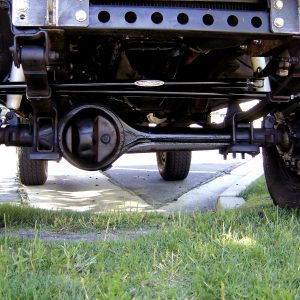
Out back, Fatman Fabrications came up with a second kit to bring the rear suspension up to today’s lofty standards. The kit is dubbed the “Wonder Bar” kit, as the new suspension is based on a bolt-in bar that connects the Air Ride Technologies ShockWave shocks to the rear axle housing. A beefier sway bar keeps the car flat in the turns, and of course the air shocks provide adjustable ride height, too.
Enhancing the Engine and Mechanical Components
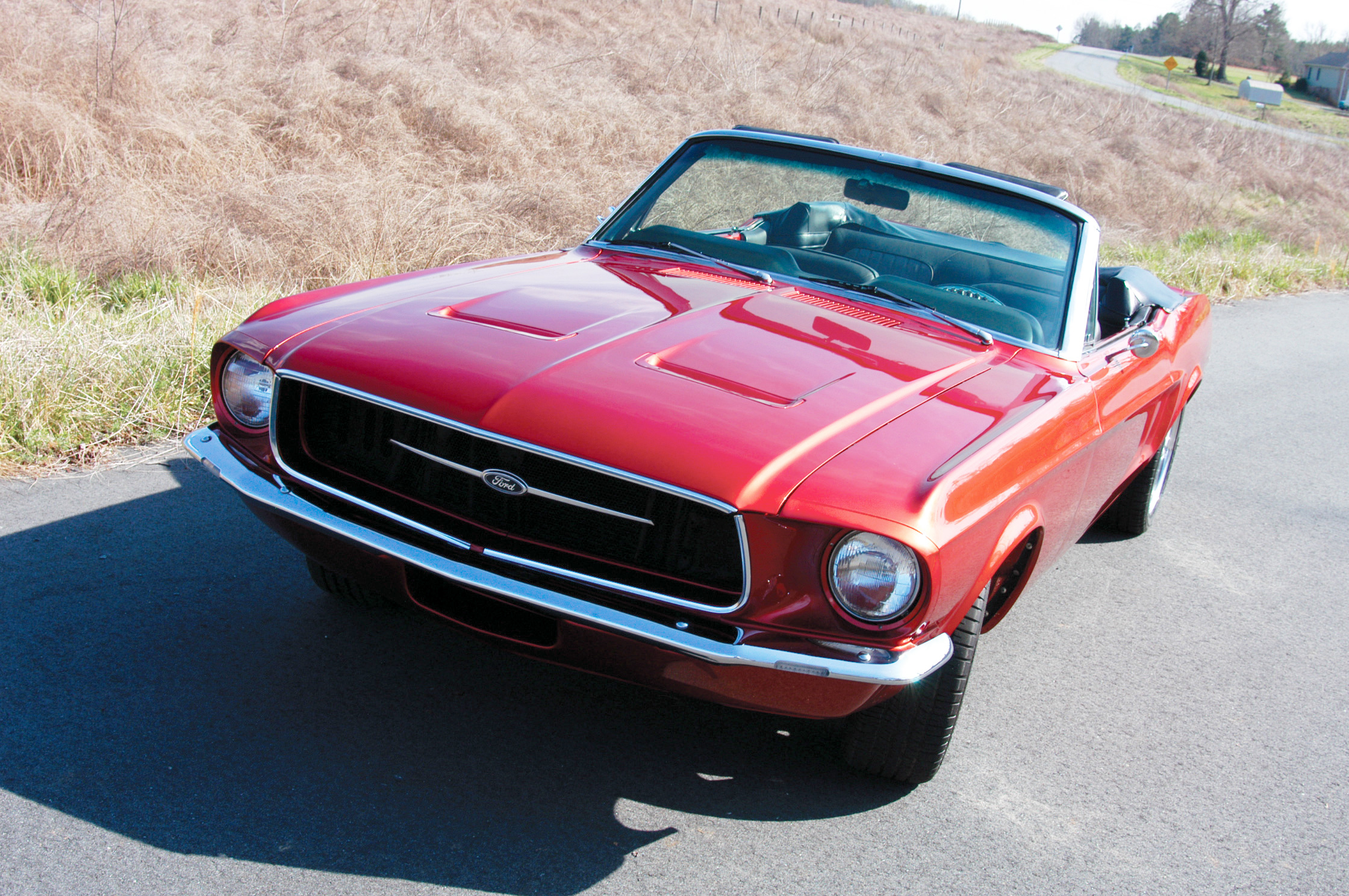
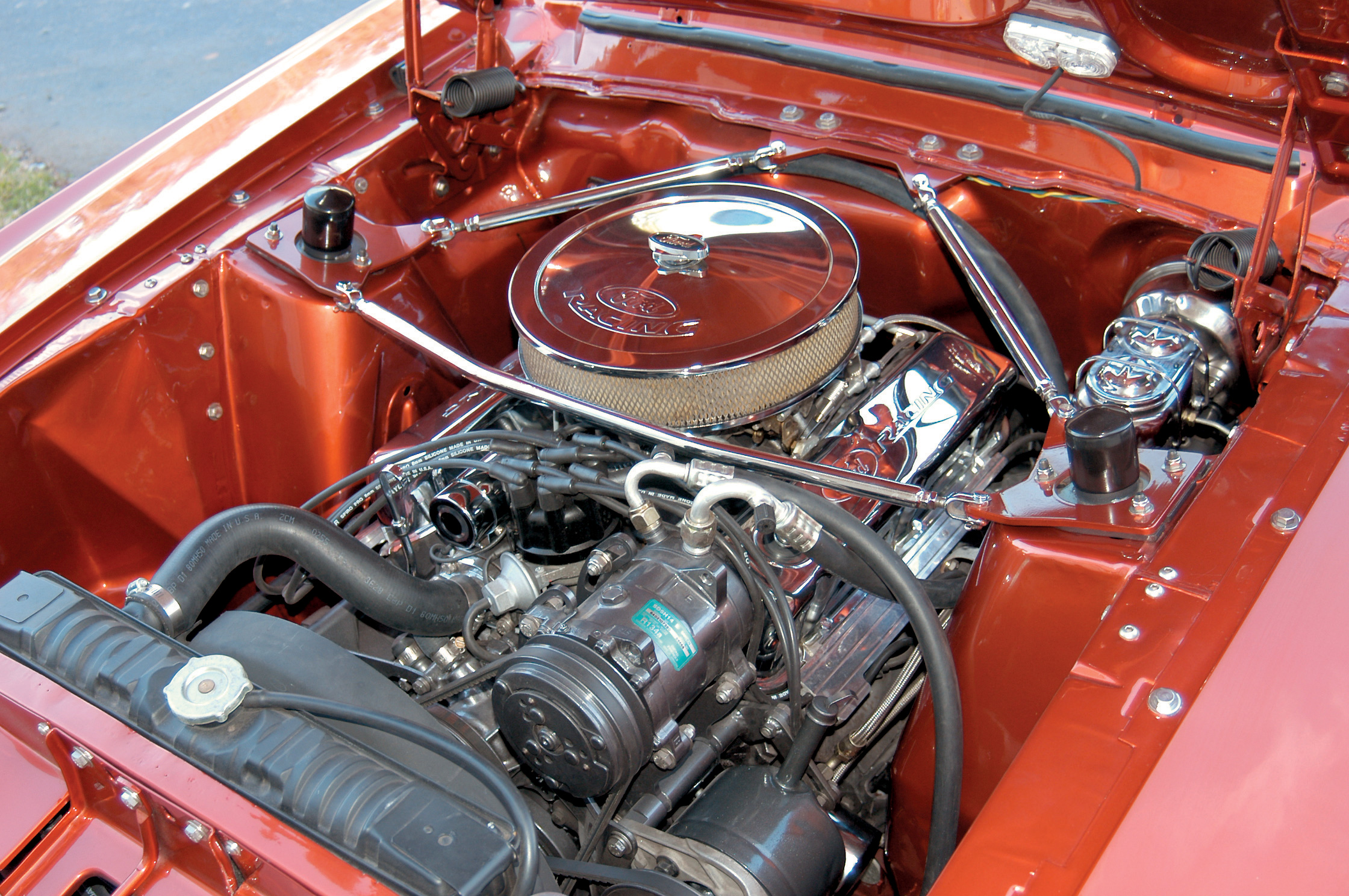
After developing these two new suspension kits, the Mustang was rolled into the shop, where a warmed-over 302ci motor and C4 were slipped into the engine compartment. Inside the small block, a mild Comp cam adds horsepower while an Edelbrock carb feeds fuel. Dress-up items are from Ford Racing and billet spark plug wires help tidy things up in the detailed engine compartment. Connecting the flawlessly finished shock towers is a polished stainless steel strut brace that substantially stiffens the front of the car.
Perfecting the Bodywork
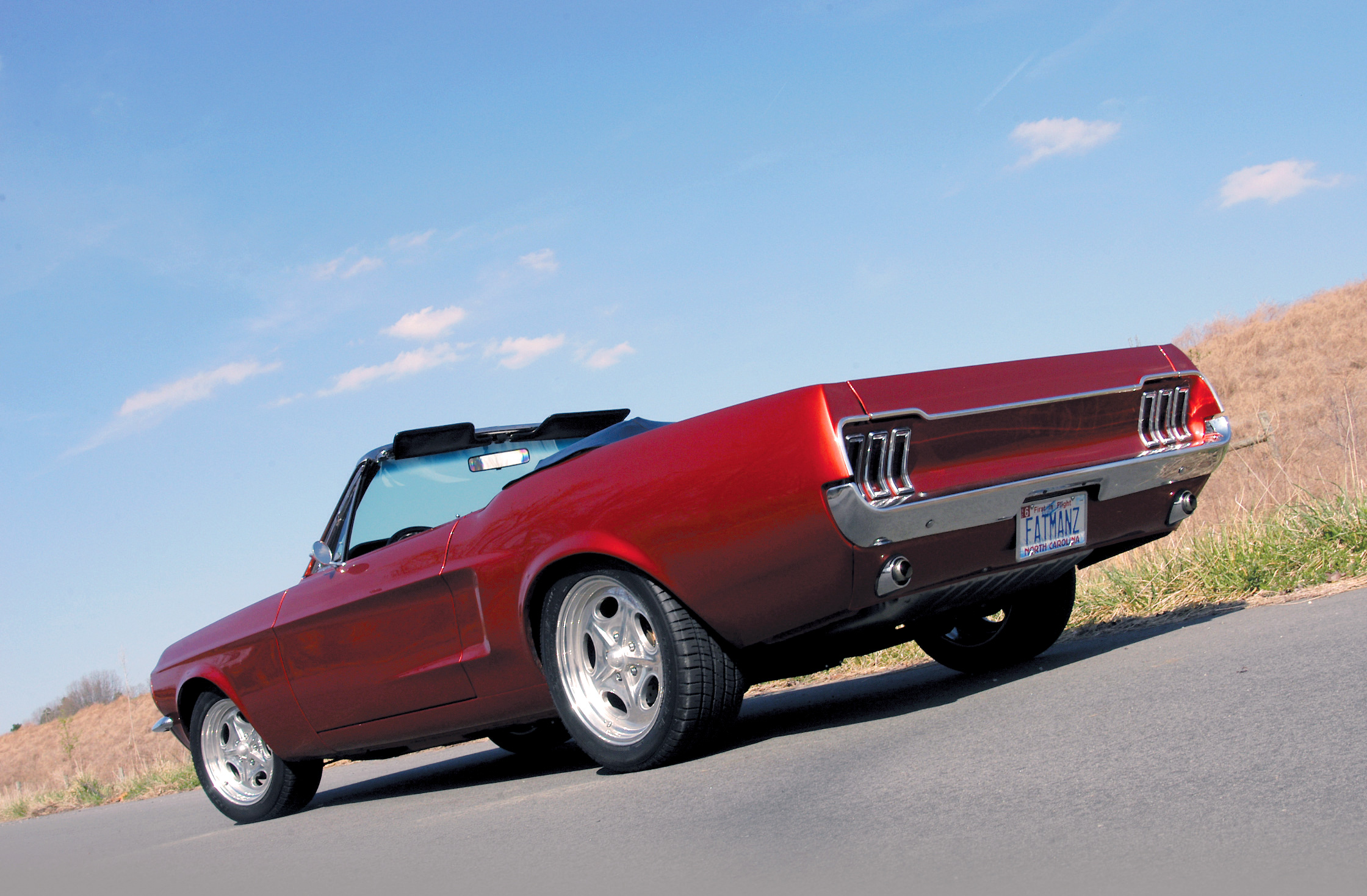
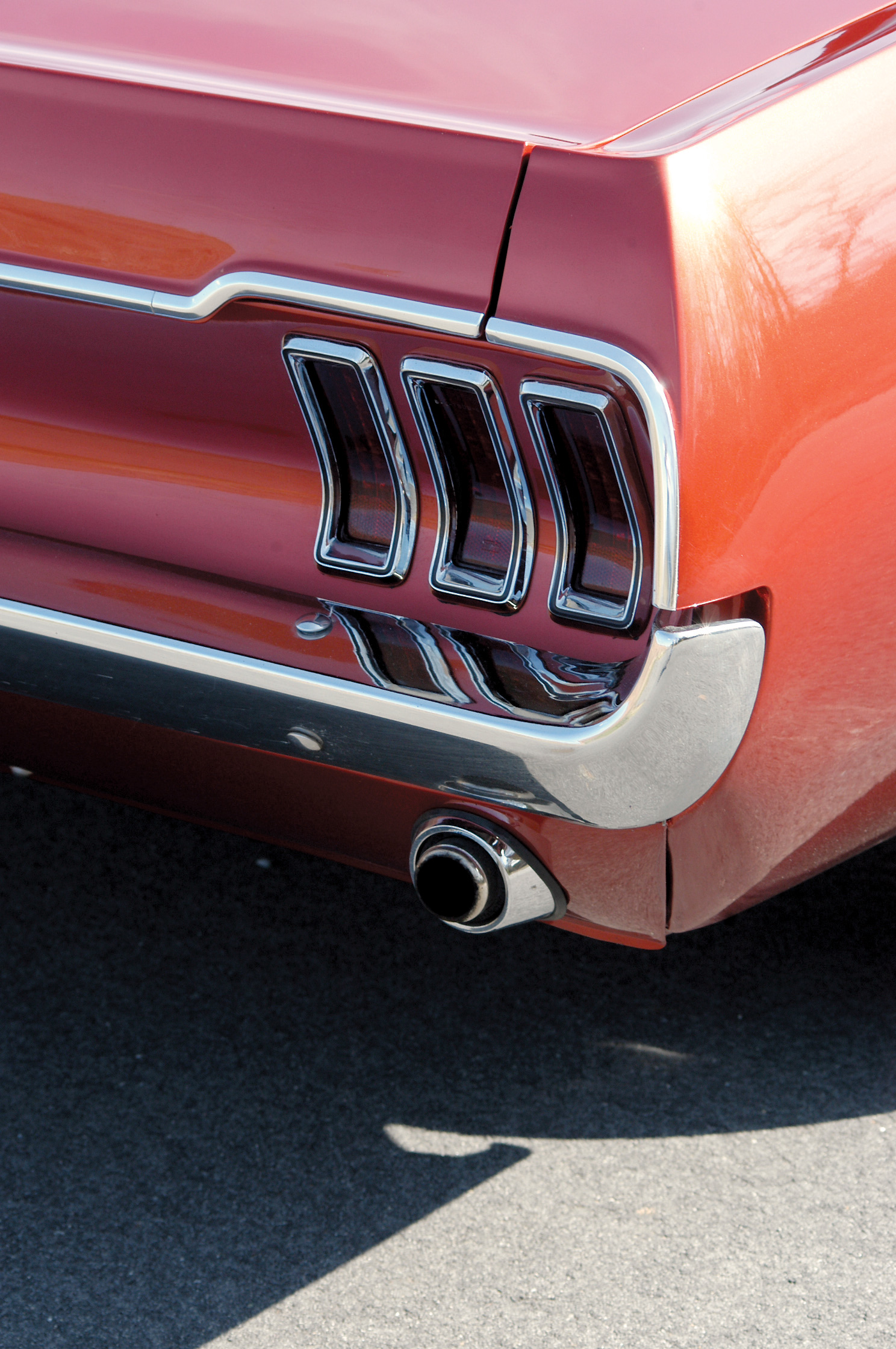
With the mechanical portion of the project complete, the crew at Fatman turned their attention to the bodywork. Now, this pony car had been ridden hard, so years of bumps and bruises were removed from the body. In the process, the gas filler was relocated inside the trunk and the rear panel was smoothed. The taillights were converted to sequential operation and the decklid was shaved of all emblems. The decklid was modified to have a slight spoiler contour built into the back edge. Twin pipes pass through the stock lower pan, and a new bumper completes the rear view.
Refining the Exterior
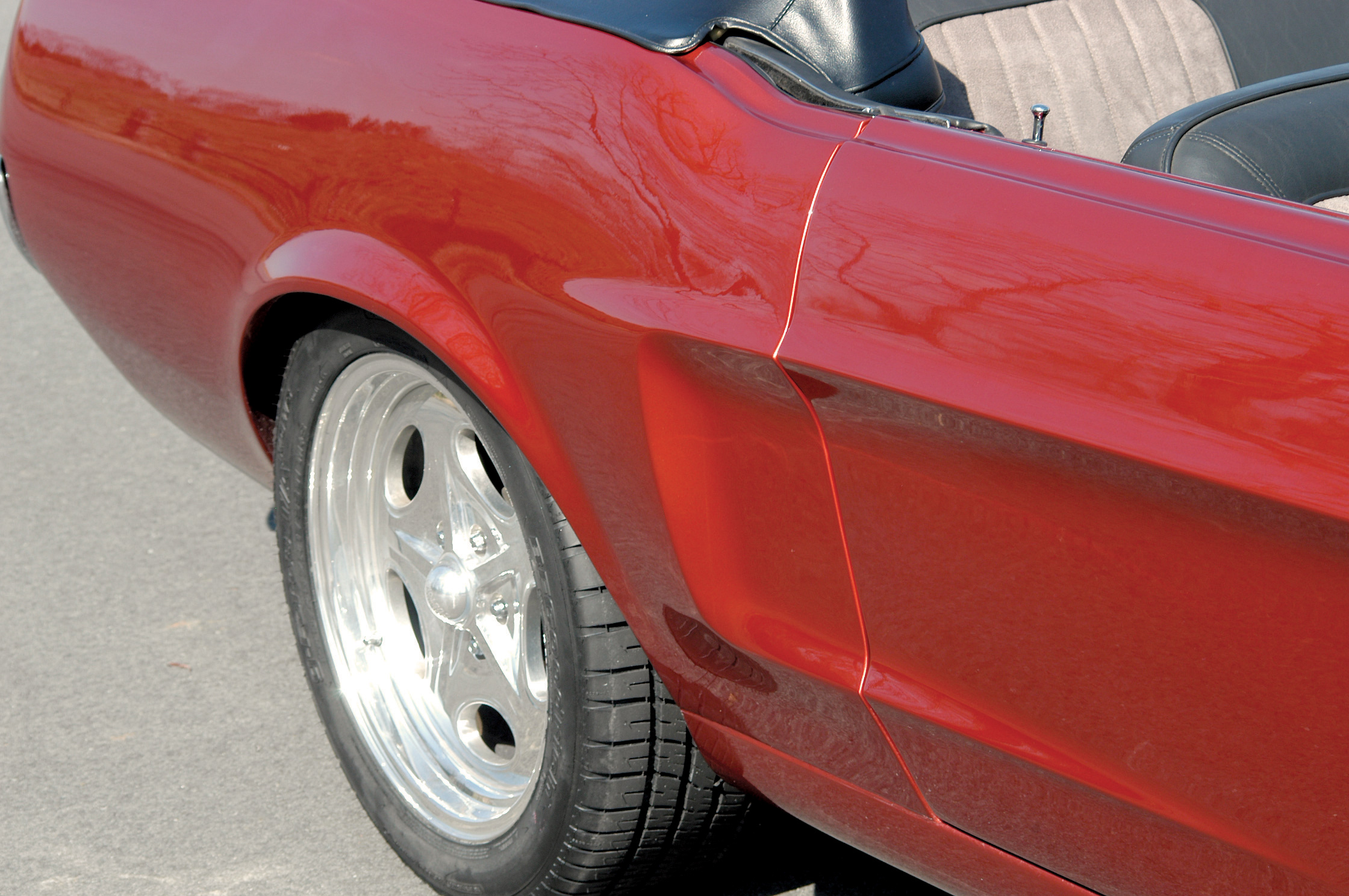
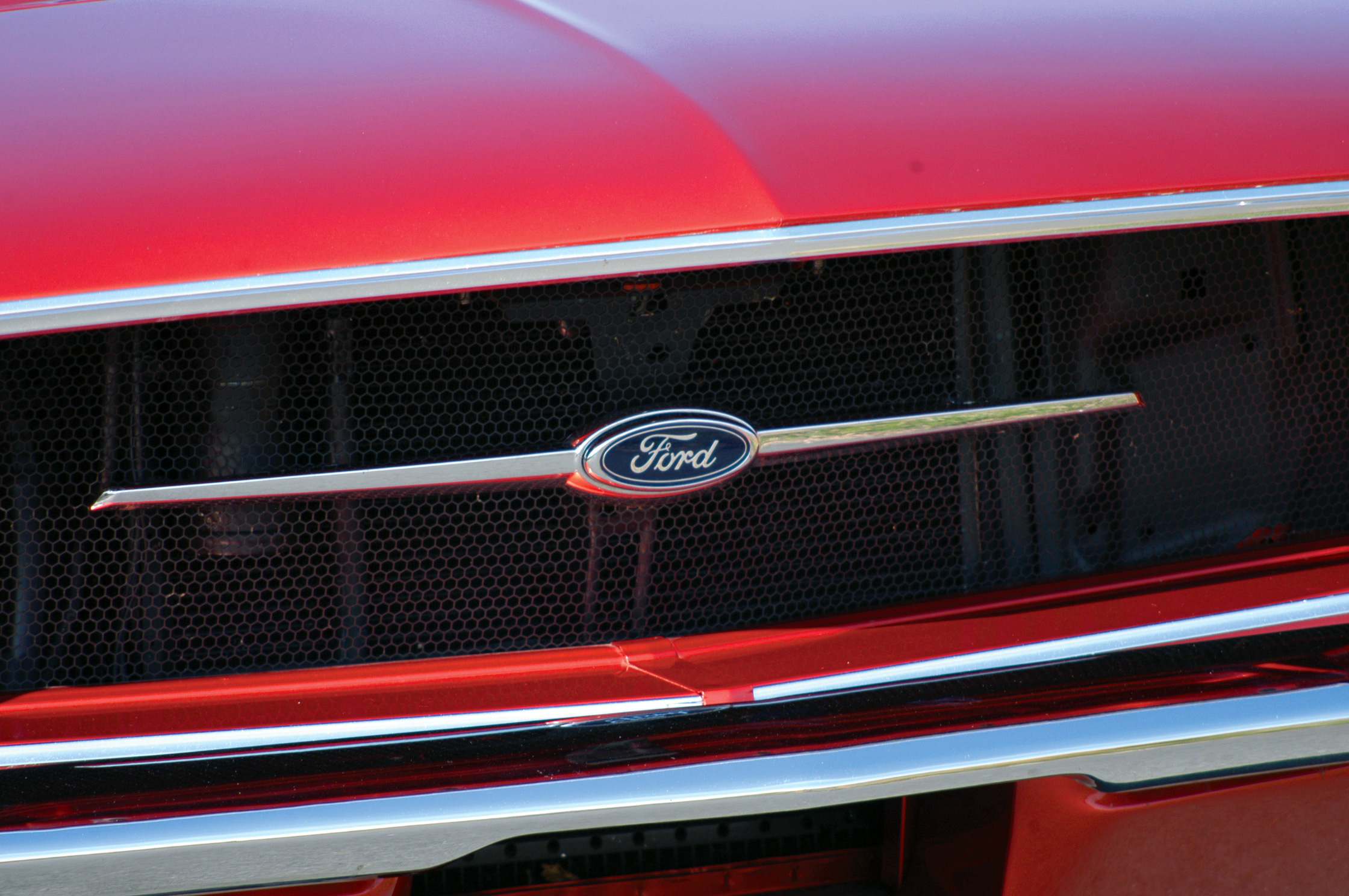
From the side we see one very clean Mustang. The side markers have been removed and filled front and rear, the Mustang emblems were removed from the front fenders, and the chrome insert on the rear quarter panel scoop was removed. The result is a very clean look but with plenty of Mustang flavor still intact. The front view sees even more subtle modifications at work. The lower pan has been filled, removing the factory turn signals in the process. The turn signals are now located in the bumper corners, where clear lenses are flush-mounted to the bumper. Behind the clear lens, a row of amber LED lights provides bright turn signals. The factory pony has been removed from the grille and a floating Blue Oval from a Taurus now splits the grille in style.
Applying the Finishing Touches
After the modifications were completed, the car was blocked to laser-straight standards and the panel gaps were precisely fit. Then the car was taken to Reflections Paint and Body, where Gary Rawlings laid down the beautiful copper paint. Even the paint on this Mustang is a Ford color, fresh off a new F-350 truck.
Completing the Interior
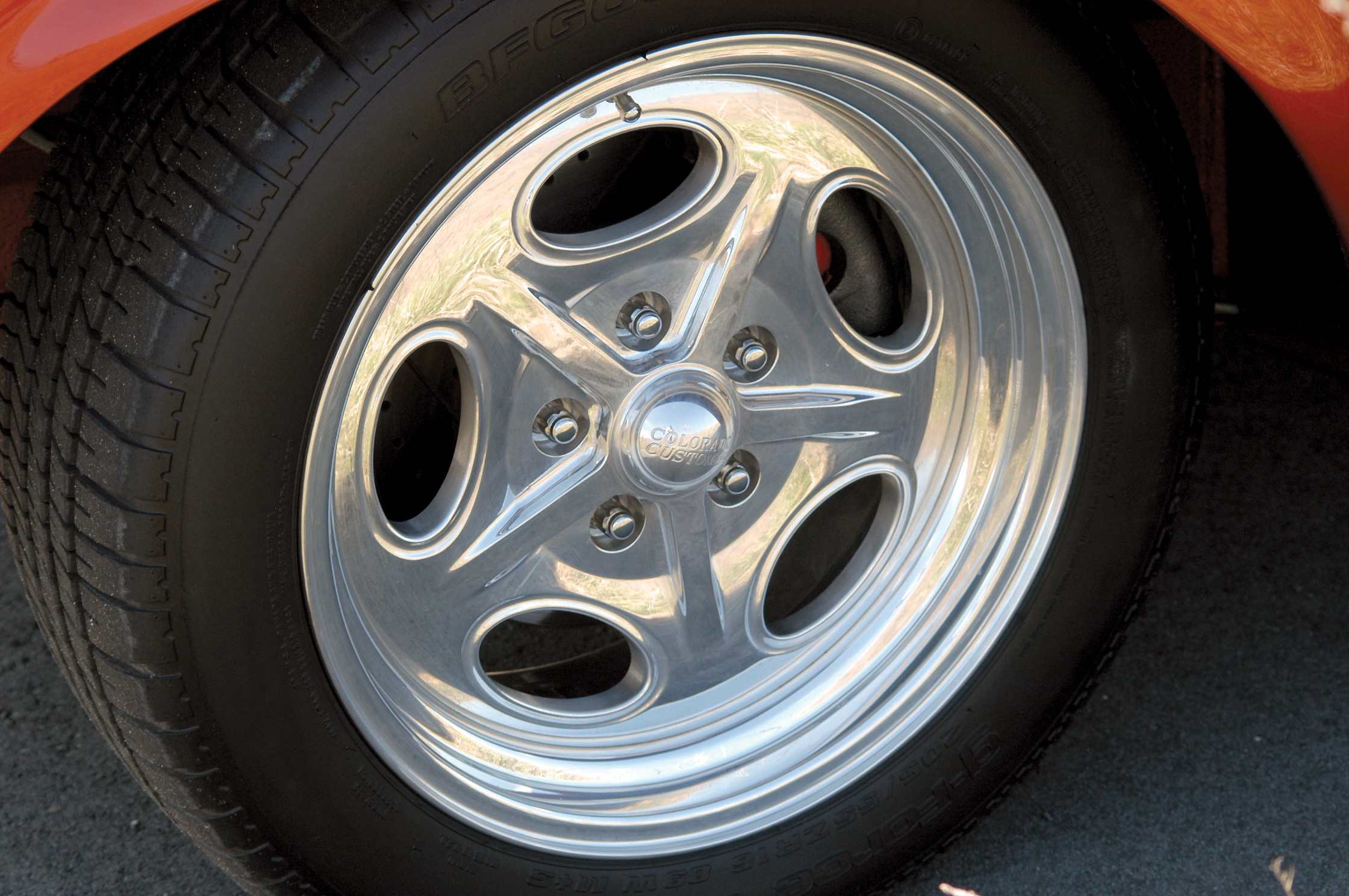
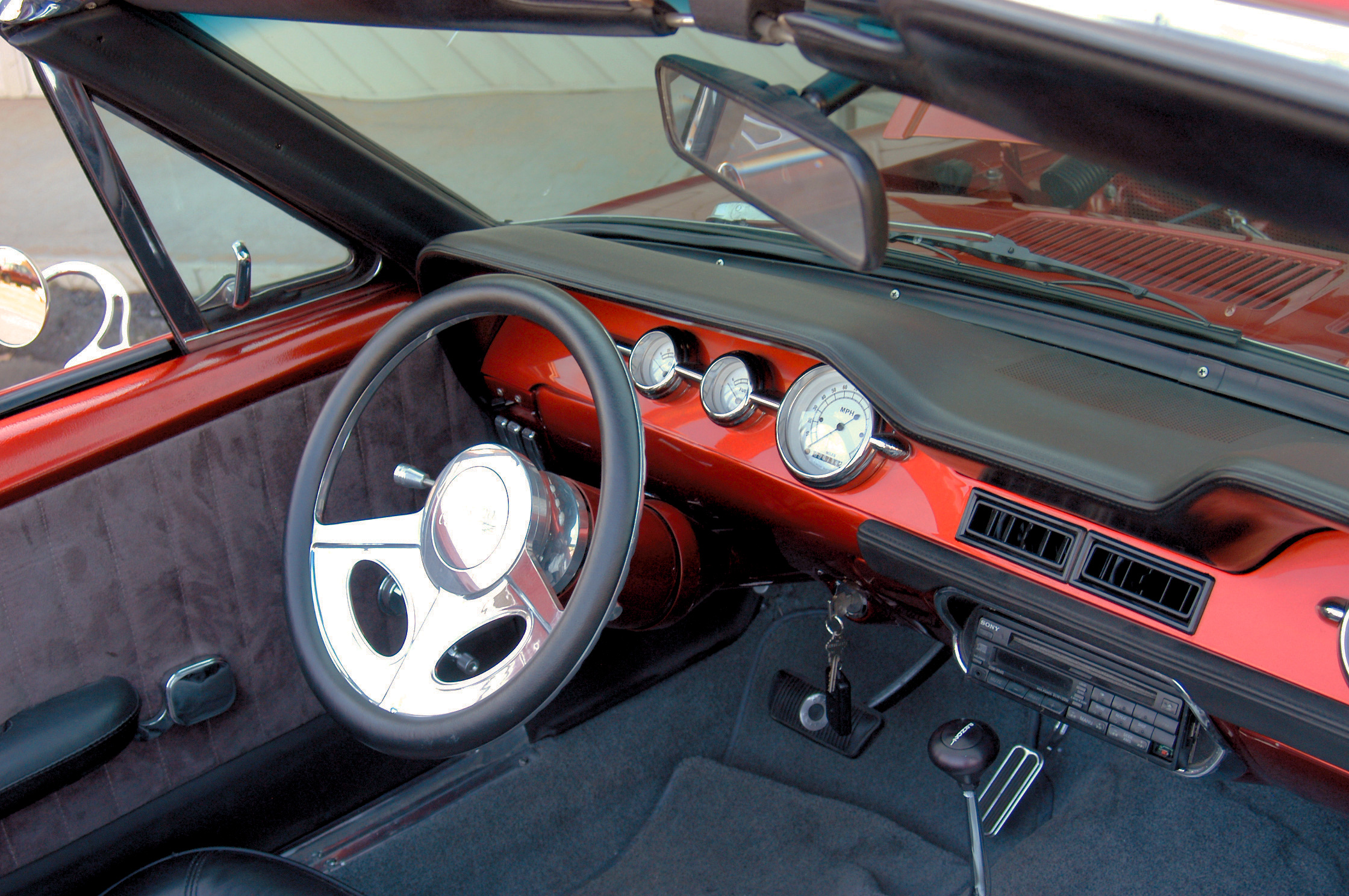
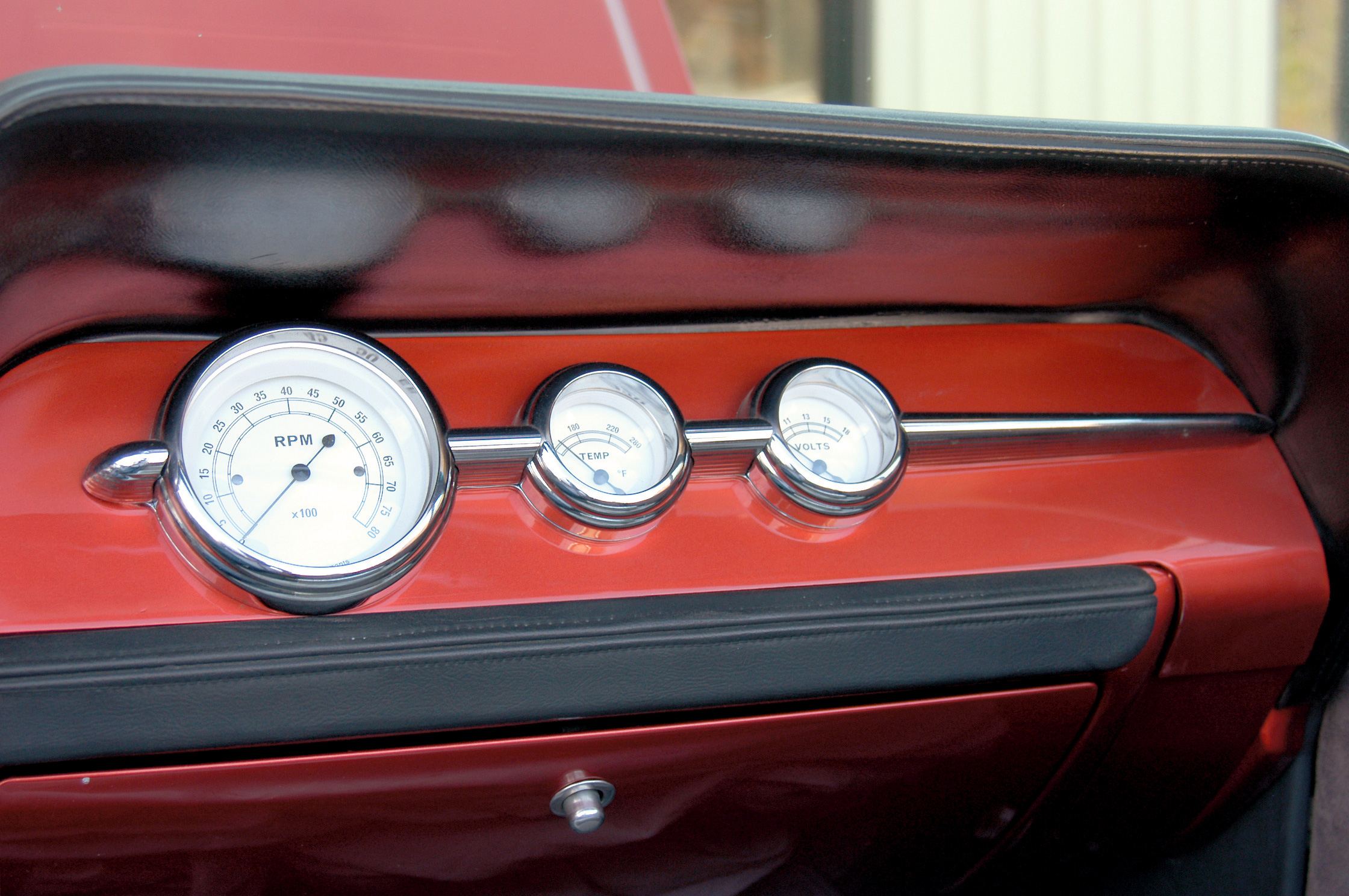
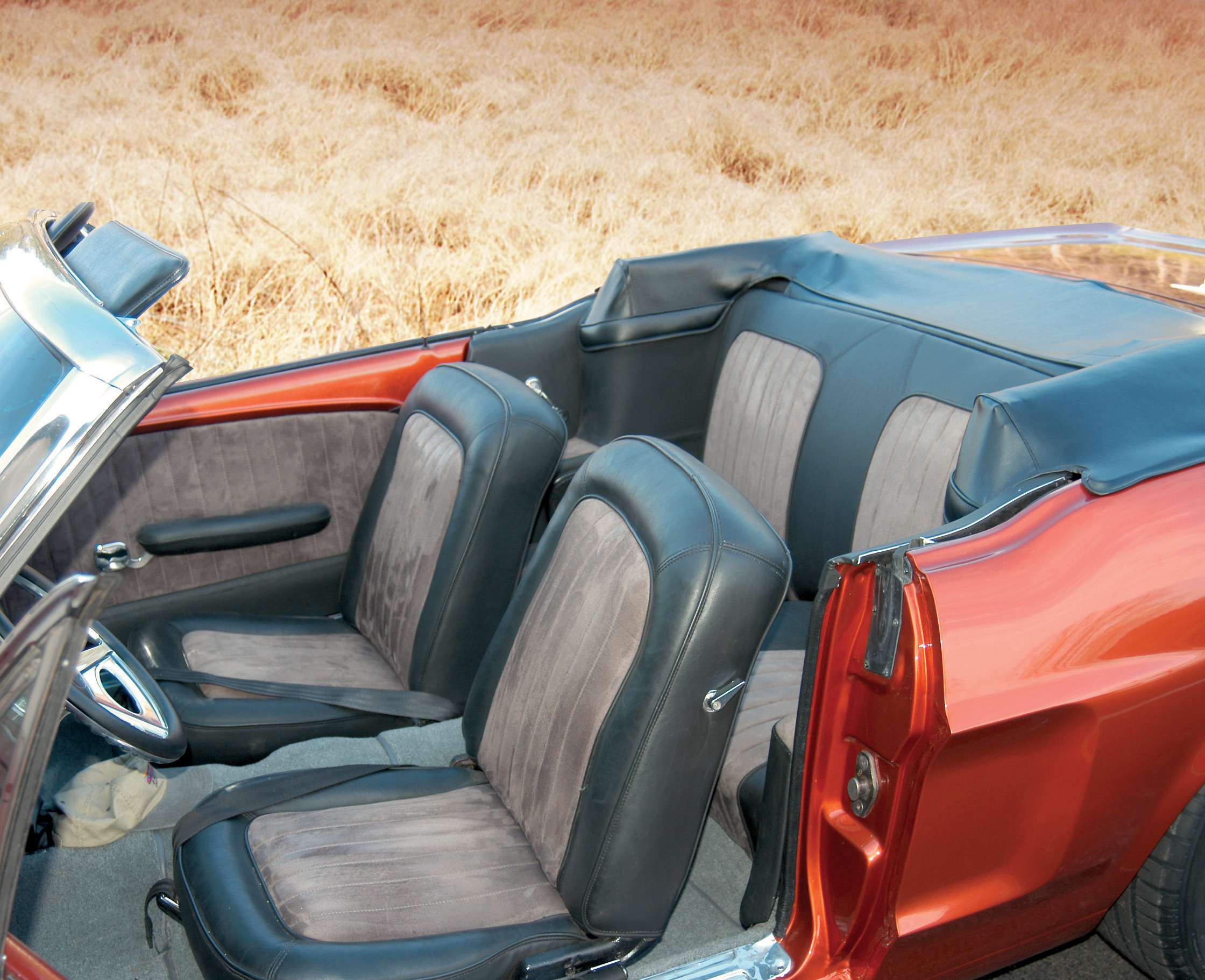
After the finish paint was buffed out, the Colorado Custom wheels (17×7-inch front and 18×7-inch rear) were wrapped with BFGoodrich rubber and mounted on the Mustang. The car was then driven to Custom Auto Upholstery in Concord, North Carolina, where Leon Brown covered the stock seats with a combination of black leather and suede. An ididit, Inc. steering column carries a Colorado Custom steering wheel, while the filled dash has a modified Carriage Works gauge cluster with Classic Instruments gauges. The pedals and shifter are Lokar items, and Vintage Air keeps things cool when the top is up.
The Fatman Mustang Today
Finally the Fatman Mustang was completed. Today the car is used by VanDervort for transportation to and from work, and it is often found in the Fatman trailer so that the car can be displayed at shows or used for transportation from the show to the motel. In short, it’s just a much-improved pony car that takes to the open road and runs with the best of them, and to think it all started with the simple question, “Dad, can we have a pony?”