





SOMETHING OLD, SOMETHING NEW
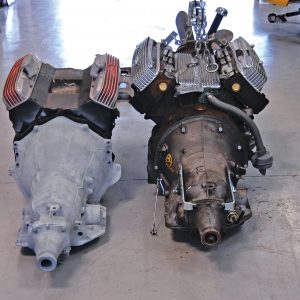
There’s a lot to like about vintage engines. Just the sheer fact that it isn’t a small-block Chevy is enough to inspire many hot rodders. Now, don’t get us wrong; the small-block Chevrolet is nothing less than awesome, but it is also the default engine of most hot rodders. Often, there is no thought involved as many rodders simply want the 350/350 treatment. That’s probably fine for most hot rodders, but there has been a real resurgence in putting vintage motors in vintage hot rods, and we love the concept. The Oldsmobile, Cadillac, Buick Nailhead and Hemi are all great candidates for powering a vintage hot rod. Parts are still available for most of these engines, some being tougher to find than others. A surprising amount of speed equipment survives for these engines, too, and companies like Offenhauser still produce a lot of vintage speed equipment.
SUREFOOTED MUSTANG
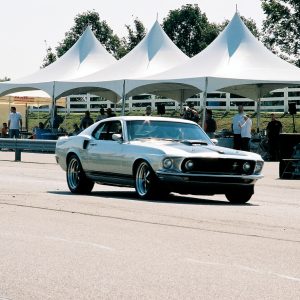
As much as it rankles Blue Oval fans, the early Mustangs used the same suspension as the Falcon and the Comet. It brings to mind cars powered by little six-bangers, dubbed “economy cars,” and not meant for the performance-minded-like a ’60s version of a Geo Metro or Yugo. Those who drove them loved and abused them, and quickly determined the limits of the factory suspension—especially with any power under the hood.
HOT ROD POWER FEST TAKES OVER ATLANTA
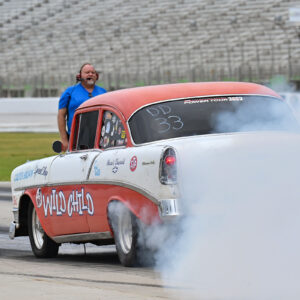
HOT ROD brought the Power Fest name back for 2026, filling Atlanta’s EchoPark Speedway with a weekend of fast cars, cool builds and nonstop action. Held August 28–29, Power Fest transformed the NASCAR facility into a giant automotive playground with drag racing on pit road, an autocross course, a huge car show and a manufacturer midway. Classic muscle, traditional hot rods, modern performance cars, trucks and homebuilt street machines were all part of the mix.




Purchasing the Camaro
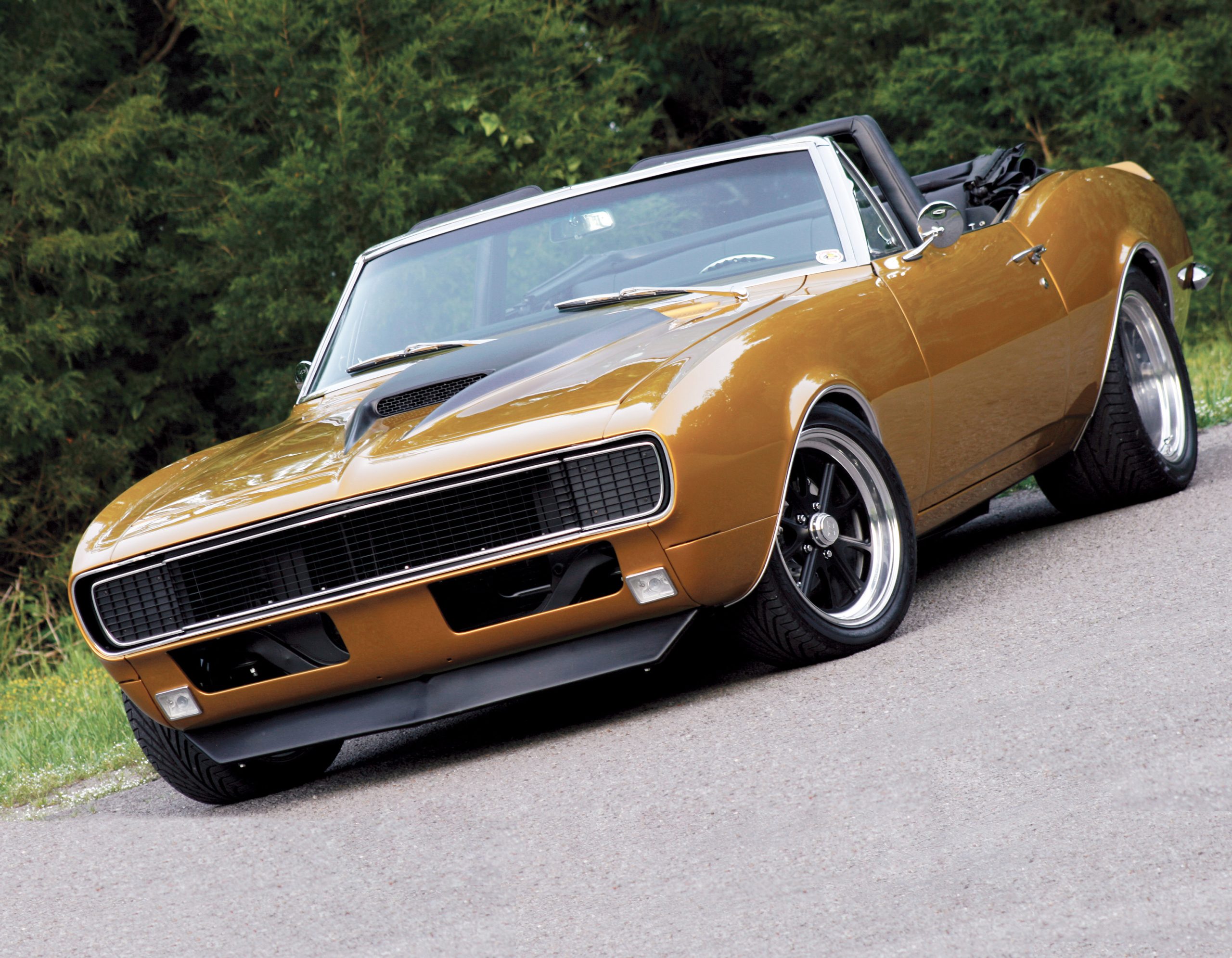
Being a true Camaro enthusiast, it didn’t take Turner long to purchase the car for the attractive sum of $2,000. A few weeks later, Turner and his pal Danny Griffin loaded up the car and all its pieces, took it home and began the arduous task of reassembling the Camaro.
Suspension and Brake Work
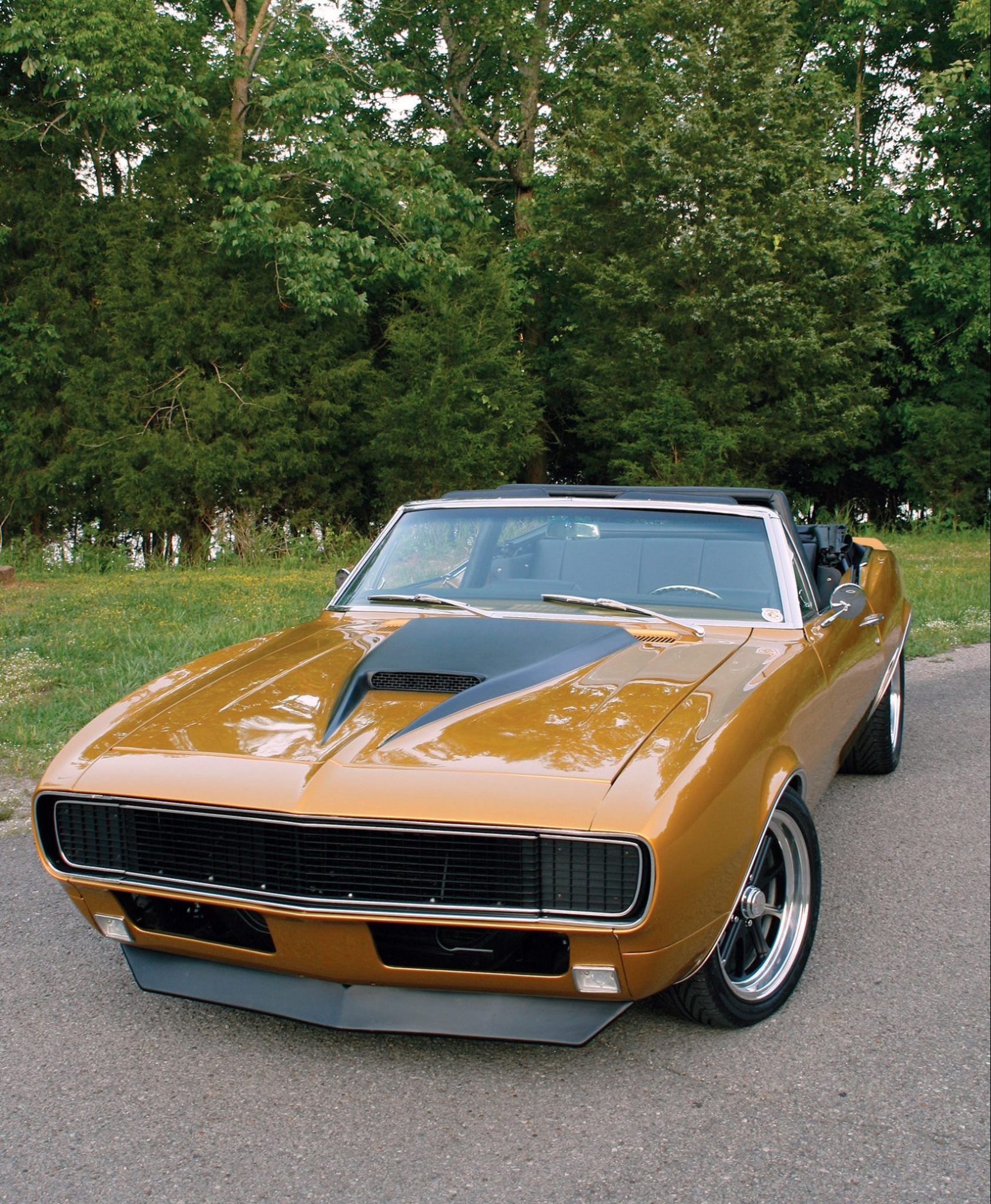
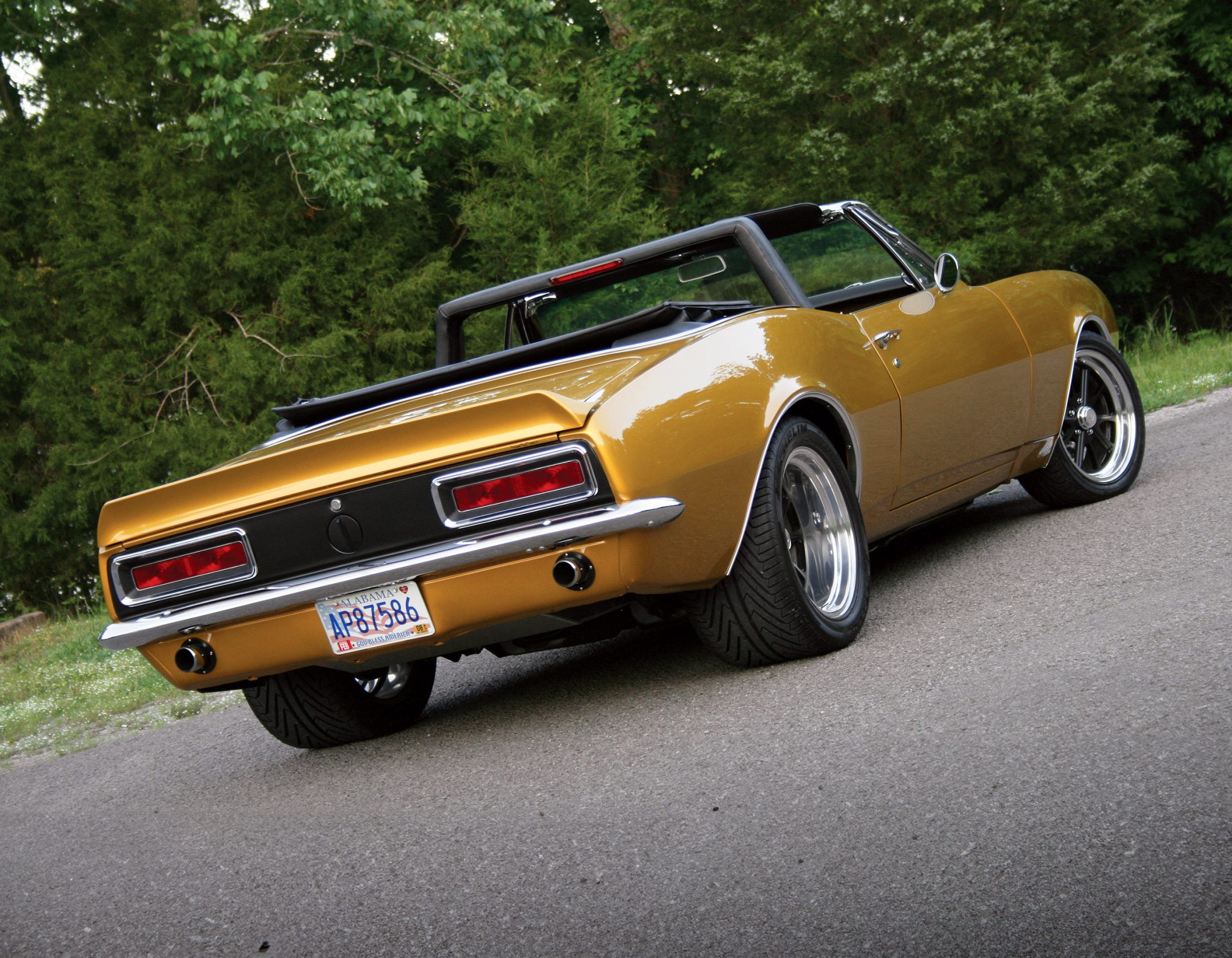
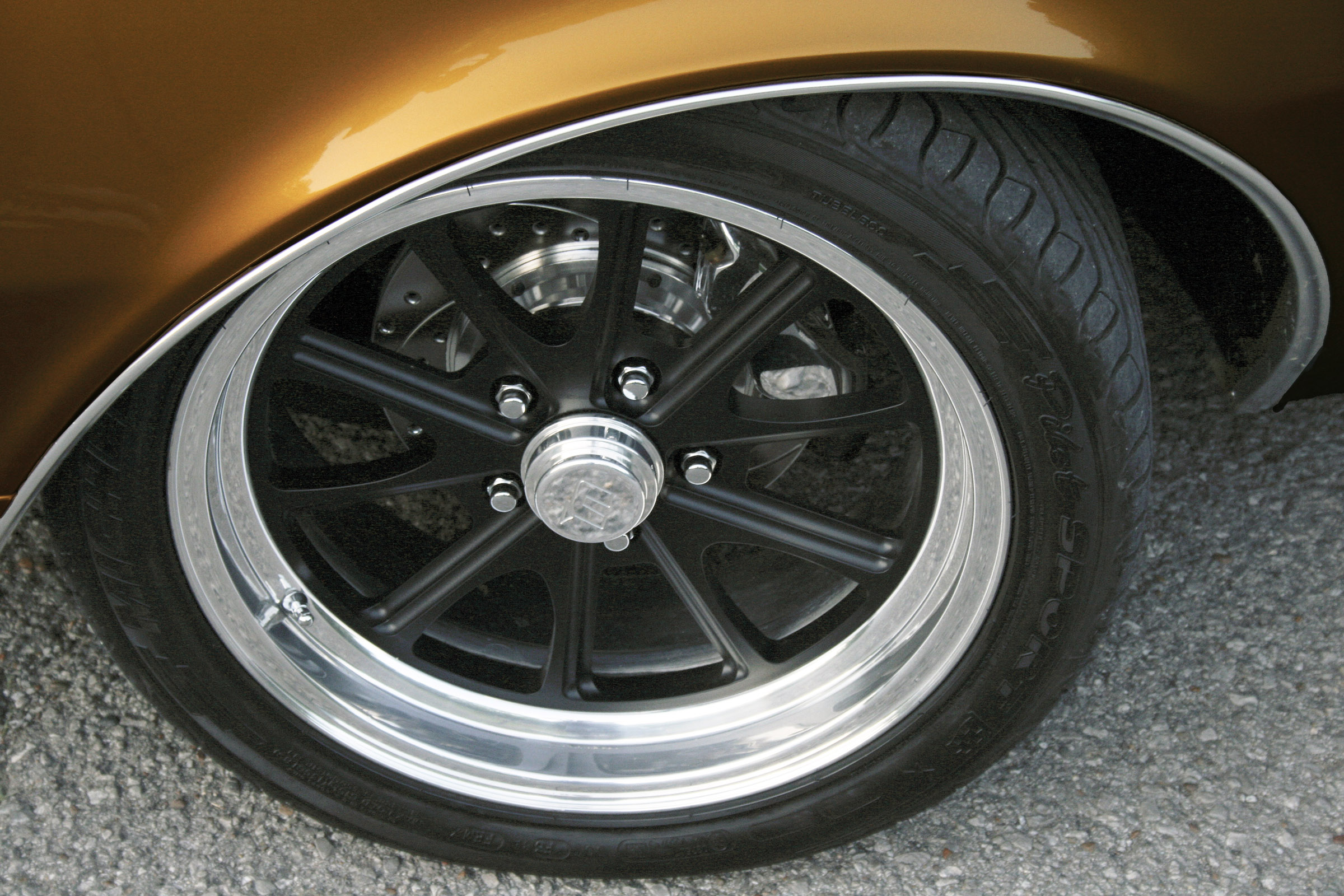
Since Blaydes had already hung several new panels on the car for the previous owner, Turner and Griffin began the assembly. After blasting and cleaning the front clip, the two first assembled the front suspension using Hotchkis dropped coil springs and 2-1/2-inch-dropped spindles to get the nose of the car low to the ground. To help bring the Pro Touring Camaro to a halt, the drum brakes were replaced with a set of 12.19-inch Wilwood discs with twin-piston calipers. Out back, Blaydes had already mini-tubbed the car to accommodate the narrowed 9-inch Ford rear, which is held in place with a set of Detroit Speed 3-inch-dropped springs and is stuffed with a set of Randy’s Ring and Pinion 3.50 gears. Stopping power comes from Wilwood 12.19-inch disc brakes. Completing the front and rear suspension package is a set of 17×8- and 17×11-inch Newstalgia wheels wrapped in Michelin rubber.
Bodywork and Customization
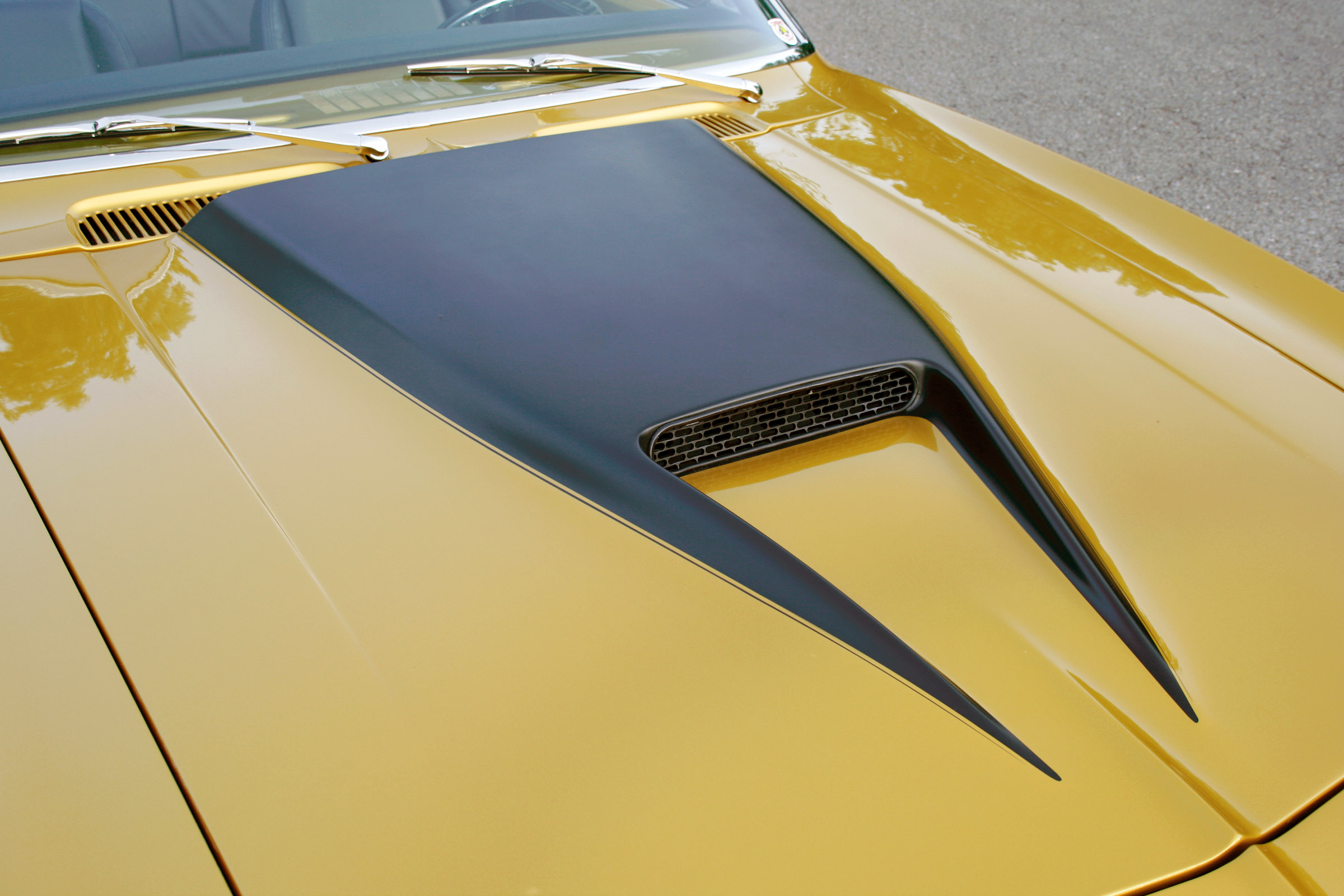
With the suspension work completed, Turner and Griffin began working on all the little details before delivering the car to Tony’s Body Shop in Fort Payne, Alabama. Owner Tony Olivia began by stripping the car to bare metal and reworking the panels to perfection. With the car disassembled, Olivia welded up the front bumper holes, one of the few exterior mods this Camaro would see. Rather than reuse the factory hood, Turner opted to purchase a fiberglass hood with a late-model SS-style scoop from Year One. Olivia also built a custom dash for the Camaro to help make the interior look more appealing. With those details completed, Olivia applied a flawless coat of PPG Incan Gold to the vintage Chevy sheetmetal.
Engine Build
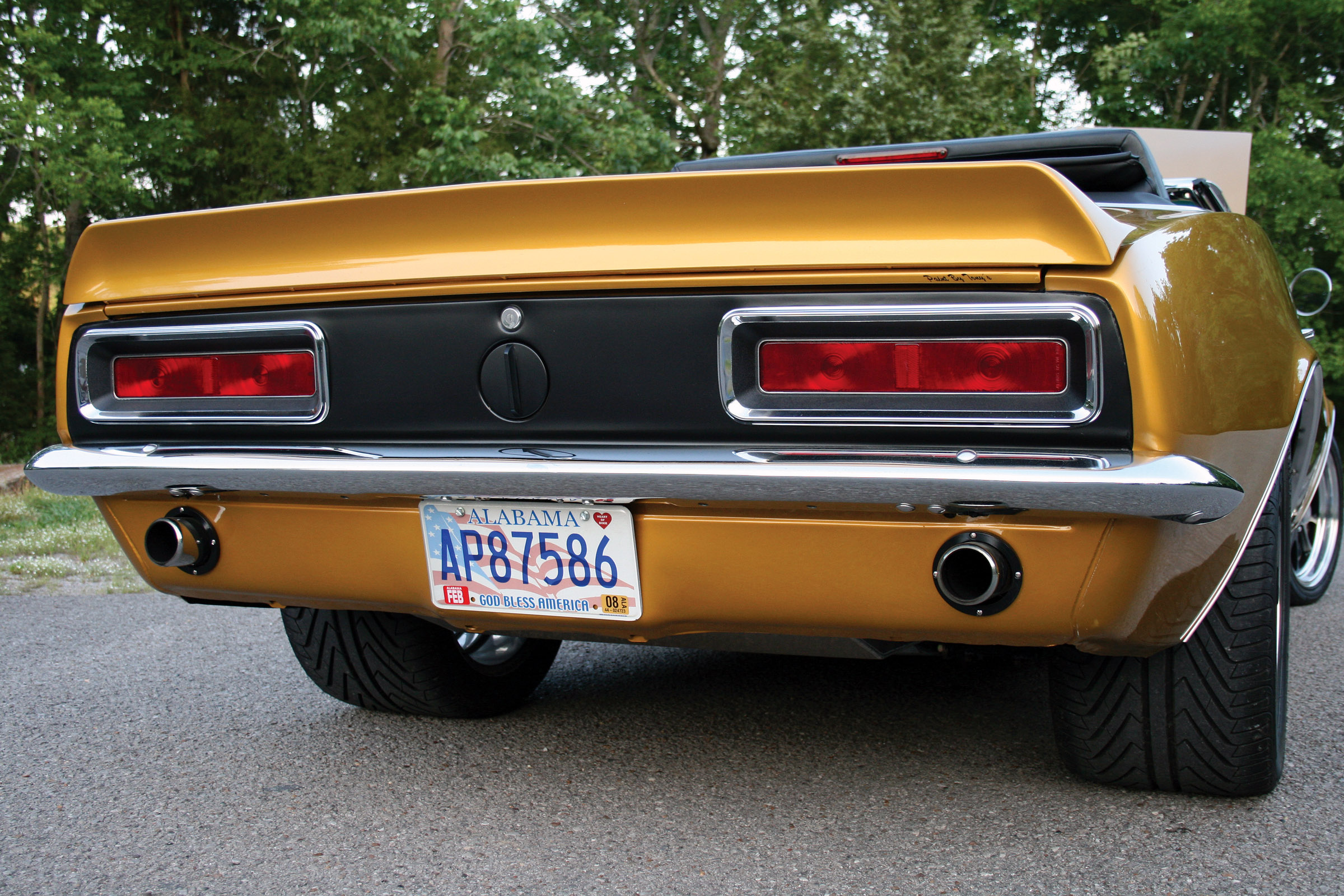
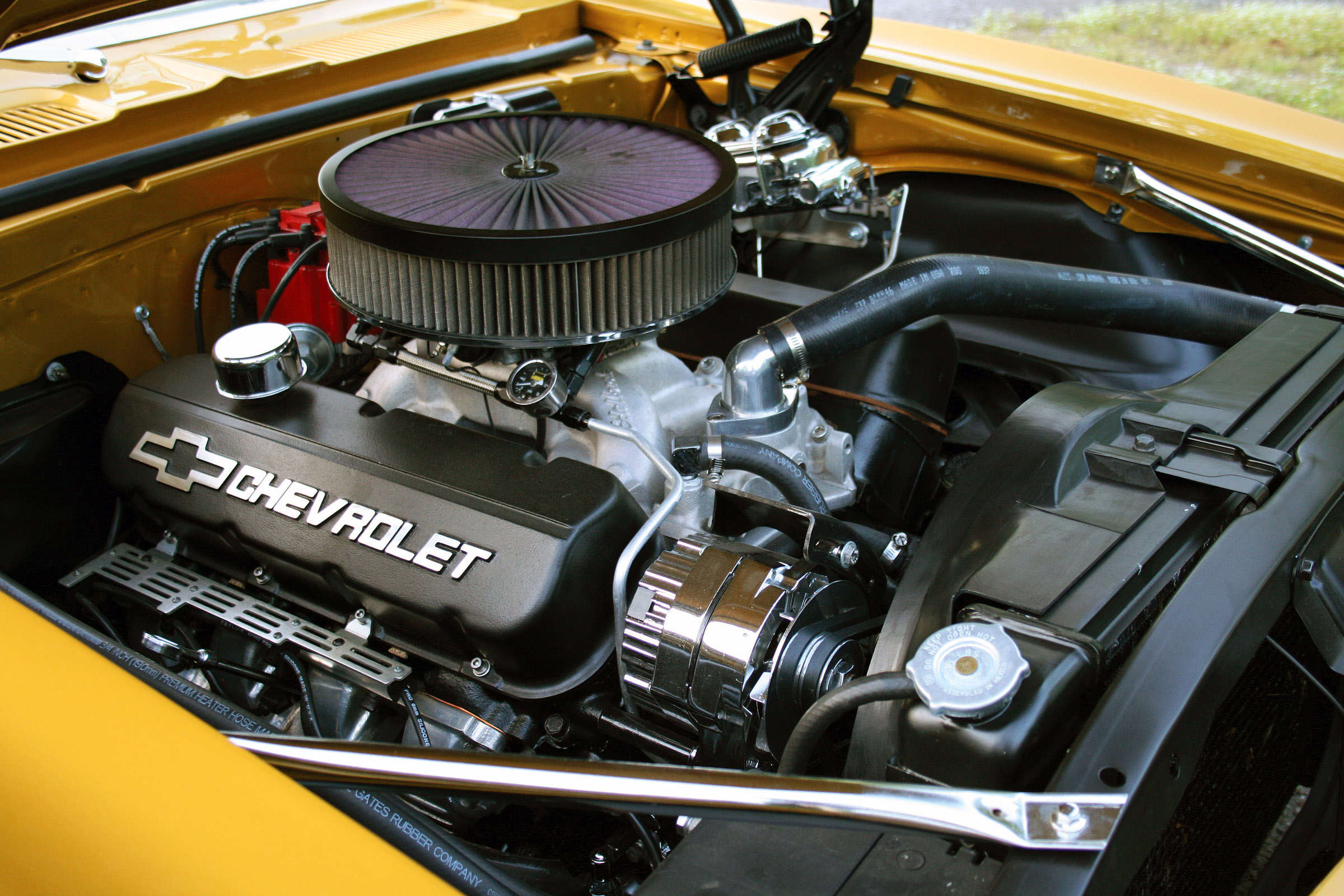
While the bodywork was being done, Turner and Griffin decided that, since the Camaro is the quintessential muscle car, it should be powered by a big-block Chevy. Turner supplied Bo and John Shacklett with a stock 454, and the rest is history. The duo began by installing a forged bottom end producing 10:1 compression, topped by a set of reworked GM iron heads. To operate the valvetrain, Shacklett installed a 0.480-inch-lift Comp cam and lifters. An Edelbrock Air-Gap intake and Holley Street Avenger carb were installed atop the 454, and to rid the engine of spent gases, Turner installed a set of Sanderson headers in a custom-built exhaust.
Transmission and Drivetrain
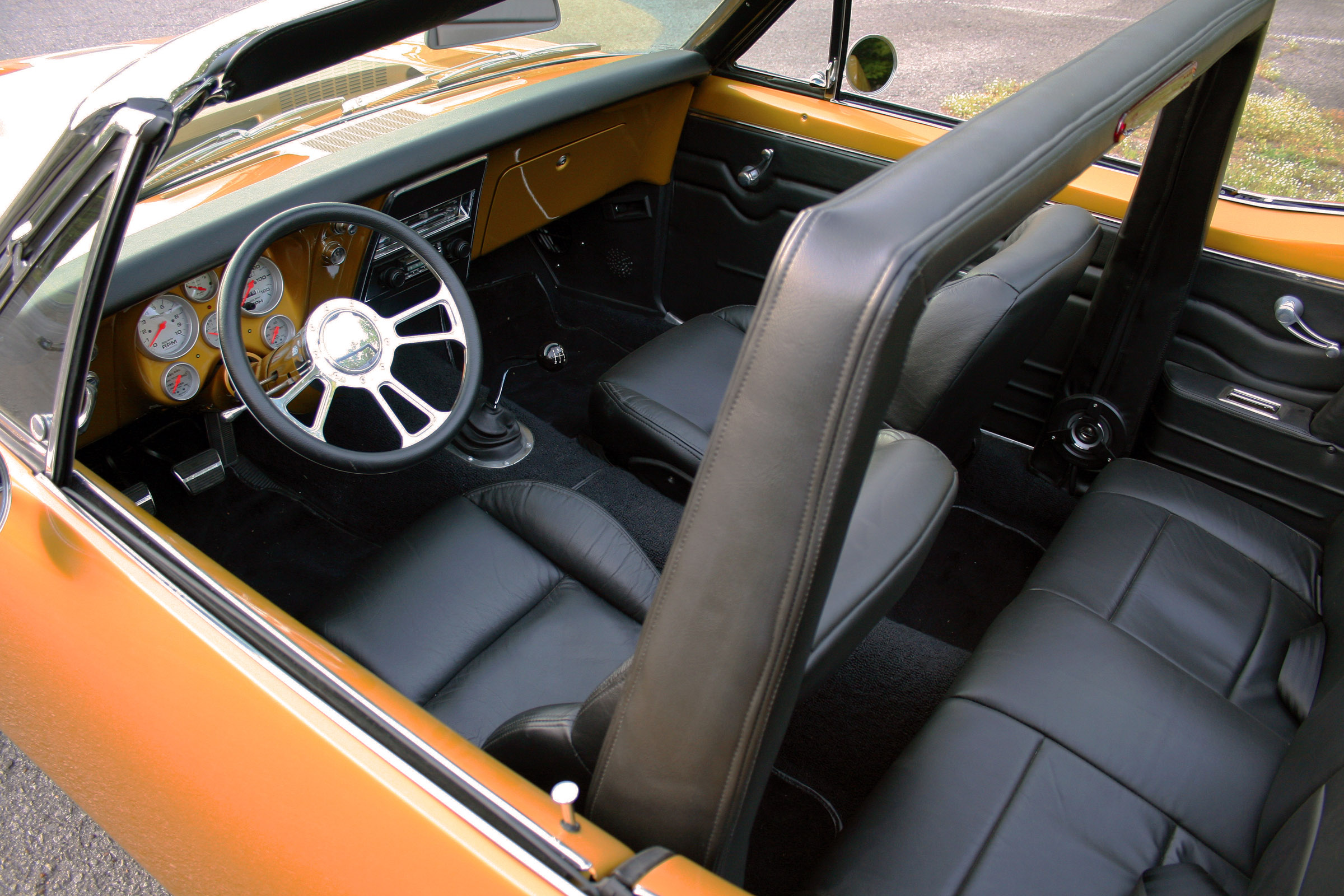
Since the car was intended to be driven, Turner installed a Tremec five-speed behind the 454. Converting that torque into usable power is a Centerforce clutch inside a blow-proof bell housing. Dave’s Drive Shaft was enlisted to build a driveshaft to withstand all that power without fear of breakage.
Interior and Finishing Touches
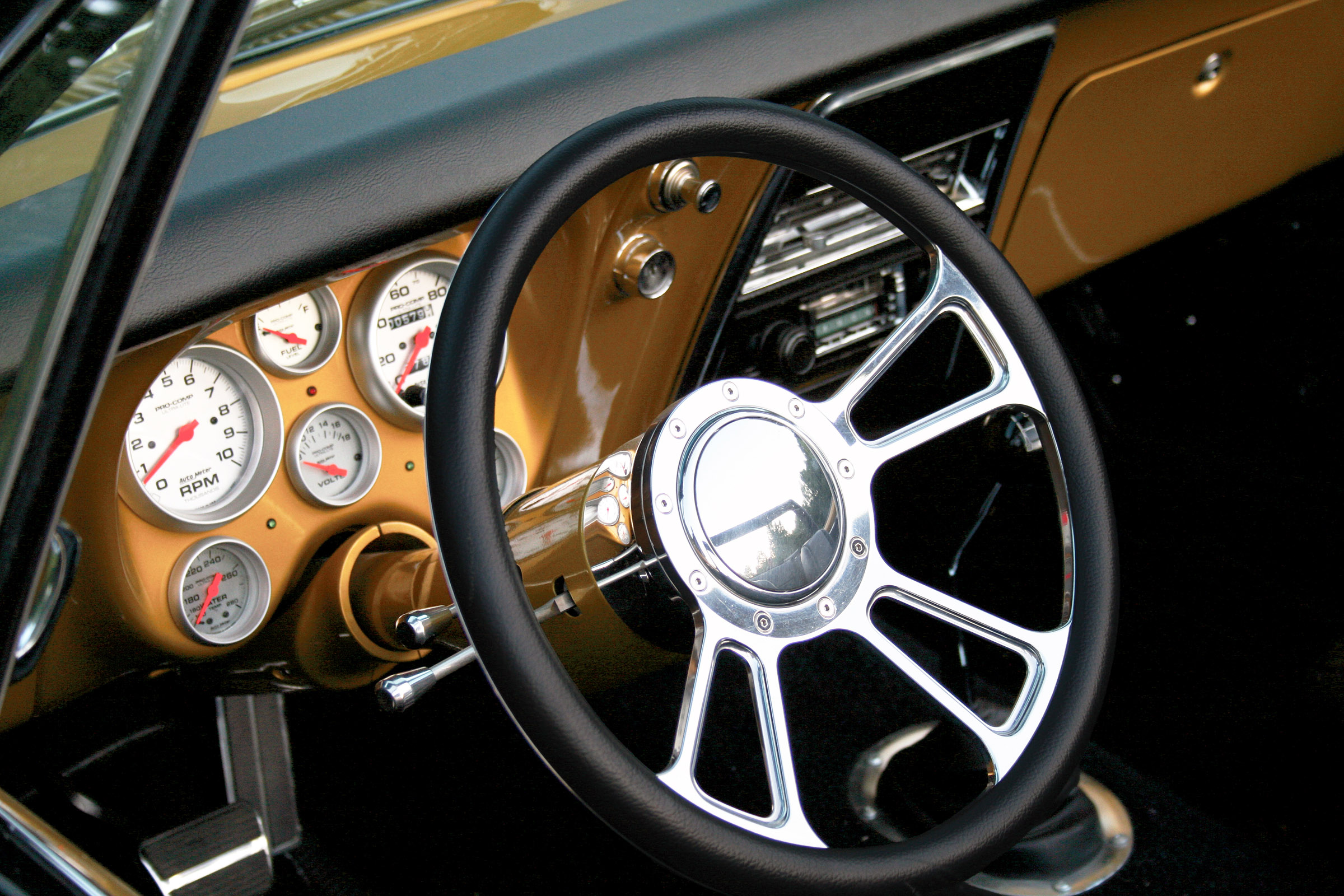
With the car almost complete, Turner and Griffin wired the car and installed beautiful new trim and a Detroit Speed wiper delay. Turner opted to install a Covan’s molded dash and Auto Meter white-face gauges and then delivered the car to Russell Upholstery in Athens, Alabama, where upholsterer extraordinaire James Russell worked his magic. Russell began by removing the headrests from a set of ’02 Nissan Sentra seats and upholstered them in rich black leather. Before bolting in the new seats, he installed a new molded carpet kit. Utilizing the same black leather used on the seats, Russell built and upholstered a set of custom door and kick panels. Before calling it quits, Turner installed a new Flaming River polished column, a Billet Specialties steering wheel and a new power top.
Completion and Final Thoughts
Turner and Griffin completed the Camaro convertible in June 2007 and have been steadily cranking up the miles while attending events such as the Goodguys Nashville Nationals and several others. The Camaro now shares the shop with several cars, including a Nova II, a ’32 Ford roadster and a ’68 Chevy truck, to name a few. Since the Camaro has been completed, it has seen the lion’s share of attention, and that’s because this one belongs on the street.