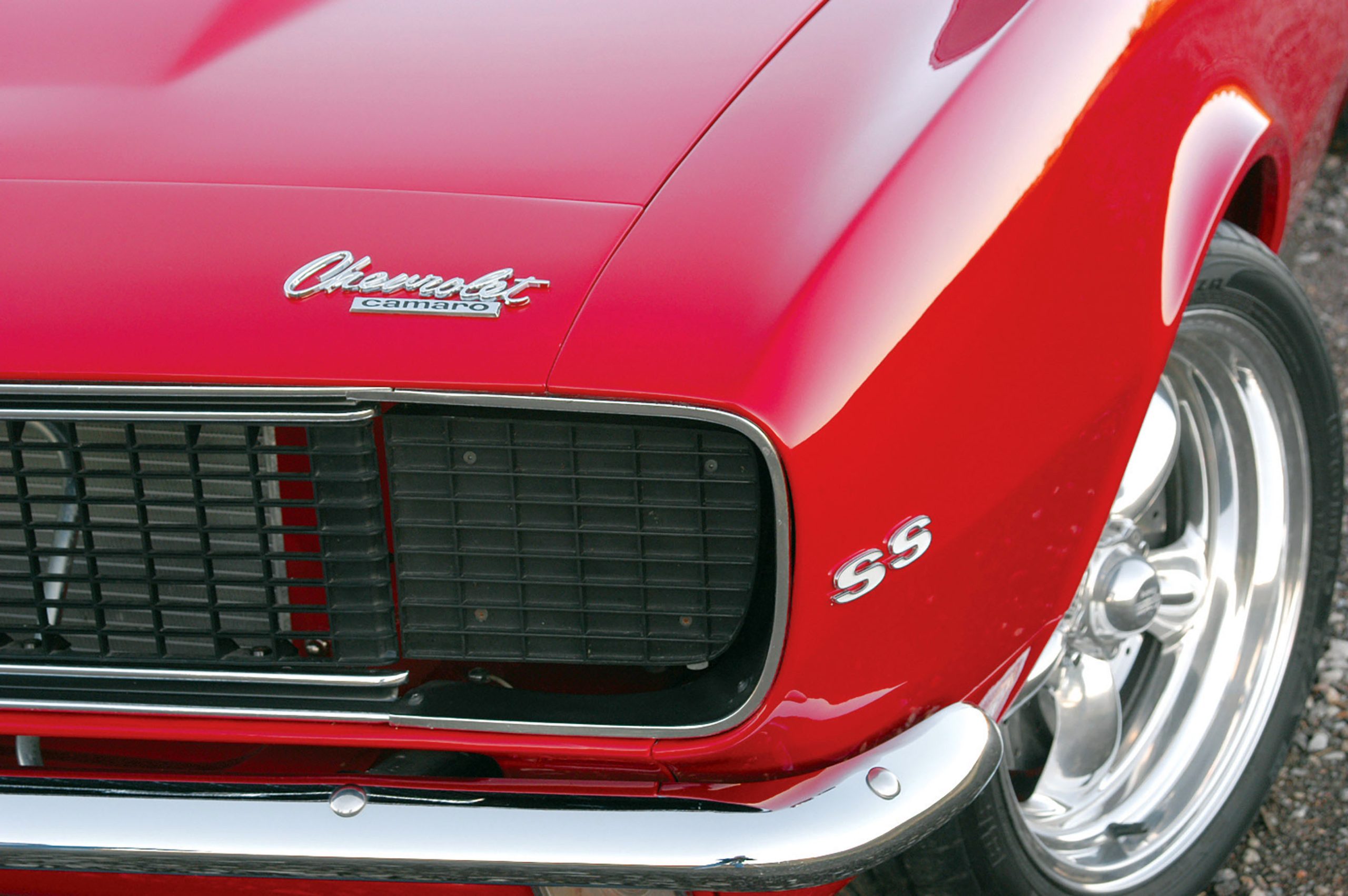
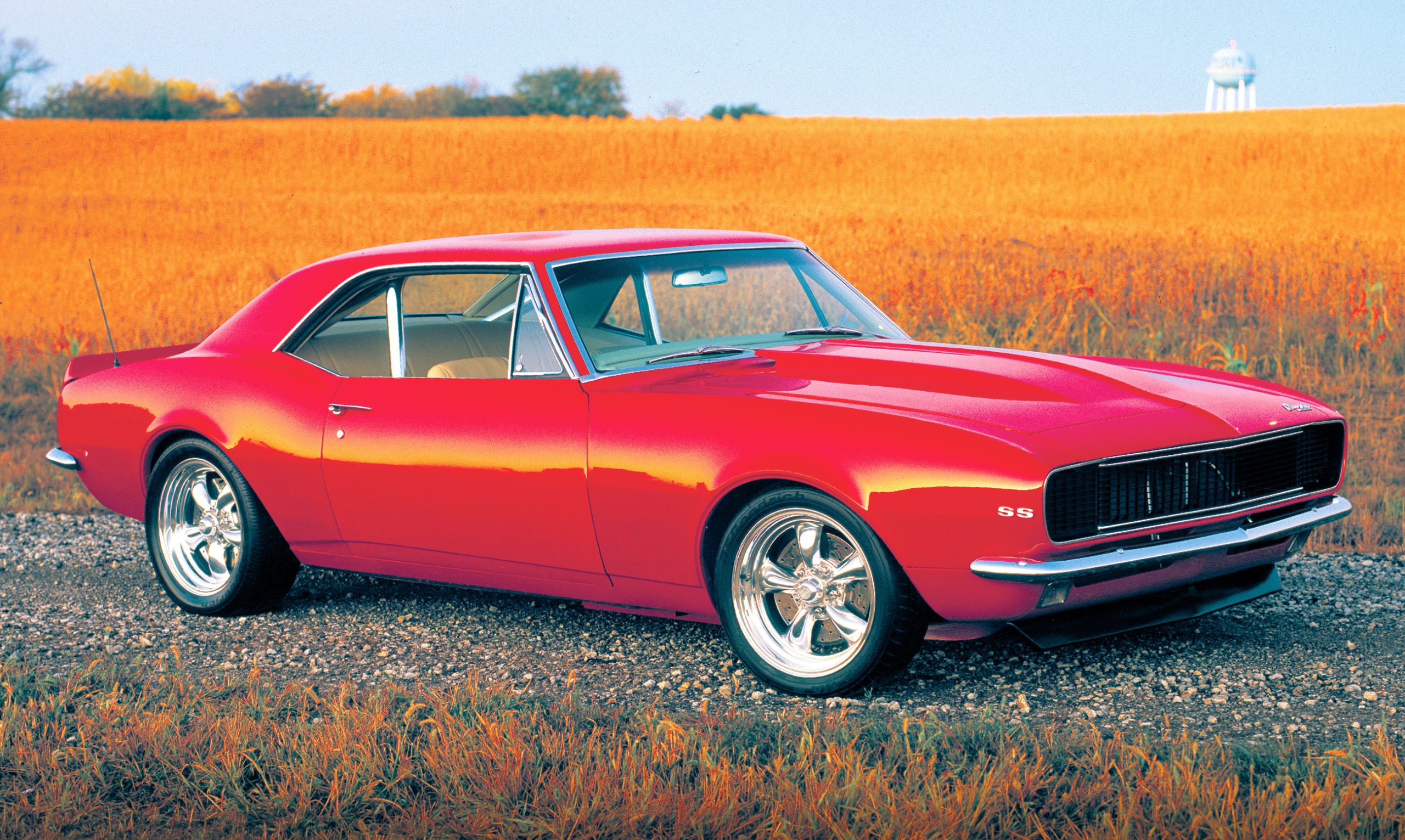
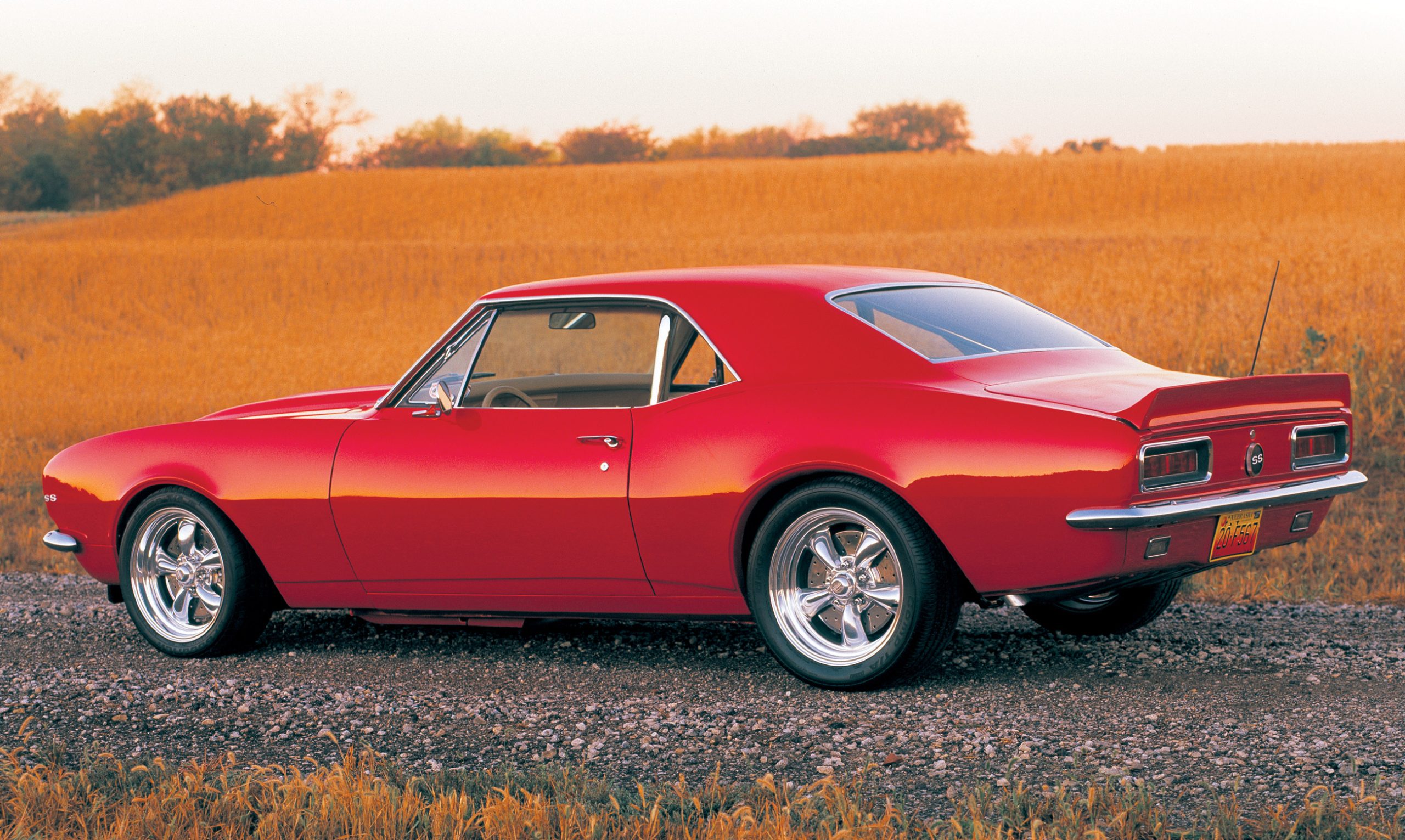
Sometimes the search for a new car can involve traveling all over the country and double the purchase price of the car, but for Felthousen it was no more difficult than reading the Sunday paper. He found this ’67 for sale for $2,400, but the engine, transmission and interior were all gone. The seller was the car’s second owner, and he had bought it with the intention of rebuilding it. He didn’t have the time or money, though, so his loss was Felthousen’s gain.
Suspension and Stance Modifications
After he got his newest Camaro home, Felthousen began work on the suspension. The fact that the car was nothing more than a rolling chassis made tearing it apart for rebuilding much easier. All the rotten rubber bushings came out in favor of polyurethane replacements, which eliminate most of the unwanted flex in the suspension and add much in terms of durability. Most of the suspension remains stock, but Koni shocks replace the way-too-soft factory versions of the same part. The rearend is the original 12-bolt, but with a positraction differential and 3.73 gears. To get the stance just right, the owner lowered the front of the car by 3 inches and the rear by 4. Drum brakes remain at all four corners, and while the wheels look as if they may have been at home on the car back in 1967, that’s hardly the case. Sure, they’re polished American Torq-Thrusts, but they’re larger than any ’60s-era piece, measuring 17×7 inches in front and 17×8 inches in the rear. The larger-diameter wheels help fill out the wheel-well openings, thanks to the BFGoodrich 215/45ZR17 Comp T/As in front and 245/45ZR17s in the rear.
Under the Hood: A Surprising Big Block
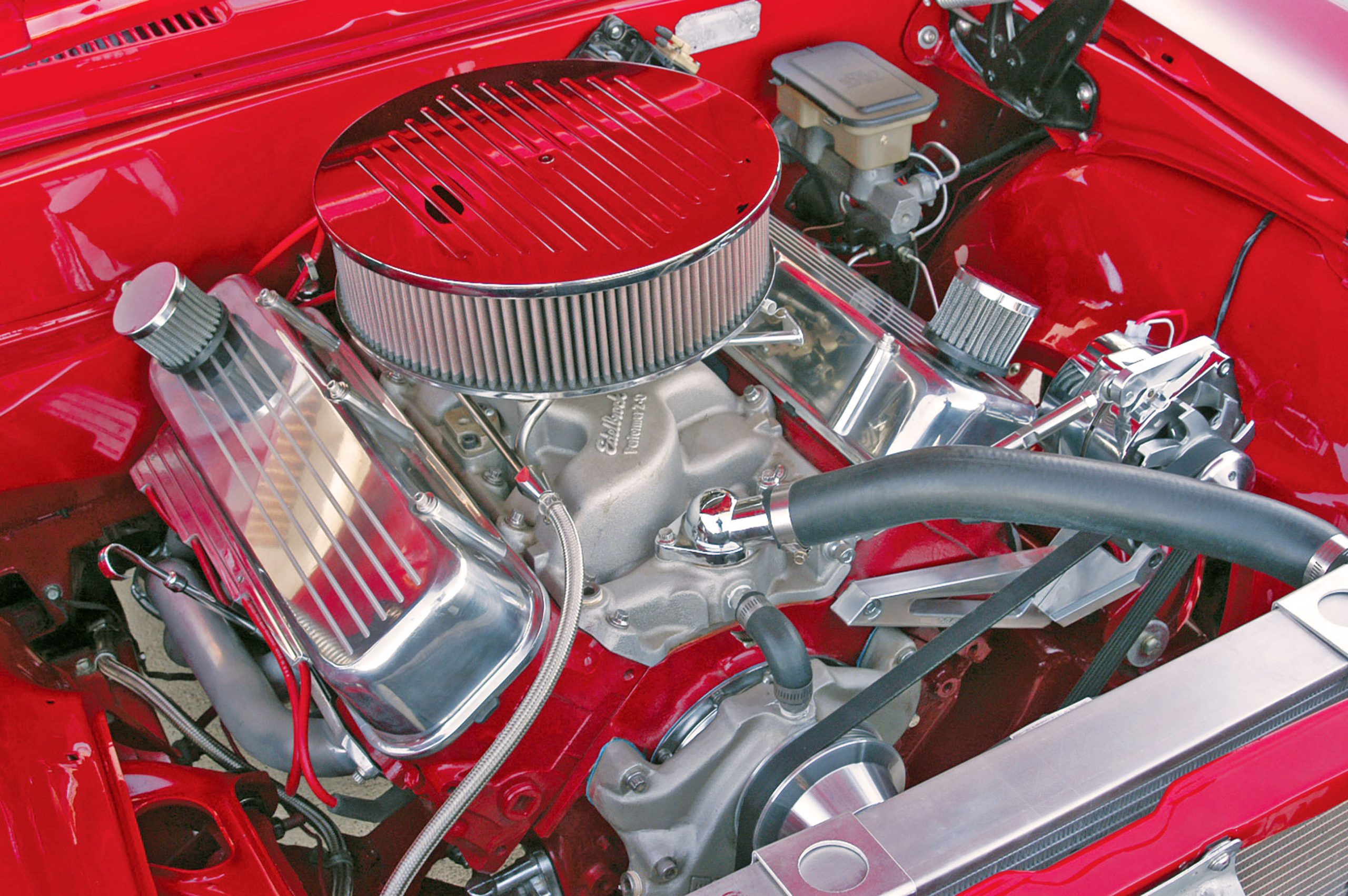
In looking at the car, you might suspect that the engine is a nice, civilized 327 or another small-block offering. After all, the tires aren’t too wide and the car sits low, so it looks like more of a road-course scrapper than a straight-line bruiser. But pop the hood and you might be surprised—you can see it’s a big block, but you still can’t count the cubic inches. That’s just as well, since we’re not sure we’ve ever counted up to 468 without losing count somewhere along the way. Jerry Welch Engines in Plattsmouth, Nebraska, built up the ’70 454 block, boring it 0.030-inch over. The crank and rods are standard 454 style, but the pistons are TRW 10:1-compression units. A Lunati solid-lifter cam bumps the valves in the heads, which are ported and polished versions of the original heads. Fuel dumps into the engine through the Holley 750cfm carb and the Edelbrock Performer 2 intake. The headers are CRP coated and the mufflers are from Flowmaster. This package is good for 475 hp, and we imagine the torque number is higher, so the ’67 is not lacking for engine. Polished billet valve covers match the air-cleaner cover containing a K&N element. Other aluminum components include the Be Cool radiator and accessory brackets, while the block and heads have been painted red.
Transmission and Performance Upgrades
Not surprisingly, the transmission behind the engine is a Turbo 400. Auto Transmatic in Omaha rebuilt the ’69-vintage trans for use in the Camaro. Even though the 400 is a stout piece, a Be Cool tranny cooler prevents things from getting too hot. We don’t think that’s a farfetched possibility, either. Between the big power and the high 3,500 stall converter, it seems that Felthousen likes to get off the line quickly, and we bet he’s gone through more than his share of rear tires.
Bodywork and Paint Perfection
Look at the body and you’ll probably think that something’s different, but you might not be able to tell what. Felthousen wanted to keep all the features that make the car what it is, so he kept the changes to a minimum. However, he didn’t feel any need to keep most of the emblems or the chrome trim, so much of the ornamentation is gone. As a result, the body looks much smoother and cleaner, leaving a much better canvas for the PPG ’97 Chevy Red paint. Acme Auto Body, also in Omaha, prepped and painted the body. Since the crew didn’t spend all their time on customization, they were able to spend a great deal of time tending to the smaller details that make this car look so good. The fit and finish is a huge improvement, with tight seams at every union of body panels. We’ve also seen many instances in which glass isn’t nearly as smooth as the sides on this Camaro. The chrome that’s left shines brilliantly, and accessories such as the factory spoiler and cowl-induction hood make the car just that much more interesting.
Interior by Recovery Room
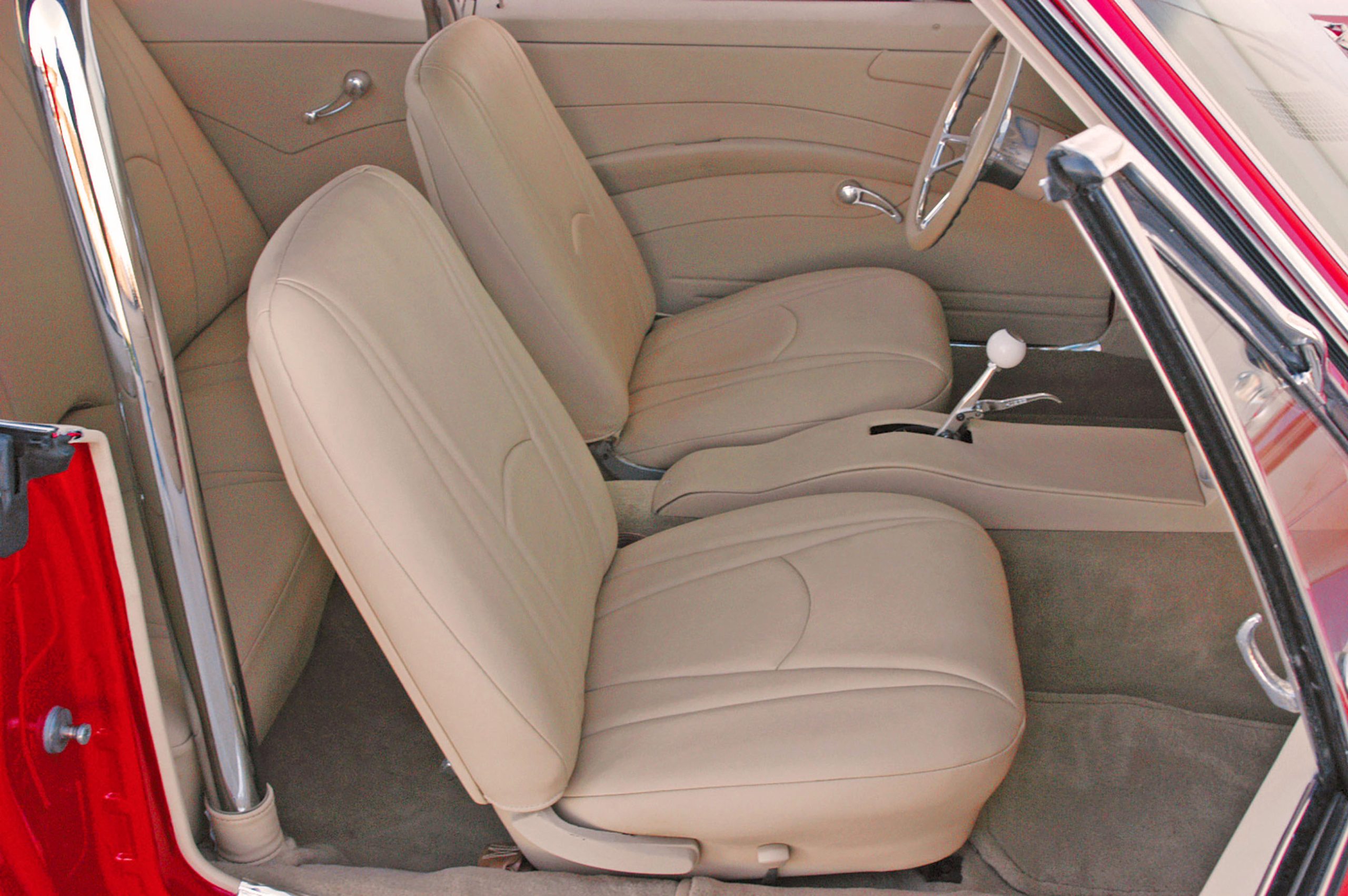
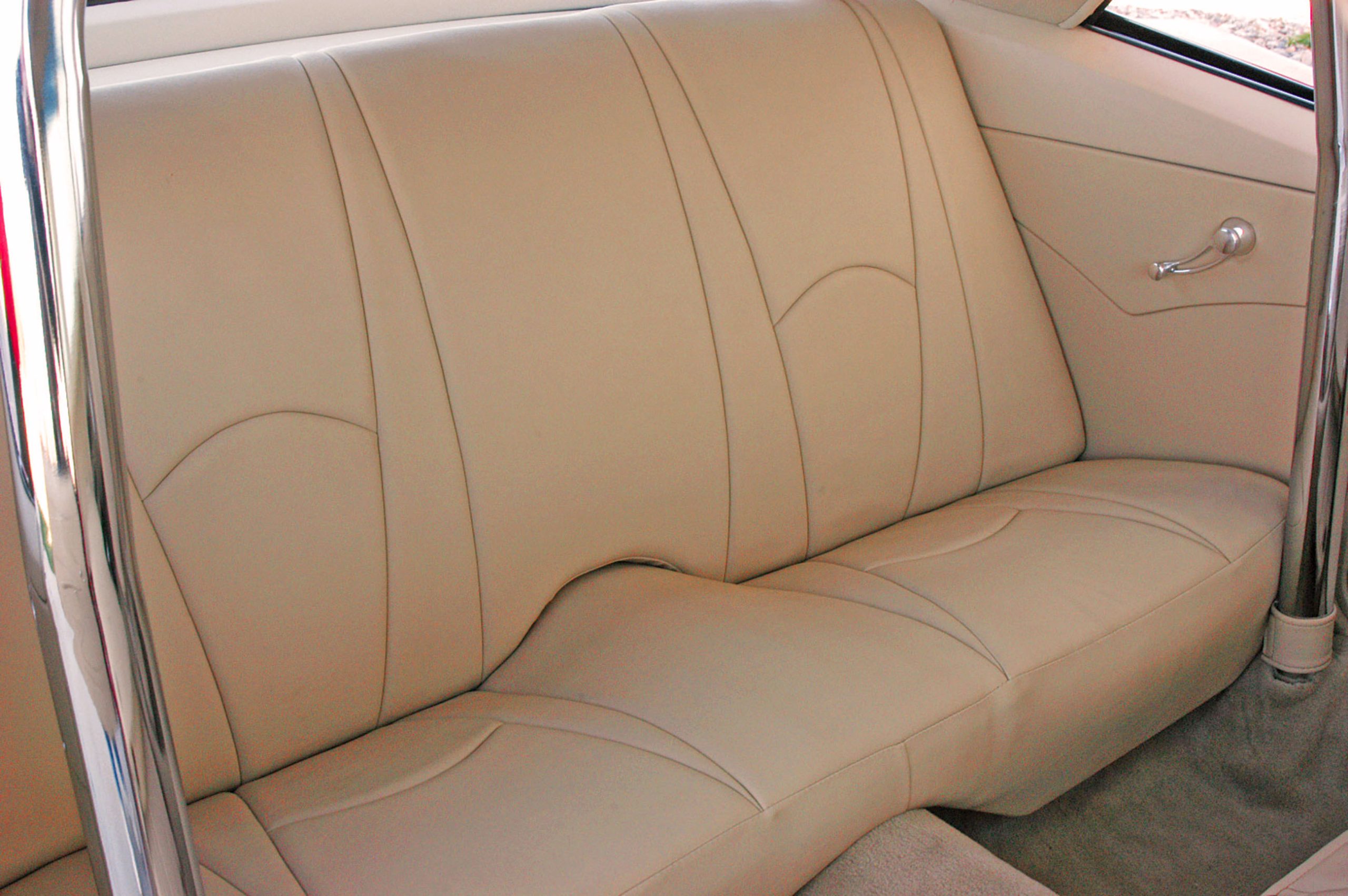
If you’ve paid attention to the story and read past issues of this magazine, you should easily be able to identify the creators of the Camaro’s incredible interior. But we’re bad at keeping secrets, so we’ll just tell those of you who don’t know that the Recovery Room is responsible for this particular work. Its Omaha shop consistently turns out the finest interiors in the area, and plenty of owners and builders from all over the Midwest take their cars there for some Recovery Room magic. Again, Felthousen bought this Camaro as a rolling chassis, so the upholsterers had to start from scratch for the most part. They threw tan leather over almost everything, and it’s hard to believe that the seats underneath this new skin are actually the factory-style components.
Finishing Touches and Final Awards
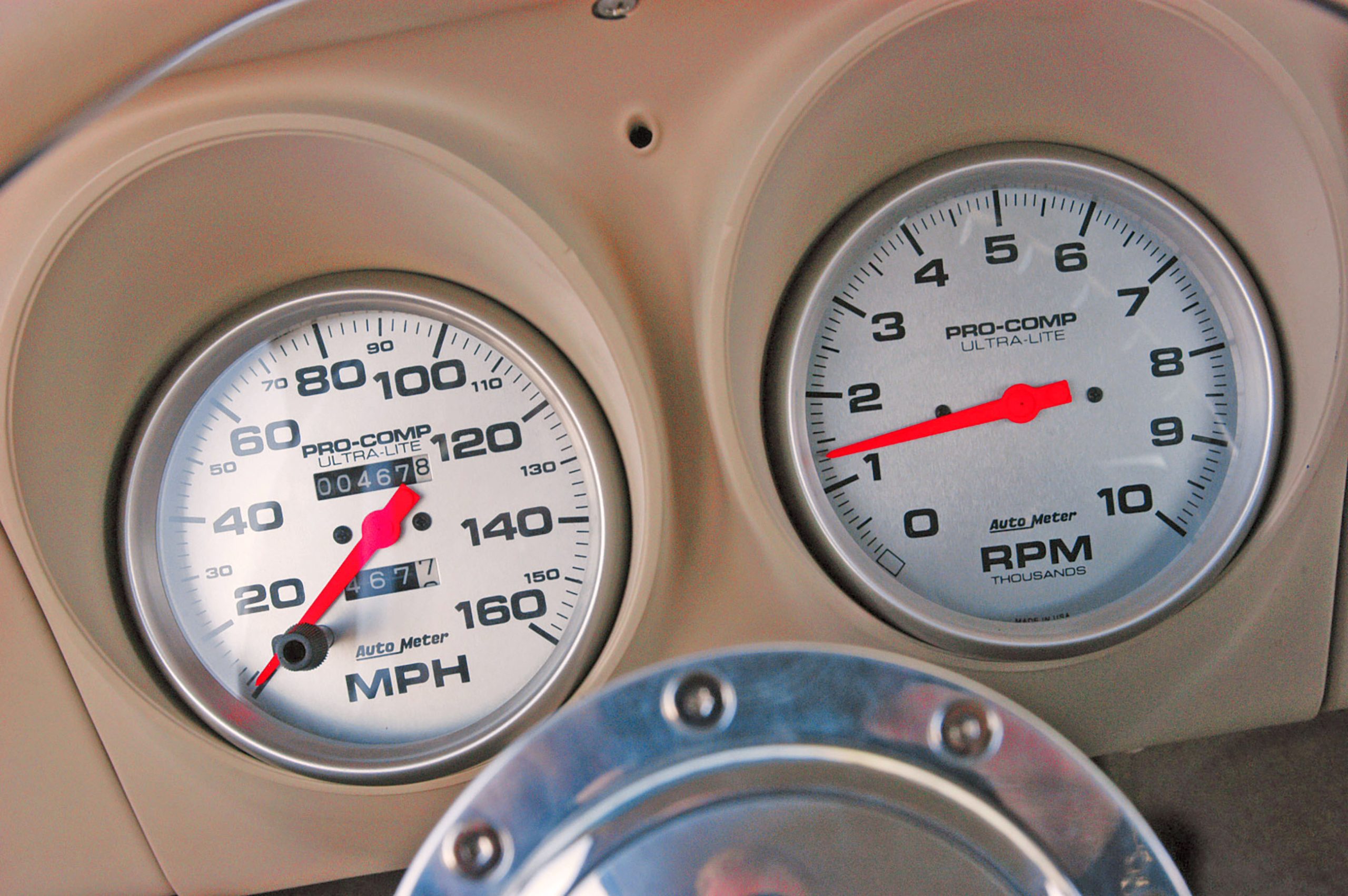
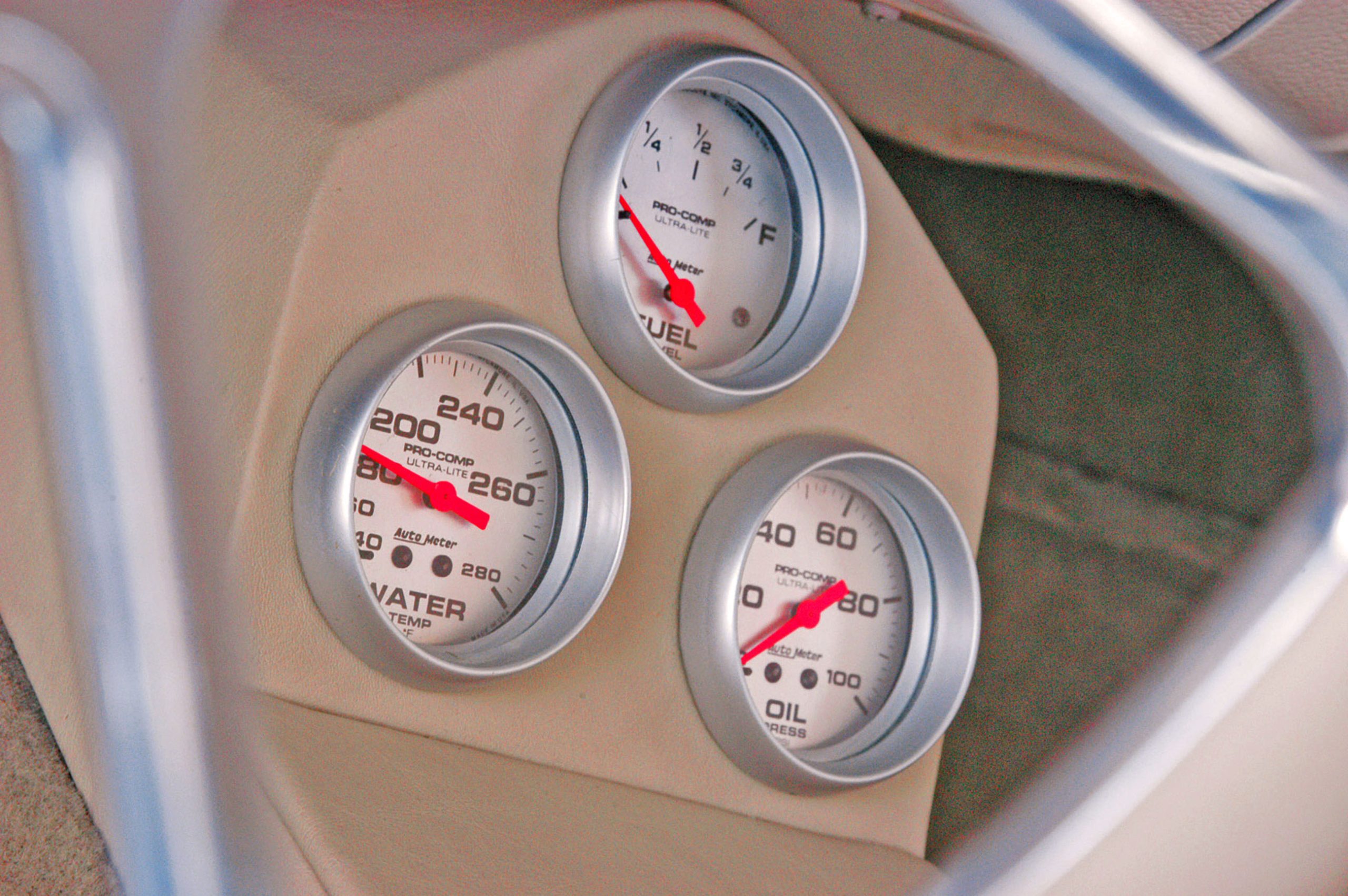
The custom center console and portions of the dashboard got similar treatment, and each houses new Auto Meter Pro Comp gauges. The rest of the dash was painted to match the upholstery, and a Hurst Quarter Stick shifter sits in the console. The JVC stereo head passes its signal to 6×9 speakers and a sub box for deeper tones. Another item that stands out is the chrome rollbar, portions of which have been covered in the same upholstery as the rest of the interior.
A Cool Camaro with a Bright Future
Felthousen completed his Camaro in January 2002, and he’s spent his time since driving it to cruise nights and other local car shows. His creation earned the “Coolest Camaro” trophy at the 2002 Goodguys show in Kansas City, as well as numerous first-place awards at smaller shows. It’s easy to see why the car has earned those honors, as it completely fulfills its owner’s goal of adding a few custom touches and modern trends while preserving the original style and improving the detailing everywhere. He thanks his wife, Brenda, and his father, Bob, for helping him complete the project. Not one to stop while there are still buildable Camaros out there, Felthousen says he’d next like to find and build a ’69 convertible. So, all of you out there in the Midwest, keep an eye out for such a car in a year or two. If you see one this cool, it may just be his.