We are so lucky, and should be so thankful, to enjoy this hobby of ours, and for so many reasons. It’s America at its best, both figuratively and historically, as the creativity shown over and over again is a sure sign that the same foresight, gumption and ingenuity that founded this nation are alive and well, here and now.
As soon as the mechanical age spawned our nation’s automakers, more than a few individuals began pushing the limits of their creations beyond past boundaries, first on country roads and city streets, and eventually on the California dry lakes, abandoned airstrips and, of course, the Bonneville Salt Flats. From there the progression continued, and while this led to a rapid evolution of production cars, the purists continued in their own search for improved performance, style and reliability, just as rodders have been done ever since.
The Roots of Hot Rodding Innovation
As time passed, a select group of practical engineers slowly rose to notoriety, either through the parts they built or the cars that put their innovative ideas into practice, and while it may seem glorious today, this was a grass-roots effort from the get-go. Whatever was learned on the weekends would soon be applied in a more practical sense in the days that followed, often leading to something new and different. Among them was Vic Edelbrock, a man of vision and wisdom who founded a small company that flourished into one of the mainstays of automotive enthusiasts worldwide thanks to the efforts of his son Vic Edelbrock, Jr., and his family. Following in the founder’s footsteps, Team Edelbrock has continued with the same commitment to innovation and quality, and over time this has taken them to great heights. This is due, in part, to their personal involvement with all aspects of automotive enjoyment, including a wonderful collection of fine historic racing cars and rods, including this fantastic ’57 Chevy.
Posies Meets Edelbrock
Ken Fenical was well aware of the Edelbrock name early on, yet at the time, if you were to tell him he would one day build a car with Edelbrock, he would have laughed. As it turned out, that’s exactly what happened, except for one detail. Fenical actually prefers to be called Posies, a name he adopted while he worked in his parents’ flower shop in Harrisburg, Pennsylvania. While calling him “Posies” may fly in the face of proper English, it reflects the same kind of single-minded approach that’s found in each and every innovative machine Team Posies builds.
Vic, Jr. and his wife, Nancy, had been entertaining the idea of building a ’57 Chevy when they happened upon one of the most innovative builders around, Posies. It didn’t take long for them to strike up a conversation, and right then the plans were set into motion. While the challenges of being located on opposite sides of the country could have been a problem, teams Posies and Edelbrock were able to come together from the initial planning stages all the way through to the turn of the key and the first of many cross-country adventures.
Vision, Design, and Subtle Custom Touches
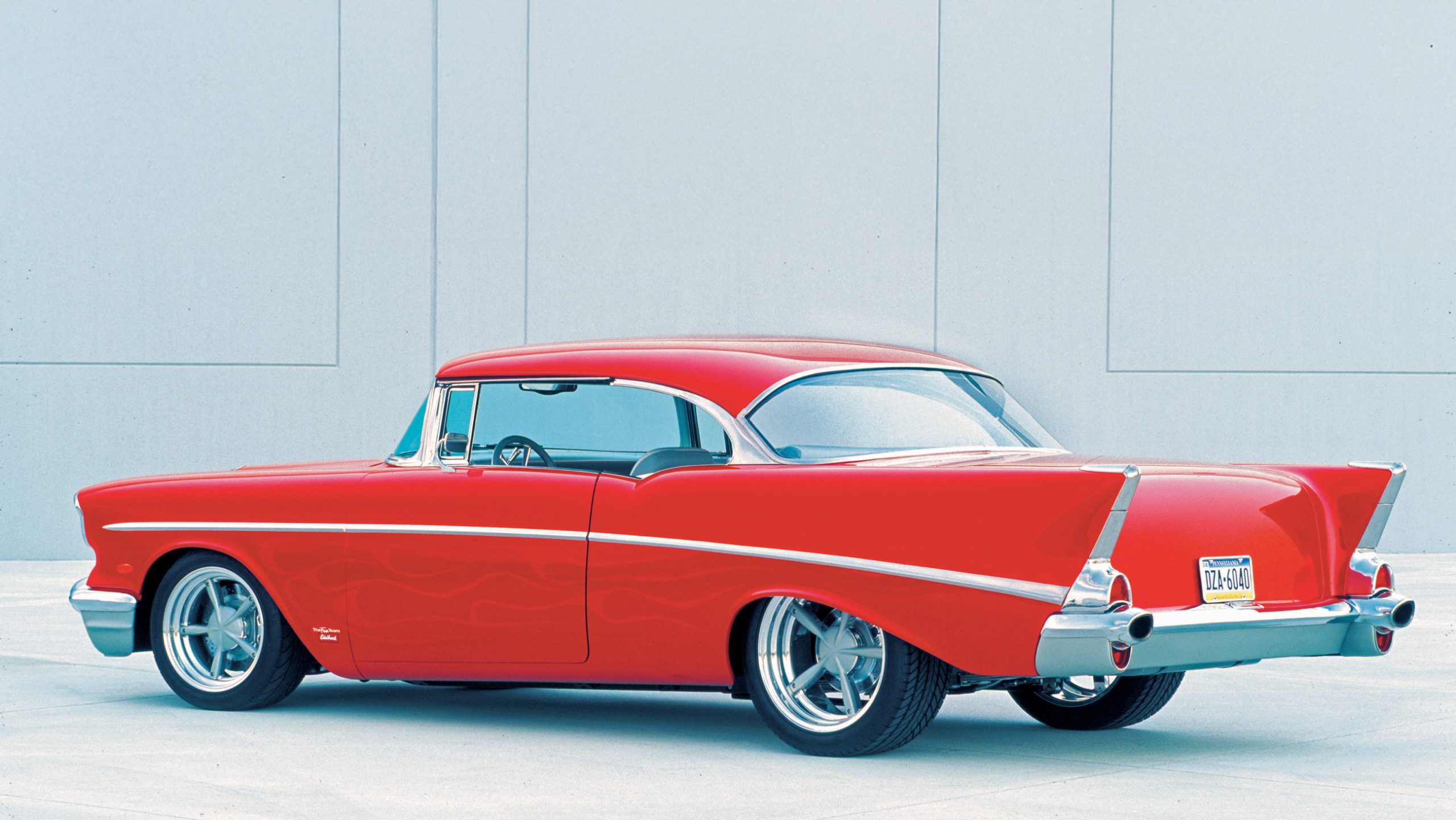
Although the Edelbrocks’ expectations for the car were fairly straightforward, they did have a few specific requests that were seamlessly integrated into the package as only Posies can do. This included the “Edelbrock Red” paint job with some subtle ghost flames (Nancy’s idea), lots of gauges and a chopped top, although there are so many other small changes that it’s actually difficult to realize all that’s gone into this truly unique Chevy. The bodylines certainly have stayed true to the original, yet a number of special details have brought a refined look to the car, putting a new spin on its classic appeal. It’s the things you can’t quite make out that really set it apart.
Chassis, Suspension, and Braking Upgrades
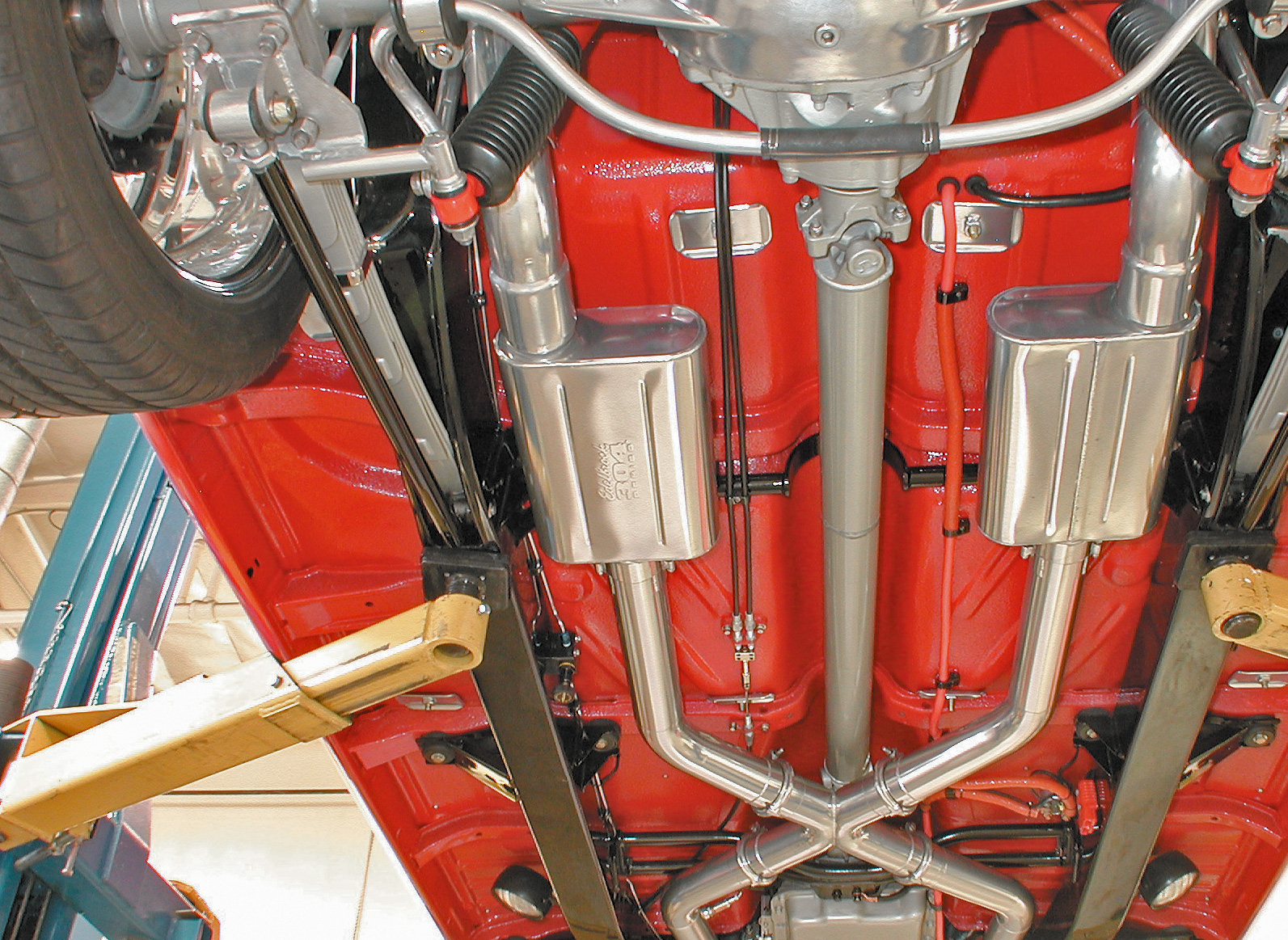
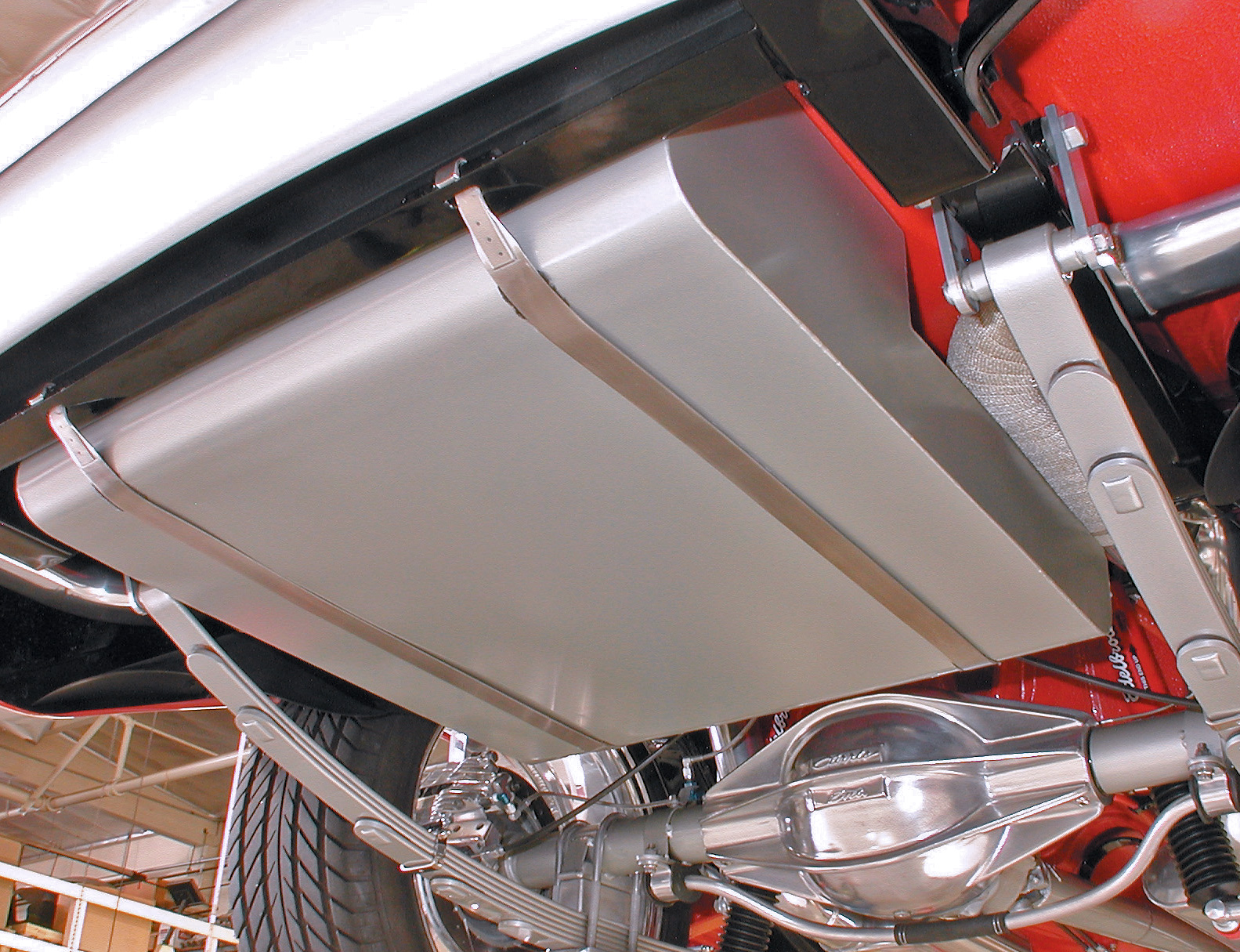
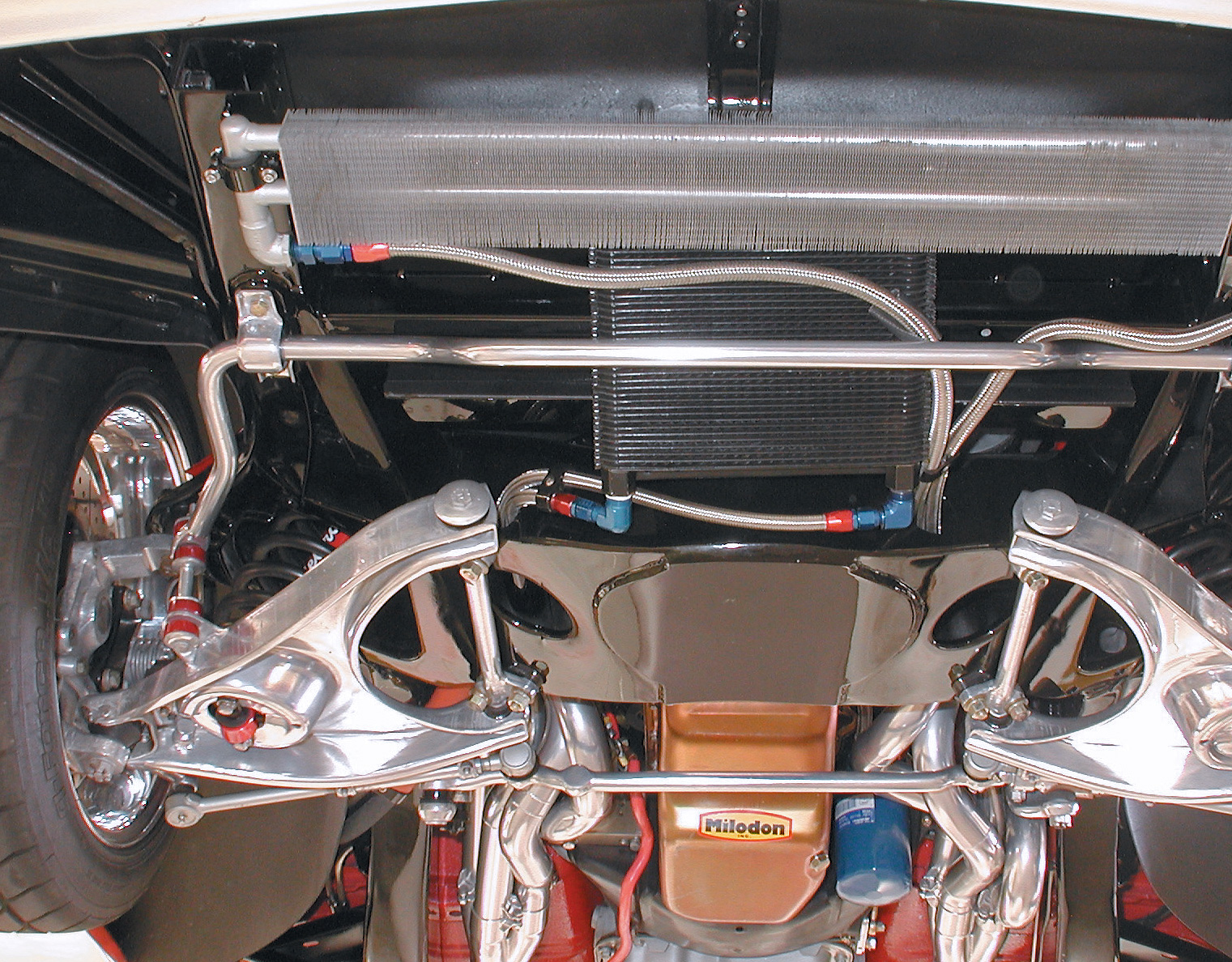
To maximize handling, the chassis was the first to be reworked, with special attention paid to updating some of the original componentry, while retaining the general layout. So it is with the front suspension that uses stock A-arms in combination with dropped spindles, shorter coil springs and Posies’ 7/8-inch front sway bar. The original rear axle was replaced with a new aluminum 9-inch unit from Currie with 4.10 gears, and it benefits from Posies’ reversed Super Slide leaf spring kit working in combination with its 5/8-inch sway bar and Edelbrock shocks. Finally, Baer PBR brake calipers and large-diameter rotors were fitted to ensure that stopping this machine won’t be a problem.
Edelbrock Power and Modern Performance
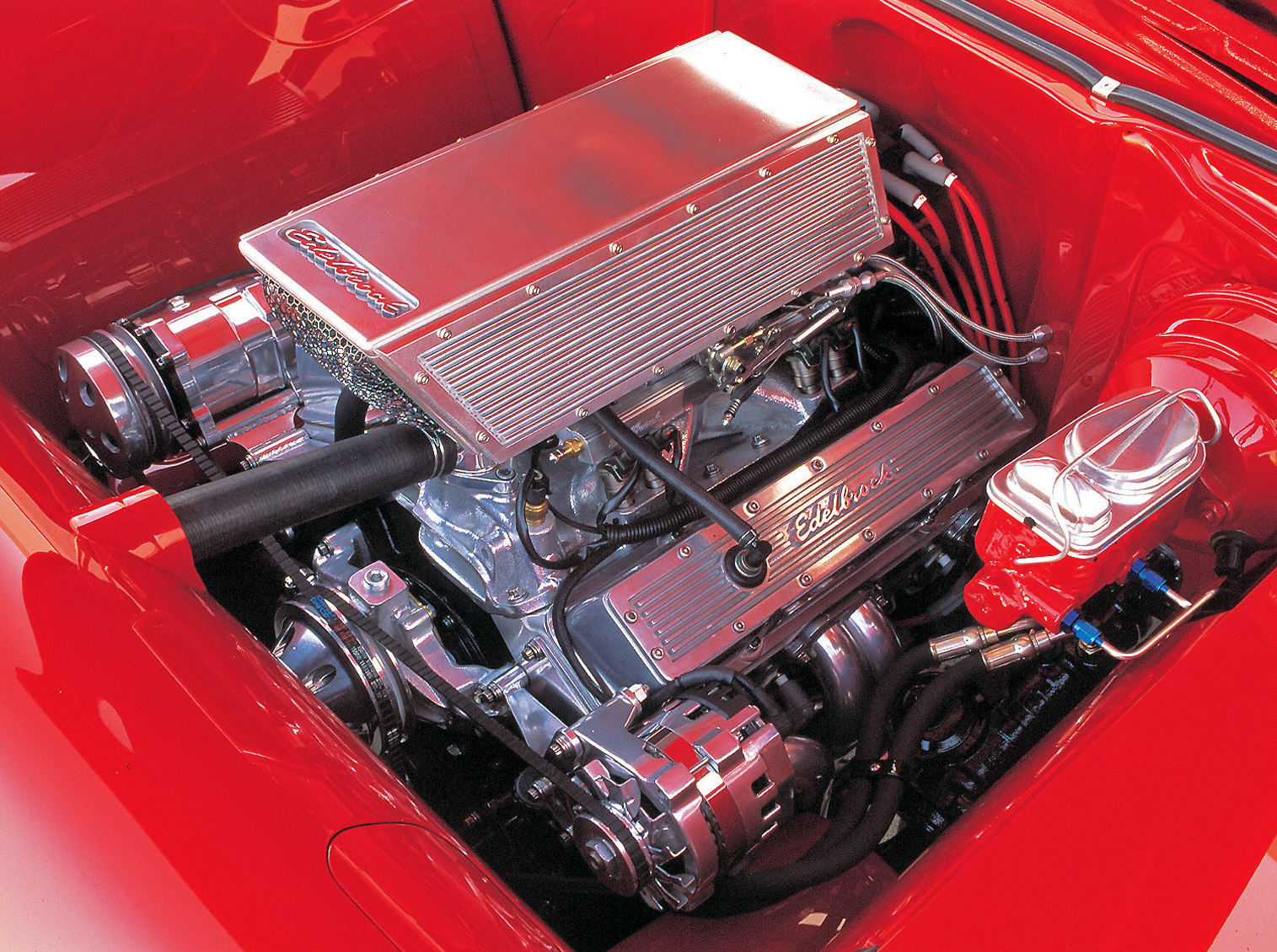
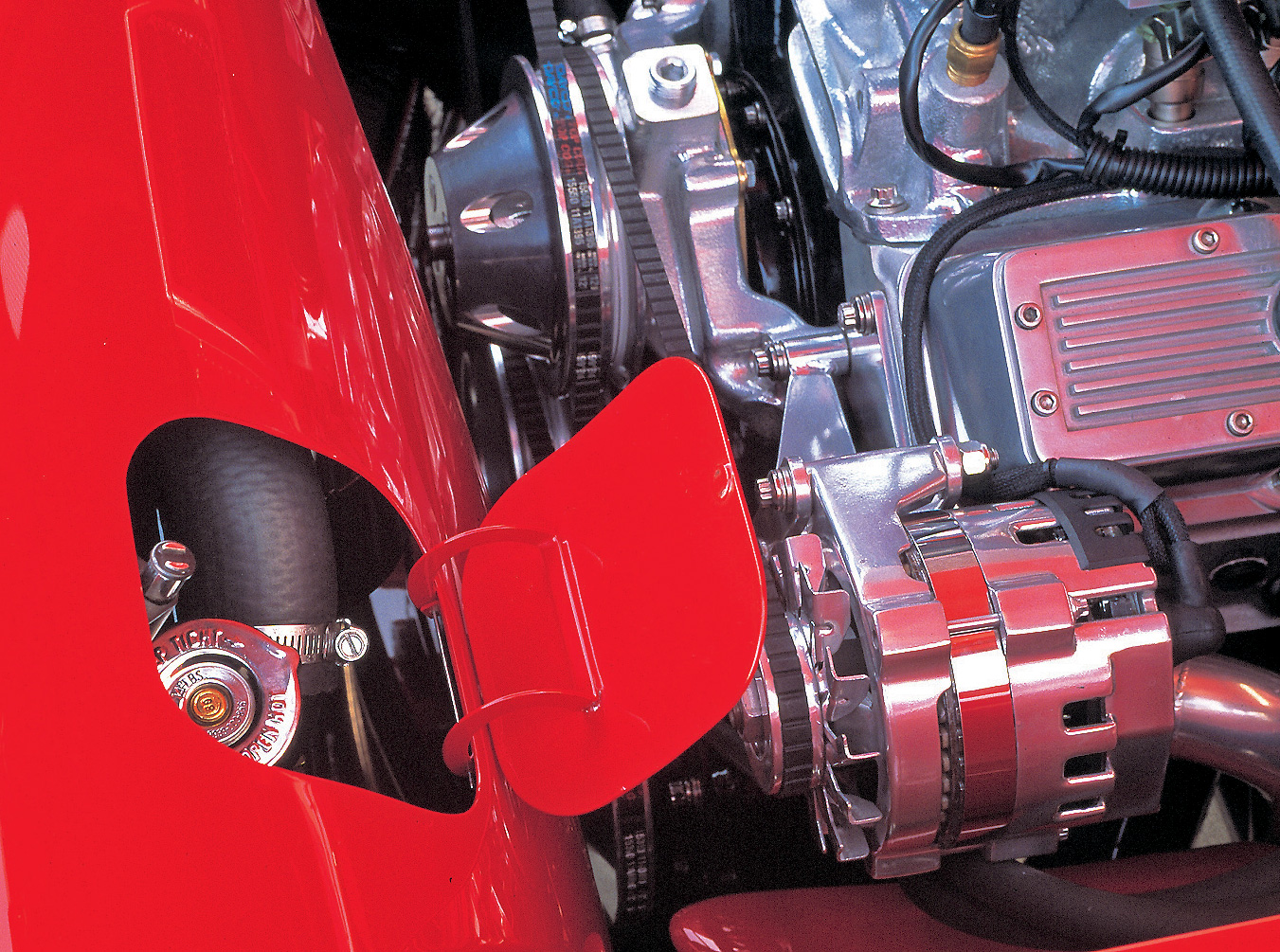
As you might expect, with some of the highest-quality performance components stacked high in the company’s warehouse, Edelbrock dipped in for a few select goodies and came up with a pair of its aluminum cylinder heads and an intake manifold incorporating one of the finest aftermarket electronic fuel injection systems available today. The Edelbrock multi-point fuel injection provides linear performance from idle to redline, even though it’s simple by design and extremely reliable. When combined with an extremely healthy 383 short block, the performance potential of this car is absolutely spectacular, as unleashing 450 dyno-proven horsepower on a reworked 700R4 automatic transmission makes for a thrilling ride.
Body Modifications and Craftsmanship
With the chassis and drivetrain modifications out of the way, attention was turned to the body. Working from a Kaiser rendering of the car, Team Posies began to make their changes, which began with lowering the top. While the original intent was to cut it down considerably, it was finally decided that by removing 1-3/8 inches in front and 1-1/4 inches in back, the original glass could be retained, rather than taking on the costly and often difficult task of shaping new glass. What’s more, if you don’t have an original to compare it to, it’s actually difficult to tell exactly what’s been done.
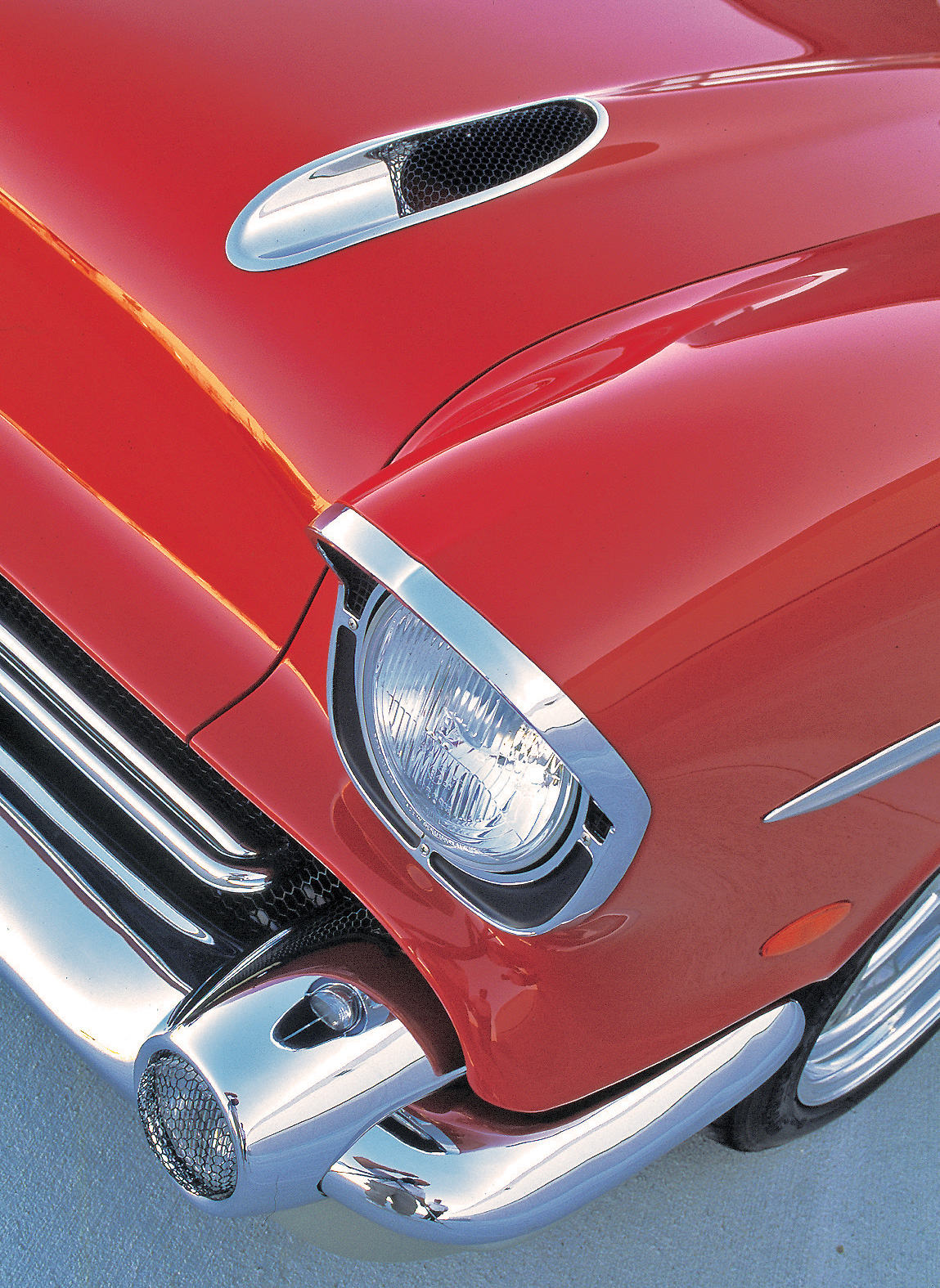
With the body and suspension lowered a total of 4 inches, the Colorado Custom Grizzly wheels and BFGoodrich G-Force tires would have been buried in the fenderwells, with no room for suspension travel. While this presented a challenge, Posies came up with a novel solution to the dilemma. By relocating the front and rear fender lips upward 1-1/2 inches, their relationship to the rolling stock retains an almost stock look, thanks to the clever craftsmanship that was incorporated into these changes. In fact, everything has been so nicely blended, you almost forget that three small accent pieces have been hammer-welded away and replaced with side marker lights above the front bumper ends, and that’s just the beginning.
Front-End and Rear-End Refinements
The grille opening has been reworked through the construction of a new chrome surround constructed from 20-gauge steel to produce a thinner leading edge, while a hand-fabricated center bar floats within honeycomb mesh filling the center cavity. More changes can be found in the bumpers, which have been split in half and narrowed before being rejoined and moved upward to speed up the nose even more. Turn-signal indicators replace the original bullets at either side of the grille opening, and the hood follows the same theme with fully functioning scoops replacing the stock bullets, and the center peak was hammer-welded to a flush surface. Finally, a contrasting light gray has been applied to the lower portion of the bumper to further lighten the nose, thinning it out with the subtle coating.
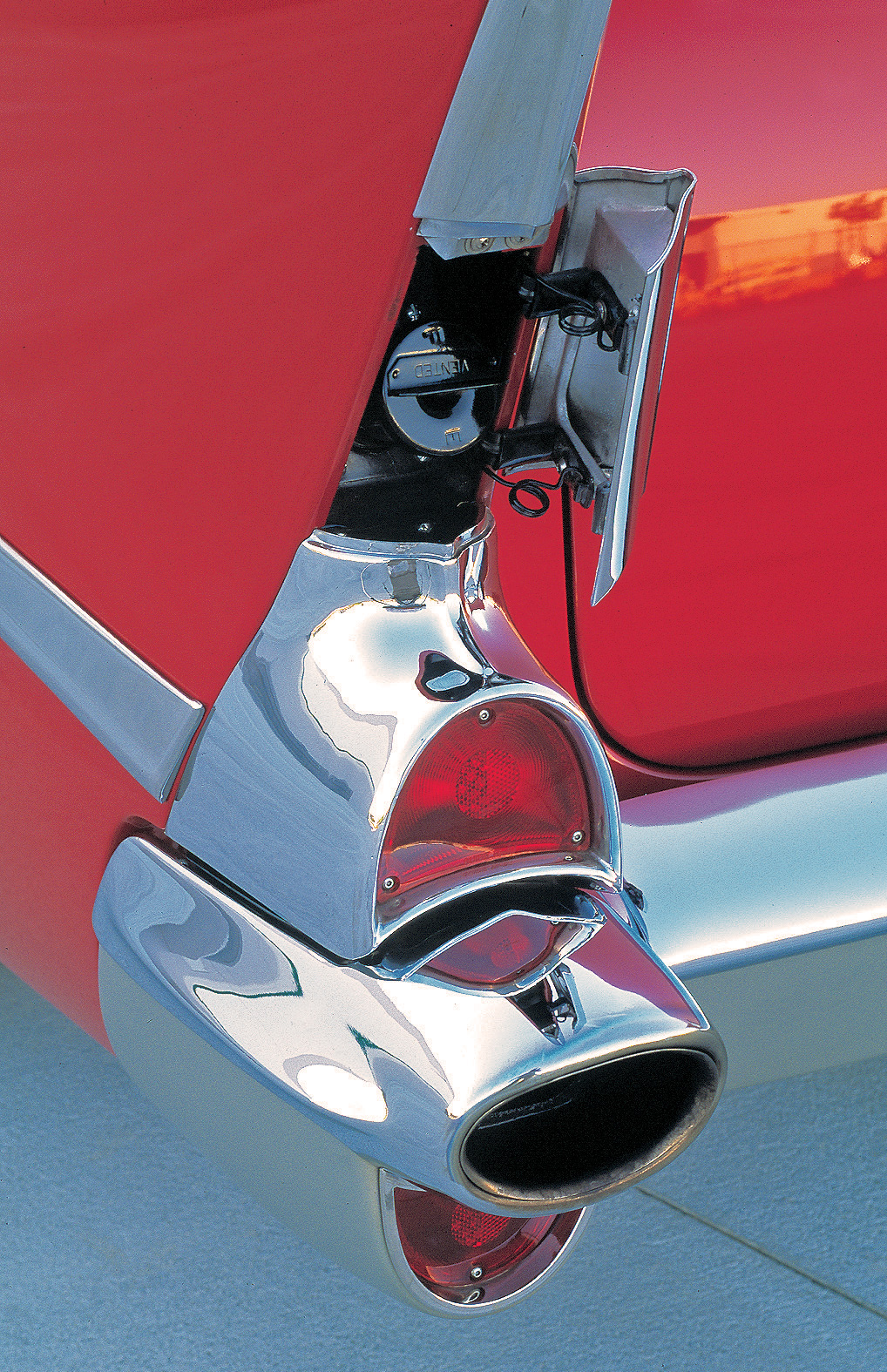
Similar modifications were made in back, where the rear bumper was also heavily, yet subtly, modified. It, too, was cut, narrowed and modified to improve its contours. The “fake” exhaust ovals on either side now sport 3-inch exhaust pipes, something you could never order as an original option. The same goes for the lower taillights that have replaced the original trim pieces, improving the function and the appeal of the car. Reviewing the rest of the body will no doubt turn up other changes, including the reworked, hand-built side molding that is a mere sliver of its previous proportions. In fact, had the car’s original designers gone a different direction, this certainly could have been one of their options, as it really brings a new look to the overall package. So it is with the molding cresting the rear fins, which have been shortened from 36 inches to just 8 inches in length. Even the stock squared-off rocker panels have been cleaned up with rounded versions, and while a 1-inch lip was added along the bottom, the rockers actually appear to be thinner than before. Once a fine layer of PPG “Edelbrock Red” paint was applied, these changes were joined in one flawless machine.
Interior Modernization and Comfort
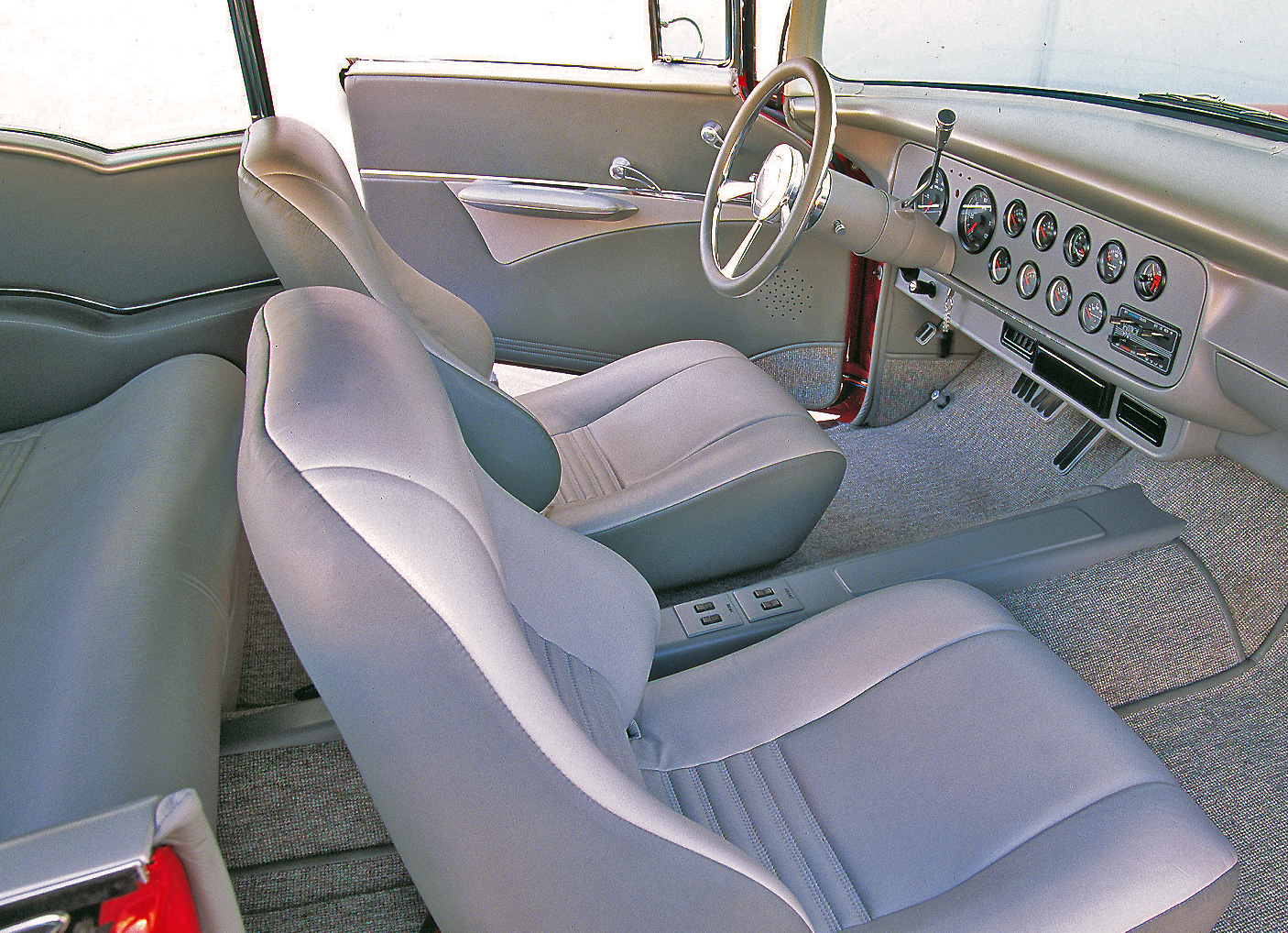
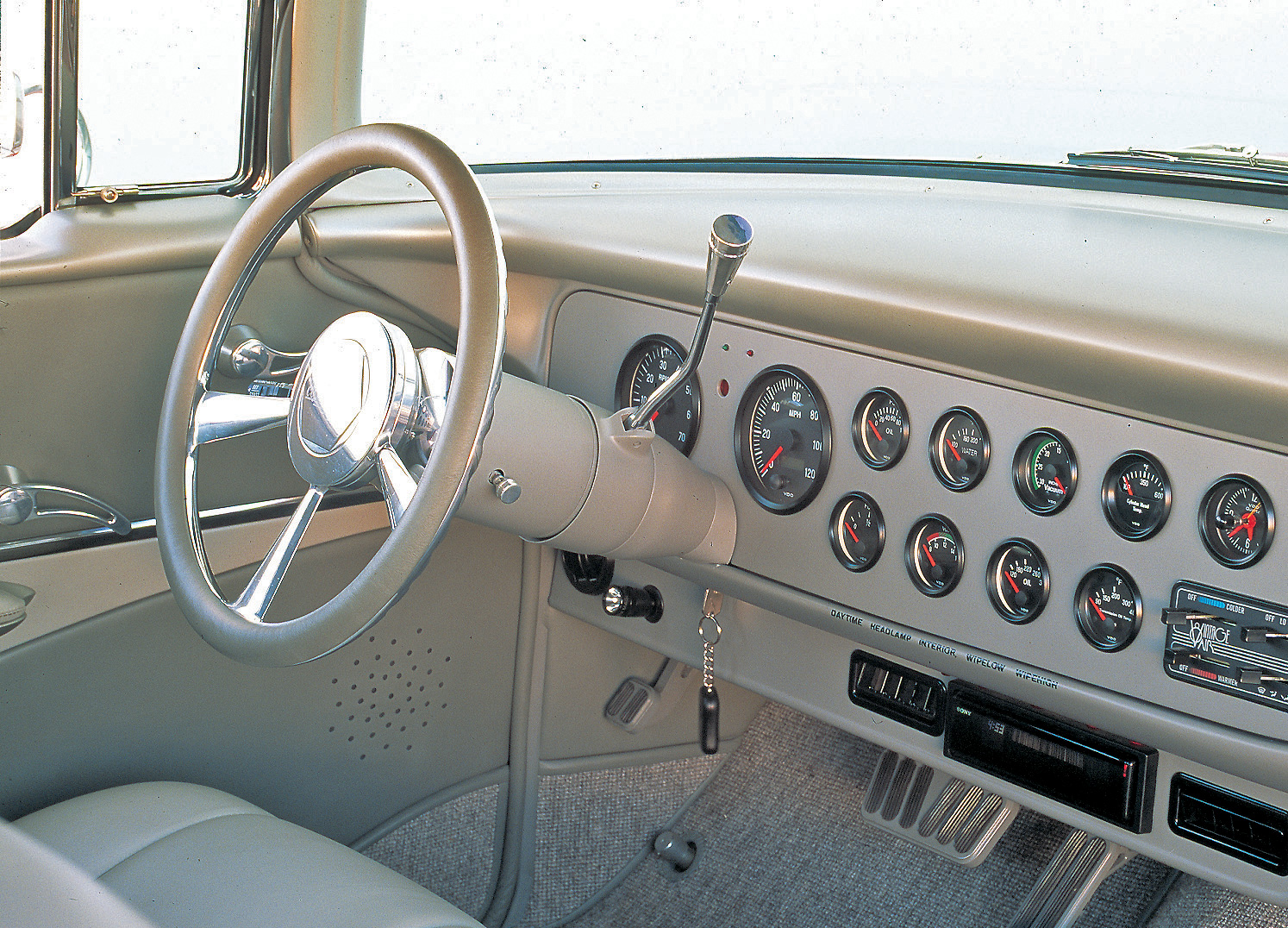
While the exterior work was being completed, attention was turned inside, where the dash was given a similar treatment to bring a modern appeal to the interior as well. This involved cutting away the eyebrow above the gauge area and hammer-welding it flat to blend in with the adjoining surfaces. Then the remaining eyebrow was split in two, turned upside down and fitted to the bottom of the dash, allowing for two rows of VDO gauges that are easily readable from the driver’s position. From there, the speaker grille on the top of the dash was filled in, the center glovebox was moved to the right, and Vintage Air A/C ducts were integrated down below, along with a Gen II control unit.
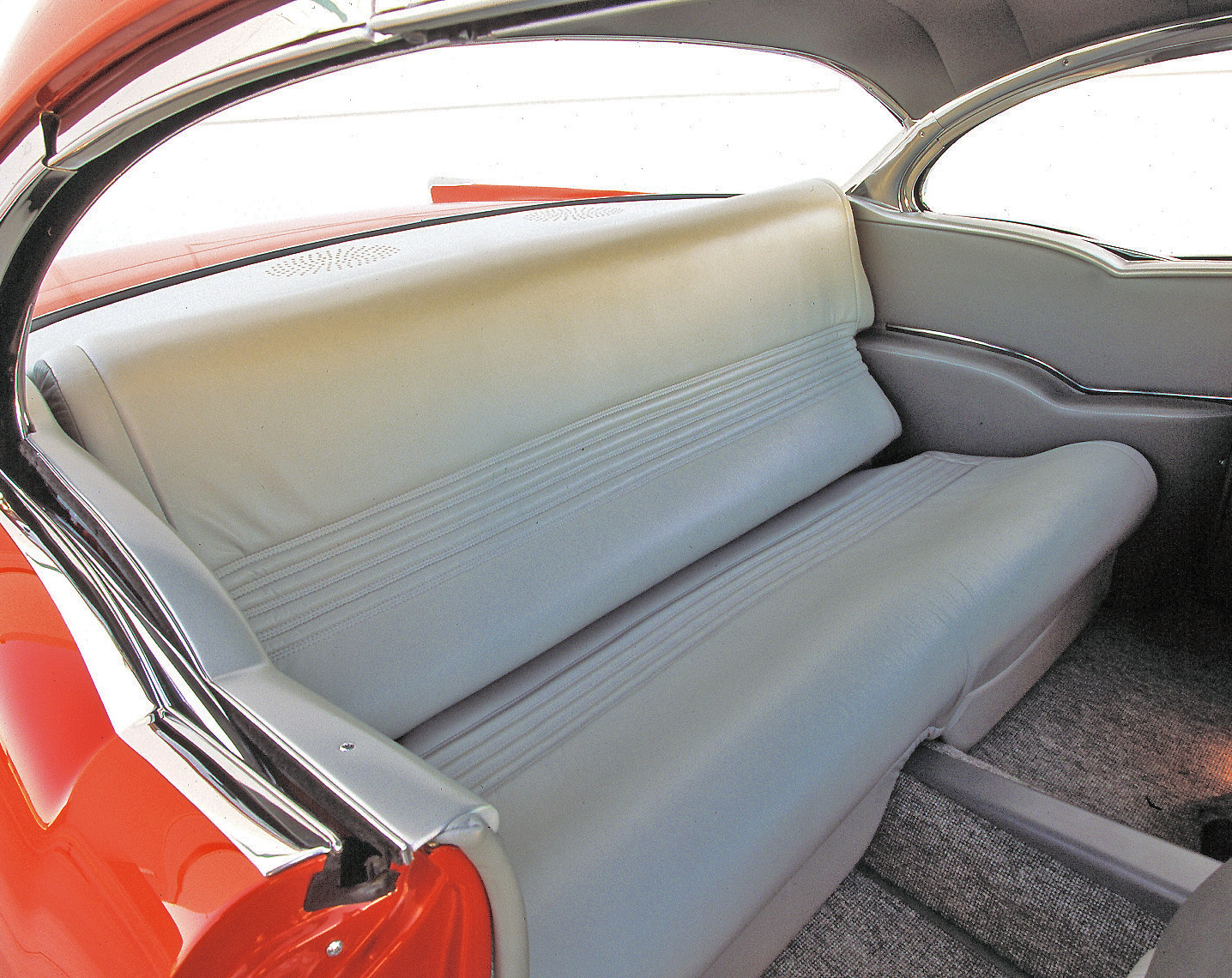
Further improvements can be found in the leather-covered Tea’s Design seats and armrests, as well as in the door panels and headliner, which were shaped in supple leather by Dick Gerwer. Billet Specialties window cranks and door handles add to the detail, while windows from Specialty Power Windows bring a modern touch to the ride. Finally, a heavy-duty audio system, incorporating Kicker speakers, was hidden away until the time comes to rock this ride.
A Place in Hot Rod History
As with all things of value, part of the mystique that propels our interest in rodding arises from this lengthy and colorful history, one that has been embellished over time through the accomplishments of those whose names run deep in the lore that we hold dear. Of those, Edelbrock and Posies certainly have earned their place in rodding history through numerous endeavors, and a unique collaboration that led to the creation of this very special ’57 Chevy.