A Legend Across the Desert and Beyond
The off-road world lost one of its true giants on Saturday, August 2, with the passing of Walker Evans at the age of 86. A pioneer, champion, and lifelong ambassador off-road racing, Evans leaves behind a towering legacy carved across the sands of Baja, the dirt of Riverside, and the rugged rocks of the American backcountry.
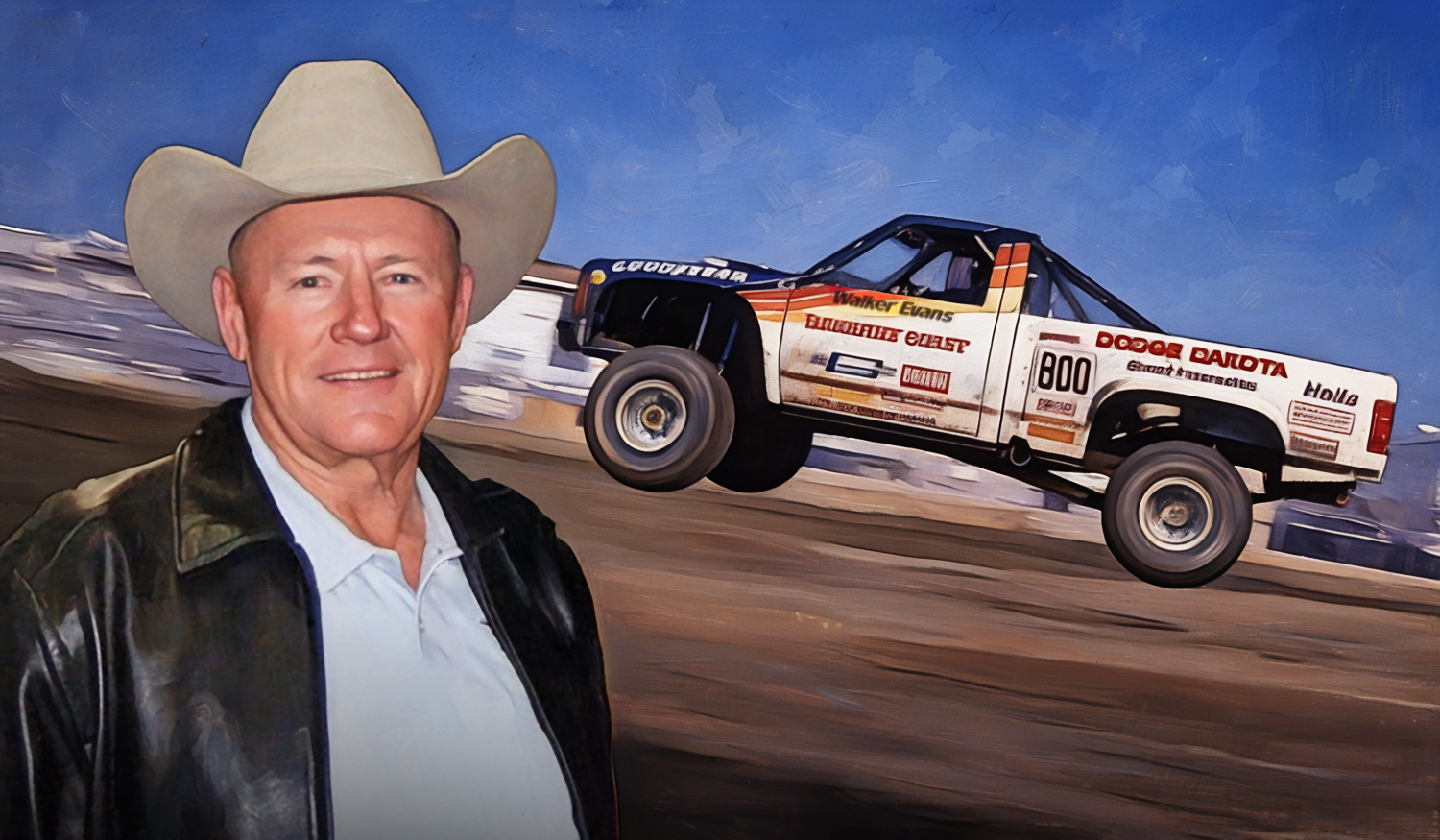
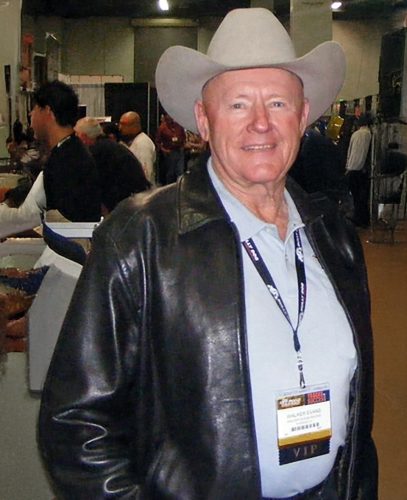
Known for his trademark white cowboy hat and unrelenting desire to win, Evans’ career spanned more than five decades and defined what it meant to be an icon, builder, and businessman in the dirt sports world.
Born in 1938 in Cedar Lake, Michigan, Walker is survived by his beloved wife Phyllis and son Evan. It was Phyllis who remained his steadfast partner through a racing life lived at full throttle—a relationship Evans credited as a major part of his success.
From a Rambler to Racing Royalty
Walker Evans got his first taste of desert competition in the 1969 NORRA Baja 500, driving a Rambler sedan for actor James Garner’s American Motors-backed All-American Racing team. That experience lit a fire that would carry him through 142 wins, 21 championships, five Baja 1000 victories, and countless fans who still recount the sound of his Dodge V8 echoing across the desert.
Soon after that first race, he began competing in his own Ford F-100, built in the famed Long Beach shop of Bill Stroppe. Before long, Walker Evans Racing was backed by Dodge and Goodyear, and the man behind the wheel became one of off-road’s first true superstars.
King of the Course
While Evans made his name in the deserts of Baja, he was just as dominant in the closed-circuit world of short-course racing. He became a fixture at Riverside Raceway in California and was one of the first major West Coast drivers to battle in the Midwest at venues like Crandon International Raceway. His legendary duels with Crandon hero Jack Flannery helped grow the sport and made for must-watch ESPN coverage in the early years of televised off-road competition.
He wasn’t just a racer—he was a showman, and fans knew something exciting would happen whenever Walker Evans rolled to the start line.
A Lasting Legacy in NASCAR and Rock Sports
In 1994, Evans took his skills to the pavement as one of the original competitors in NASCAR’s new Craftsman Truck Series. His Dodge effort—built from scratch—made headlines and earned four top-10 finishes. But the pull of the dirt proved too strong. By the late ’90s, he was back at it, this time pushing into rockcrawling and ultra-technical off-road events that challenged even the most experienced desert hands.
His love of Baja never faded. With the rebirth of the NORRA Mexican 1000, Evans found new life behind the wheel of his restored Class 8 Dodge. For more than a decade, he returned to Mexico each year—racing, laughing, and winning, just as he always had.
Built to Win, Engineered to Last
More than just a racer, Evans was also a savvy entrepreneur. Alongside trusted crew chief Randy Anderson and his wife Phyllis, he co-founded Walker Evans Racing—one of the most respected names in the off-road aftermarket. What began as a performance wheel and shock business grew into a respected OEM supplier for Polaris UTVs and snowmobiles, helping shape the evolution of modern off-road machinery. The brand was acquired by Polaris in 2023, cementing its legacy in the industry.
The Man in the White Hat
Walker Evans didn’t come from ranch life, but he wore the white cowboy hat like a badge of honor. In a sport that rewards toughness, Evans brought grit, charm, and professionalism in equal measure. He was a gentleman and a gunslinger, a hard charger who once said, “I’d take out my best friend to get to the finish line first.”
For fans, fellow racers, and generations of future champions, Walker Evans was—and always will be—The Legend.
A Legacy That Won’t Be Rewritten
Walker Evans was inducted into nearly every hall of fame that matters in motorsports—the Off-Road Motorsports Hall of Fame (2004), the SEMA Hall of Fame (2022), and the Motorsports Hall of Fame of America (2015). But his greatest accomplishment wasn’t a trophy or a championship.
It was the path he paved—for off-road racing, for factory involvement, for new formats like short-course and rockcrawling, and for the next generation of racers inspired by his tire tracks.
Our Thoughts and Prayers
To his wife Phyllis, his son Evan, and all who knew and loved him: Our thoughts and prayers are with you. We thank you for sharing Walker with the rest of us. He wasn’t just part of racing history. He made it.
Rest in peace, cowboy. You’ll always be first across the finish line in our hearts.