In 1933, Dodge was the fourth-largest manufacturer of automobiles in the United States. It would be the last year of the eight-cylinder Dodge until after World War II, and the introduction of the DP six series was big news for Dodge dealers.
In 1933, Dodge had no fewer than three different-wheelbase automobiles, something that raises havoc with restorers and rodders today, as fenders, running boards and hoods all look similar but can be different. This new series of six-cylinder cars was designated the DP series, but to complicate things, on April 5, 1933, a change was made, adding 4 inches to the wheelbase, and thus the DP/LWB was born. So today you have the DP/SWB and DP/LWB quietly waiting to confuse you. The short wheelbase (SWB) rode on a 111-1/4-inch wheelbase, while the DP/LWB stretched the space between the wheel centers to 115 inches. The eight-cylinder cars, designated the DO series, rode on an even longer chassis with a 122-inch wheelbase.
For 1933, Dodge had a full line of automobiles, and the salesmen of the day no doubt touted that there was a Dodge model perfect for you. But of all the sedans, coupes, convertible sedans (of which only 13 four-door convertible sedan eight-cylinder models were built) and station wagons, the convertible coupe was no doubt the most stylish of the bunch. The ’33 Dodge convertible coupe was a rare car in 1933, with only 1,563 units being produced, and, of course, there were 56 more built with the eight-cylinder engine. So, while the convertible coupe was a strikingly good-looking automobile, it was not the best of times, and the practicality and affordability of coupes and sedans far outsold the convertibles of the time. Today, finding a ’33 Dodge convertible coupe is truly a challenge.
However, Coach & Chassis Works produced a fiberglass version of the scarce convertible for a couple of years to meet the pent-up demand for these cars. As it turns out, the demand wasn’t all that pent up, and before production of the ’glass car ended, only a handful were produced. As a matter of fact, the fiberglass ’33 Dodge convertible coupe is much rarer in fiberglass than it is in steel!
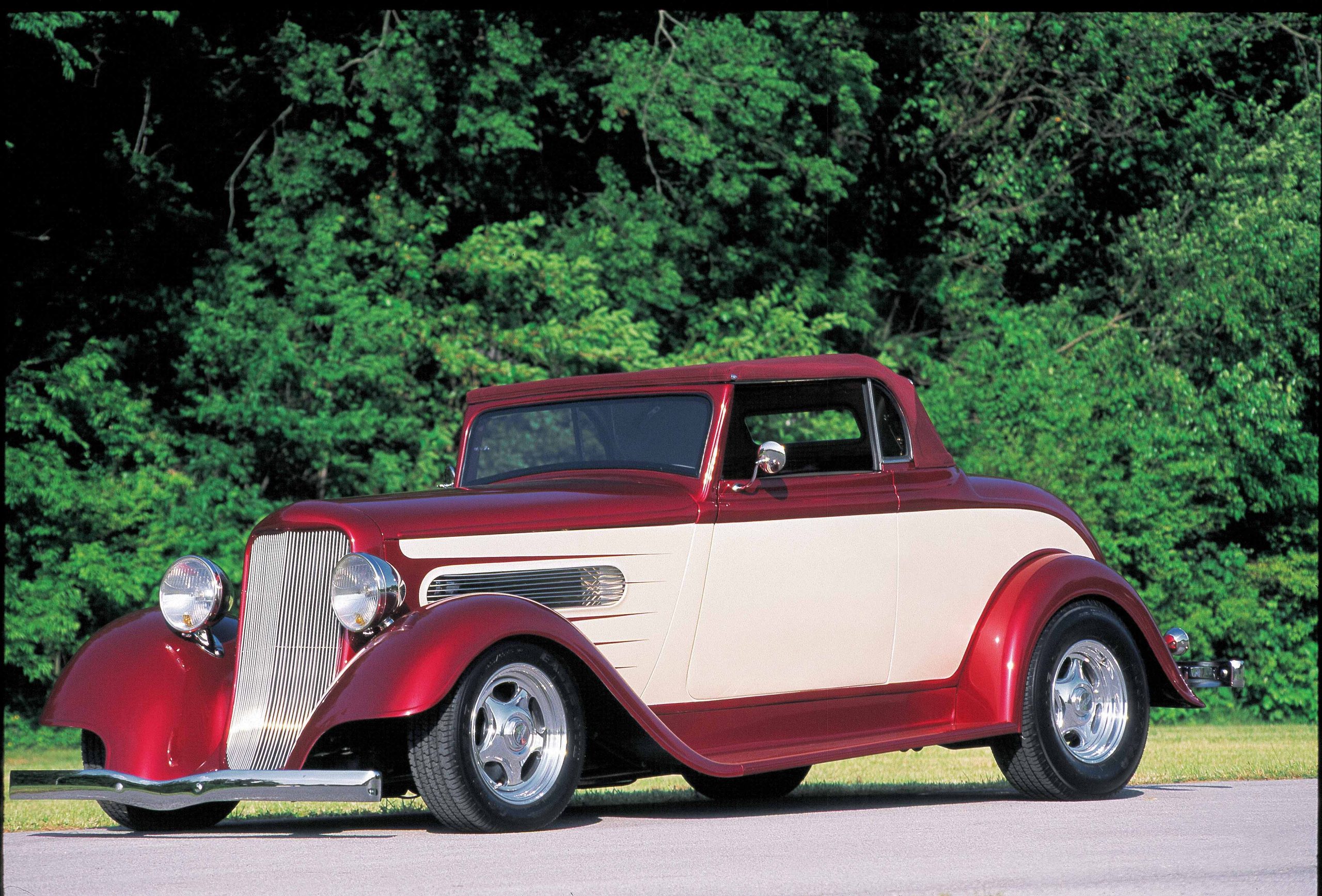
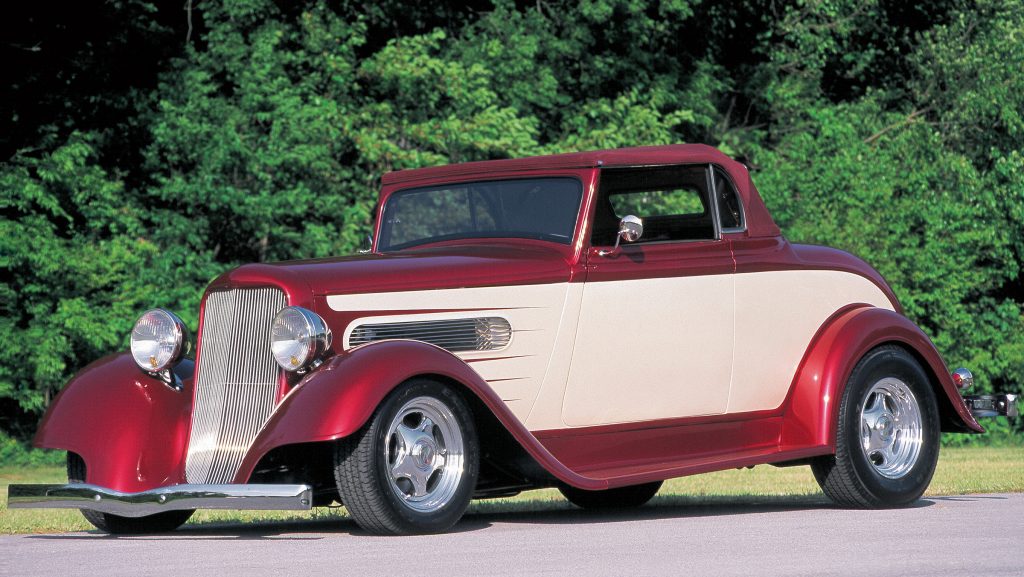
Fast-forward exactly 70 years and we are strolling the fairgrounds of the NSRA Street Rod Nationals South, when a brilliant burgundy convertible catches our eye. The stance is right, the colors are bright and beyond that it’s a Mopar convertible. We move in for a closer viewing of this rare car. Well, the closer we get, the better it looks, and before long we have struck up a conversation with the owner, Ormand McCord Jr. of Clarksville, Tennessee. He tells us Virgil Mullen of Richmond, Indiana, built the Dodge and the McCords were completely enjoying the fruits of his labor.
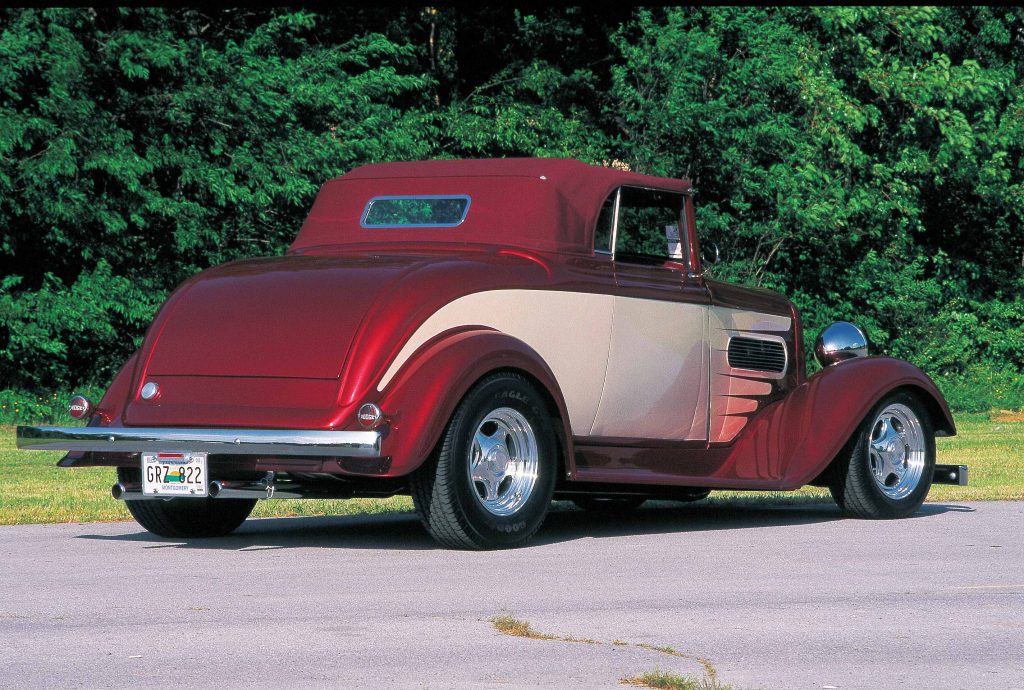
When Mullen began construction on the car, he began with a stock ’33 Dodge chassis. The tubular front axle was removed and replaced with a Fatman Fabrications front suspension incorporating tubular control arms. Out back, a set of Posies leaf springs mount the 9-inch Ford rear, and the chassis rolls on a set of Boyd Coddington billet wheels with Goodyear Eagle GT tires.
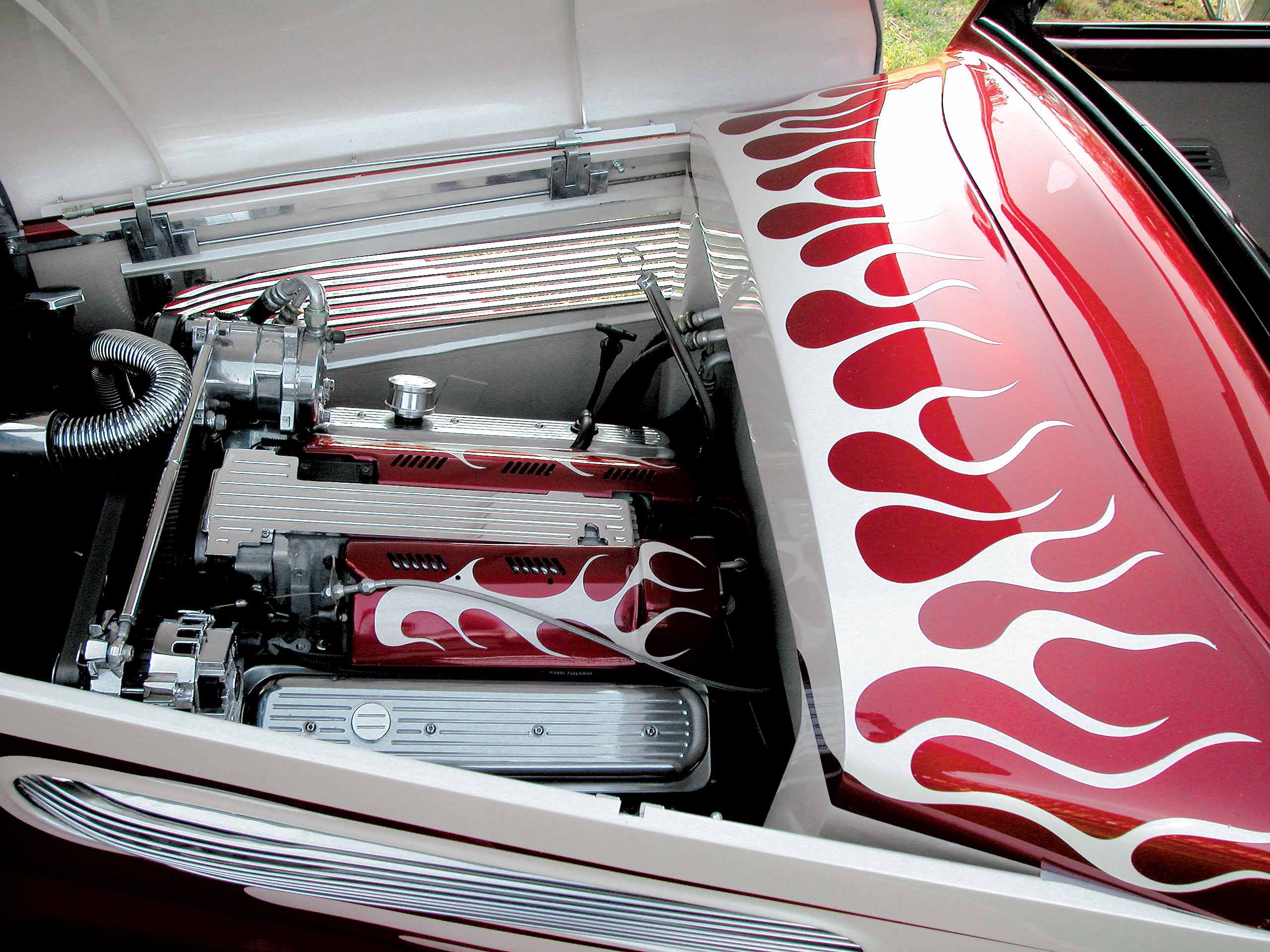
Power for the Dodge comes from Chevrolet in the form of a modern LT1 engine built by Speartech. Street & Performance of Mena, Arkansas, provided all the dress-up goodies, pulleys and headers for the engine, while a Walker radiator cools things down under the hood. Painless wiring controls all the electronics in the car, and a polished stainless steel exhaust from Stainless Specialties muffles the engine.
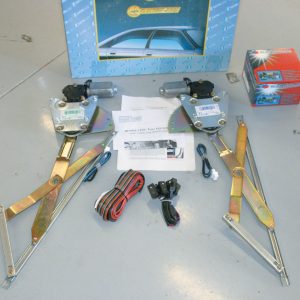
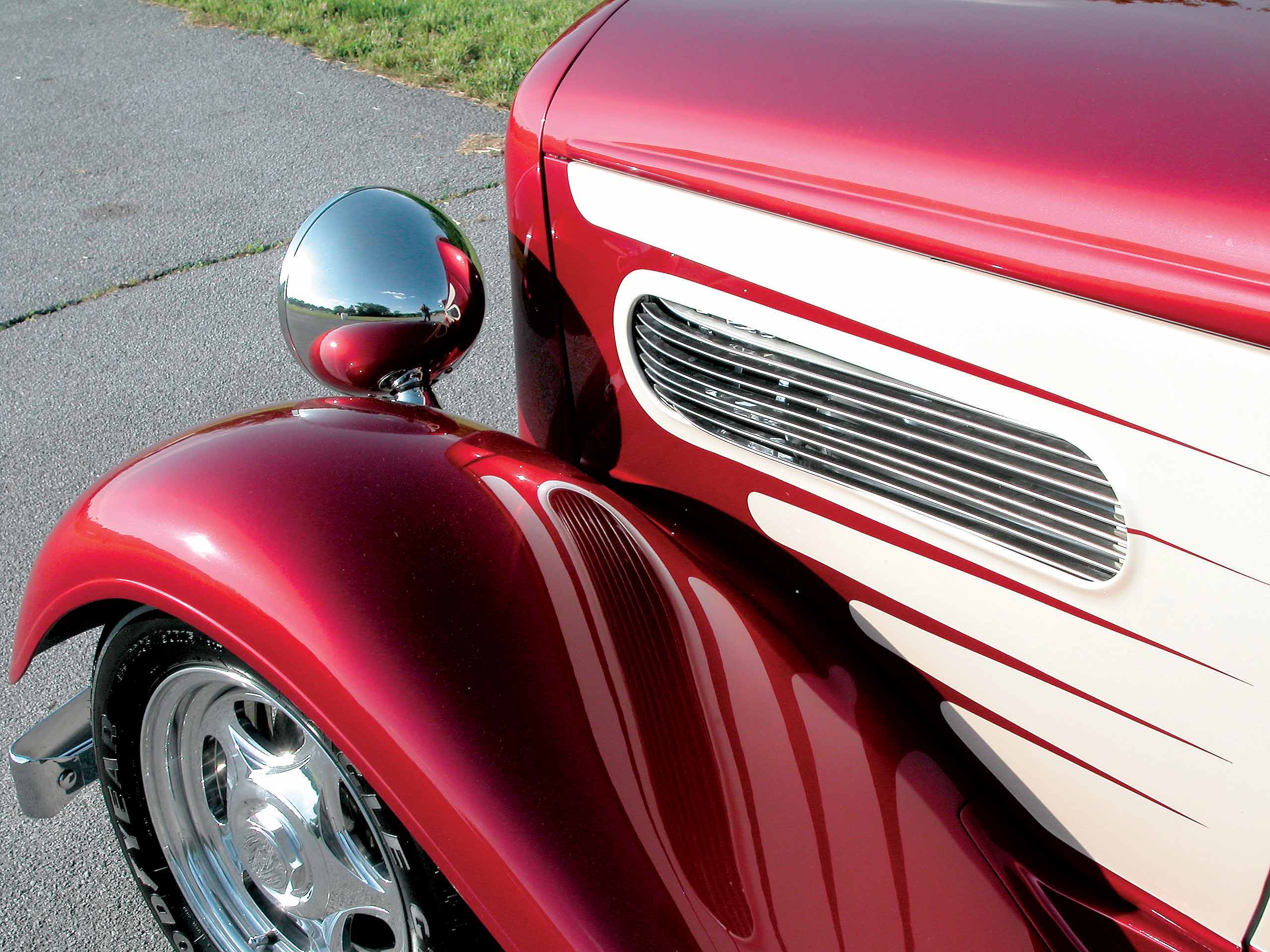
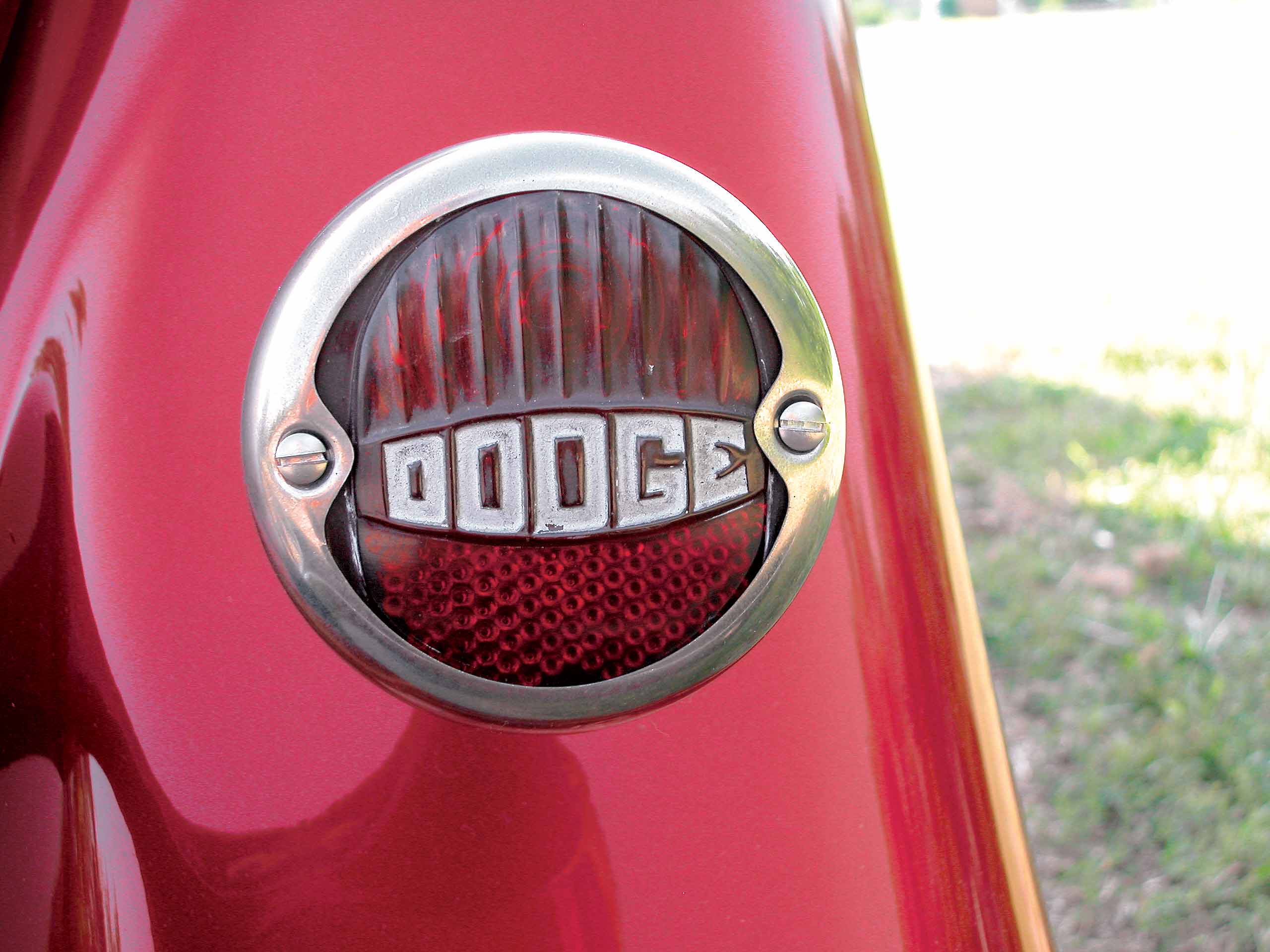
The Coach & Chassis Works ’33 Dodge convertible coupe body was built with a 2-inch top chop, and the rest of the body remains in original form. Steel running boards connect the fiberglass fenders. An original ’33 Dodge grille shell mounts in front of the Hoosier hood, and that completes the body panels. Mullen then formed two very nice grille inserts for each smooth hood side. Lighting in the rear is courtesy of a set of original ’33 Dodge taillights and stanchions, while up front a set of ’34 Ford headlights is employed. Power windows, a power trunk and a remote keyless entry system were all incorporated into the body before Mullen applied the Theador Red-over-ivory paint scheme. The two-tone paint job is split using subtle yet effective scallops. This permits the grille shell to be the same color as the fenders and makes the two-tone split appear natural.
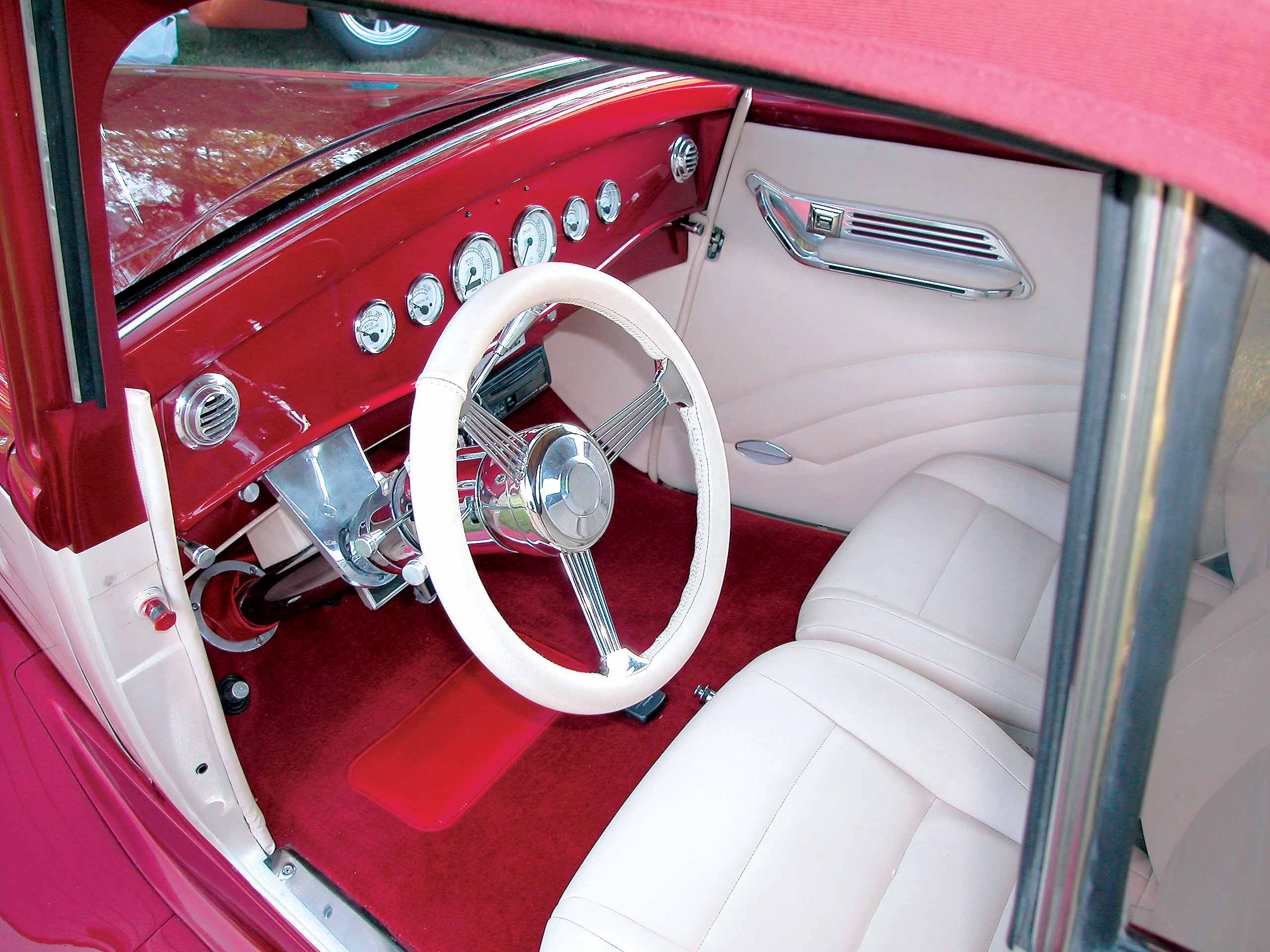
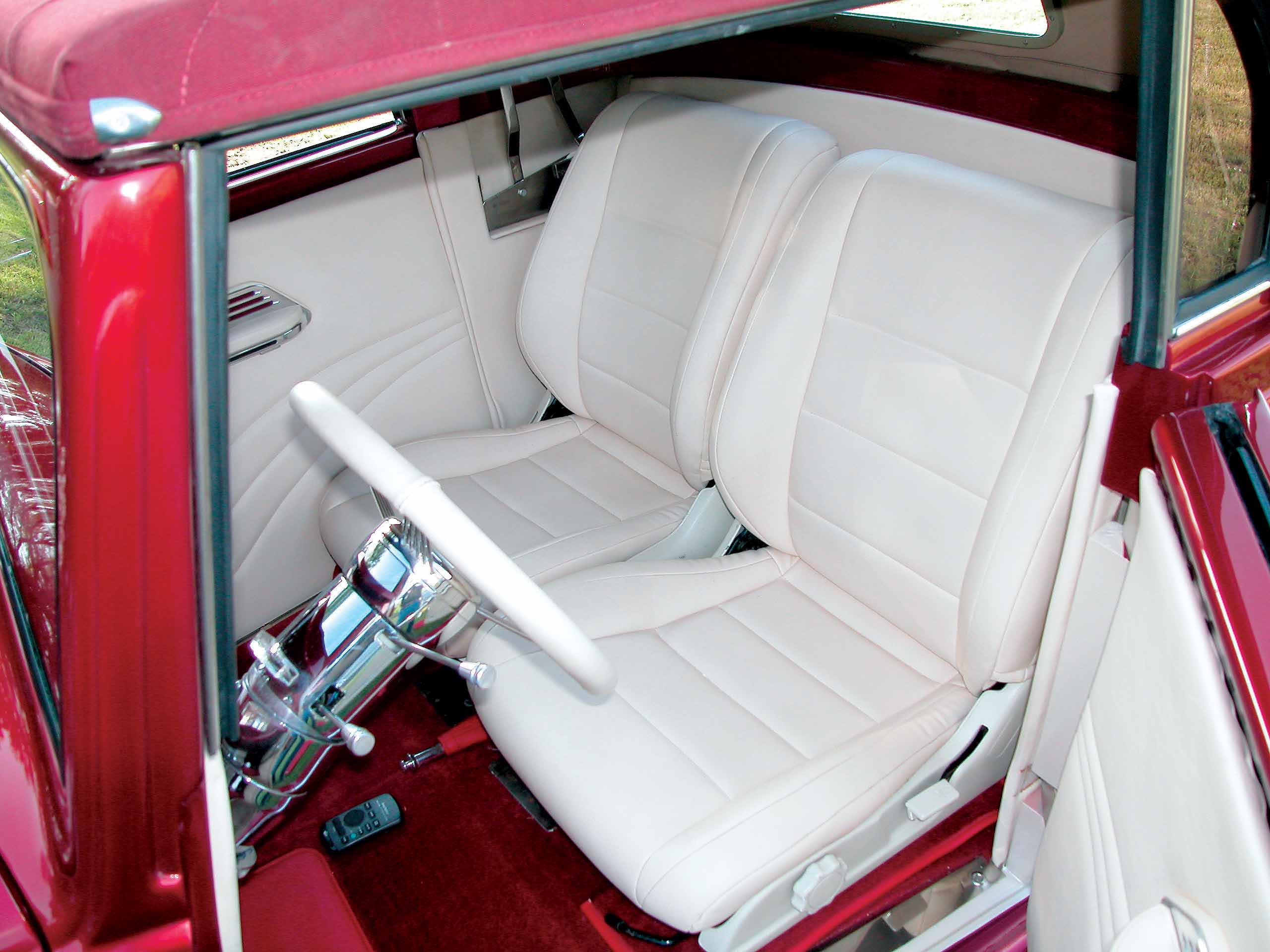
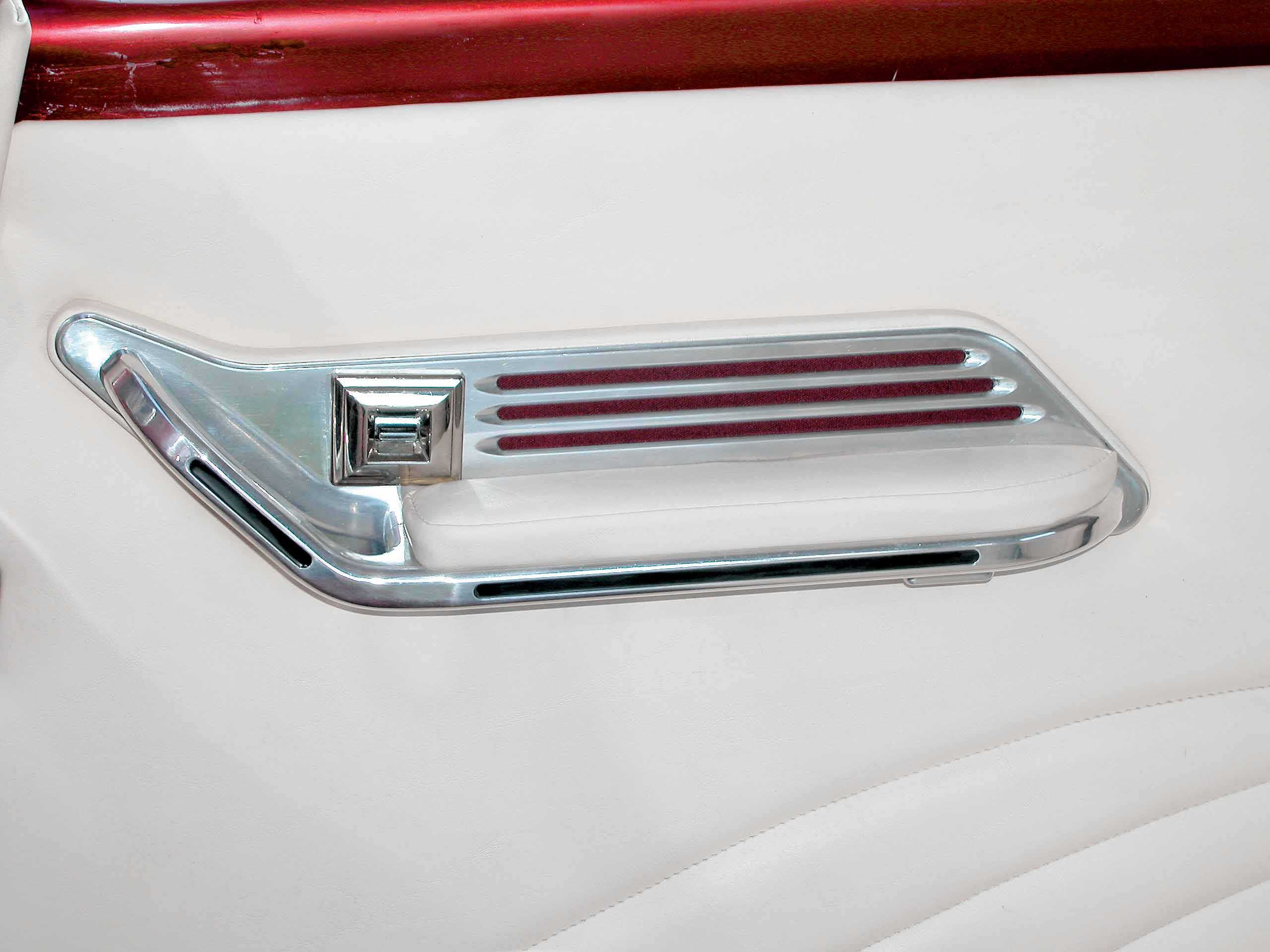
On the inside of the Dodge, Holliday Interiors of Richmond, Indiana, stitched up the leather in a matching ivory color. The seats were pirated from a Honda, while Mullen formed the custom dash and filled it with VDO gauges. Vintage Air provides hot or cold air on demand, and a banjo steering wheel adds a touch of class mounted to a chromeplated ididit steering column. Holliday Interiors also covered the top in a very nice burgundy material to match the body. The top bows themselves are modified ’32 bows, and the side window opening was carefully designed by McCord to incorporate a small quarter window, something Dodge didn’t do in 1933. The reshaped side window area makes the top appear much more graceful and less bulky. The top completely folds down out of sight behind the seats, and a simple boot snaps in place to cover the top.
And so, after two years, McCord had exactly what he wanted—a good, reliable street rod convertible that was different, good looking and rare. There is no denying he captured all three in this Dodge, and if you think this car looks good sitting still, you should see it going down the road.