TheAutoBuilder.com

Hot Rod/Muscle Car

Slick 66

Doug Schultz of Maple Valley, Washington, is not your typical home builder. Several years ago, he owned Street Works, a shop for hot rod and racecar fabrication. He built a black-and-silver ’62 Impala, which we featured in the December 2002 issue of this magazine, as well as a ’67 Nova that earned Goodguys’ Street Machine of the Year honors a few years back. Today he’s a fabricator and press-brake operator with his local municipal government, but during this time, he never lost his love for cars.

EXTREMELY SUBTLE

When you’re located far to the North, as in north of the United States border, it isn’t always easy to gain the attention needed to grow a hot rod shop through creative statements alone. Then again, quality workmanship is difficult to miss and is rarely overlooked by knowledgeable people.

34 Expert Restoration Tips for Classic Car Enthusiasts

Every detail matters when it comes to restoring or customizing a vehicle. Whether you’re smoothing out seams, fine-tuning trim, or upgrading outdated systems, the right techniques can make the difference between a show-stopping build and a project that falls flat. We’ve compiled 34 expert tips to help you refine your restoration skills, sourced directly from the pros at Jeff Lilly Restorations. Dive in and discover actionable advice that will streamline your workflow, enhance your results, and help you achieve the classic car of your dreams.

GOLDEN ARCHES

As enthusiasts, when we build our cars, we tend to stuff as much tire under those cars as possible. This is especially important for rear tires that hook the car to the ground while improving its stance. For those interested in drag-racing their cars, you will need to accommodate larger rear tires or slicks. The current hot trend is the 10.5-inch slick, which seems to work well on many applications, but depending on the make and model of your car, it may require modifications to enlarge the rear wheel openings to accommodate the larger rubber.

PRODUCT SPOTLIGHT: Smeding Performance’s 408″ LS3

For the hot rodder who demands usability and performance, Smeding Performance’s 408” LS3 engines are designed to take your project to the next level. These aren’t your typical cookie-cutter kits—they’re full-fledged, turnkey engine packages built to drop into your classic chassis and turn it into a road-ready rocket. Whether you’re chasing street-friendly power or show-stopping performance, Smeding has you covered with engines dialed in for hot rod perfection.

INTERNATIONAL MUSCLE

“It looks like a Chevelle, but what’s up with that grille? Why does this Chevelle have a Pontiac dash in it? Where did you get the special side trim?” These are questions often heard by muscle car enthusiast Nick Hedgecoth, shortly after pulling his ’64 Acadian Beaumont into position at a car show or cruise-in. This mixture of components puzzles many enthusiasts, but it makes for a great-looking car that will always get attention because of its unique styling.

CHEVELLE MEMORIES

“If these four walls could only talk, what great stories they could tell” is an old adage that is certainly apropos from a historical perspective. In the context that we Americans have an ongoing love affair with the automobile, it could also be said that if a classic car could only talk, it could tell some pretty great stories as well!”

Challenging The Odds

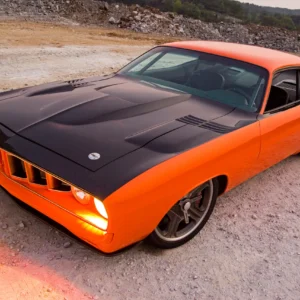
Like old hot rods, muscle cars are getting hard to find, so as our hobby grows, different alternatives and varied approaches keep it fresh. We’ve witnessed a change in style of many of the cars being built today. No matter what the future holds, you can bet that a Mopar enthusiast will insist on having a Hemi—or another fine Mopar powerplant under the hood—whether it’s the original-style Hemi or the new, modern Hemi that’s become popular.

HARD CHARGER

We were talking to Devin Meucci when the topic came up about how difficult it is to find a ’69 Dodge Charger in Southern California, because most were gobbled up by the studio when “The Dukes of Hazzard” show was on television. I also mentioned that two of my friends were in charge of the transportation department of the show when the cars were being scrapped out, and described how they made the 383 and 440 engines available to members of my car club. Meucci said he and his brother watched the show religiously, and that’s when their love for Chargers began. Fortunately, in Washington state, Chargers were plentiful, so, in 1990 his brother bought a matching-numbers ’69 RT/SE. Two years later, Meucci purchased his own Charger and drove it in high school during his senior year, and to college after that.

Scroll to Top
image

Subscribe for Email Updates

Newsletter Categories *
Marketing by