

THE AUTO BUILDER
Featured

Barely Legal
“I built this Jeep to handle a variety of terrain,” Todd Tice told us. “The coilover five-link rear and three-link front suspension provide excellent articulation for rockcrawling, and it is stable enough for hammering the desert at higher speeds. I wanted the Jeep to be able to handle most off-road challenges and still be able to cruise down the highway. This is an everyday driver,” he added.

BITS FROM THE PITS
Off road racing in the desert Southwest has been around for almost forty years now and we’ve never gotten tired of looking at vehicles and hardware associated with going off-road. Off-roading–racing or just having fun presents problems. We’re always intrigued by some of the solutions.Here’s what we found on a recent trip to Baja.

Caddy Stu
Richard Larson and his wife, Jane, have owned a number of custom cars and trucks in their time, but they never really thought they would have so much fun building and owning a custom 53 Studebaker pickup. There was no plan to find a Studebaker; the truck simply found him. I lived across the street from a friend who owned a repair shop in town, Larson told us. Over some time, he had collected six or seven cars and trucks that he hoped to restore some day. One weekend morning, his wife informed him that she planned to plant an orchard in the area where the vehicles were being stored…and in one week. He had to get rid of his collection. I asked about the Studebaker pickup and he said if he could get $200 for it, it was gone. Well, it was gone.
Spotlighter
POPULAR READS
QUIET DOWN
Installing Dynamat Xtreme for a Cool and Quiet Ride
Author
Josh Kaylor
Story & Photography
Why Classic Trucks Are Louder and Hotter
If you’ve ever hopped out of a classic pickup into a modern daily driver pickup, you have probably noticed the startling difference in noise and heat levels within and throughout the interior. This is because some time in the mid-’80s, pickups began receiving the same noise and heat control attention as auto manufacturers spent on cars, as they filled every nook and cranny with noise cancellation foam, sealant and padding. These insulations greatly helped cancel out noises and improved temperature control, as well as help dampen vibrations.
The Problem with Older Classic Trucks
Older classic trucks are among the worst in all these areas. They squeak, they are noisy, and do little to control heat buildup inside the cab, especially around the floorboard. Since all these trucks were originally workhorses, not much attention was paid to these areas, but this problem is easily solved. Whether you are just beginning your interior and building from scratch or retrofitting your existing truck, Dynamat offers a wide selection of noise and sound cancellation products. Dynamat engineers have designed a complete line of products, ranging from speaker kits to complete sound and noise cancellation solutions from the floor to the roof.
The Test Vehicle and Its Challenges
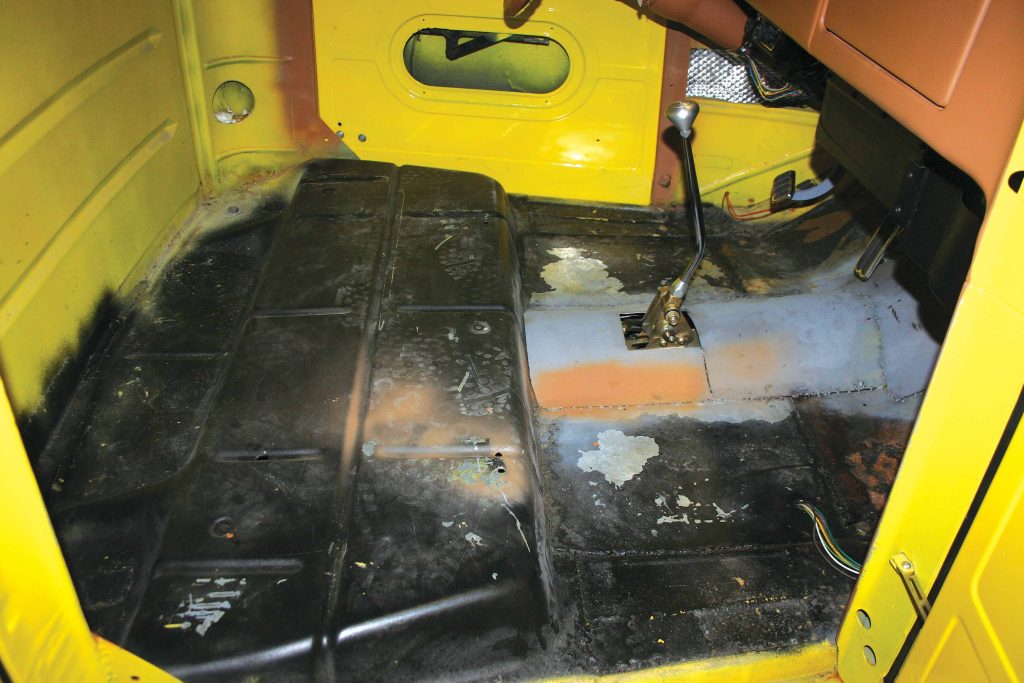
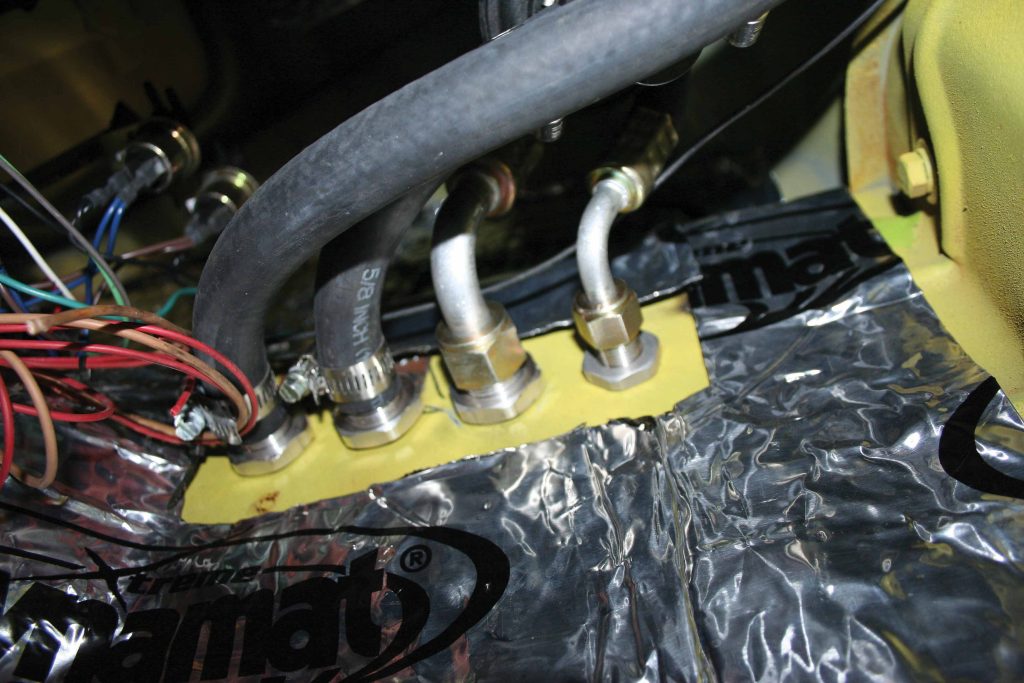
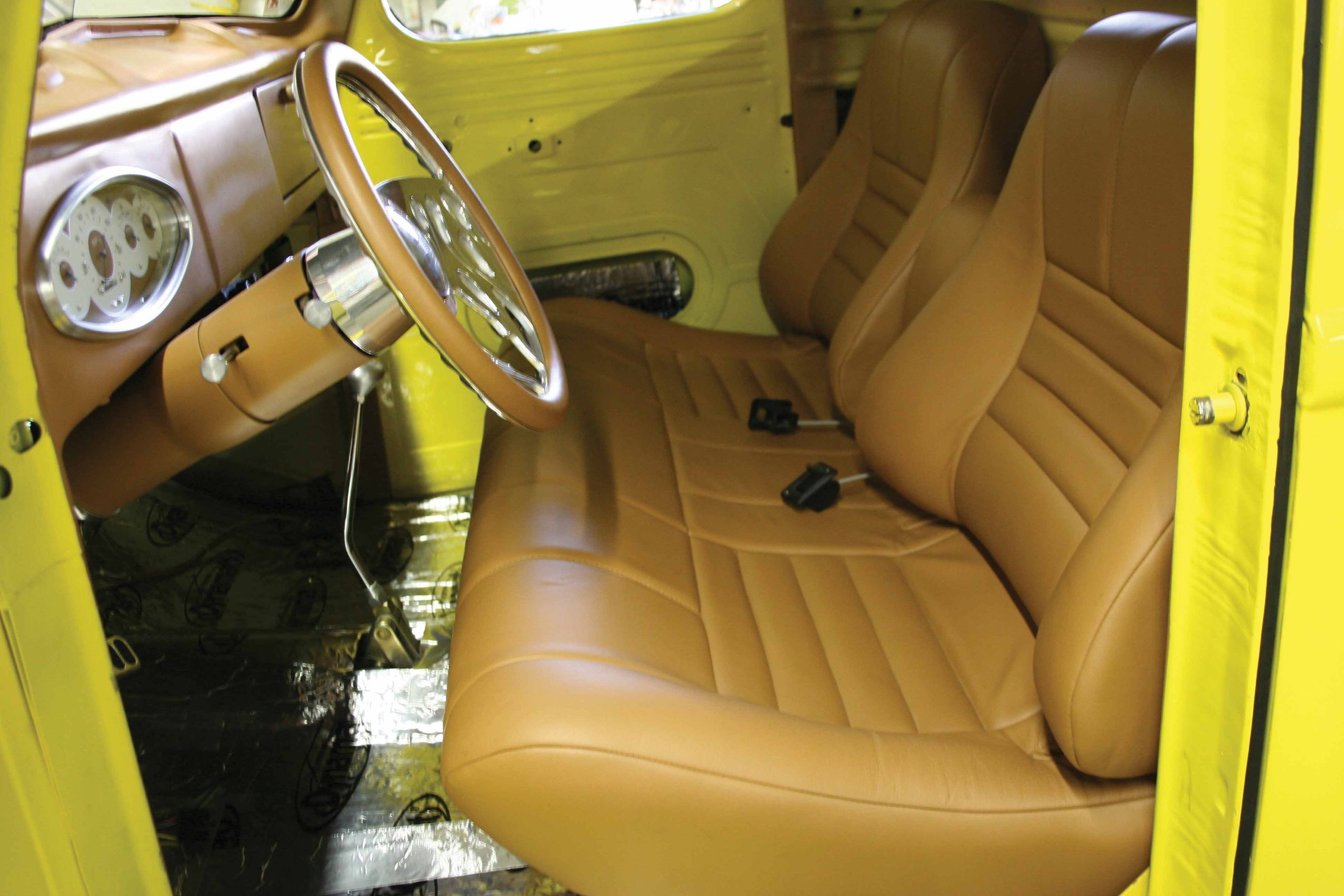
This International pickup is in the process of receiving a new interior, which is being done in stages, allowing it to be driven while parts of the interior are being done, as budgets permit. The truck squeaks and rattles, and the A/C fights to cool the cabin. Heat buildup can be bad, and this doesn’t begin to mention the excessive noise and oil canning throughout the interior. This problem has persisted, but now it’s time to do something about it.
Learning the Proper Dynamat Installation Process
While visiting M&M Hot Rod Interiors, we had the opportunity to speak with Wayne and Pam McGriff about the proper procedure for installing Dynamat in the cab of a pickup or any car for that matter. M&M stresses to all of its customers the importance of installing noise, heat and sound canceling material, such as Dynamat Xtreme, into the interior of their cars. After deciding that Dynamat Extreme was right for us, we purchased the Dynamat Extreme Bulk Kit from M&M, which includes nine 18×32-inch squares. The precut squares allow you to cover 36 sq ft, which is plenty for most classic trucks.
About Dynamat Extreme
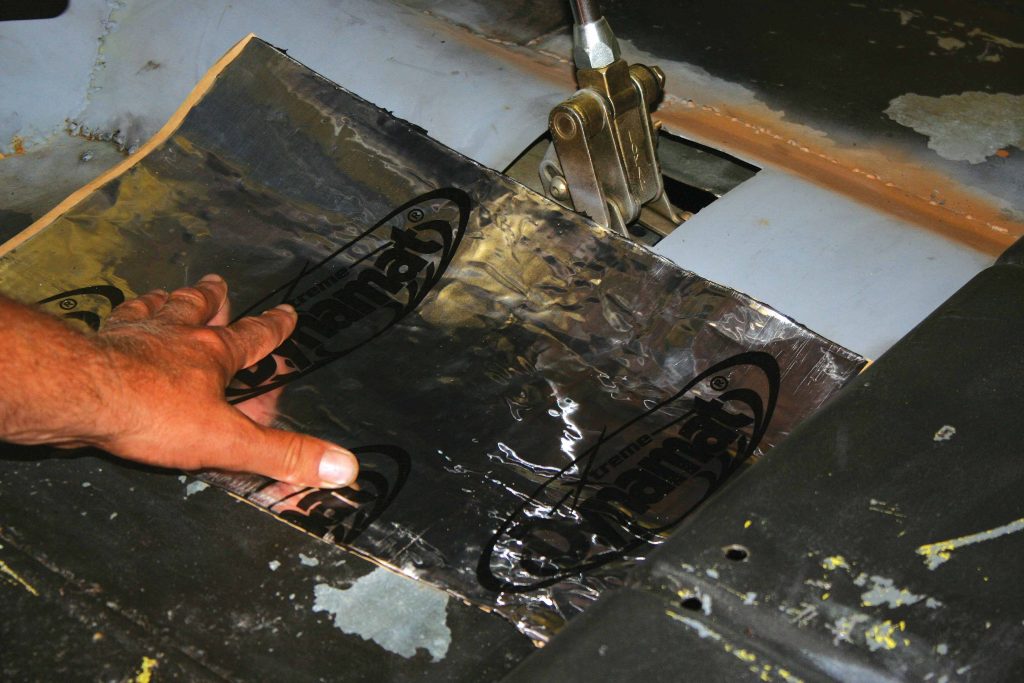
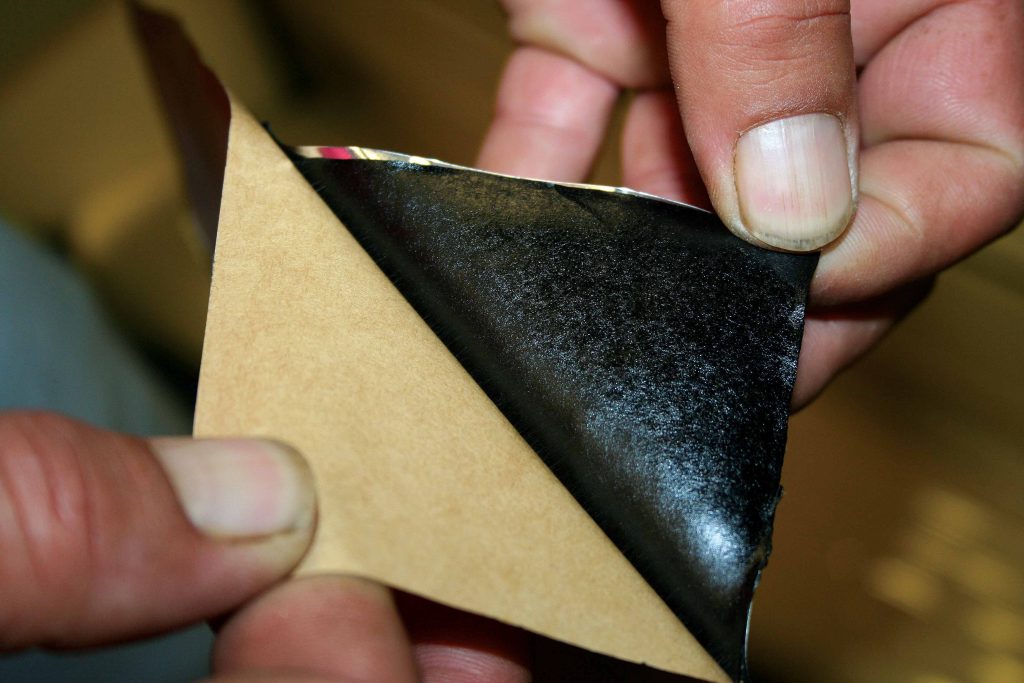
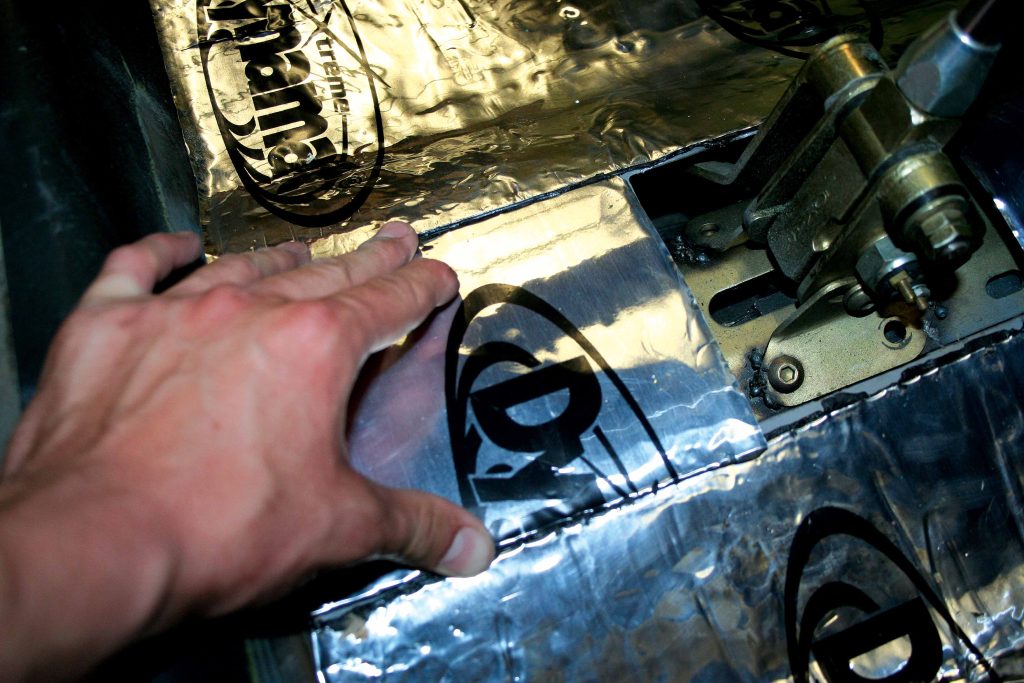
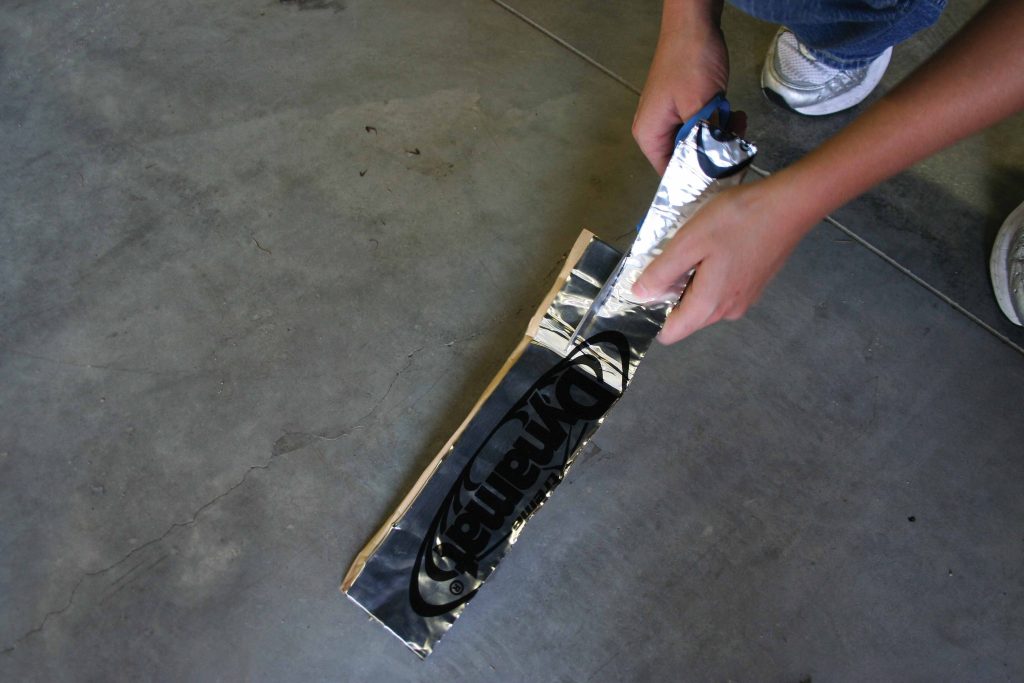
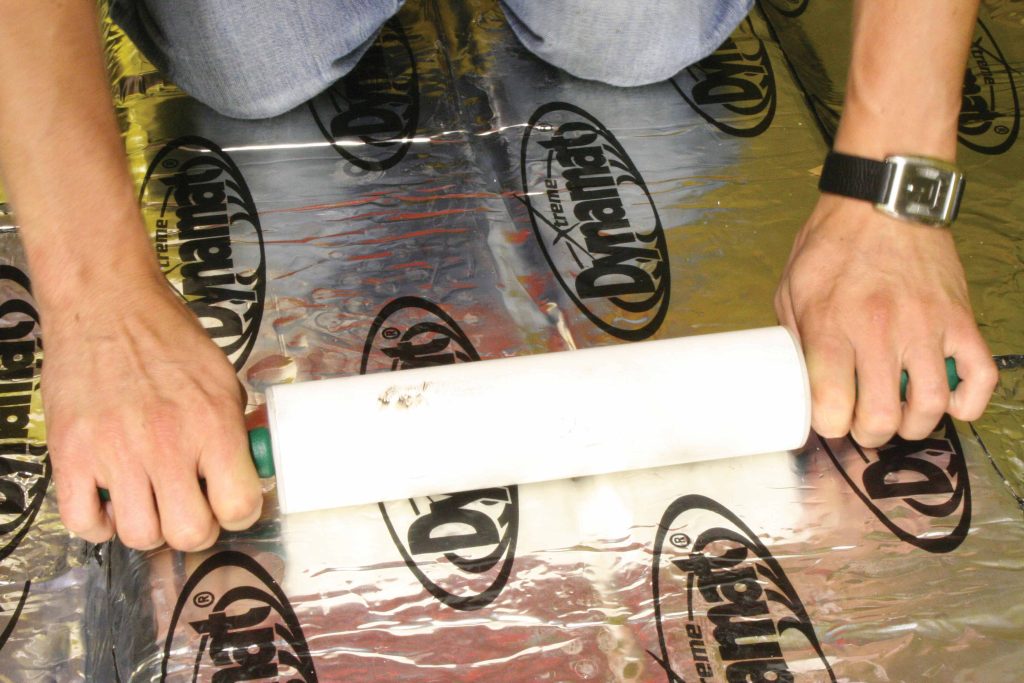
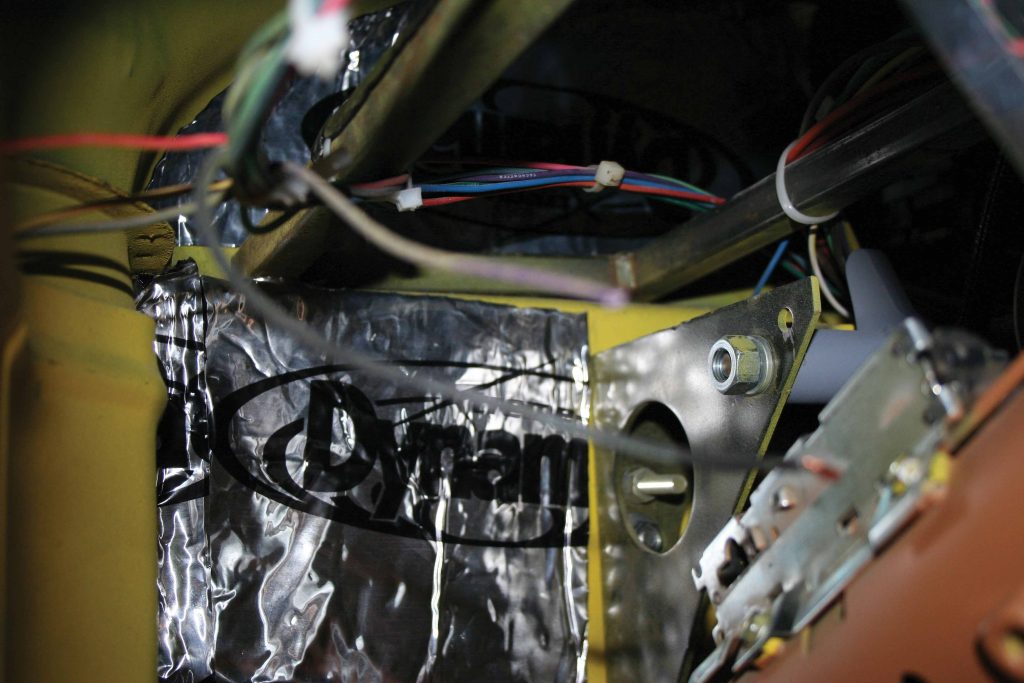
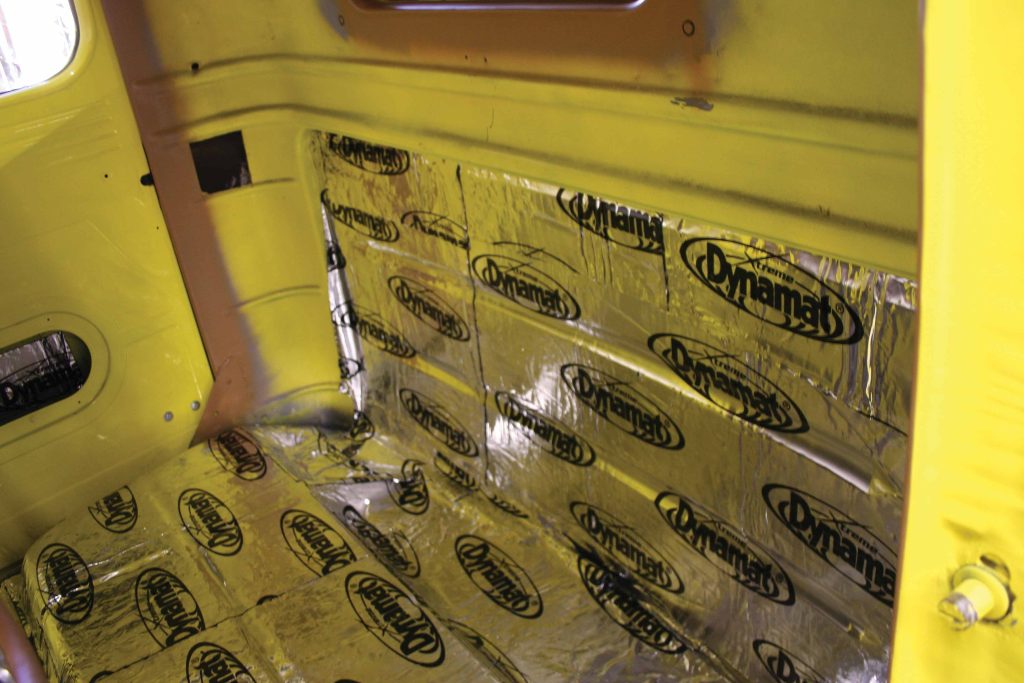
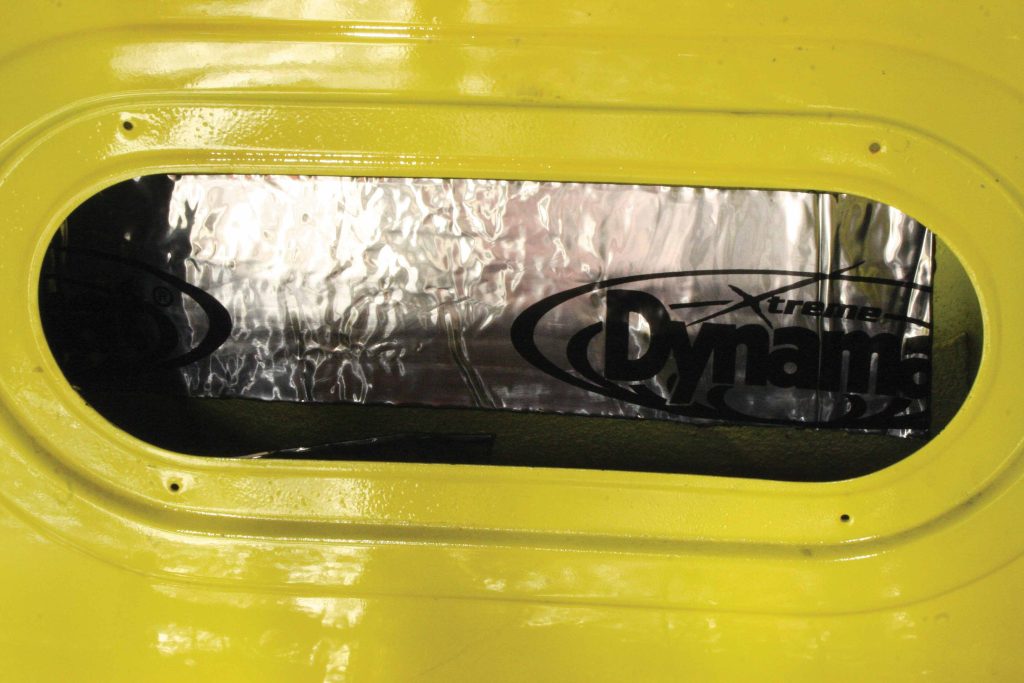
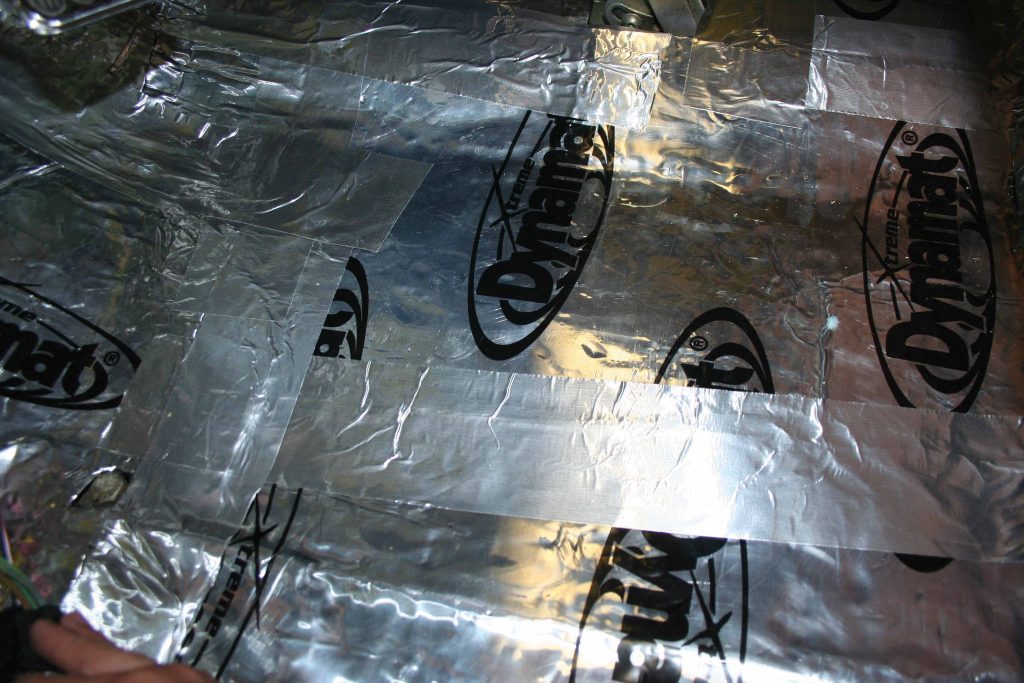
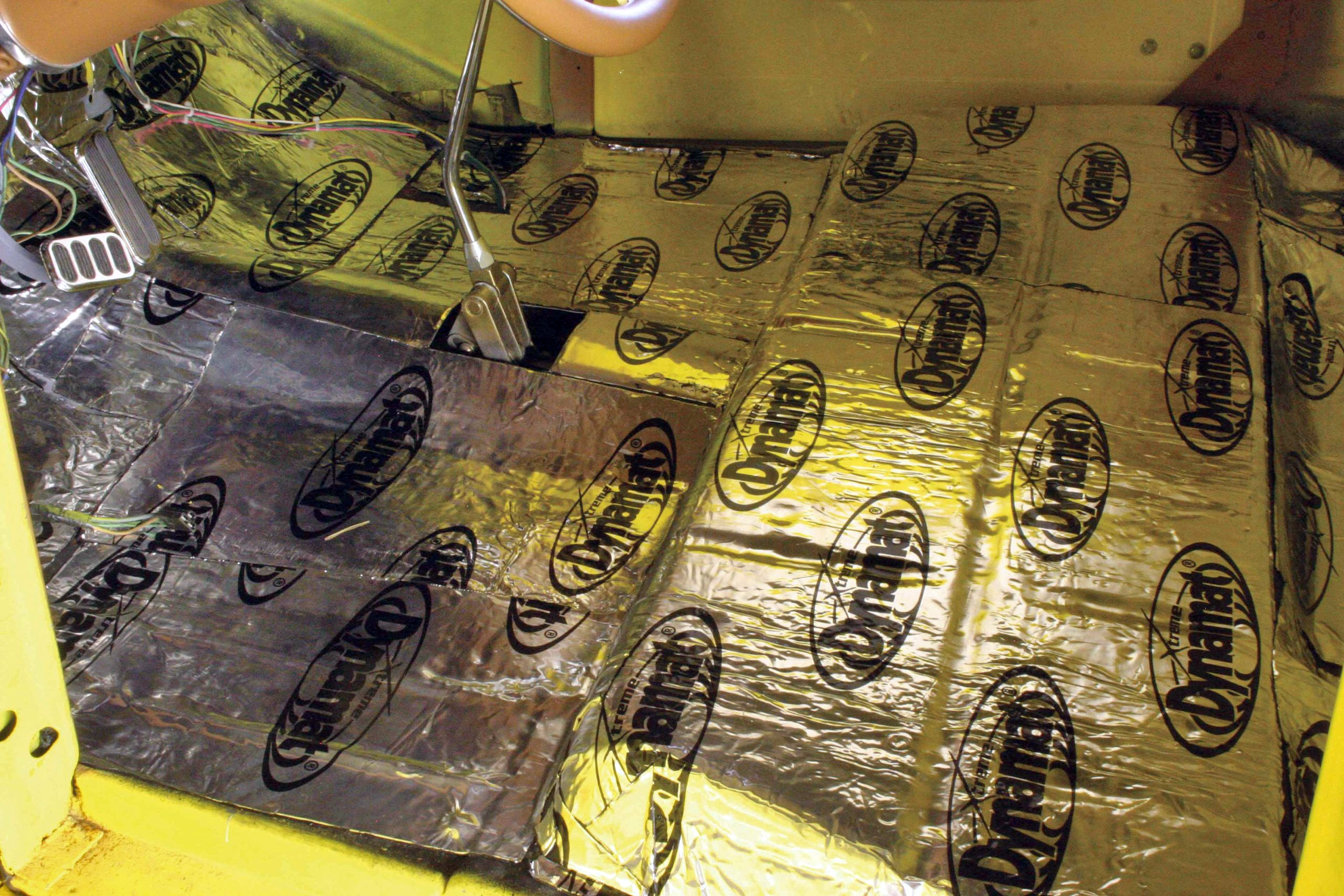
Dynamat Extreme is designed to be installed on the headliner and inside the doors, firewall, floorboard and rear of the cab. Dynamat Extreme is only about 1.7mm thick, which allows door panels and carpet to be installed over the Dynamat, without causing unsightly humps or other problems associated with thicker sound deadeners. Dynamat Extreme features a black butyl-based core with an aluminum liner designed to block against heat. The Dynamat features an adhesive back that provides a simple measure, cut, peel and stick procedure. This can be done at home with a pair of scissors, a box cutter and a small rolling pin.
Installation and Preparation
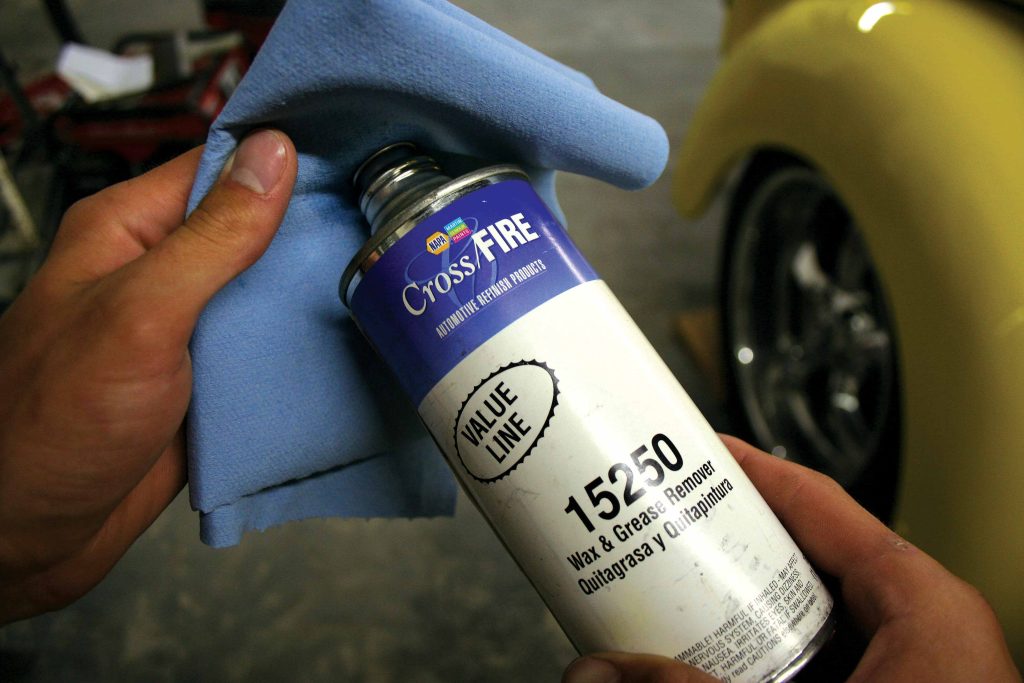
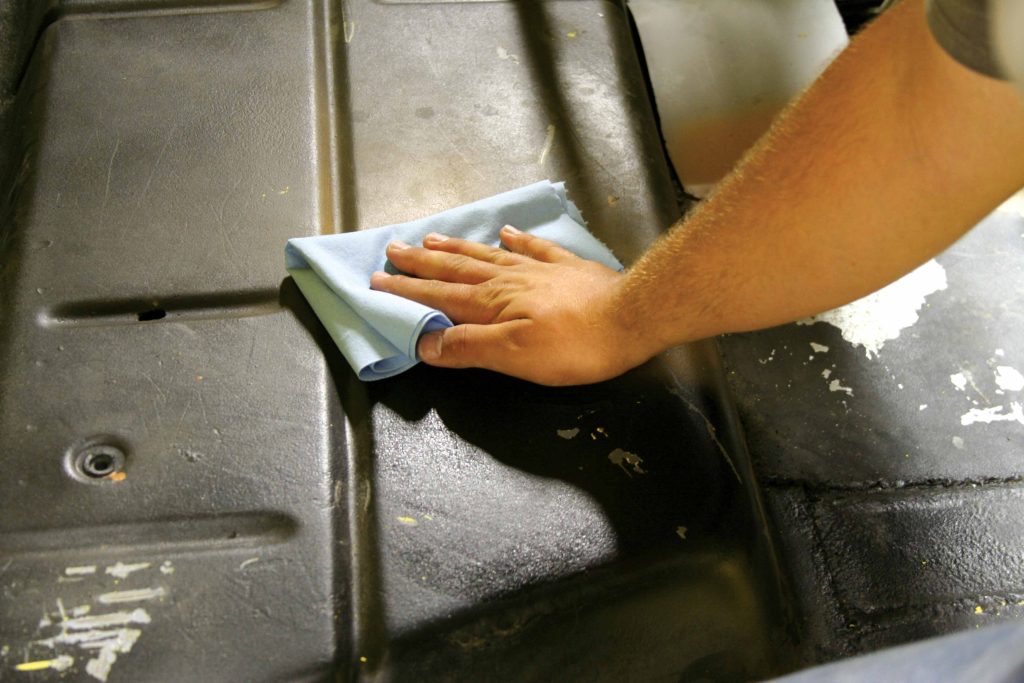
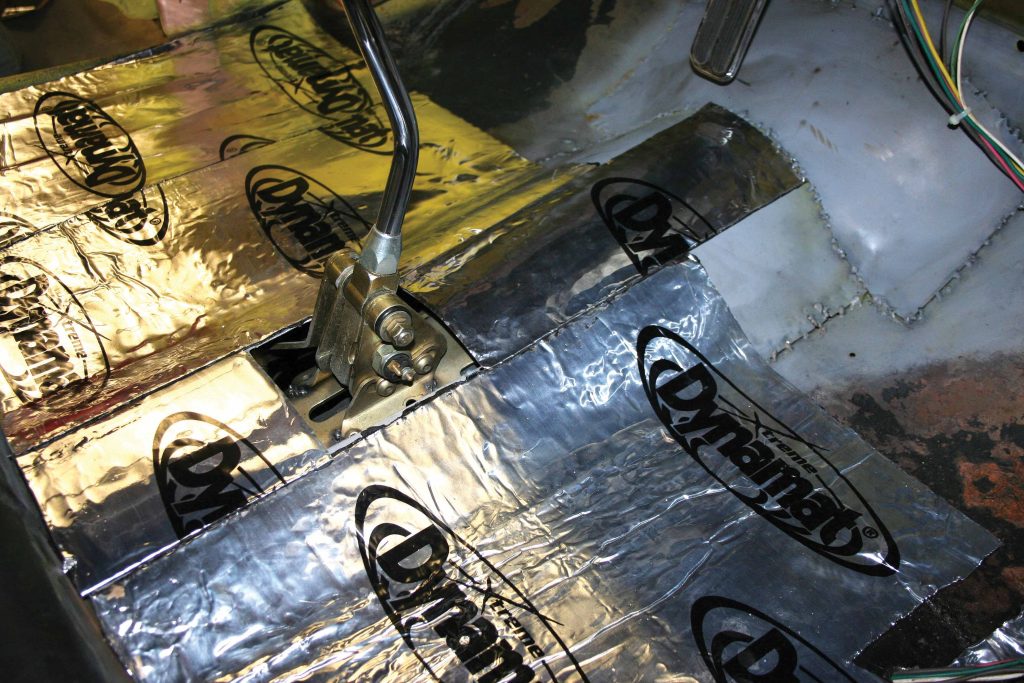
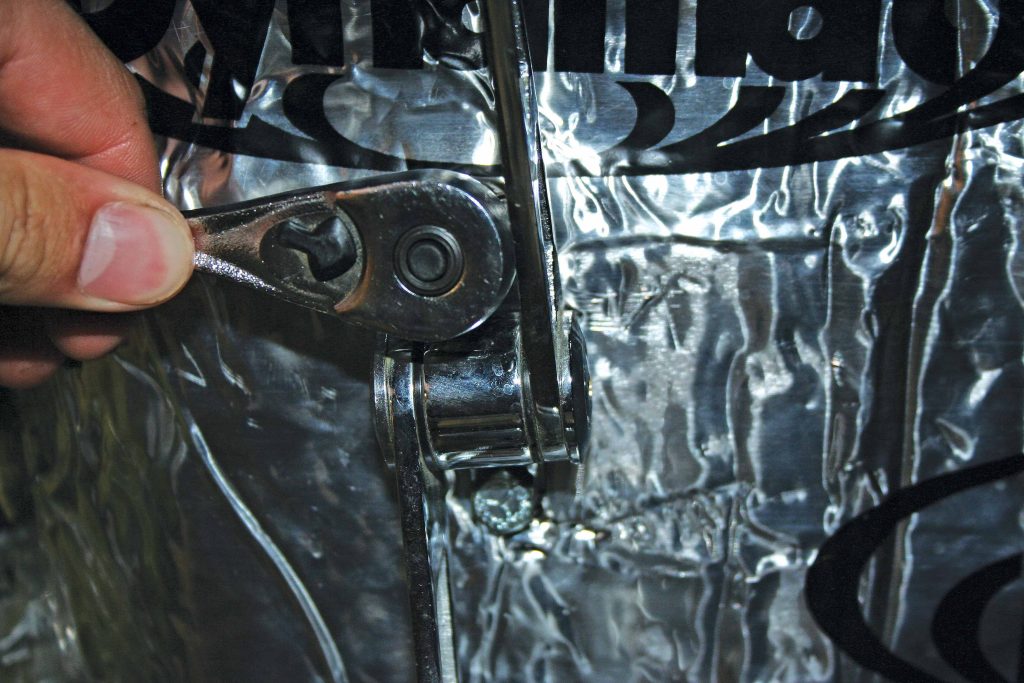
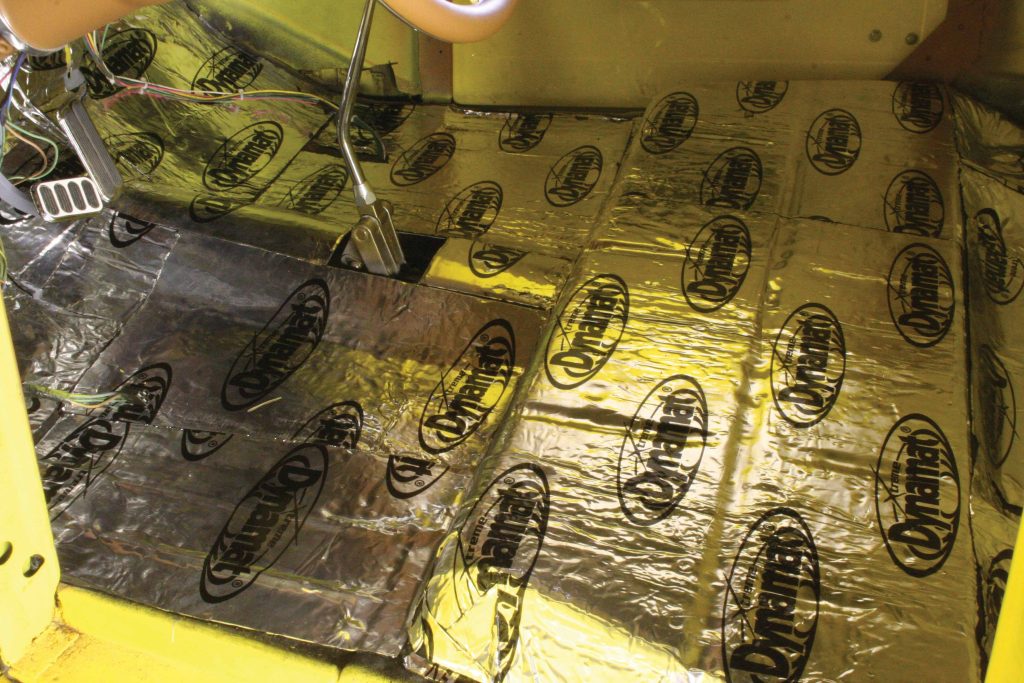
Since this truck interior had yet to be completed, the seat was removed, and interior panels thoroughly cleaned. In order to clean the steel panels, use wax and grease remover. Prepping the panels was not difficult, as Dynamat Extreme can be installed over painted surfaces that are properly cleaned of contaminants and residue. After about three hours of work, the entire interior of the truck was thoroughly lined with Dynamat Extreme.
Results and Final Impressions
During our initial road test, and without a completed interior, we instantly noticed a difference in the lack of vibration, reduced sound and lower heat inside the cabin. Follow along with us to see how it was done.
ARTICLE SOURCES
Dynamat, LLC
Dynamat is recognized around the world as quality solutions to unwanted noise & heat. Dynamat makes sound deadening and thermal insulation products for automotive, car audio, home, RV, marine and more. Dynamat is 100% proudly made in the USA.
M&M Hot Rod Interiors
13875 US Hwy. 278 E.
Holly Pond, AL 35083
(256) 796-7443
mmhotrodinteriors1982@gmail.com