

THE AUTO BUILDER
Featured

IFS Install on Chevrolet C-10 Pickup Trucks (1960-1987)
Let’s face it: The new, hot truck of the hobby is the 1960-1972 Chevy. With the amenities available for these trucks they have become modern classics. The Chevy truck was available with power steering, A/C, IFS and a host of other great goodies, including power disc brakes. While still not up to today’s standards, with a little tweaking they make really great options on a classic truck without having to break the bank to have cold air and comfortable seats. The only downfall to this is that they are outdated.

Product Spotlight: Artec Industries APEX Axle Truss – Strengthen Your Jeep’s Foundation
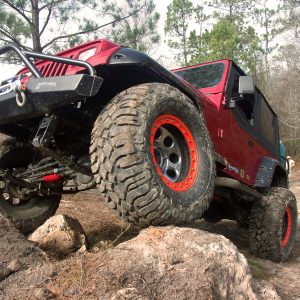
If you’re wheeling a Jeep Wrangler JL, you know the factory axles are decent for the daily grind—but get rowdy with bigger tires or gnarly trails, and they’ll cry uncle faster than you can say “diff fluid leak.” Enter the Artec Industries APEX Truss, a killer upgrade for your front and rear axles that doesn’t just add strength—it revolutionizes the game.

BOSS!
In 1969 and 1970, Ford produced a pair of unique vehicles designed with only one purpose in mind: to take back the SCCA Trans-Am series crown from Chevrolet. After stunning success with the ’65-’67 Mustangs, Ford lost the title to Chevy’s Camaro in 1968, and many felt that the car’s “tunnel port” engine was the culprit. Ford drastically rethought its engine program and came up with a legendary solution.
Spotlighter
POPULAR READS
-
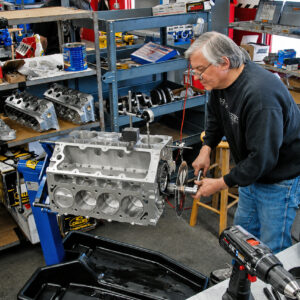
Product Spotlight: Bill Mitchell Products Aluminum LS Engine Block
-
PRODUCT SPOTLIGHT: 60-66 Chevy C10 Fresh Air Vent Block Off Plate
-
Product Spotlight: Pyramid Optimized Design Sequential Aurora Taillight for 1964½–1966 Mustang
-
PRODUCT SPOTLIGHT: Cam Covers for GEN/3 Coyote from Pyramid Optimized Design
SUPERBIRD REBIRTH
Replacement Sheetmetal Panels From Year One Recreate a Solid Body for a Complete Restoration
Author
Josh Kaylor
Photography by Bill Woodard
The Introduction of the 1970 Plymouth Superbird
In 1970 Plymouth introduced the Superbird. It was equipped with an aerodynamic nose, a shape that was ahead of its time, and it had a ridiculously high wing that gave it track performance and a unique trademark. Only in 1970 were the Superbirds produced, and a mere 1,920 left the factory. Of those, 23 percent were painted Lemon Twist. The Superbird did very well in NASCAR, as it won its first race at the 1970 Daytona 500, with Pete Hamilton behind the wheel of a Petty Enterprises Plymouth. After it did so well in ’70, NASCAR developed a rule stating that winged cars were limited in engine size, and so Chrysler decided to pull the plug on the program.
The Decline and Resurgence of the Superbird
In 1971, Plymouth introduced the new model year of cars, and the Superbirds just sat on showroom floors, as dealers almost couldn’t give them away due to their high price and unusual styling. With the sudden rage in anything Chrysler and Plymouth from the ’60s and ’70s, people are beginning to pull these spectacular-looking cars out of hiding and spend some serious money to bring them back to life.
Jim Smith’s Lemon Twist Superbird
Jim Smith of Dayton, Tennessee, has owned this Lemon Twist 440 four-barrel car since it was new. Jim was the owner of Smith-Clayton Dodge in the early days and purchased this car for himself. After some years Jim retired but kept the Superbird seen here behind his barn. Eventually, he decided that it was time to bring it back to life.
The Restoration Process Begins
To do so, Jim enlisted the help of Bill Woodard, longtime friend and master bodyman. Bill and Jim determined what they would need for the Superbird and then called Year One, located in Braselton, Georgia, for the beginning of a long list of parts that would be required to bring the car to as-new condition. In about a week, new trunk floors, wheel housings, and rear quarter panels arrived at the shop, and the work began. We plan to follow this car through to completion, so read along as we revive one of America’s most sought-after muscle cars.