
THE AUTO BUILDER
Menu
Featured
HIGH-SCHOOL HEARTTHROB REVISITED
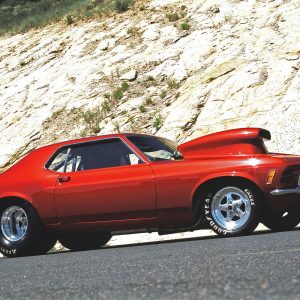
At first, it appeared as though the bright red Mustang didn’t have an engine in it, but once the seller, Eric Rizner, opened the hood, Holden and Wunsch could plainly see that the engine had been set back in the chassis. Was this the elusive Mustang “racecar” that Holden had been looking for?
WINDSOR CASTLE
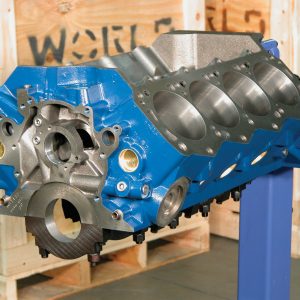
While the small-block Chevy is the popular engine choice for many enthusiasts, many are now relying on a Blue Oval heart for their performance bodies. With its link to Ford, the original body manufacturer for many of the classic cars we see today, the small-block Windsor-style Ford engine offers several advantages. When compared to Chevy, the lack of firewall clearance for a number of Chevy engine swaps is due to the rear distributor position of the engine. The front-mount distributor position is the more logical place to drive the distributor and the oil pump. Not to mention, it’s much more convenient.
Rock Crawling the Sport That Defines Champions
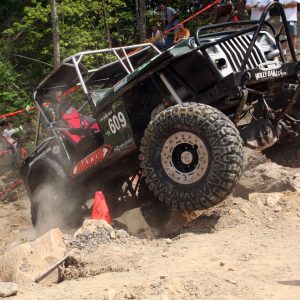
Competitors from across the country converged on Jellico, TN to compete in the Eastern US Nationals held by W.E. ROCK (World Extreme Rock Crawling Series). White Oak, a small community located just outside Jellico, TN is where the event was held. Lil’ Rich, course designer for W.E.ROCK stayed true to his reputation for designing some of the most technical obstacles in the rock crawling world, and Jellico was no exception.



Spotlighter
POPULAR READS
-
The Auto Builder’s Hottest Product Picks from The Triple Crown of Rodding 2026
-
Product Spotlight: Bill Mitchell Products Aluminum LS Engine Block
-
PRODUCT SPOTLIGHT: 60-66 Chevy C10 Fresh Air Vent Block Off Plate
-
Product Spotlight: Pyramid Optimized Design Sequential Aurora Taillight for 1964½–1966 Mustang



PUMP THE POWER: PART 1
Installing a Full Banks Power Pack on a Ford V-10 F-350
Author

Bob Carpenter
Photography by Jeremy Lachenmyer
Introduction: Changing Lifestyles and Increased Demands on Trucks
Our lifestyles have changed, and we are an active group. As such, the loads we’ve asked our trucks to haul have gotten larger and heavier, and tow vehicles especially have had to become more powerful and more fuel-efficient to be able to safely and economically tow these heavy loads. It is no longer an oddity to see big, muscular trucks cruising to and from events of one type or another. When you look in the parking lot at many such events, you’ll find yourself treated to a virtual truck show, as tow rigs nowadays are every bit as show-worthy as the vehicles and/or boats or trailers they are towing.
The Rise of Diesel-Powered Trucks
As we walk the boat ramps, off-road areas, construction sites, and other places where trucks rule the planet—and that’s just about everywhere nowadays—it seems that diesel-powered trucks are becoming more predominant. Before the price of diesel fuel rose excessively high—just the other day we saw it for $2.90 a gallon in our old neighborhood (California) and it was $2.10 in our new neighborhood (Tennessee)—diesel power made all the sense in the world.
Diesel vs. Gas: A Consumer’s Dilemma
So what kinds of games are being played with the diesel-buying public, especially California diesel drivers? It seems a bit excessive to us. It also seems that diesel-powered trucks outnumber gas-powered no matter where you go, east or west, although there is still a significant group of consumers who choose gas over diesel. While you cannot deny the cost benefits of diesel power, the gas companies have noticed this trend toward diesels, too, and what was once the cheap of the cheap, “bottom barrel” fuel, has been reformulated for emissions, giving those companies the opportunity to charge diesel guys as much for a gallon of diesel as for a gallon of premium gas! There ought to be a law, and perhaps one day there will be, but oil interests are strong in Washington, so any such movement may not come soon.
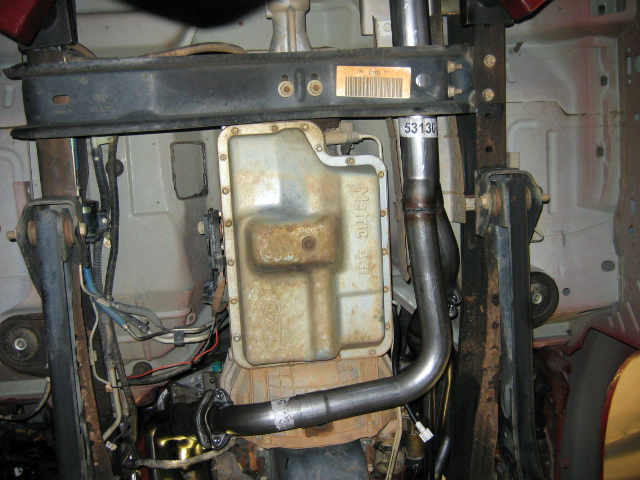
Power Options for Gas-Powered Trucks: J&D Performance
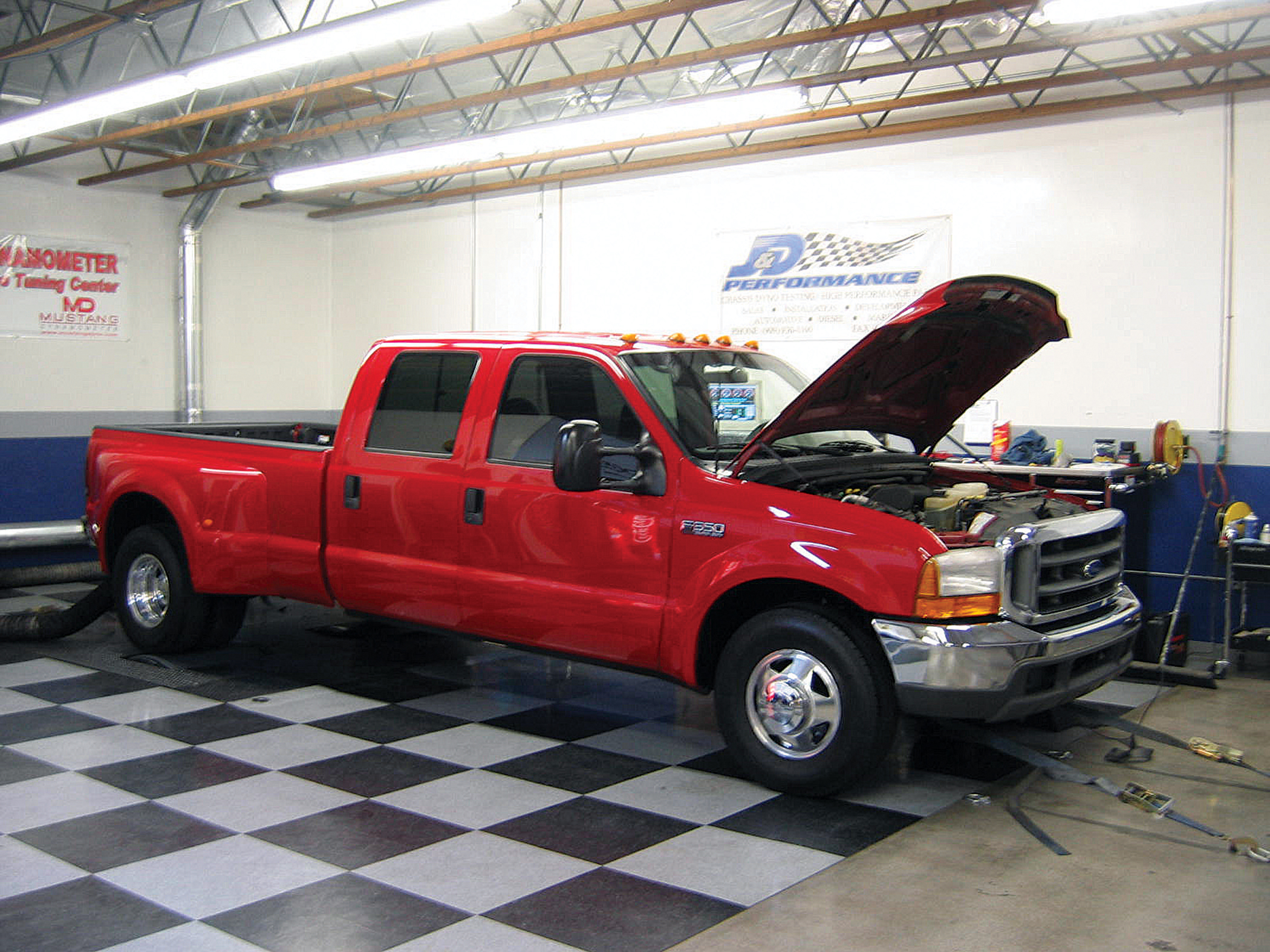
Like their diesel counterparts, gas-powered truck owners are always looking for ways to give their vehicles even more power and better mileage. To find out what kind of power options there are for gas-powered trucks, we went to J&D Performance in Ontario, California. We’ve seen what kind of power and performance the guys at J&D can make in a diesel-powered truck, so we figured we’d follow along as they wrenched more power out of a common gas-powered truck. After a quick phone call, we were set. The guys at J&D had a customer’s stock 1999 Ford F-350 dualie with a 6.8-liter V-10 ready for buildup. Here’s how it went.

Baseline Testing of the Stock Truck
Our test truck was bone stock with 92,000 miles. The truck is used as a daily driver and does part-time duty towing a 28-foot toy box during the winter months and a 25-foot boat during the summer months. According to the owner, the truck runs well but is underpowered for its size. The owner wanted more power for daily driving and towing but did not want to sacrifice mileage, economy, or smog-legal status.
Initial Road and Dyno Evaluations
To start off, the crew at J&D did some baseline evaluations of the stock truck. The first tests were done on the road. The truck was put through four on-road evaluations: the 1/8-mile, the 1/4-mile, 30-50 mph, and 50-70 mph. In stock trim, the truck ran the 1/8-mile in 11.01 seconds at 65.76 mph, the 1/4-mile in 17.04 seconds at 81.58 mph, 30-50 mph in 3.92 seconds, and 50-70 mph in 5.77 seconds. On the road, the truck produced 11.5-12.5 mpg during normal driving. With the on-road evaluations complete, J&D put the truck on its in-house chassis dyno for some baseline, rear-wheel power numbers. On the dyno, the truck made 207.81 horsepower at 4,400 rpm and 314.87 lb-ft of torque at 2,900 rpm.
Improving Power and Economy: The Banks Power Pack
J&D knows that the best way to improve power and economy in a gas-powered truck is to improve airflow into the engine, and then to improve the exhaust flow out of the engine. Once that is complete, adjusting fuel and timing will optimize power output and fuel economy.
The crew at J&D decided to do this buildup as a two-part series. First, being a local Banks Power dealer, the crew set out to install a full Banks Power Pack. Second, they set out to further improve power and performance by adding hand-selected items they know make “real-world” power (a high-flow catalytic converter, a larger intake system, a computer programmer, and a larger throttle body). The second installment will be featured in an upcoming issue.
Installation of the Banks Power Pack
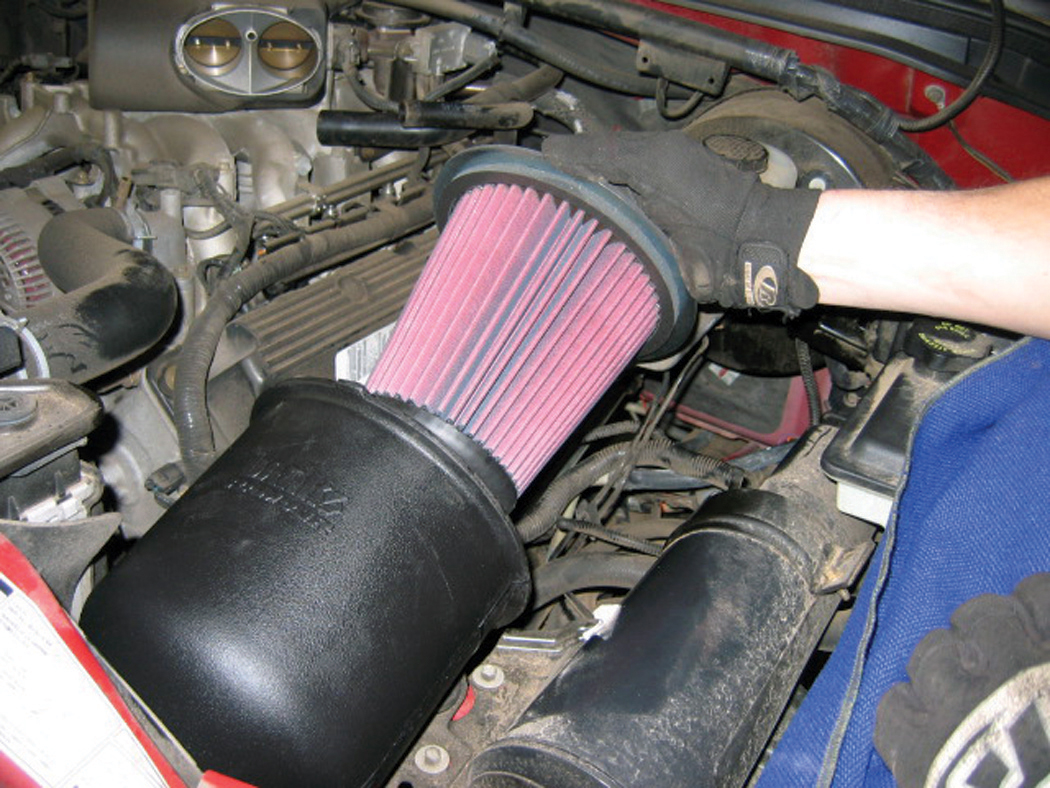
For the first part of the buildup, J&D worked with the crew at Banks and began the process of installing the full Banks Power Pack. They started by removing the stock exhaust and installing the Power Pack’s full-length headers, Y-pipe, and after-cat exhaust system. Banks’ headers are made using a .625-inch flange and stainless steel head pipes. Banks’ after-cat exhaust system uses the Banks monster muffler and stainless, 3-inch, mandrel-bent tubing. With the exhaust complete, J&D and Banks installed the air filter replacement and the Banks Trans Command to improve transmission function. The stock air filter assembly was replaced with a Banks custom housing, which dramatically improves the flow of air into the engine. The Trans Command increases transmission line pressure, changes shift points and converter lockup points, and helps eliminate unnecessary downshifting while towing on long grades.
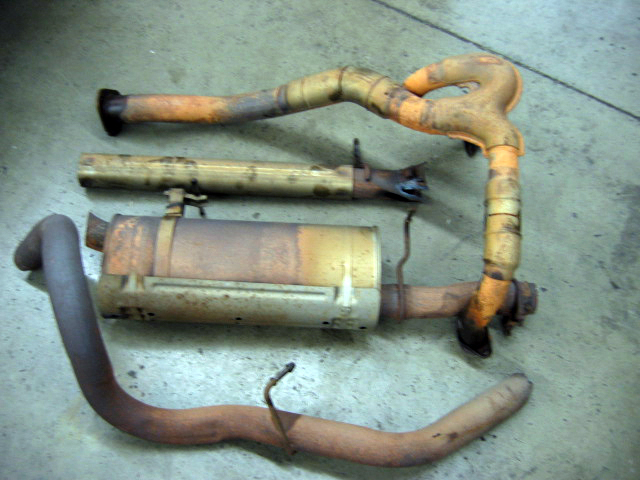
Evaluation of Performance Gains with the Banks Power Pack
With the first part of the installation complete, the truck was taken back to the street for an evaluation of the Power Pack system. The truck was put through the same four on-road evaluations as before and ran the 1/8-mile in 10.08 seconds at 68.47 mph, the 1/4-mile in 15.94 seconds at 83.49 mph, 30-50 mph in 3.10 seconds, and 50-70 mph in 4.90 seconds. The power pack produced an improvement of .93 seconds and 2.71 mph in the 1/8-mile, 1.1 seconds and 1.91 mph in the 1/4-mile, .82 seconds at 30-50 mph, and .87 seconds at 50-70 mph. During normal driving, the truck produced 12.7-13.5 mpg (a 1-1.2 miles-per-gallon improvement over stock).
Dyno Testing Results After Power Pack Installation
With the on-road evaluations complete, J&D put the truck back on its in-house chassis dyno for the Power Pack’s rear-wheel power numbers. On the dyno, the truck made 232.96 horsepower at 3,900 rpm and 343.06 lb-ft of torque at 3,400 rpm. These numbers showed an increase of 25.15 horsepower and 28.19 lb-ft of torque at the rear wheels. Once the dyno testing was complete, the truck was returned to its owner for evaluation. The owner reported a substantial power increase, a noticeable mileage increase, and an overall improvement in driveability, proving that statistical improvement can be felt in the seat of the pants in real-world applications.
Conclusion and Next Steps
For the first part of this buildup, we learned that by simply improving the flow of air into the engine and the flow of exhaust out of the engine, we were able to significantly improve the usable power of the truck. In our second installment, we’ll follow along as the crew at J&D adds their own selection of parts to further improve the power and mileage of the 1999 V-10.
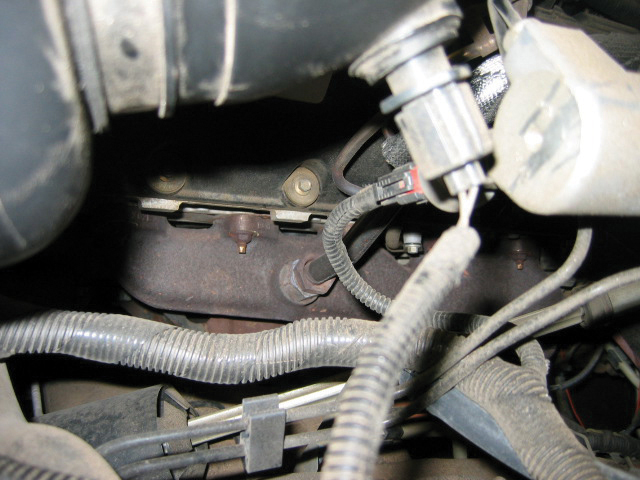
1. The factory cast iron exhaust manifolds are a five-into-one “log”-type design and are very restrictive.
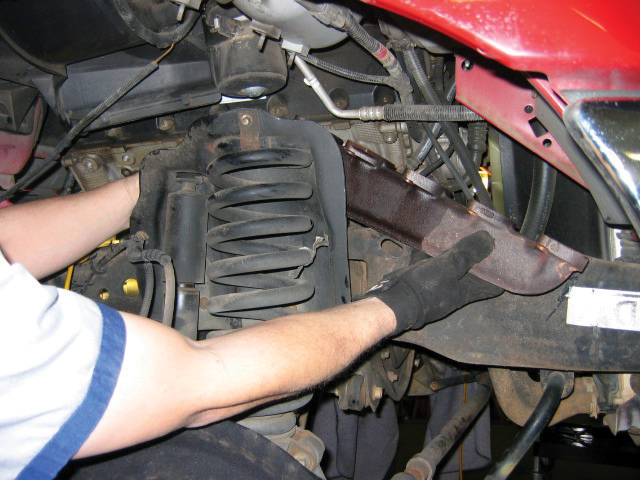
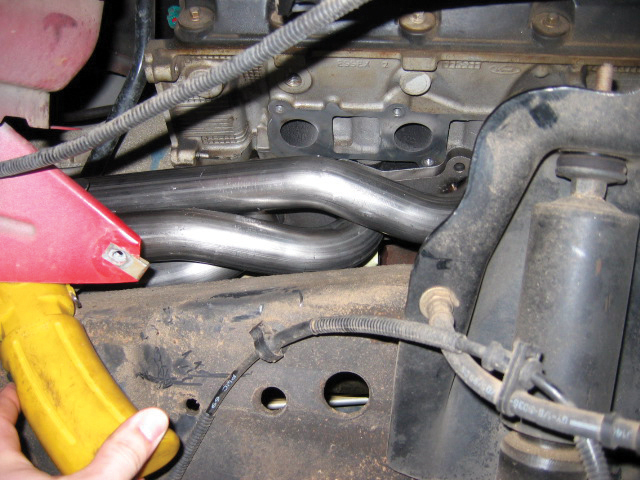
2. There is little clearance between the factory exhaust manifold and the frame on Ford’s V-10 SuperDuty.
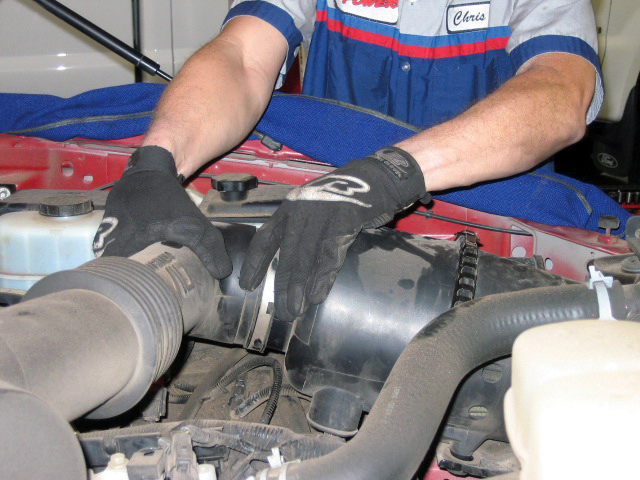
3. The technicians begin by removing the factory air box to make access to the exhaust manifold easier.
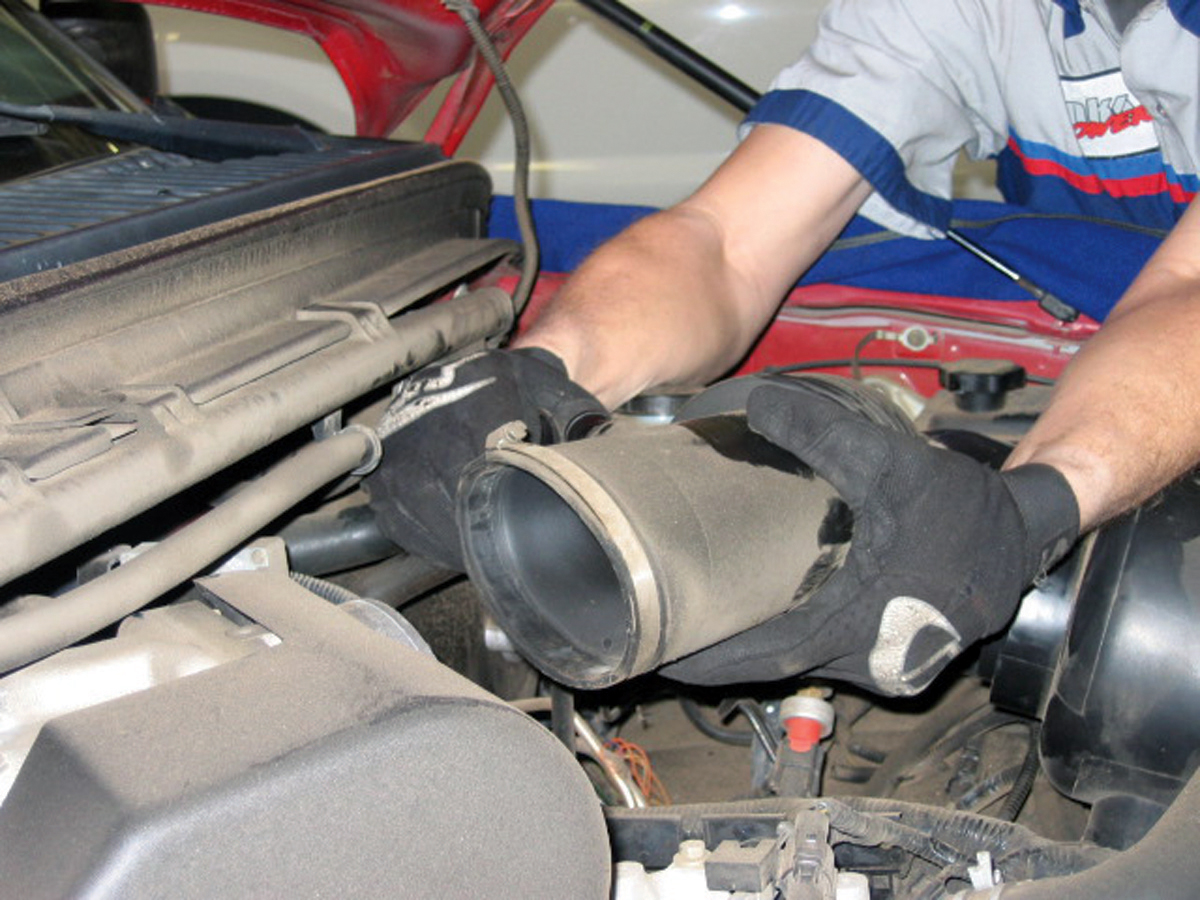
4. The intake is completely removed from the truck.
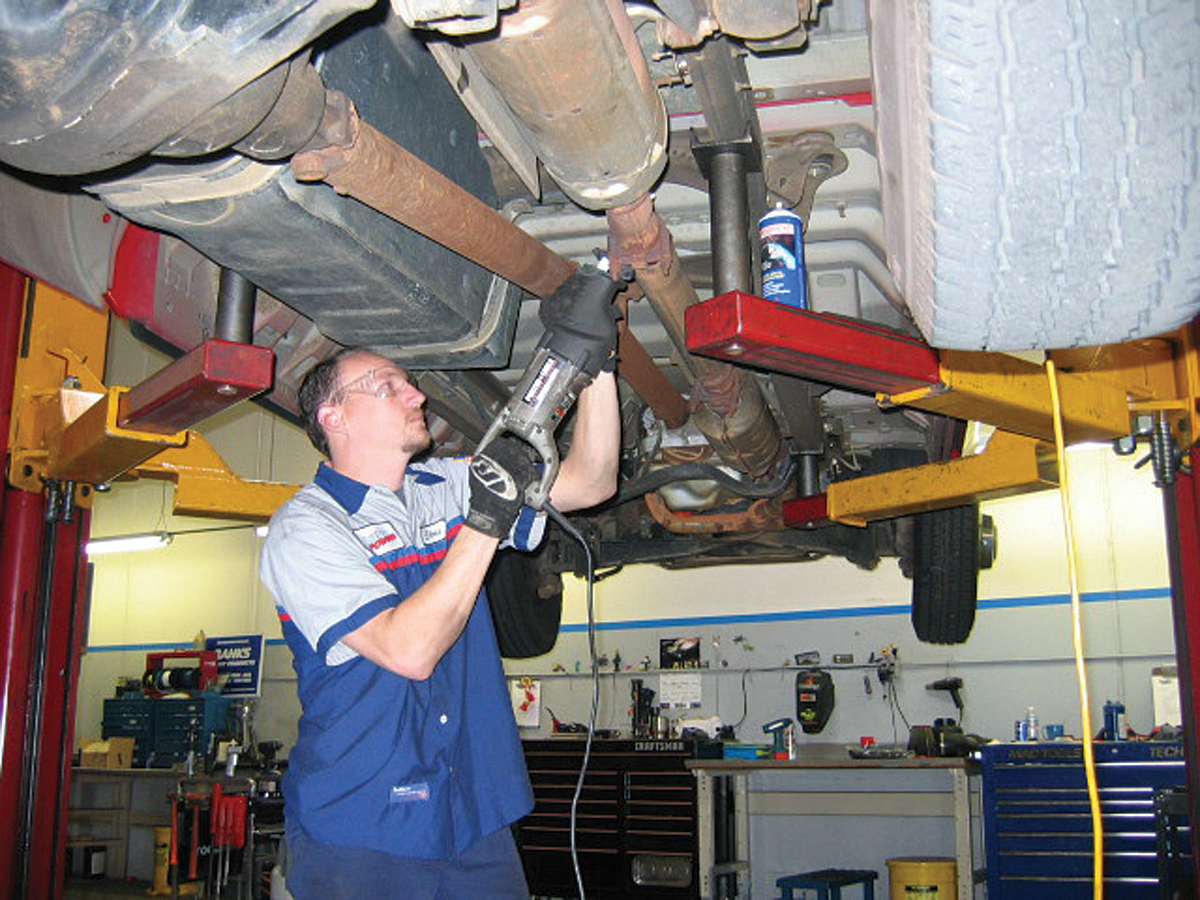
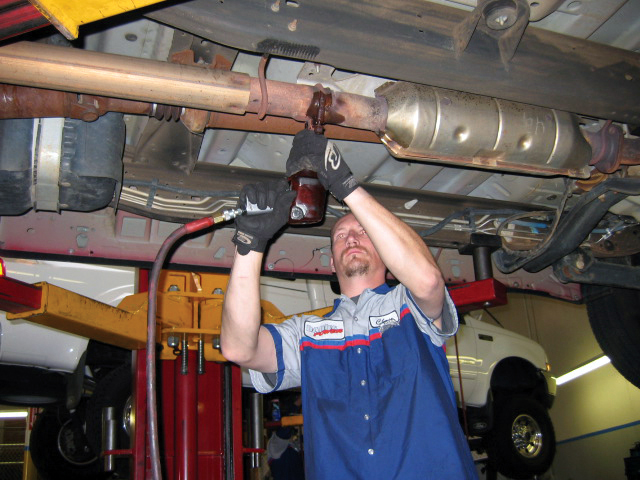
5. With the truck up on the lift, the factory exhaust is cut out.
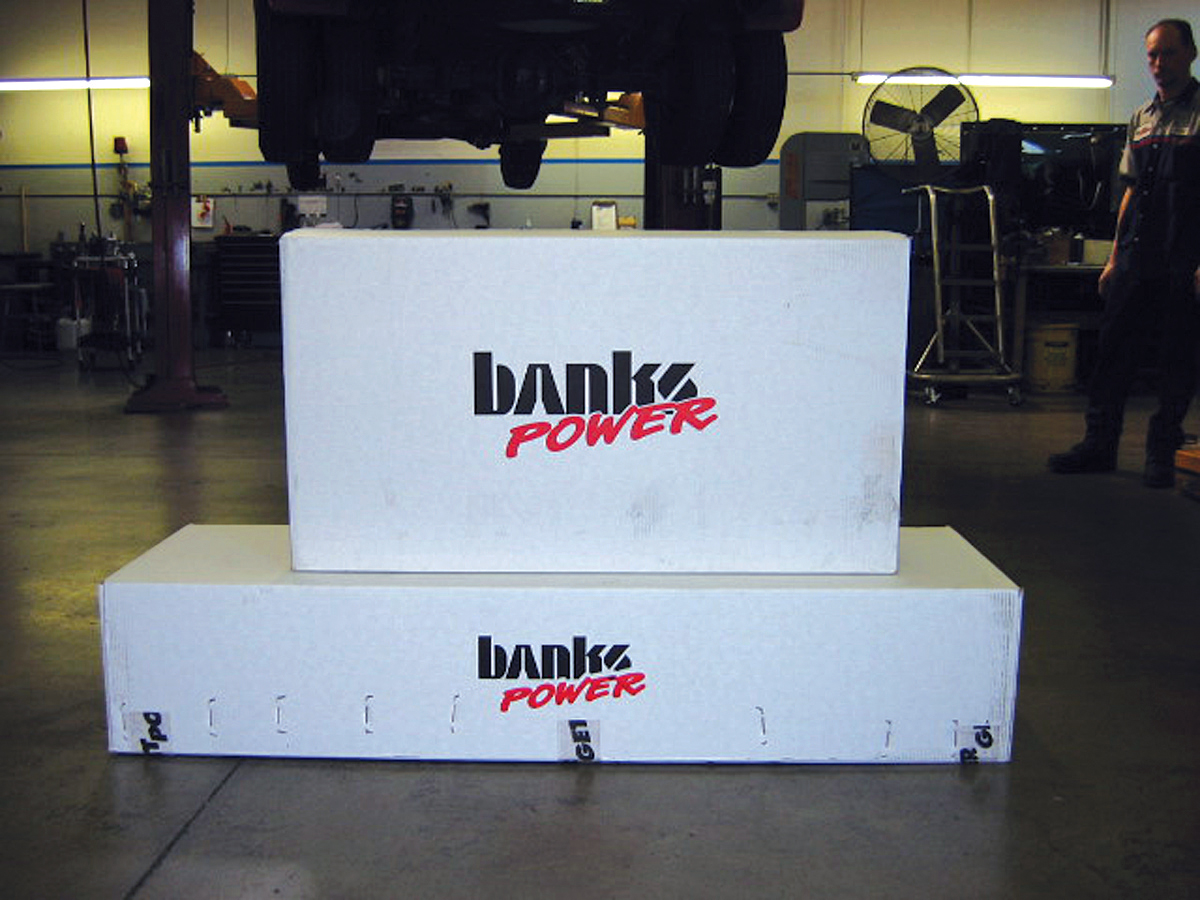
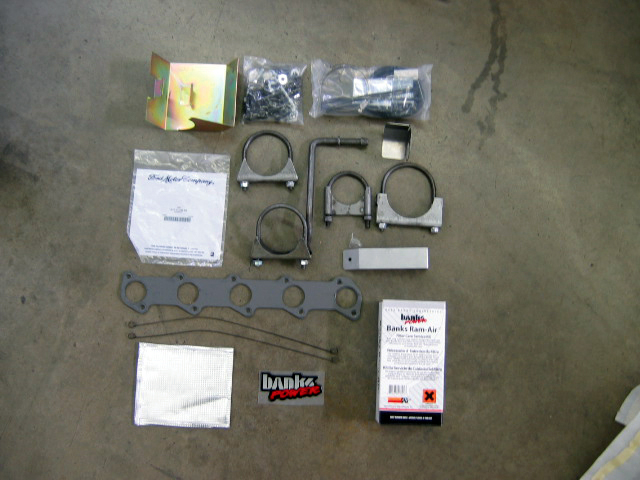
6. Here’s Banks’ new exhaust system in the box and ready to go on the truck.
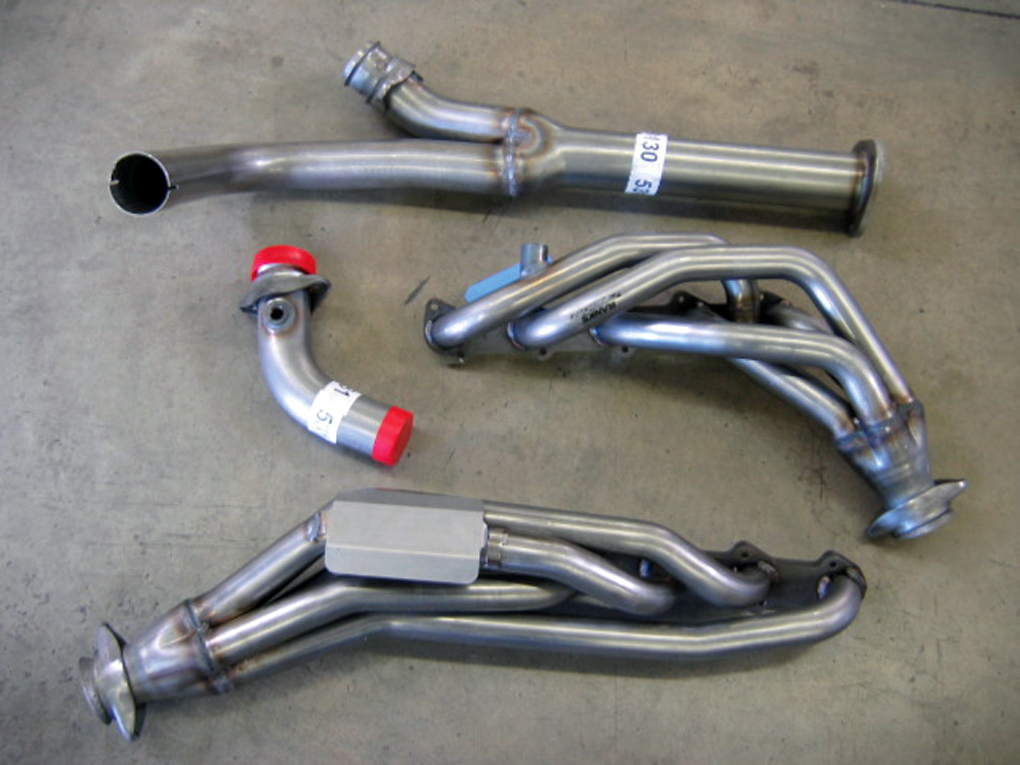
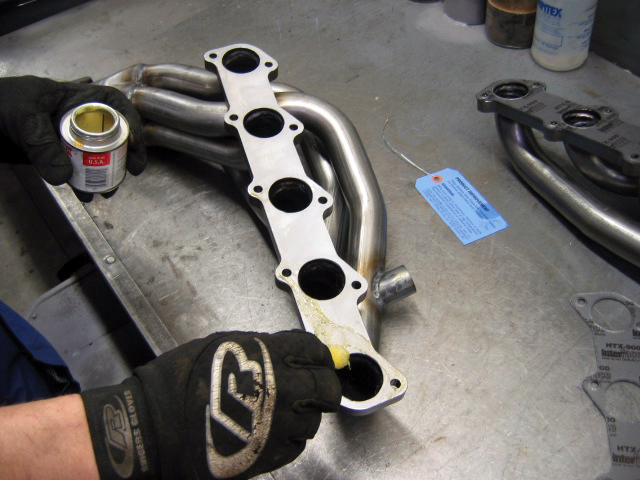
7. Banks’ headers use massive flanges and full stainless steel construction.
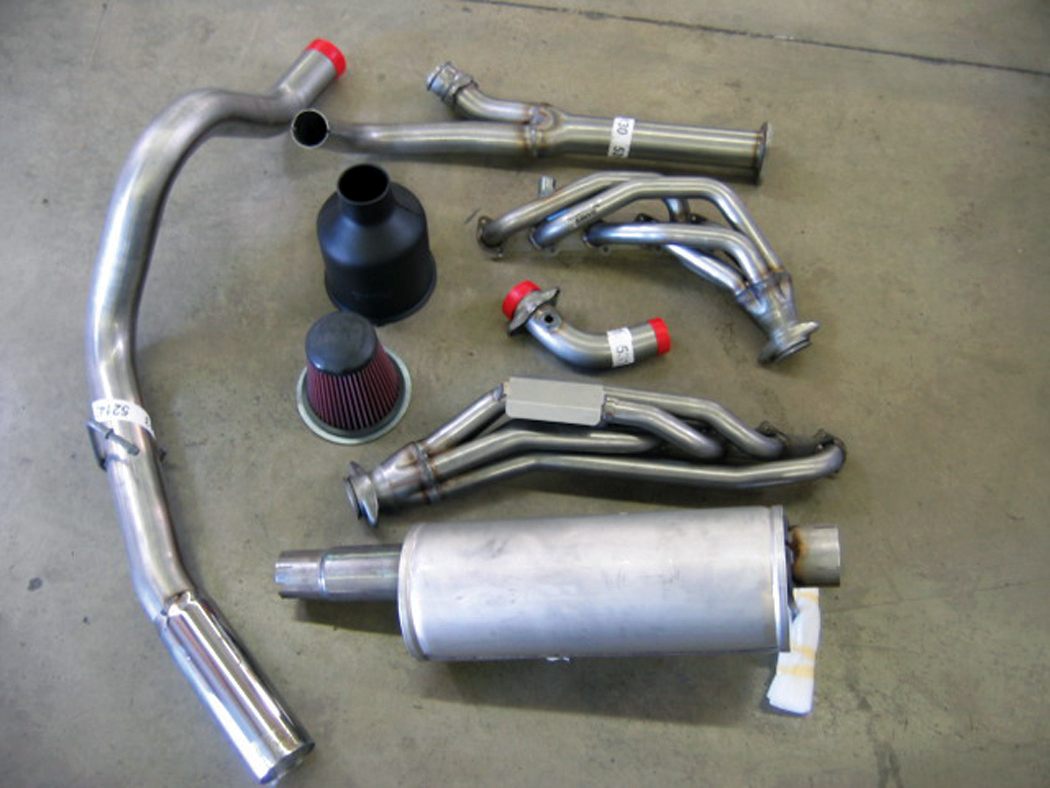
8. Here the technicians laid out the intake and exhaust portion of Banks’ Power Pack.
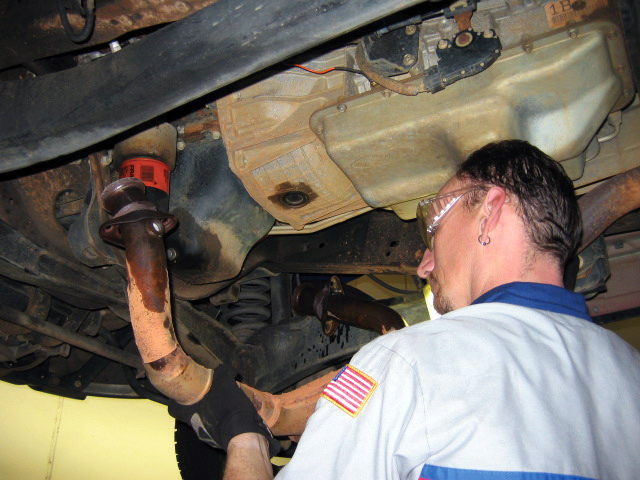
9. The factory cat pipe is carefully removed from the truck, as it will be reused later.
10. Six bolts are removed and the crossover pipe is out of the truck.
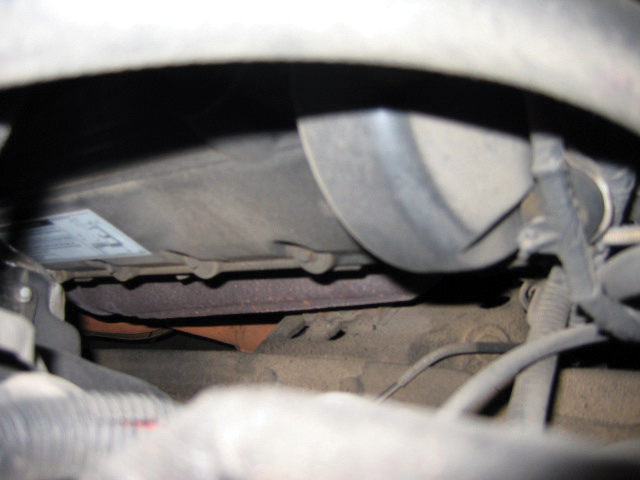
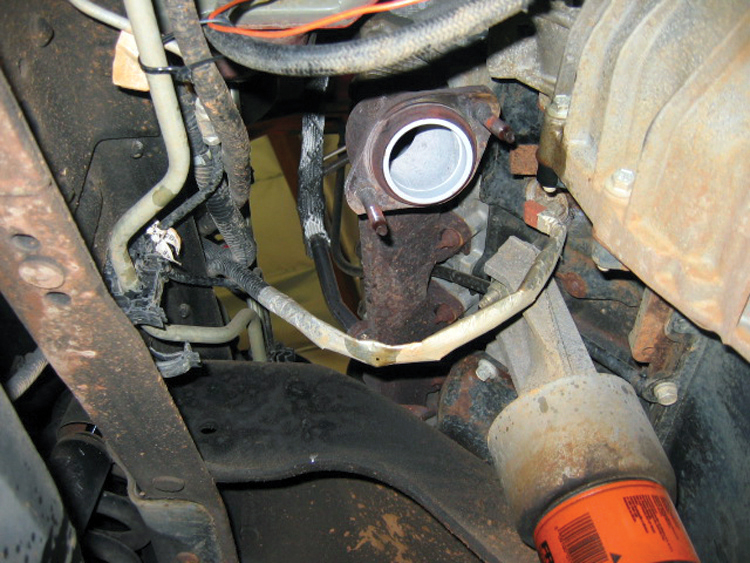
11. Here’s an underside look at the restrictive exhaust manifold.
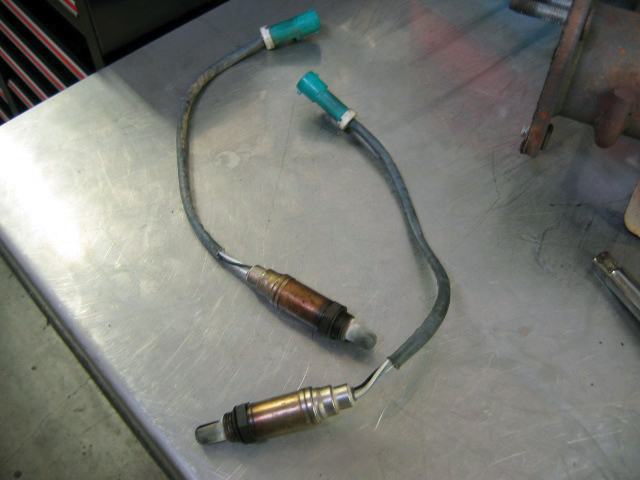
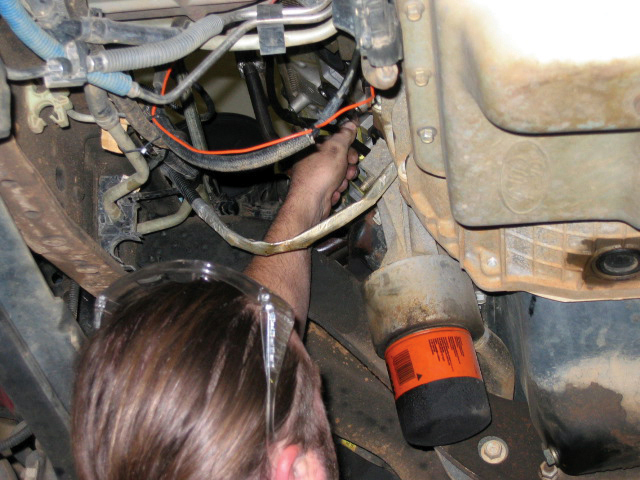
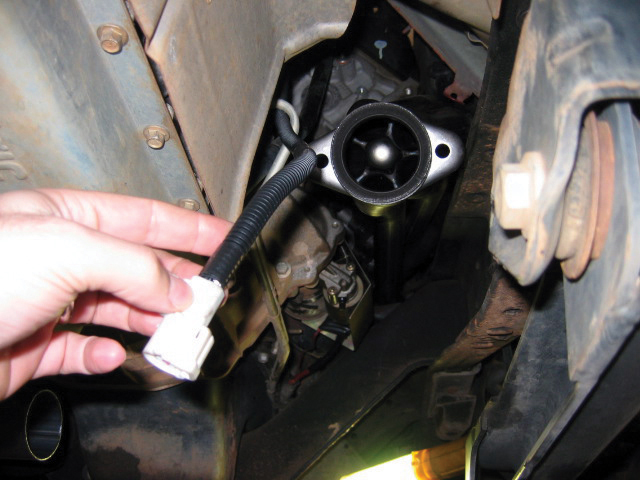
12. Although they’re not included in the kit, J&D Performance recommends replacing the oxygen sensors when you do a complete exhaust change.
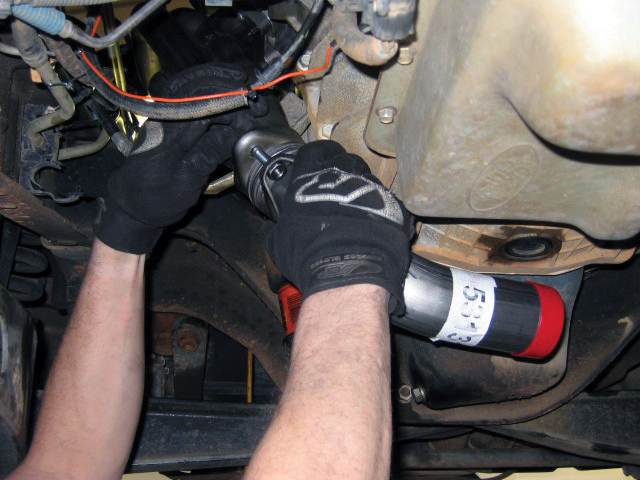
13. All the hardware to complete the exhaust install is included in the Power Pack kit.
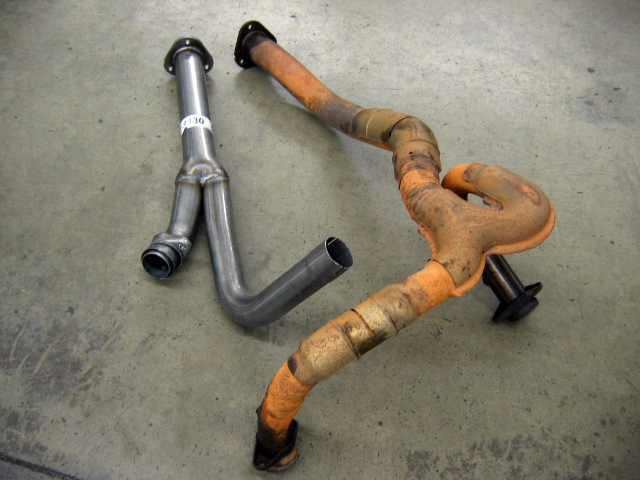
14. With the stock exhaust completely removed from the truck, you can see just how restrictive it is compared to the new Banks kit.
15. The unnecessary turns of the factory crossover pipe create restriction, which is eliminated with the new Banks kit.
16. With the bolts all removed, the exhaust manifold is pulled out through the fender. As we said, space is tight.
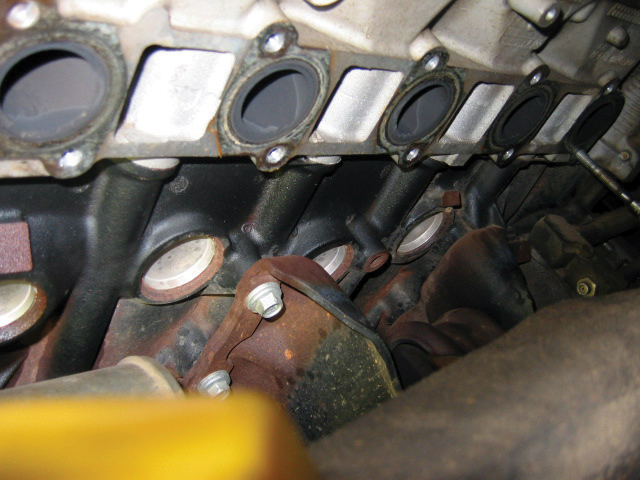
17. Here you can see the factory aluminum head and exhaust ports.
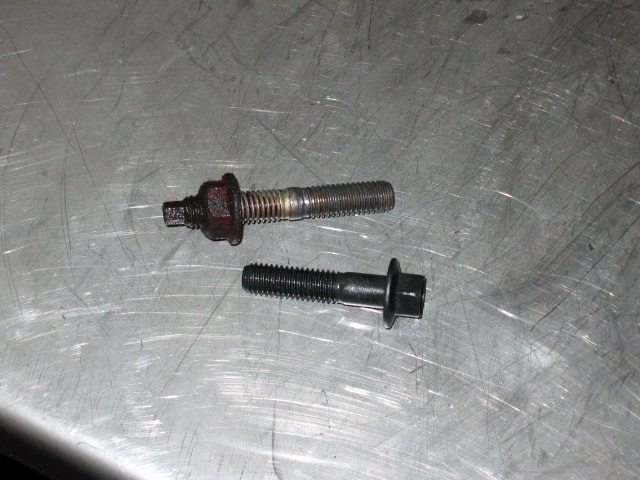
18. Broken exhaust bolts are a common problem with this installation. In these instances, an Easy Out or bolt extractor is used to remove the remaining portion of the bolt from the cylinder head.
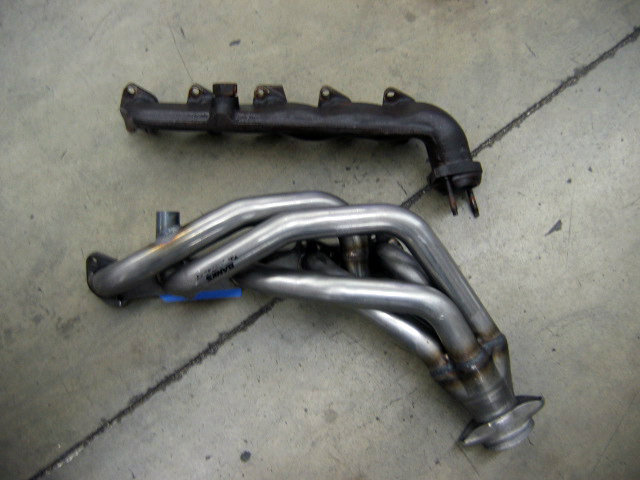
19. Here’s the factory exhaust manifold next to the Banks header.
20. Once the exhaust manifold is removed, the mounting surface is thoroughly cleaned and prepped for the new header.
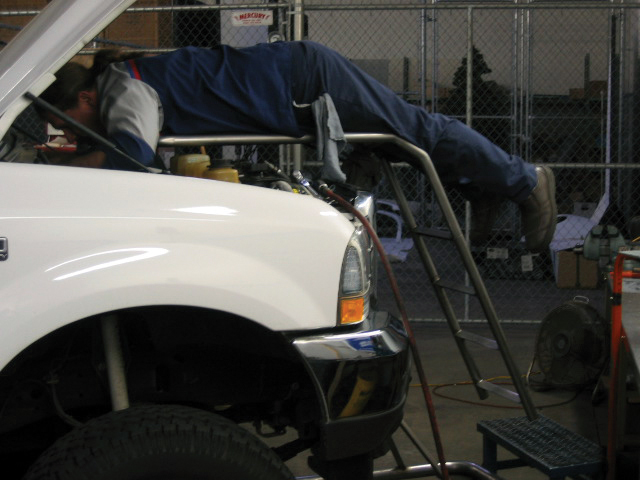
21. Removing the headers requires a special stand to allow the technicians to lie across the engine of this large truck.
22. The technicians prep the header for the gasket install.
23. The clearance is very tight when installing the new headers.
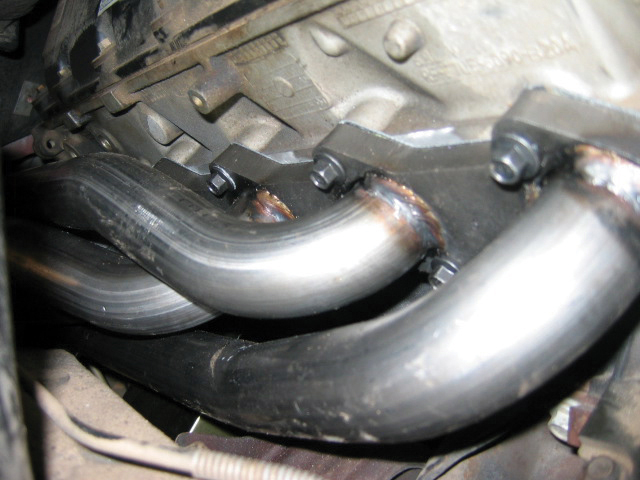
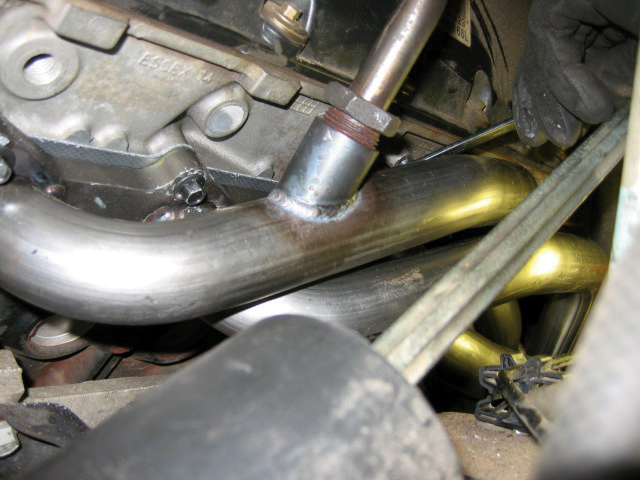
24. Once installed on the truck, the headers are an excellent fit.
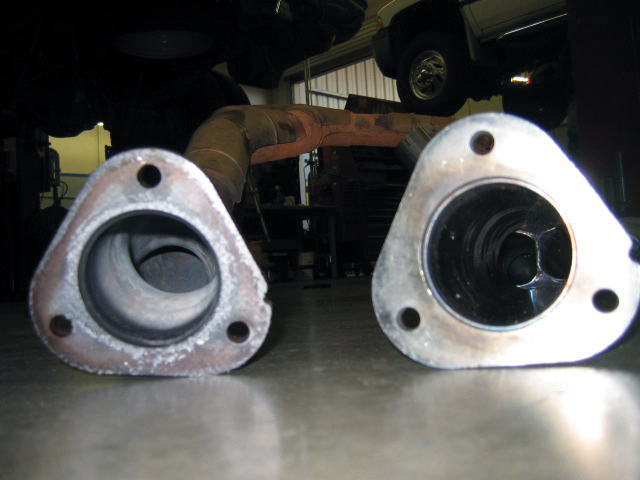
25. Check out the difference between the factory 2.5-inch exhaust and the Banks 3-inch exhaust. Also note the increase flange diameter.
26. All factory emissions systems are retained with the new Banks exhaust system. This is one of the benefits of the package.
27. Once installed, the Banks headers clear the suspension and transmission with plenty of room.
28. The new passenger’s-side portion of the crossover pipe is installed on the truck.
29. Next the new driver’s side of the crossover pipe is installed on the truck. Be sure to carefully check the tightening of the flange bolts before mounting the remainder of the exhaust system.
30. Both portions of the crossover pipe are attached just above the transmission mount.
31. New oxygen sensors are installed in the Banks system rather than using the old sensors.
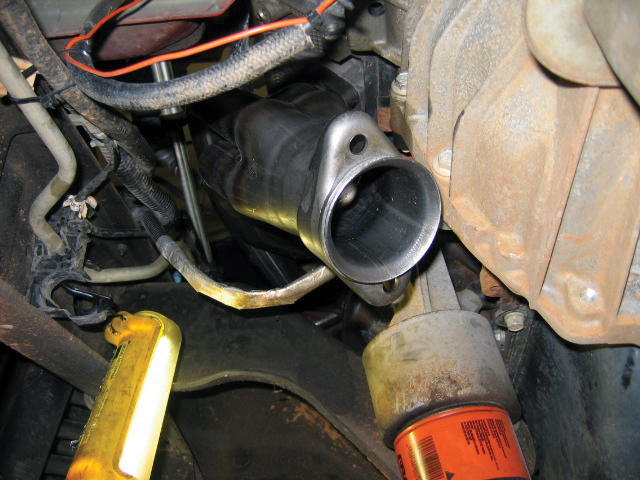
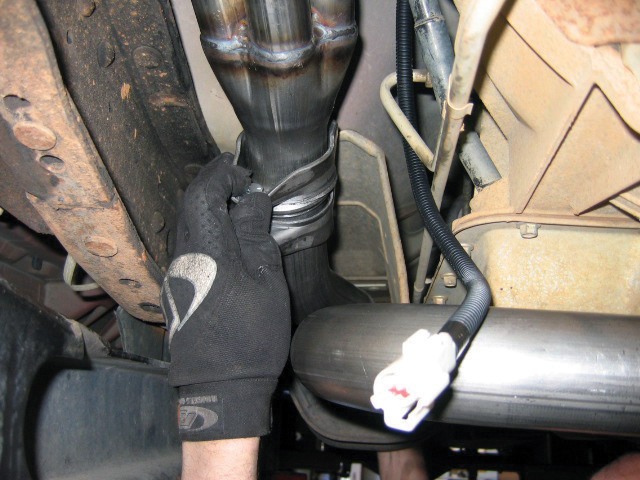
32. The crossover pipe is bolted to the new headers.
33. Here’s an overall view of the crossover and header system on the truck.
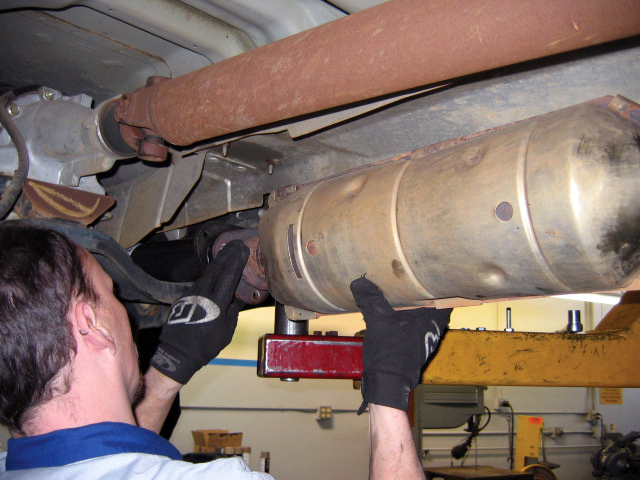
34. In order to retain emissions-legal status, the cat pipe is reinstalled.
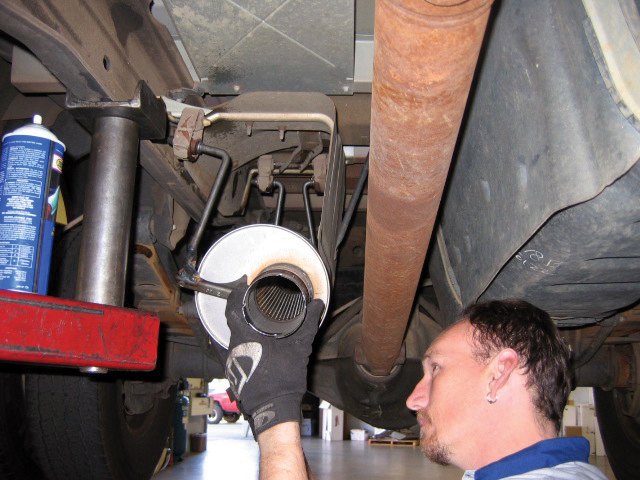
35. All of the factory hangers are used to install the new muffler. Again, this system is designed around efficiency.
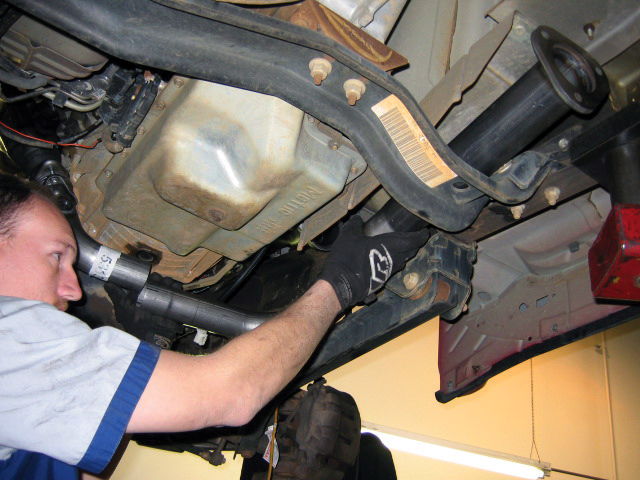
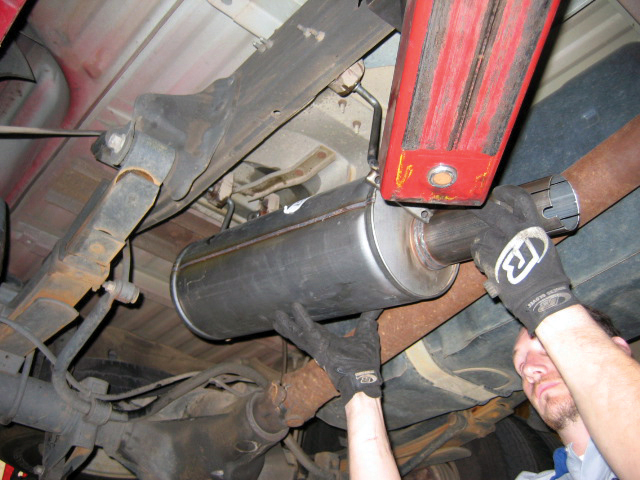
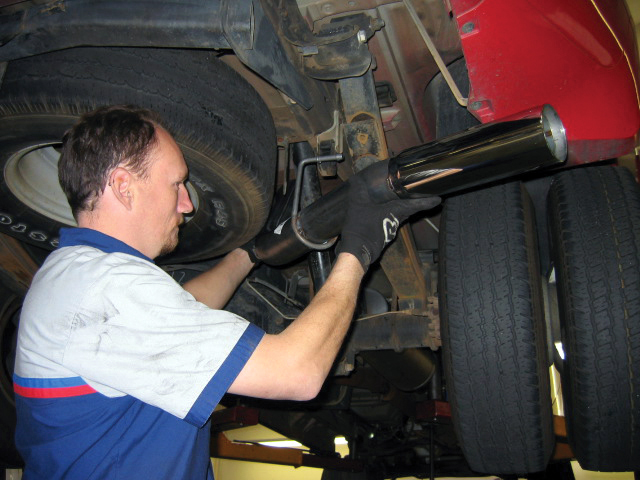
36. The Banks muffler is maneuvered into place.
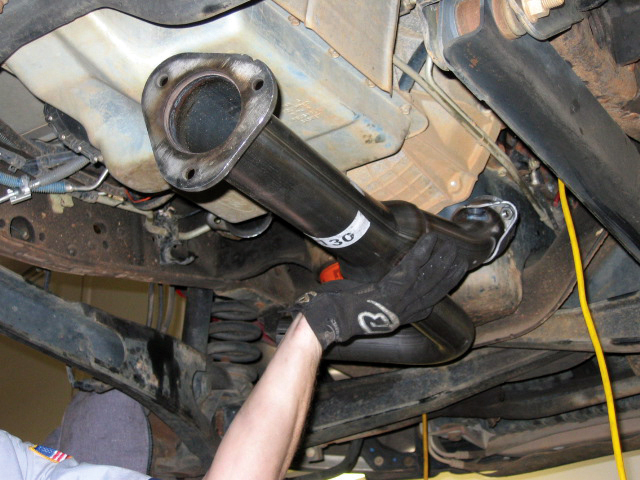
37. After the tailpipe is installed the exhaust will be complete.
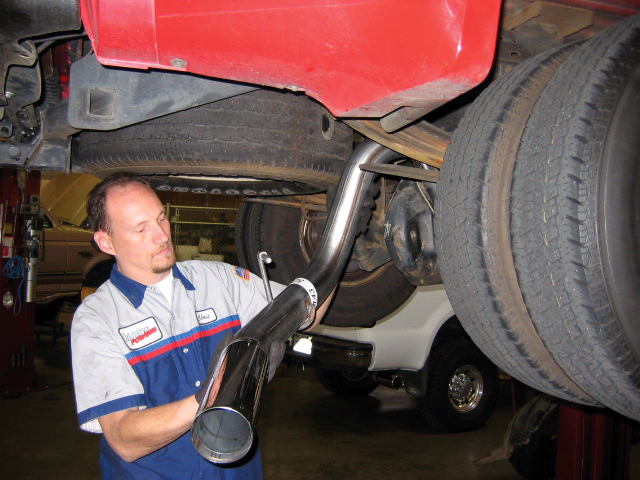
38. The tailpipe is maneuvered between the shock and the spare tire.
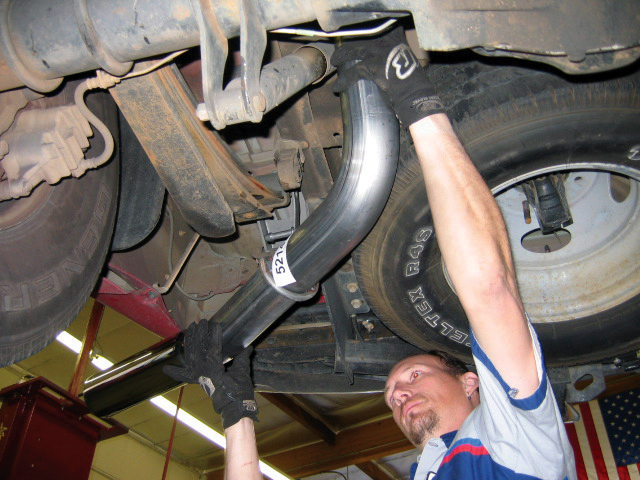
39. The rear portion of the Banks tailpipe is moved into place.
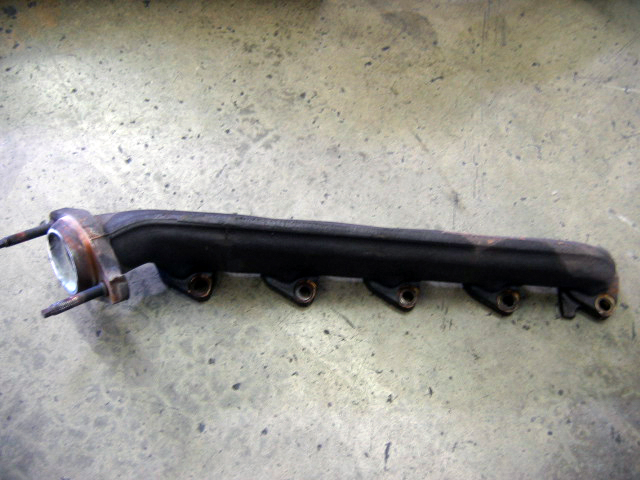
40. Here’s a look at the factory exhaust manifold removed from the truck. Consider using it as a garage art sculpture, as it will be of little use now.
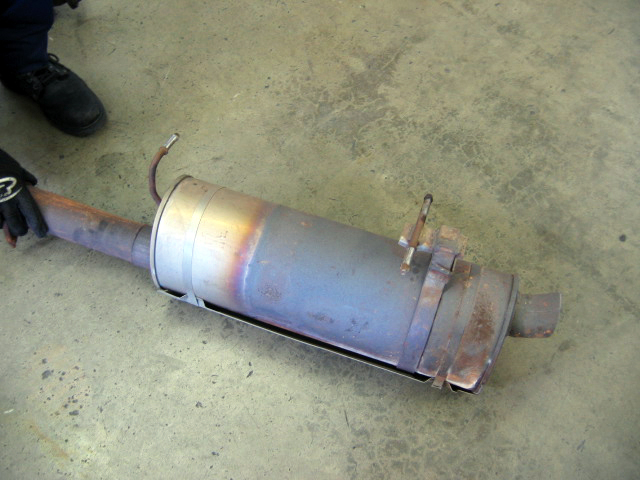
41. This is the factory muffler removed from the truck—no sculpture here!
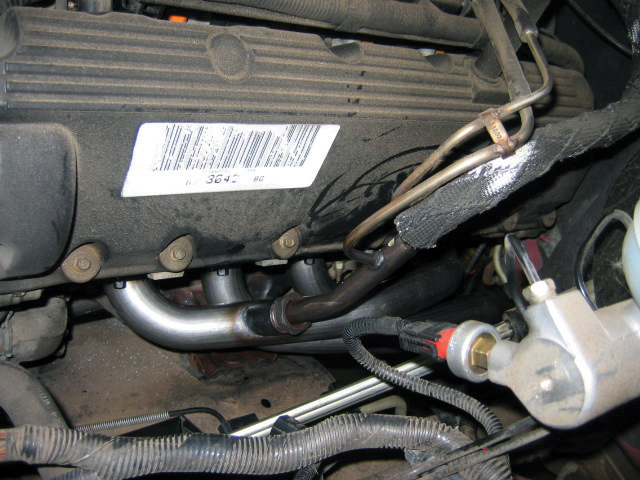
42. This is the header installed with all the emissions attached.
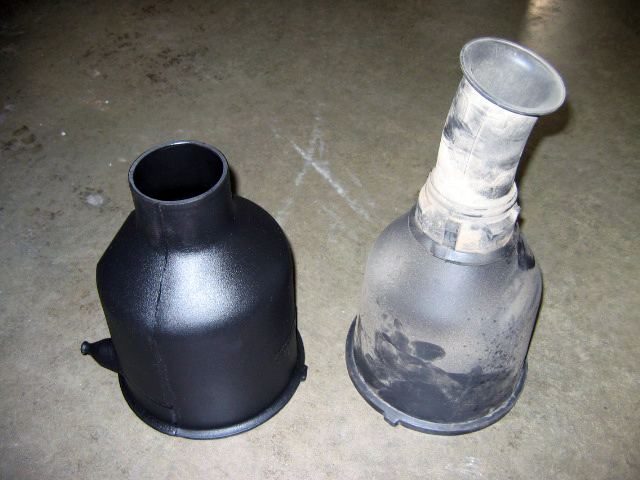
43. Here’s the Banks intake housing next to the stock intake housing. Note the larger diameter.
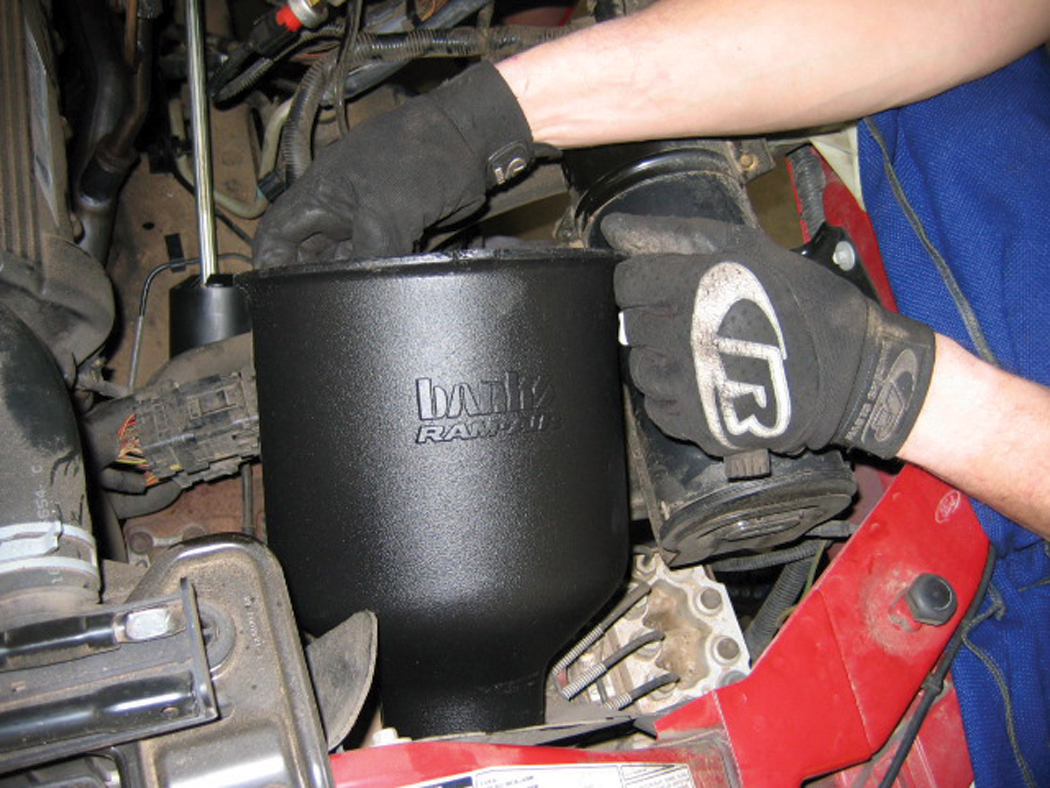
44. The new intake housing is installed in the truck. As you can see, it utilizes all of the space available to maximize the size of the air filter.
45. The Banks washable filter is installed and the remaining portion of the factory intake is put in place. The truck is ready to run.
ARTICLE SOURCES
J&D Performance
1718 South Grove Ave., Unit B
Ontario, CA 91761
909-930-1100

Banks Power
Gale Banks Engineering
546 Duggan Ave.
Azusa, CA 91702
800-601-8072