The story of Terry Beaty’s ’50 Ford F-1 is no whopper of a fishing tale—this is the one that did not get away, a pickup that has been in possession of the Beaty family since the truck was nearly new.




The story of Terry Beaty’s ’50 Ford F-1 is no whopper of a fishing tale—this is the one that did not get away, a pickup that has been in possession of the Beaty family since the truck was nearly new.

In this day and age, getting the most power out of your late-model truck or SUV is both difficult and easy. Now that we have covered ourselves technically, we will give you the reasoning behind this convoluted theory. New vehicles are hard to work on but easy to upgrade. See? That was easy.

The Holley LS West Fest 2024 is a haven for automotive enthusiasts, where the asphalt becomes a stage for the most electrifying display of drifting mastery you’ve ever seen. Drifting, that high-octane symphony born from the streets of Japan, takes center stage in the Drift Challenge. It’sa spectacle that’s part adrenaline rush, part precision ballet. These drivers aren’t just racers, they’re artists, wielding their cars like brushes on a canvas, deliberately throwing them sideways through tight corners at breakneck speeds, the smoke from their tires painting the landscape with a vivid display of raw power and skill.

We met Jeff Jordan at the 2004 Texas Street Machine Nationals, held at Lady Bird Johnson Park outside the city limits of picturesque Fredericksburg, Texas. Jeff and his Torch Red ’56 Chevrolet stepside pickup were attending the event, along with his brother, Rick, who owns a similarly hued Pro Street ’83 Chevrolet Silverado. We quite logically assumed that both Jeff and Rick were from Texas, but the reality was that brother Jeff had towed his ’56 all the way from Gilbert, Arizona, to attend the event and hang out with his brother, who lives in Harlingen, Texas. Not only would both Jeff and Rick’s Chevys win spots on the Texas Nationals Top 10 Truck list, but Jeff’s immaculate ’56 big-window also won the C&C Productions Long Distance award. Now let’s take a look at this beautiful half-ton hauler. “I built this truck with my son, Jeff Jr., as a father-and-son project, and it took 10 years to complete,” says Jeff Sr. Ten years?
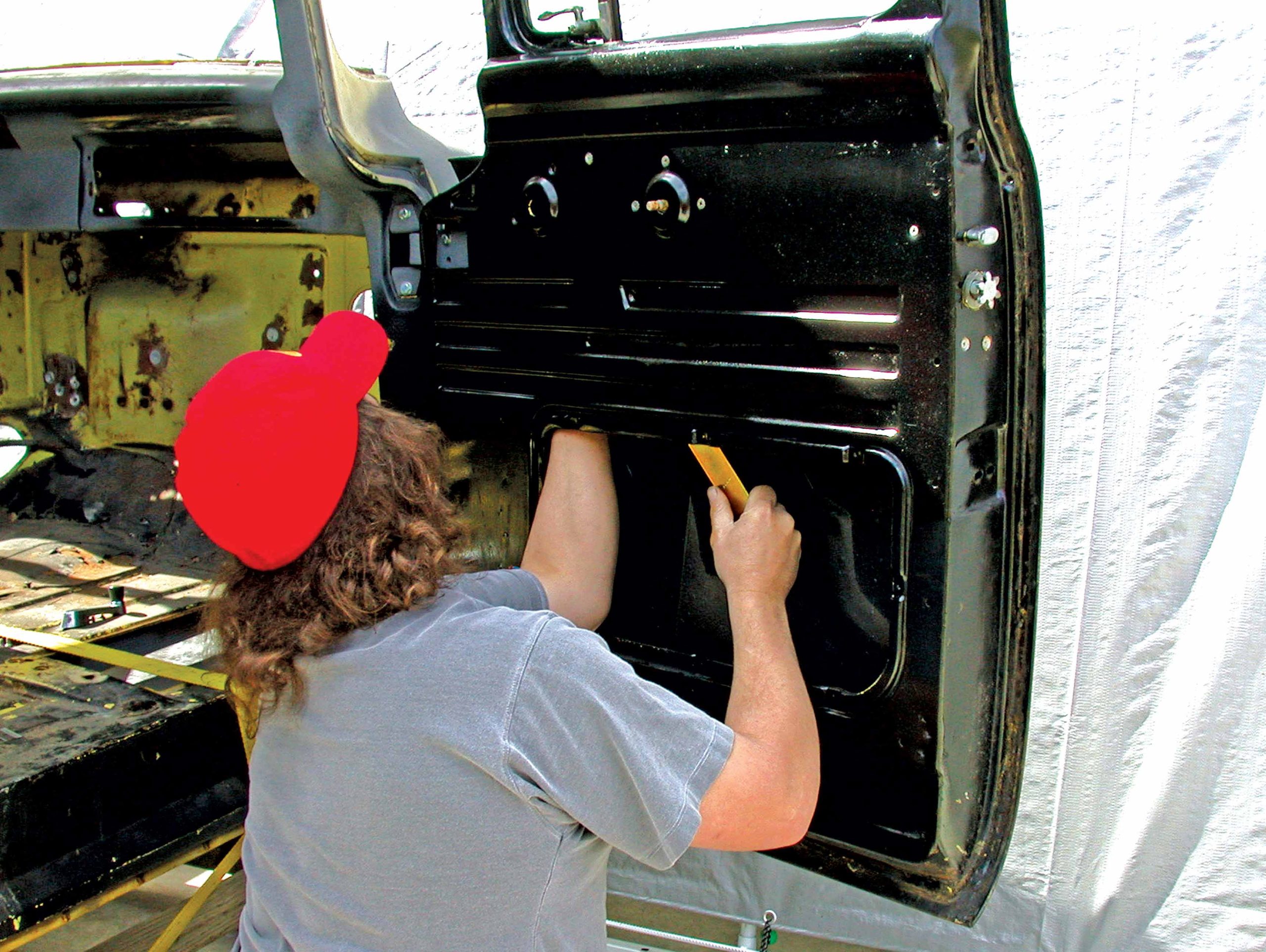
Adding power windows is a popular aftermarket option for classic vehicles these days. Worn-out window regulators have given people problems for years, and as replacement parts have become increasingly more expensive and harder to find, it’s simply easier and often cheaper to replace the old regulators with new electric ones. In the past we had to raid wrecking yards for parts that would adapt into our vehicles, and as expected there were generally a few problems associated with doing this. First, you don’t always know the condition of the parts being used, even though they look good; and second, you would need some background in window geometry to get the job done correctly. Finally, you need a certain level of basic fabrication skill and tools, which would be more than basic hand tools. With today’s technology and the availability of well-engineered aftermarket power window kits this has all changed, as it’s commonplace for most people to go straight to a kit designed for their vehicle.
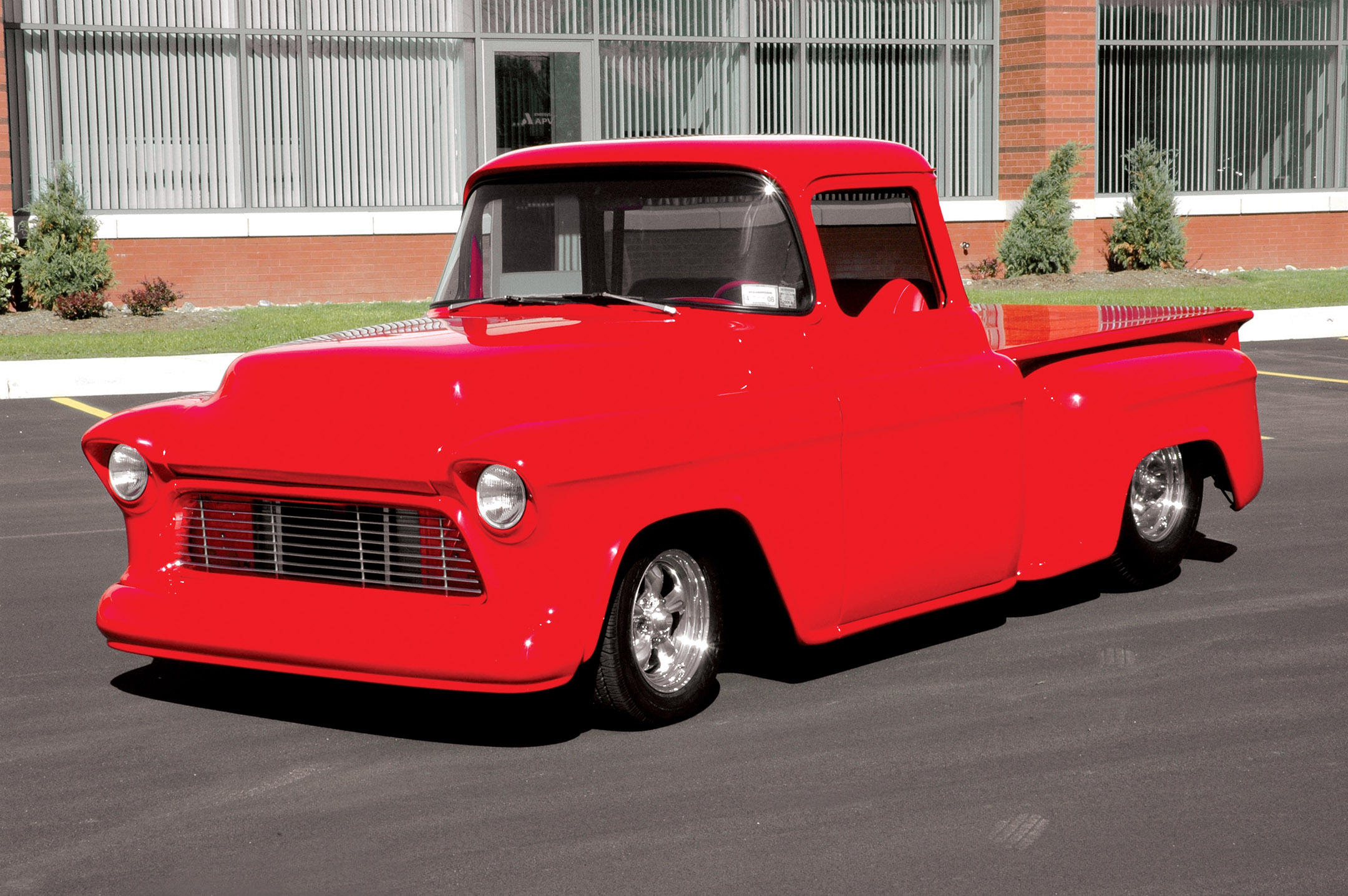
It often takes a serious challenge to test a person’s capabilities. After years of driving a string of performance cars, Terry Short wanted something different sitting in his North Tonawanda, New York, garage. So, he set out and found this ’55 Chevy big-window pickup in an apple orchard. He just knew he had met his challenge.
Terry Short’s ’55 Chevy pickup has a just-right rake, a monochromatic finish on a super-smooth body and a potent big-block Chevy. All these elements combine to make this Hot Rod Red truck a perfect cruising machine. Short’s goal was to build a truck that if you couldn’t see it, then you could certainly hear it coming. Though the roof went unchopped, the remainder of the body was extensively reworked and is devoid of chrome accessories.
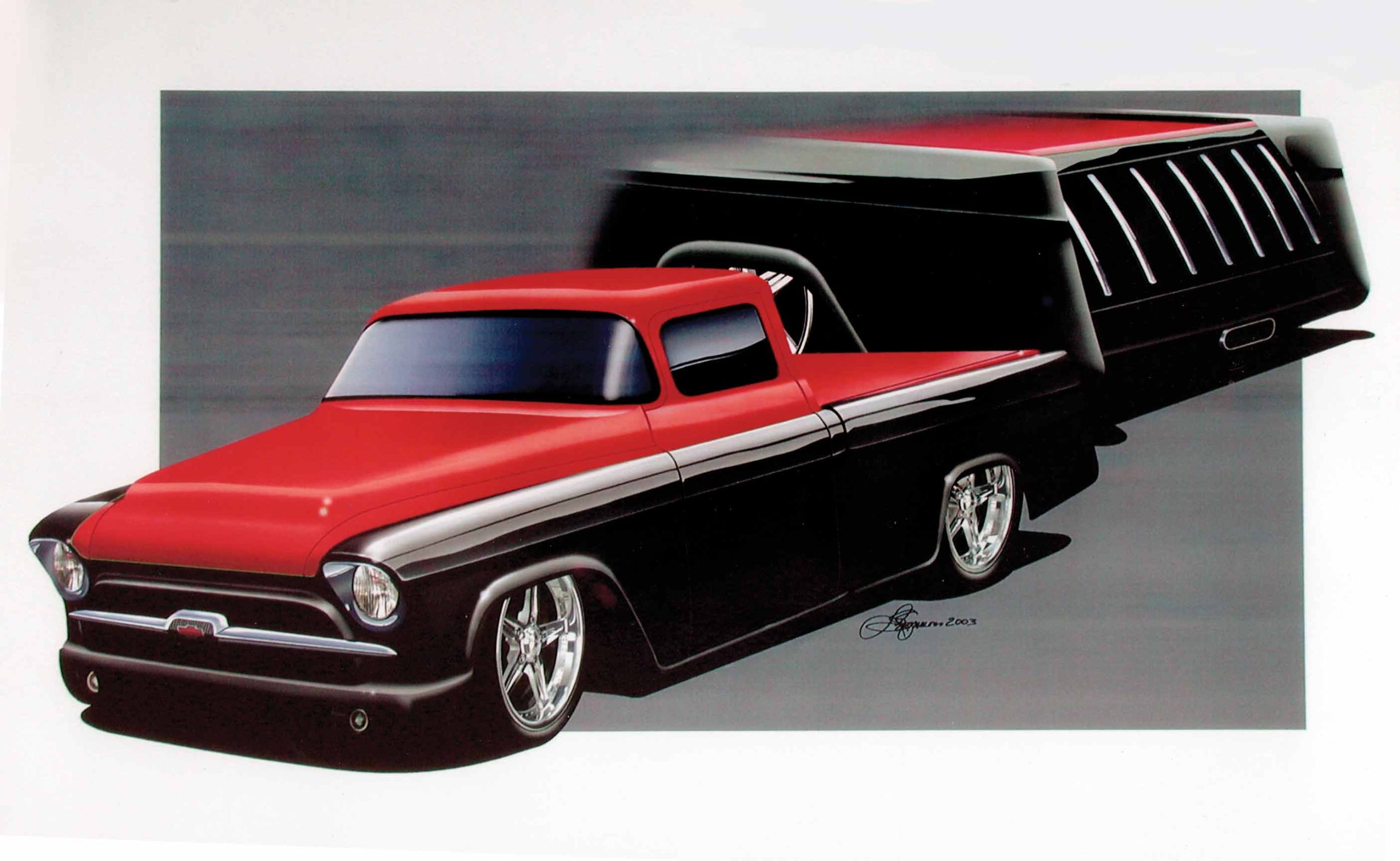
After 1-1/2 years of preparing a rock-solid foundation for our Cimtex Rods-constructed ’56 Chevrolet Super Cameo pickup, the time finally came to hang sheetmetal, but not without experiencing a few major disappointments. “All I can say is, before you buy a truck cab or any kind of old car body, look before you leap,” commented Darrell Cimbanin of Cimtex Rods after picking up our ’56 Chevy big-?window cab from True Grit Sandblasting in Hutto, Texas. This cab was in worse condition than we originally thought. It’s easy to disguise what appears to be a good-looking truck cab with plastic filler and a nice paint job. Sometimes even the experts can be fooled.
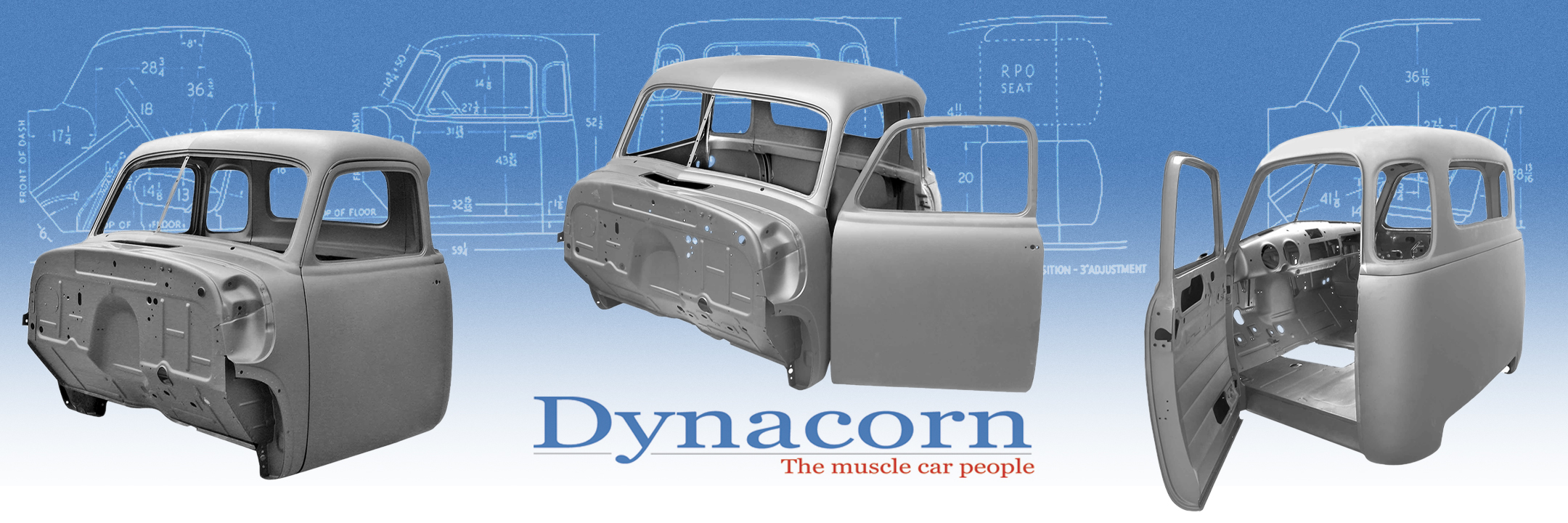
For years, truck builders have searched, looking for that much-sought-after early five-window Chevy pickup project. They are still around and are occasionally found, but it’s getting tougher, and their condition is ever worsening. It’s simple math really: Only so many remain, and many of the really solid ones have been spoken for. To The Delight Of Custom Truck Builders Everywhere, The All-Steel Dynacorn ’47-’53 Chevrolet Five-Window Cab Is Now A Reality!
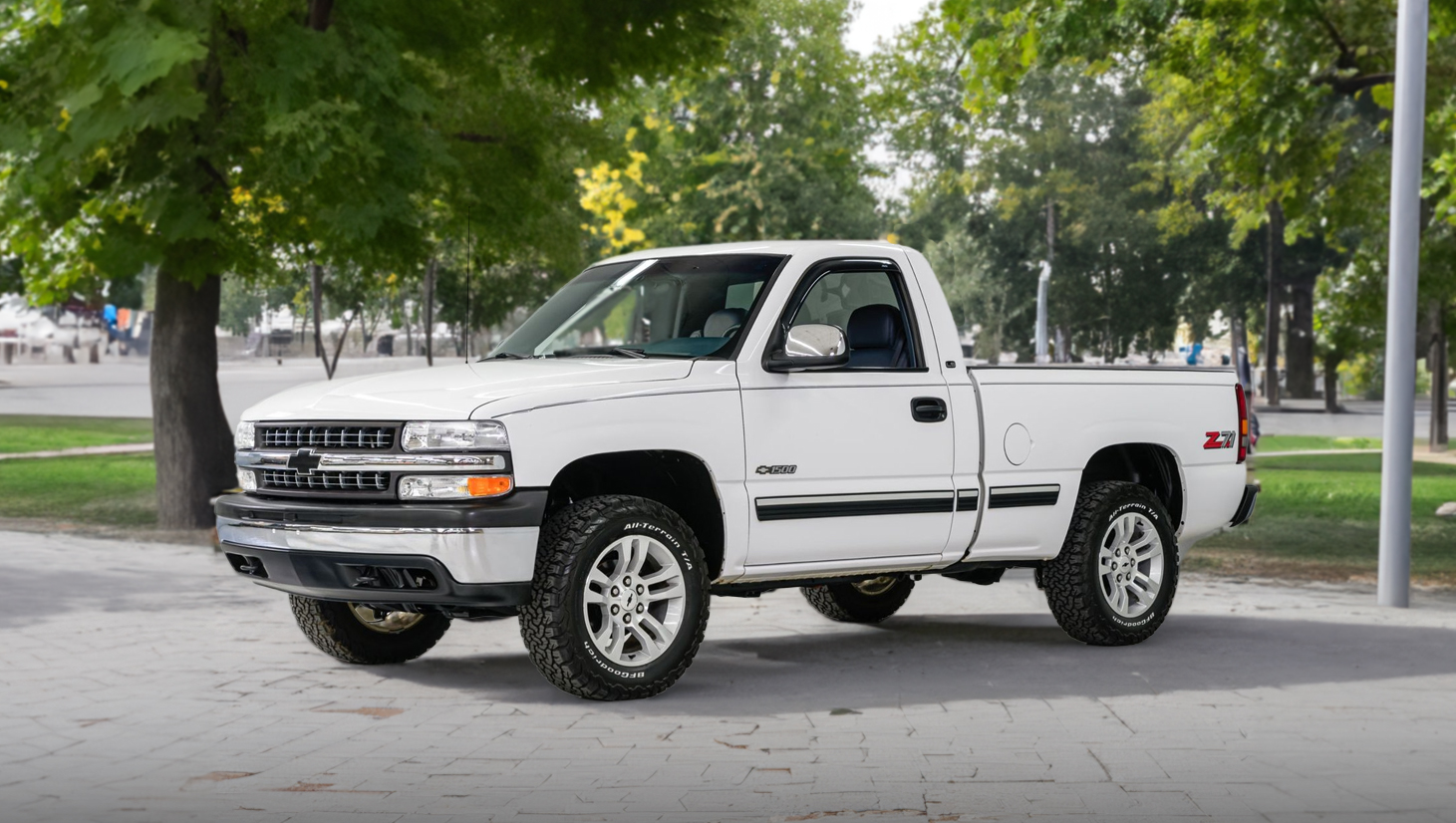
The white ’99 Silverado was beginning to show the wear and tear of fighting the highway wars the last few years. The once proud and pampered show truck—a standard cab shortbed with matching cab-high camper shell—hadn’t spent much time in daily service until recent years, but now it bore its share of dings, dents and scratches. It was obvious that the 50,000 miles on the odometer hadn’t done the 5.3-liter V-8 much good. Part of the reason for the dissipated performance was the exhaust system, a very tired, less-than-top-quality aftermarket after-cat that had started banging, squeaking and leaking.
Installing a new after-cat from MagnaFlow was at the top of this owner’s agenda. He acquired a MagnaFlow (part No. 15617) polished stainless steel after-cat performance system for his Chevy, and because he’s in the automotive business and has a lift at his own facility, all he had to do was enlist the help of a colleague experienced in exhaust system installs to lend a hand with the hookup.
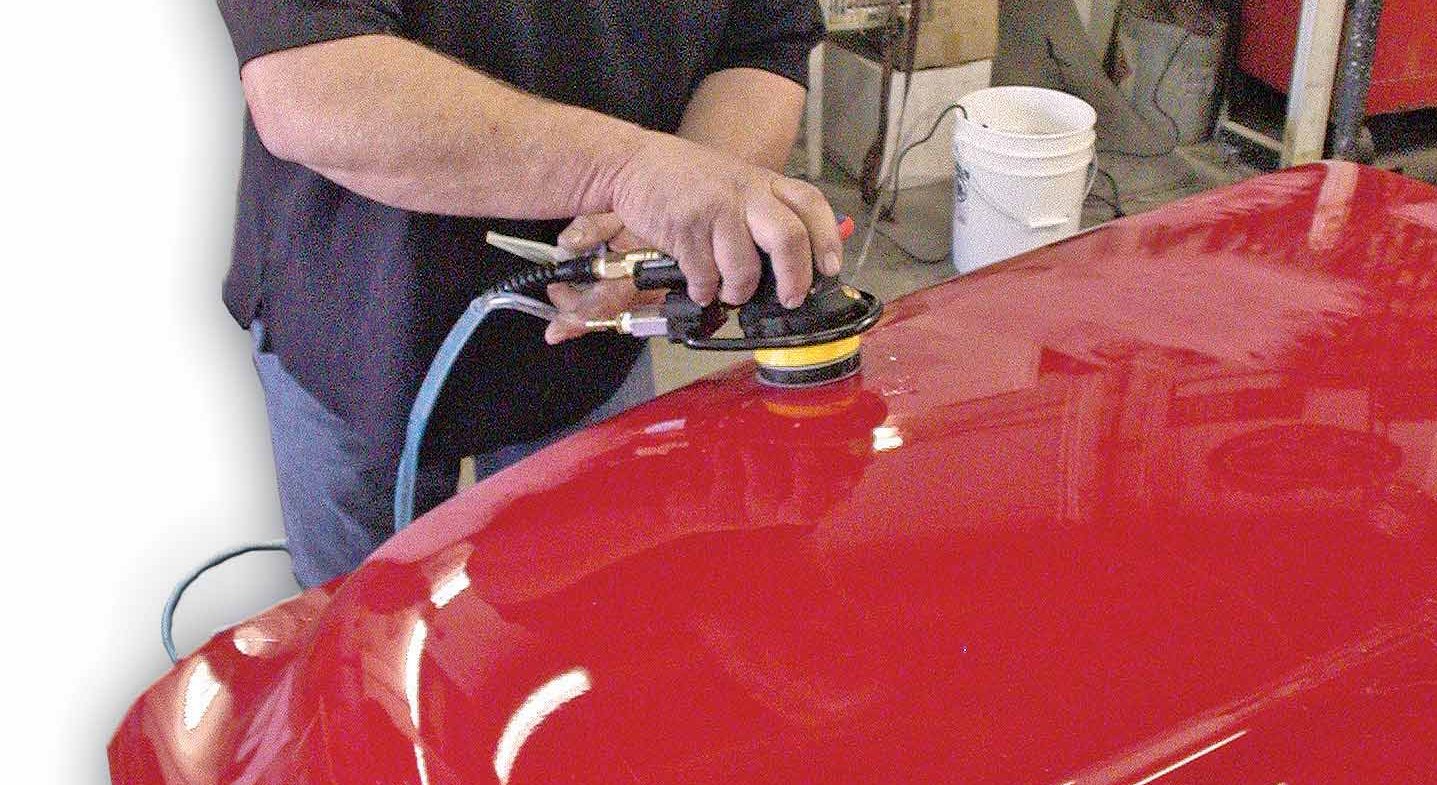
Now, it may seem crazy that anyone would take sandpaper to a new paint job, but if you want to have a glass-like finish that is exactly what happens. Of course, it is special sandpaper, and the person doing the work needs to know exactly what he is doing or that paint job can be toast. One of the things that makes color sanding possible is that the paper used is meant to be wet while the job is taking place. The water not only works as a lubricant, but it also removes the fine paint sludge from the area. The problem is getting that water in the proper place and having enough of it to do the job. After all, who really likes sticking his arm into a cold bucket of water time after time?