A Concept Born from Desire
It’s a simple concept really. You see, when you build six-figure cars for one person, many others stand by and wish they, too, could have such a fine piece of work. Of course, all that one-off bodywork, tube frame construction and sculpted interior is just too pricey for most street rodders, and that doesn’t even consider the price of an artist concept study and subsequent drawings.
From One-Off to Mass Appeal
However, after spending all that time, money and effort to produce an aesthetically pleasing and award-winning design based on the venerable ’32 Ford, why not mass produce the car in fiberglass with the same great chassis and super smooth lines? That thought crossed Boyd Coddington’s mind when he did the original Boydster, a fenderless highboy roadster. The next progression was to add fenders to the car and so, being a sequential kind of guy and is good with numbers, Boyd decided to call this one the Boydster II. The car embodied all the great style of the first car, but now with fenders.
Design Evolution and Inspiration
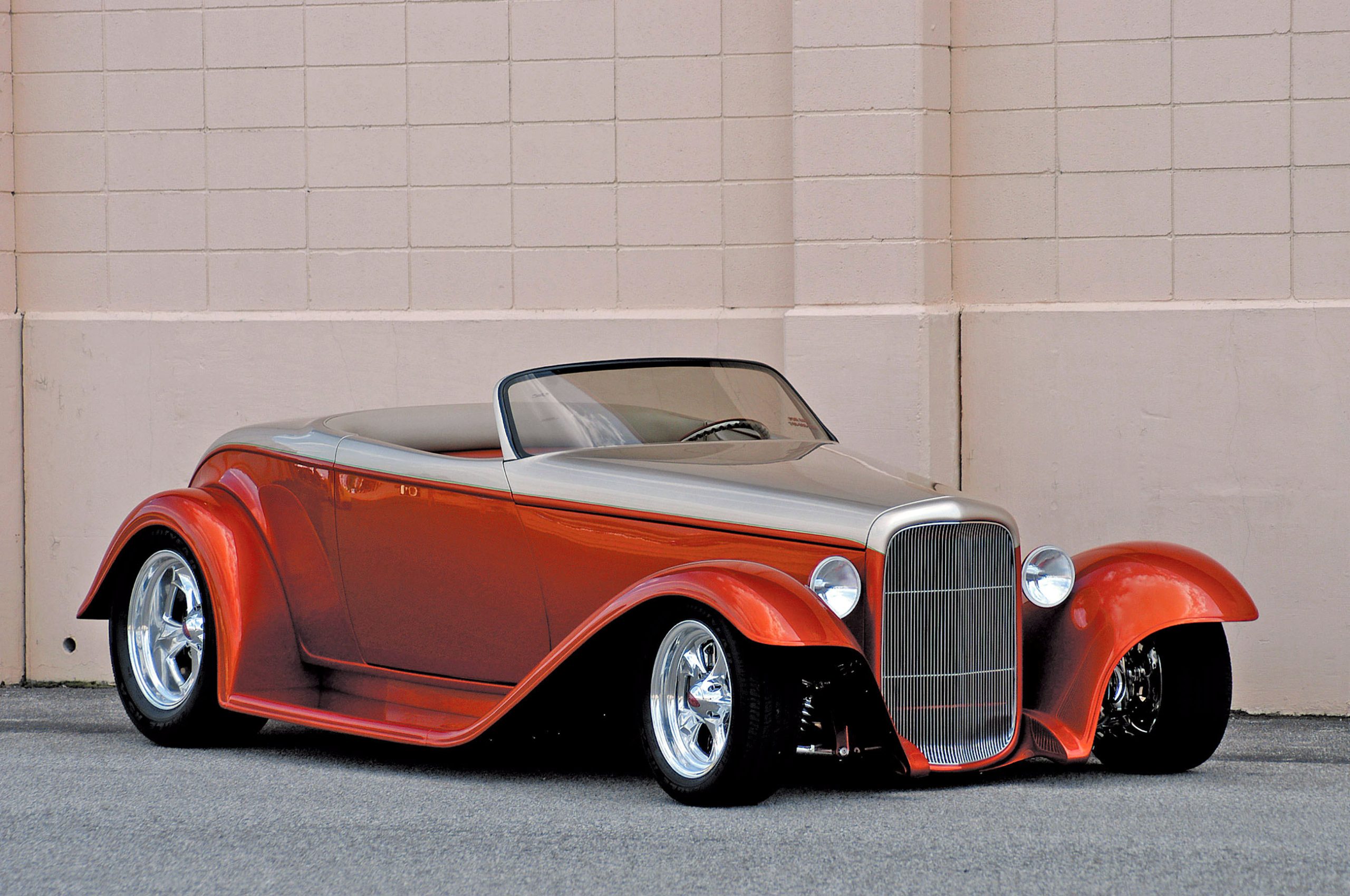
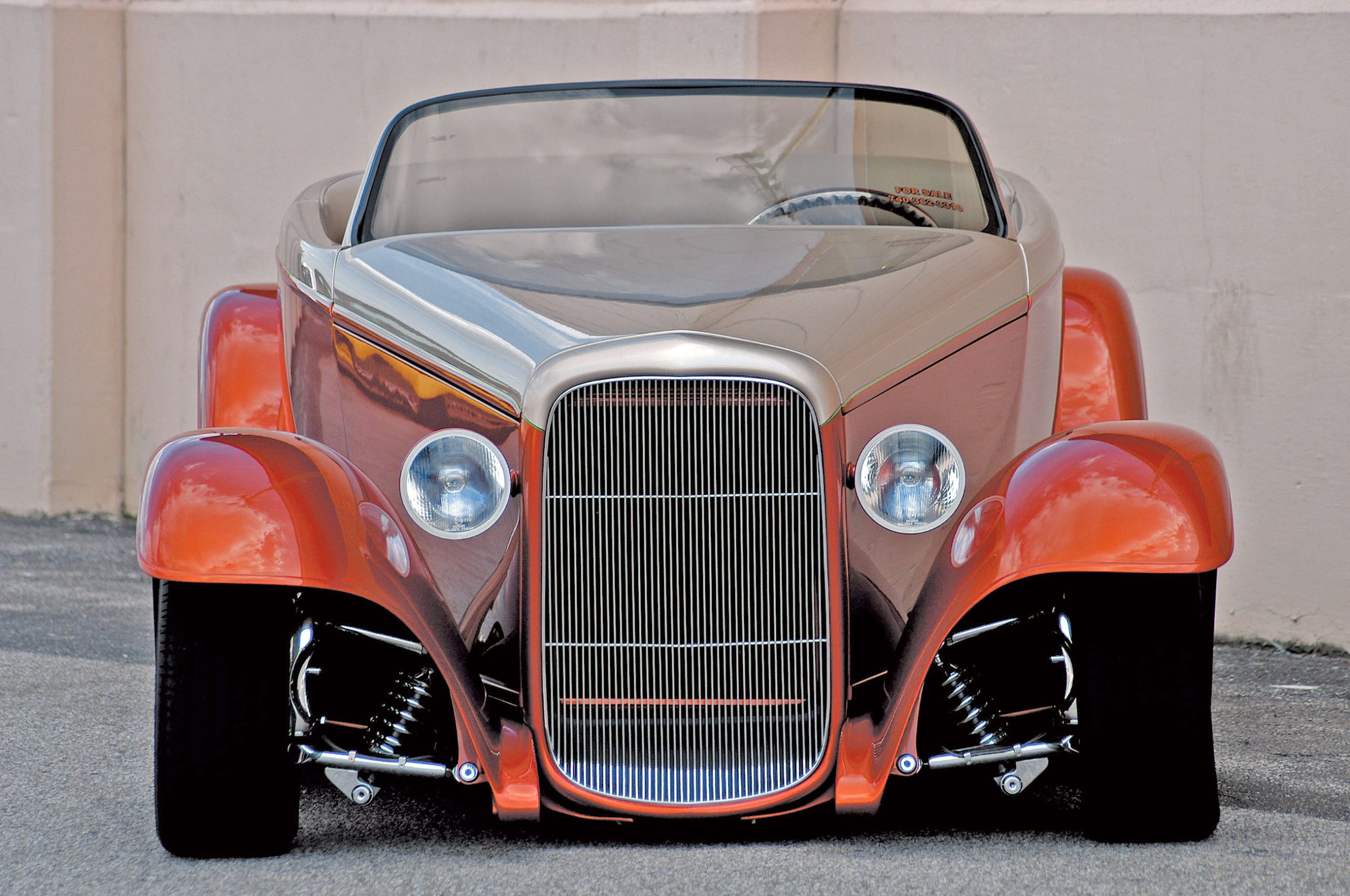
When Boyd Coddington and Chip Foose conspired to design both Boydsters (I and II), the concept was to make a good thing better, to resist change for the sake of change. In the end the car was much like an early ’33 roadster or late Deuce, as much of the boxy Deuce was transformed into the more swoopy ’33 style. To begin with, the short roadster doors on the ’32 Ford gave way to over-sized doors with rounded corners, ala ’33 Ford. Likewise the short and stubby hood of the Deuce was replaced with an extended hood that eliminates the cowl and, better yet, the cowl seam. The long, sleek hood adds a feeling of power and speed to the roadster. Up front the grille shell was narrowed for a lighter feel and to make the hood even longer. Headlights no longer mount on a bar between the fenders; rather, they bolt directly to the grille shell. The front apron is still reminiscent of a ’32 Ford apron, but it is now thinner and more sculpted to provide road clearance and good looks.
Style Meets Functionality
The stock windshield in a ’32 Ford provides some protection from the elements, but it also causes lots of wind noise and very little side protection from the weather. The Boydster II addresses these problems in style. First, a wraparound windshield is incorporated in the design, and with the down-low seating, the occupants are protected from the elements.
Subtle Refinements and European Flair
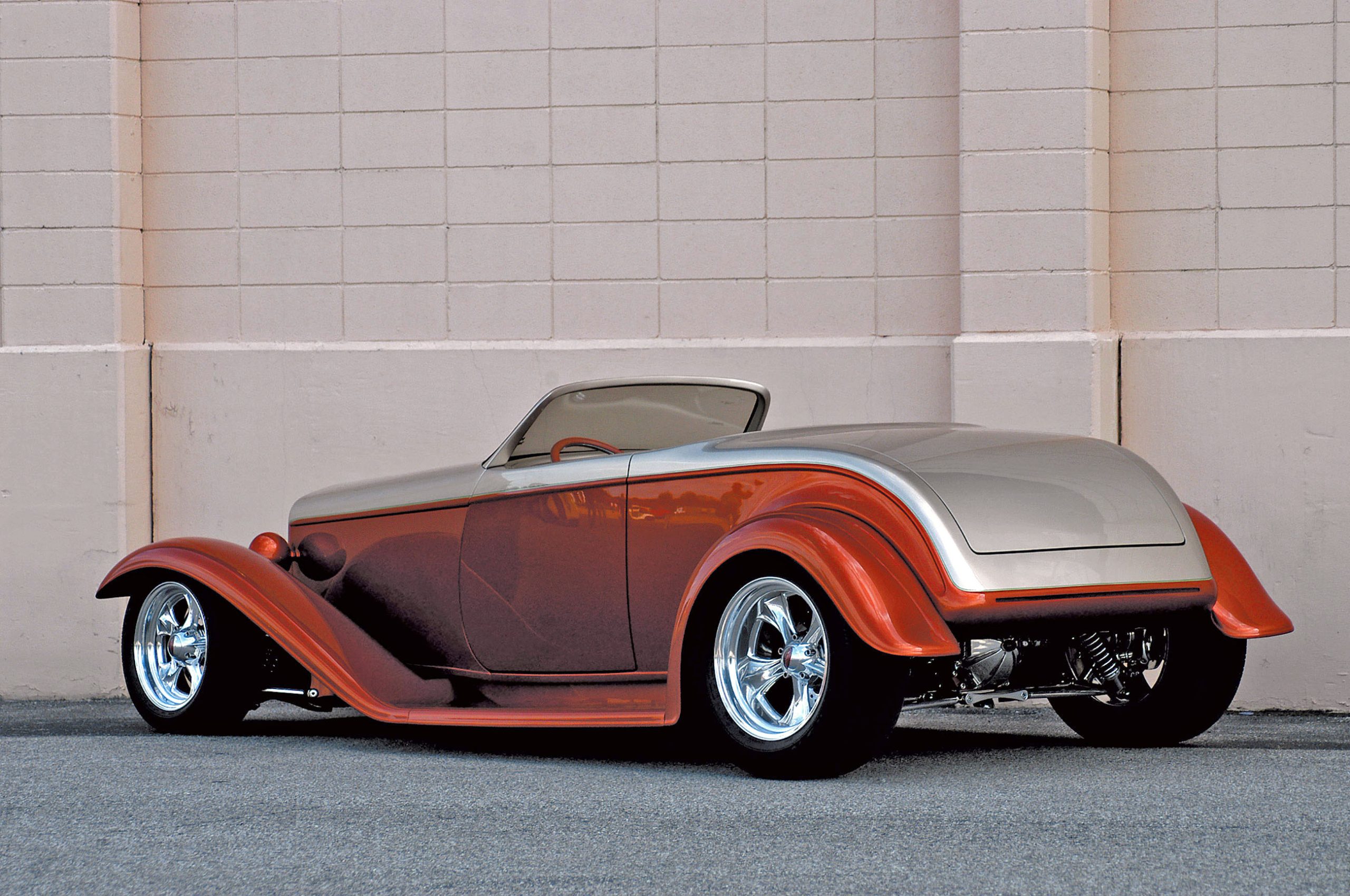
From the seat back, the Boydster II carries distinctive ’32 Ford styling with changes limited to slight re-contouring and bobbed rear fenders. These rear fenders connect to the lengthened front fenders through a pair of smoothie running boards. The high arched front fenders bring the hood line and fender crowns much closer than the original design, and in the process the car takes on a certain European flair.
A Personal Vision: Jim Borowske’s Boydster II
Of course, all this high style and great looks didn’t go unnoticed to Jim Borowske. As a matter of fact, he was so impressed that he ordered a Boydster II and then set about building the roadster with a theme of understated elegance. With the major styling work done by Coddington, the builder has time to dedicate to details, and as we all know, street rodding is all about the details.
Chassis and Suspension Excellence
To that end, the Coddington chassis was detailed to perfection. The rear suspension consists of a Corvette center section with polished hub carriers and lower control arms. Big Wilwood Dynalit brakes provide plenty of stopping power, and of course all brake lines are polished stainless steel and connect to a GM dual reservoir power master cylinder.
Under the Hood: Power Meets Polish
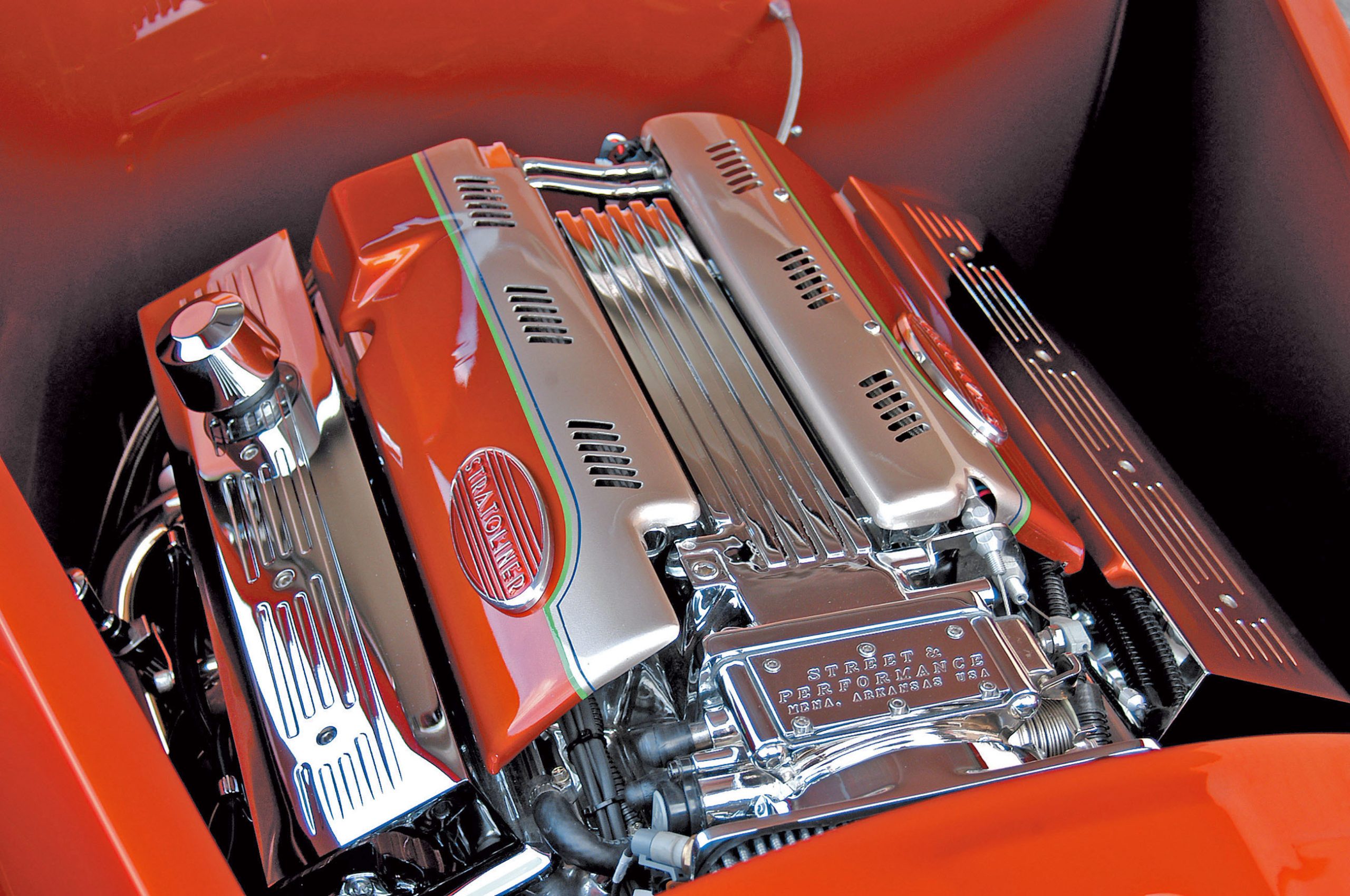
Front suspension is a Coddington design using coilover shocks and polished stainless steel control arms. Another set of Wilwood brakes are found up front, and the steering is via rack-and-pinion from Flaming River. A 12-gallon polished stainless steel fuel tank is mounted in the frame, and the Bosch filtered fuel runs through stainless steel fuel lines to a Corvette LT1 crate motor that has been ground smooth, and virtually every removable piece has been plated or polished. The block and engine cover were painted body color. A set of polished stainless steel headers from Street & Performance feeds exhaust back through more stainless steel tubing.
Transmission and Wheels: The Finishing Touches
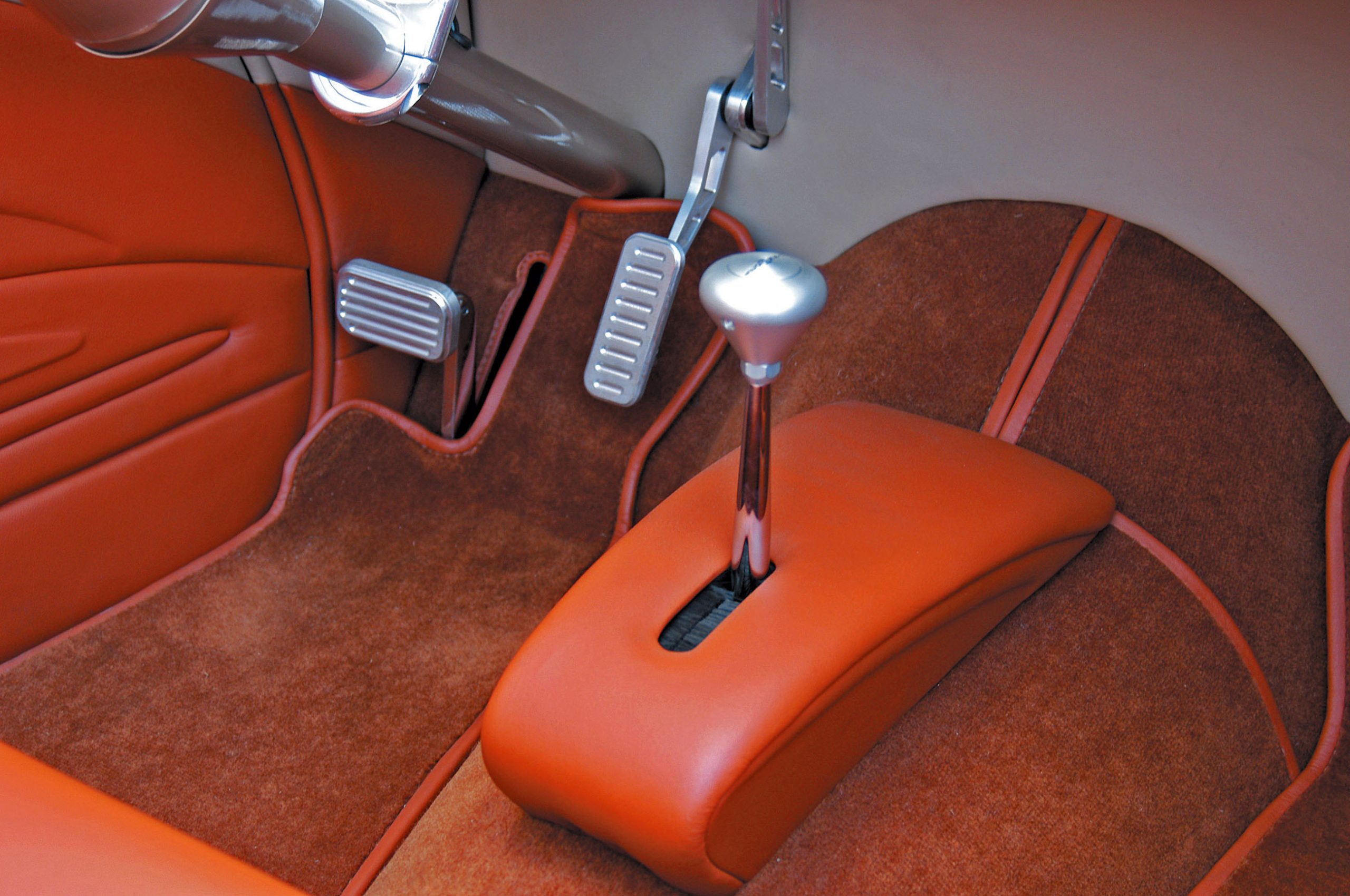
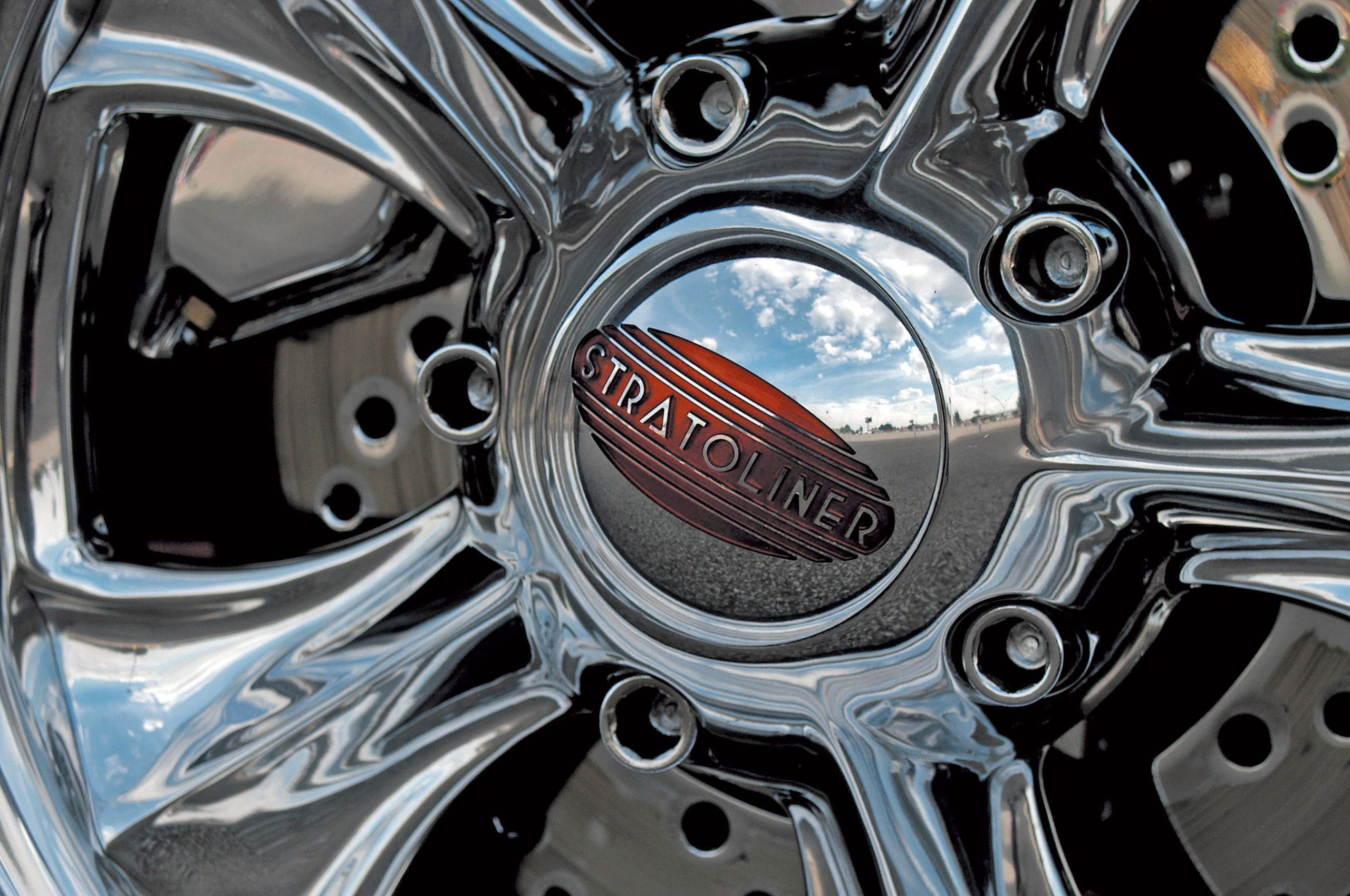
Behind the LT1 engine, a fully polished ’93 700R4 transmission passes the power back to the Corvette rear through a Hamilton Automotive driveshaft. A Lokar shifter mounts to the transmission. The final touch to the chassis is the rolling stock, and in this case that comes from a set of one-off Boyd Coddington wheels that measure 15X7 up front and 17X8 in the rear. Goodyear tires (P195/55R-15 front and P255/55R-17 rear) make the final connection to the road.
Wiring, Interior, and Elegance
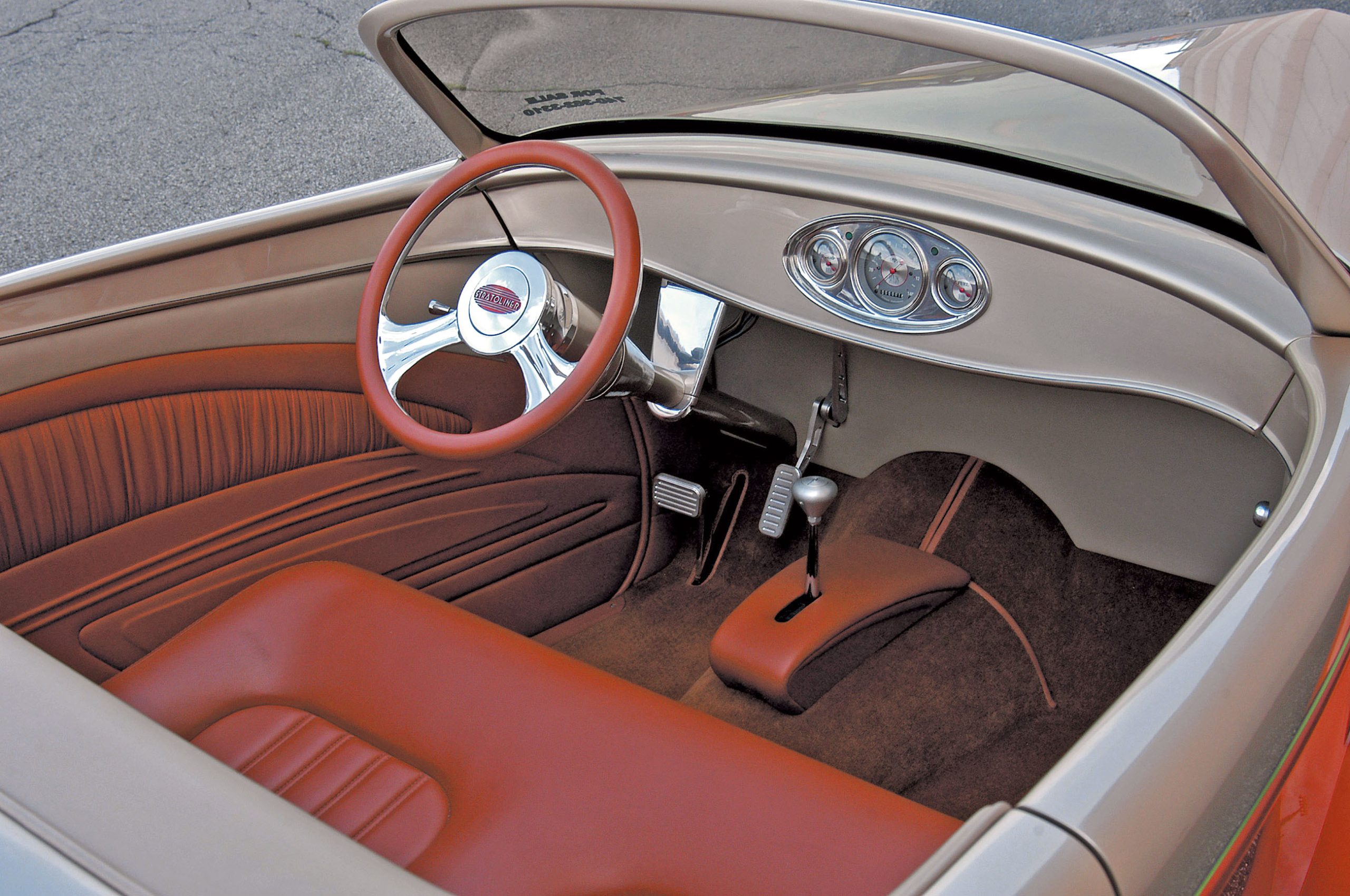
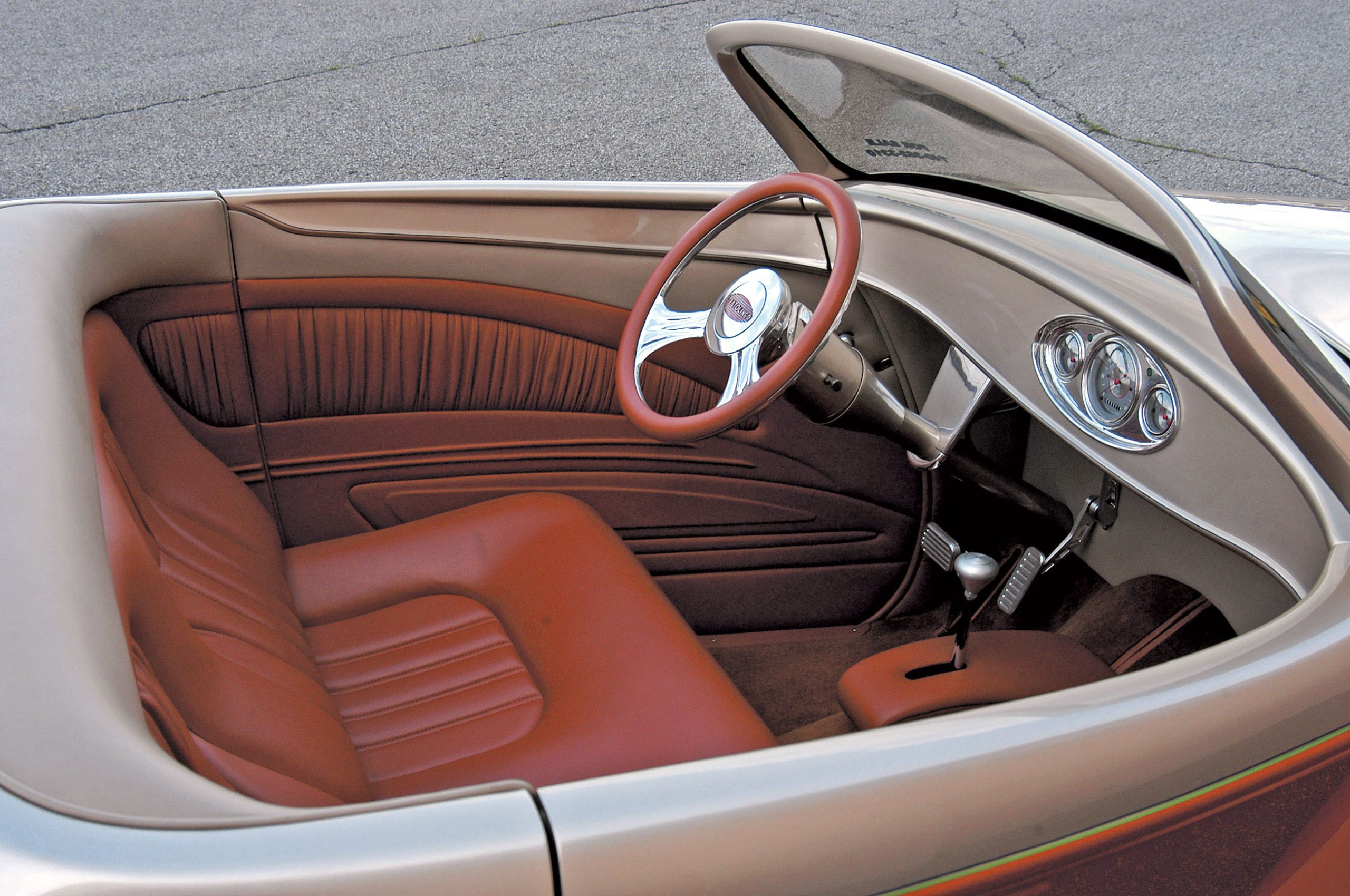
Speaking of connections, a Ron Francis Wiring kit handles all the electrical needs, including the Boyd Coddington series Classic Instruments gauges. The Flaming River tilt steering column is also connected to the Ron Francis Wiring, and the column is topped with a billet wheel from Boyd. Gabe Lopez handled the stitching of the fine brown leather and wool, while many of the custom interior design work was collaborated on by Tom Piana, Don Borders and Gabe Lopez. The craftsmanship is impeccable, and the materials are first-class throughout the interior.
A Two-Tone Masterpiece
Of course, the really big decision in any street rod project is the color choice. After Image Auto Works had the body perfectly straight, Borowske opted for a two-tone affair that breaks at the body reveal and then travels rearward breaking just above the rear rolled pan. A long single LED taillight is housed in the rolled pan, and the custom mixed copper paint carries across the pan making a seamless color break. Above the copper, custom-mixed platinum adds a distinctive touch of class to the car. Once again the two-tone paint seems to play toward a vintage European feel. The Dan Fink grille leads the way, and Don Borders is the man responsible for laying down the flawless finish. Scott Harvill handled the subtle pinstriping, and the car was complete.
A High-Level Achievement
After over a year of hard work, Borowske had completed a car with a level of detail equal to the level of design on the base car, and that’s a pretty lofty level. The car has made the rounds of indoor shows and outdoor rod runs, garnering nods of approval from street rodders for the high build quality and overall subtle elegance. Of course, Borowske isn’t about to stop here as other projects are already in the works, and you can bet they’ll be every bit as nice as this awesome Boydster II.