A Mustang Bracket Racer’s Dream
In the fall of 2003, a friend of Brighton, Colorado, Mustang bracket racer Jim Holden was driving home from work one day when he spotted a ’70 Mustang coupe parked with a “for sale” sign on the windshield. Remembering that Holden had been itching to find a ’70 Mustang coupe similar to the one he had owned when he was in high school to race in the local brackets (he didn’t want to cut up an original Mustang street car to do it), Dave Wunsch stopped to take a look at the car.
A Hidden Racecar in Disguise
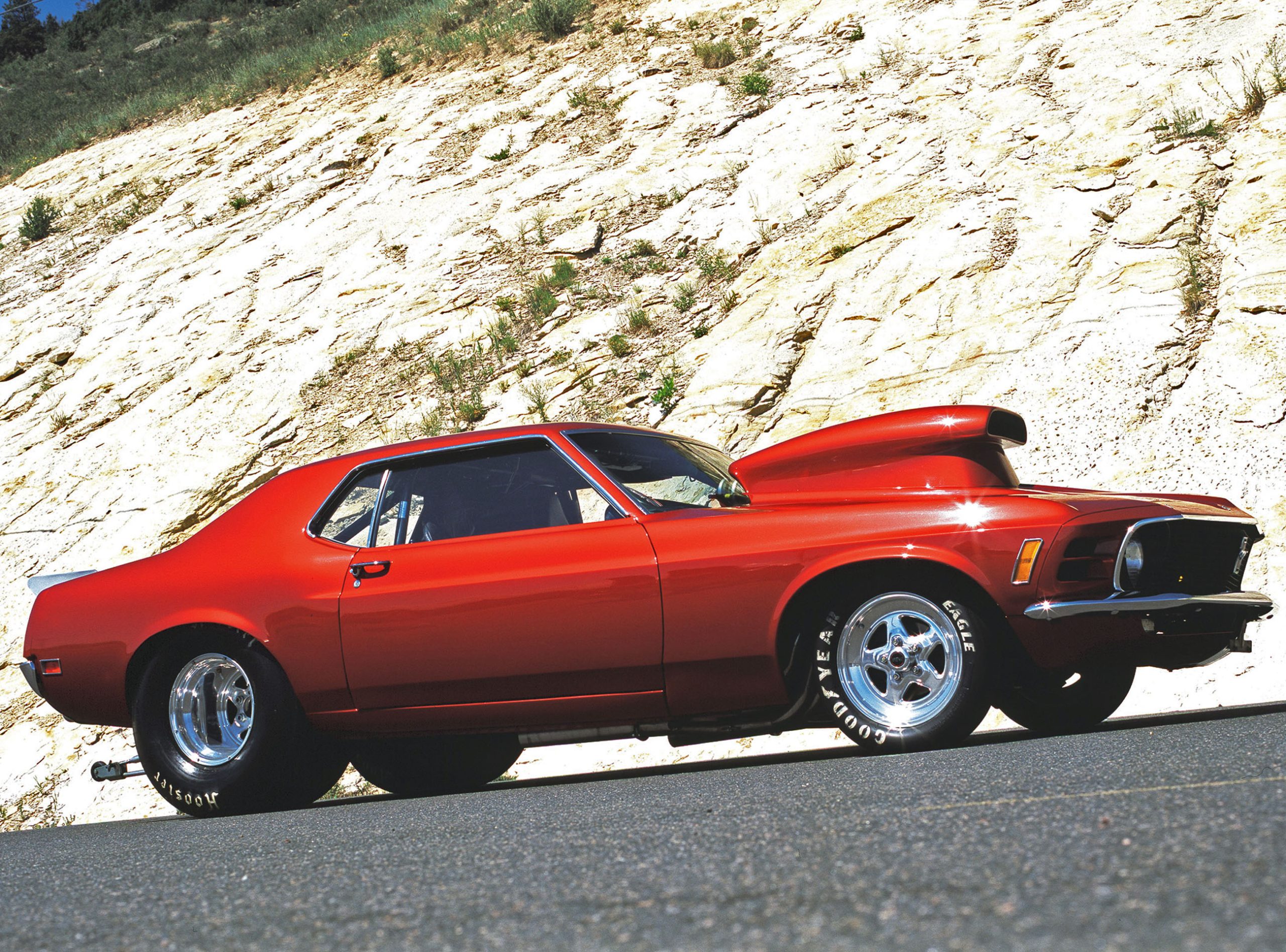
At first, it appeared as though the bright red Mustang didn’t have an engine in it, but once the seller, Eric Rizner, opened the hood, Holden and Wunsch could plainly see that the engine had been set back in the chassis. Was this the elusive Mustang “racecar” that Holden had been looking for?
“The attention to detail and the quality of workmanship on the Mustang were outstanding,” Holden said. However, both buyer and seller had difficulty coming to a financial agreement. Frustrated by the whole experience, Holden tore up the seller’s telephone number and started looking elsewhere.
The Mustang Resurfaces Online
Three or four weeks went by, and once again the Mustang popped up, only this time on the Internet. A quick e-mail revealed that the coupe was still for sale. Once again, Holden initiated conversation with the seller, only this time Holden succeeded in buying the coupe.
The Origins of the Mustang
A brief history of the Mustang reveals that it was bought in the fall of 1992 by Iowan Eric Rizner. The Mustang started out life as a plain-Jane ’70-model coupe, equipped with a two-valve, low-compression 302 and C4 automatic transmission, and very little else. However, it wouldn’t remain that way for long.
For about a year and a half, the old Mustang was driven back and forth to work. Then, in the spring of 1994, the 302 was pulled out and a 429 Ford SCJ big block and Ford C6 automatic were installed. Built by Keith, Eric, and Craig Rizner, the early-’70s vintage Cobra Jet seemed to produce an ample amount of horsepower, certainly enough for a college kid to drive back and forth to school with.
Chassis and Suspension Upgrades
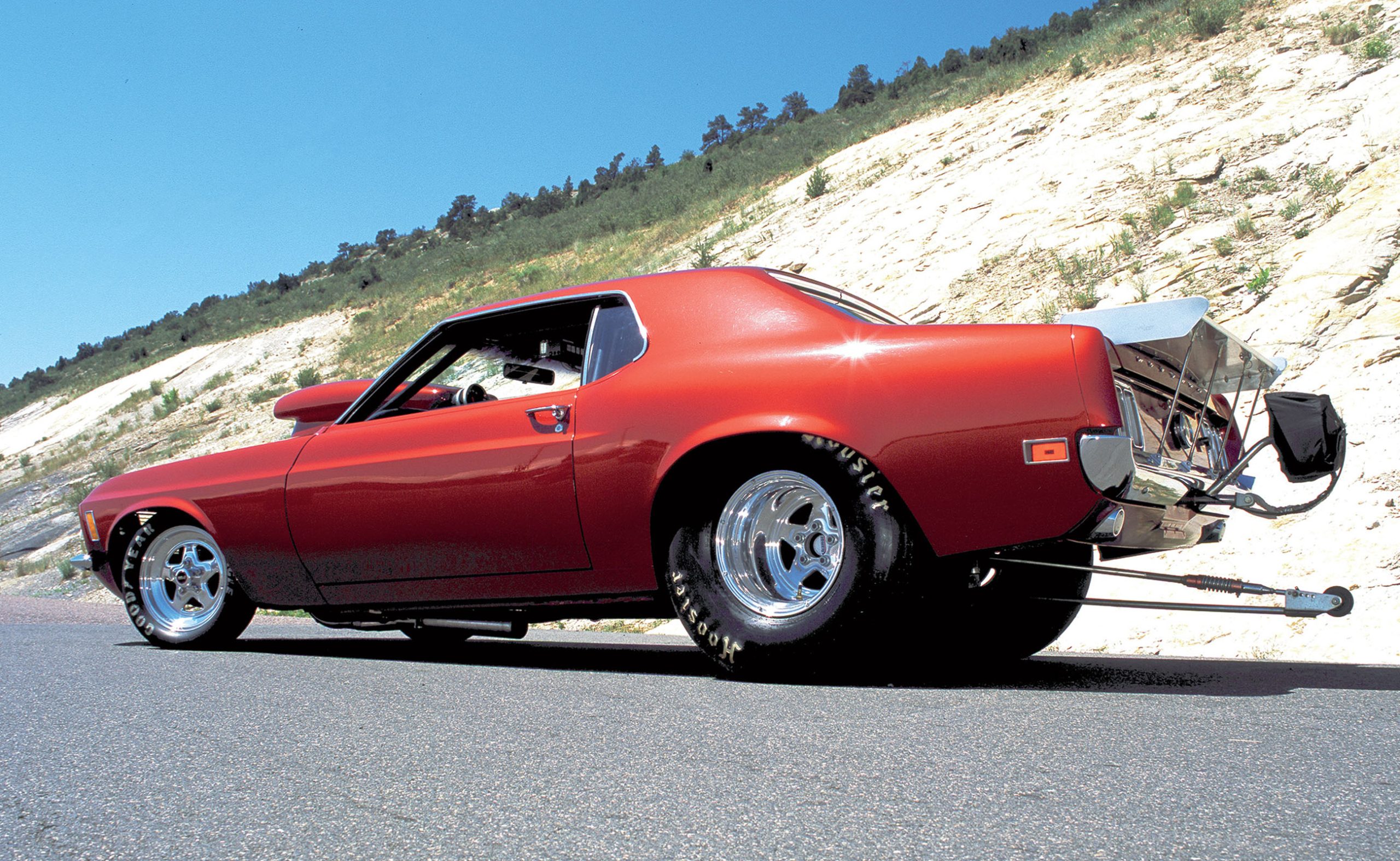
In the winter of 1994-1995, the Rizners’ Waterloo, Iowa-based shop, Cedar Valley Motor Sports, back-halved the Mustang, installing a set of 2×3-inch rear framerails and an Art Morrison 12-point rollcage. The rear suspension on the coupe was updated to a 4.56:1 Strange Engineering, GM disc-brake-equipped, narrowed 9-inch Ford rearend suspended by an Art Morrison four-link and a QA1 coilover shock package.
Along the way, the front half of the Mustang was also updated to Mustang II independent A-arm front suspension, complete with Mustang II front disc brakes, “MII” rack-and-pinion steering, and Koni shocks. Other additions to the car included a 16-gallon RCI fuel cell, an Ed Quay Race Cars rear-deck wing, and a set of Weld Racing Pro Star wheels outfitted with a combination of Goodyear and Hoosier racing rubber.
A Massive Power Upgrade
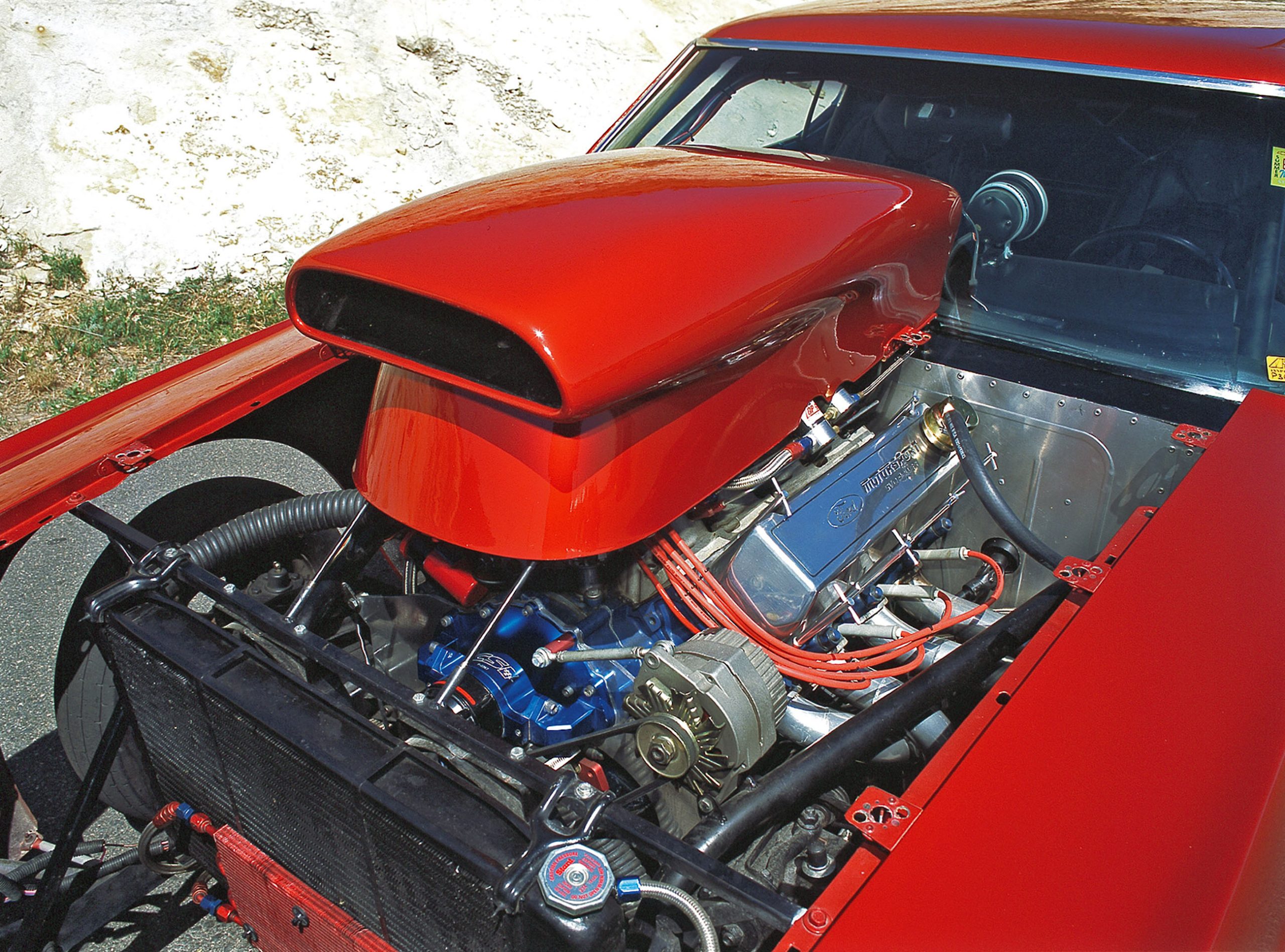
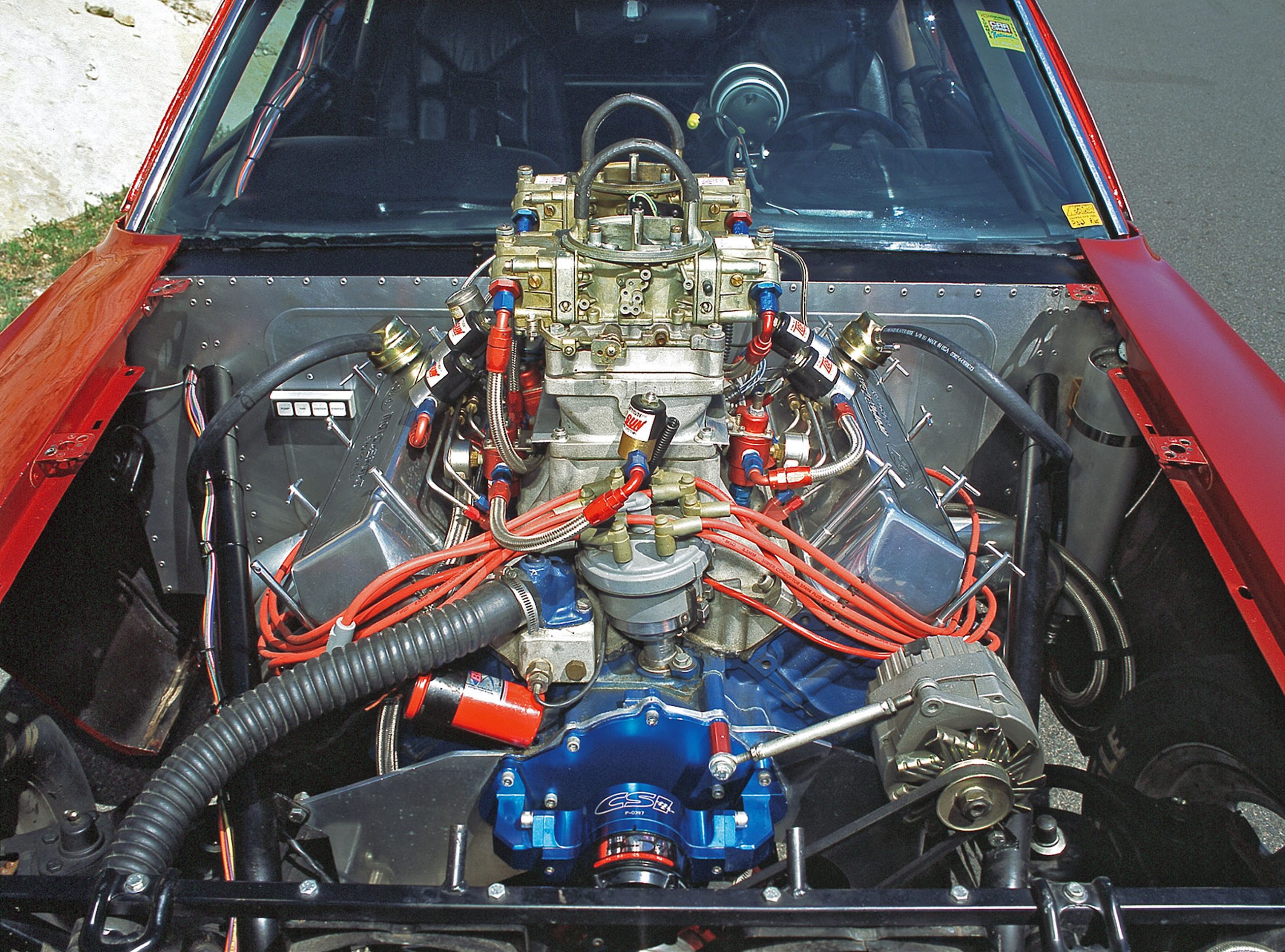
Now with an actual racecar sitting beneath him, Eric Rizner decided to get serious. He and his relatives pulled out the warmed-over 429 CJ and substituted a 514ci Ford big block, which includes a SCAT crankshaft, a set of Bill Miller Engineering (BME) connecting rods, 4.440-inch-bore, 13:1-compression Arias pistons, a Lunati roller camshaft (0.272 intake and 0.286 exhaust), a Pete Jackson geardrive, ARP engine studs, Fel-Pro engine gaskets, a CSI electric water pump, and a Hamburger 10-quart oil pan.
The cylinder heads are also vintage ’70s CJ and feature a fairly radical port-and-polish job along with 2.250-inch Manley stainless steel intake and 1.73-inch Manley stainless steel exhaust valves, plus a full complement of Lunati valvetrain hardware, including a set of 1.73:1-ratio Lunati roller rocker arms. And finally, a set of tall-deck Ford Motorsport cast-aluminum valve covers keeps things well protected.
Fuel, Ignition, and Exhaust Enhancements
Bolted between the CJ’s lifter valley is a Weiand 2×4 tunnel-ram intake sporting a two-stage Top Gun nitrous system and twin 750cfm Holley squirters. The ignition system consists of a combination of Ford and MSD components, while the exhaust comes in the form of a set of HPC thermal-coated Hooker headers dumping into a pair of DynoMax UltraFlow mufflers.
A Bold New Look
Painted in a dazzling PPG Mopar Inferno Red by Evansdale, Iowa’s Diamond’s Auto Body, the ’70 was transformed into a real looker. However, because the car now had so much power, early runs mainly consisted of bumper-dragging wheelstands. It seemed as though the C6 couldn’t hold all the power. After a changeover to a Liberty Powerglide, the wheelies went away, and Rizner was able to run a best of 9.70-137.00.
A New Owner and Fresh Goals
In the summer of 2002, Eric Rizner and his Mustang moved to Longmont, Colorado, and with a new job to deal with, Rizner didn’t have the time to race anymore. After a lengthy negotiation process, he sold the coupe to Holden.
Since the Mustang has been in Holden’s possession, he’s installed a set of wheelie bars and basically fine-tuned the car to his liking. Early runs have yielded a best of 10.26-132.00 at a mile-high altitude (Bandimere Speedway), without the nitrous. Once Holden gets the hang of things, we have no doubt that the coupe will be back on the bottle. Holden is a member of the NHRA, and lists his wife, Misty, and their daughter Clarissa as the official “crew.”