




THE AUTO BUILDER
Featured


Shade-Tree 1.6.
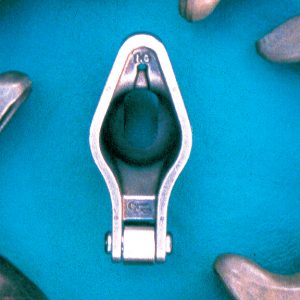
Okay, we weren’t quite that naive about what we read regarding upgrading to 1.6 rockers on our small-block Chevy for the first time, but it was close.Â
The engine in question was a decent runner with 30,000 miles on the mild-performance rebuild. The rebuilt engine was purchased used, and among its selling points were 0.030-over 9.5:1 pistons, moly rings, 1.5 roller rockers, a Performer RPM intake and a brand-new Holley 750cfm carburetor. The cam wasn’t a perfect match to the torque converter used in the previous installation nor was the final-drive gear ratio. As a result, the owner planned on stepping down on the cam chart to a Comp 286H-10 cam, which came with the engine in its original box. Also included were a brand-new factory Z28 oil pan and a factory timing chain cover to replace the cheap chrome pieces. For $300, the engine package was a deal, and one we couldn’t pass up. We sold the aforementioned chrome pieces and matching valve covers for $50, getting us the engine at the bargain price of $250, and we still had the new cam and lifters on our shelf.
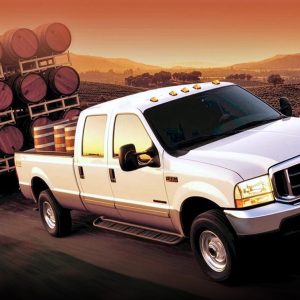
Product Spotlight: Dieselsite’s 4WD ESOF Stainless Lines Kit for 1999–2010 Ford Superduties
Picture this: you’re cruising down a muddy backroad, ready to switch into 4WD, and nothing happens. You check your ESOF switch, slam it again… still nothing. The culprit? Not your transfer case, not your drive shafts—it’s the OEM vacuum hoses and steel fittings at your hubs, silently failing after years of exposure to heat, moisture, and road grime. Dry-rot, leaks, and rusted fittings strike when you least expect it, leaving you stuck and frustrated.

Spotlighter
POPULAR READS
-
The Auto Builder’s Hottest Product Picks from The Triple Crown of Rodding 2026
-
Product Spotlight: Bill Mitchell Products Aluminum LS Engine Block
-
PRODUCT SPOTLIGHT: 60-66 Chevy C10 Fresh Air Vent Block Off Plate
-
Product Spotlight: Pyramid Optimized Design Sequential Aurora Taillight for 1964½–1966 Mustang
Totally Awesome Elky
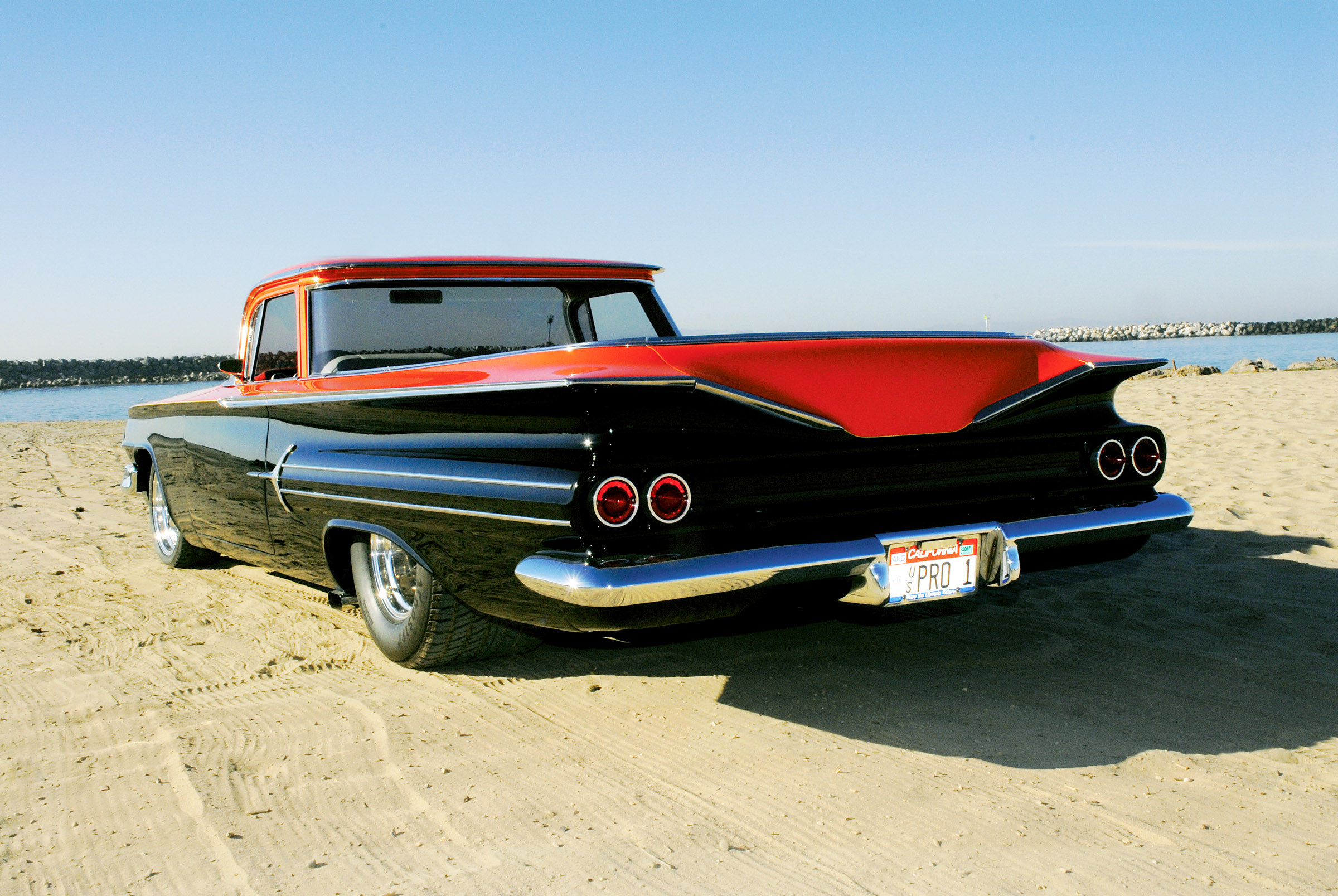
A Home-Built ’60 El Camino That Was 15 Years in the Making
Author
Bob McClurg
Photography by Bob McClurg & Brad Meltzer
According to Meltzer, the El Camino sat for the next 11 years, taking up space in the corner of the shop while he helped his son Rod build a very nice ’90 1/2-ton Chevy full custom pickup. And if that wasn’t enough, he helped younger son Brad completely update his Camaro and perform a full frame-off restoration on a ’60 Corvette.
“It was beginning to look like the El Camino would never get finished,” he says. Then four years ago, Meltzer simply jumped back in feet first. “As you get older, you get a little wiser,” he says. “We sold the big motor and cut out the rollcage and the entire pickup bed. We built a completely new chassis and converted the El Camino back into a street car like it should have been in the first place.”
As far as the chassis is concerned, Meltzer and son Brad fashioned a new set of longitudinal framerails out of 2×4-inch, 0.180-wall thickness box tubing, adding the necessary box tube rear frame kick-ups and round-tube crossmembers along the way. These rails are joined together with a late-model Chevelle front frame clip, which features a Chevelle independent front suspension, QA1 12-way adjustable shocks, Chevelle power steering and ’86 Chevrolet Monte Carlo power front disc brakes. To get the proper ride height, a set of specific-rate, low-profile Detroit Spring coil springs were also added.
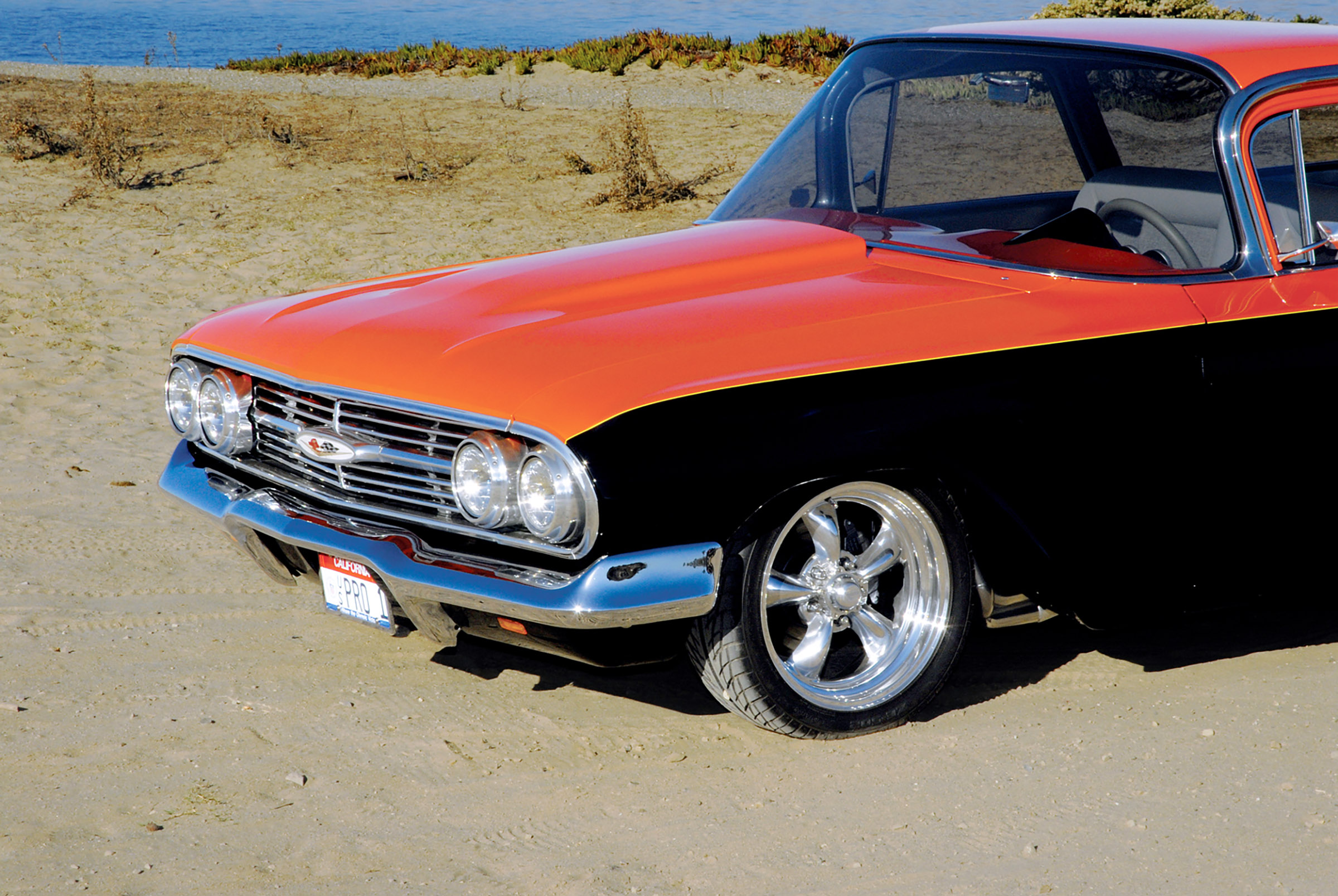
Rear suspension on the car consists of a big-bearing, 3.50:1 NI-geared, Moser 31-spline axle-equipped Ford 9-inch rear suspended by a Meltzer four-bar suspension and QA1 12-way-adjustable coilover shocks. The rear brakes are Ford 11-inch LTD discs. Wheels and tires consist of a set of 17×7-inch American Racing Torq-Thrust IIs in front and 15×14-inch American Racing Torq-Thrust II’s on the rear rolling on P215/45xZR17-inch Falken radials in front and 29.5×15-inch Hoosier Pro Street rubber on the rear.
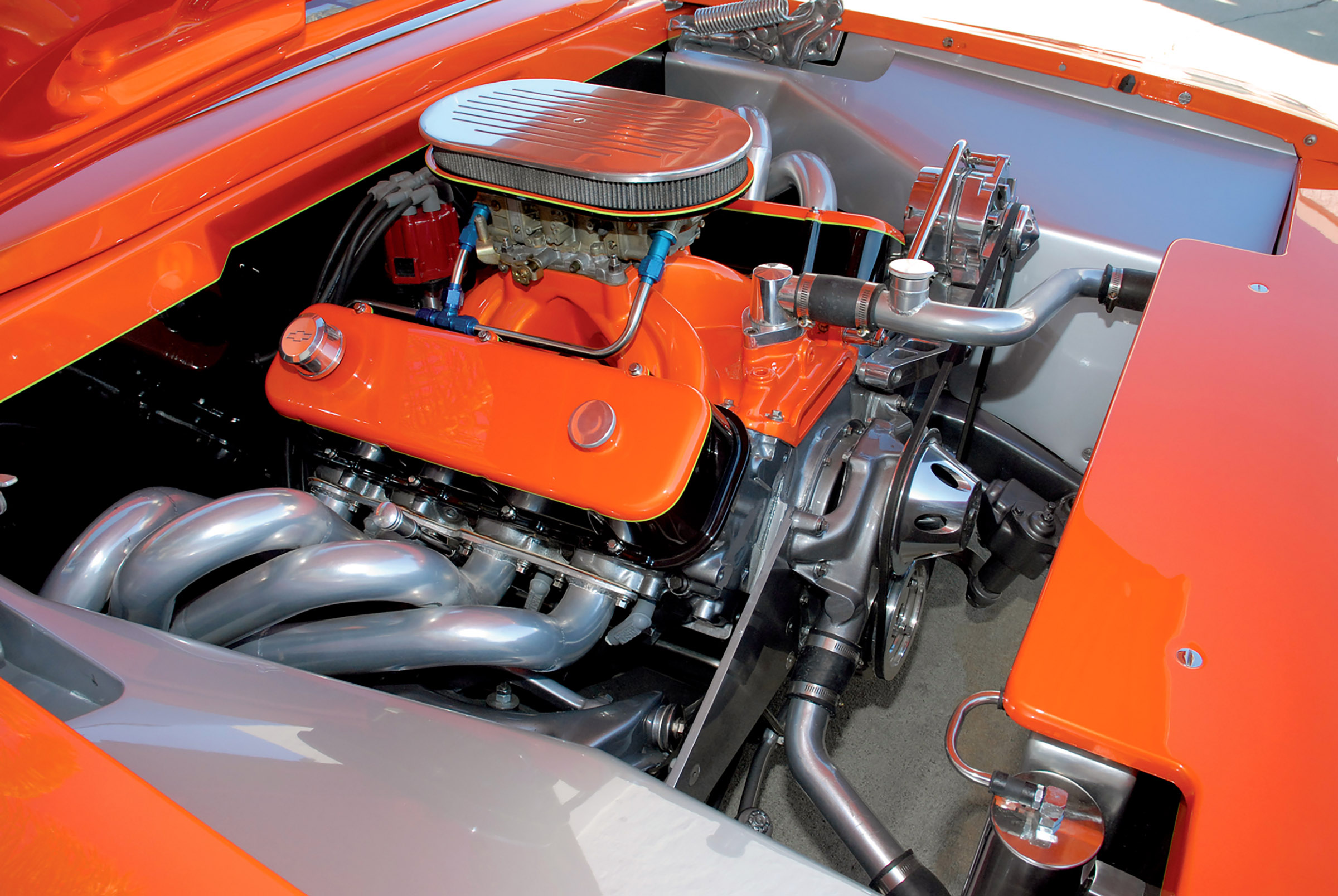
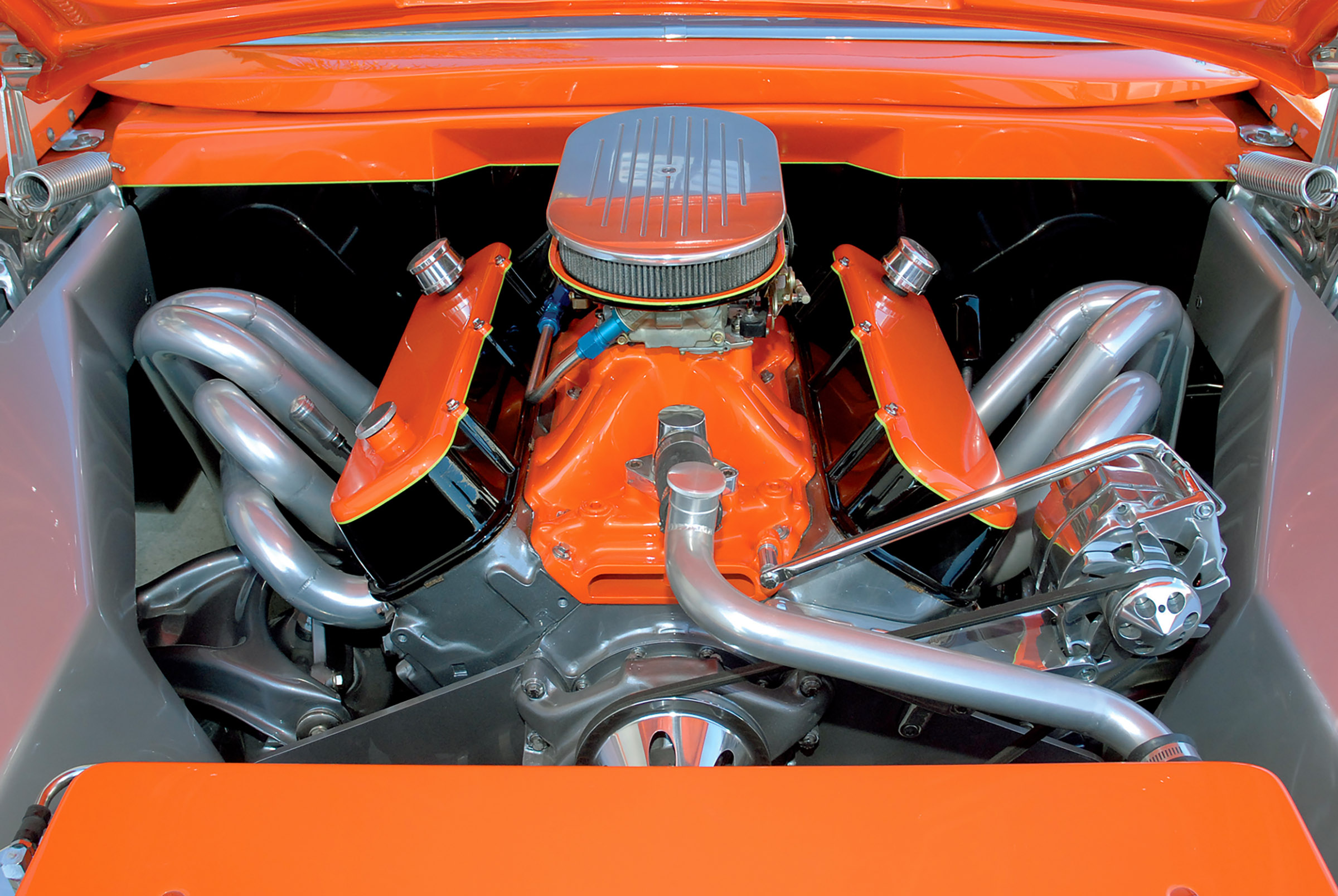
Powering “Pro-1” is a highly detailed, 0.030-overbore, 9.6:1-compression, TRW-equipped 427 big block by Mump Kenyon. Go-fast items include a Comp Cams roller cam and kit, LS7 open-chamber heads, Edelbrock intake, Holley 850cfm 4-bbl carb, MSD Pro Billet ignition, home-built 10-quart oil pan and fenderwell headers.
Powering “Pro-1” is a Mump Kenyon-built ’67 427 Chevy big block that was bored 0.030 inch over and stuffed with an L88 forged steel crank and 9.6:1-compression TRW forged aluminum pistons that are pressed onto a set of ARP-equipped L88 big-block connecting rods. The cam of choice was a Comp hydraulic-roller unit for a set of LS7 open-chamber cylinder heads. Also an integral part of this combination is the Comp Cams valvetrain, which is protected by a set of Billet Specialties aluminum valve covers.
Induction comes in the form of an Edelbrock Victor Jr. four-valve intake and a race-prepared 850cfm Holley carburetor. The ignition system is an MSD Pro Billet setup while the 10-quart oil pan was custom-built by the owner. Ron custom-built the 2-1/8-inch, four-tube fenderwell headers, which dump into 3-1/2-inch collectors. The 3-1/2-inch exhaust was also fashioned by Meltzer and uses a pair of Flowmaster three-chamber mufflers.
Backing up this potent big-block is a Richmond five-speed transmission using a Hurst shifter and Centerforce dual-friction clutch contained in a Lakewood bell housing. The final link in the El Camino’s powertrain is a Coast machine-fabricated 4130 steel custom driveshaft.
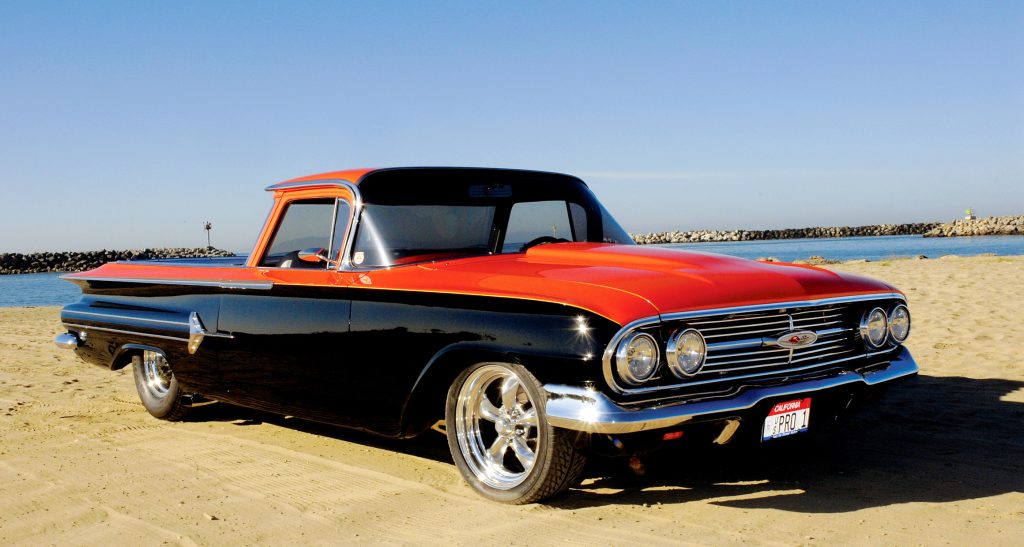
When it came to the bodywork and paint, Jim and sons first filled in the cowl vent area. Then they shaved off the door and tailgate handles and added electric door openers. The cowl induction hood was made by grafting on the scoop from a ’70 El Camino cowl induction hood onto the stock ’60 sheetmetal hood.
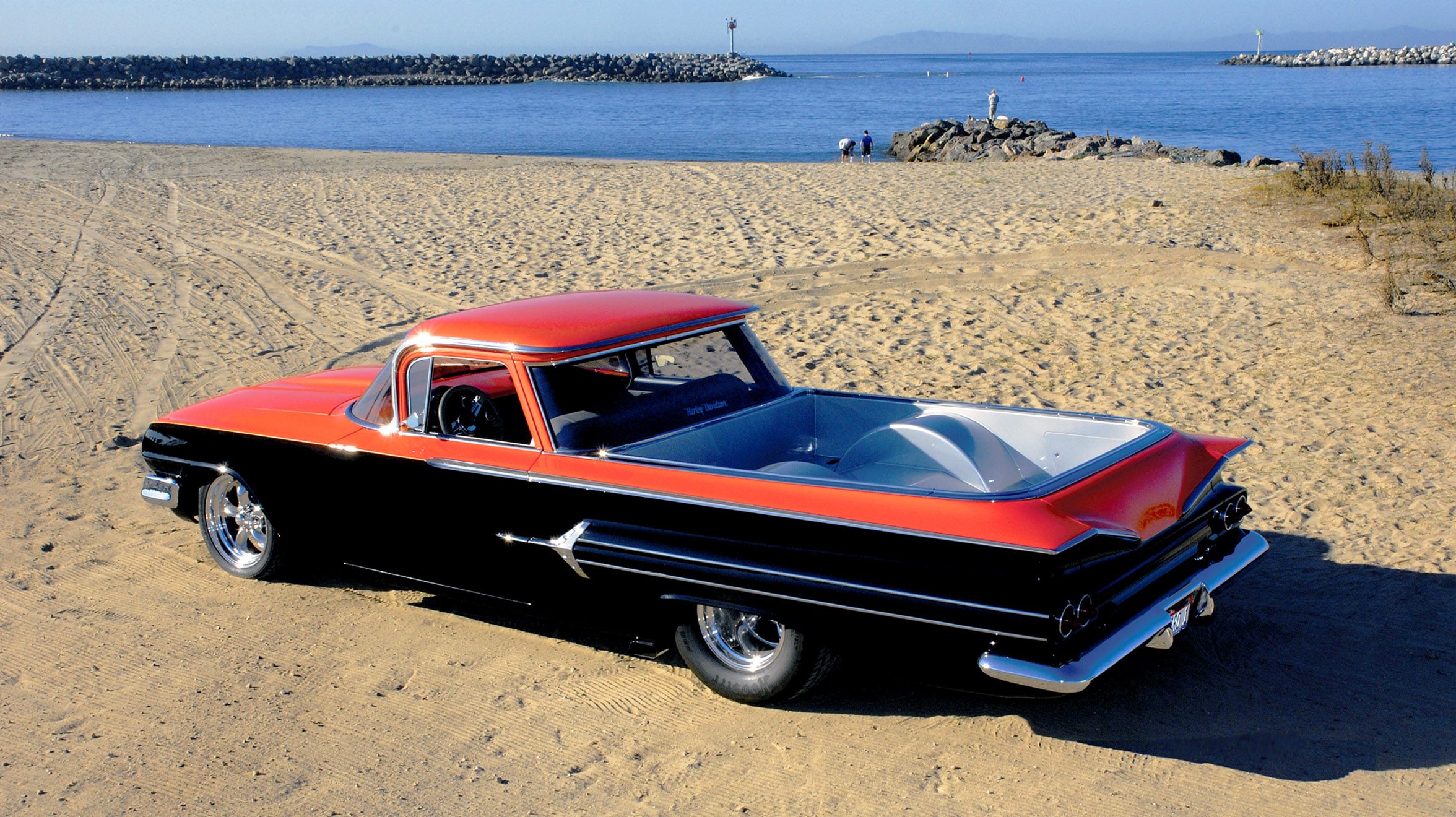
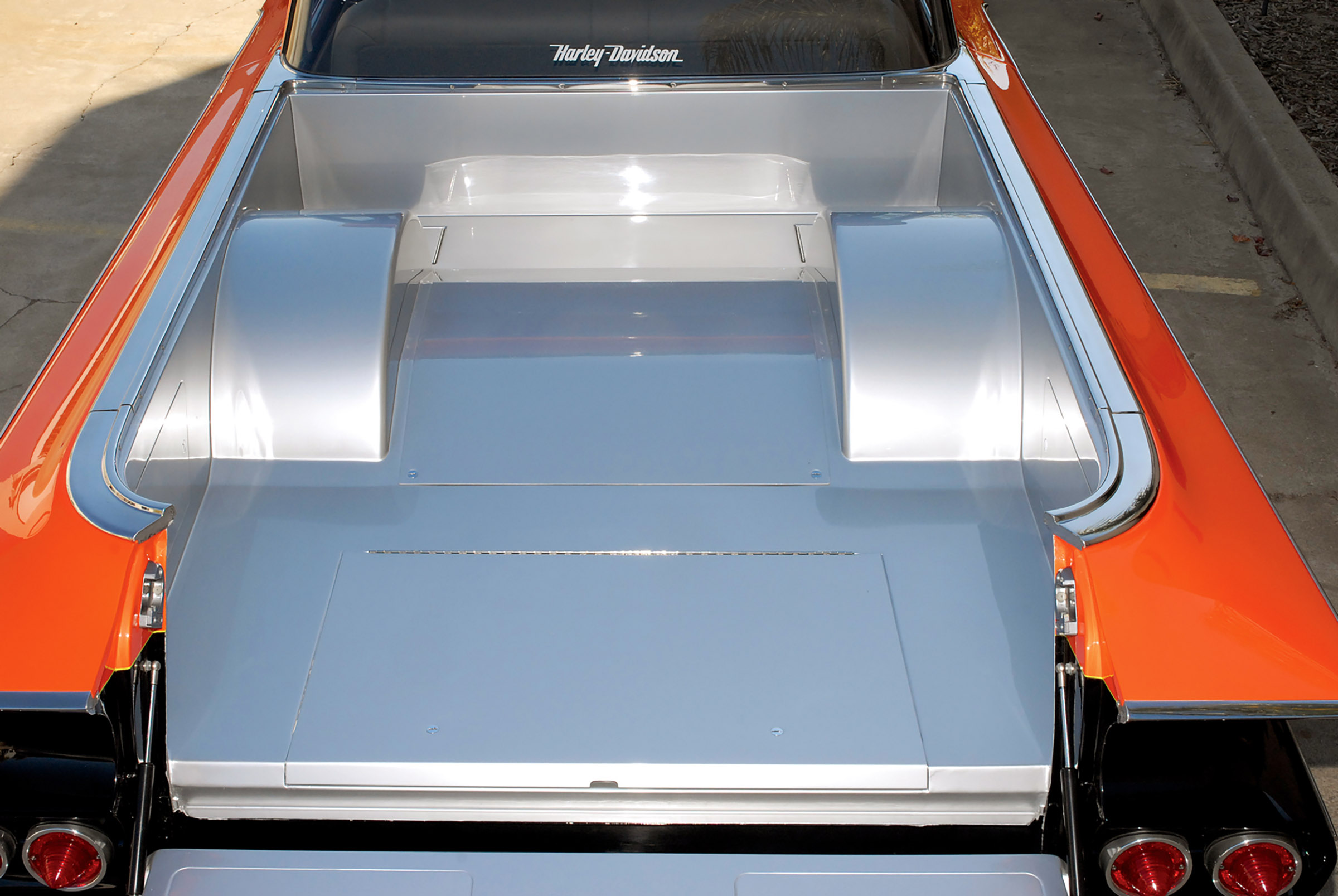
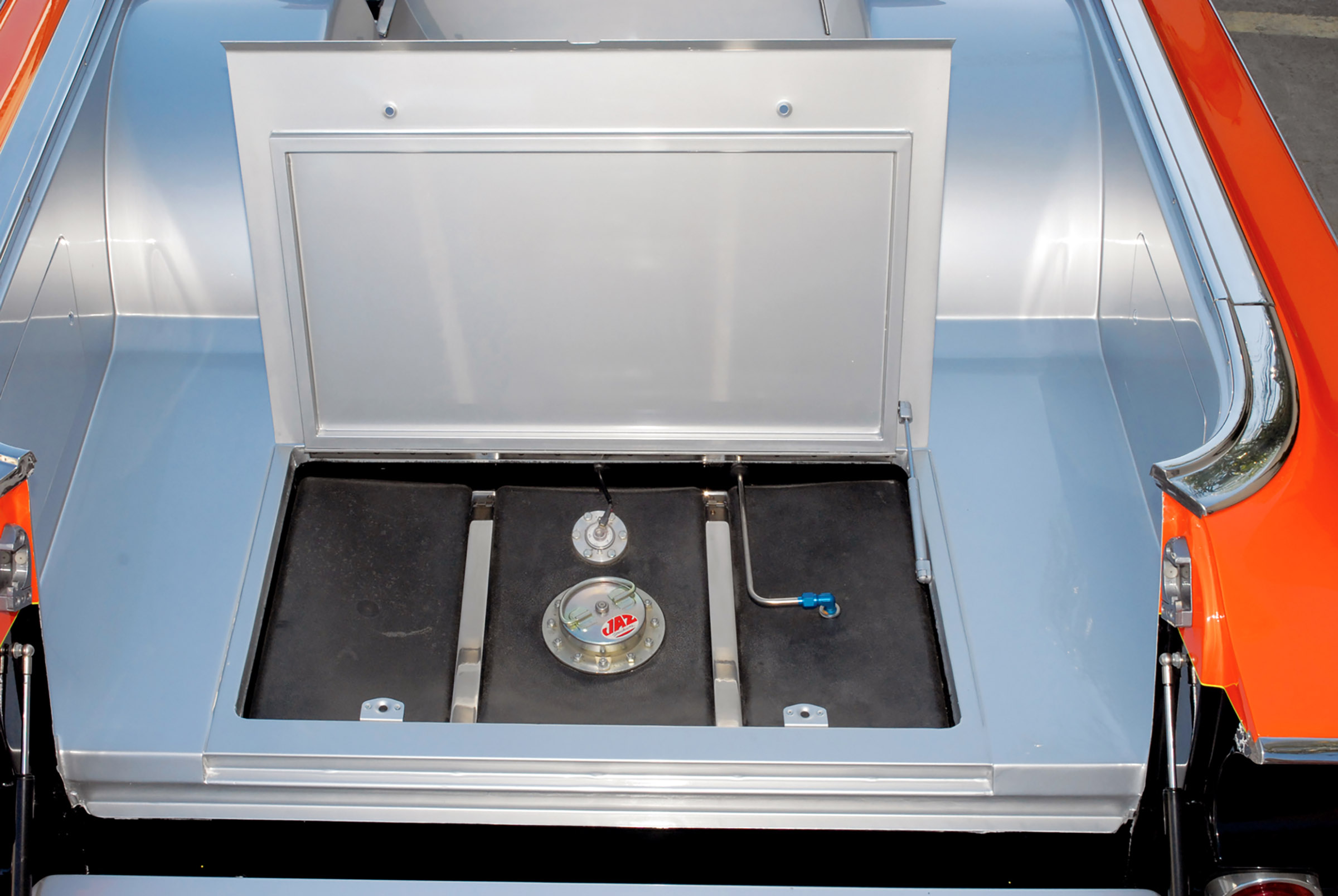
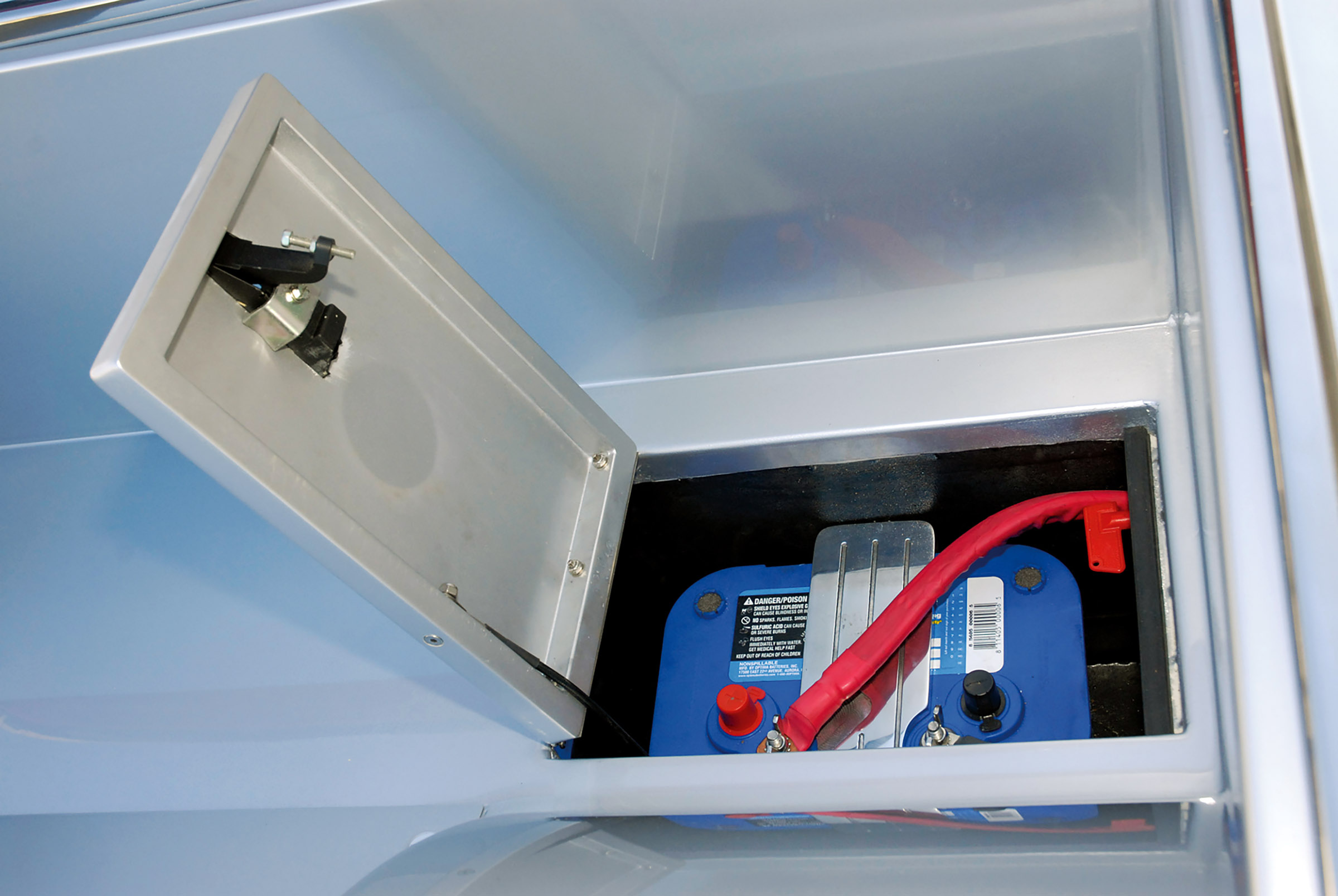
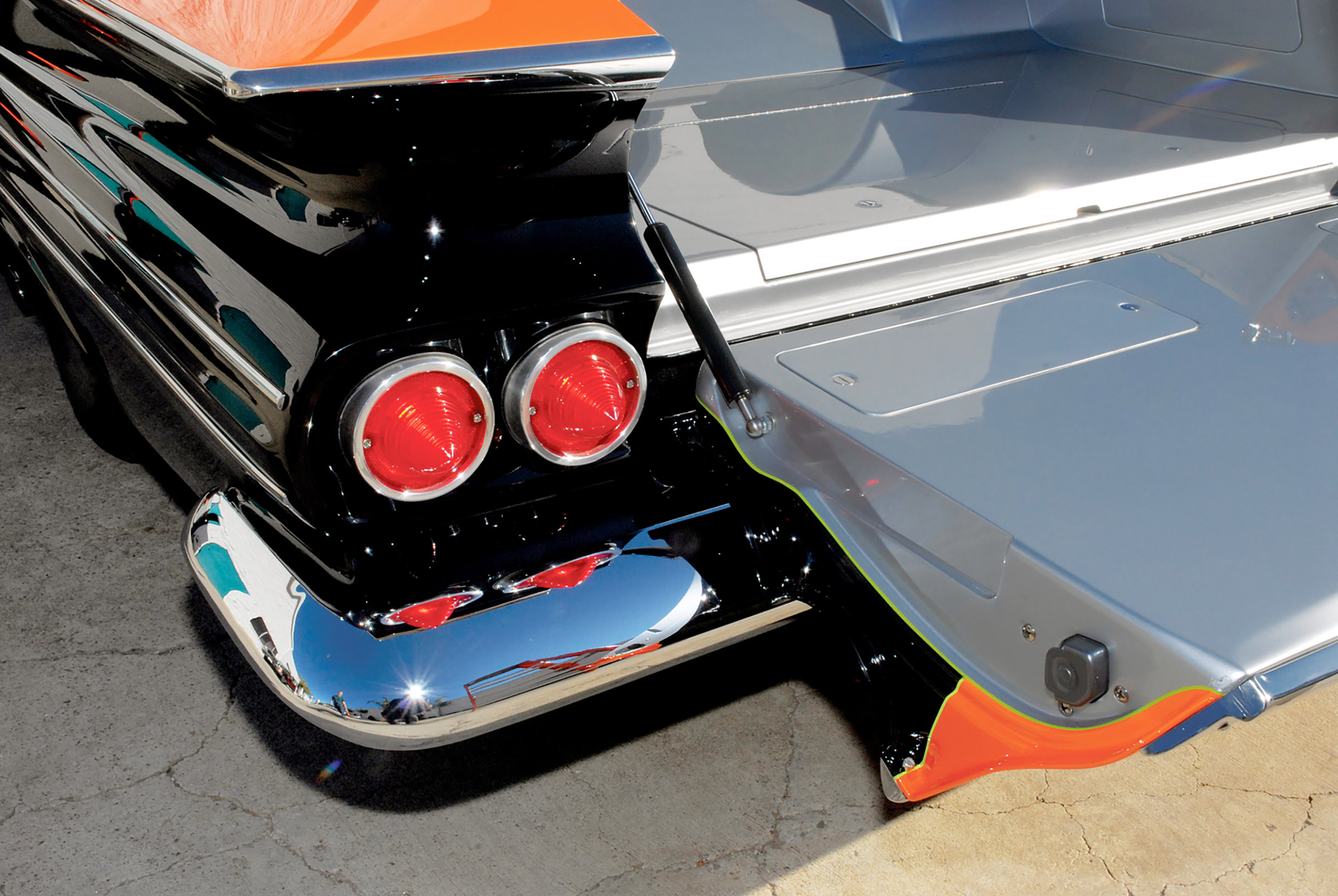
The El Camino’s one-of-a-kind custom bed was fashioned out of 0.125-inch thick 5052 aluminum, which was fully radiused, metal-finished and sprayed in light silver metallic. Inside you will find three compartments; on the driver’s side is one for storage, on the passenger’s side is one containing the battery, and out back in the center is one containing a JAZ 22-gallon fuel cell.
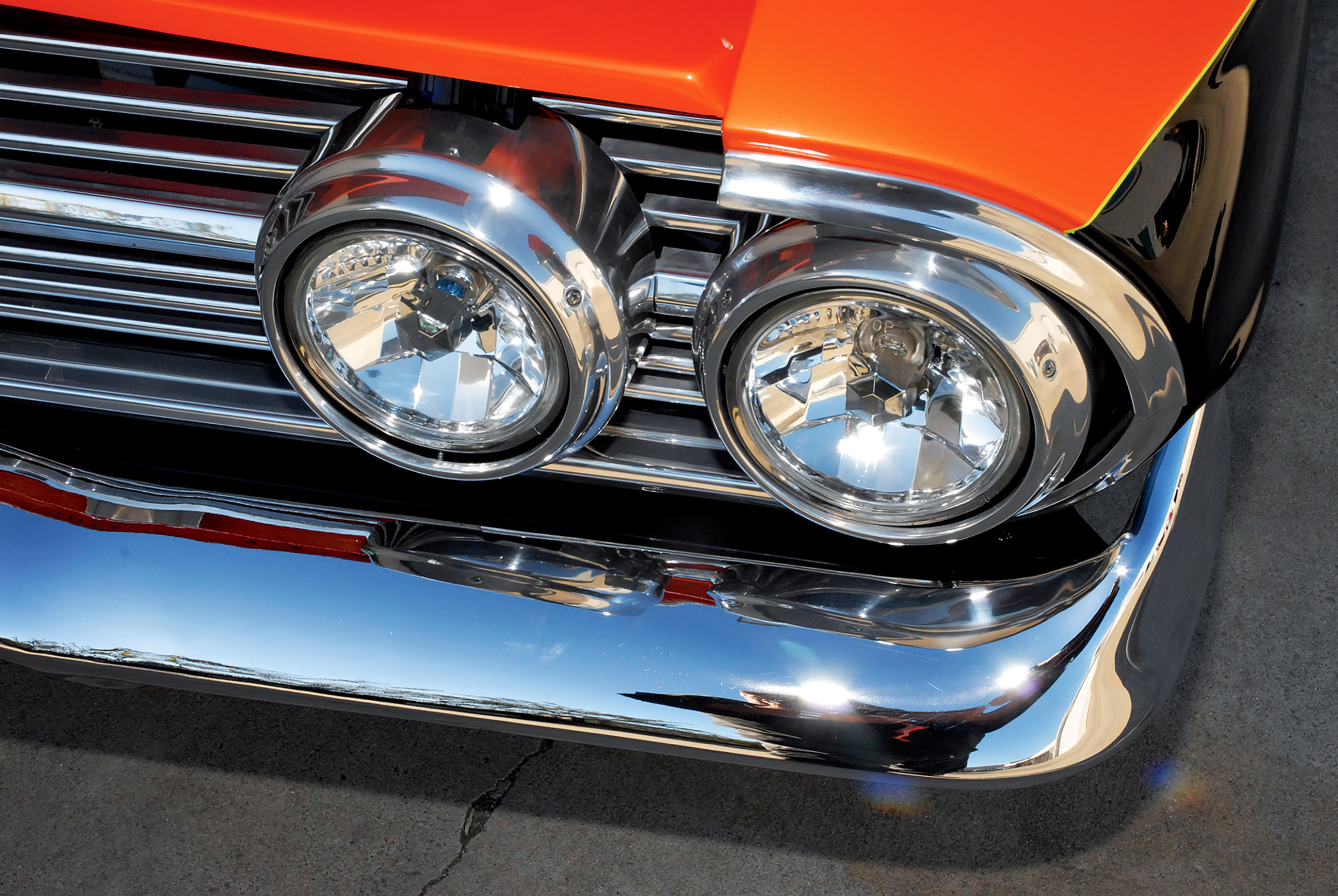
The El Camino body was sprayed in House of Kolor Tangelo Pearl topside and PPG Black on the bottom. Pinstriping consists of lime green under many coats of PPG Delgo clear. You’ll also note the use of Impala SS trim.
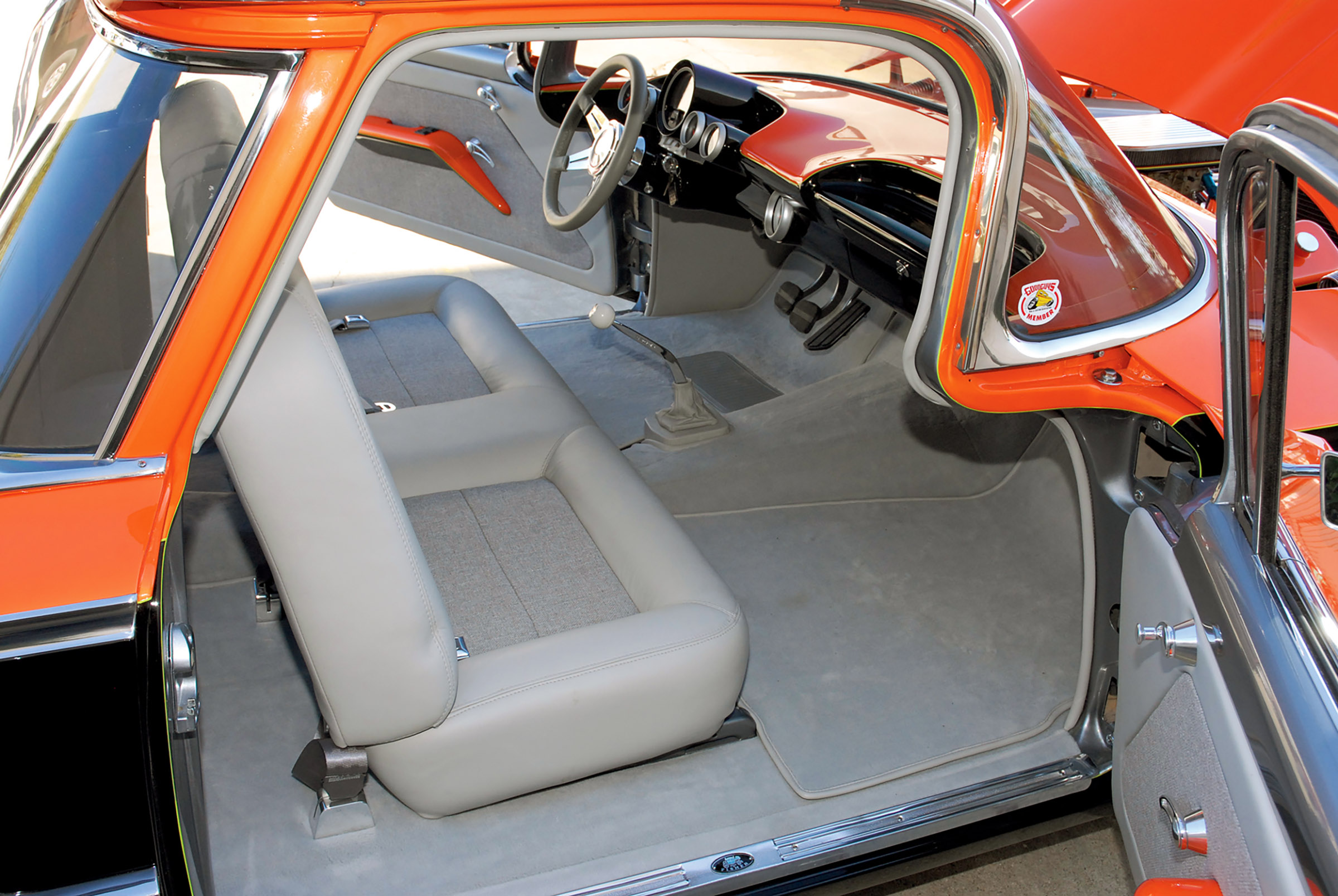
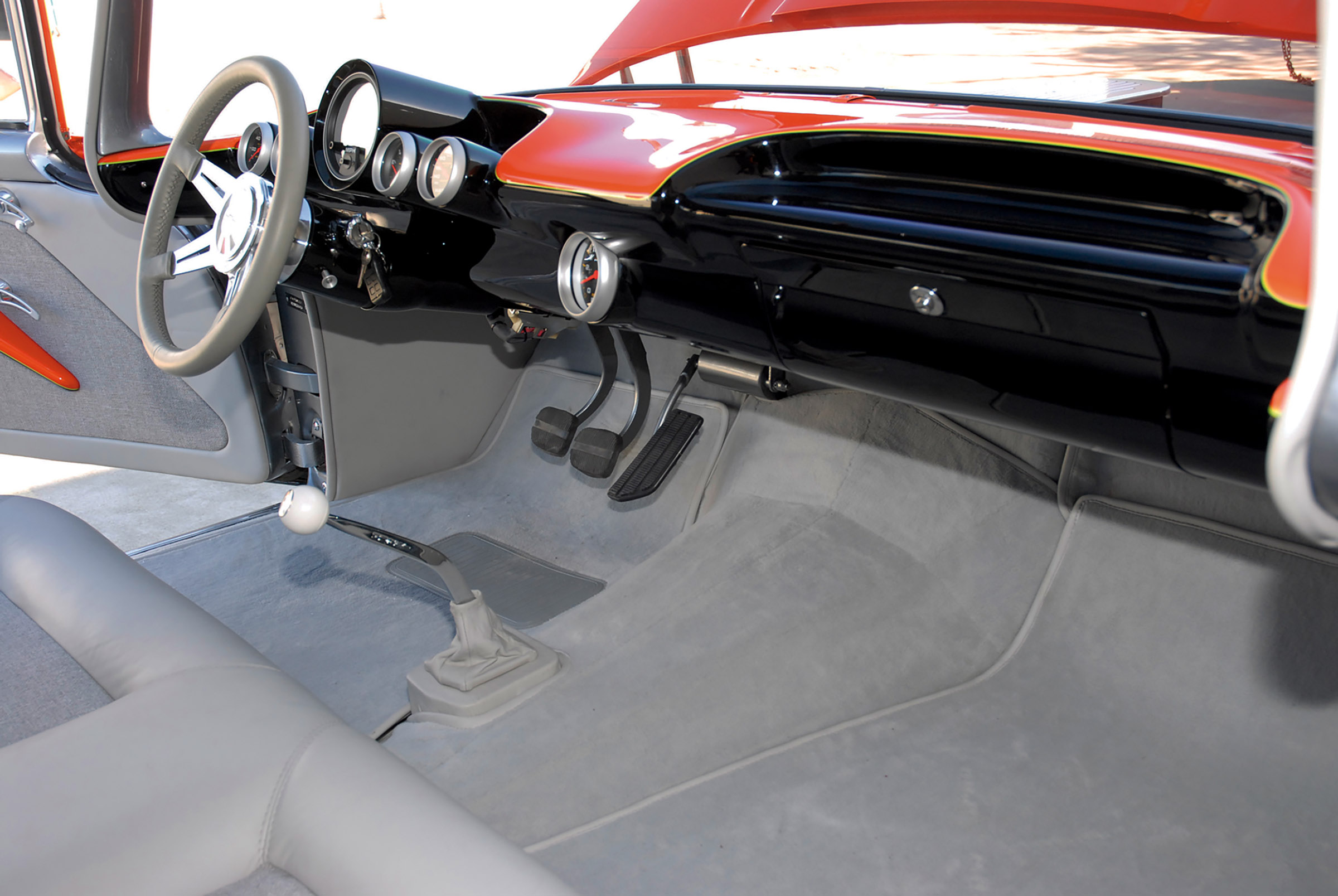
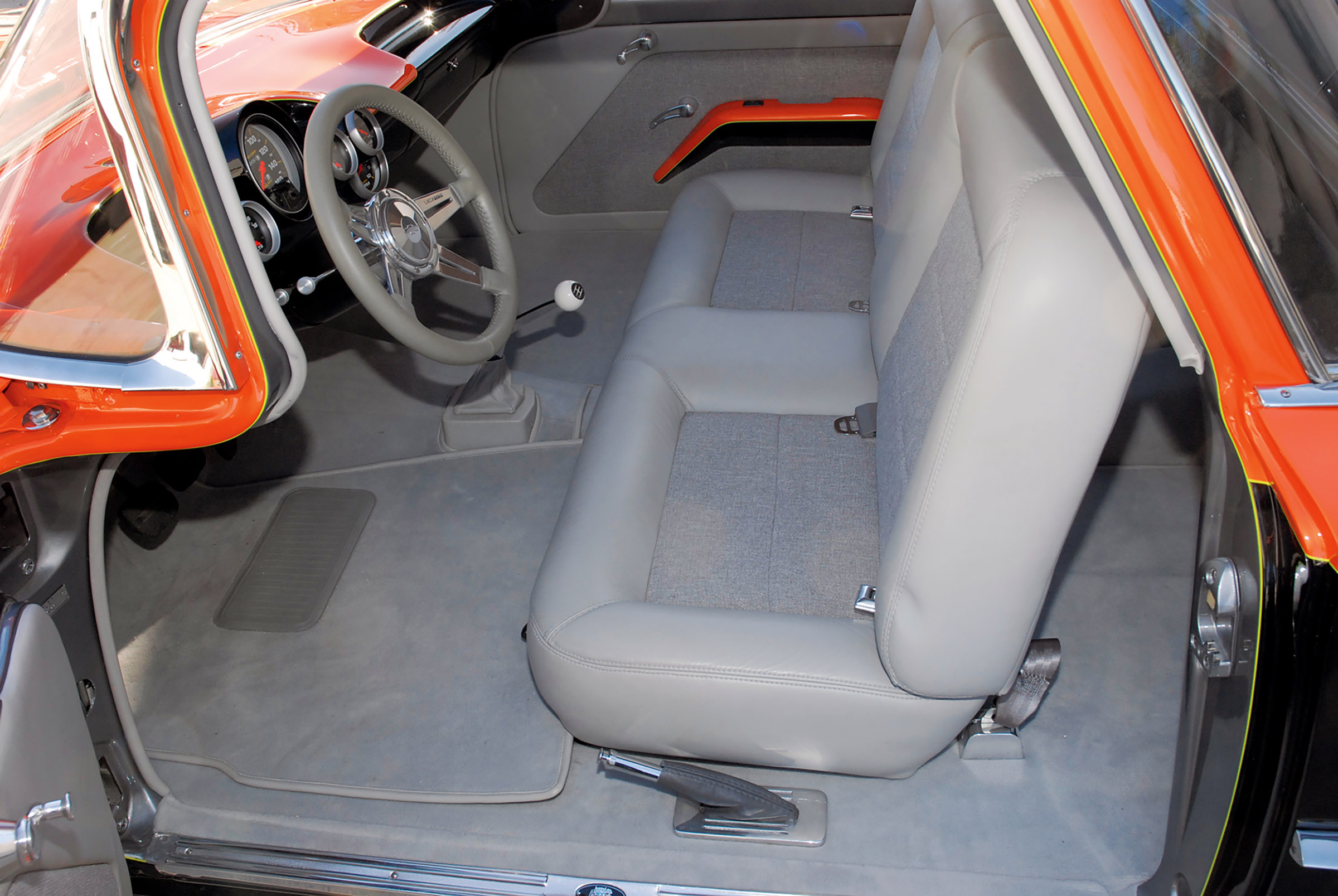
Inside, we find the handiwork of Saticoy, California’s Jesse’s Upholstery. The El Camino bench seat has been done in gray tweed with a matching headliner and custom door panels. Also along for the ride are a custom-fabricated dash containing Auto Meter Pro Comp gauges and a LeCarra leather-wrapped steering wheel. There’s no fancy stereo here, folks, just the delightful sound of the 427.
On the inside, the Elky features a custom Auto Meter Pro Comp-equipped, all-steel dash that resembles the stock dash. Also along for the ride is a custom floor pan with a radiused tunnel to provide sufficient clearance for the transmission and driveshaft. The seats were covered in light gray tweed and wool by Jesse’s Upholstery in Saticoy, California. Also onboard are a LeCarra leather-wrapped billet steering wheel, power windows and custom door panels. “There are no CD players, amps or speakers. The only sounds I hear come from that 427 and those Flowmasters,” Meltzer says.
Since completion, Jim Meltzer’s “Pro-1” has captured the Goodguys “Hot Hauler” award, the Super Chevy Show Pomona “Best of Show Pro Street” award, the Goodguys “Pro Street is Neat” award, the Harbor Run “Best Paint” award and the NHRA Twilight Cruise’s “The Look” award. And all of this is from a Chevy that was built for driving, not showing!