Dave Shuten: A Time Traveler in the World of Show Cars
Dave Shuten is a time traveler. Traveling through time is what he likes to do best, but looking at his latest creation, we can’t tell if his time travel machine is moving forward or back in time. Here’s the real dilemma: If you’re advancing a trend that ended in the early ’60s, are you traveling forward in time or back? One thing is certain: Dave Shuten loves to visit the golden era of show cars; after all, he’s the guy who did such an awesome job of cloning the Mysterion, an Ed Roth creation that was ultimately parted out and destroyed, only to live again through the efforts of Dave Shuten. Lest you think this era of show cars is just weird (and you wouldn’t be the only one), bear in mind that the Mysterion was a major showstopper when it re-debuted in 2005. Once again, spectators and hot rodders alike stood and stared at the marvelous mystery machine originally conceived by Big Daddy Roth. What this serves to illustrate is that the bubbletop car seems to be forever advanced, a futuristic design even 45 years after first seeing such a creation. So this new bubble car, the Astrosled, is a futuristic look at the past.
The Futuristic Look of Bubble Cars
One look at a bubble car makes most people think this is a “futuristic” rod, but it is actually only futuristic in comparison to the Jetsons or Buck Rogers. Yet, even today, people stand at the show ropes thinking this is the hot rod of “the future.” All of this is possible because the future, much like the sign that proclaims “Free Beer Tomorrow,” never quite arrives. We have today, we have yesterday; the future, much like this car, is out there somewhere. While Shuten has yet to reach the age of 40, he is a student of ’60s pop-culture cars. The combined influence of Roth, Casper, and Starbird is apparent in this car, and yet it is none of these. No, this is Dave Shuten’s car from the bottom of the tires to the top of the bubble, and it will be remembered as the “Astrosled,” the latest in a relatively short line of bubble cars.
Building the Astrosled: Advancing the Bubble
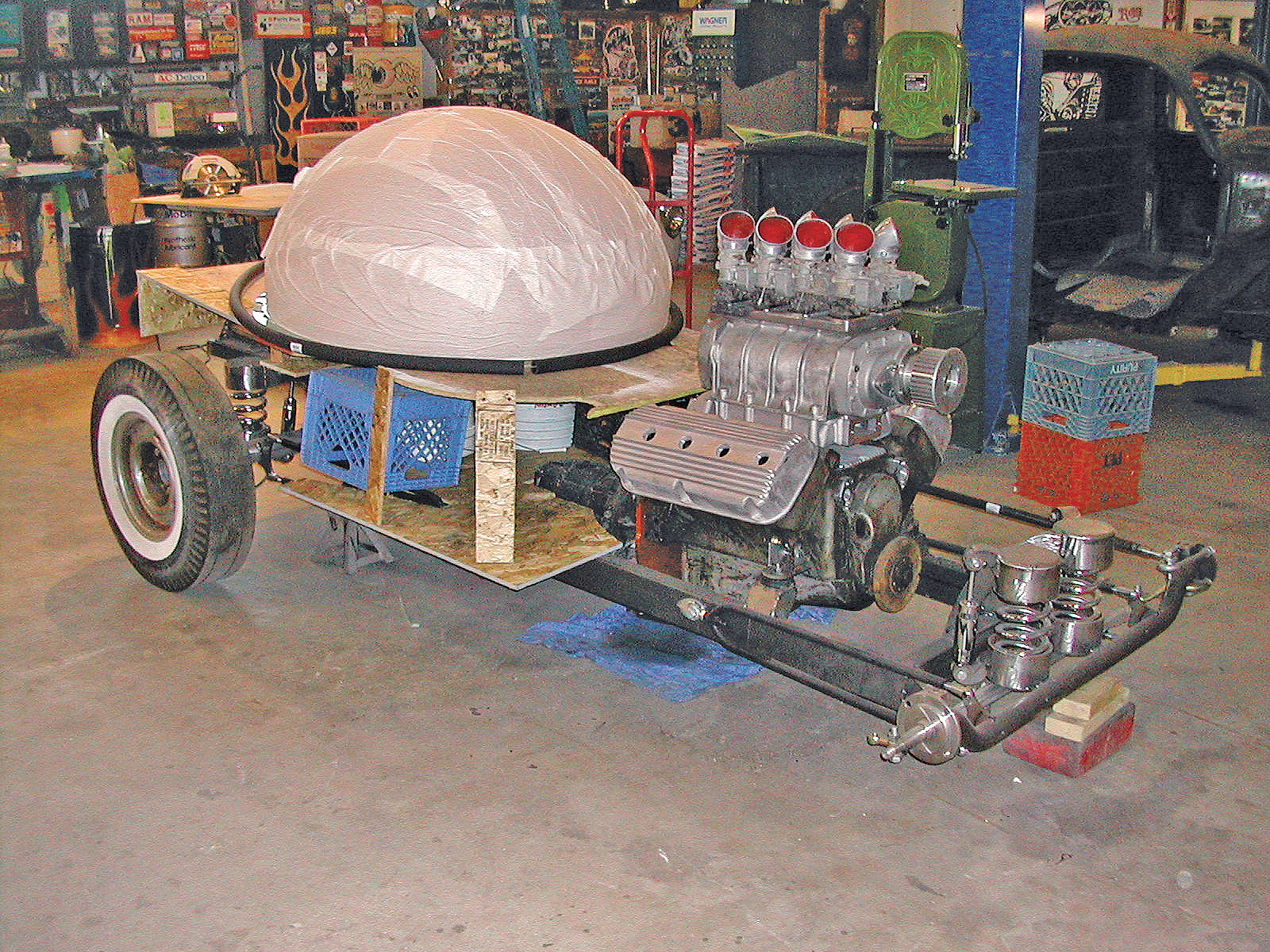
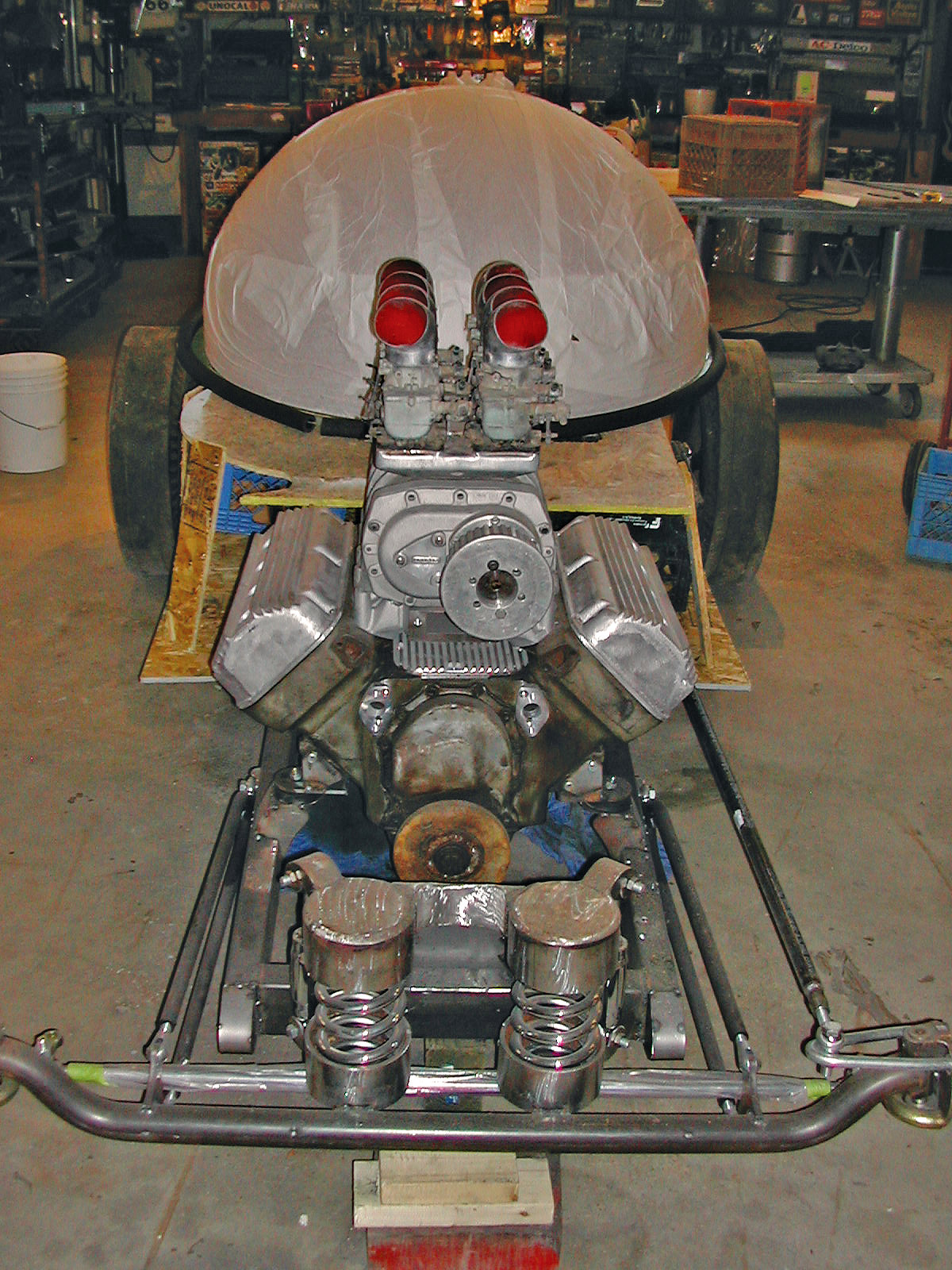
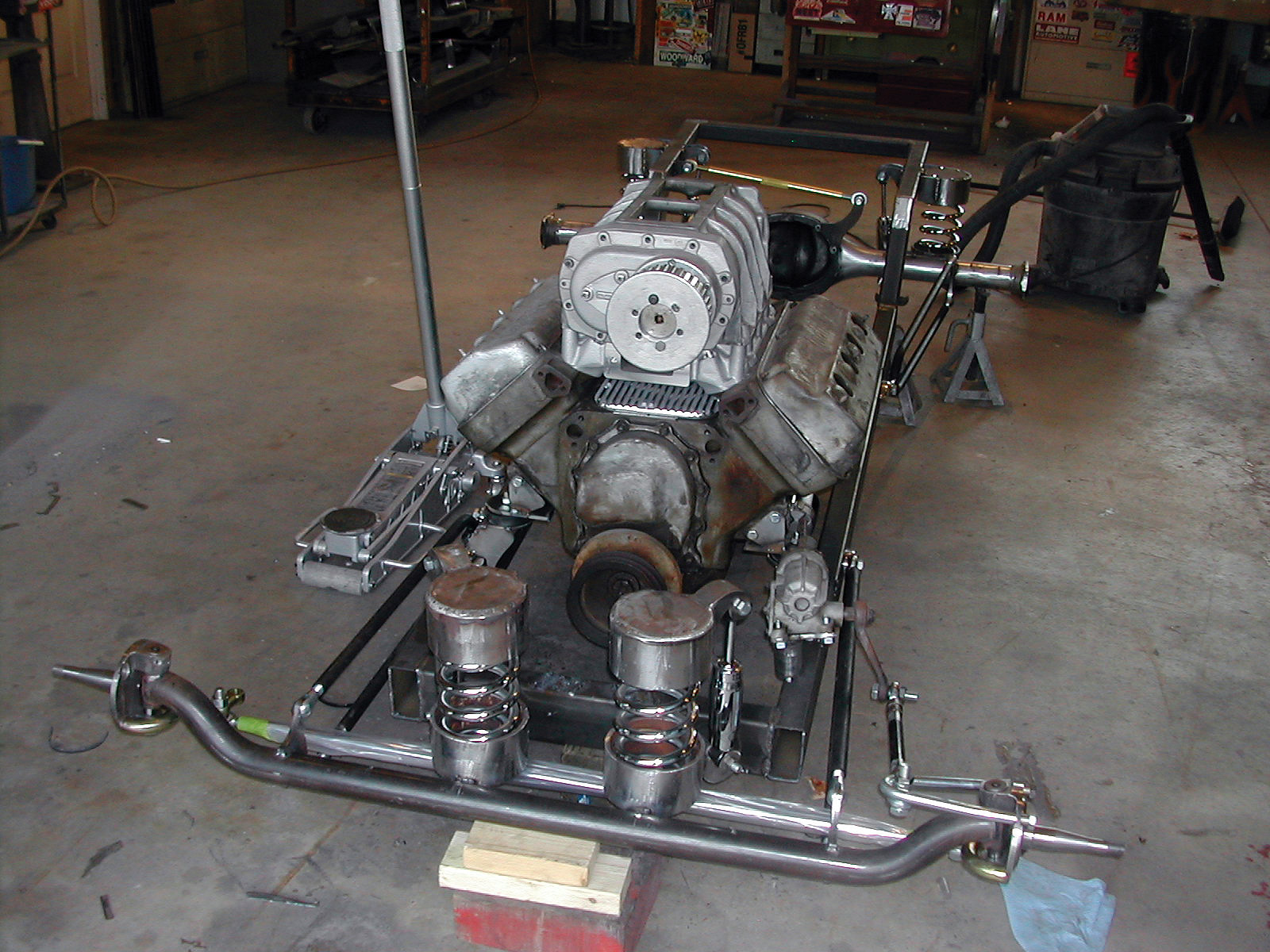
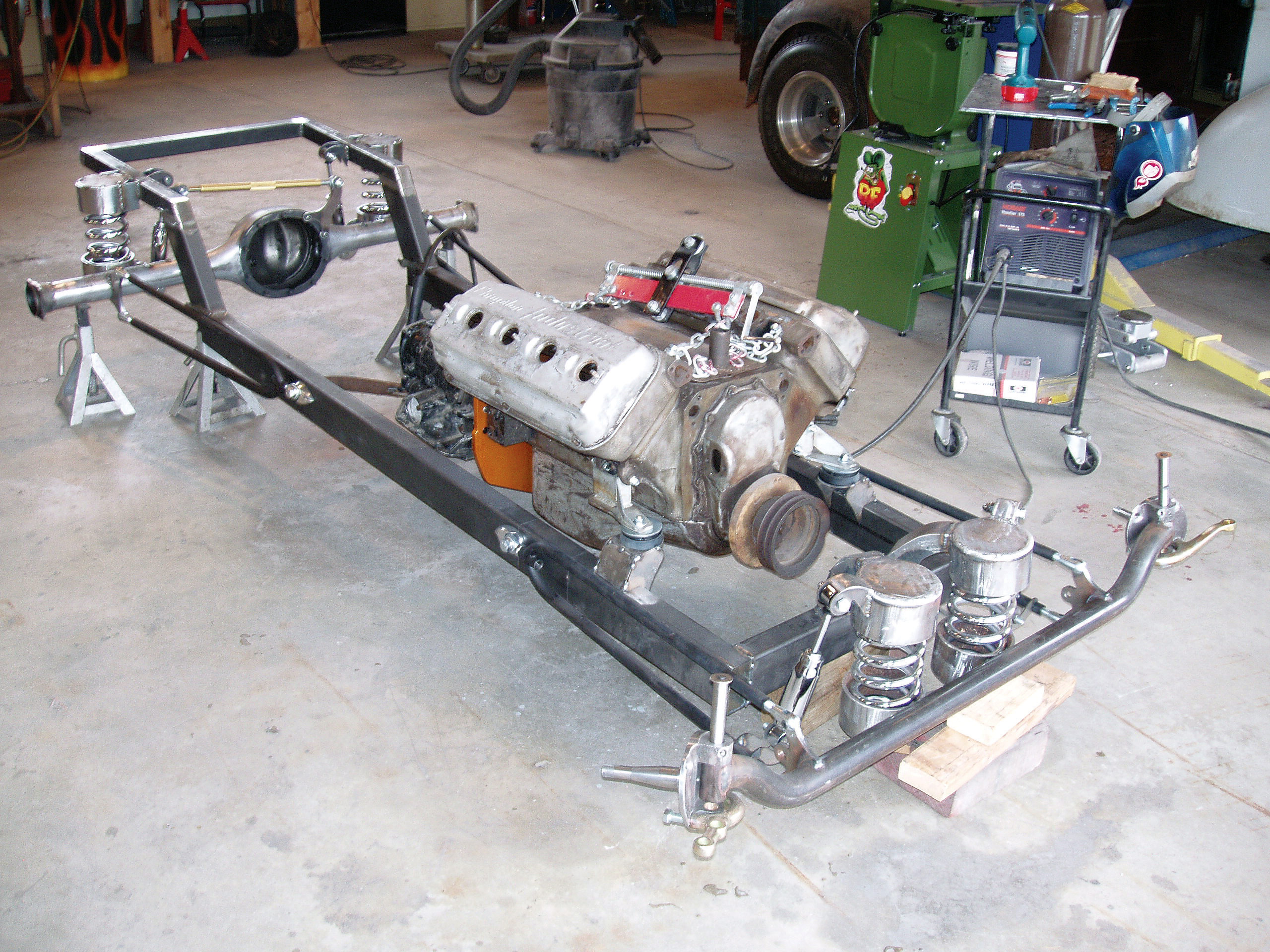
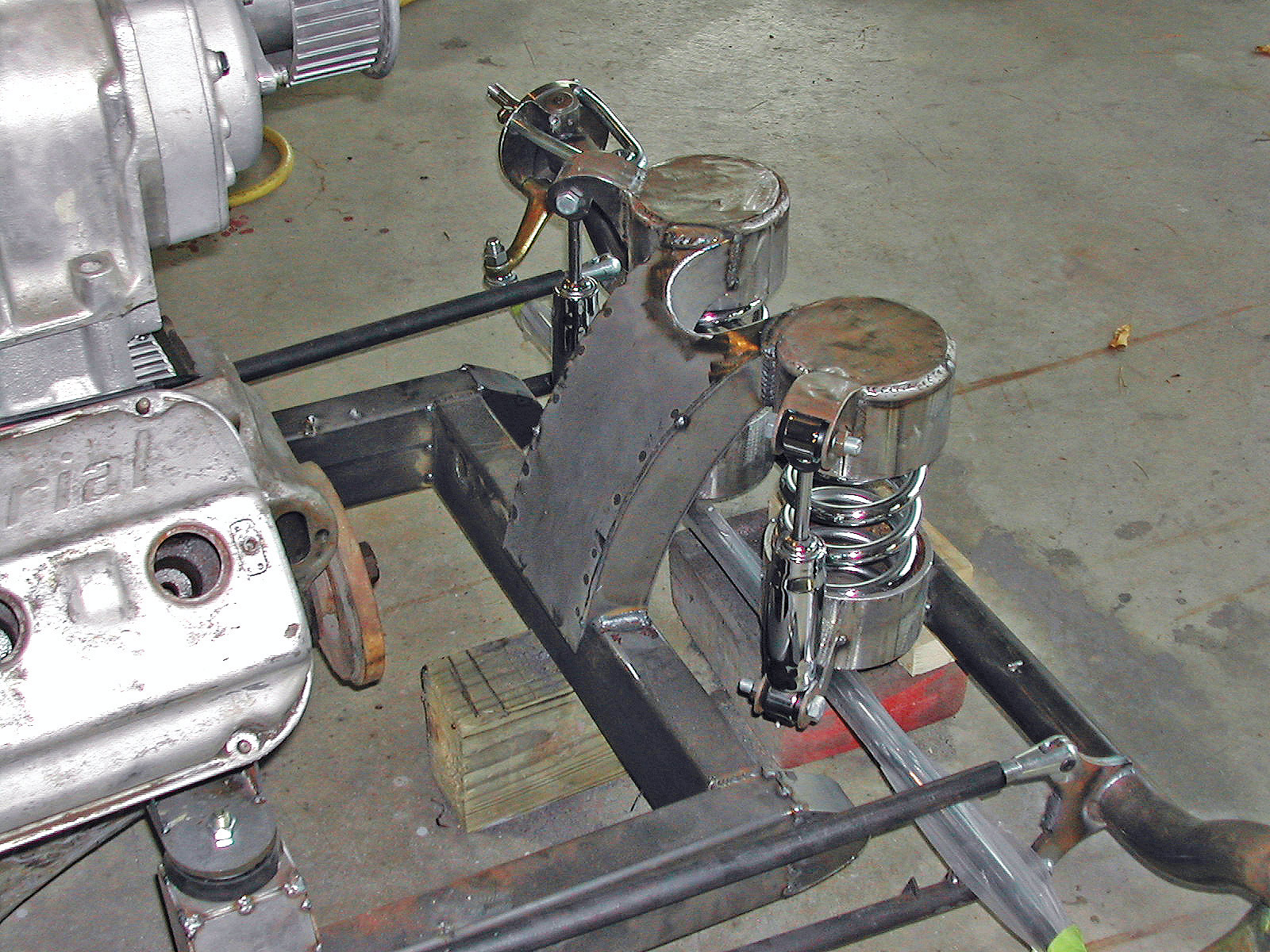
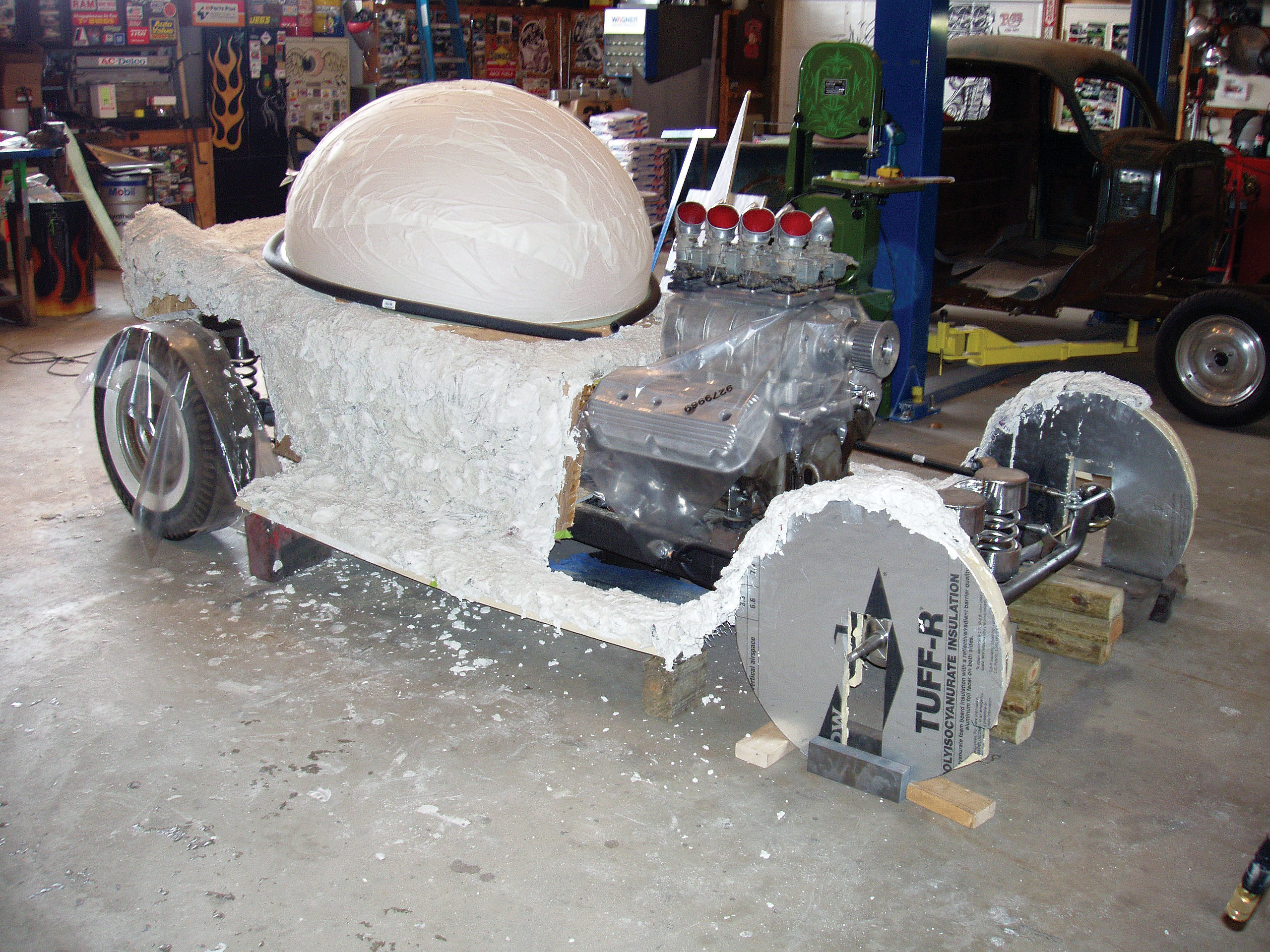
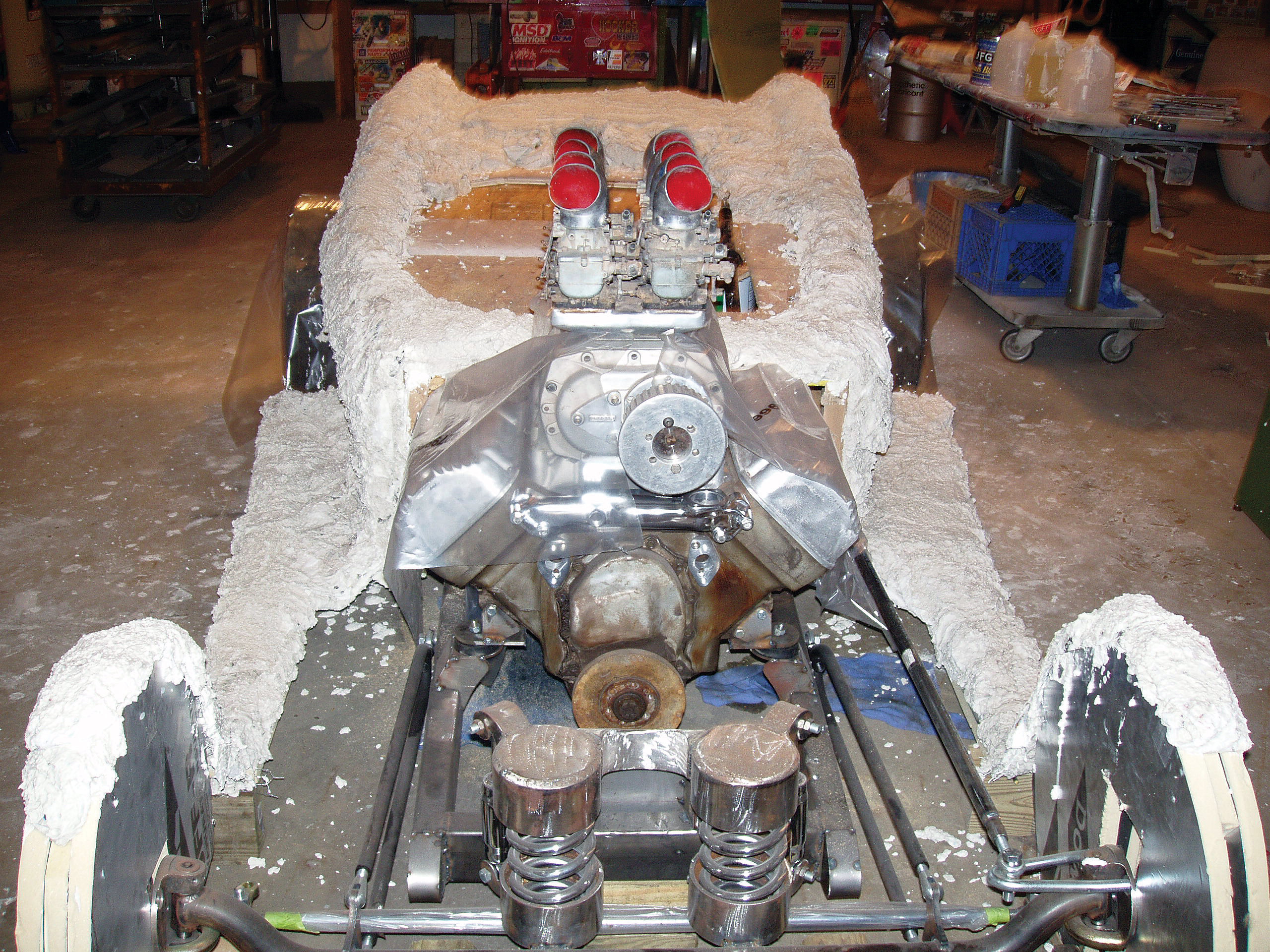
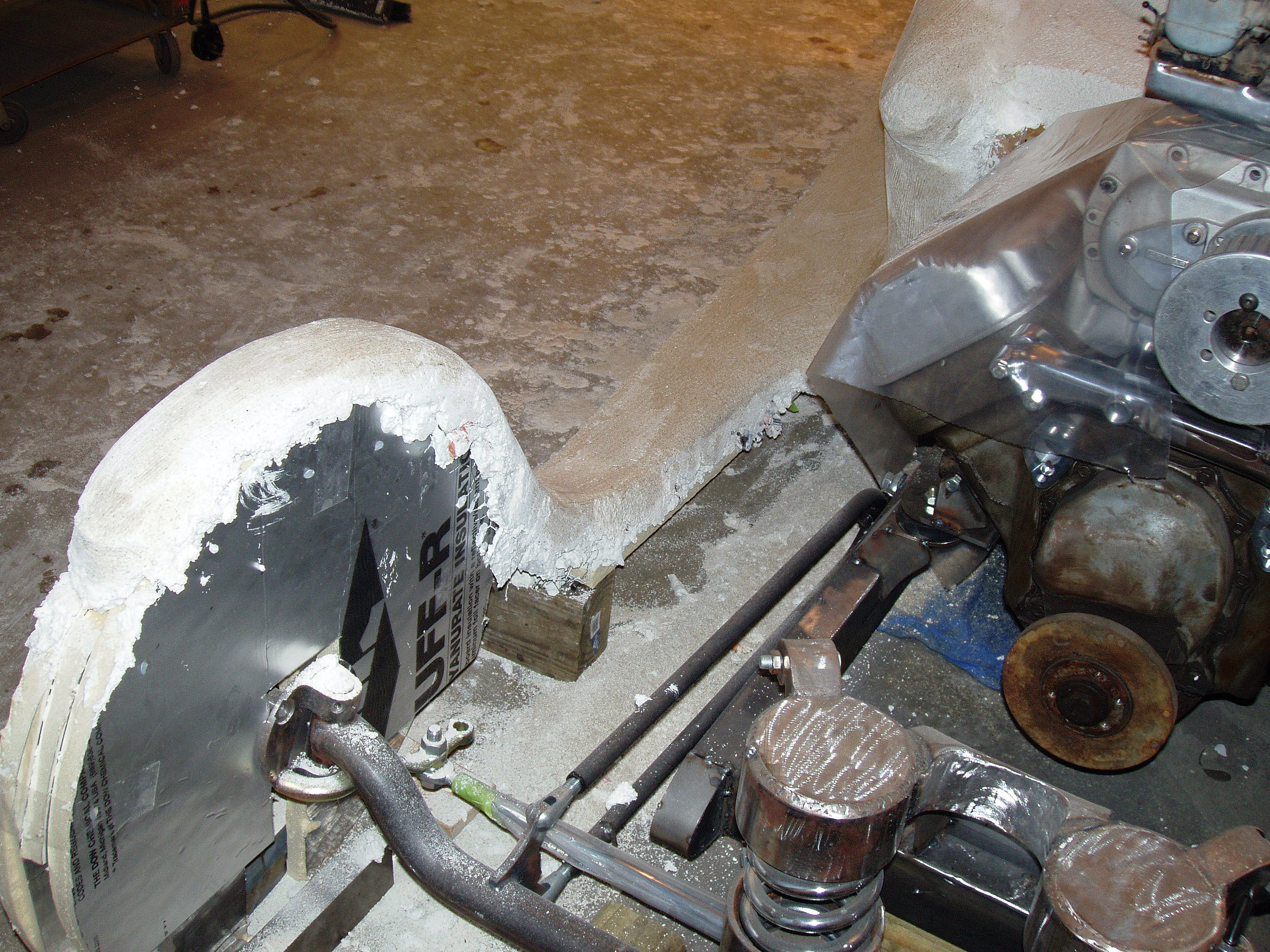
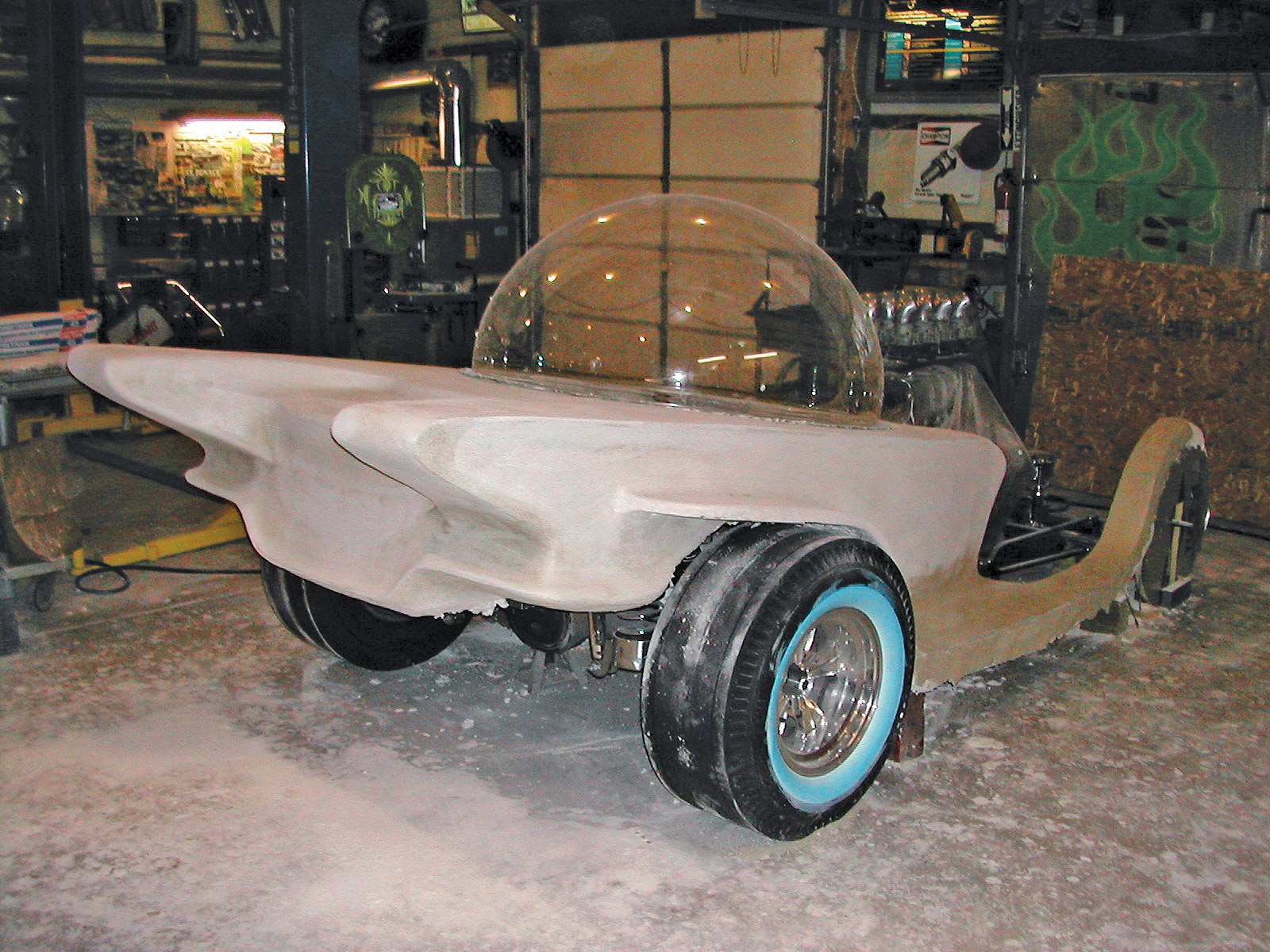
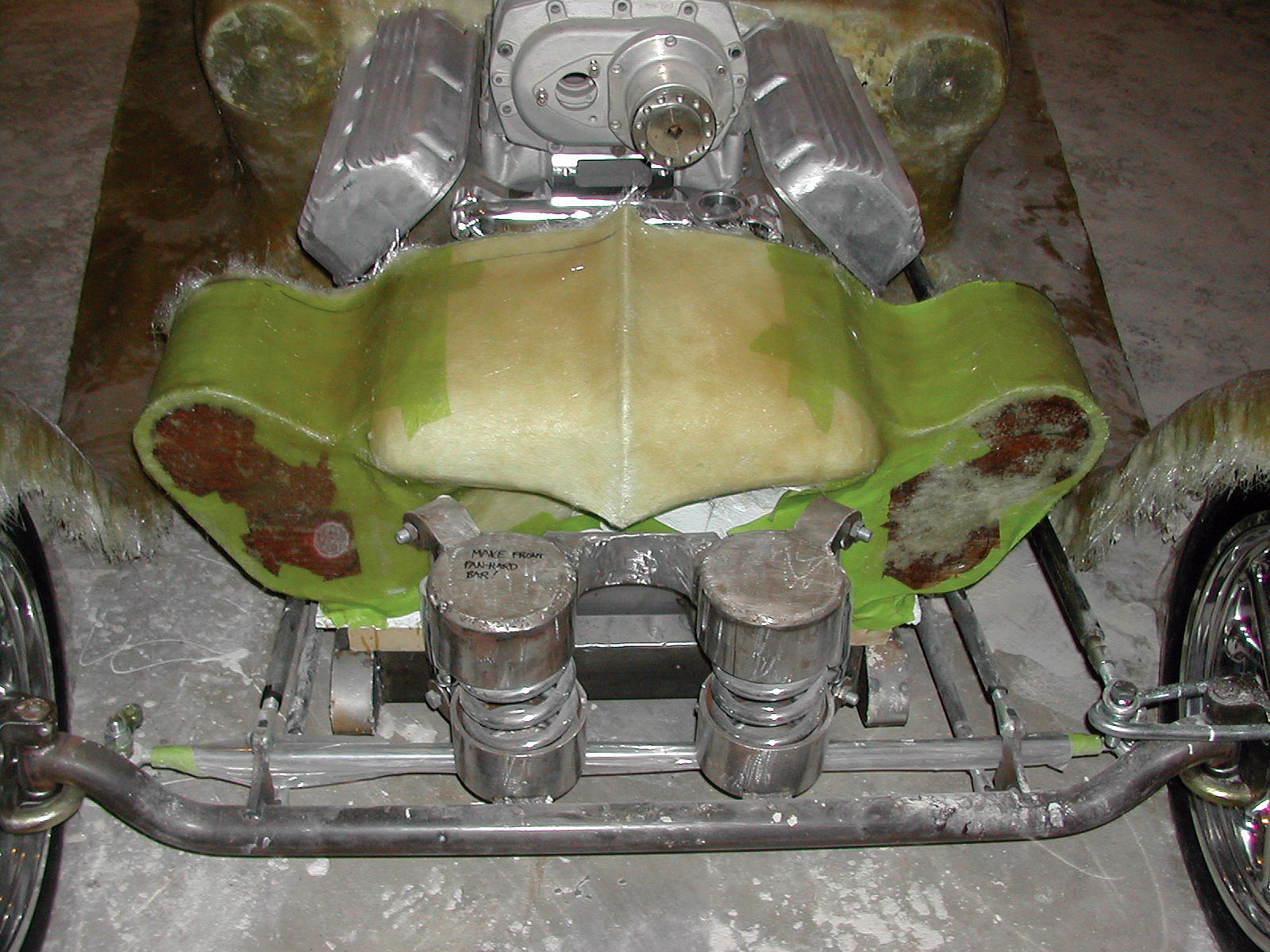
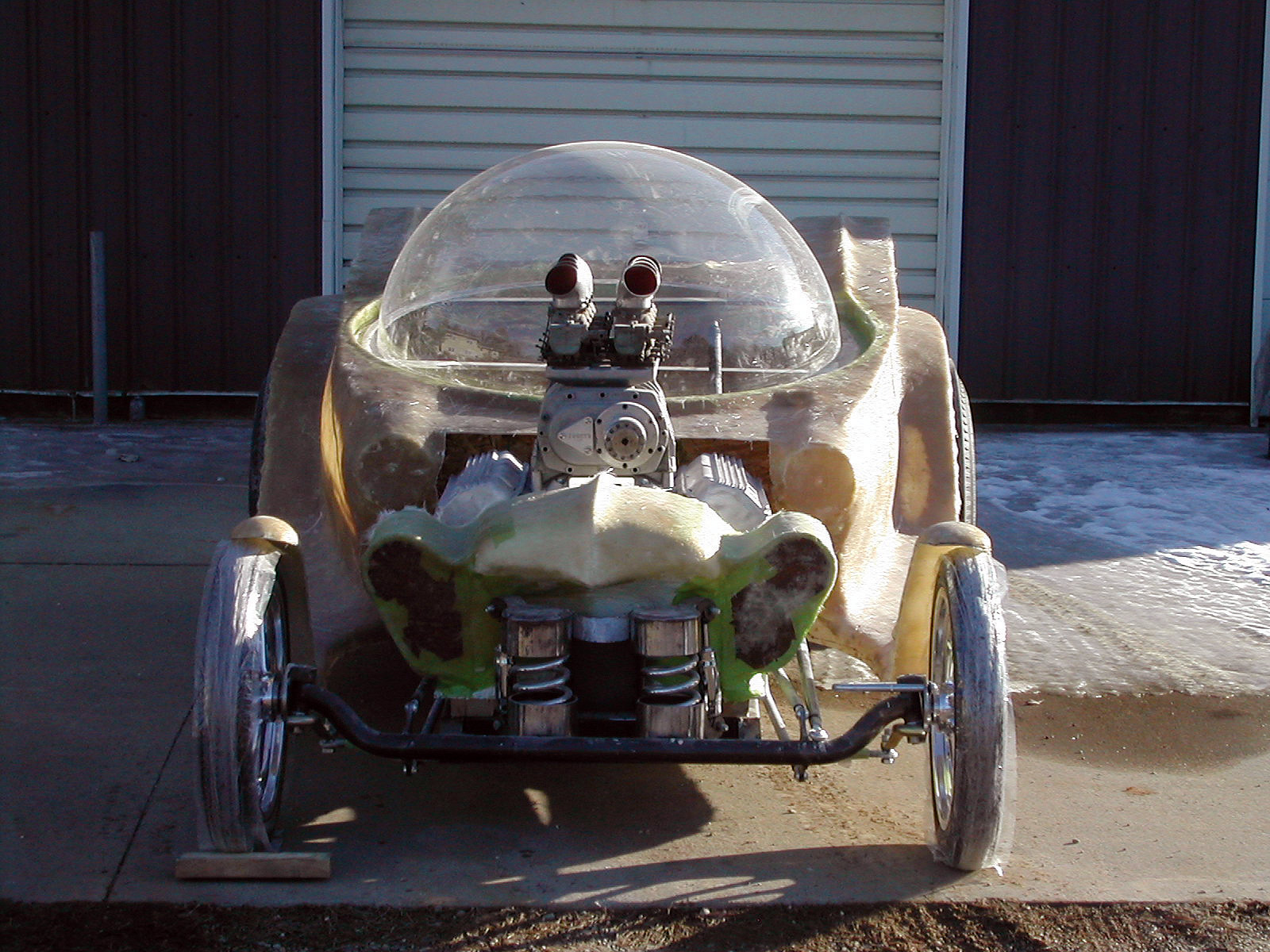
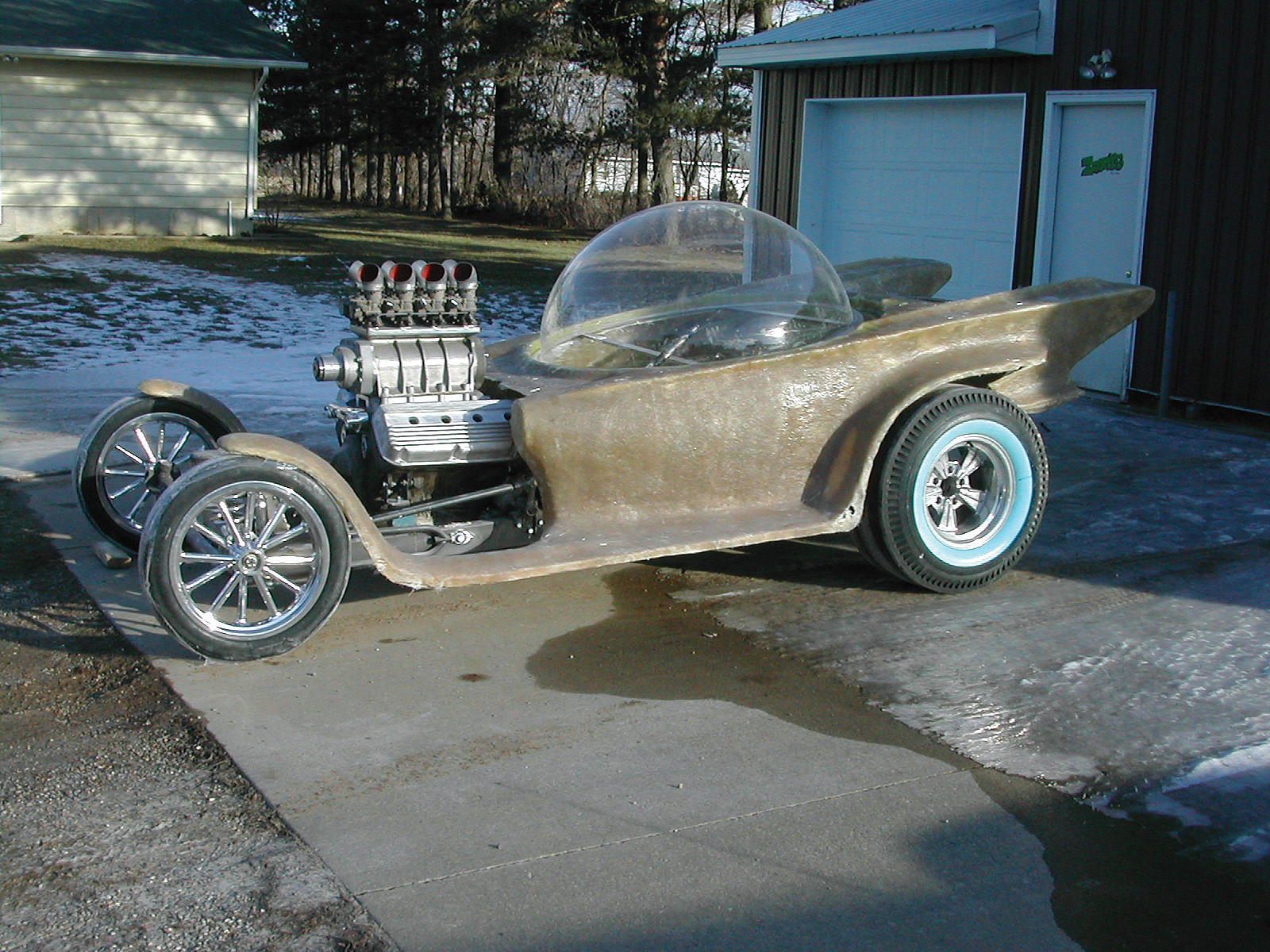
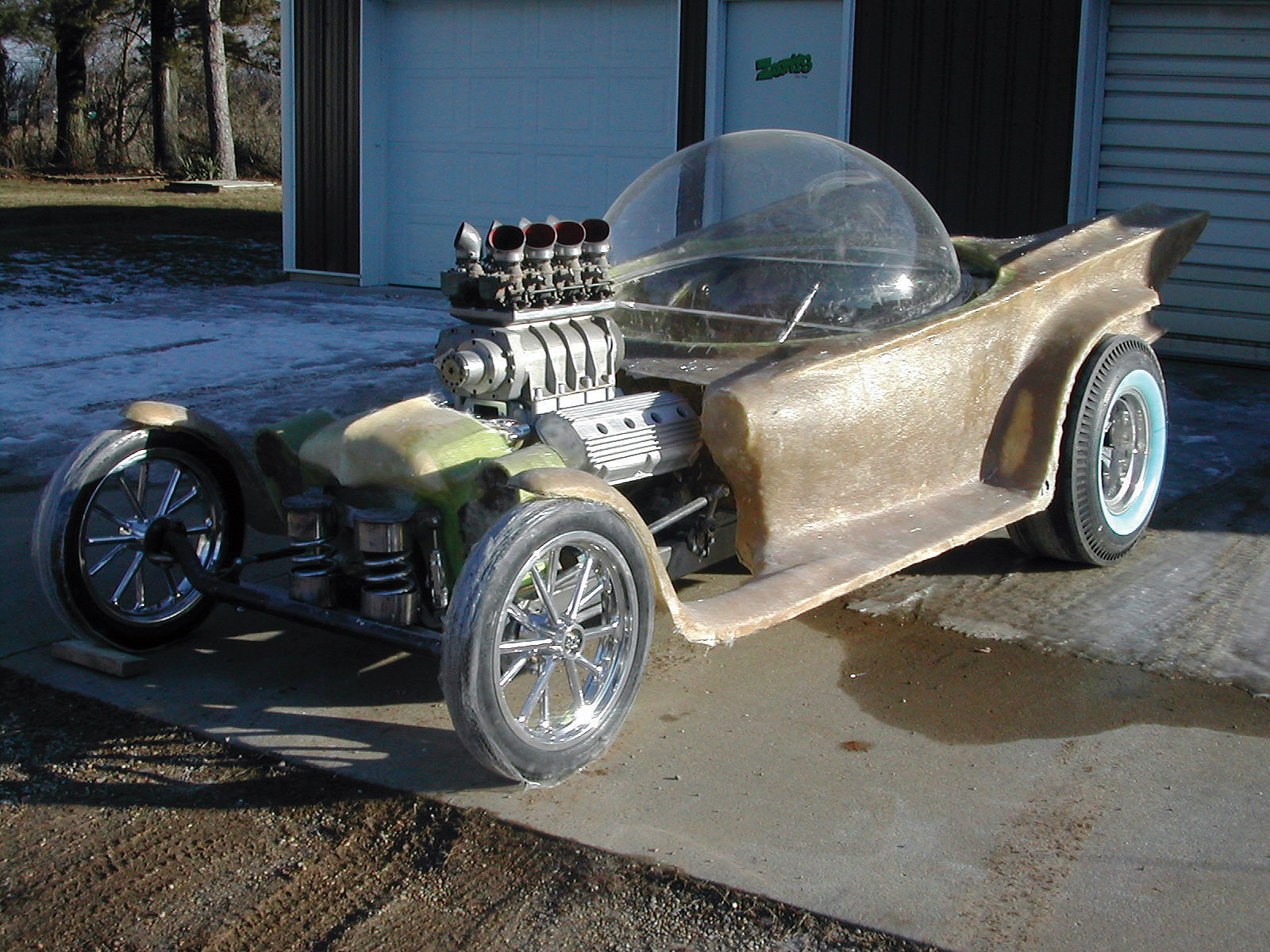
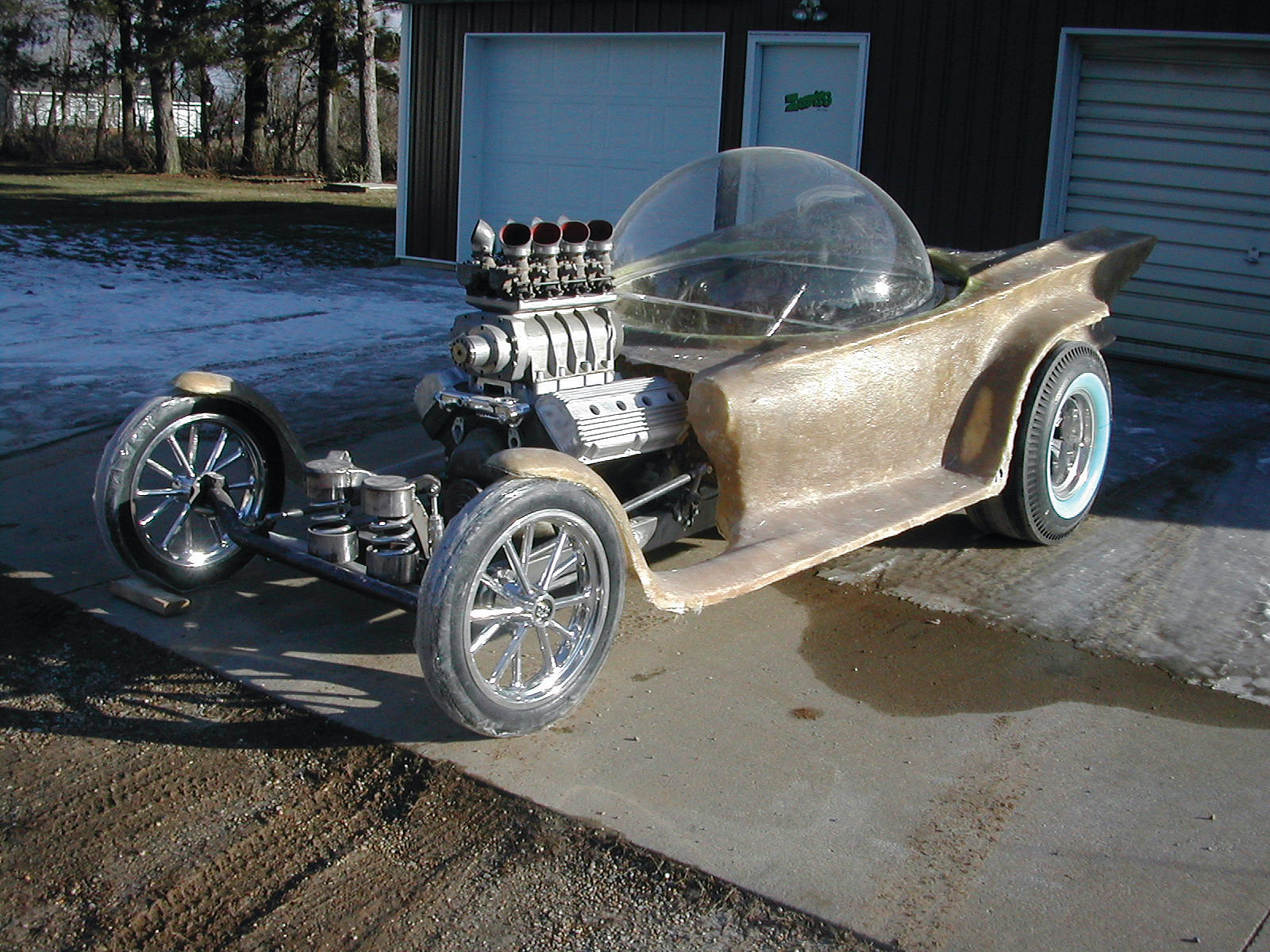
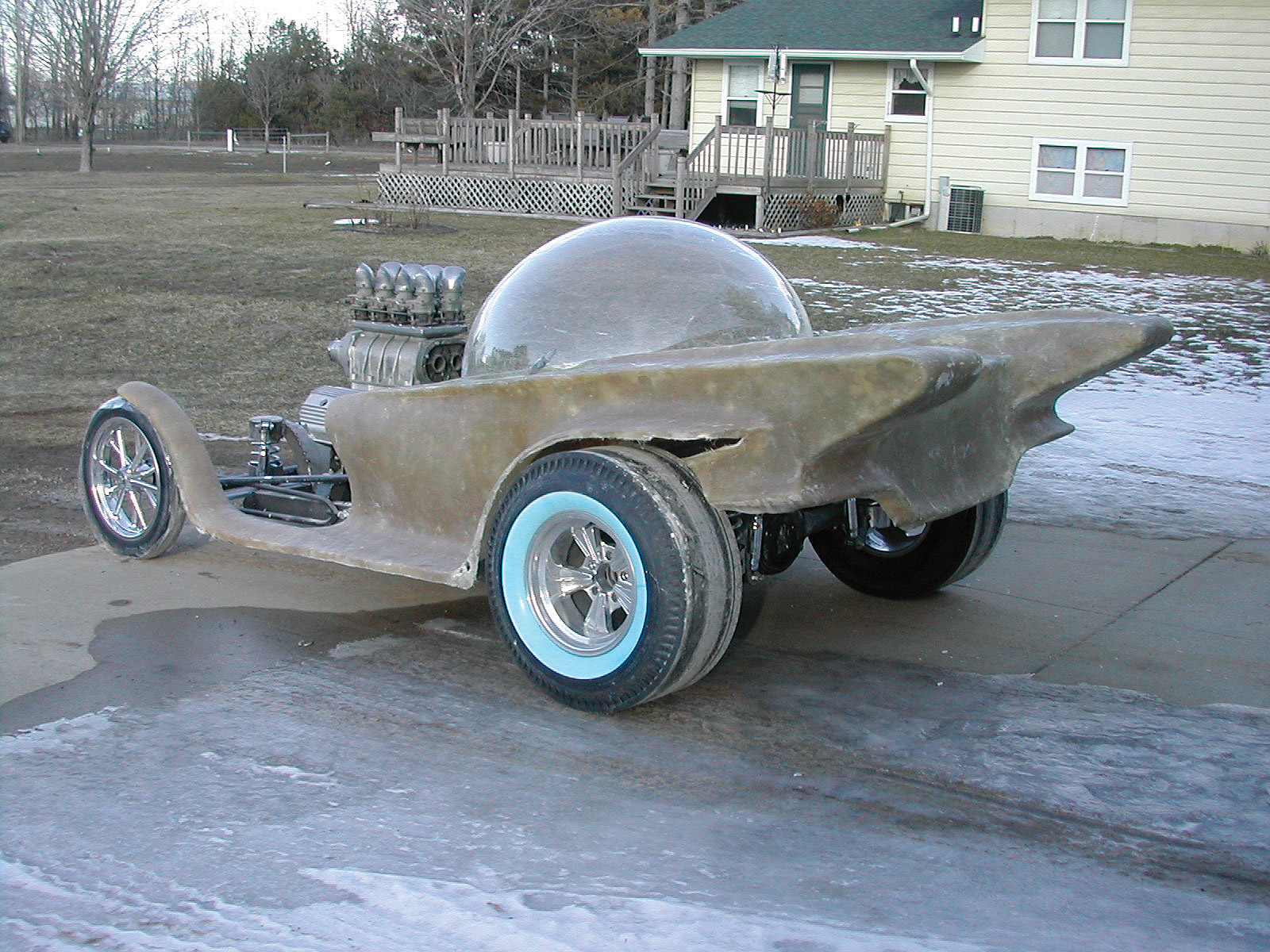
When Dave Shuten decided it was time to “advance the bubble” with a new show rod, he wanted to keep things in the same vein as they were in the ’60s, but with his own flair. To begin the project, several lengths of 2×4 box tubing were brought into the shop and cut up into a basic perimeter frame with a heavy Z’d rear, much like a T-bucket chassis. The front suspension is similar in design to the earlier Roth car, with a pair of coil springs located nearly in the center of the axle. The location of the springs was dictated more by the shape of the grille and the headlight pod than by ideal suspension geometry. Likewise, a pair of vertical shock absorbers mounts to the central suspension location. With the suspension fully exposed, these pieces also become a part of the cosmetics of the car.
The Rear Suspension and Powertrain
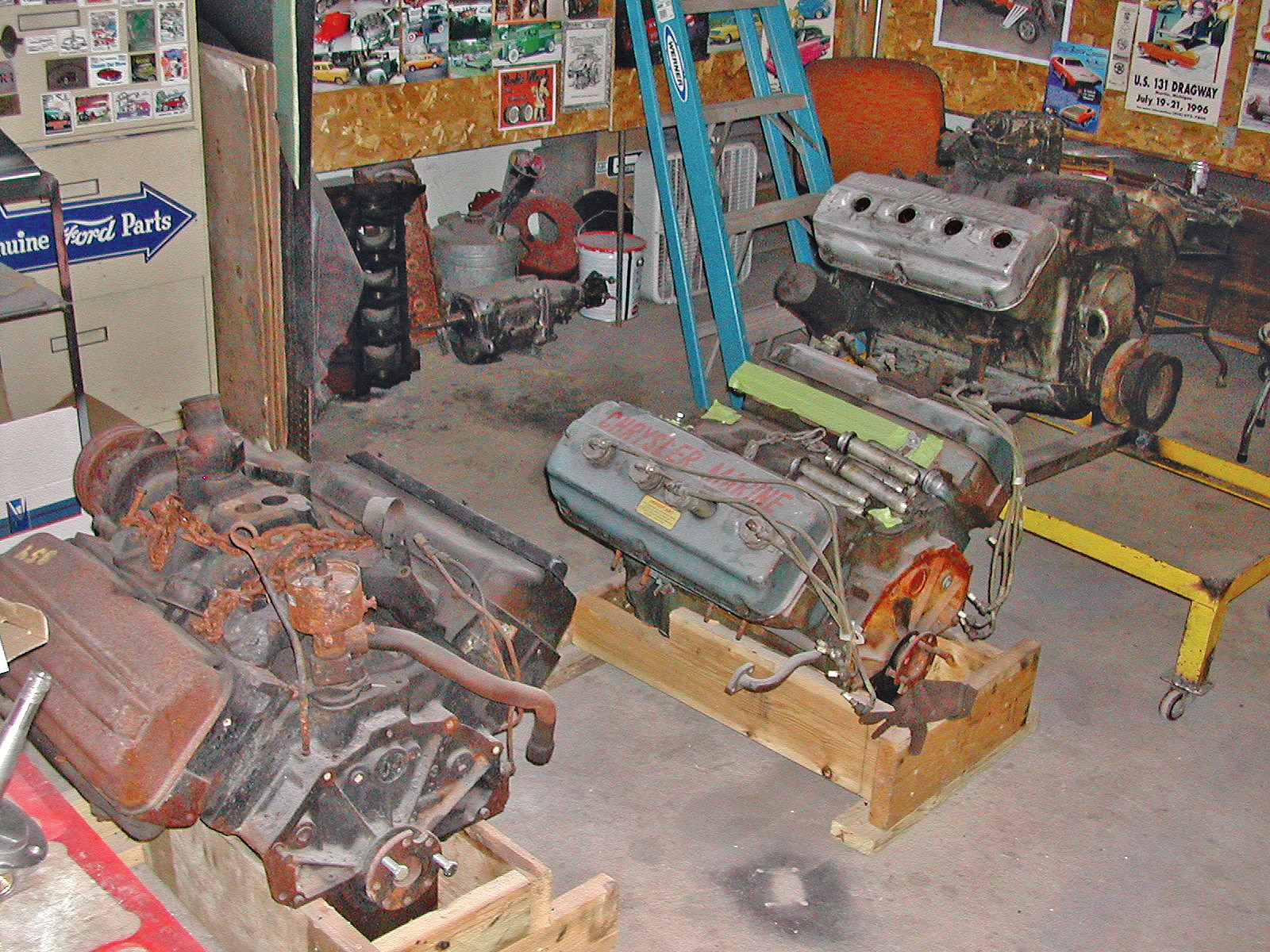
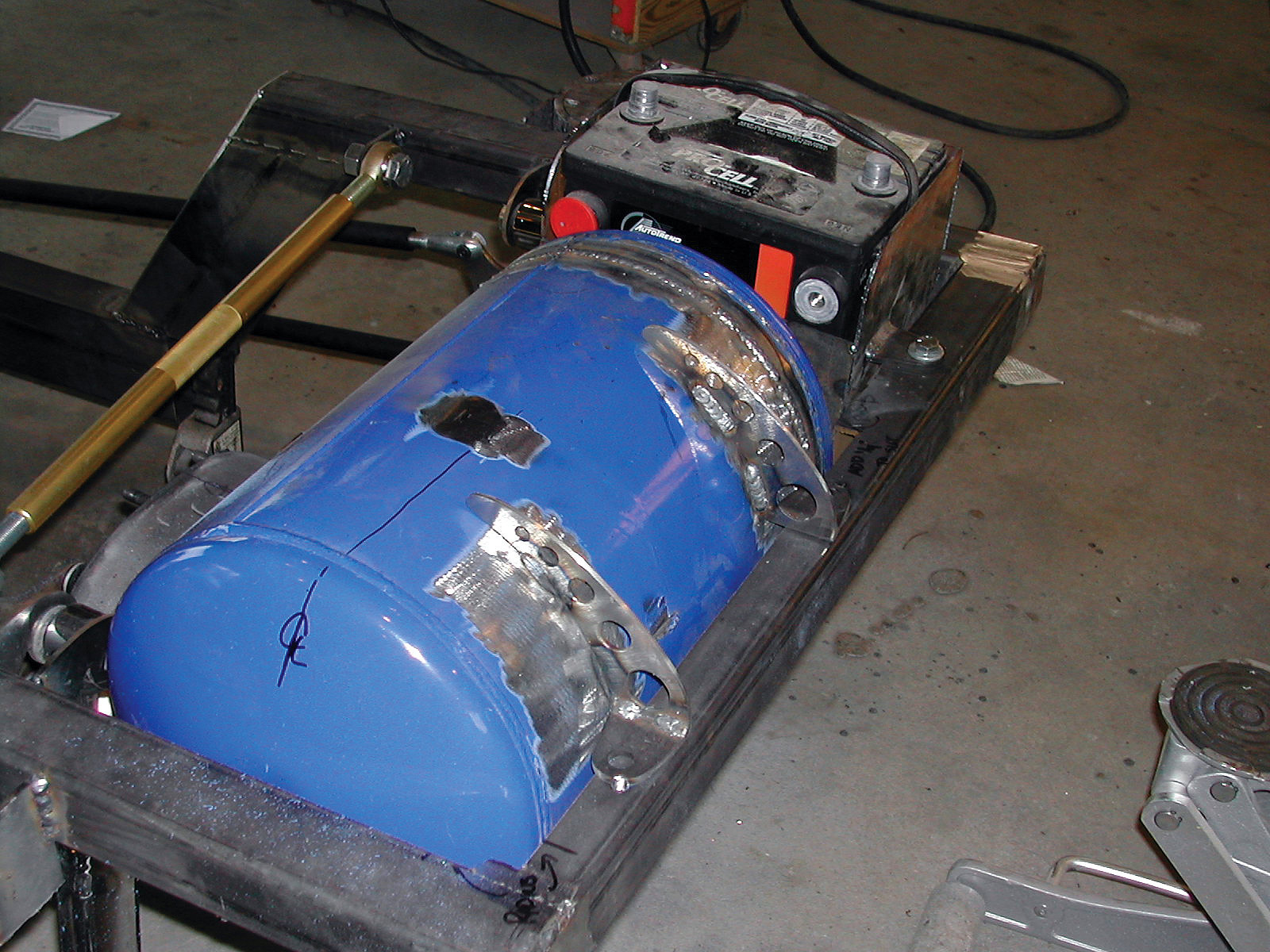
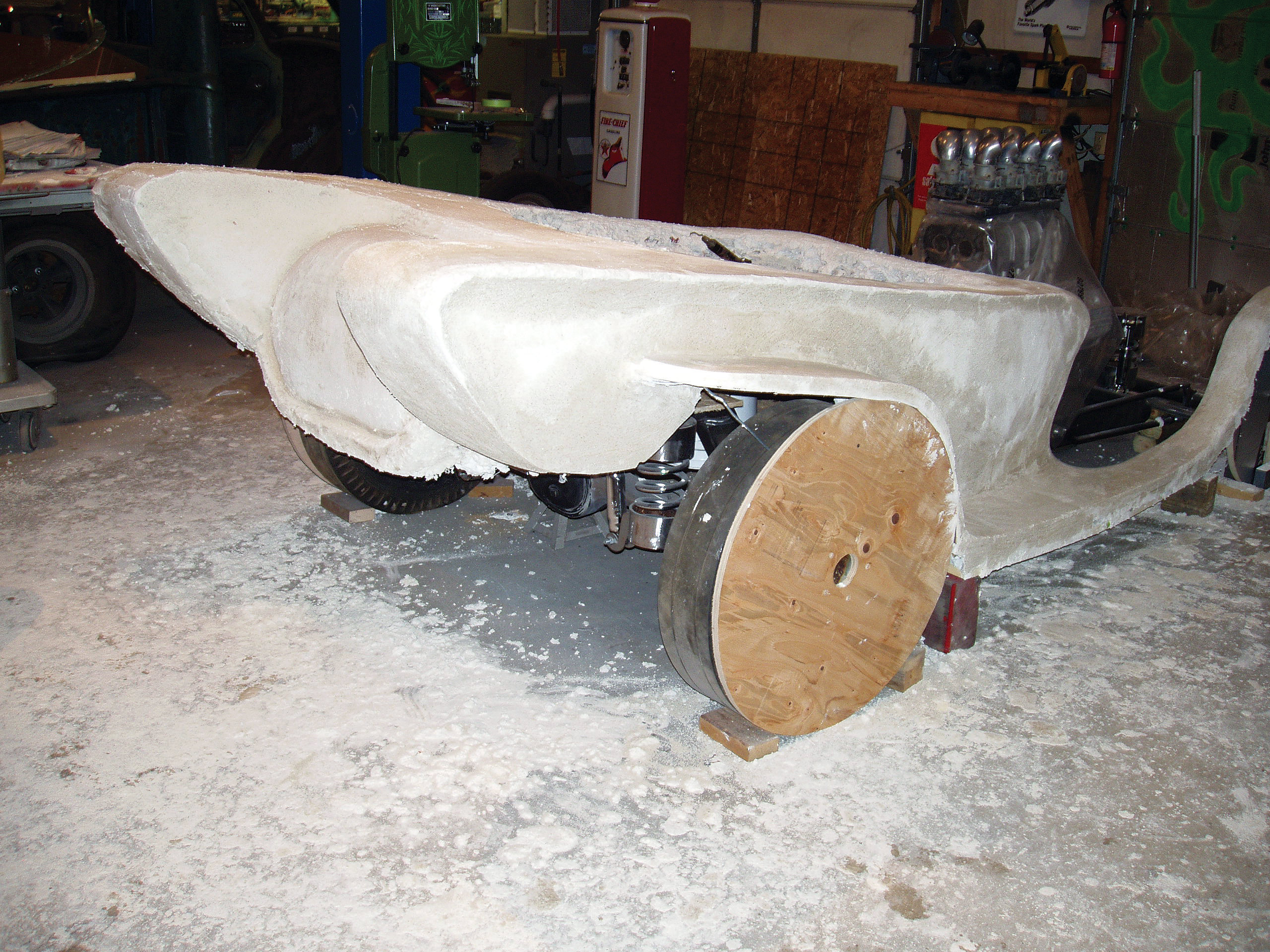
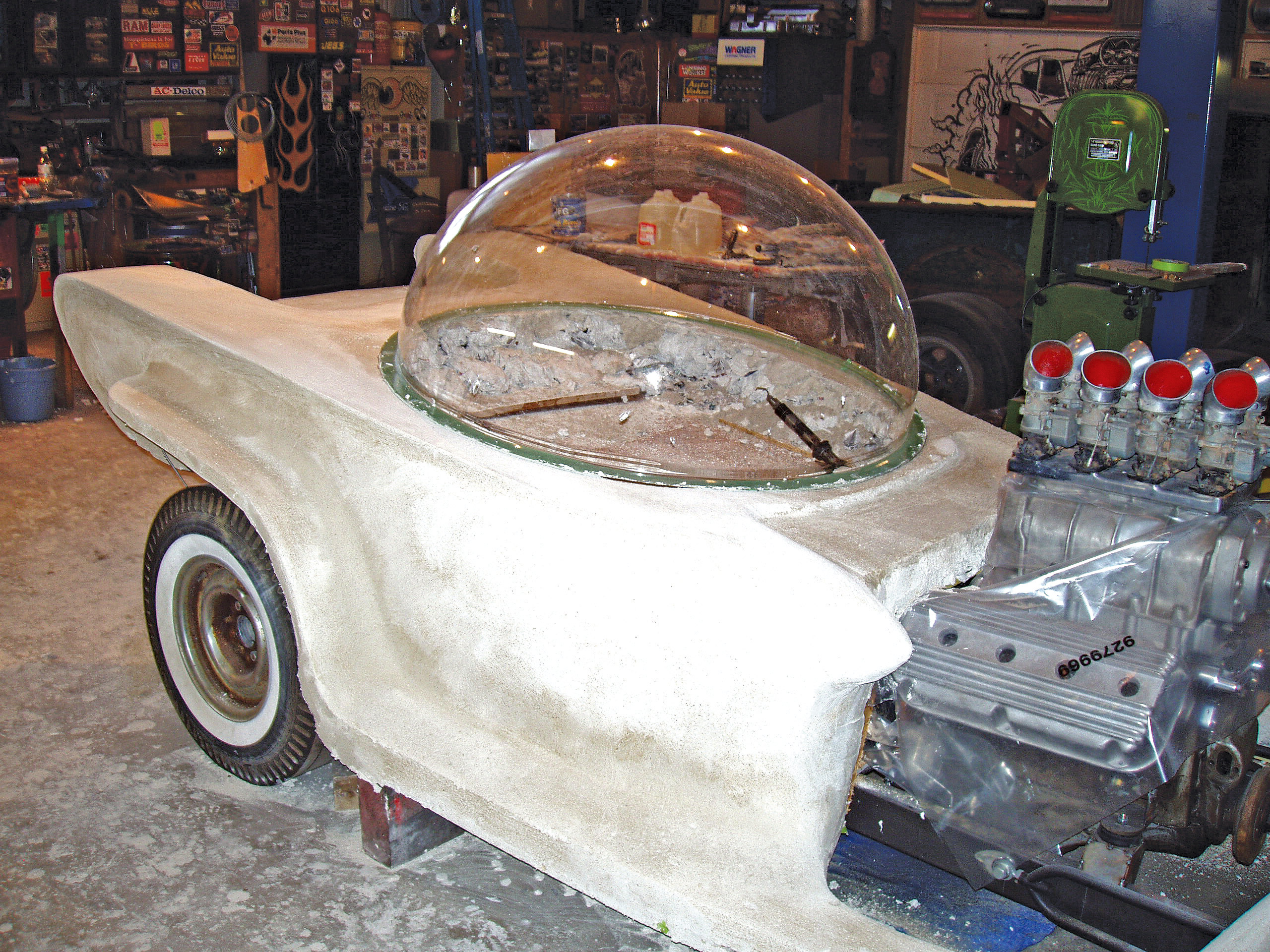
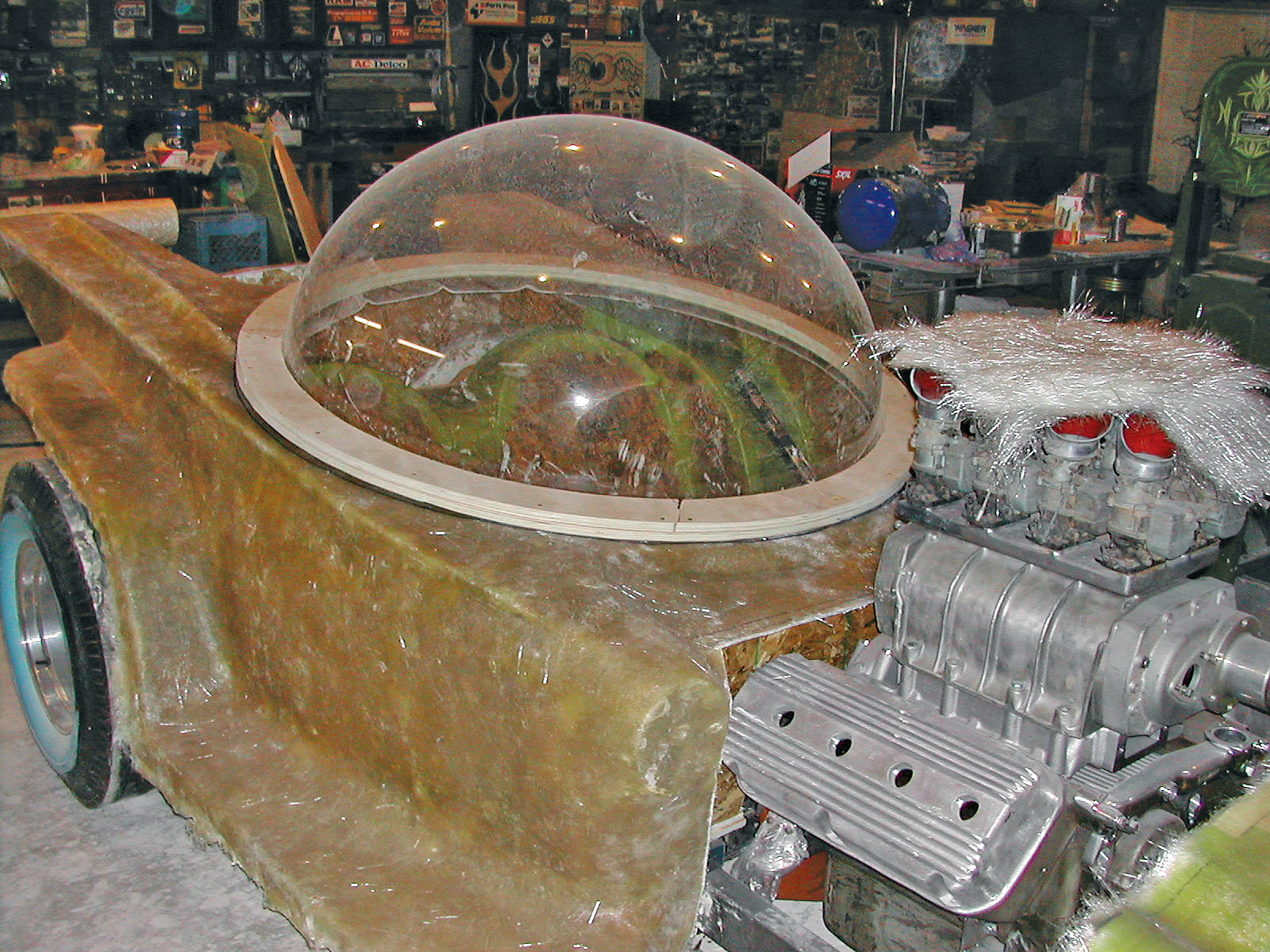
The rear suspension consists of a 1957 Chevy rear axle housing suspended with coil springs mounted in custom spring cups. A pair of tube shocks and a basic Panhard bar completes the rear suspension, while homemade hairpin radius rods locate the rear axle. Power for the Astrosled comes from the ultimate hot rod motor, a blown Hemi. This one is based on a 1957 block that displaces 354 cubic inches. Atop the big Hemi is a Weiand blower intake with a big GMC 6-71 blower and a Cragar top plate that holds no less than eight Stromberg 97 carburetors. Coupled to the Hemi is a GM 350 turbo transmission, so as you can see the chassis is wild, and yet it is basic and functional. Could this be a bubble car that will be driven someday?
Crafting the Body: The Spit-Wad Technique
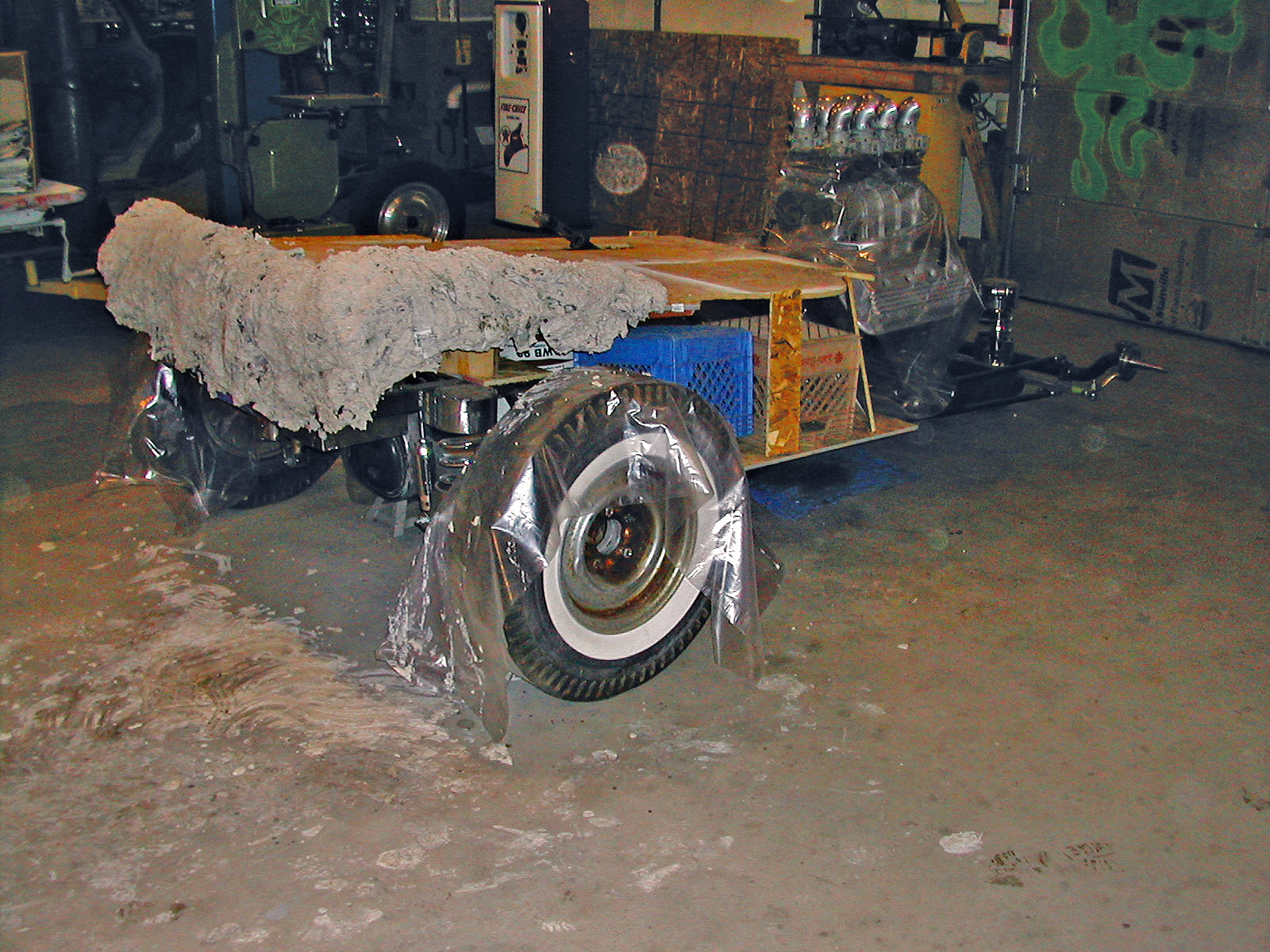
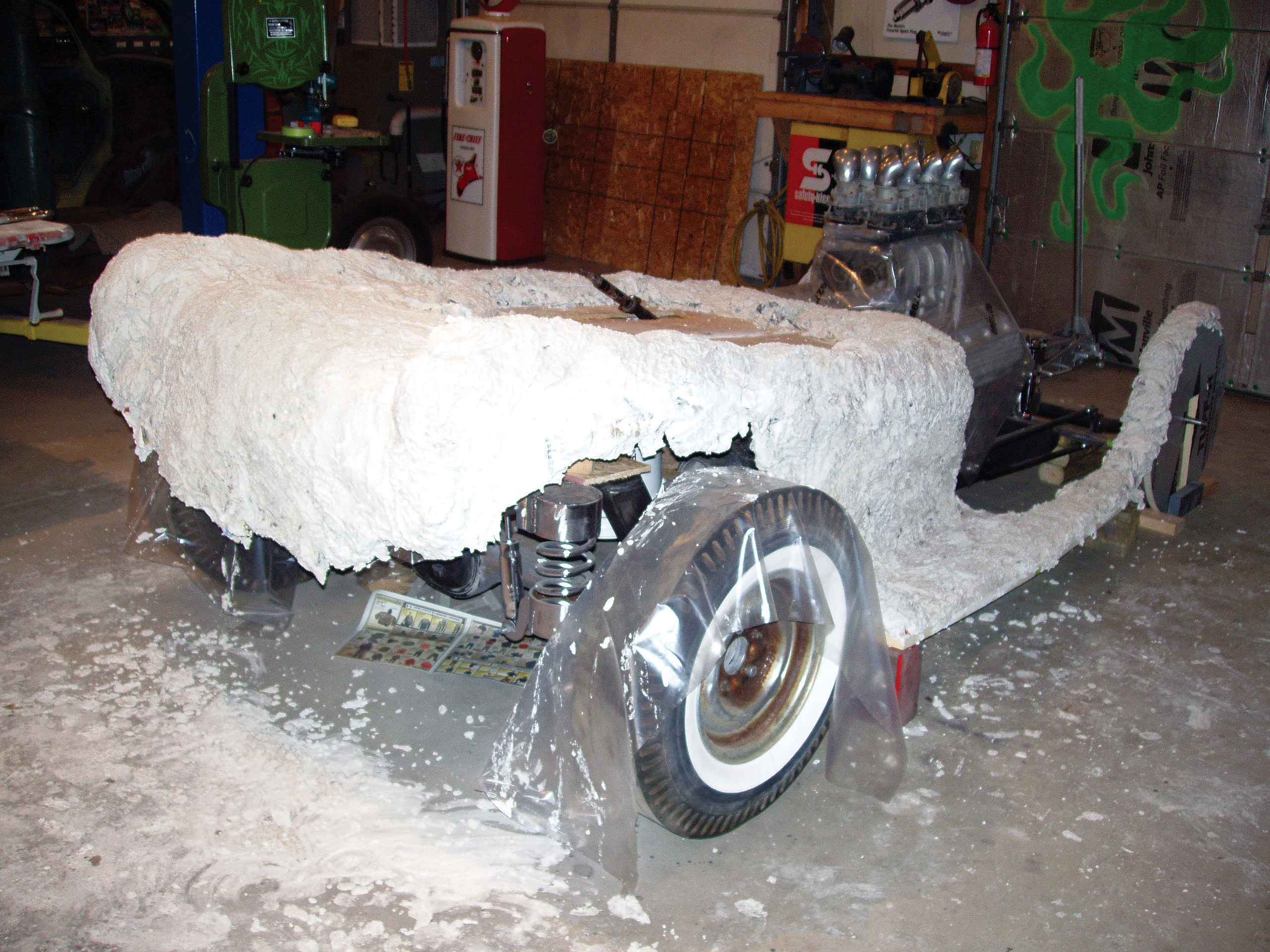
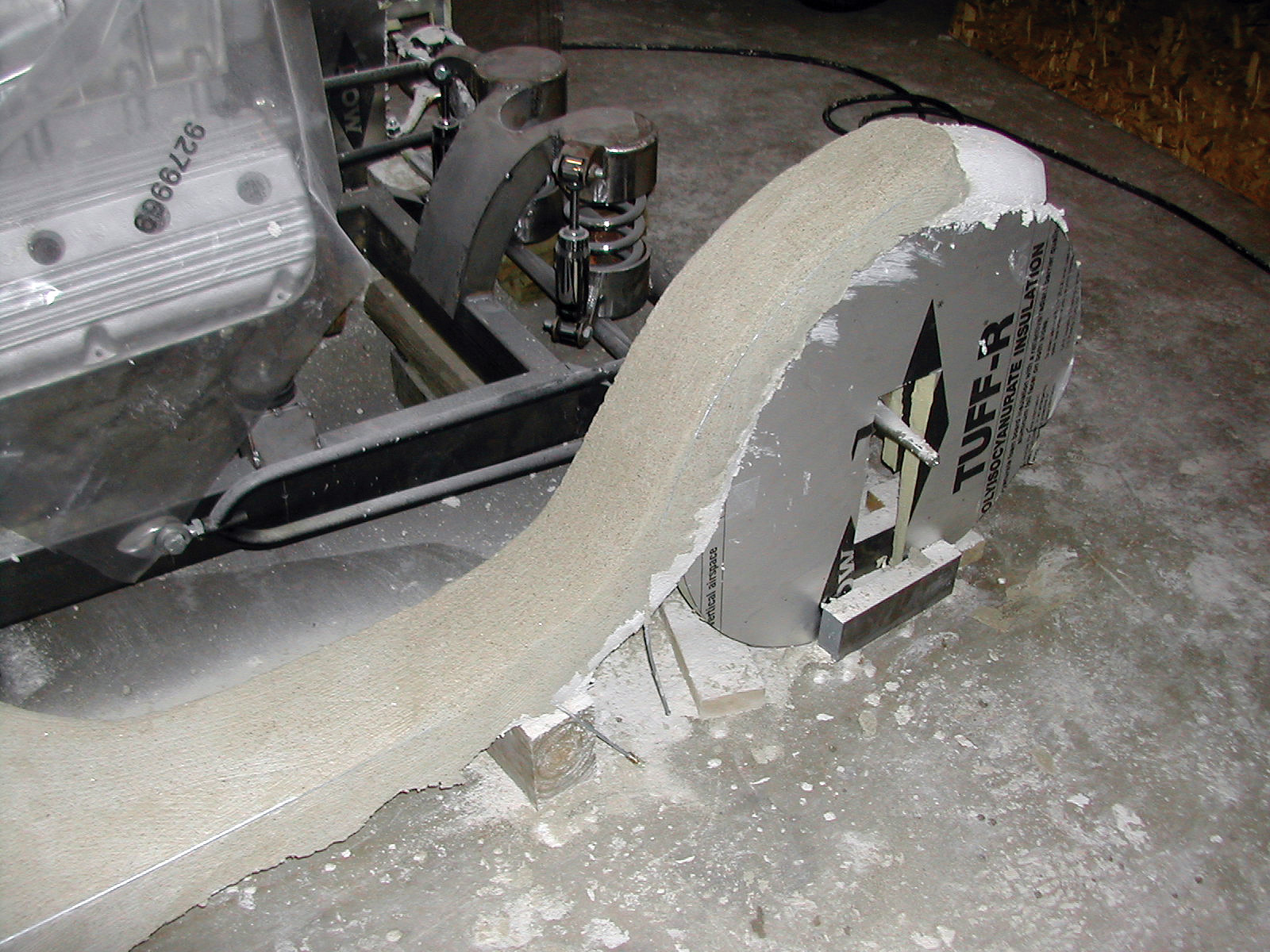
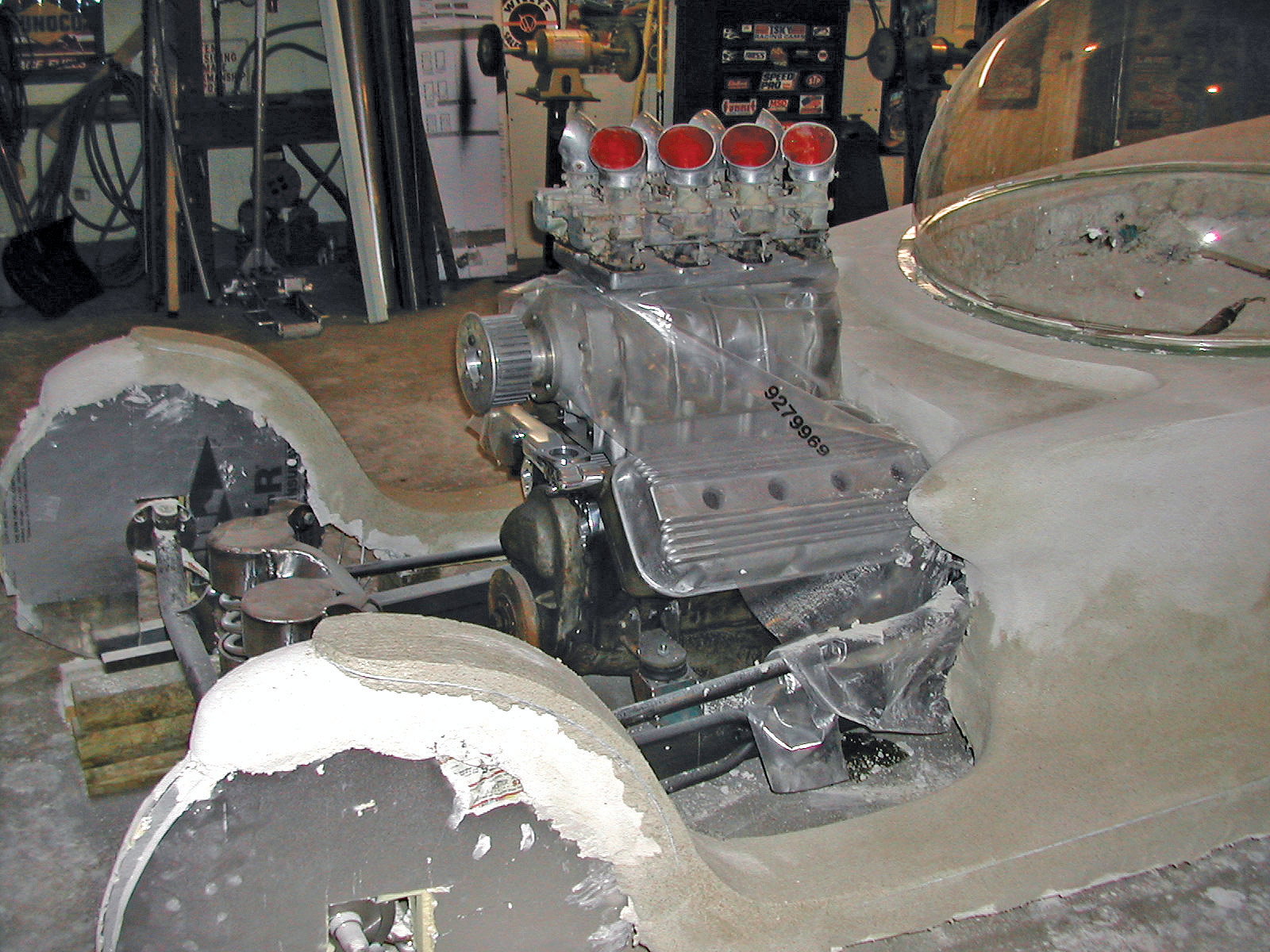
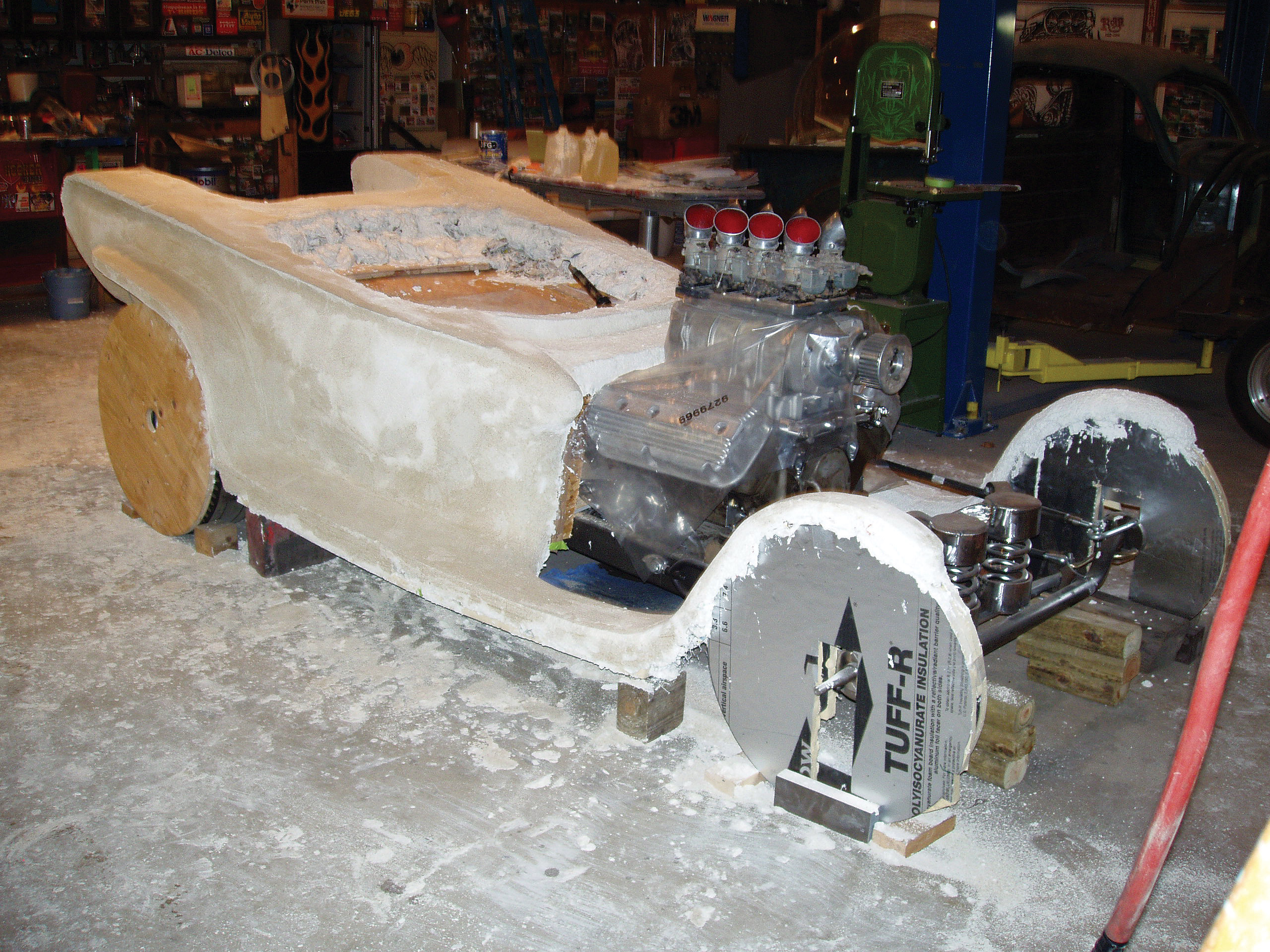
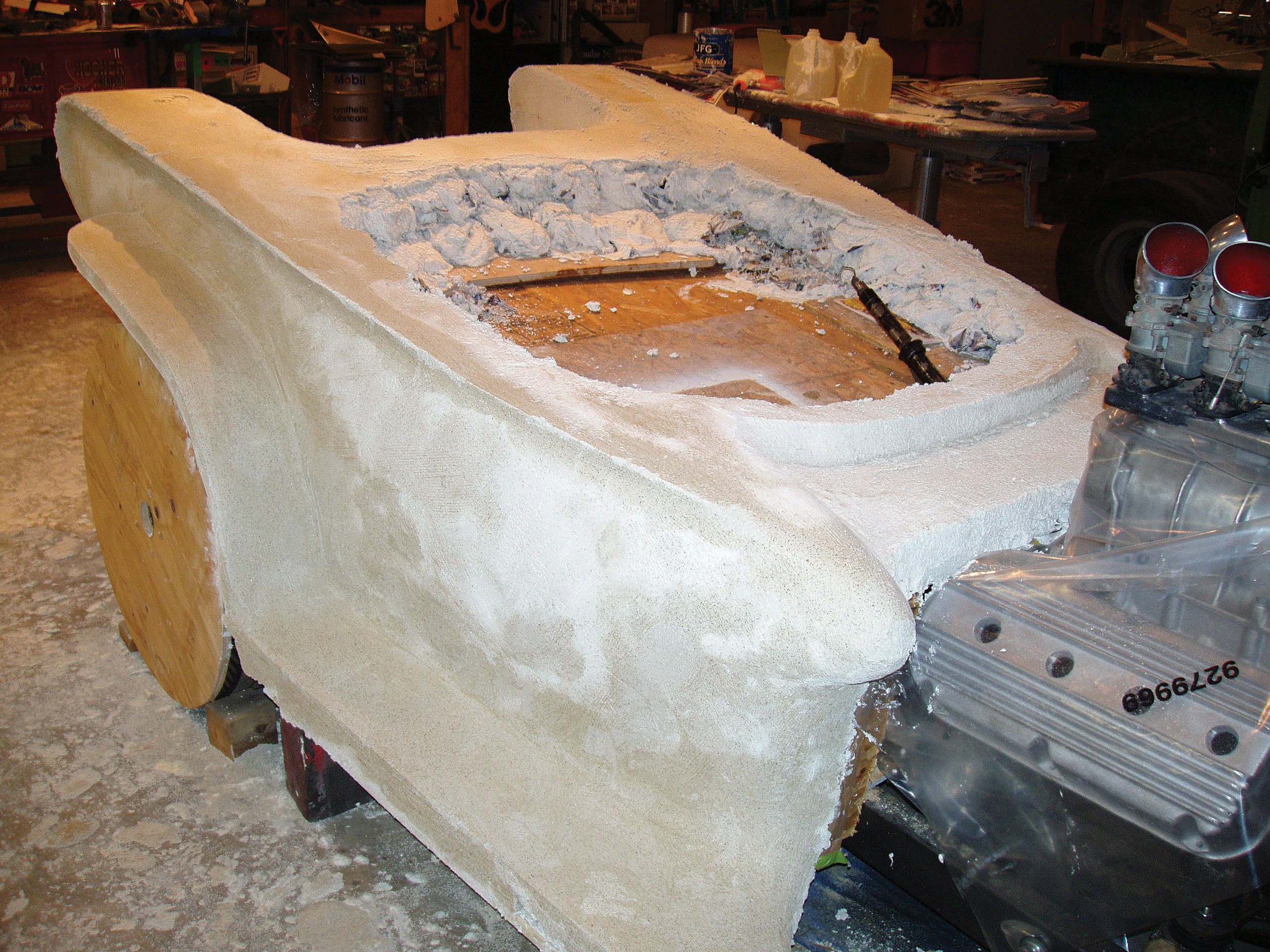
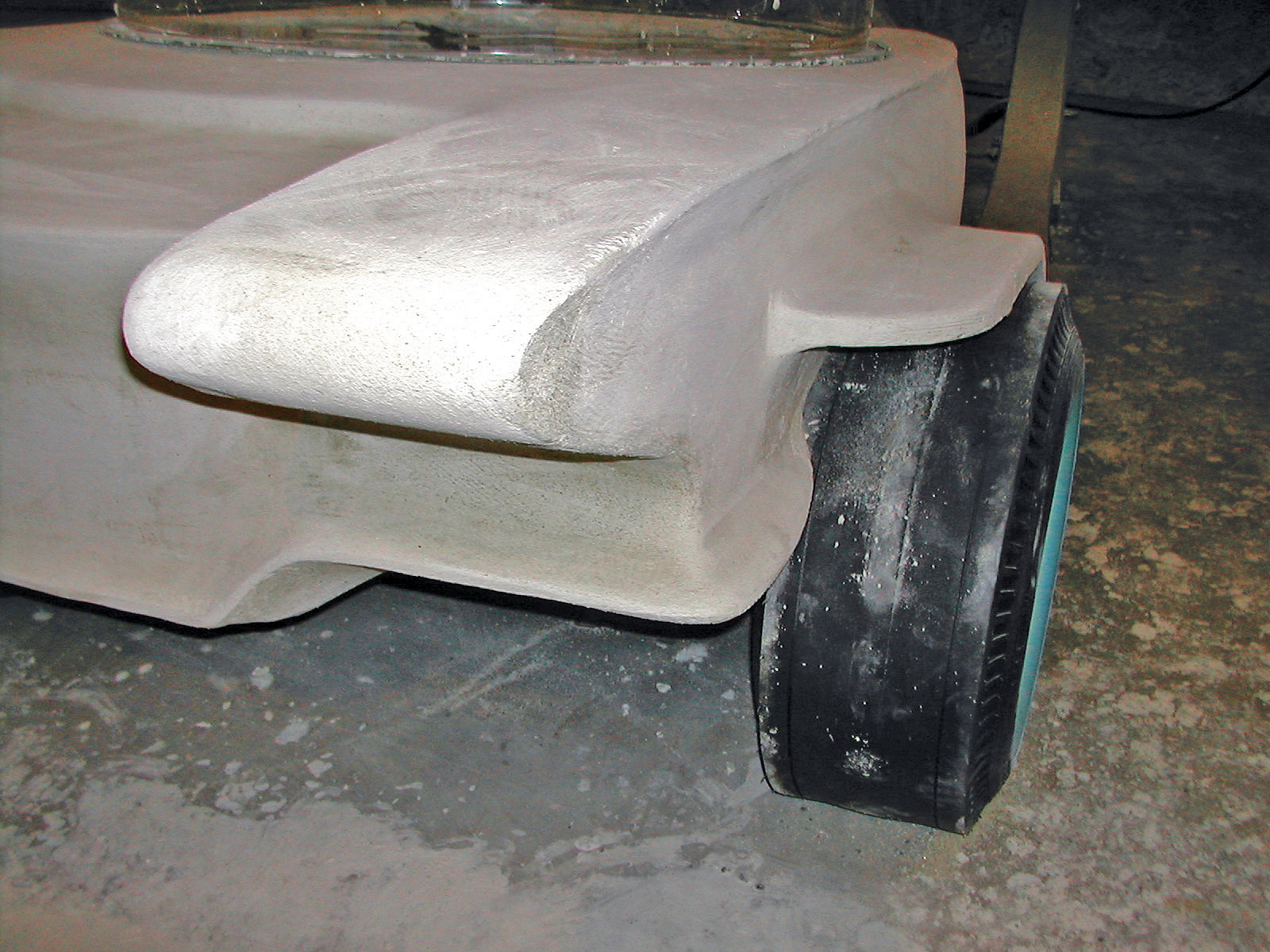
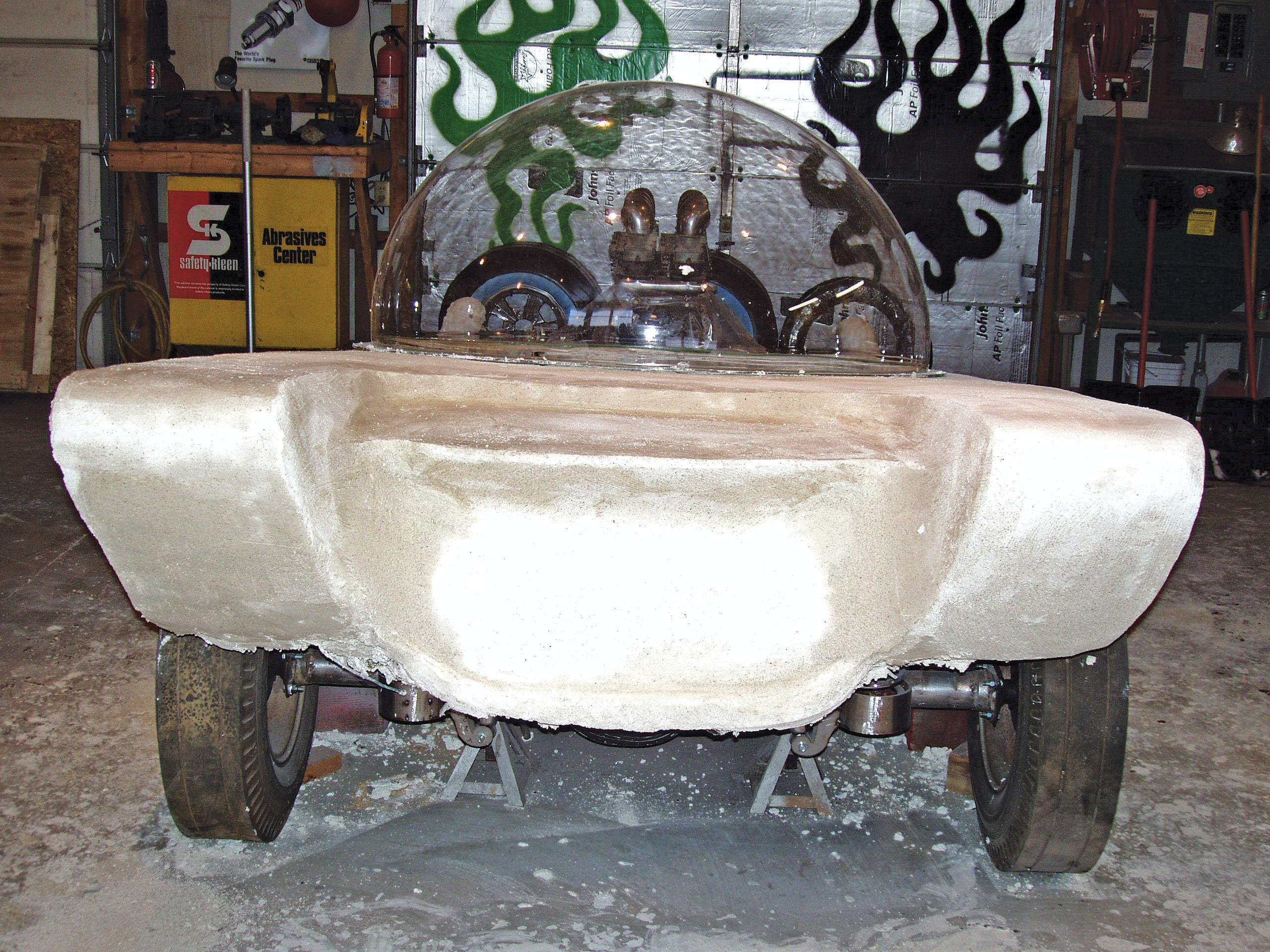
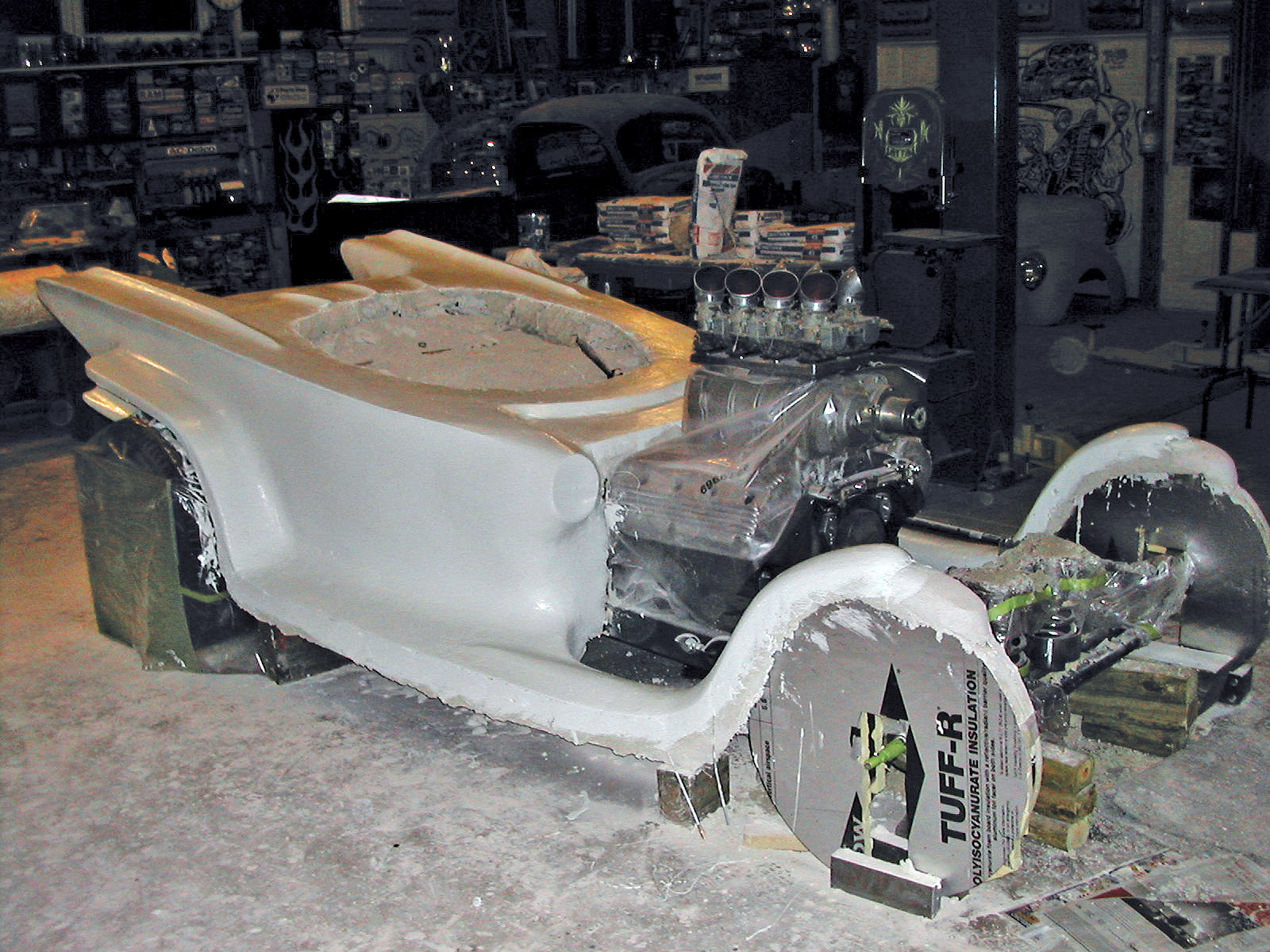
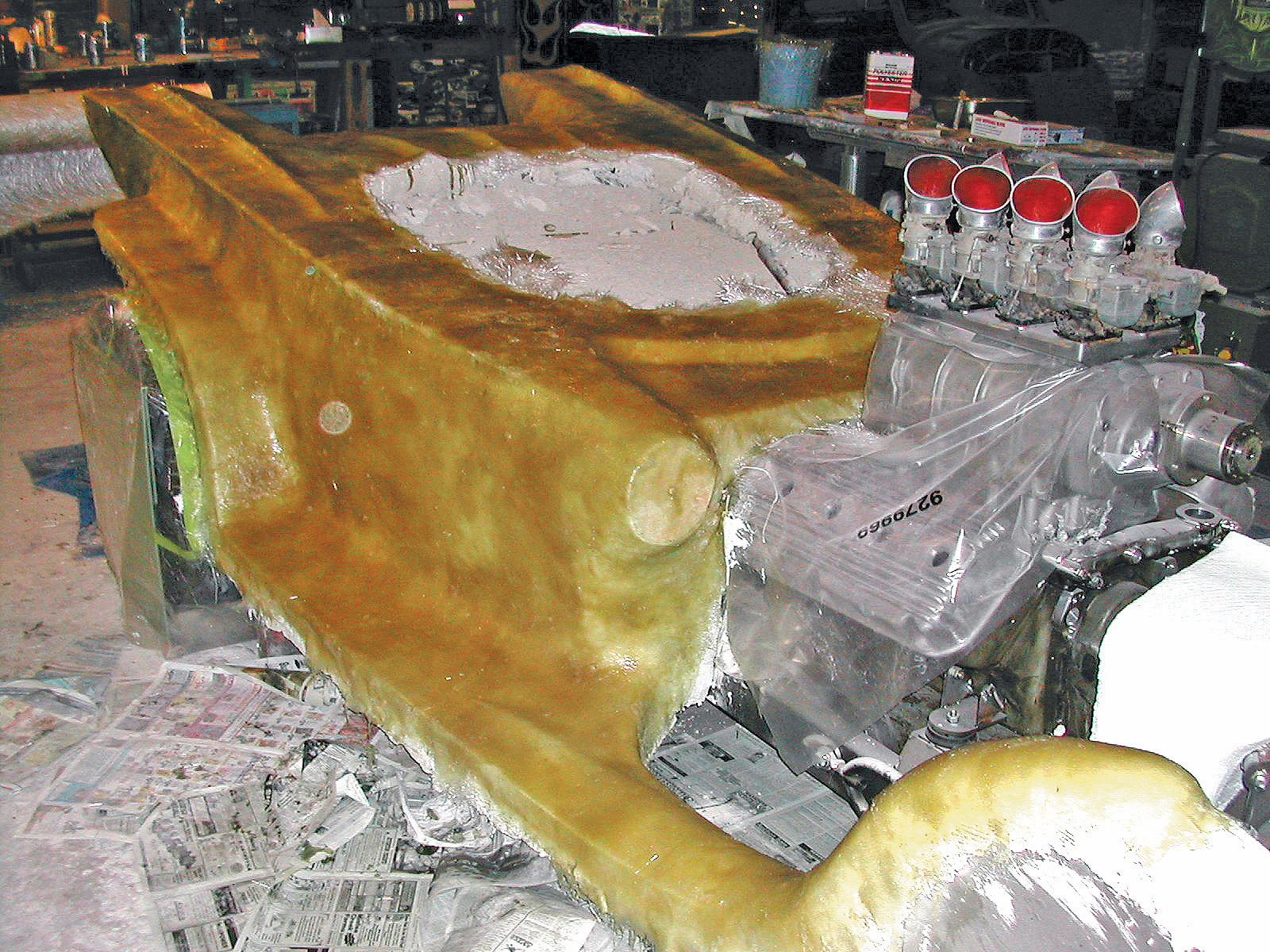
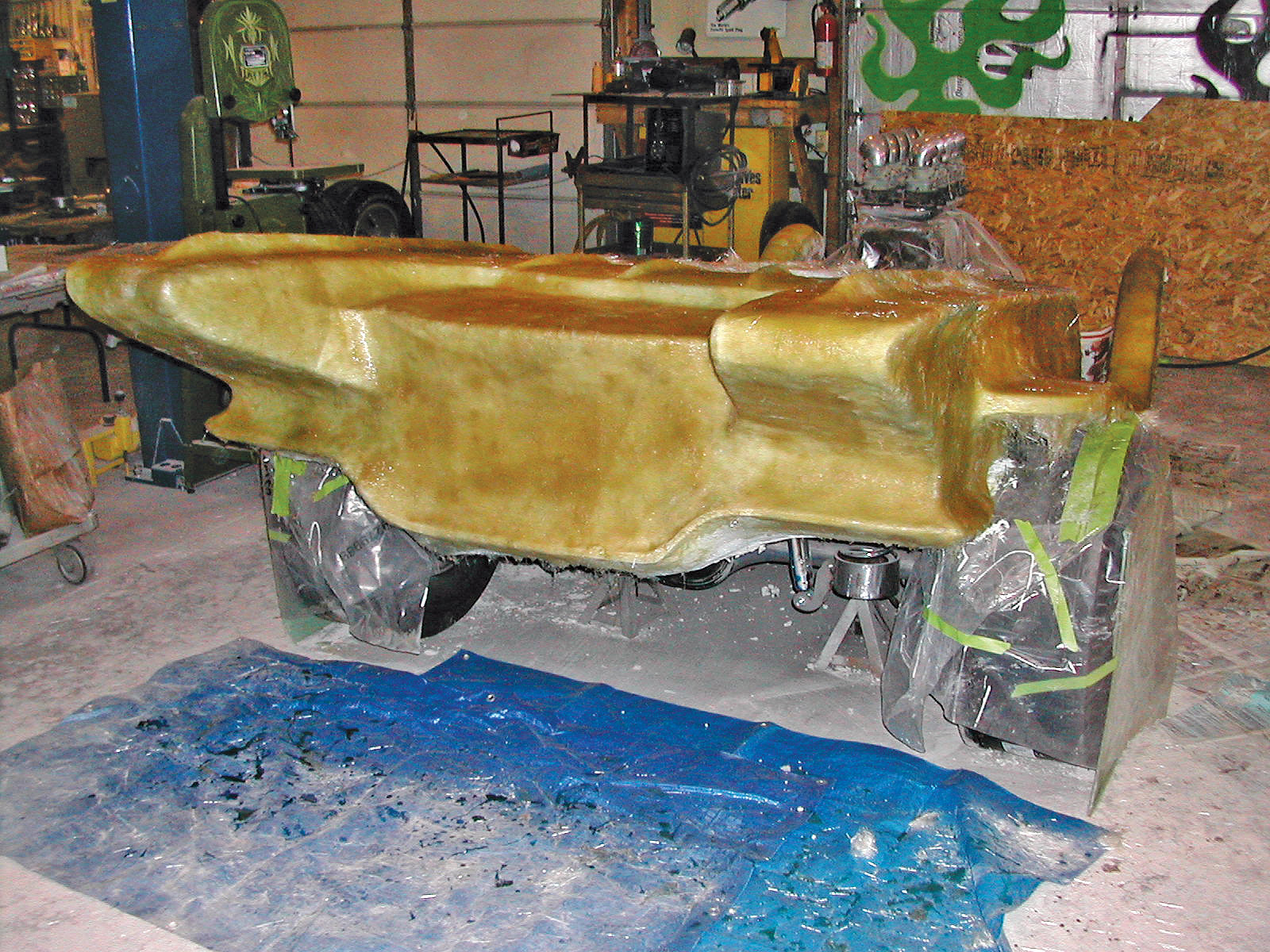
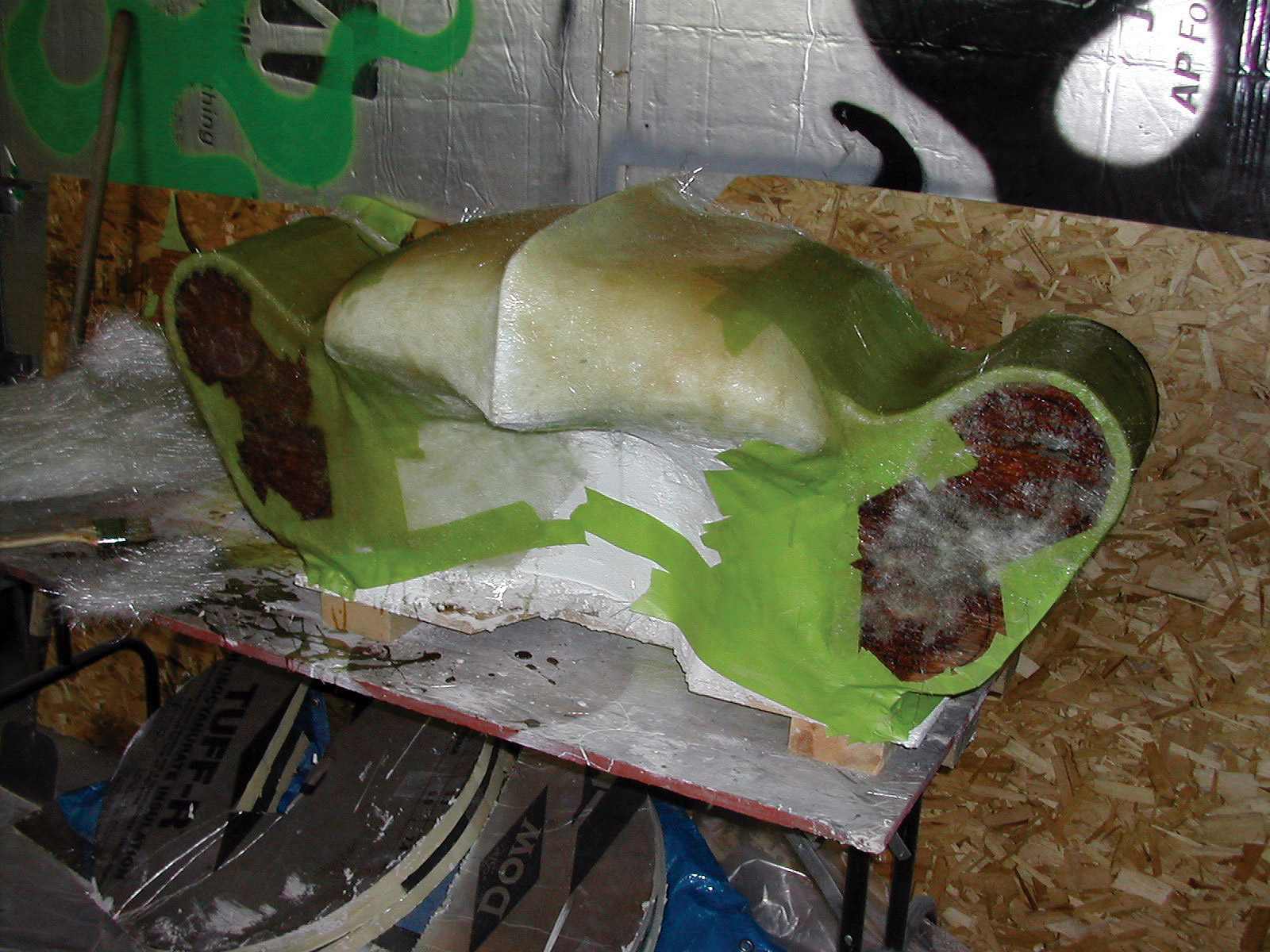
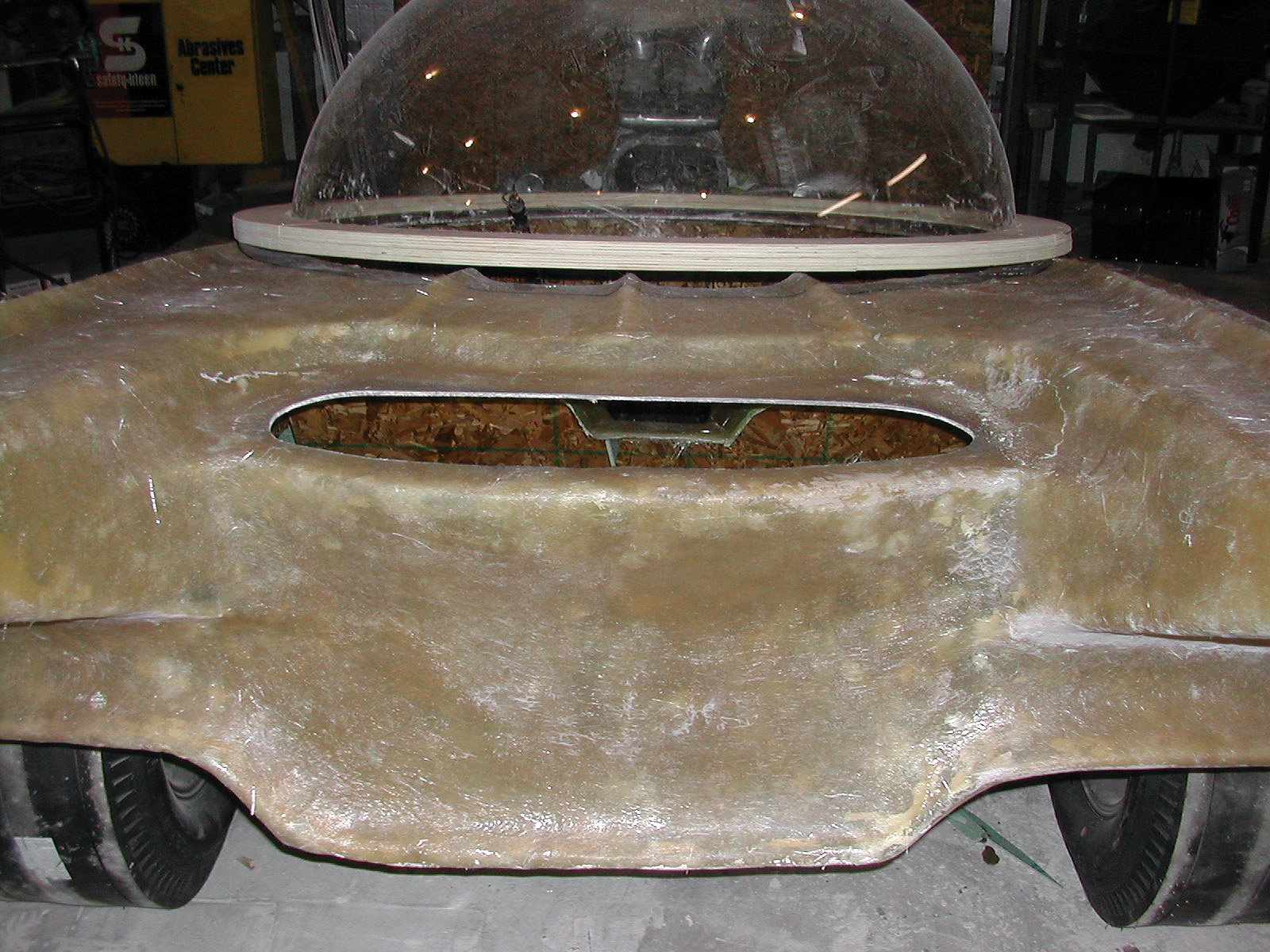
Of course, the real news here is the body. Shuten designed the body, and with rendering in hand, he headed out to the shop. The body would be built employing the same odd yet effective method that Ed Roth so lovingly referred to as the spit-wad body building technique. The system works like this: You begin with a level chassis and some basic measuring point from the ground. Then you build a basic platform from plywood that has the basic height of each area. With this platform attached to the frame, the spit-wad part of the process comes along. You start mixing plaster and simply throw it on the platform one batch at a time until the desired thickness is achieved, and then you start carving, sanding, grinding, and cutting the plaster to shape. Add more plaster in the low parts, remove it from the high parts and, after weeks and weeks of sculpting and mixing plaster, you have a body shape. Sanding smoothes the plaster body and allows for details to be cut into the mold. Careful measurements are made along the way to ensure balance and symmetry to the body. When all the white dust had cleared and Shuten was satisfied with his creation, it was time to put down the sandpaper and start laying down fiberglass cloth and resin.
Laying Down the Fiberglass
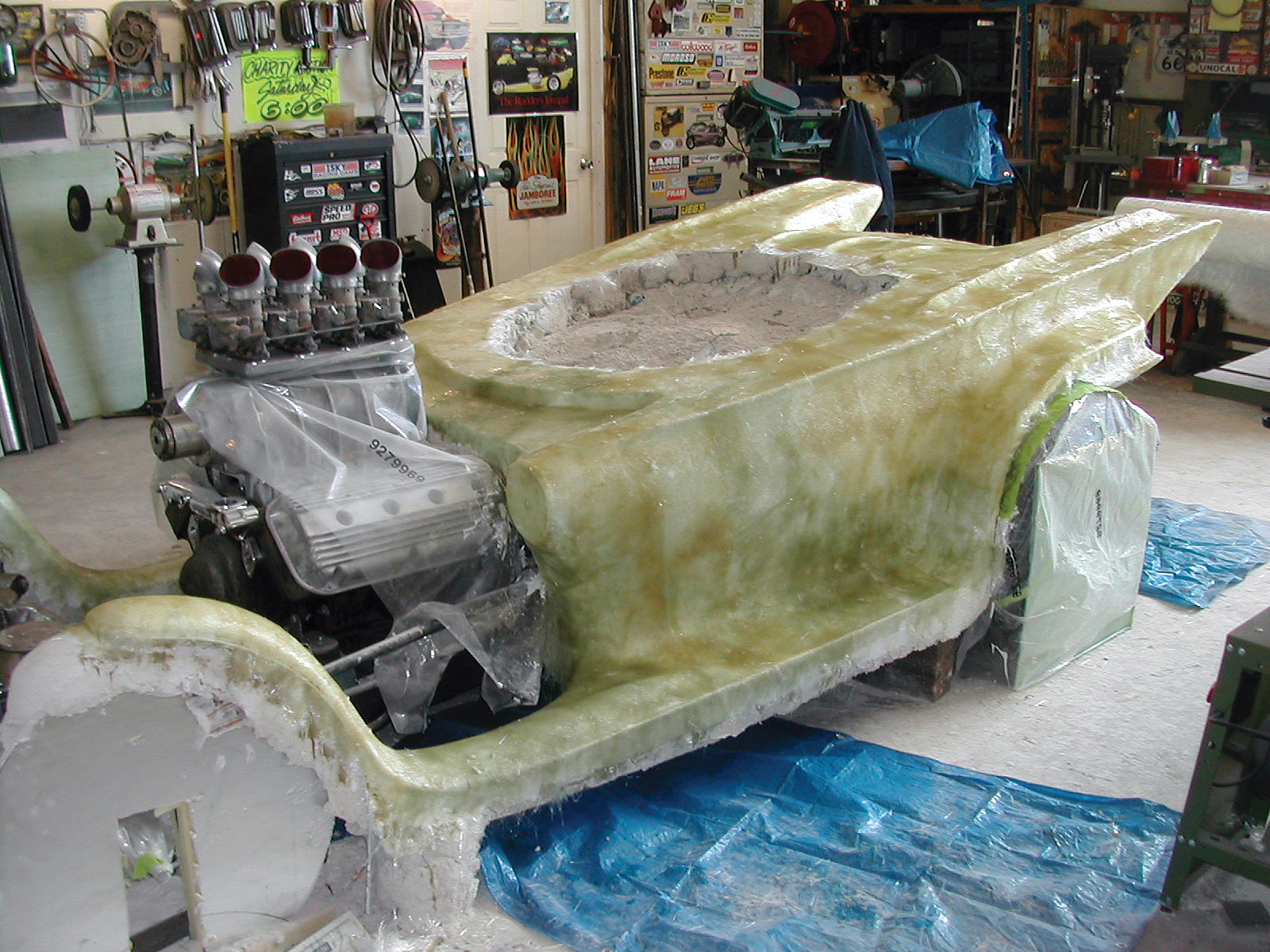
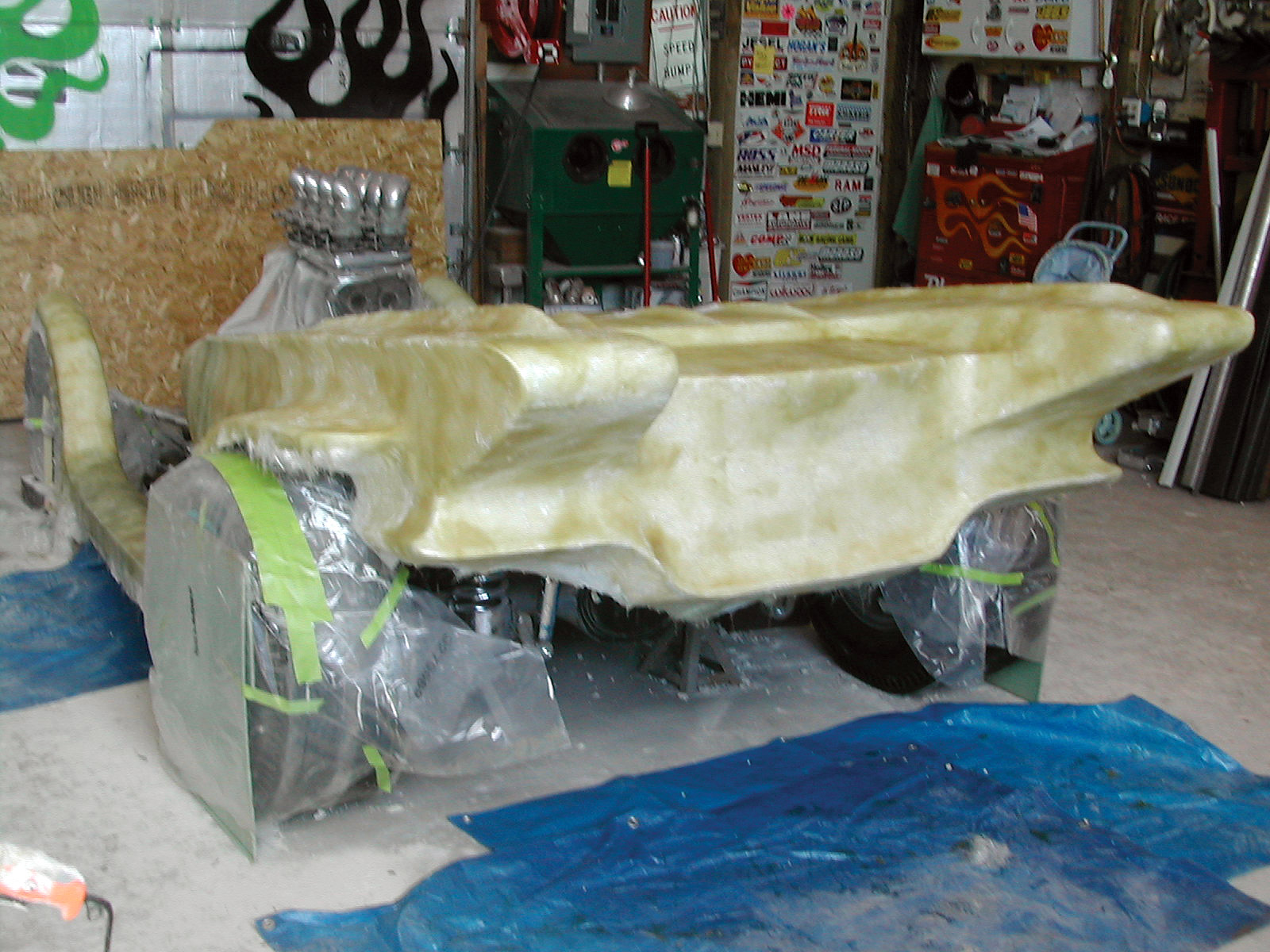
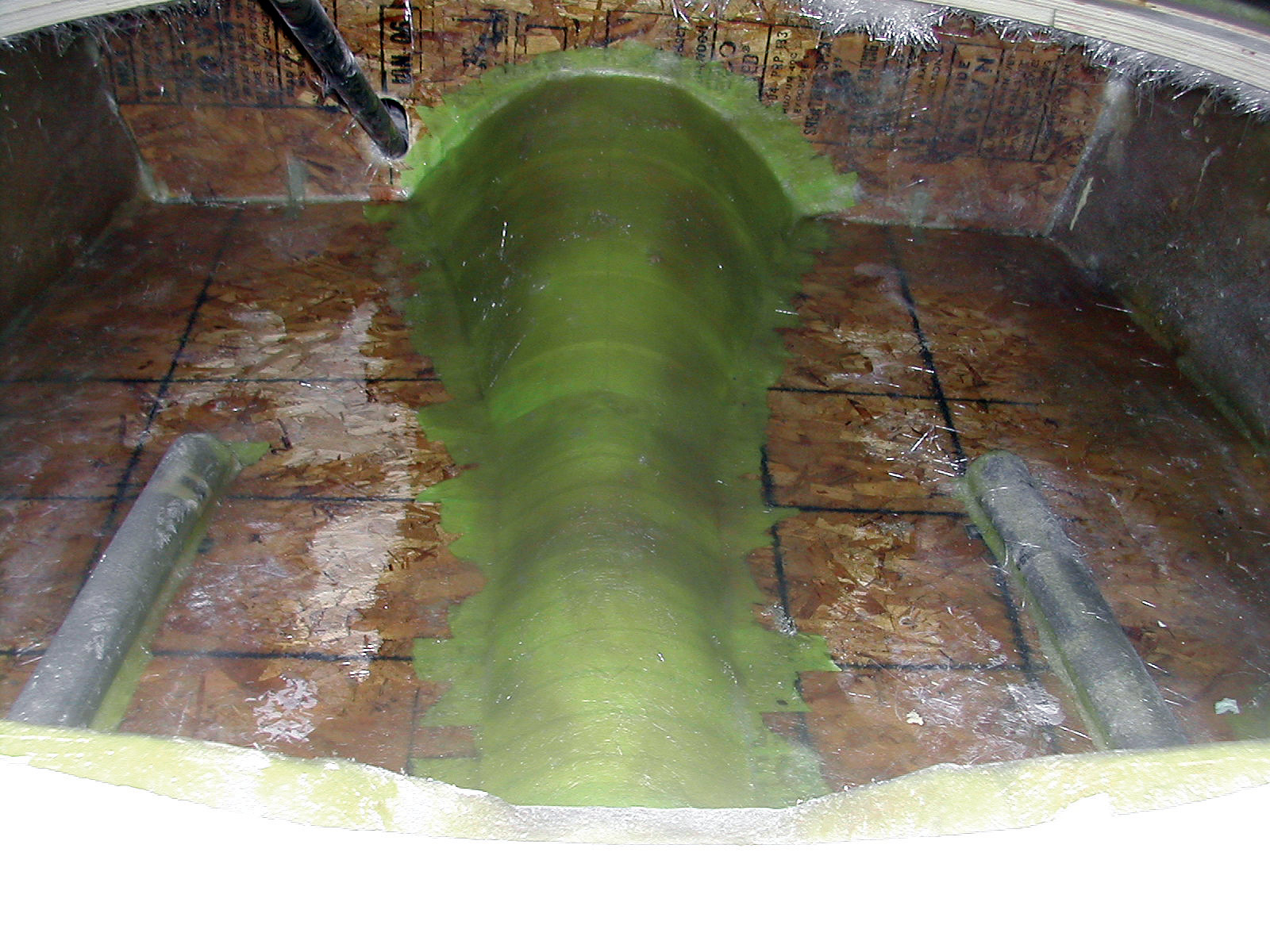
Of course, when you use a finished body as your investment mold, you end up with the smooth part of the mold on the inside of the body, so as you lay up the fiberglass, care is taken to be certain the base layers conform to the mold perfectly. After that, it is a matter of building up the fiberglass to the desired thickness. Once again, some grinding and forming can be done as the glass is being laid up, but generally uniform thickness is the goal.
The Dirty Job: Removing the Plaster Mold
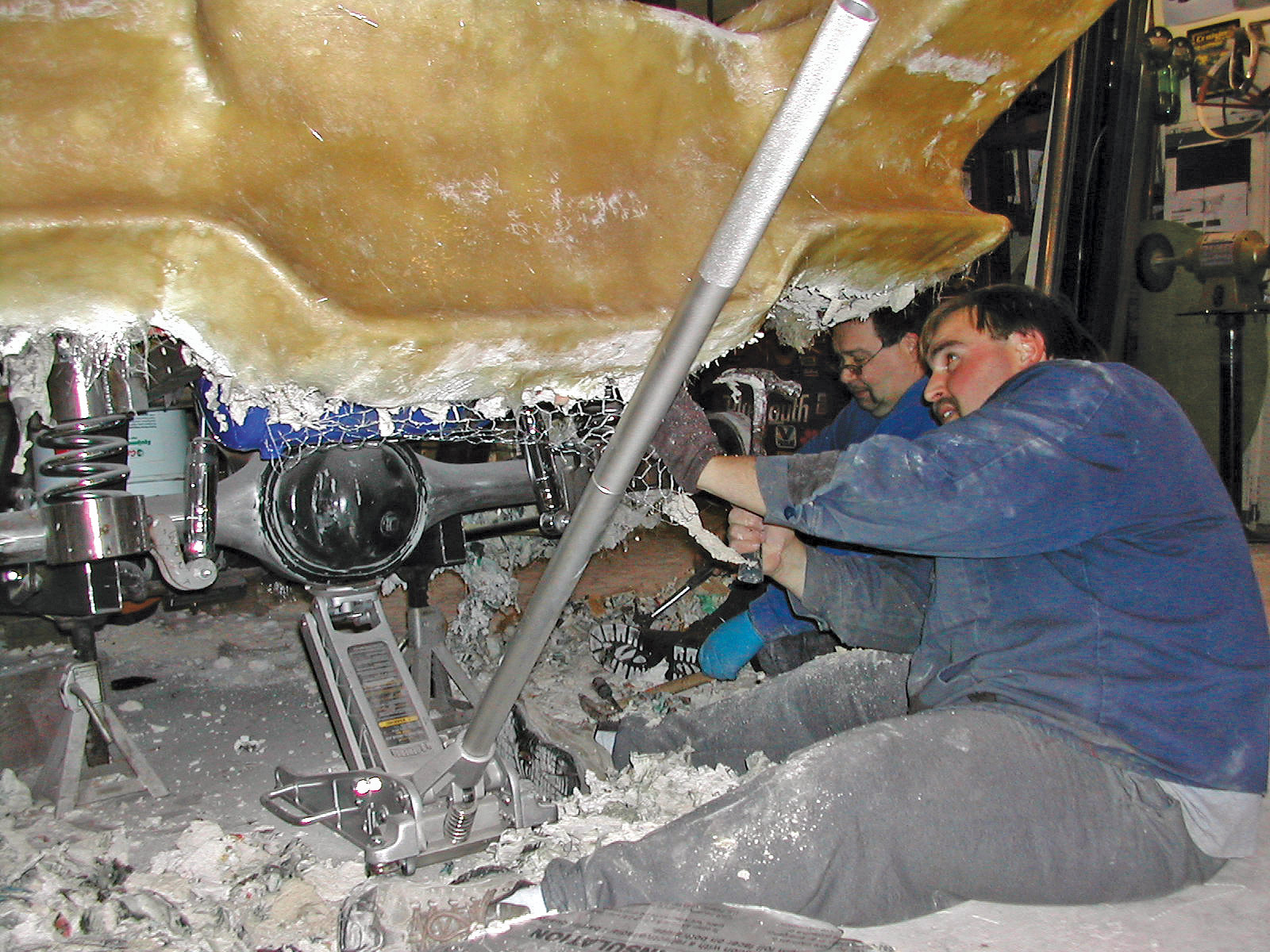
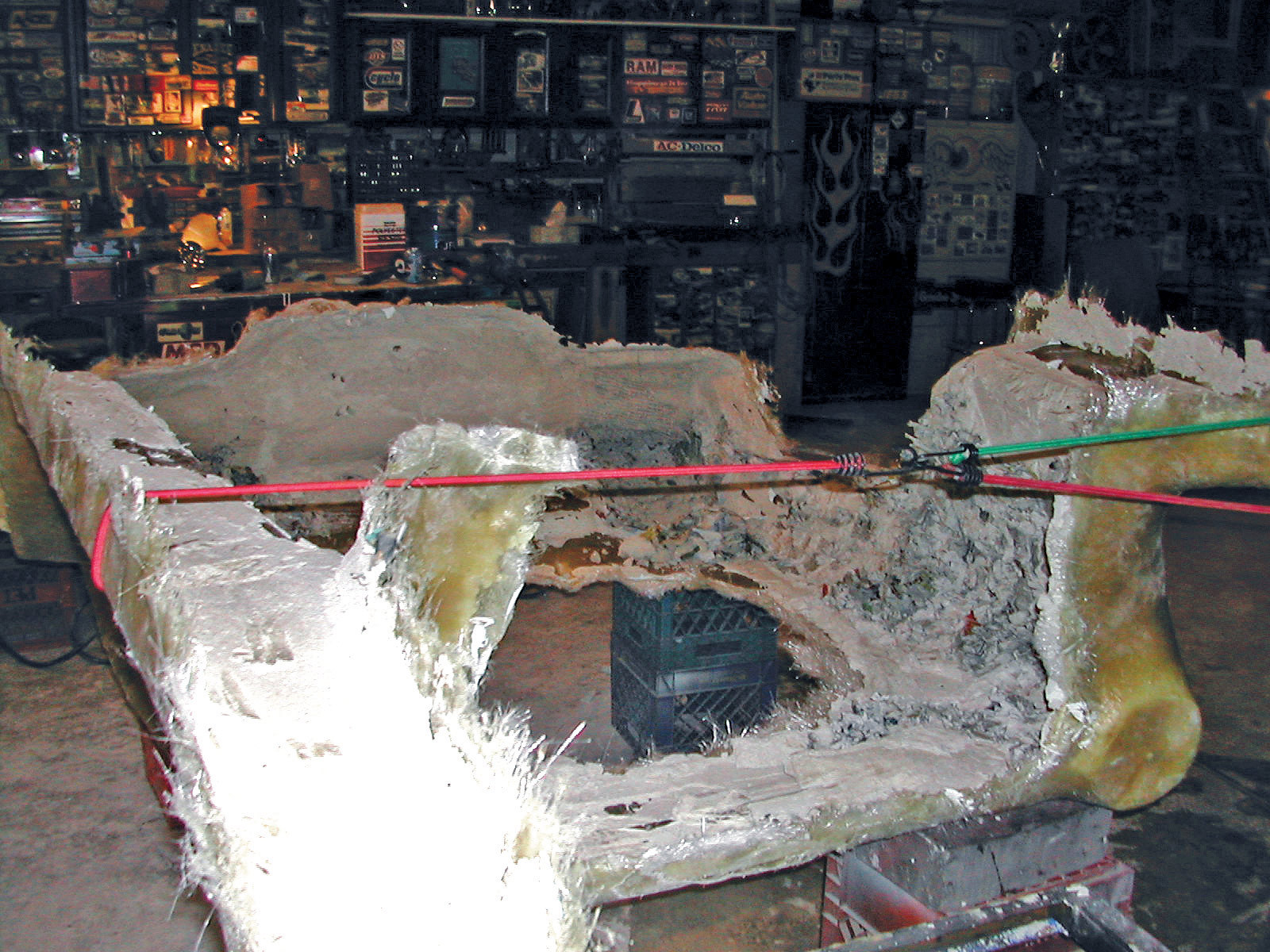
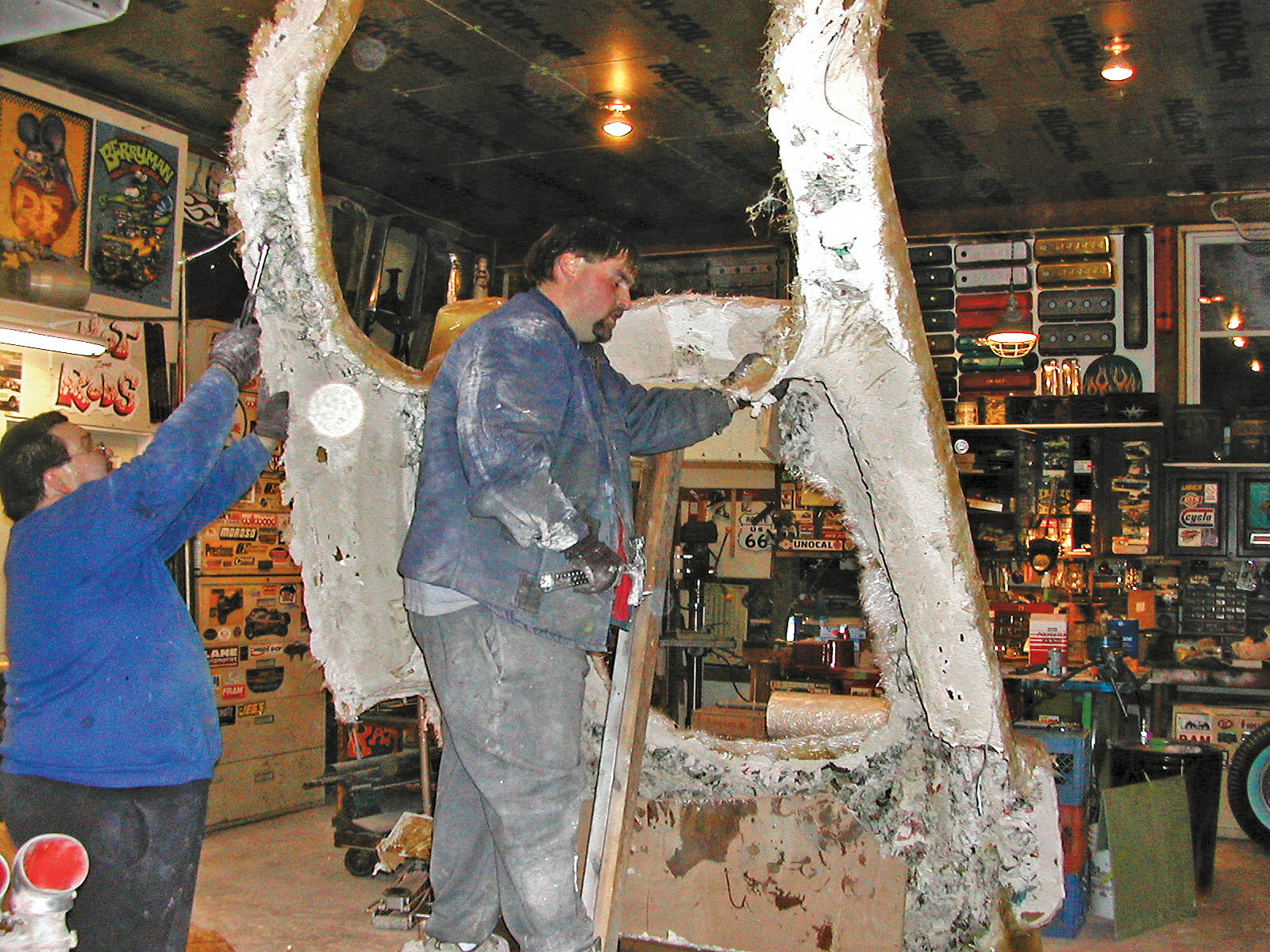
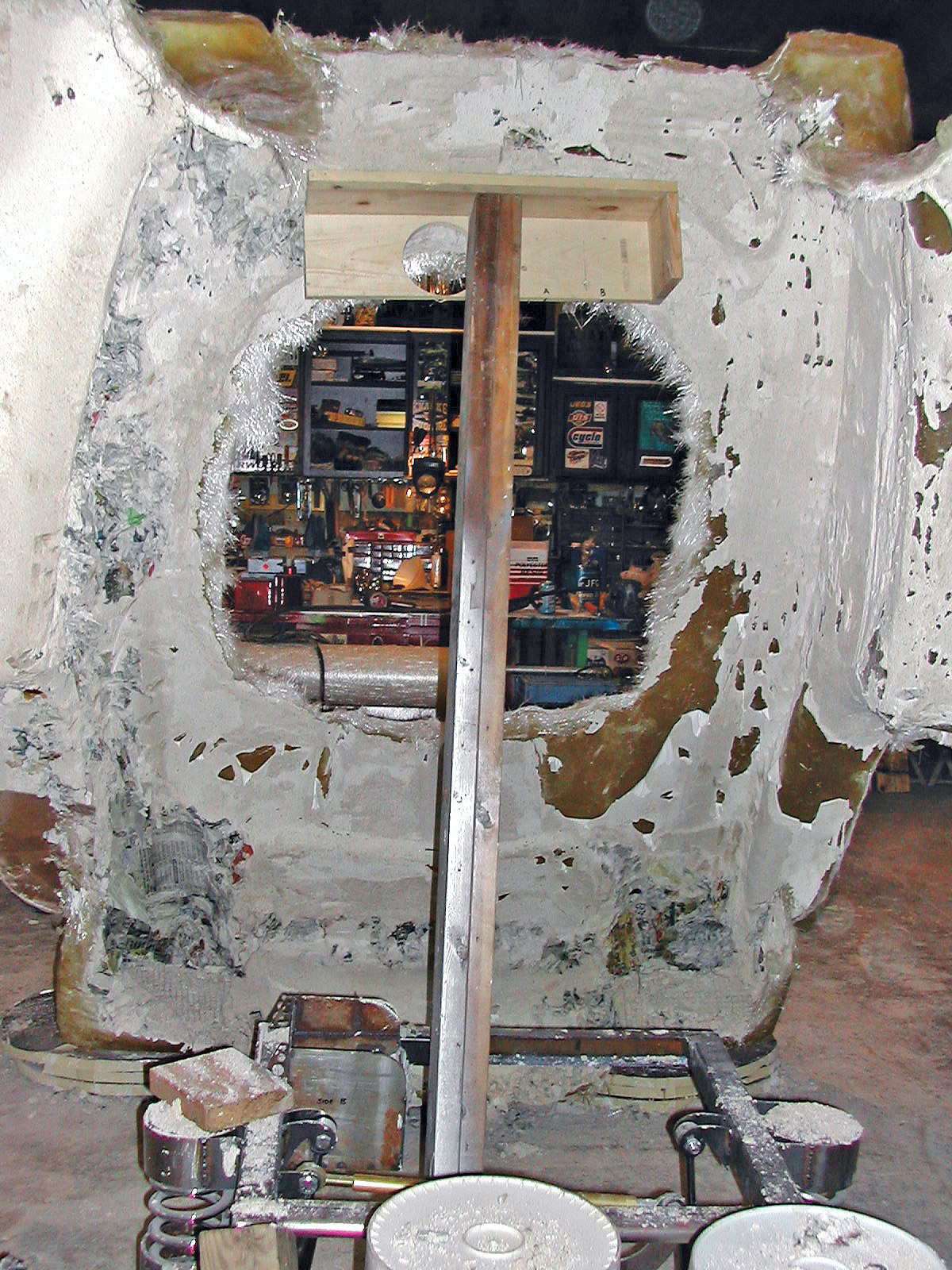
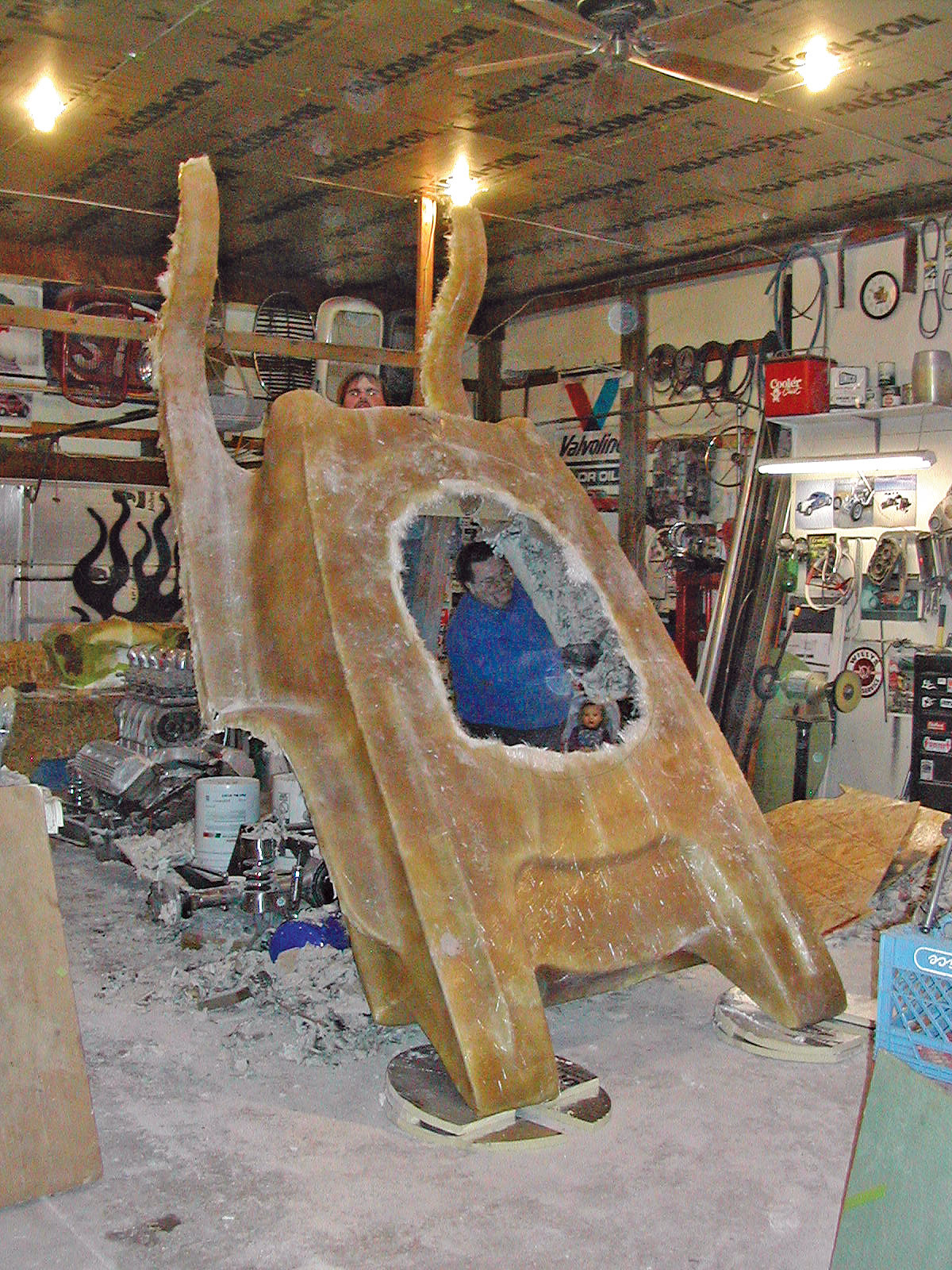
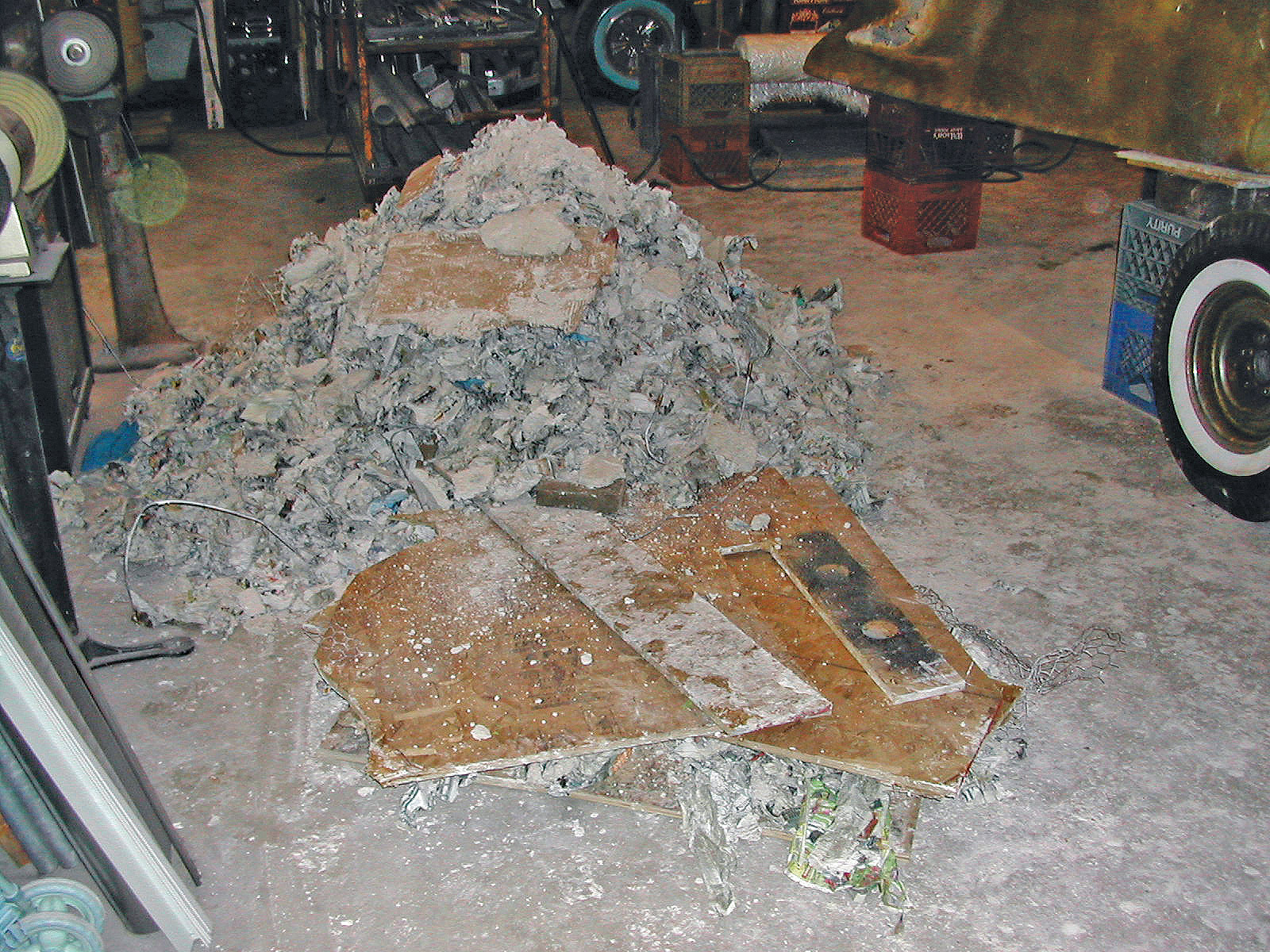
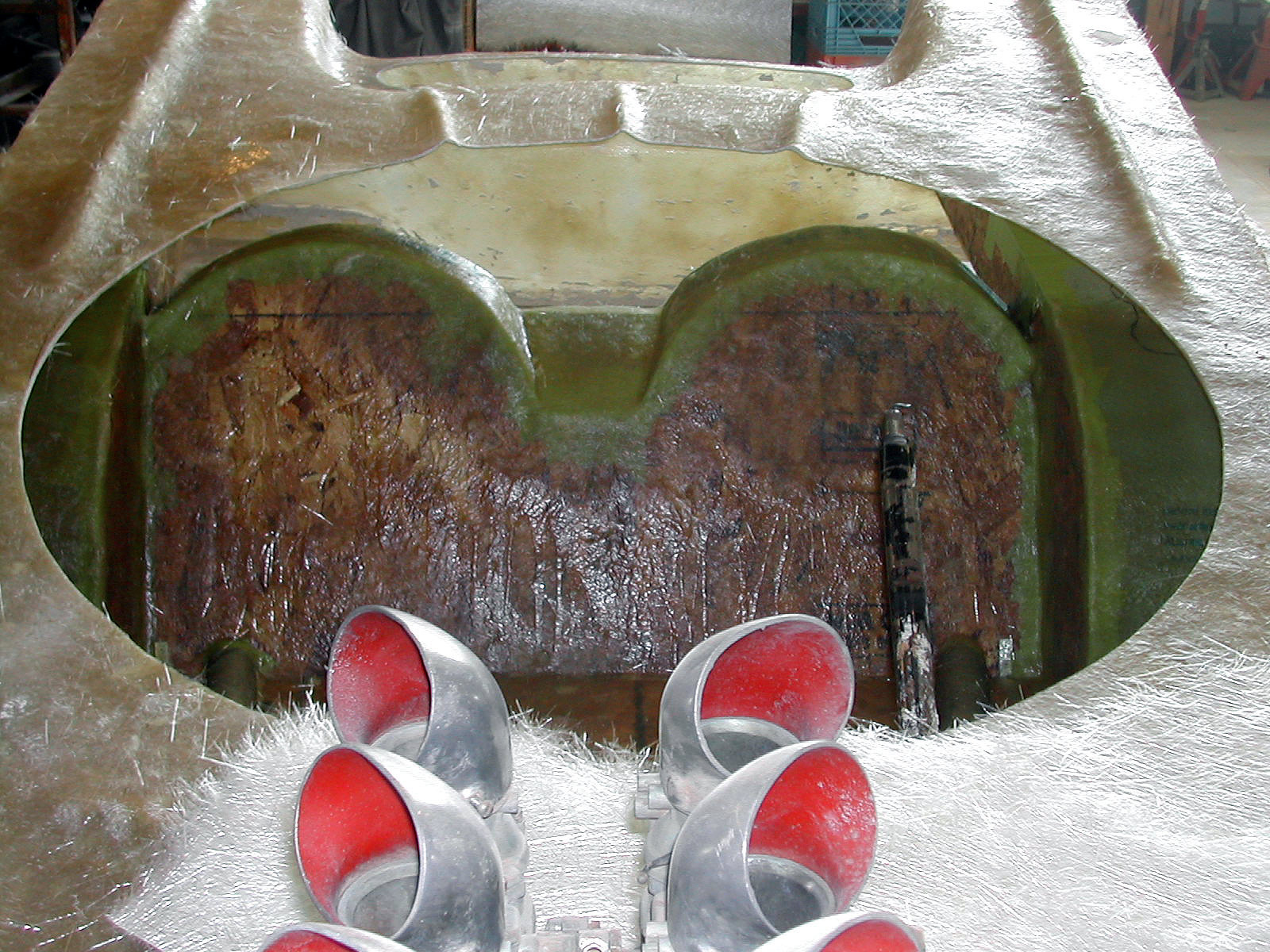
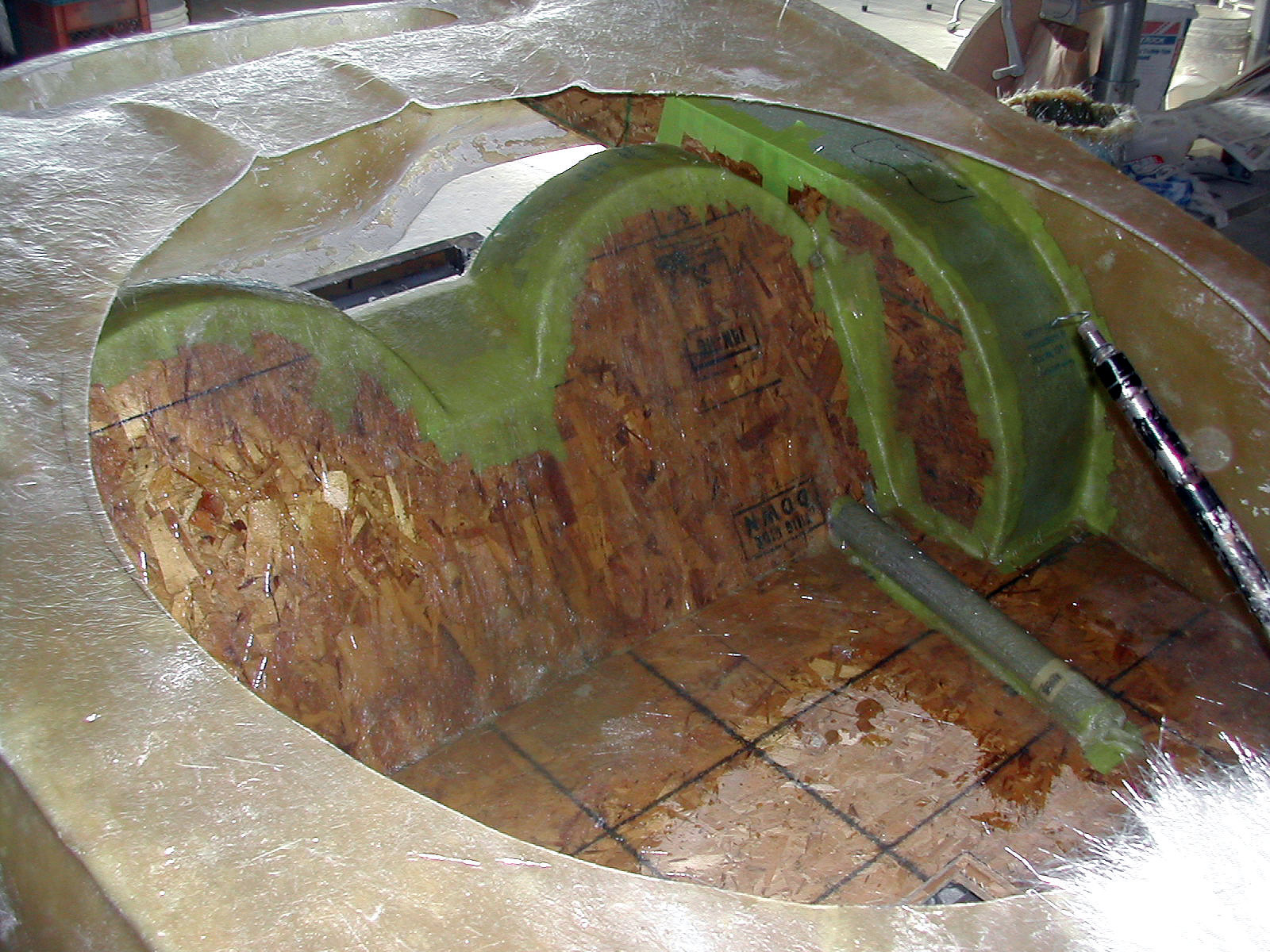
Once Shuten had achieved the desired thickness, the dirty part of the project began. For, you see, since the body was sculpted as a one-piece mold, it must now be stood up on end, and the painstaking, dirty, nasty, time-consuming job of chopping the plaster out of the mold begins. Ten packs of respirator masks later, the job was complete, and the piles of plaster on the shop floor made Shuten’s shop look like an EPA hazardous waste super site. A literal mountain of plaster was chopped out from under the fiberglass, leaving a body in rough fiberglass.
Final Details: The Birth of the Astrosled
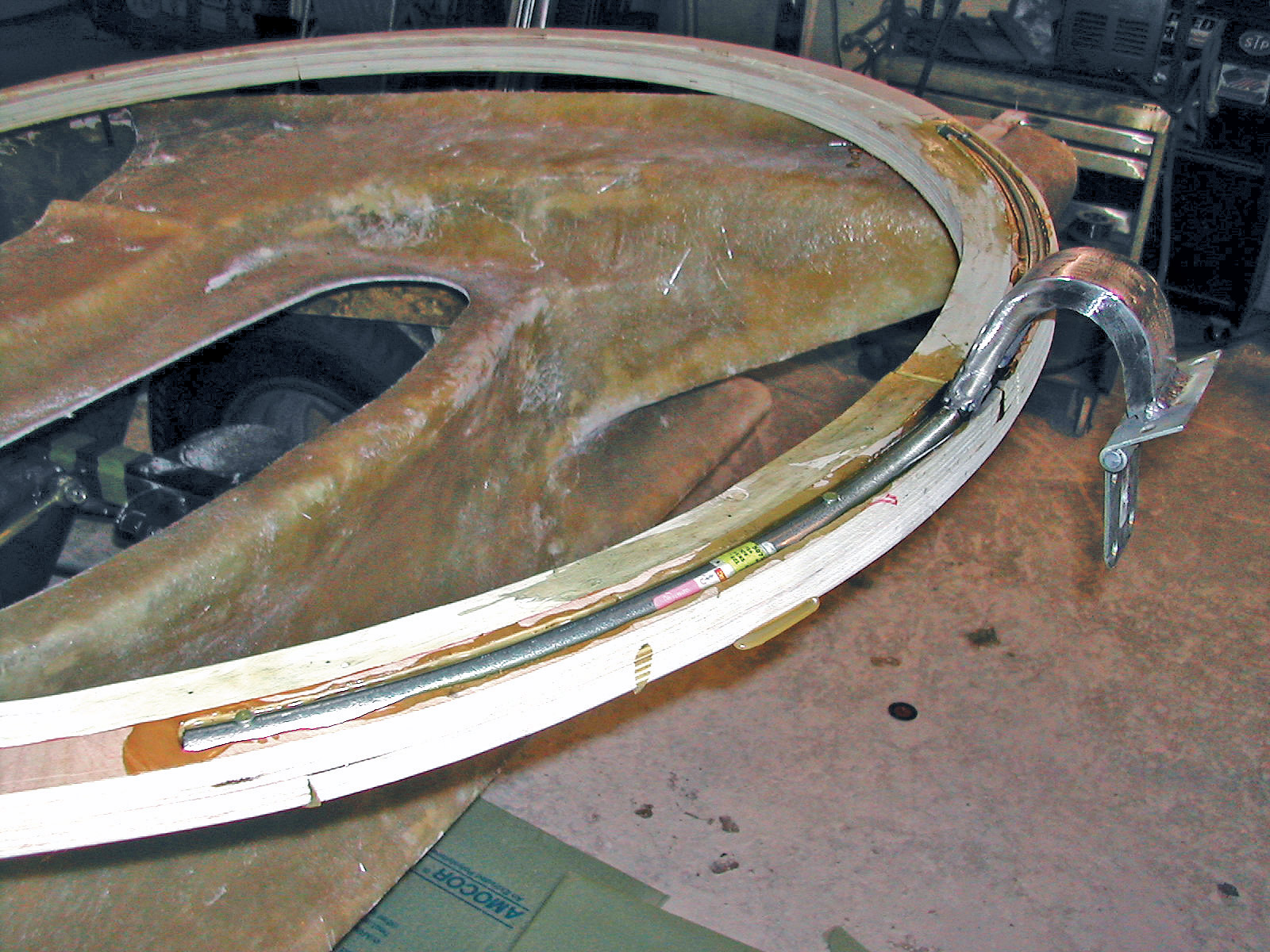
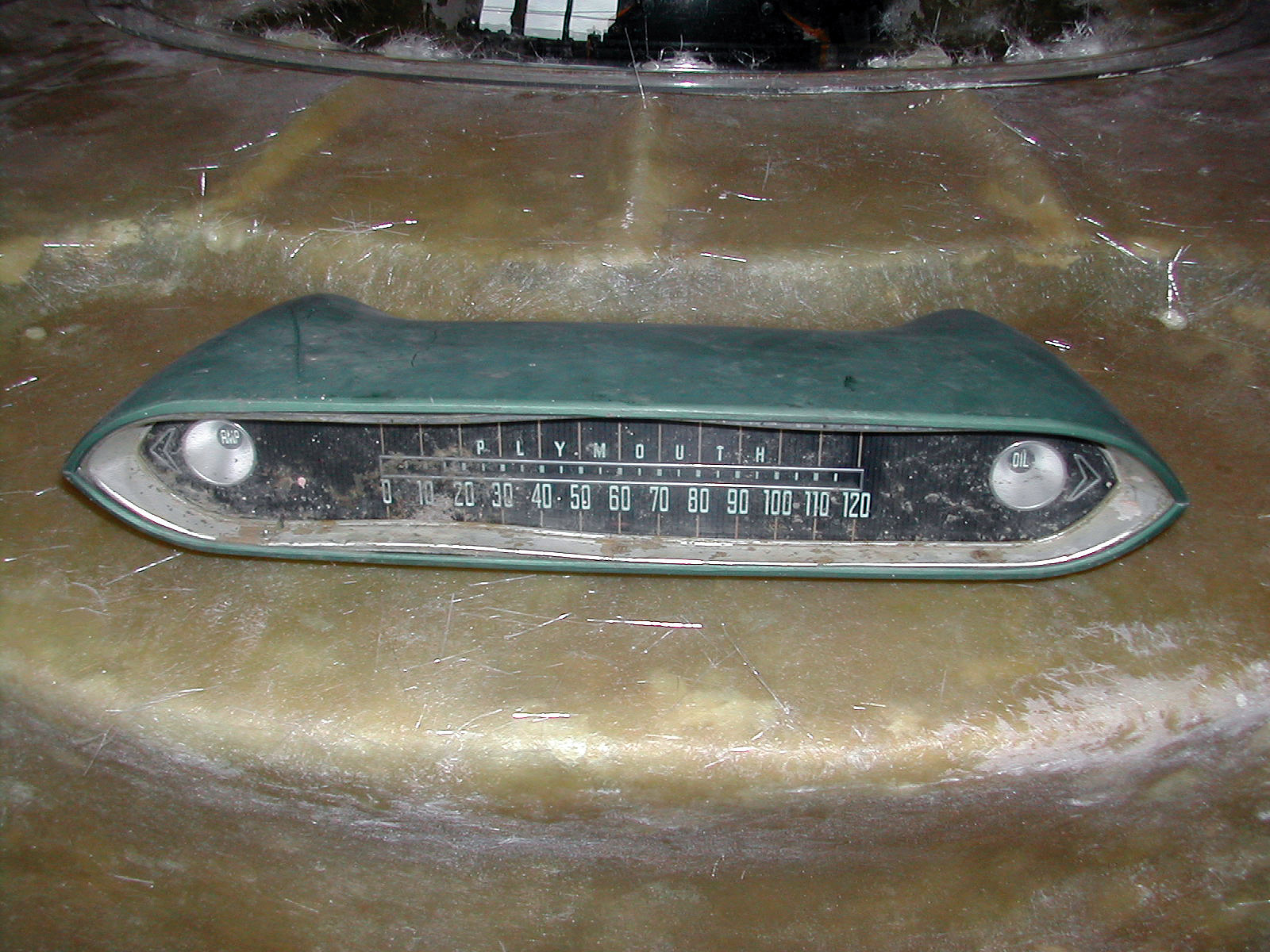
However, the shape was there, and the smoothing had already begun. The seats were fabricated, as were the hinges for the acrylic dome, and the front grille and headlight pod were now completed. Yes, the Astrosled was slowly becoming a reality. Future appointments will include eight 1959 Caddy taillights, four motorcycle headlights in the front pod, and a pair of parking lights/turn signals employing 1964 Ford Galaxie taillight bezels.
The Future of the Bubble Car
In true show car fashion, the Astrosled will be painted in candies and pearls and will roll around on Radir wheels. When it is finished, it will be the next logical extension of the bubble car movement. Sure, there has been a 45-year sabbatical on the craft of building bubble hot rods, but the good news is that even today, when this car hits the showroom floor, hot rodders will flock to see this “futuristic rod.”
Is the Bubble Back?
We would be remiss were we not to mention another new bubble car that hit the show circuit this year, the radical ’56 Ford custom built by Gary Choppit. The car took the top award at the big Starbird show in Tulsa, Oklahoma. Now, this begs the question, “Is the bubble back?” Is this a trend or, much like 45 years ago, are there just a few bubble cars floating through the show circuit? Only time will tell, but with Dave Shuten’s new Astrosled set to debut at the Rockin’ Rods on Route 66 Show in Bloomington, Illinois, on July 21, the future of the bubble car looks secure.