Ronnie Staples’ Custom 1950 Ford Coupe
Ronnie Staples is simply a car guy—been one all his life. From that first Deuce coupe he built in high school to award-winning rods and customs, Ronnie has built a lot of great cars over the years. But beyond that he’s had a ton of fun doing it, and while the quality of his cars is second to none, he insists that they first be fun.
His latest endeavor actually started back in 1989 when he first saw this custom. It was for sale, and like almost everyone else who sees this car, Ronnie thought he remembered seeing the car in early rod magazines. Bargaining ensued, but a deal could not be struck, although the gap betwixt buyer and seller was less than $1,000. Ronnie kicked himself for the next seven years for not buying the old custom, and when the car rolled into the Turkey Rod Run in Daytona in 1995, it was for sale again. This time negotiations ensued—the numbers were larger, the chasm yet wider—but in the end Ronnie Staples took home the custom. He wasn’t about to let it get away twice.
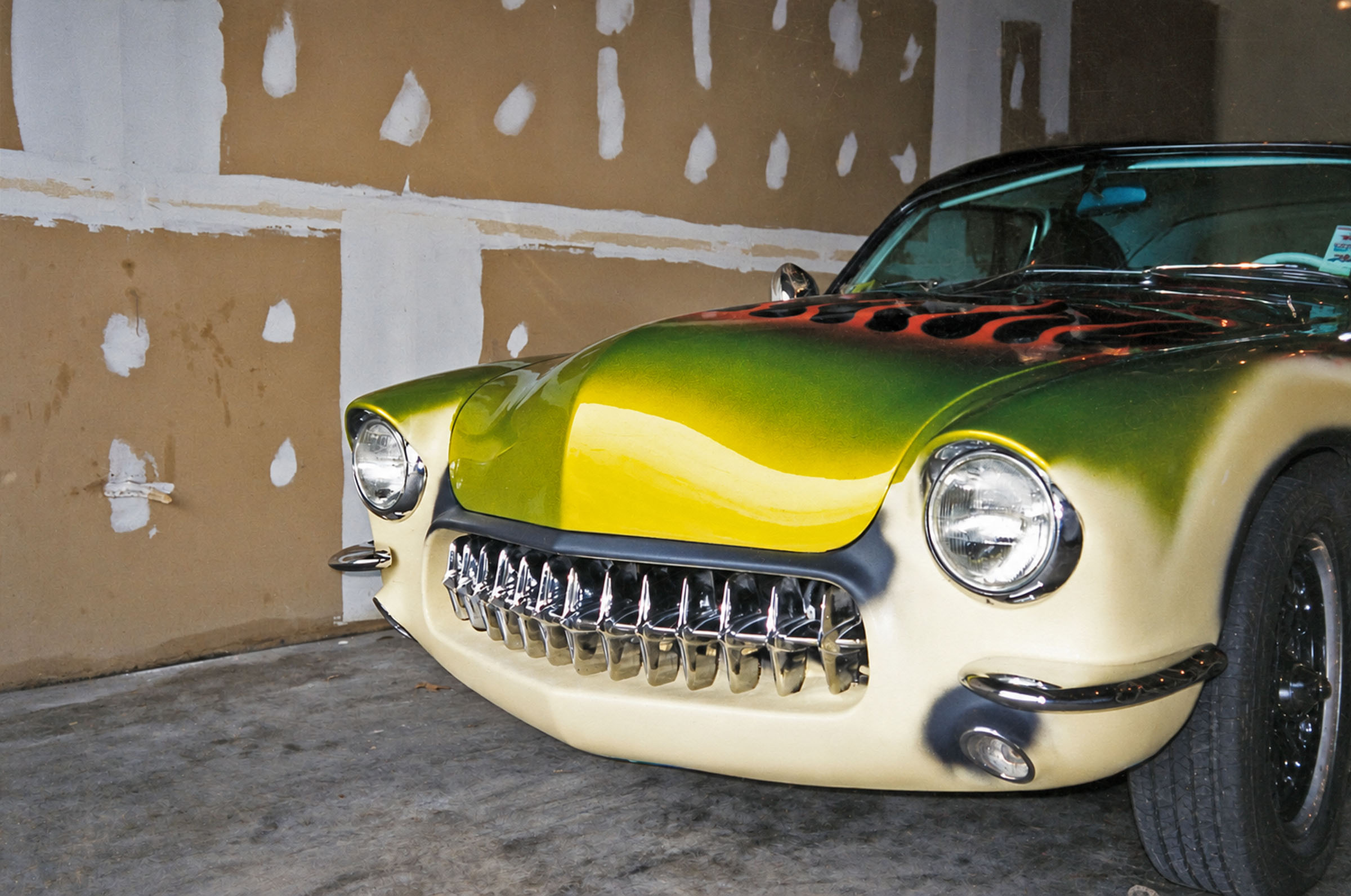
A hot rodder chasing a car can be likened to the proverbial dog chasing a car; sometimes you don’t know what to do once you catch it! However, that wasn’t the case here, as all those years of experience have given Ronnie a great eye for rods and customs and, over time, a plan emerged to improve the car considerably. For the first couple of years the little ’50 Ford coupe was used as it was purchased—black with flames. A little buffing and detailing were done, but all the while the gears were spinning in Ronnie’s head as he made mental notes of the changes in store for the car.
Refining the Sectioned Ford Body
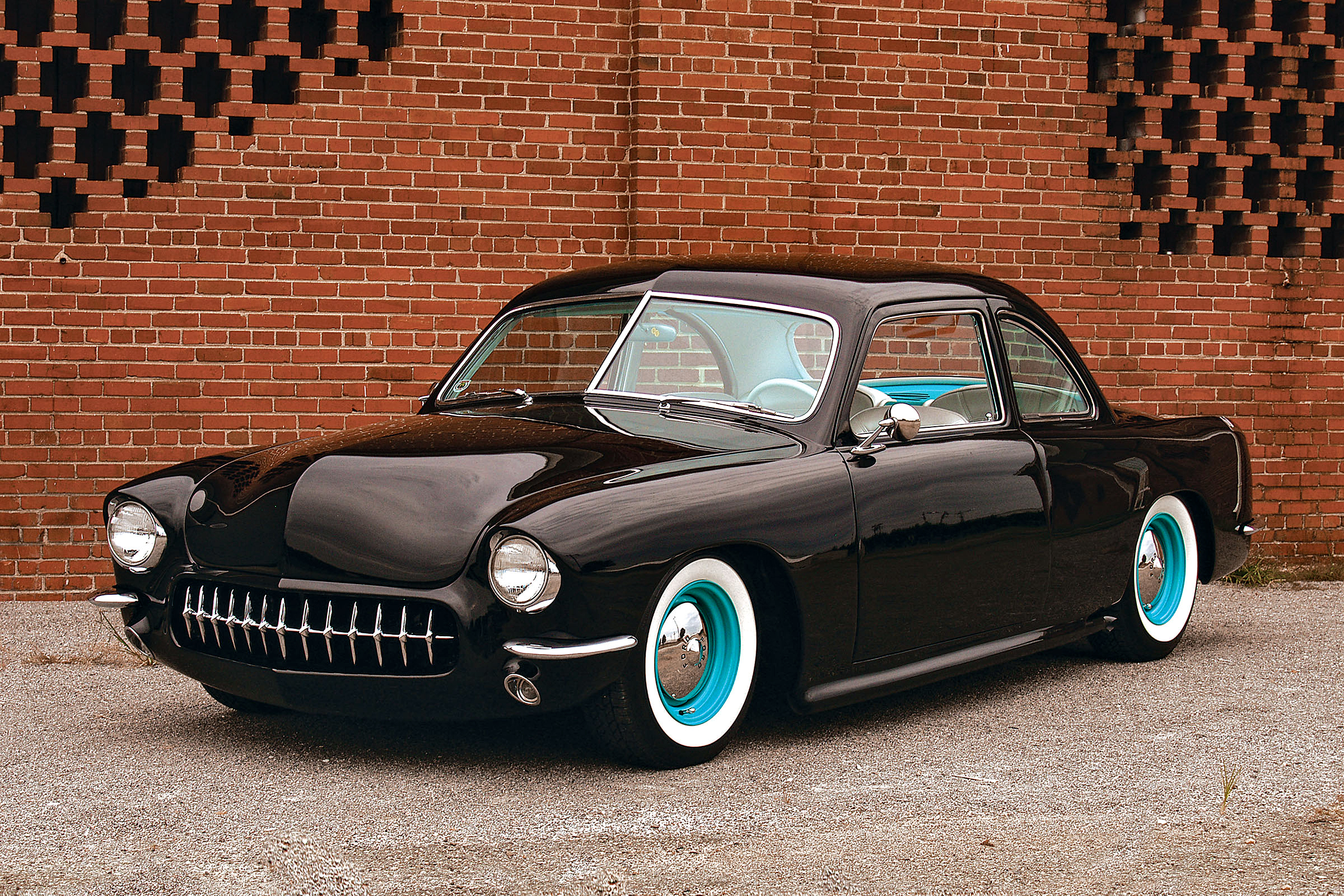
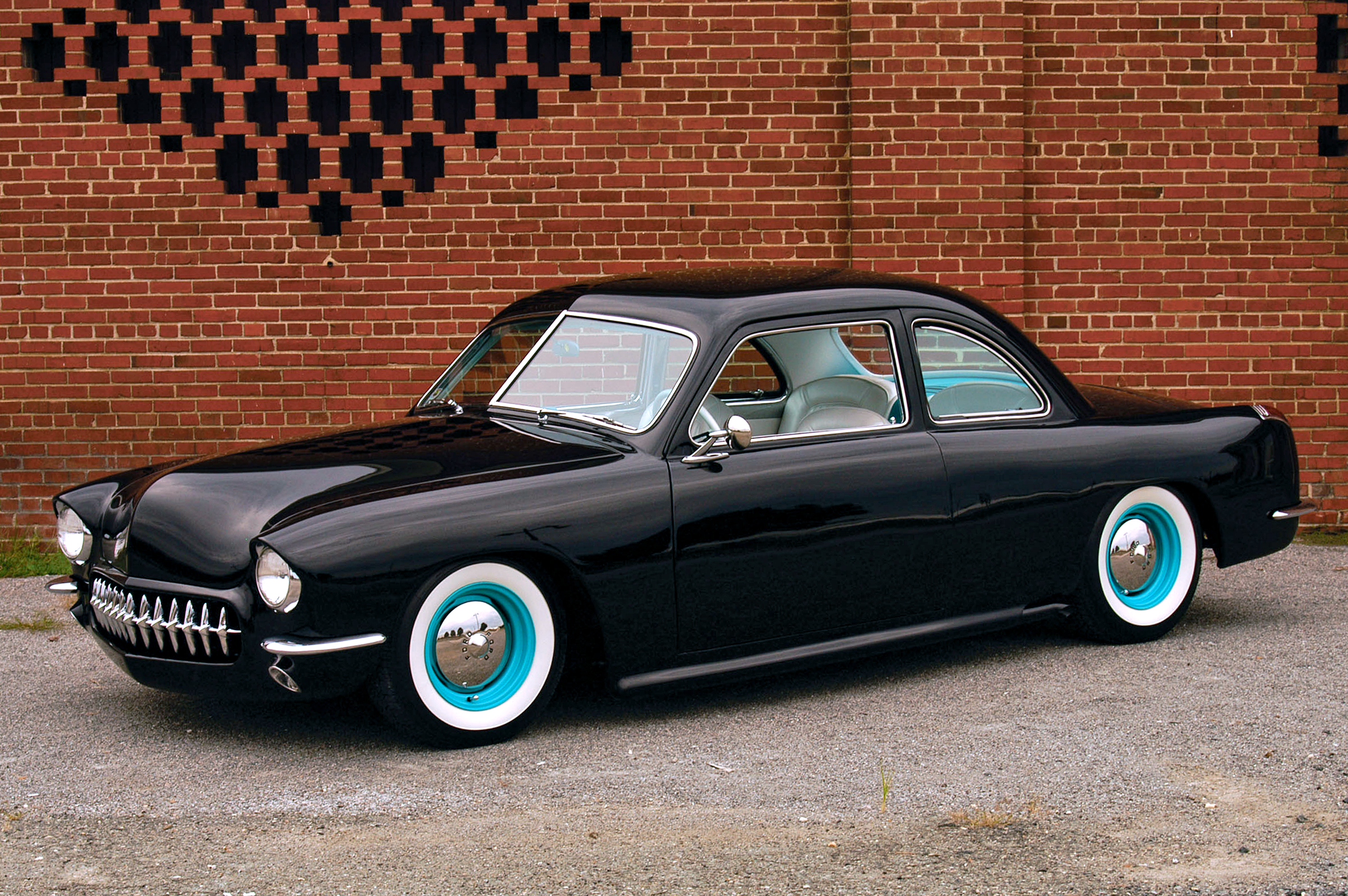
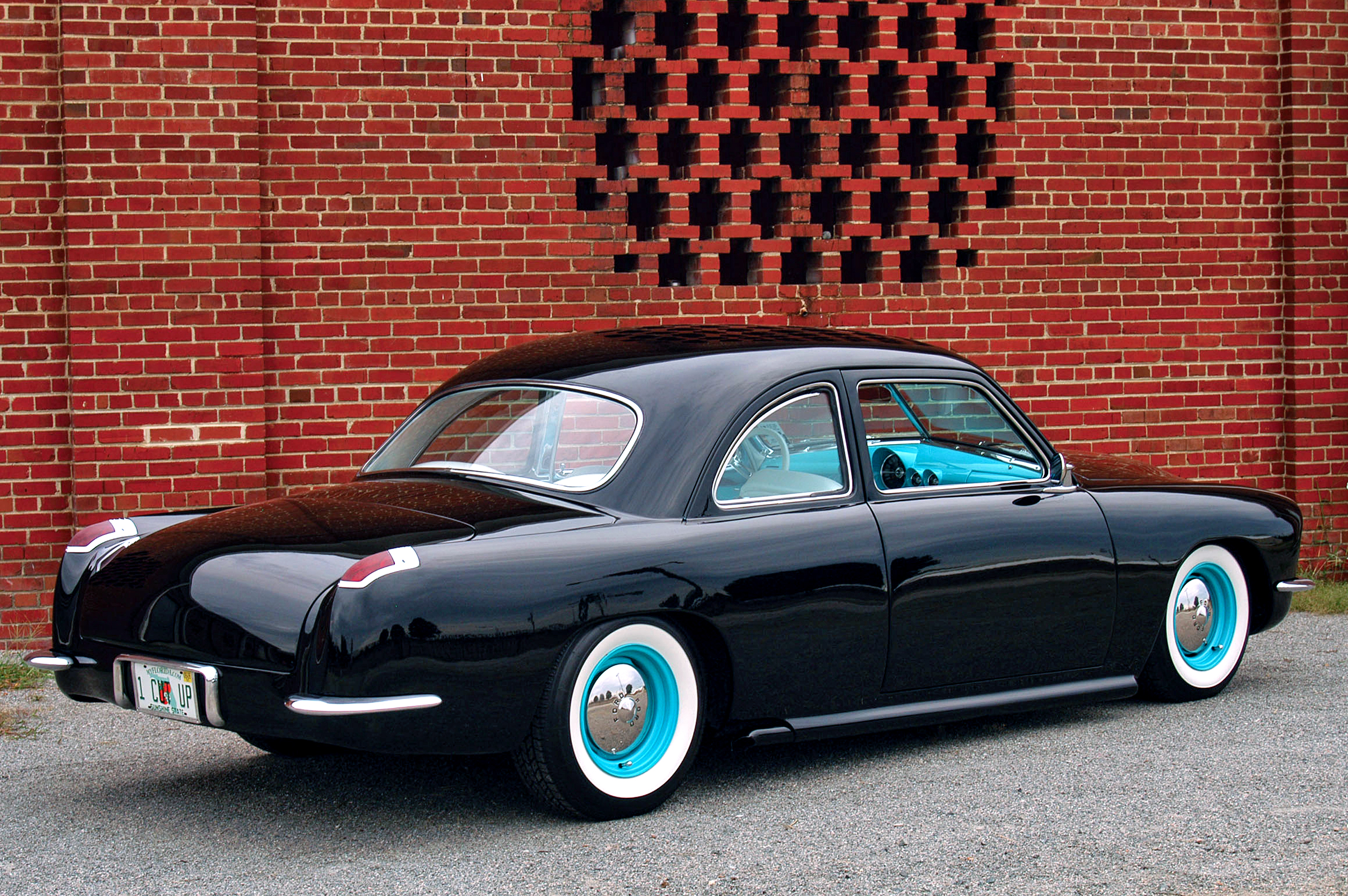
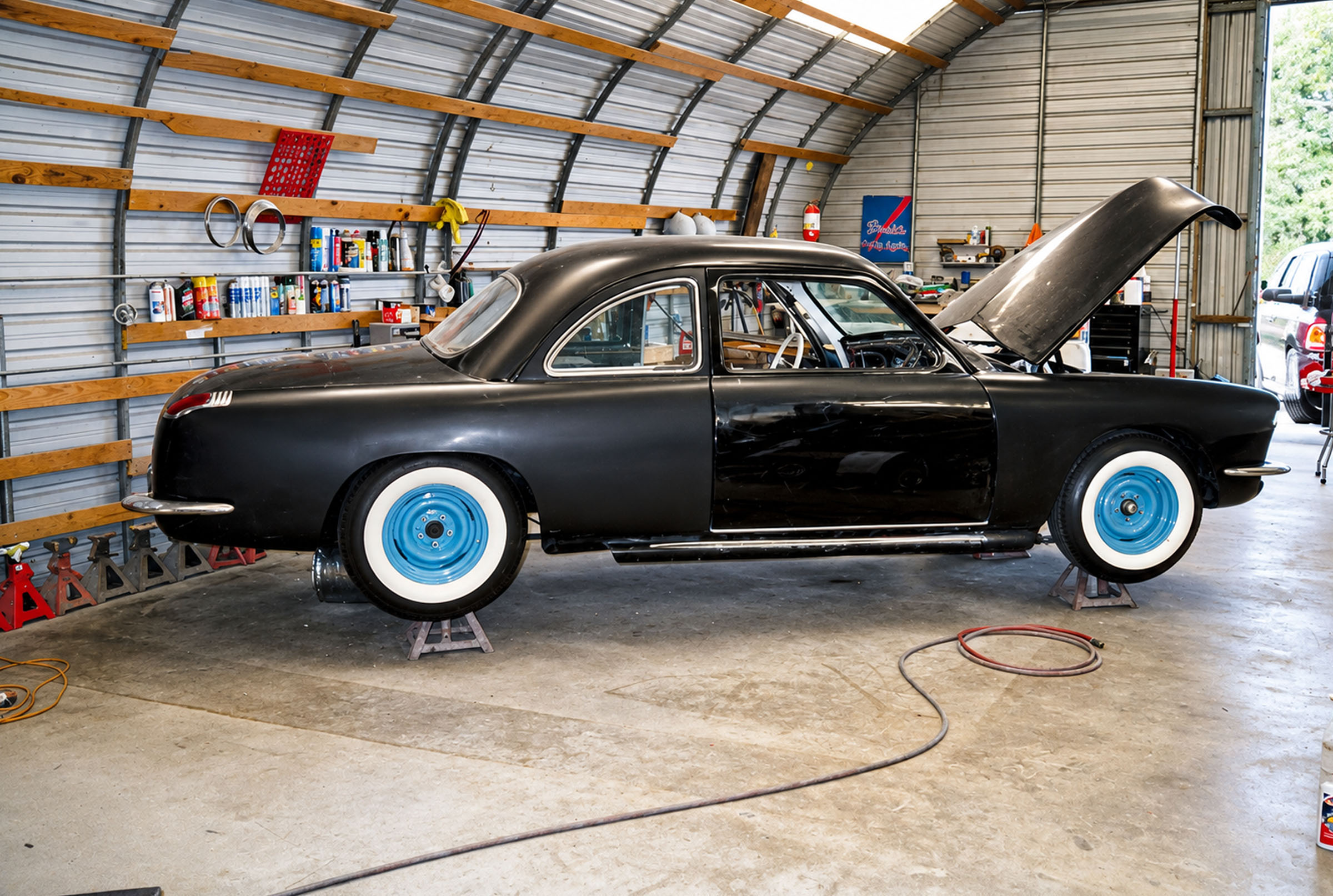
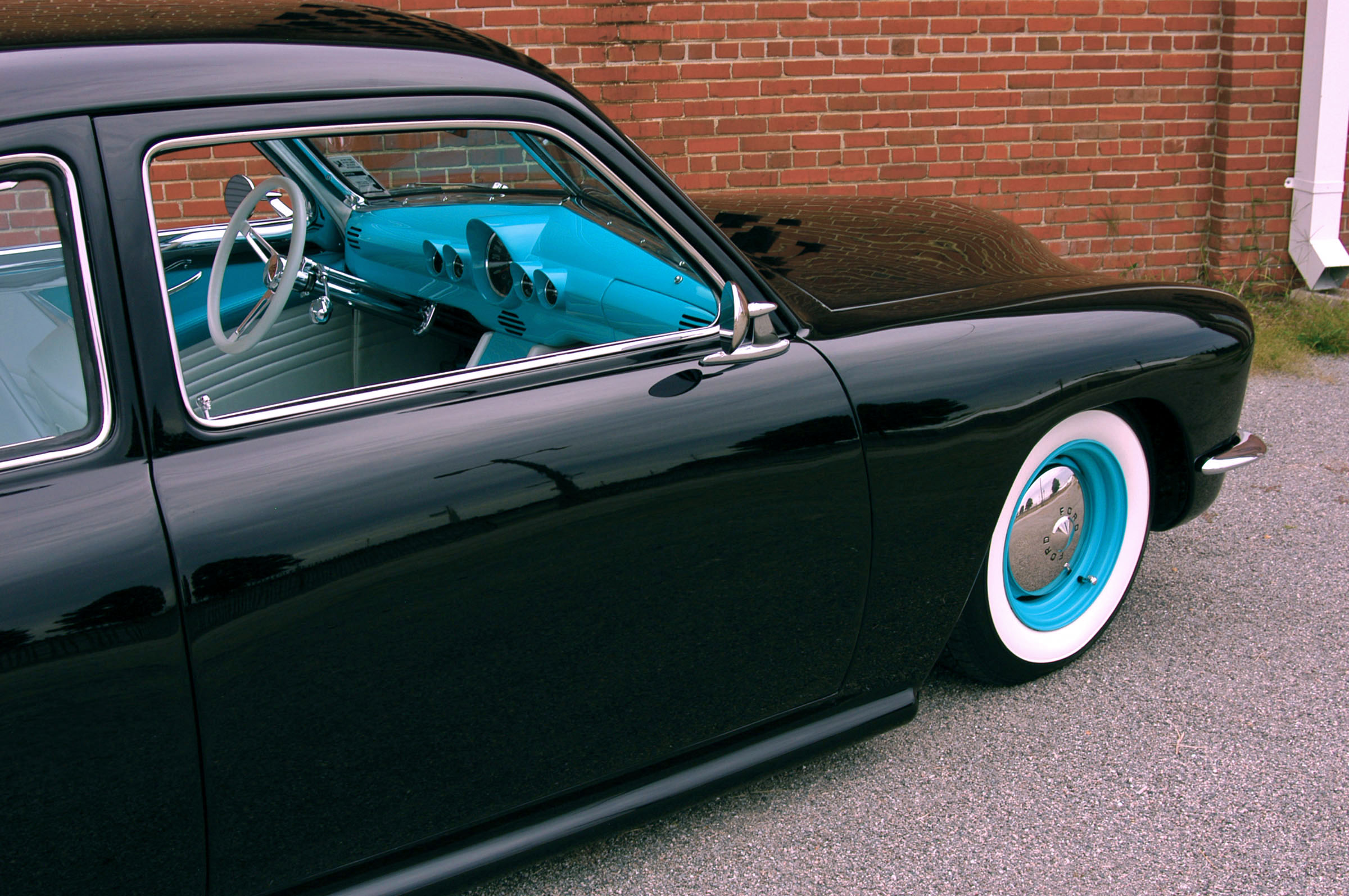
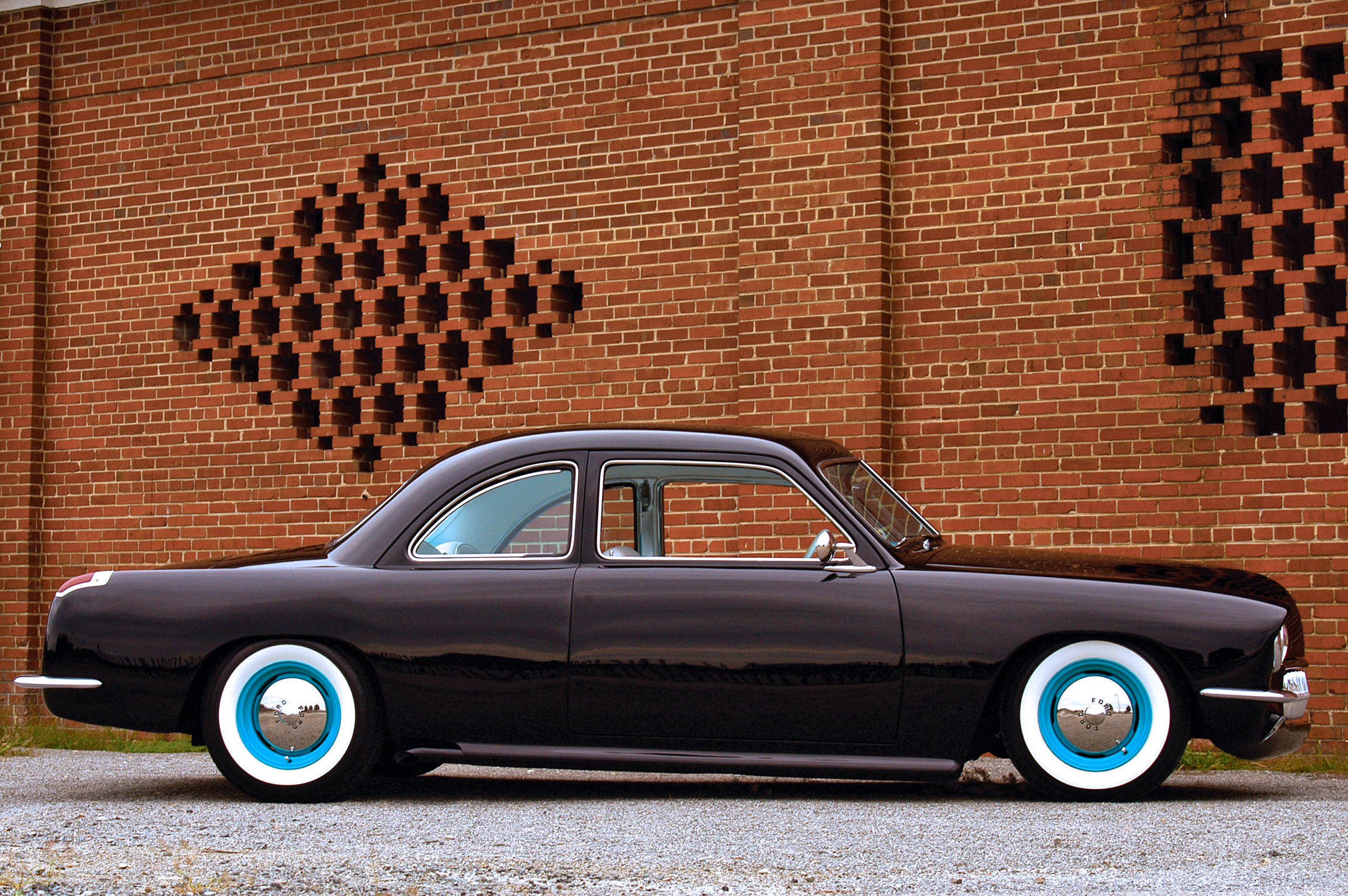
In 2000 the time was right, and the coupe came off the road for yet another round of improvements. The original builder of the coupe had modified all four wheelwells as part of the 5-1/2-inch sectioning of the body. The expanded wheelwells just didn’t look right to Ronnie, so they were modified to a more uniform shape that fit the tires better. The look of a deeply sectioned body with a stock-height top was popular in the ’50s, and the tall turret of the business coupe serves to accentuate the sectioning of the body. However, Ronnie was concerned that the section might have been a bit too severe, and the rocker panels seemed too high between the wheels compared to the front and rear rolled pans. He came up with a clever solution; by molding in a set of full-length sidepipes under the rocker panel, he effectively added 2-1/2 inches to the body and made the rocker panels blend with the front and rear pans, too. It made a big difference in the look of the car.
Corvette Grille and Traditional Custom Details
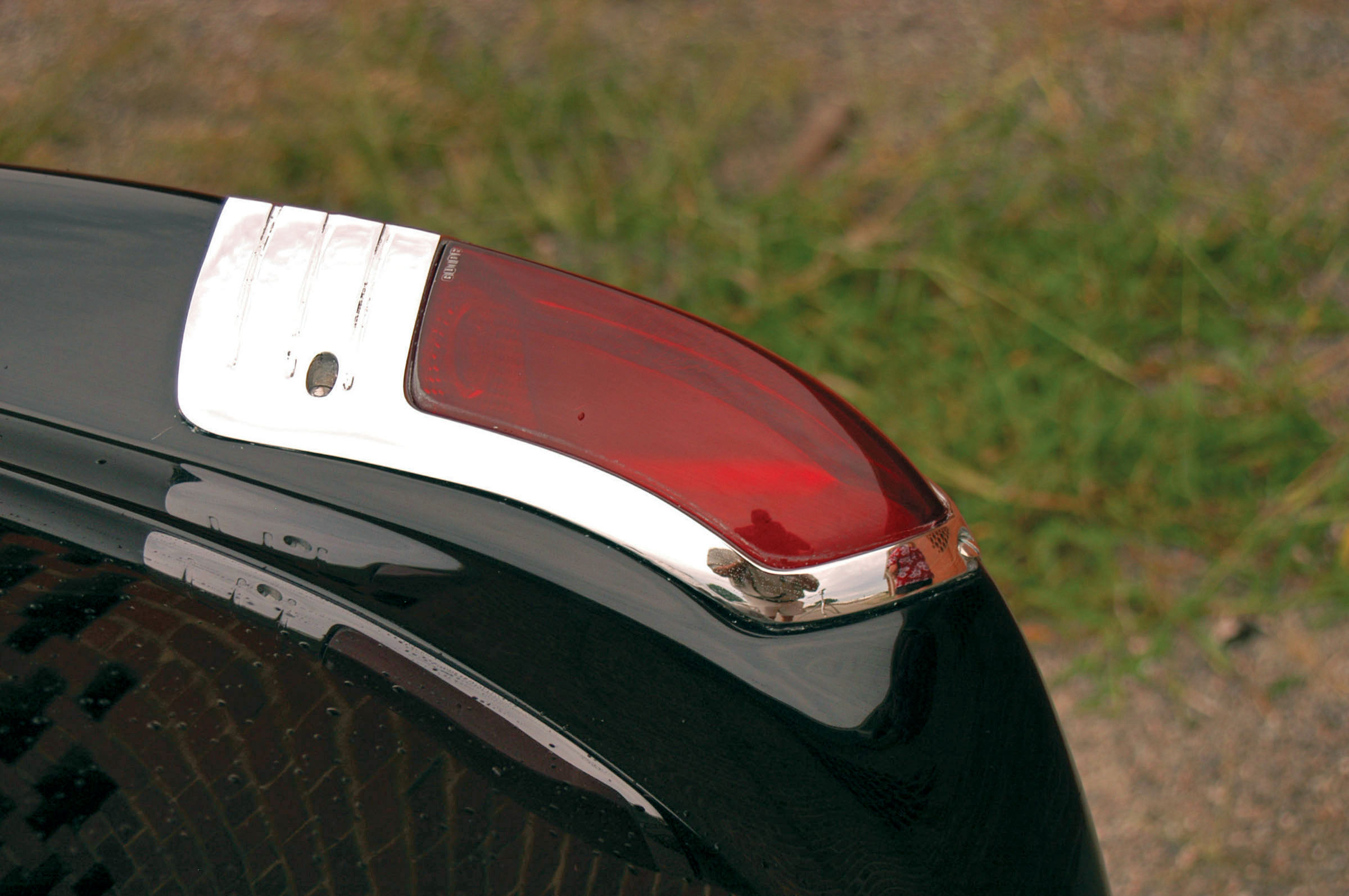
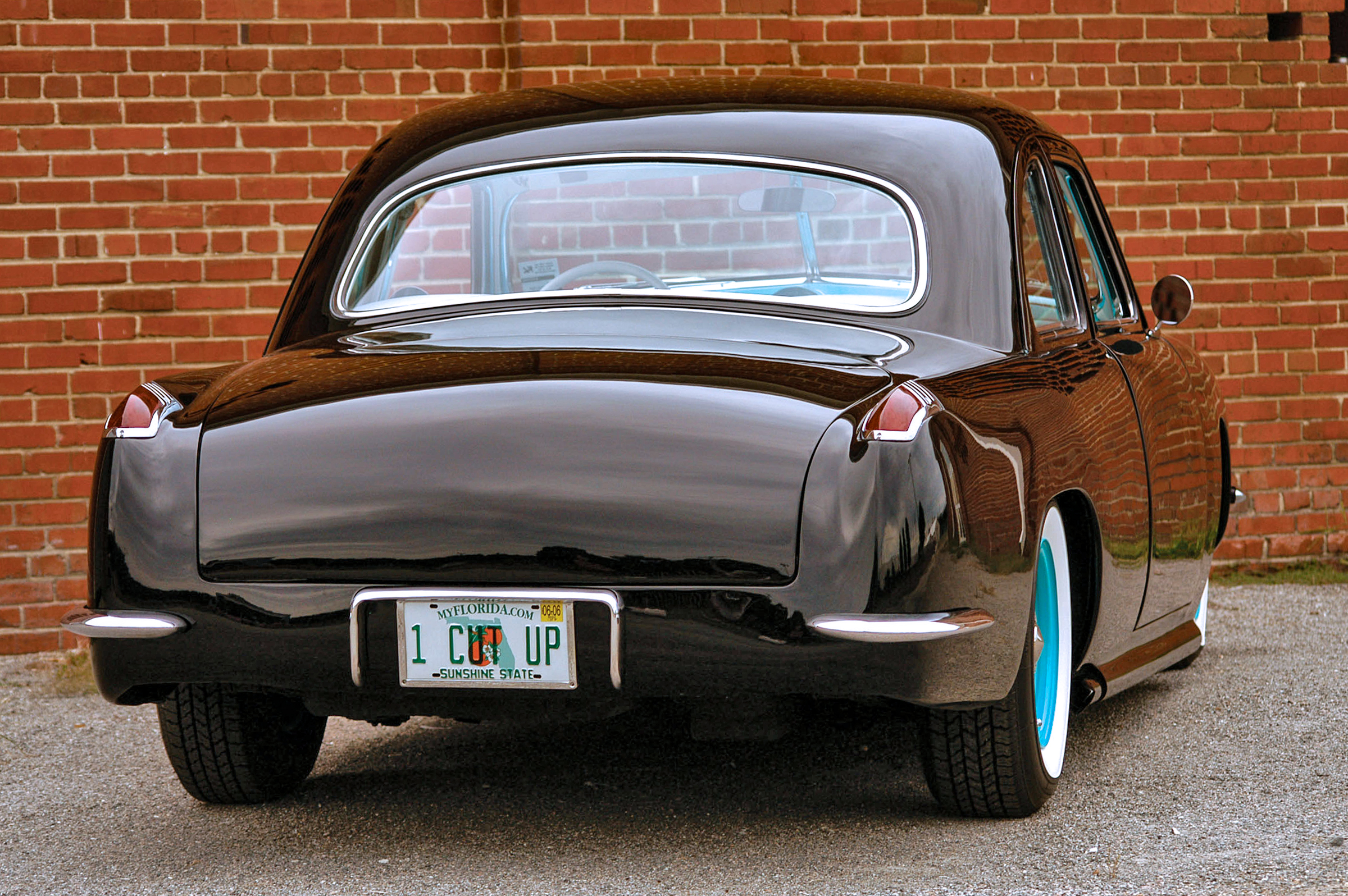
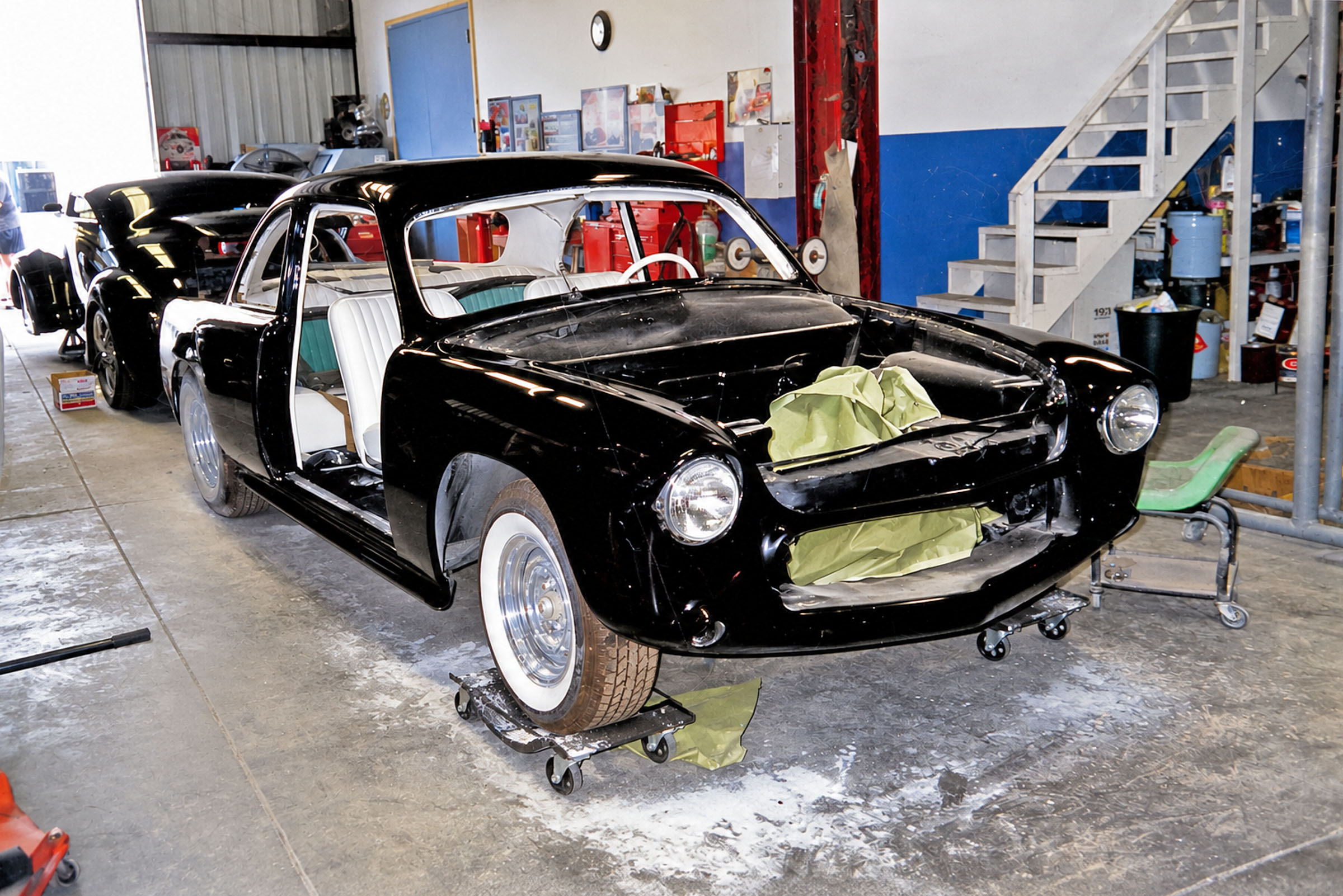
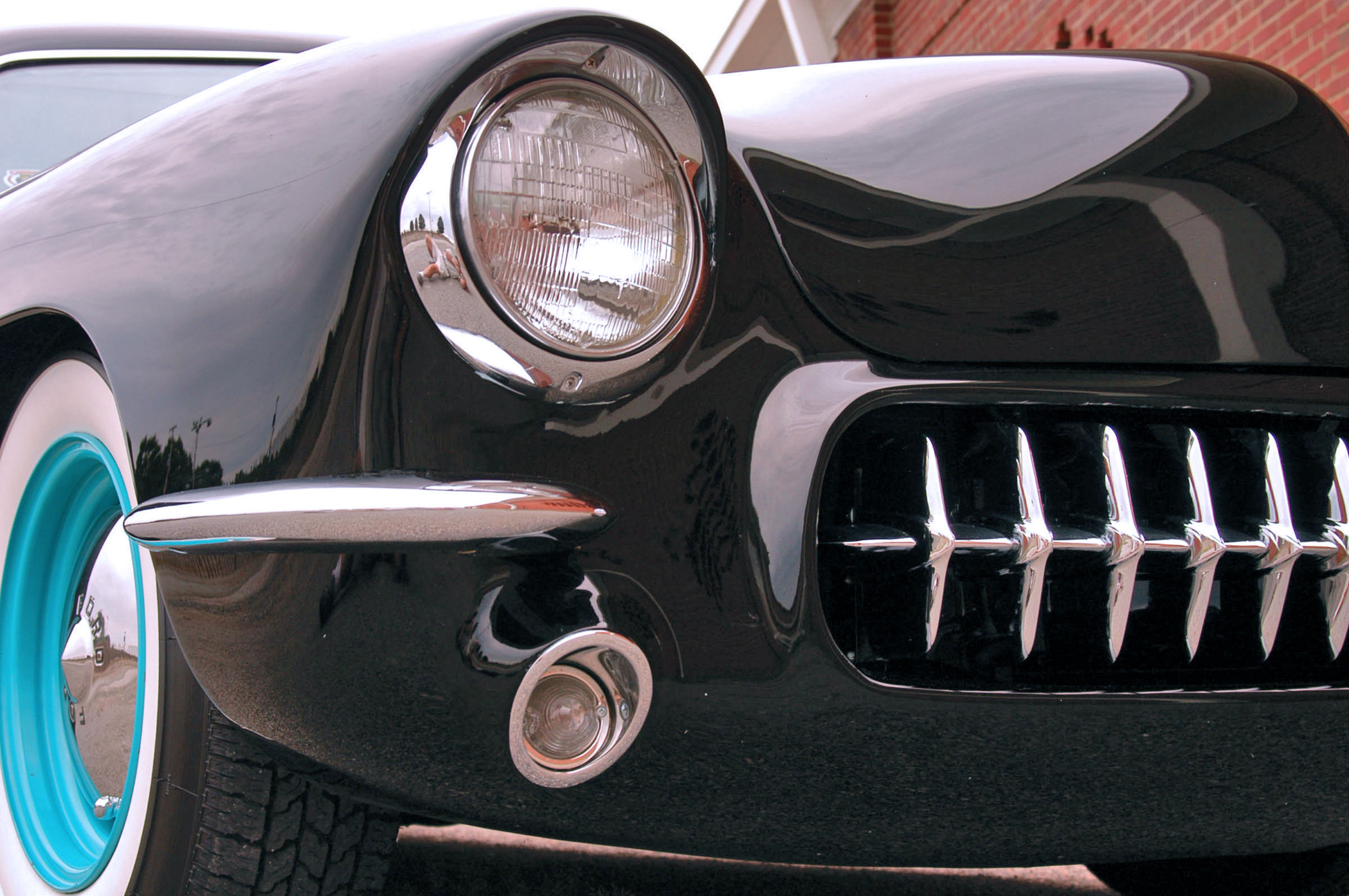
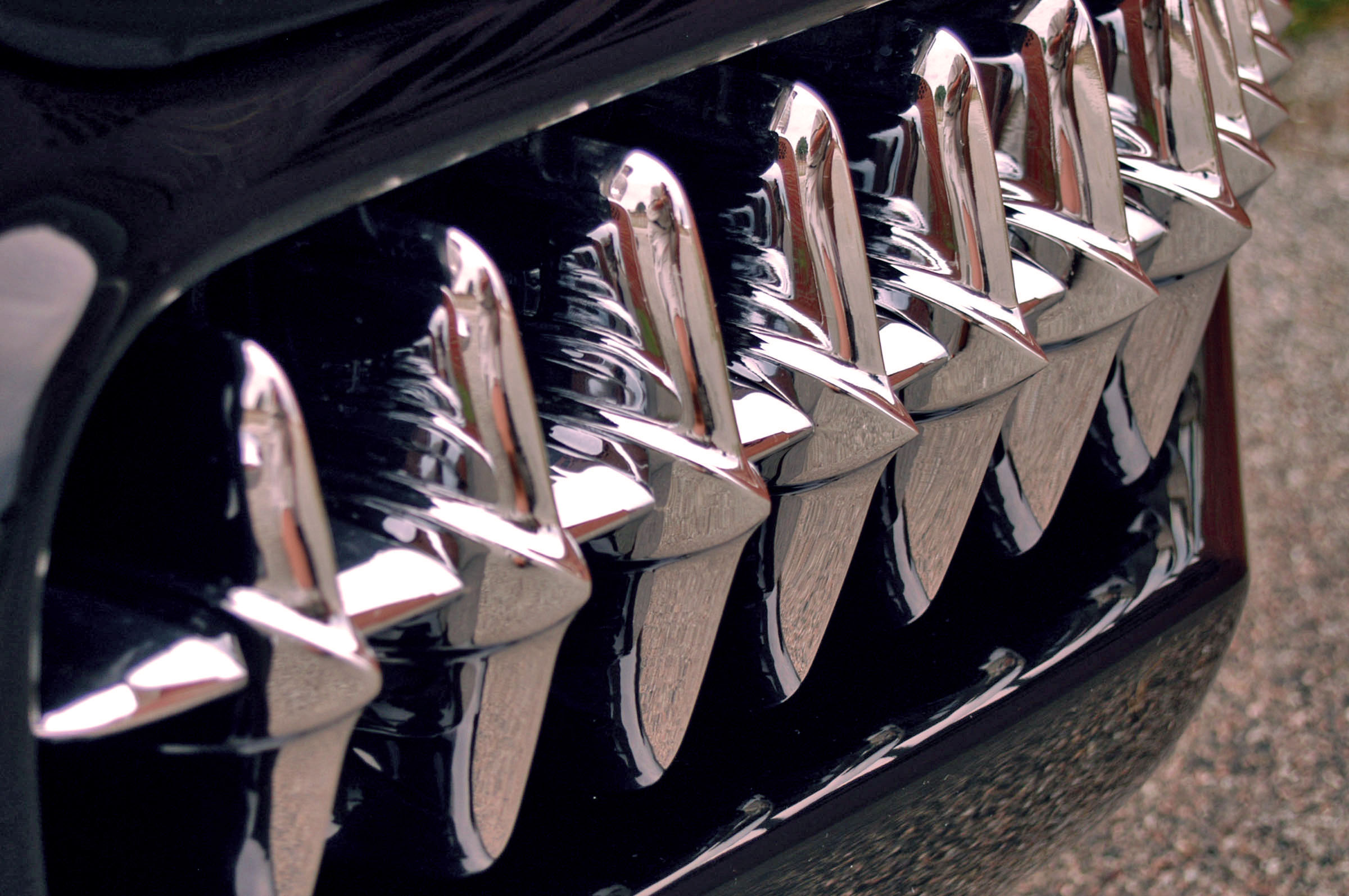
The hooded headlights and the Corvette grille are the two dominate features on the front of the car. But once again, the keen eye of Ronnie Staples thought the grille cavity was just a bit too wide for the Corvette grille. The entire cavity was reworked, and the ends were closed in for a much cleaner look. Then Corvette turn signals were added just below the 1950 Pontiac bumper “over riders.” The same bumpers were used on the rear, and the 1949 Buick taillights originally installed in the ’50s remain in the modified rear quarter panels. The hood is nosed and the corners have been rounded, while the front fenders now hold ’55 Chevy headlights and fender brows. Moving rearward, the door handles have been shaved, the vent windows eliminated and the aforementioned sidepipes were done completely in black to make them “part of the body.” The reshaped rear wheelwells wrap around the Coker tires, and around back we find another rolled pan with a license plate residing under a 1949 Chevy license plate surround. All the latest modifications were done by Marty Martino of Gum Springs, Virginia, while Bob Clark Sr. handled the final panel finishing and paint in Sarasota, Florida. The choice of basic black perfectly covers the clean and simple lines of this custom.
It is worthy of note that the ’49 Buick taillights are visible both from the rear and the side, and the entire treatment of the body exudes a certain simple elegance. The changes made to the body give you the feeling that this is a coupe approaching sports car status. As a matter of fact, this custom was well ahead of its time in that it is a true sport sedan, long before BMW or others had thought of such a notion.
Fatman Fabrications Chassis Upgrades
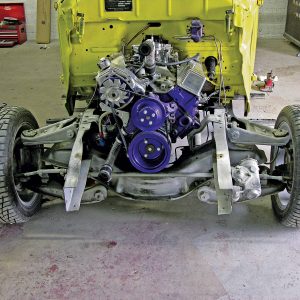
Ronnie has a healthy respect for vintage cars, but he also drives his cars, so as he put it, “I like them to look old; drive new.” When he bought the car it still had a 283 adapted to the stock three-speed overdrive tranny with the stock Ford rear. This brought with it drum brakes on all four corners, cut coil springs and other such period pieces. To update the chassis, a Fatman Fabrications front clip was installed at Fatman’s shop in Charlotte, North Carolina. Tubular control arms now mount disc brakes, and a power rack and pinion provides precise steering. A Ford 8-inch rear from a 1964 Fairlane was also installed by Fatman Fabrications.
ZZ-4 Power With Thunderbird Valve Covers
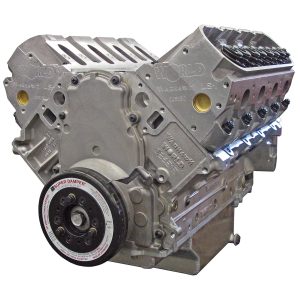
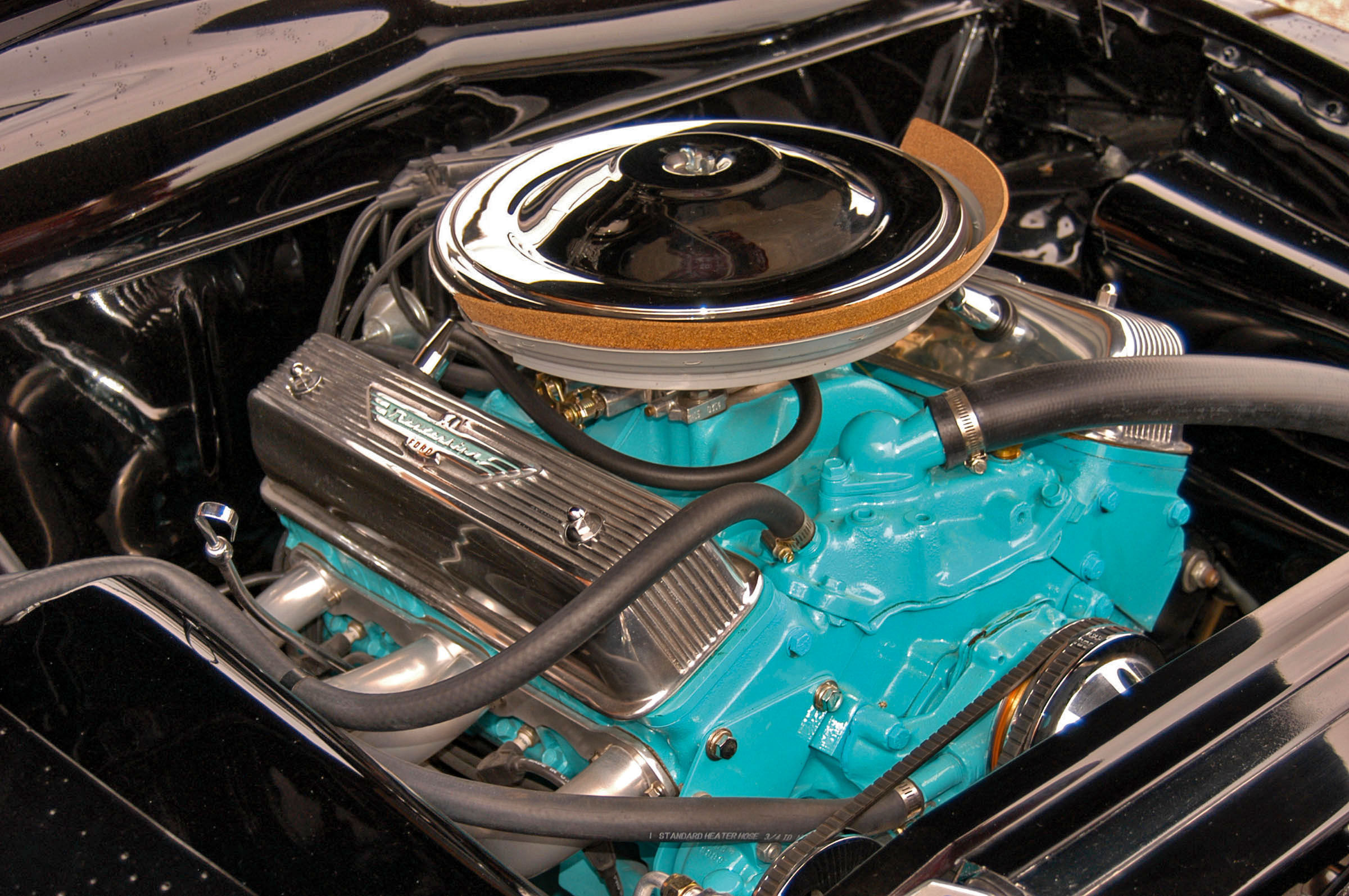
For power, Ronnie decided to go with what he calls, “My 312 T-bird special, and what makes it so special is it’s really a ZZ-4 motor with a set of 1957 Thunderbird valve covers adapted to the engine.” The Y-block valve covers just barely clear the Chevrolet valvetrain, but they sure look right and righteous atop the motor with turquoise filled fins. Headers from Street & Performance and a 600cfm Edelbrock carb are the only modifications to the crate motor.
A ’50s Concept-Car Interior
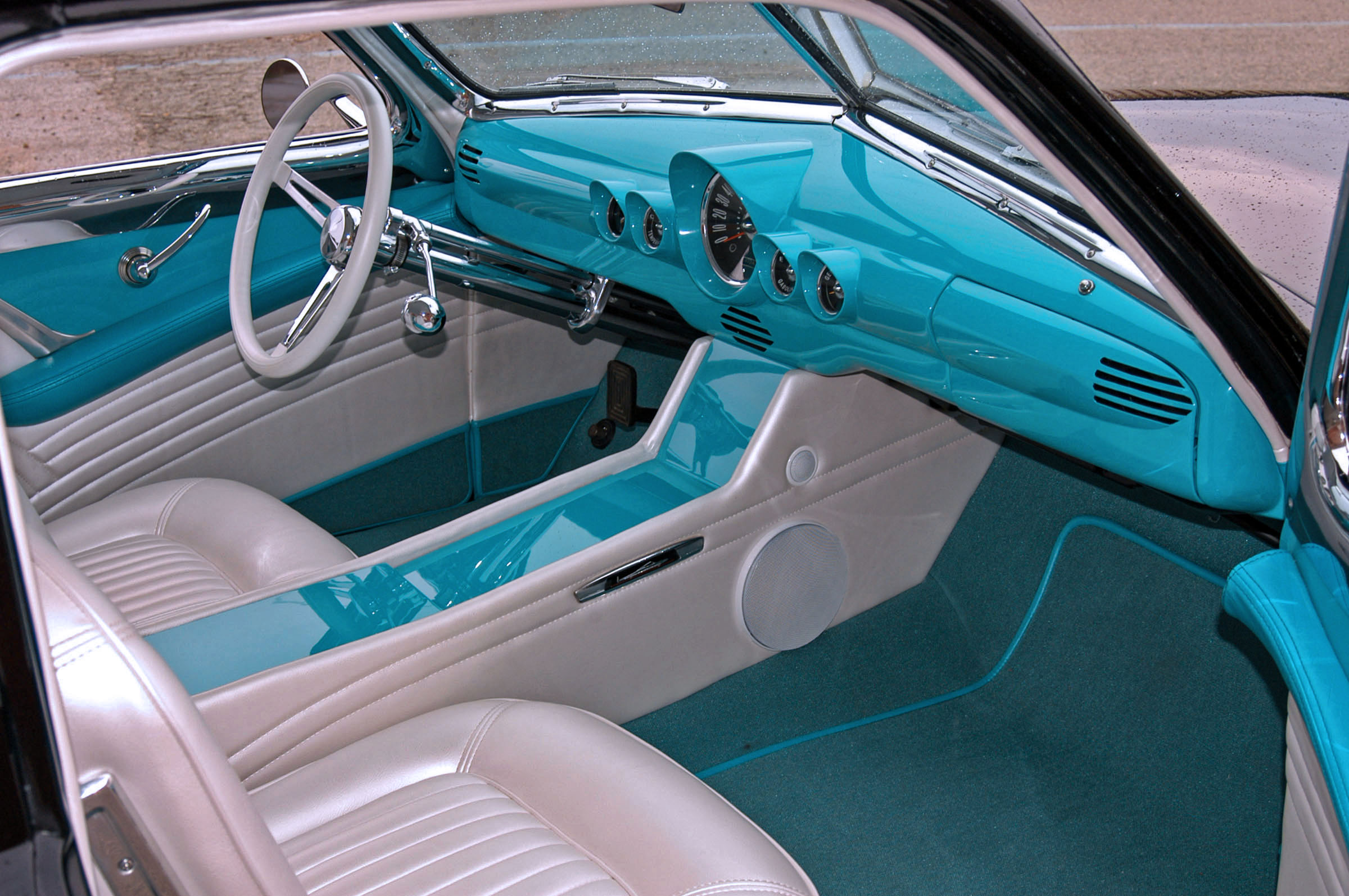
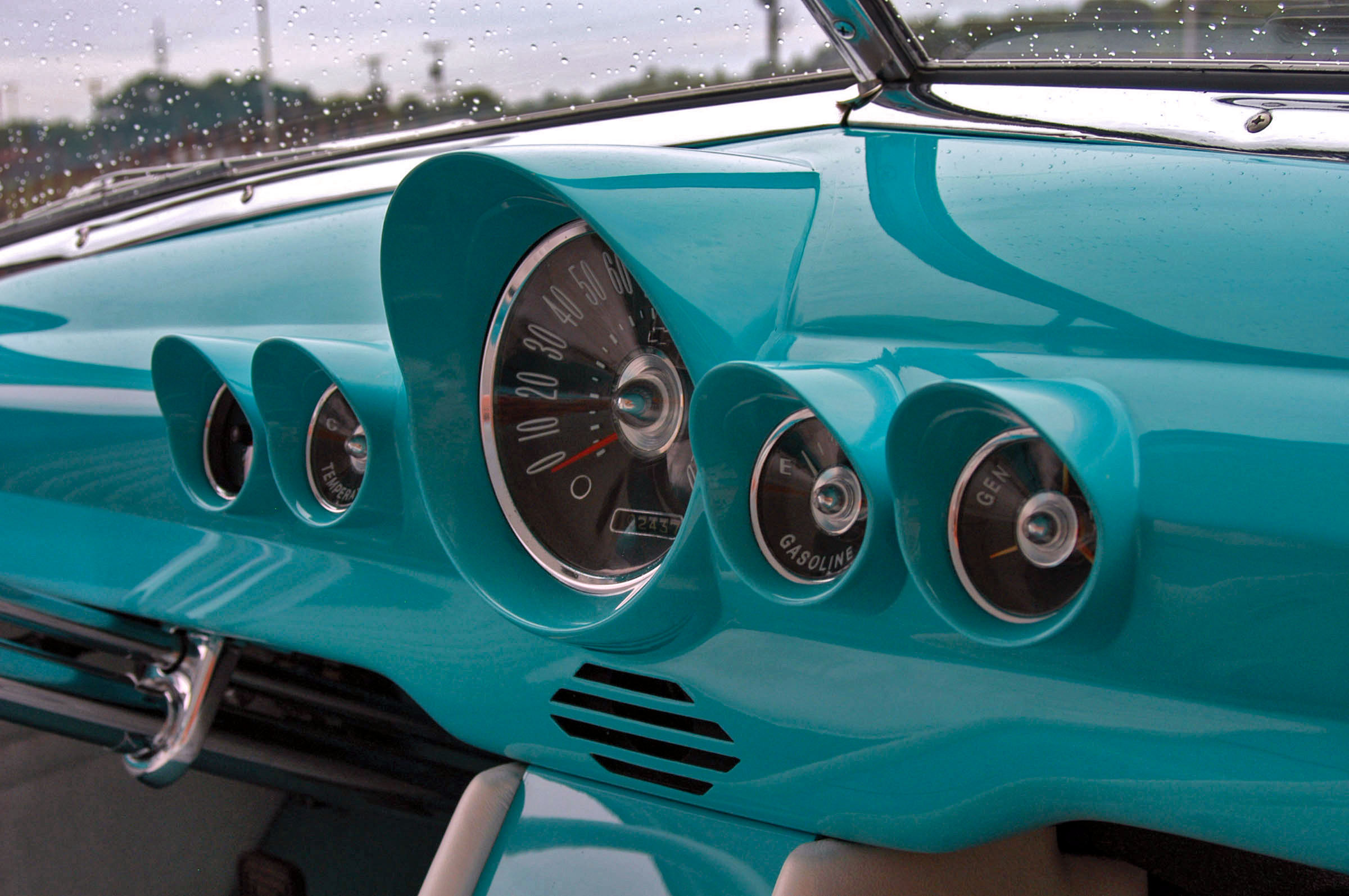
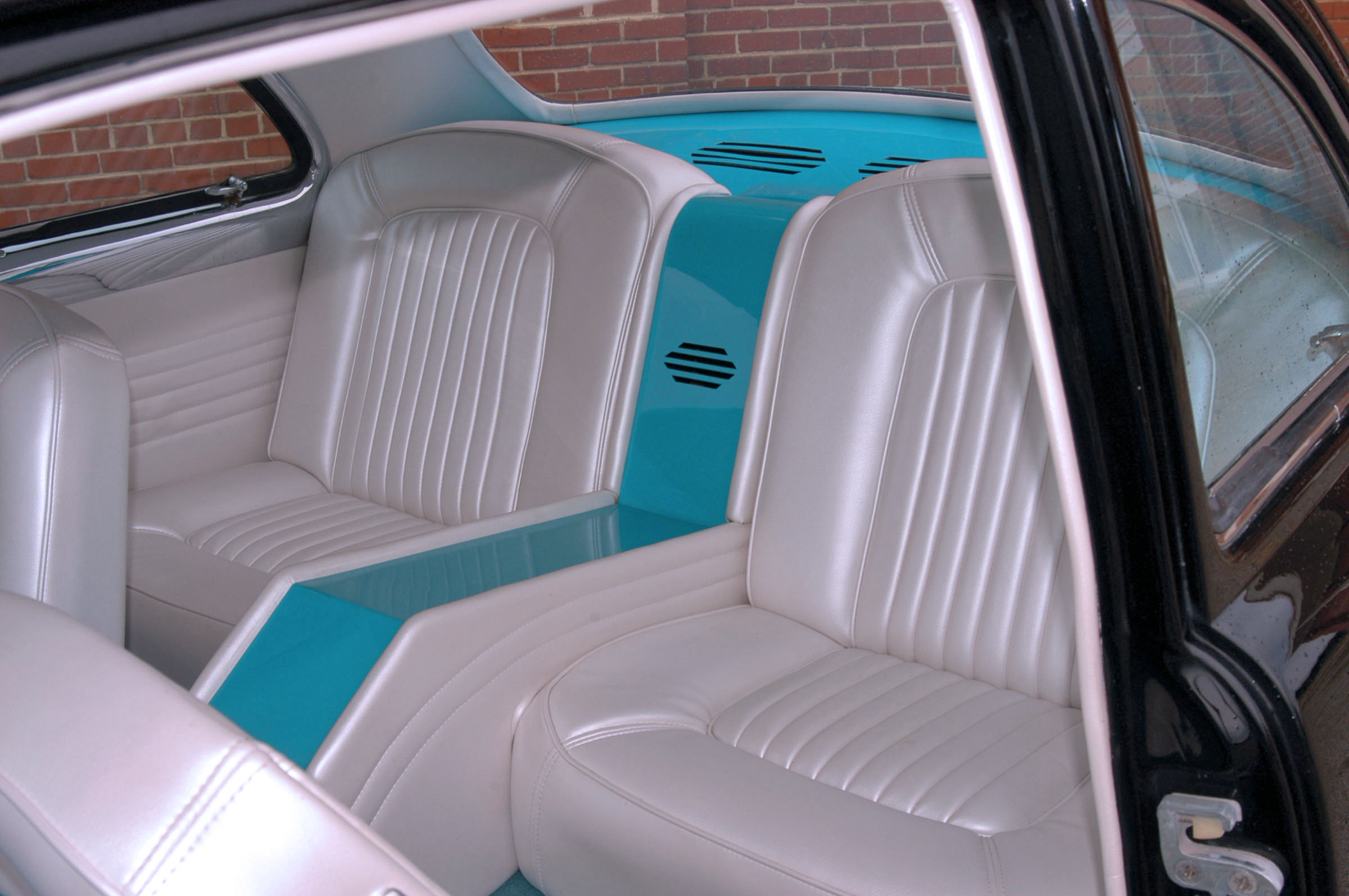
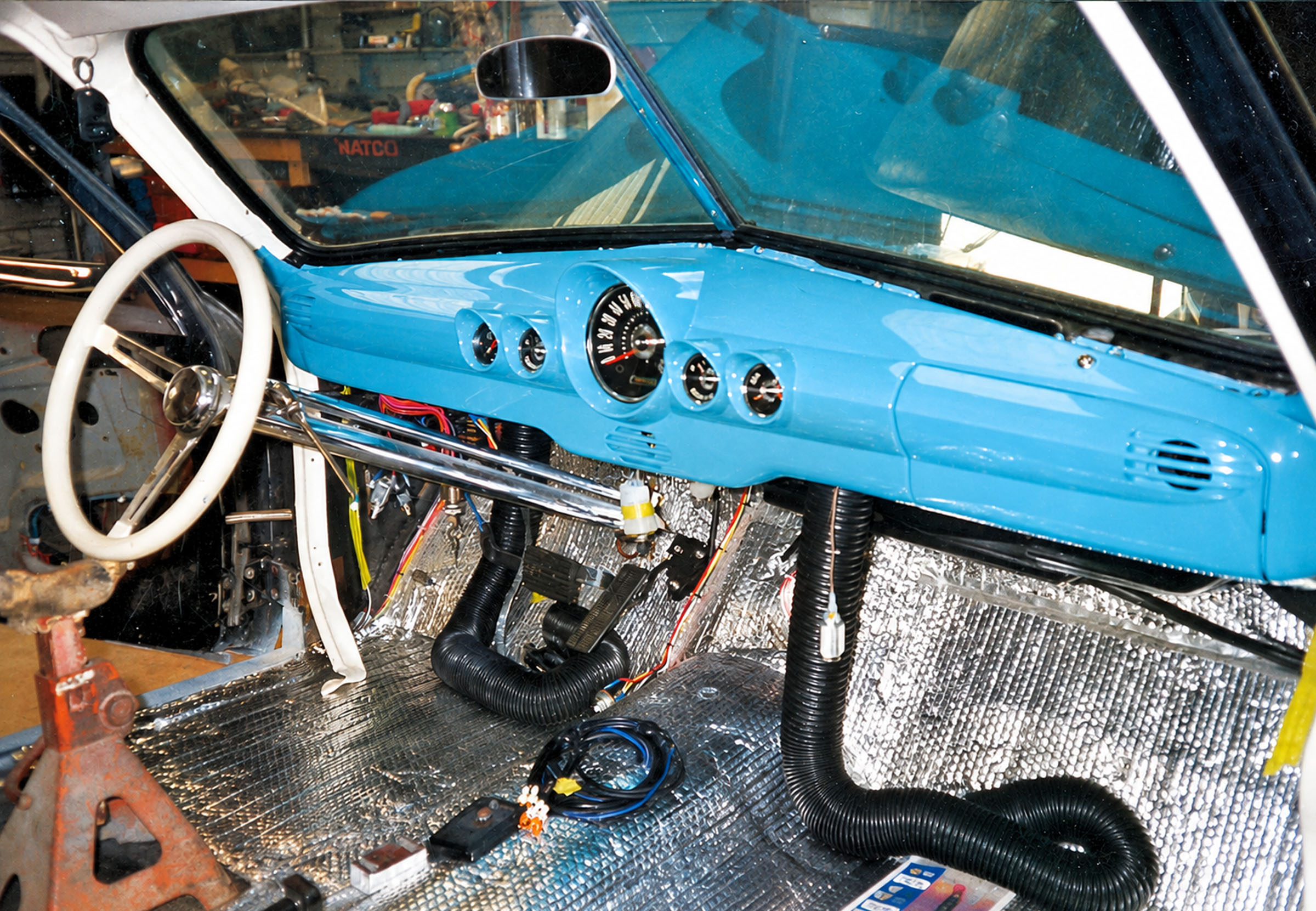
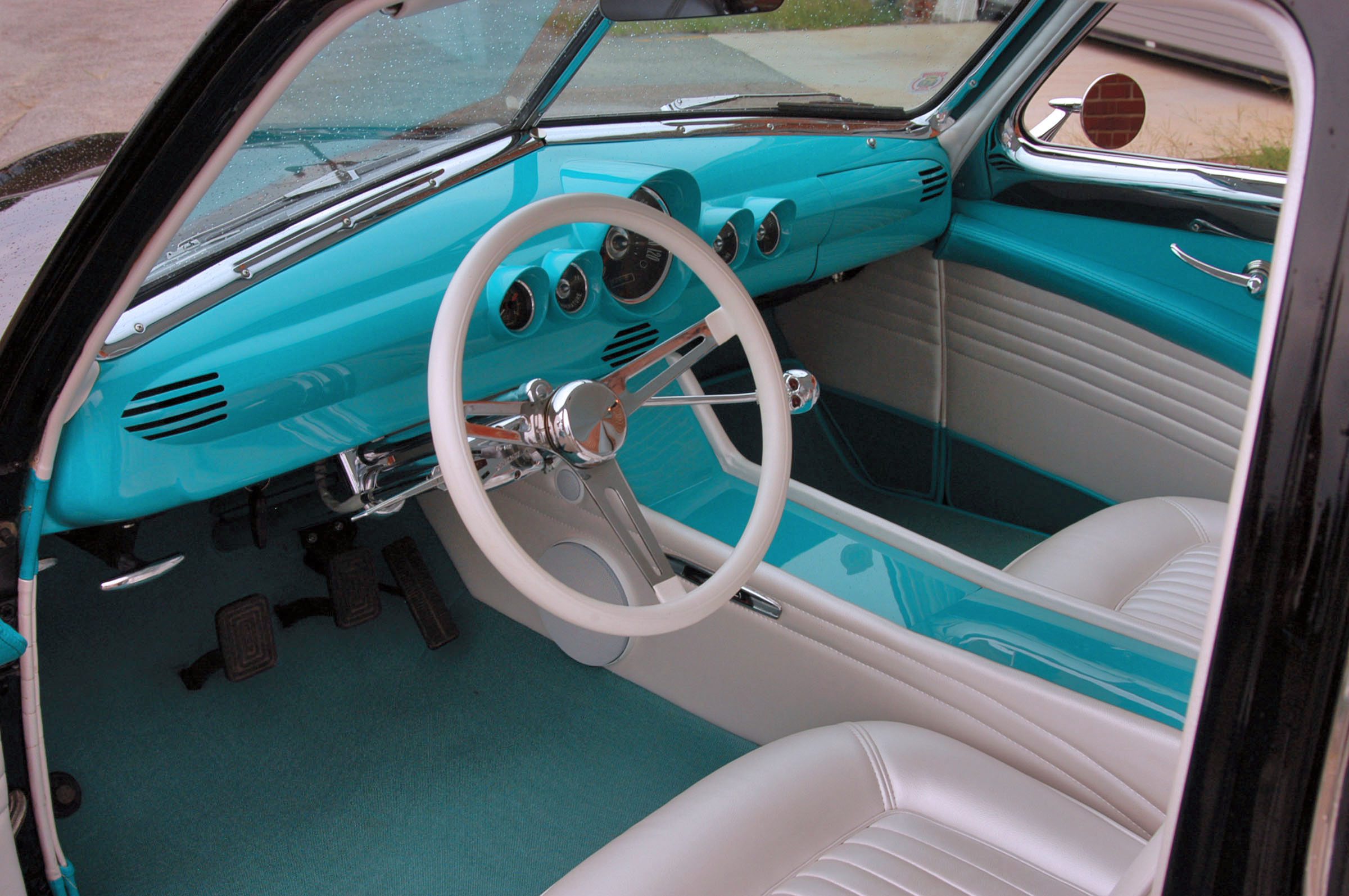
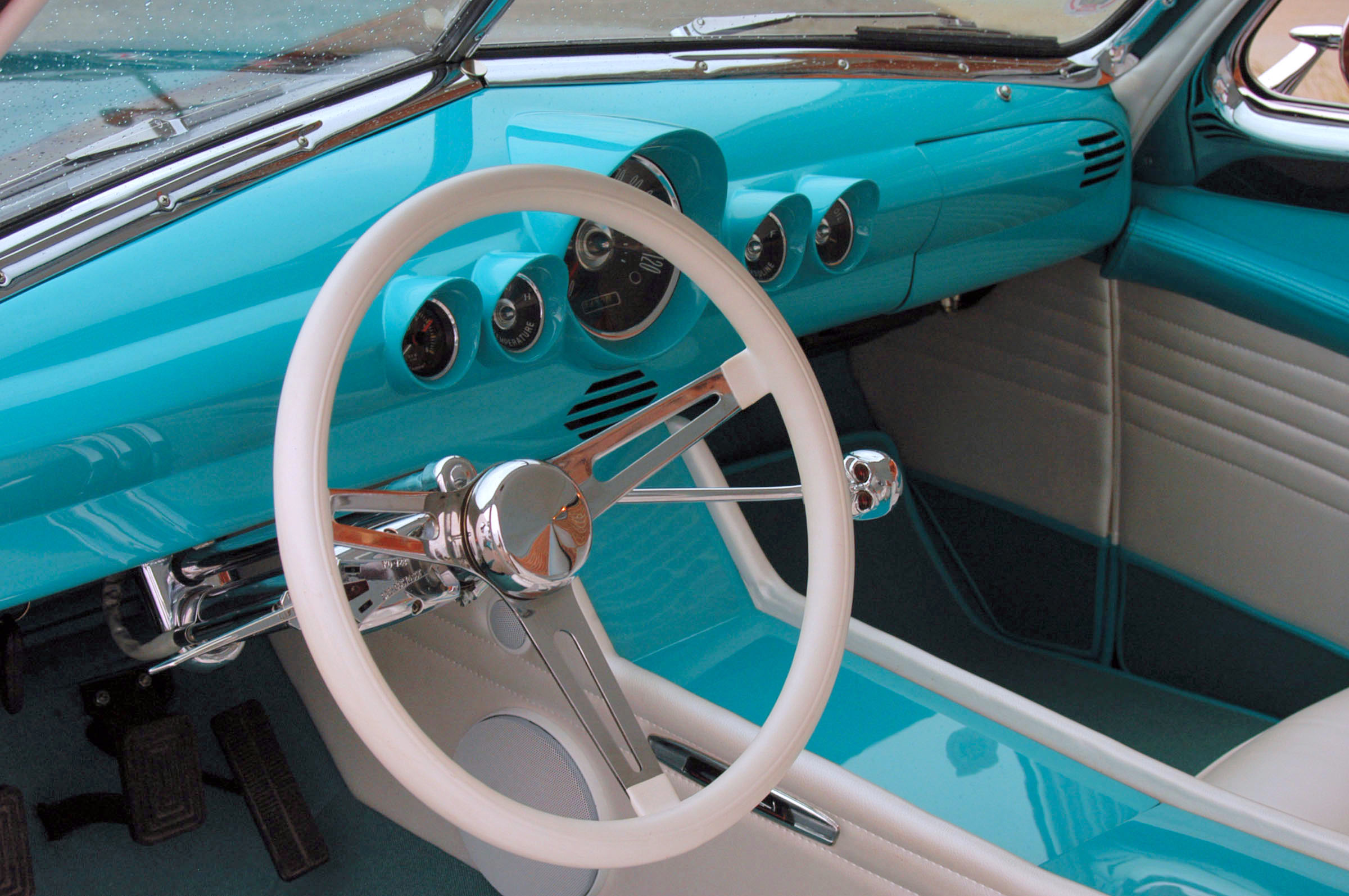
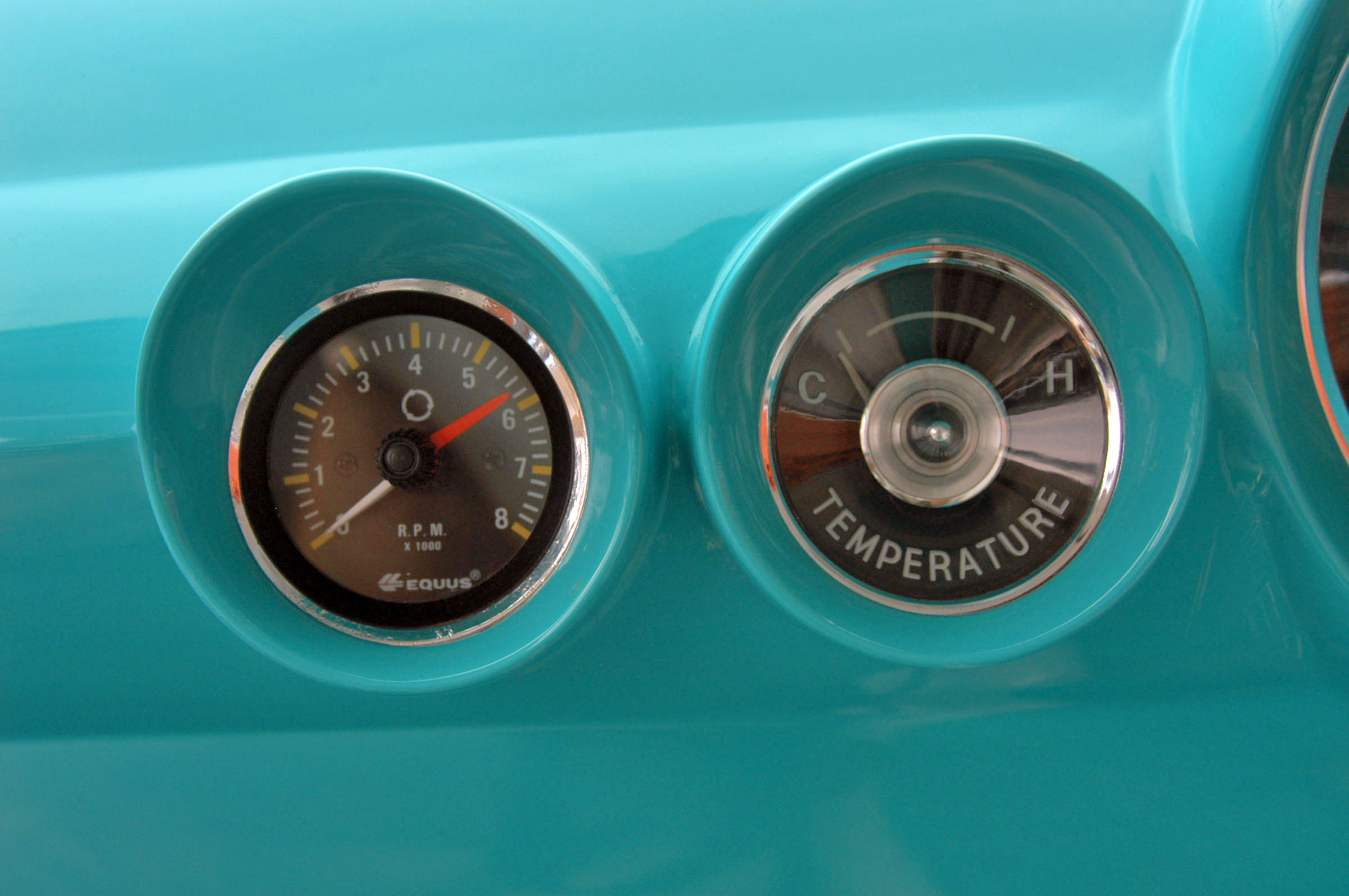
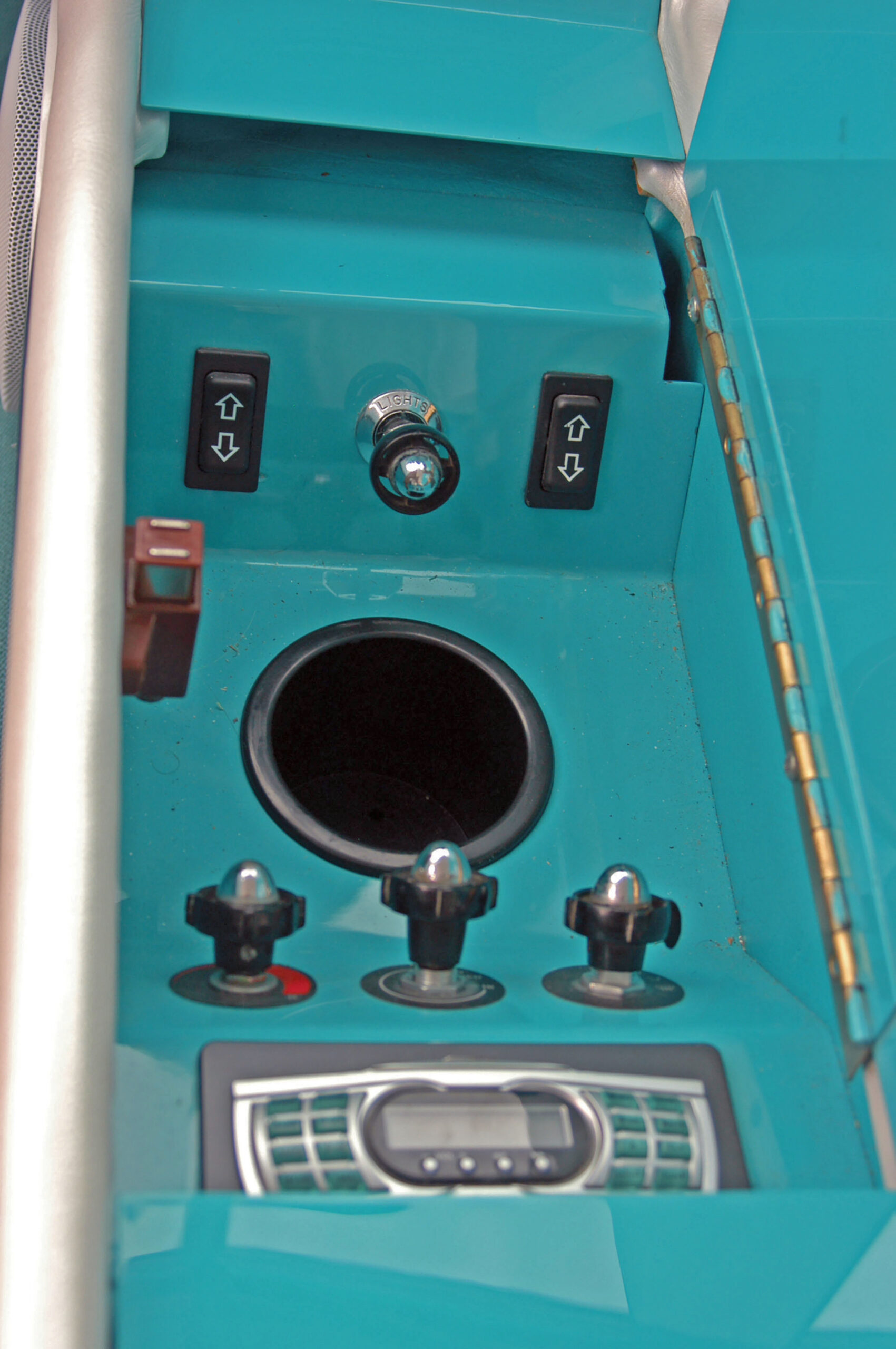
When it came time to tackle the interior, Ronnie Staples teamed up with Bob Clark Jr. to build the console and the dashboard, and the interior is nothing less than awesome. It embodies all the flavor of a ’50s concept car, with a full-length console and a molded dashboard with hooded gauges from a 1959 Chevrolet mounted dead center in the dash. A/C vents are all cut into the dash in the same pattern and the Vintage Air unit keeps the cool air flowing. The dashboard and console were painted 1957 Chevy Tropical Turquoise, and the rear package shelf was also done in sheetmetal and painted the same color. The thought behind this was simple: Ronnie wanted to see the same colors looking through the front or the rear of the car, a small detail but one worth doing. The console holds the hidden radio, the ignition switch and the windshield wiper controls.
After all the fabricating and painting were complete, the coupe went to JR’s Upholstery in Venice, Florida, where pearl white vinyl was stretched over the Mustang bucket seats, and the center console splits yet another pair of bucket seats, making this a 1950 Ford business coupe 2+2. The door panels have a pattern stitched in them that carries the Ford theme, as it mimics the side trim of a 1956 Ford Victoria. The emblems on the side of the console once graced the garnish moldings of a ’50 Ford. The floor is covered in turquoise Corvette Daytona Weave carpet. Simply put, the interior on this car is stunning, and it truly does carry the feeling of a ’50s factory concept car.
Goodguys Recognition and Miles on the Road
Finally the coupe was complete in its latest rendition and it was time to hit the highway. The first attempted trip was to Goodguys Columbus, but a vibration in the transmission meant turning back after just 200 miles. The next attempt was to Jacksonville, Florida, for the Goodguys Southeast show, and while driving there Ronnie cut a front tire and had to roll into the show with narrow whites on the front and wide whites on the back. But the car must have still looked pretty darned good, as it was selected as one of the top six finalists for the Goodguys Custom of the Year. We caught up to Ronnie and his coupe at the NSRA Richmond show where we photographed the car, but as you can see, Ronnie not only builds neat cars; he drives the wheels off them, too.
Tracing This Custom Ford Coupe’s History
Still, everywhere he goes, people tell him they remember seeing the car in a ’60s rod magazine. To date no one has been able to produce the magazine with this car in it. Following the car’s history back to 1979, Ronnie found out that it was an old custom supposedly built in New Mexico in the late ’50s, and the completely rust-free body would seem to bear that out. However, should you know anything about the history of this great custom, let us know.