Origins of the ’63 Chevrolet
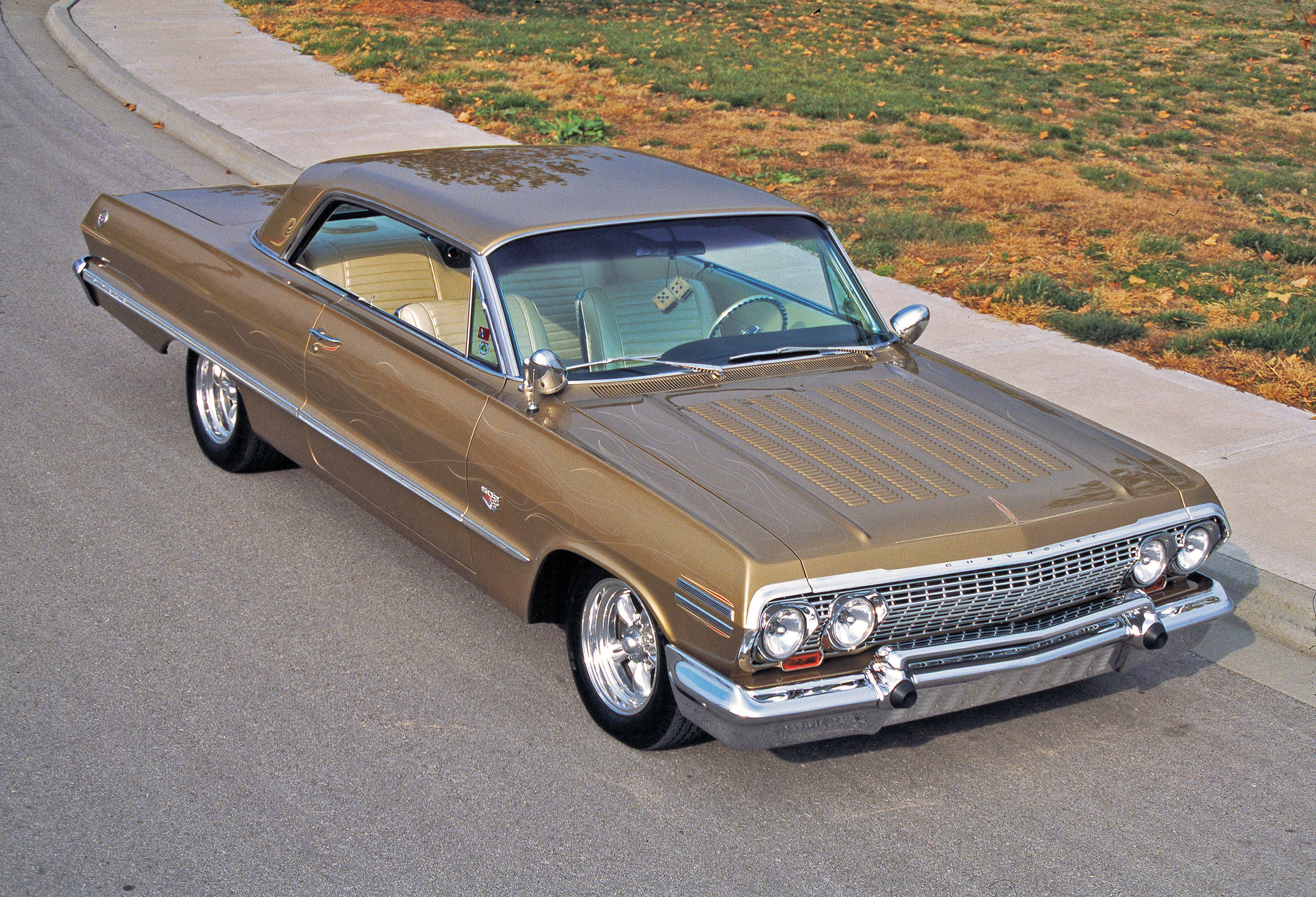
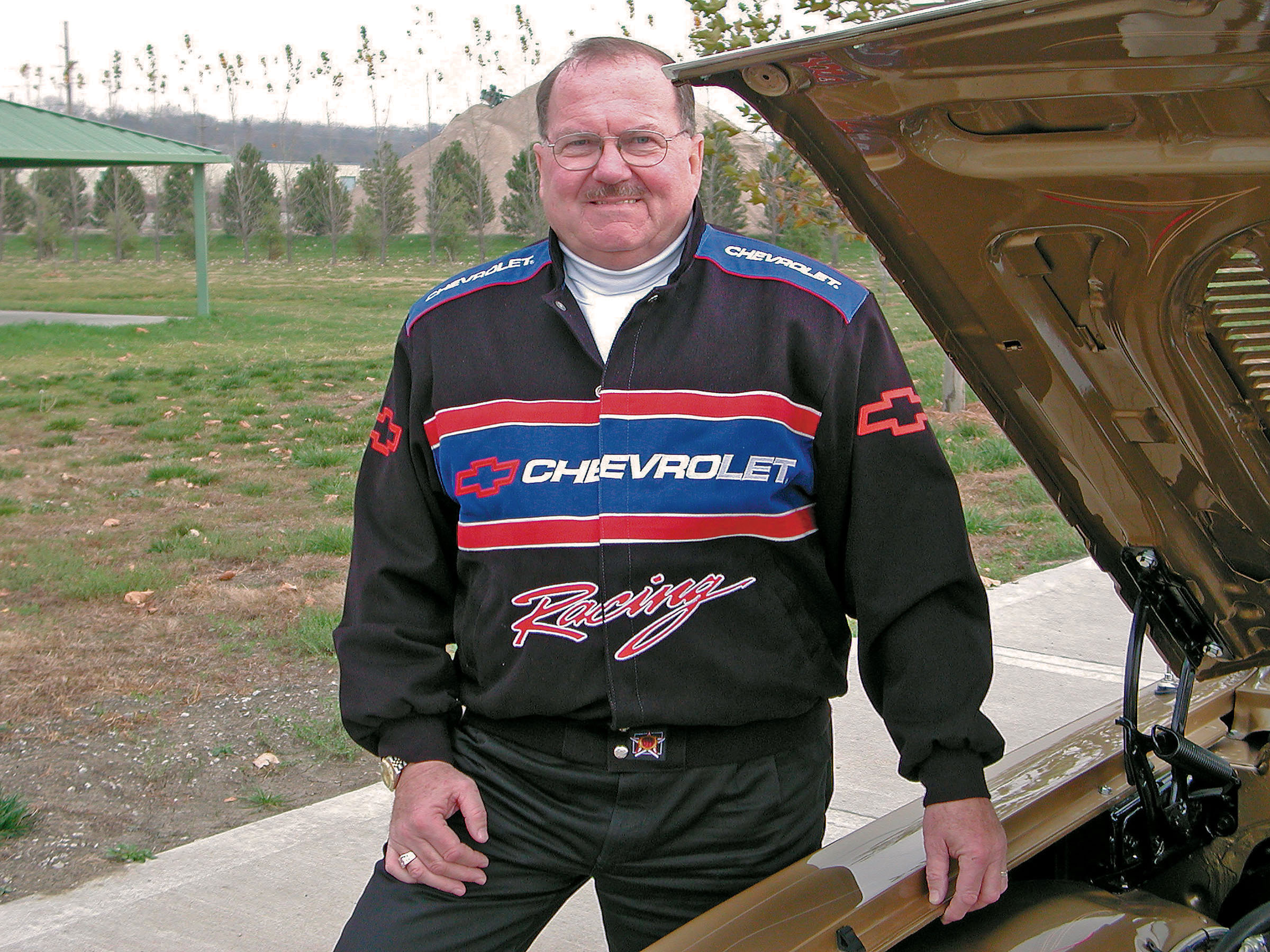
This ’63 Chevrolet was built in September 1962 at the Van Nuys assembly plant in suburban Los Angeles. He purchased this anniversary gold car from Kent Oliver as an original, rust-free, 38,000-mile, 340hp 409 Super Sport. Oliver, a friend from Minnesota, had recently bought it from the original owner, now in Arkansas, and when Lavine saw the car sitting alone in an empty garage in Duluth, Minnesota, one snowy January day, he fell in love with it. Within minutes, he owned it and soon hit the road for home in Kansas City, a 595-mile trek. Mind you, this is a guy who has owned a bunch of ’55-’57 Chevys, two ’40 Willys, 16 Corvettes and many other beauties. According to Lavine, its original mileage today is about 50,600.
Vision for the Transformation
Lavine’s plan, once the snow melted, was to transform the Super Sport Impala into a true representation of muscle and brawn, as well as a pure show-and-go vehicle. Not a trailer queen. This guy grew up with all four tires on the pavement with the pedal to the metal. The car was a torque monster loaded with options, including tilt steering, Wonderbar AM/FM radio, power steering and power brakes. Sometime in the late 1980s, Lavine pulled the original motor and dropped in a 535hp/474ci W-motor built by Day Automotive in Kansas City. This bad boy also put out 545 lb-ft of pavement-ripping torque. It ran almost as well as his old F-4 fighter. A Muncie close-ratio four-speed gearbox and a 3.70:1 positraction rearend with Moser axles and dual upper control arms finalized the drivetrain.
Paint, Body, and Exterior Upgrades
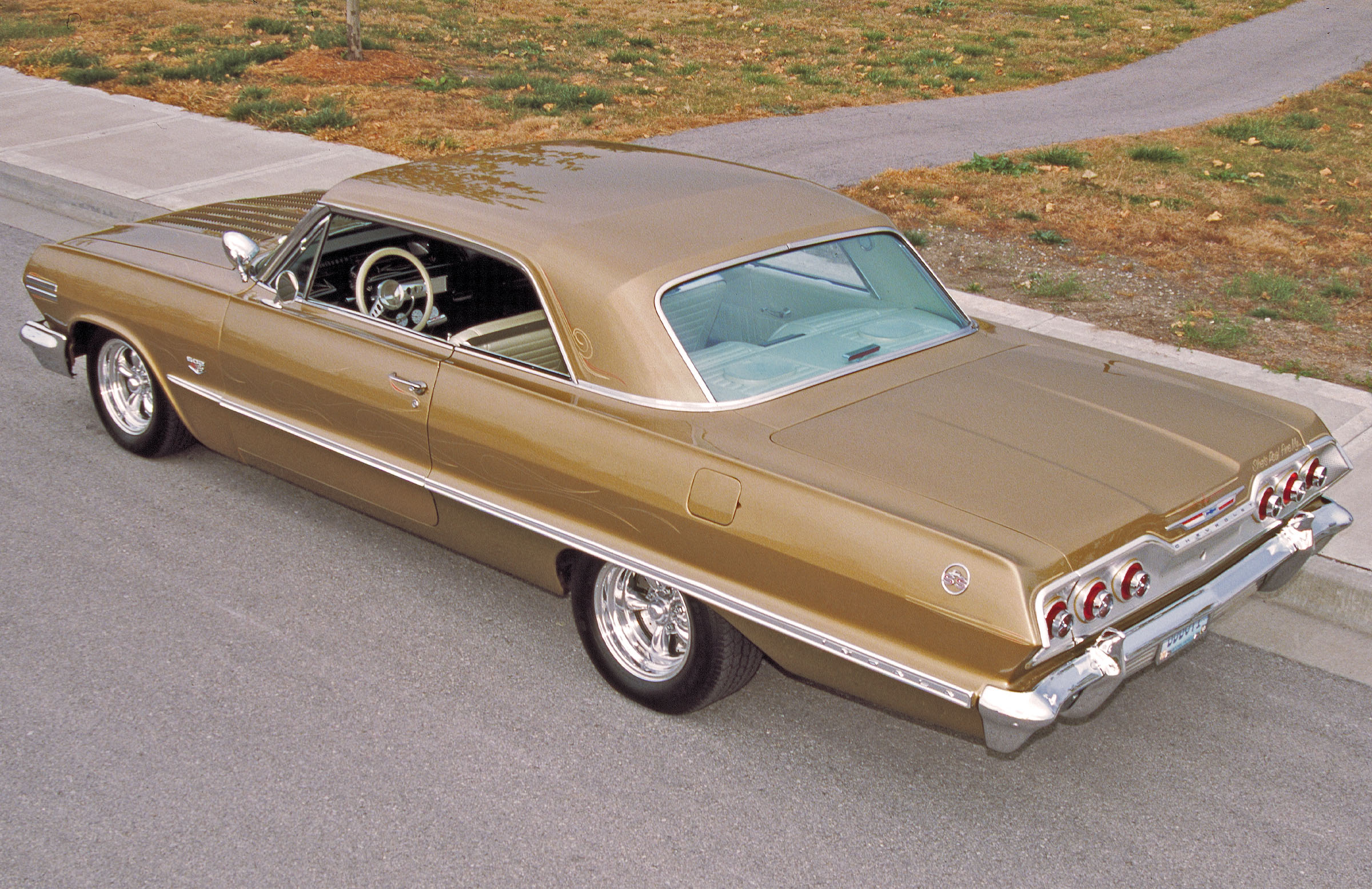
The rest of the car was just as sizzling. Polished American Torq-Thrust 15-inch wheels rotate Goodyear P225/70 front and P255/70 rear rubber. Lexington, Missouri’s Donnie Shafer laid the DuPont Anniversary Gold paint. Bob Bond from Lee’s Summit applied the ghost flames. Hot Rod Express in Blue Springs color-sanded the paint and applied many coats of clear. In all, it took four months to do all the paint-finishing work. The bumpers were show-chromed, and Moon dual dummy spotlights were added, along with a new hood with 328 louvers. The headlights are Jag-style glass lamps by Lucas. A super-rare new-old-stock (NOS) grille, eyebrow chrome and a hood lip molding came from Phil Reed’s Classic Motors in Kansas City. The factory side trim also is new-old-stock, as are the taillight assemblies. The headlight bezels have been chromeplated and the front license plate aluminum has been louvered. The front suspension was lowered 2 inches with Year One shortened front coil springs. Station wagon rear coil springs were cut slightly to lower the rear 3/4 inch for a ’60s nose-down-rake stance.
Interior and Comfort Upgrades
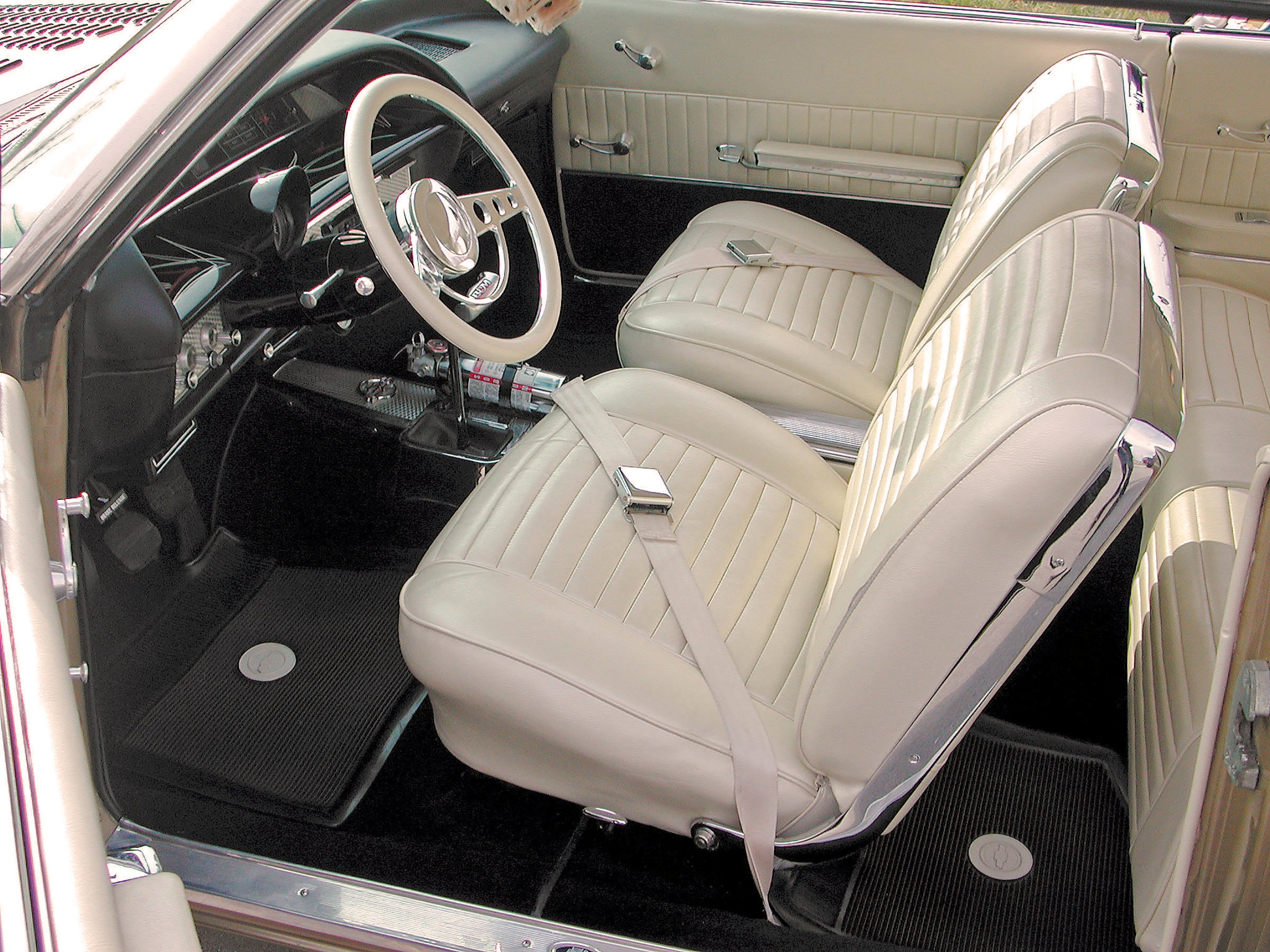
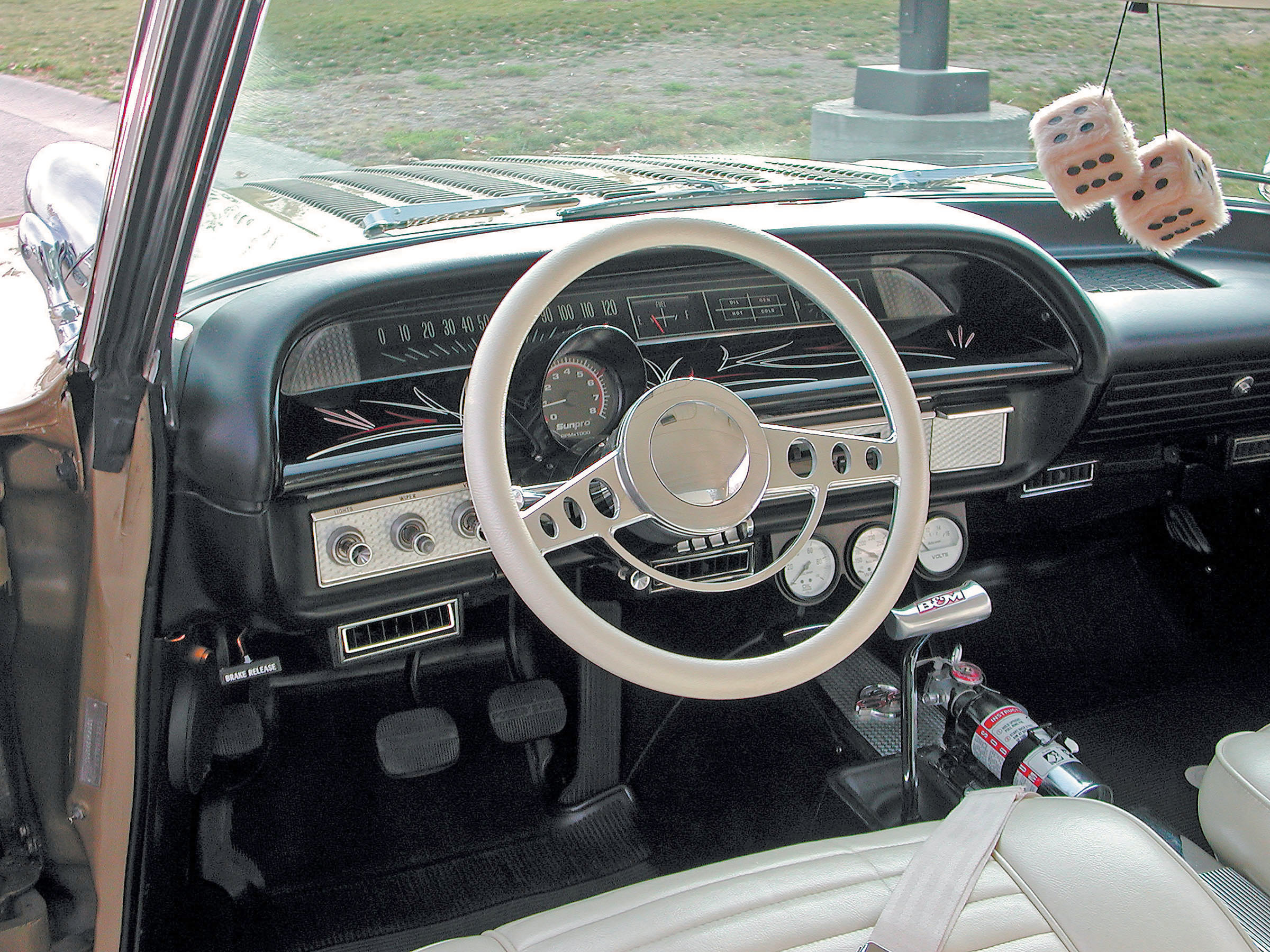
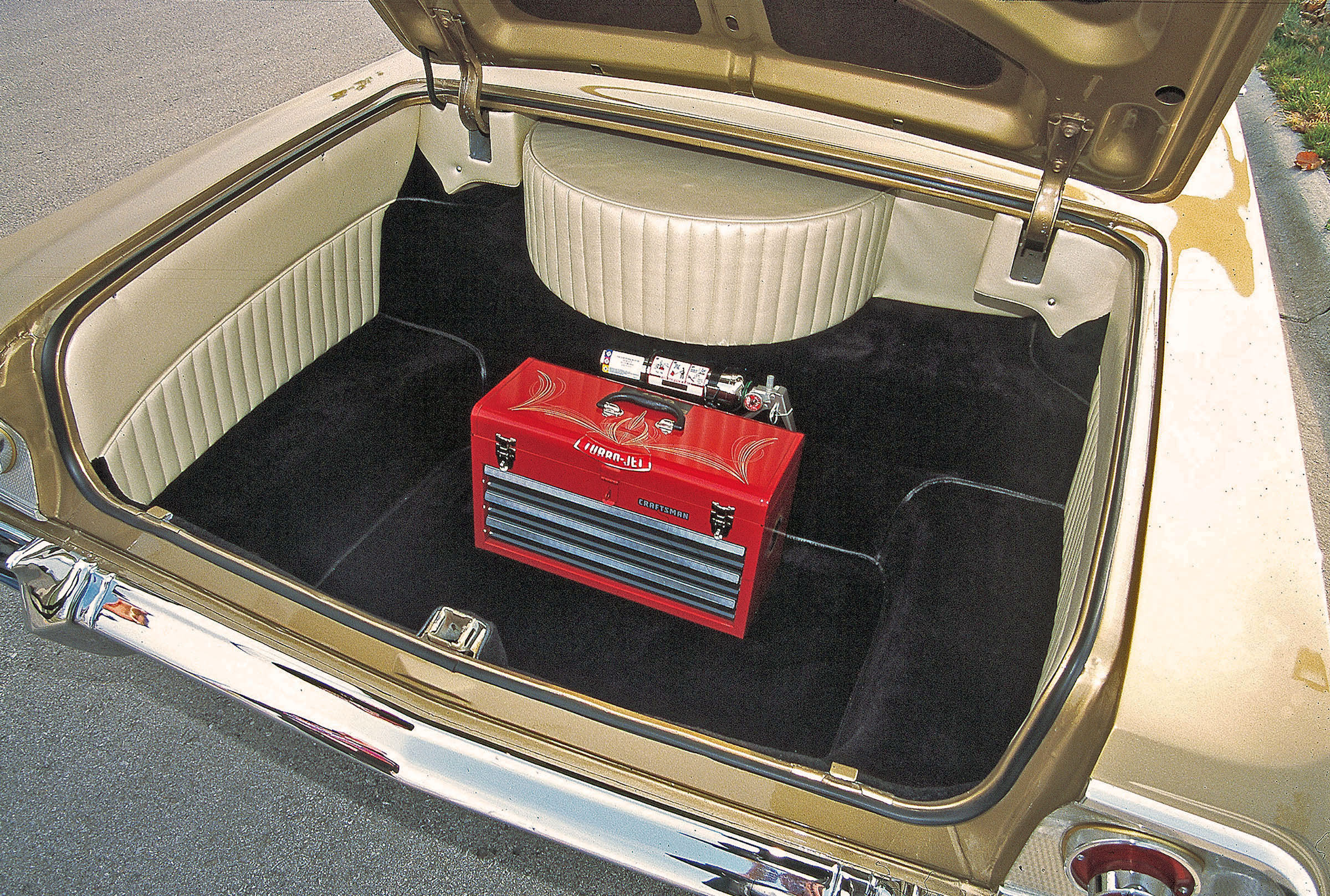
Hot Rod Express installed a champagne interior with black-wool Egyptian mohair carpet. Extras include a Billet Specialties steering wheel, Stewart-Warner gauges and a Kenwood stereo with a 700-watt, 10-disc CD player. For increased sound and clarity, an Infinity amplifier and speakers were installed. A vintage Sun tachometer fits in the dash center where the small factory original once was. A trio of white-faced Auto Meter 2-5/8-inch gauges is mounted at the dash bottom and monitors oil pressure, water temperature and volts. Look closely and you’ll see ’60s-era pinstriping on the dash, thanks to Eric Campbell of Independence, Missouri. Other interior extras include Billet Specialties dash-mounted light and accessory knobs and a third brake light inside the rear window.
Show Circuit Success
When the transformation was completed, Lavine and his wife, Judy, drove the bad Bow Tie to many shows and won just about every award. They also drove back and forth to Duluth four times to prove that show-and-go cars can be driven and still win show awards!
Modernized Powertrain Upgrades
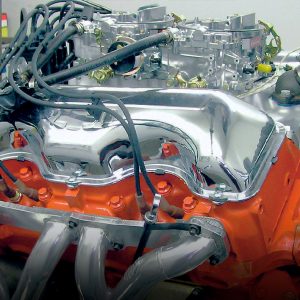
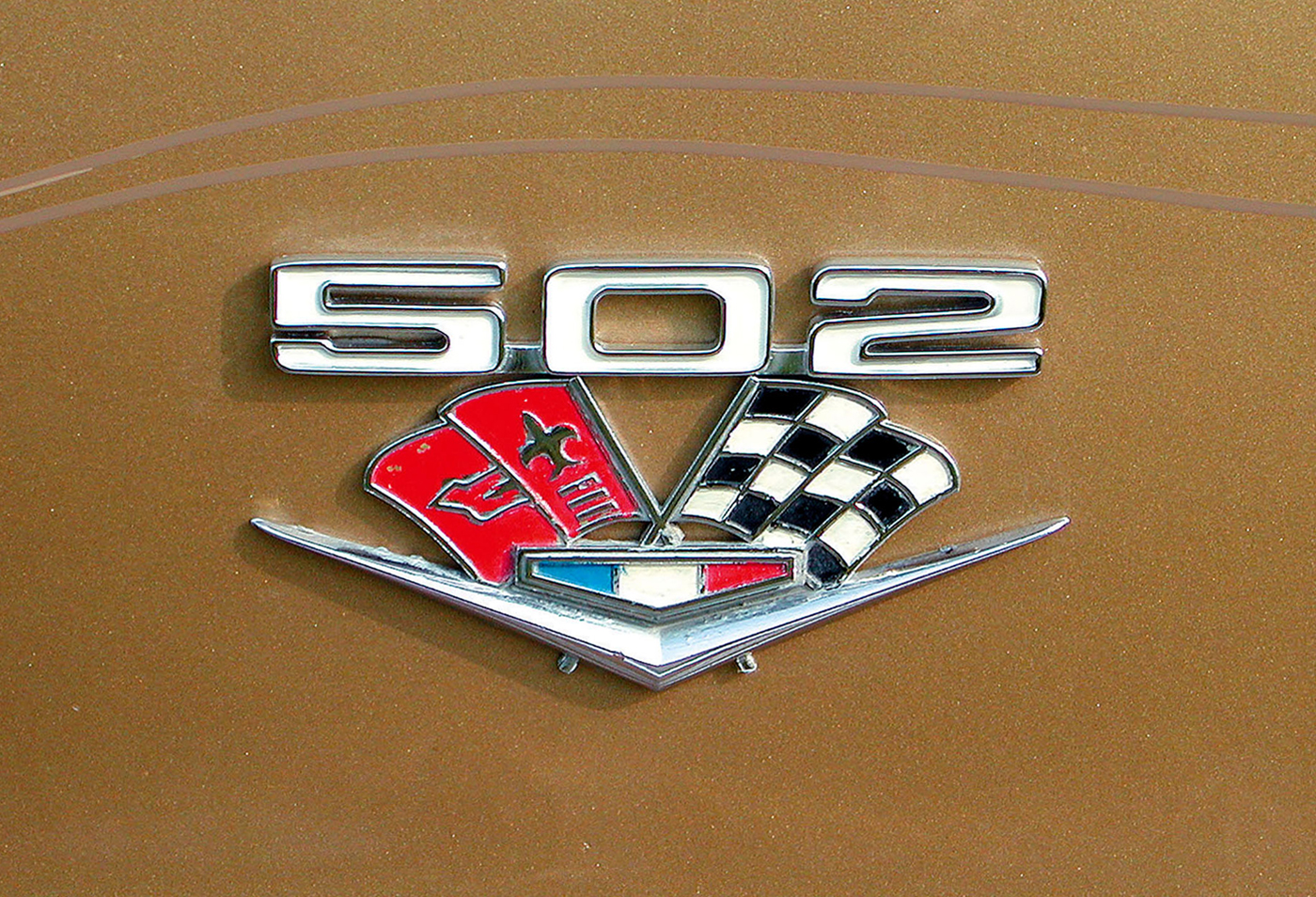
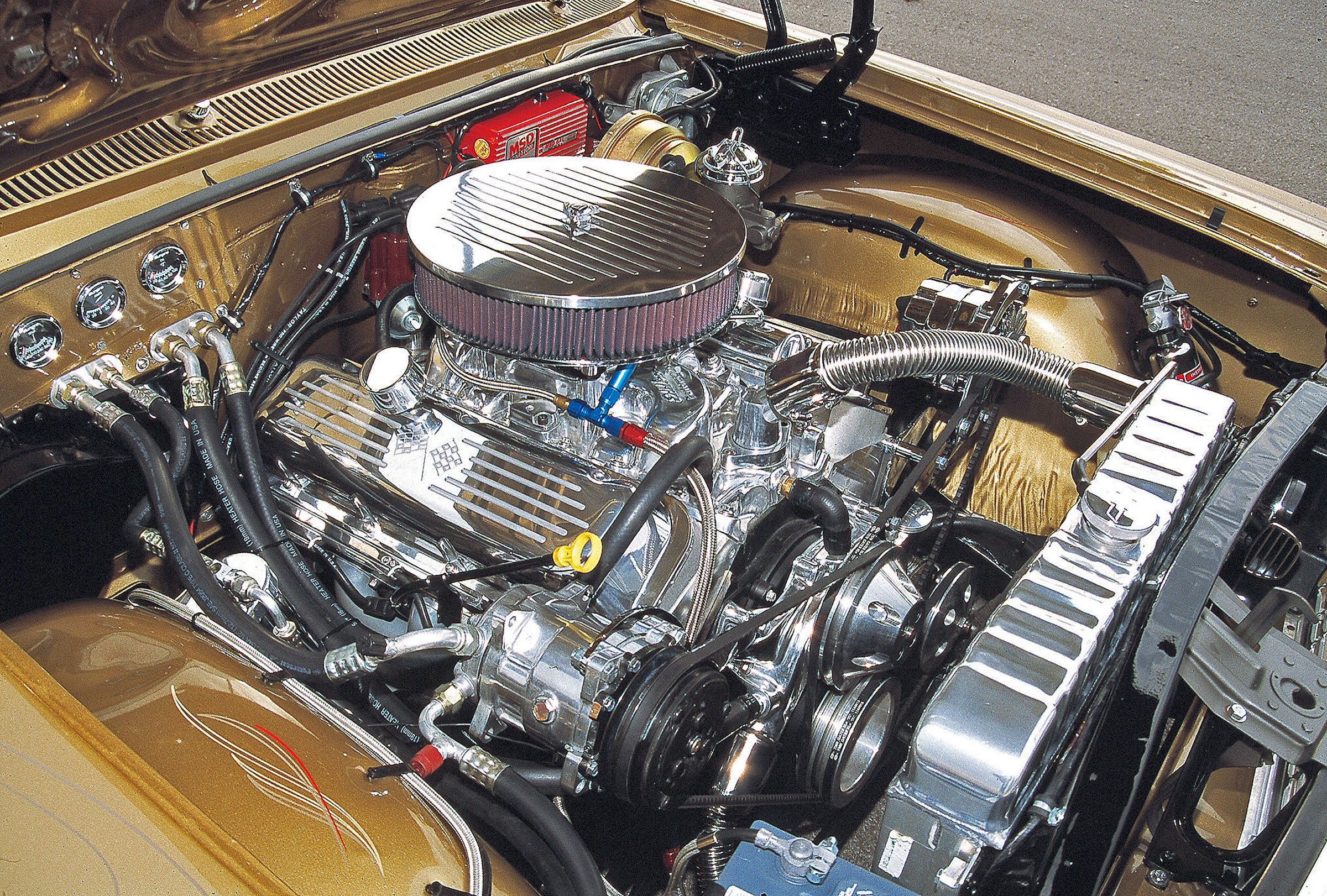
In 2001, Lavine felt it was time to bring the car into the 21st century. To do so, he pulled the 474 ’09 and replaced it with a warmed-over 502 crate motor featuring aluminum heads and a lot of aftermarket goodies. The cam is a Crane roller with 0.613/0.634 lift. Firing the cylinders is a Mallory Hyfire VI system with Taylor spark plug wires. An Edelbrock polished dual-plane manifold with a Demon 850cfm carb serves as the induction. Helping feed the 502 is a Holley electric fuel pump. Scavenging the exhaust are ceramic-coated Sanderson headers, a 3-inch-diameter dual-exhaust system and a pair of Flowmaster mufflers. Billet Specialties valve covers and air cleaner (with a K&N filter) help set off the theme of “all show and go.” The braided-steel engine hoses are from Cool-Flex, and the radiator is a polished Griffin unit with dual electric fans. A chromed alternator pumps out 140 amps so the stereo can blast away on a hot day with the air conditioning on. You can bet Lavine installed a top-quality Vintage II polished A/C system. Thanks to Bob Bond, the engine compartment is tastefully pinstriped. The entire engine and engine compartment have received hours of detailing.
Restored Driveline and Awards
Recently bolted to the potent 502 is an equally stout Richmond six-speed gearbox actuated by a Hurst Pro shifter. The two-piece driveshaft features a solid center support bearing. Every inch of the car has been restored or over-restored to better-than-new specs. The car has been in 23 shows and has received 22 first-place awards, one second-place, eight best interior, six best engine and four people’s favorite.
Performance and Final Thoughts
Oh, yeah, Lavine says the car rides like a Cadillac but runs a little faster. Try 11.90s at 116 mph at Kansas City International Raceway. Lavine’s ’63 is indeed one bad Bow Tie.