Meet Paul Jacobs: A True Mopar Enthusiast
Paul Jacobs is a Mopar nut. Now, before all you other Mopar owners think we’re being derogatory, he admits it, and “moparnut” is part of his e-mail address. Jacobs has two jobs: The first is as a police officer, and the second is as the owner of Jacobs & Angelly Restorations (812/454-1496) in Evansville, Indiana. He earned his credentials as a Mopar nut thanks to the many cars that have occupied his garage over the years, including a ’69 Charger, a ’69 Charger R/T, a ’69 Dart and a ’64 Sport Fury.
The Friendship That Led to a Build
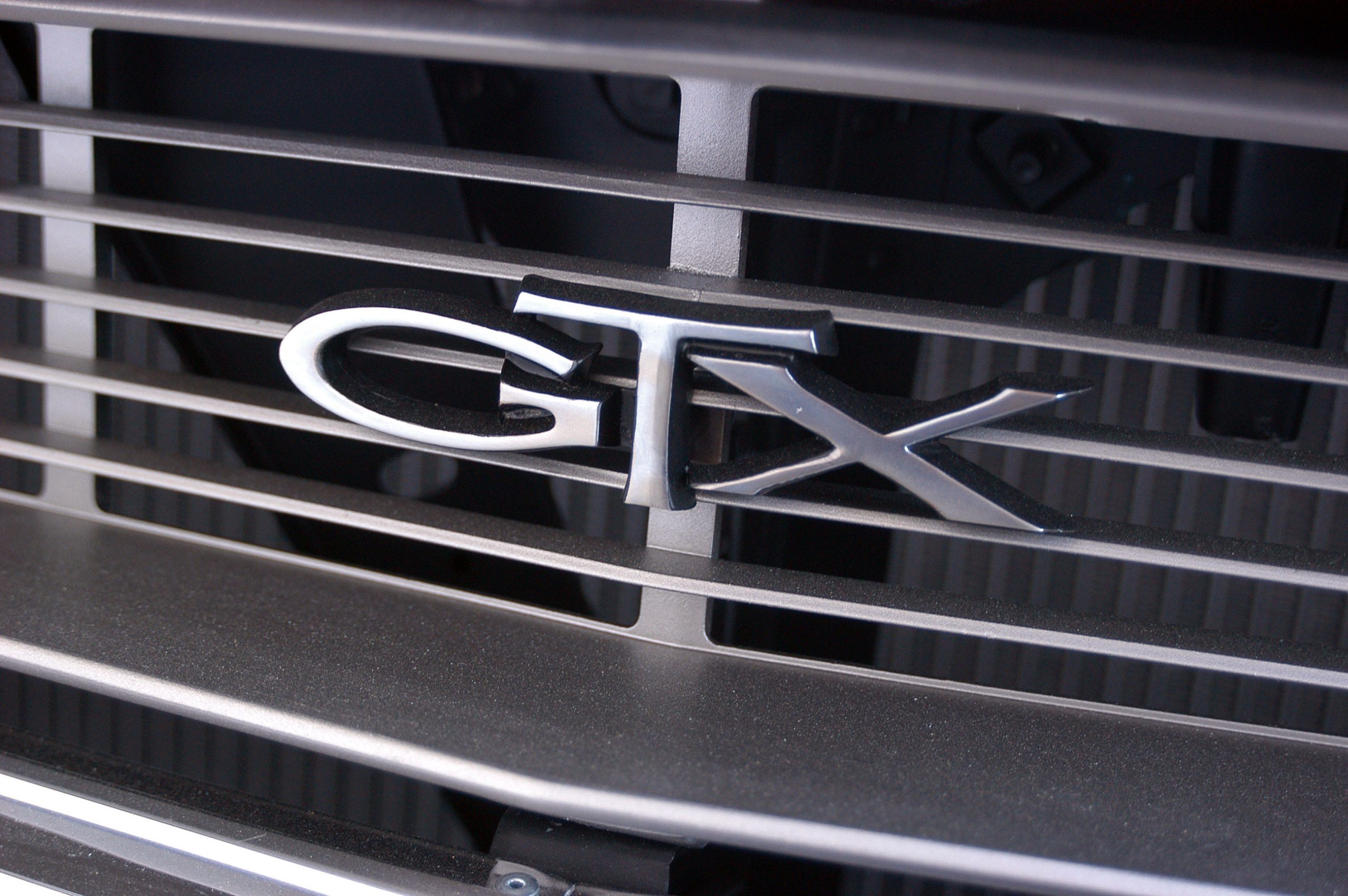
Mopar nuts tend to congregate, and one of Jacobs’ friends is Mike Crowell, who owns a ’70 Challenger convertible powered by a 5.7-liter Hemi. Crowell jumped at the chance to buy one of the first available 6.1-liter Hemi engines, and though he did get it, he didn’t have a car to put it in. That’s when Jacobs and his partner, Troy Angelly, agreed to stuff the engine in Jacobs’ ’69 GTX.
The Challenge of a Tight Timeframe
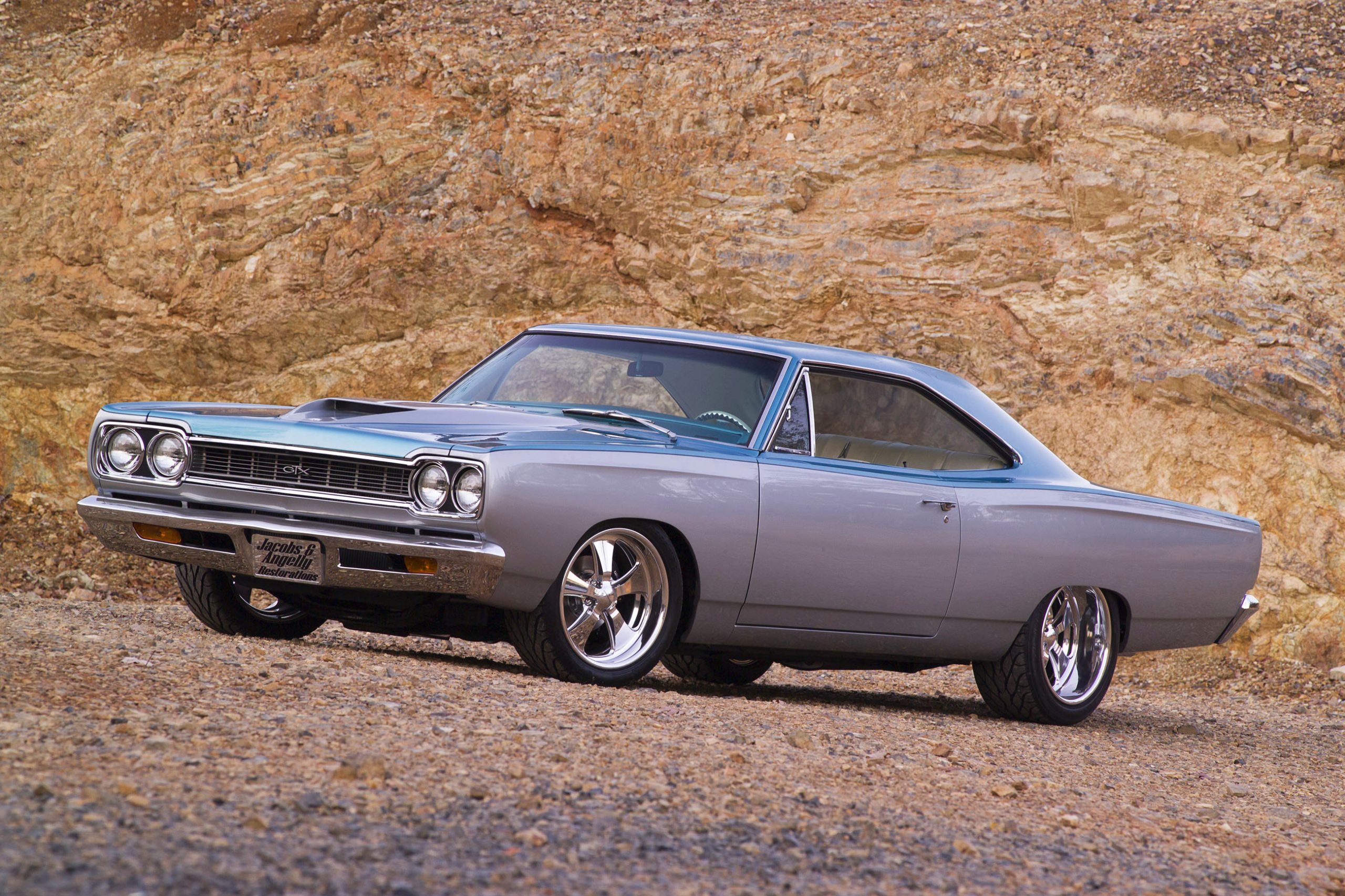
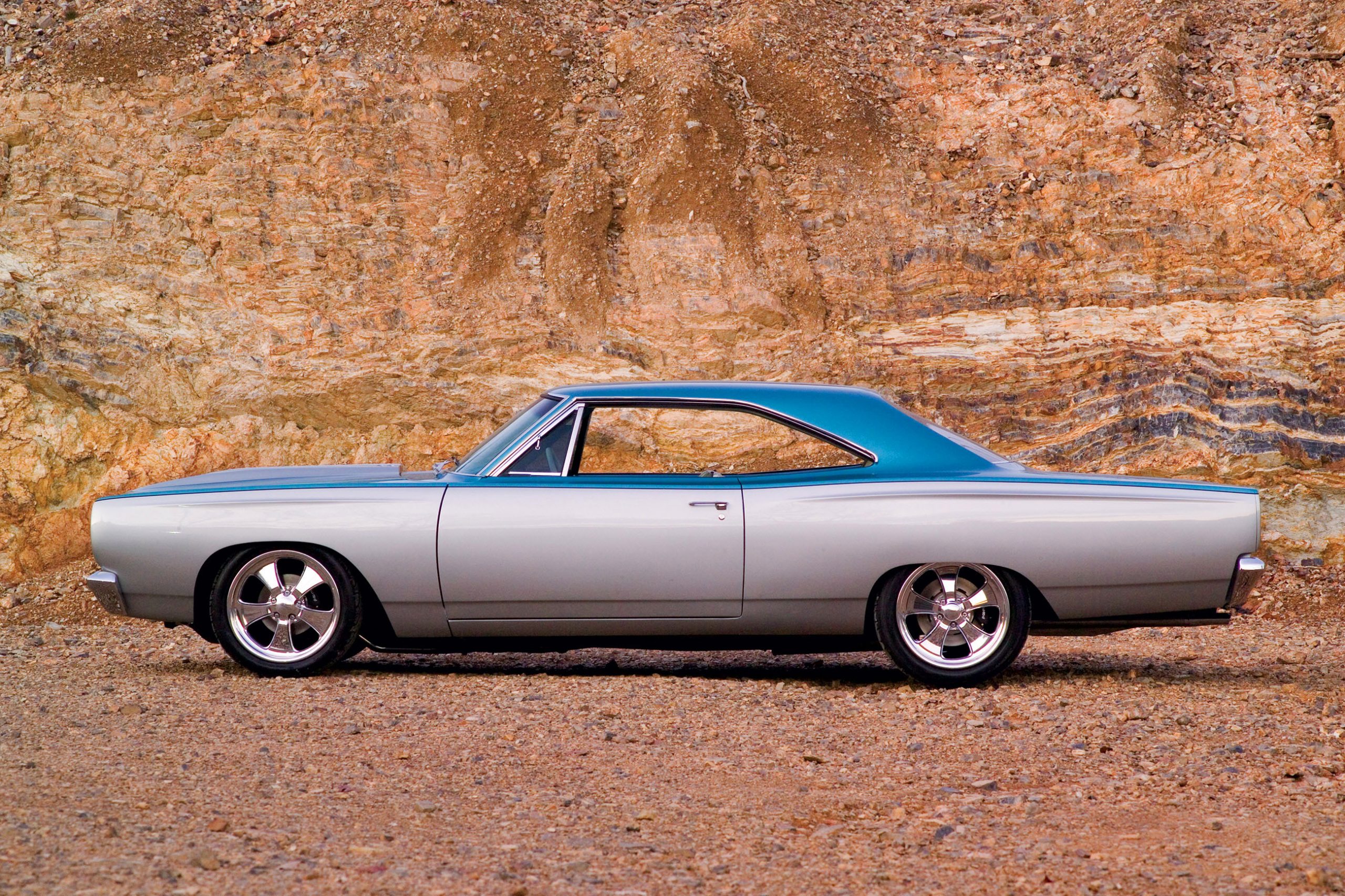
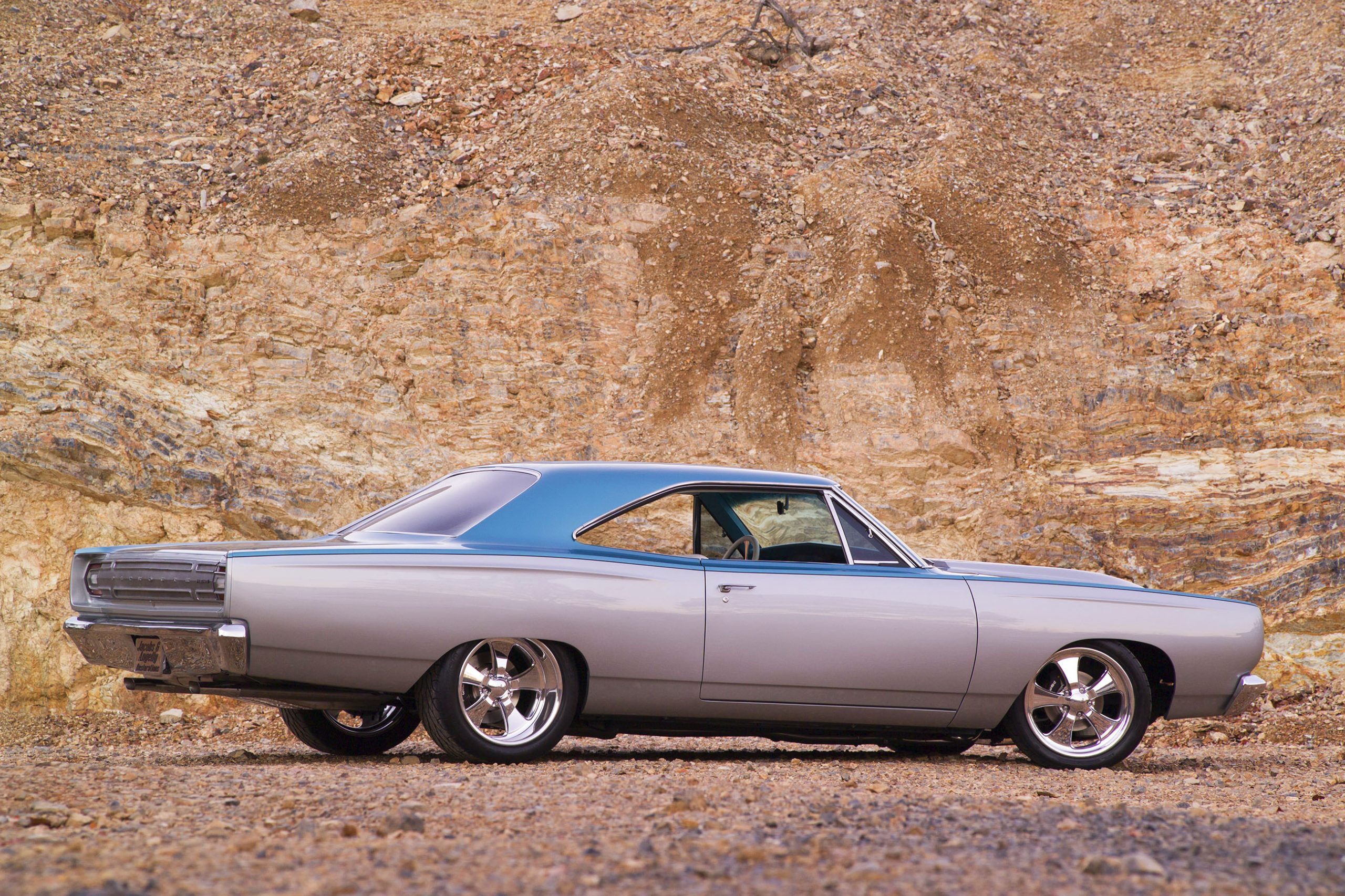
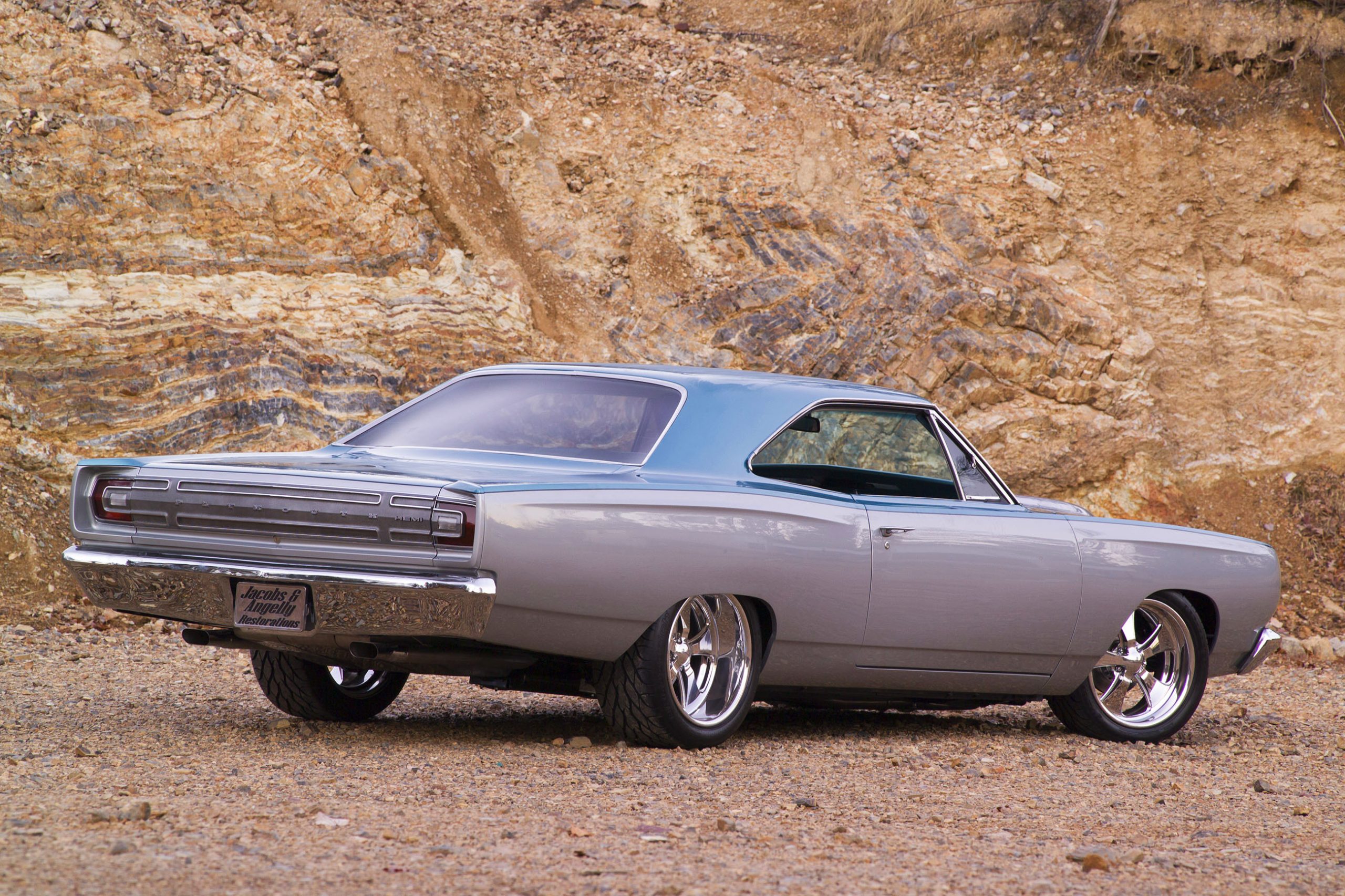
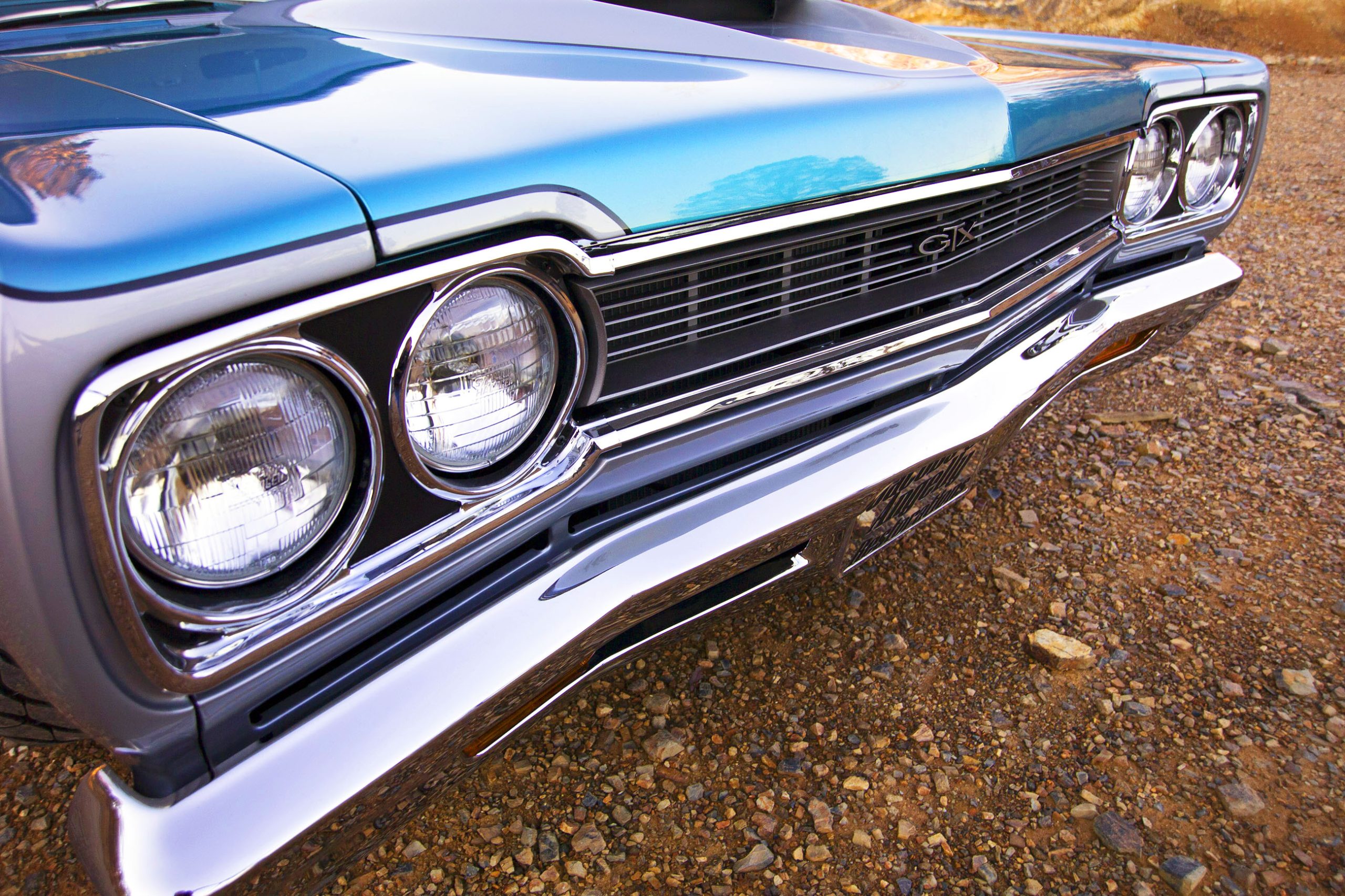
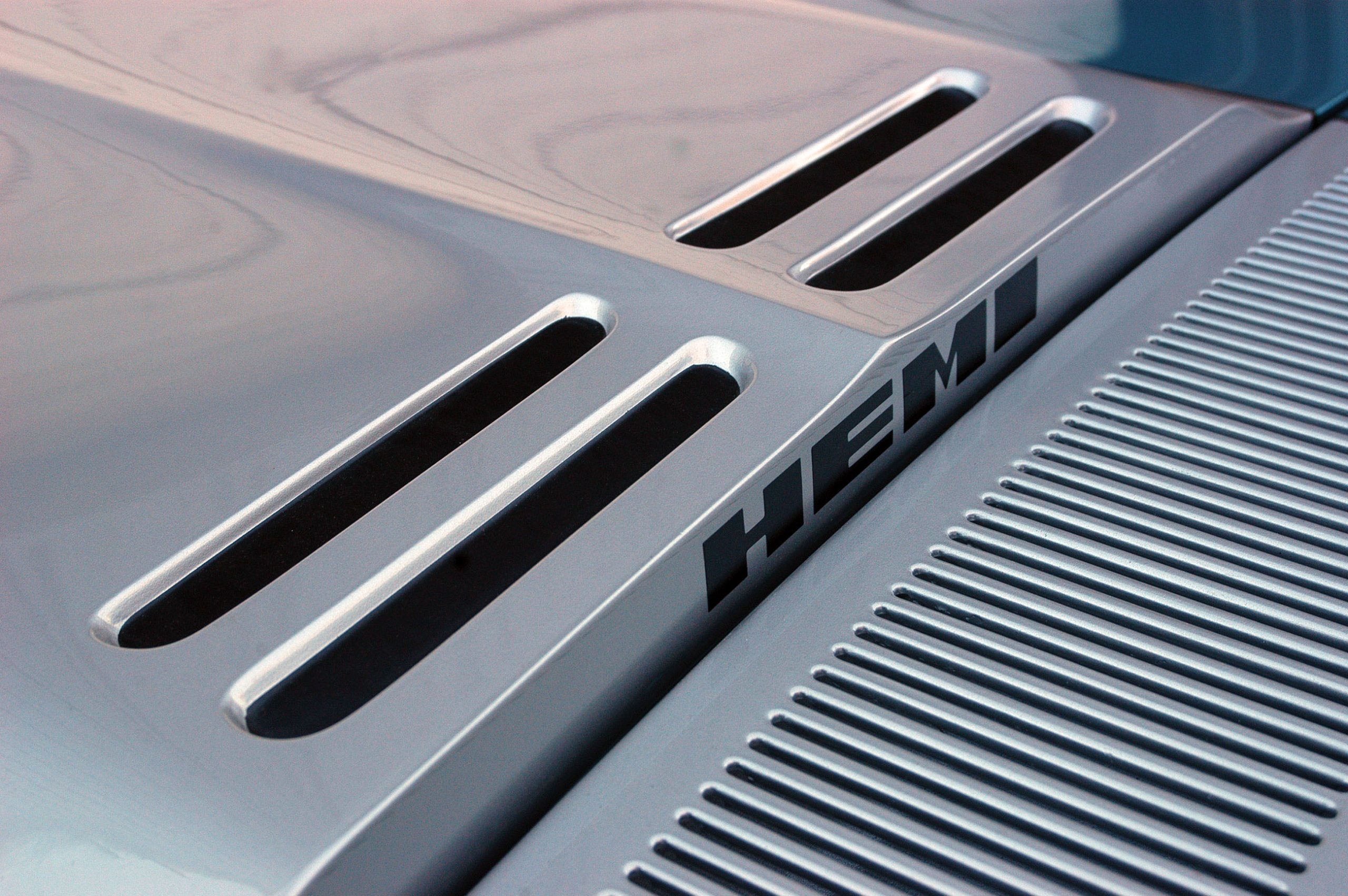
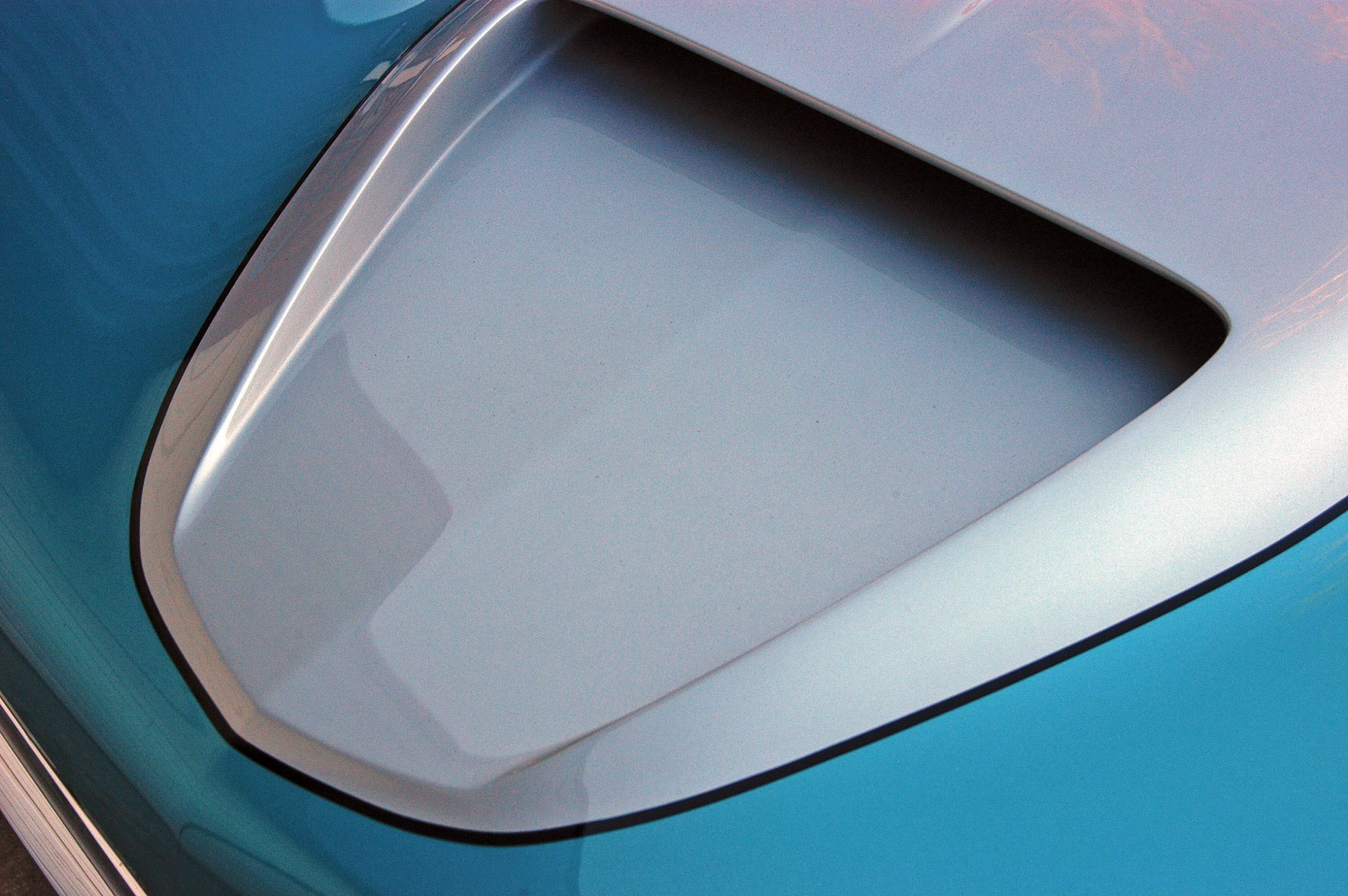
The timeframe to build the car was extremely tight, but since Jacobs and Angelly had helped Chip Foose overhaul a ’69 Road Runner earlier in the year (a week-long total rebuild), they knew that such a job was possible if they worked hard. Angelly began with the body, and fortunately they didn’t need to make many repairs or changes. The alterations they did make were in the name of smoothness and included jobs such as filling the corner marker lights, mirror holes and antenna holes. The most noticeable change is the new hood, which is a blending of hoods from a ’68 Satellite and an AAR ’Cuda; this change alone consumed 80 hours of labor. For the most part, though, the rest of the bodywork consisted only of repairing minor dings in the car. When Angelly was done, he applied the two-tone paint scheme consisting of DuPont Q3 Teal over AA1 Silver, both factory colors.
Custom Interior for a Modern Look
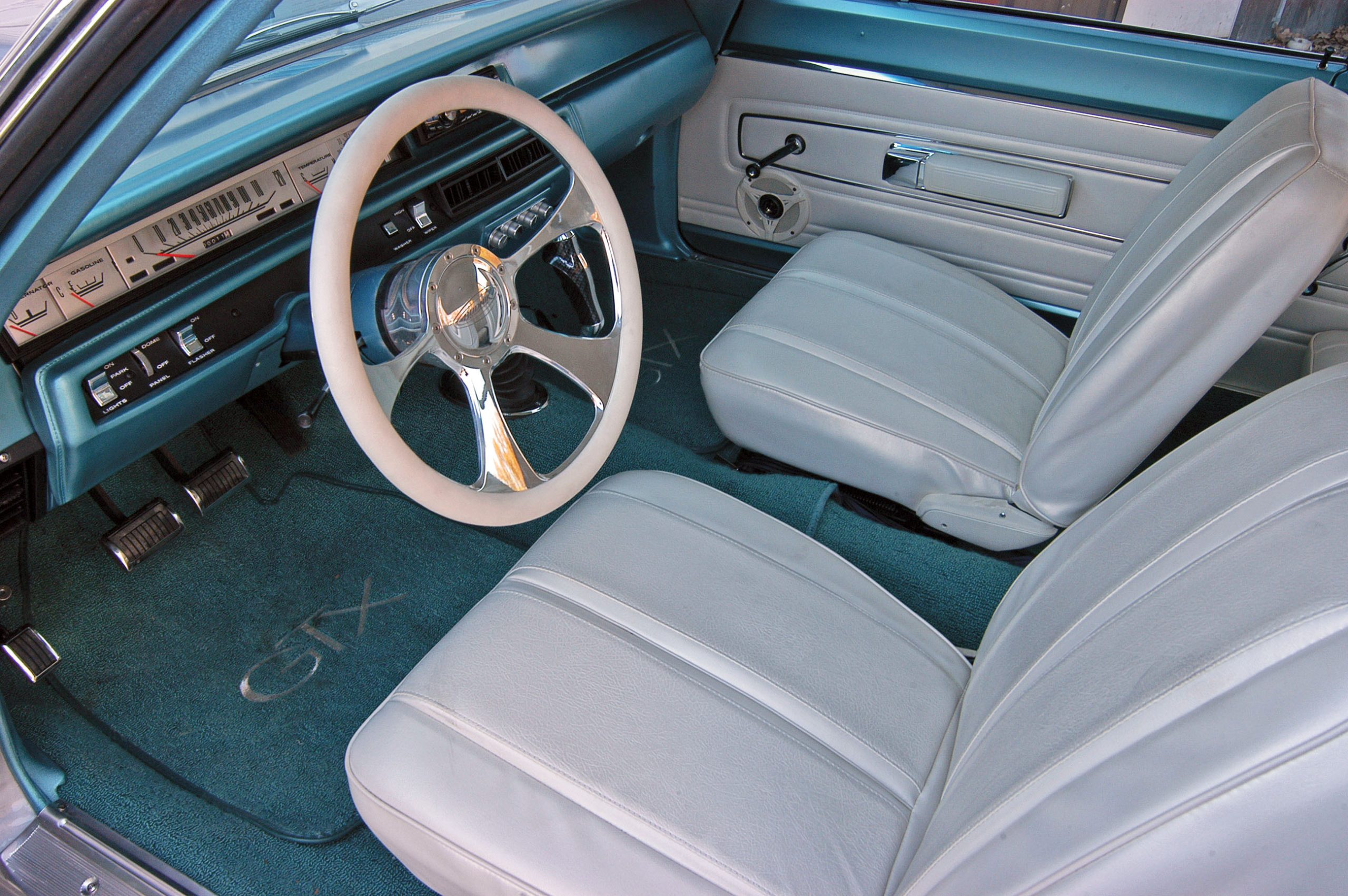
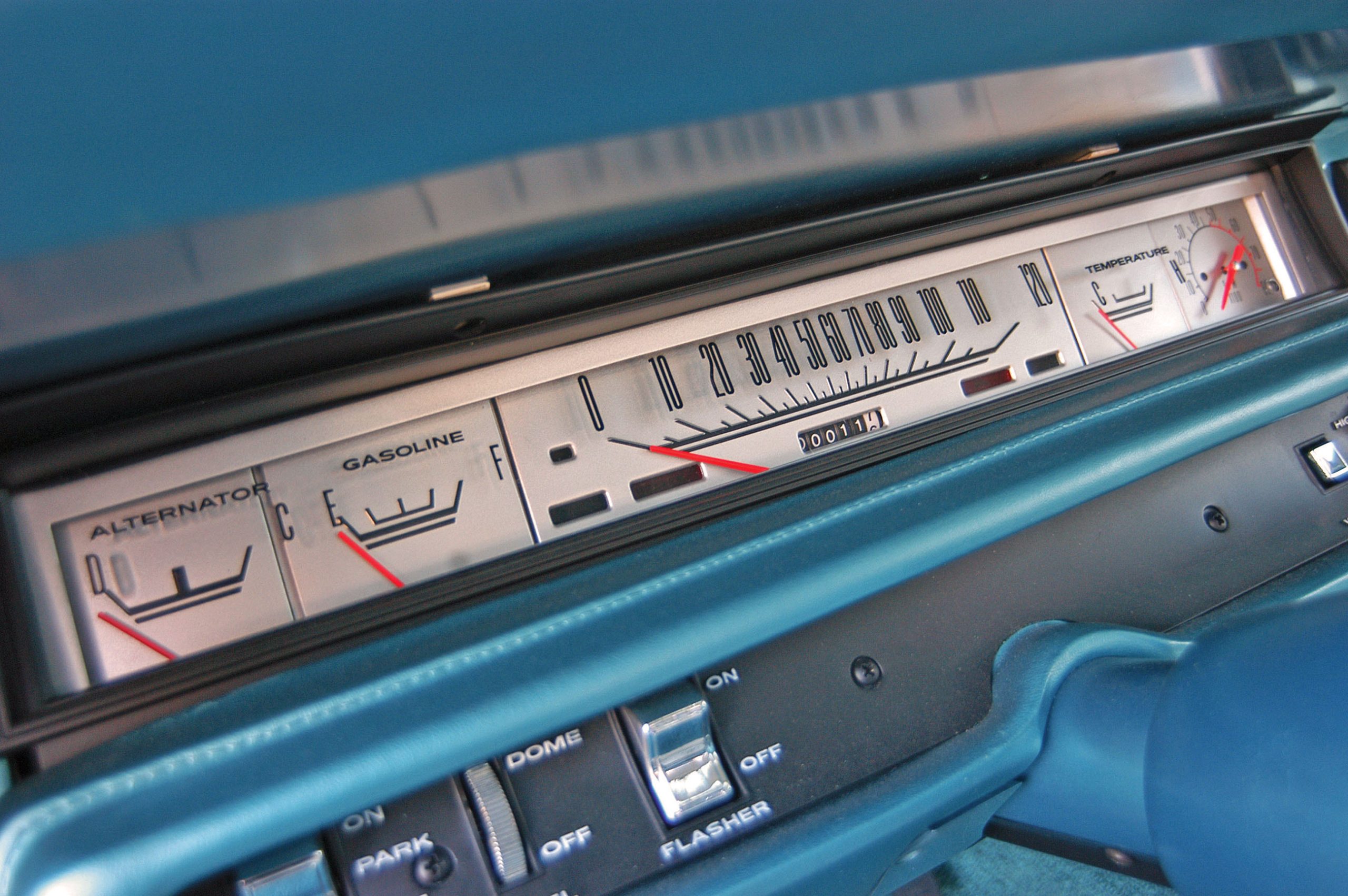
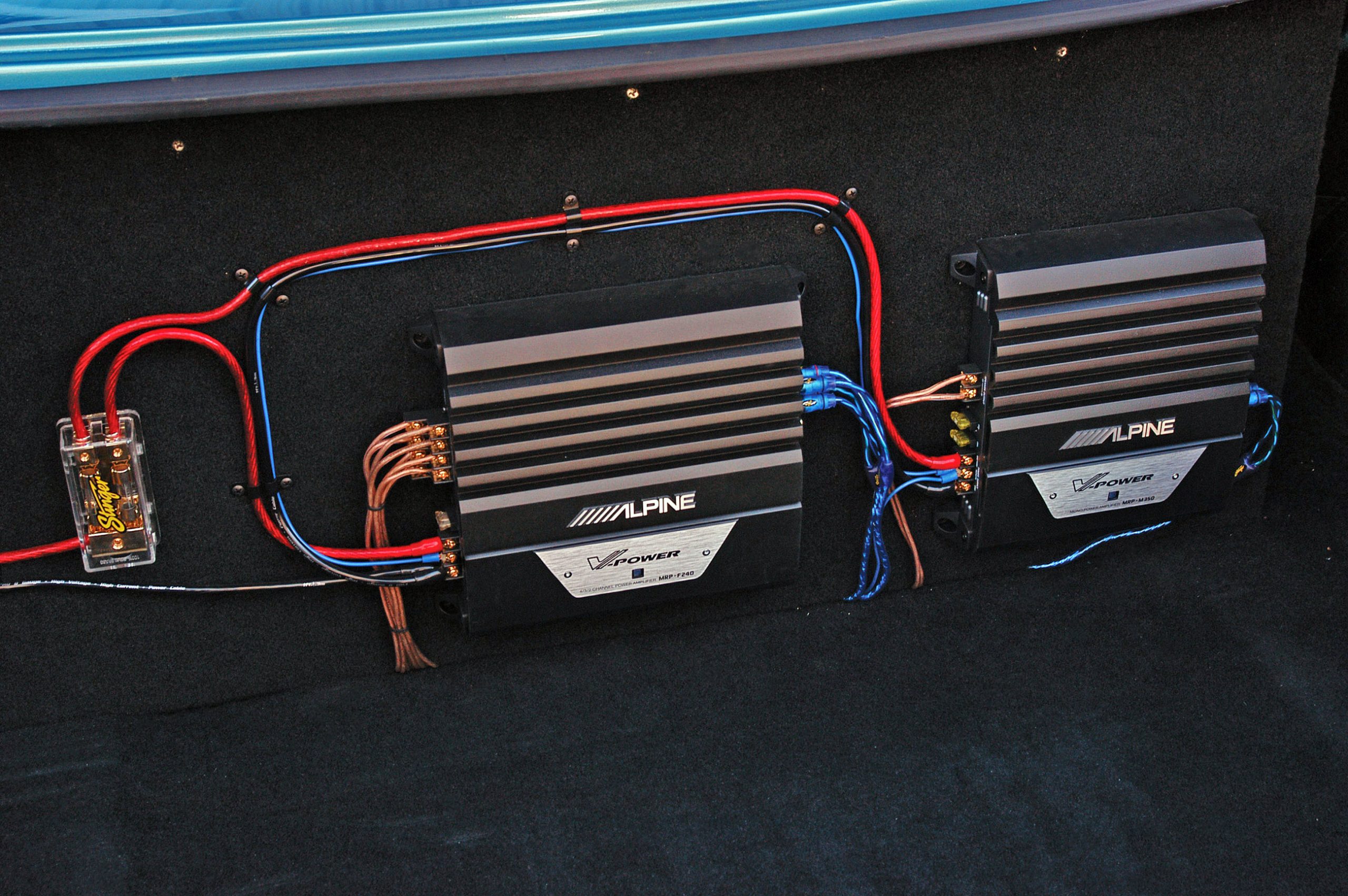
Next, Jacobs and Angelly teamed up on the interior, which they upholstered in white pearl vinyl. This material covers the stock-style seats and door panels, and a matching shade of leather wraps around the Budnik Famosa steering wheel. The steering column and dash are painted and upholstered to match the Q3 Teal exterior, and the dash contains the stock-style cracker box instrumentation and a Vintage Air climate control unit in place of the old cigar lighter and ashtray. Above the A/C vents sits an Alpine CD stereo head, which works with a pair of amps to feed a quartet of speakers in the cabin and two more Kicker component subwoofers. A TKO shifter extends up from the teal carpet on the floor, terminating in a carbon fiber and billet pistol grip shift knob that blends Mopar tradition with current trends and styling.
Modernizing Performance and Handling
At this point, Jacobs and Angelly had an exceptionally clean-looking GTX, but this was also the time to start making changes that would really modernize the car. Fortunately, much of the original frame and suspension was suitable to reuse or replace with stock components. However, other changes reflect current attitudes regarding modern muscle car performance. Changes to the front suspension resulted in a 2-inch drop that cures some of the traditional muscle car nosebleed stance. New disc brakes from Wilwood incorporate four-piston Dynalite calipers to provide stopping power that previous generations of Mopar faithful couldn’t have imagined. Urethane bushings throughout the suspension tighten and firm the ride. At the rear of the car, a narrowed rearend turns 3.91 gears and another set of Wilwood disc brakes. The Plymouth rolls on a set of 18×8 front/18×10 rear Budnik Fontana wheels tucked inside BFGoodrich KDW2 Z-rated tires.
Swapping in the 6.1-Liter Hemi
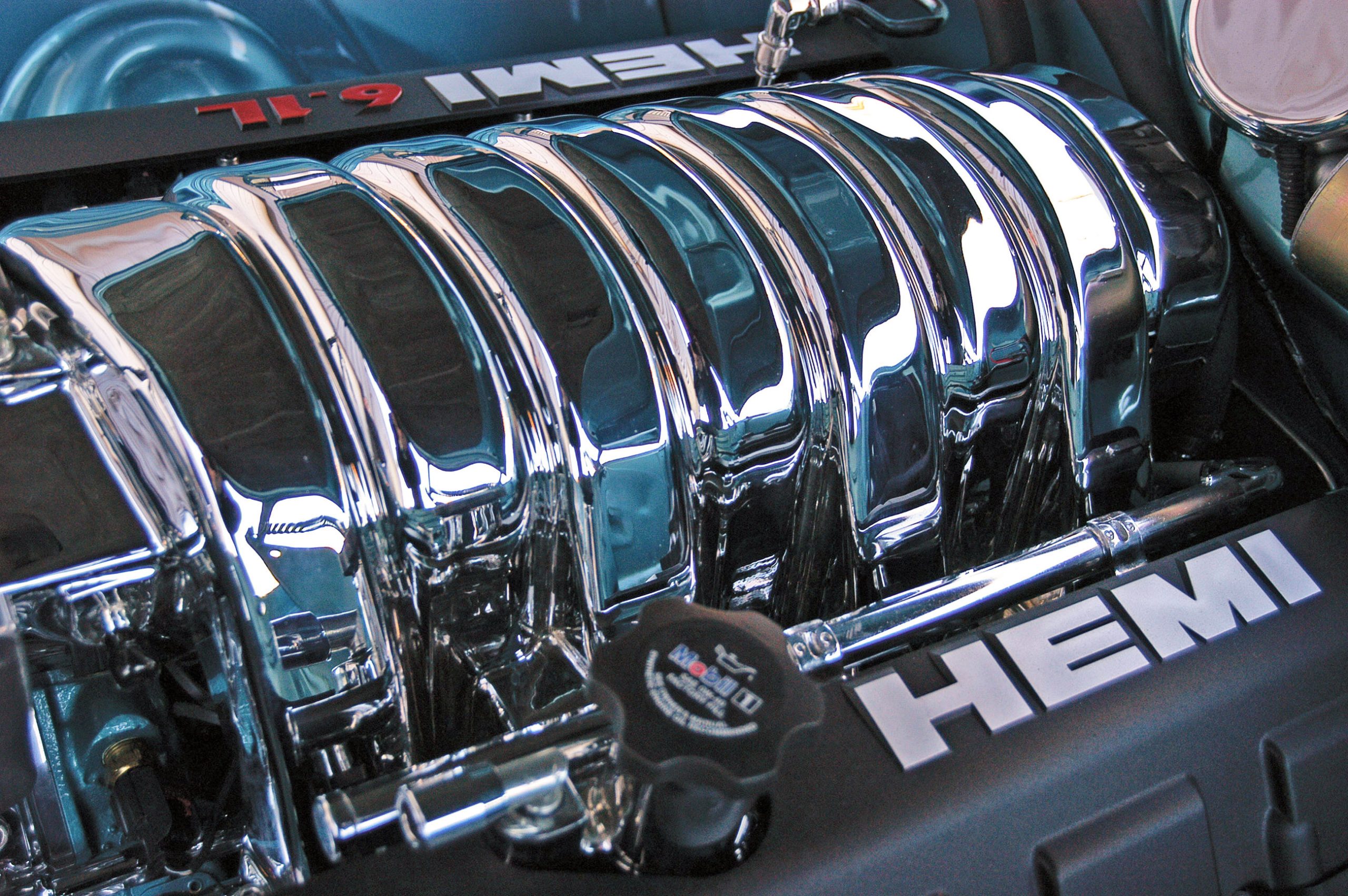
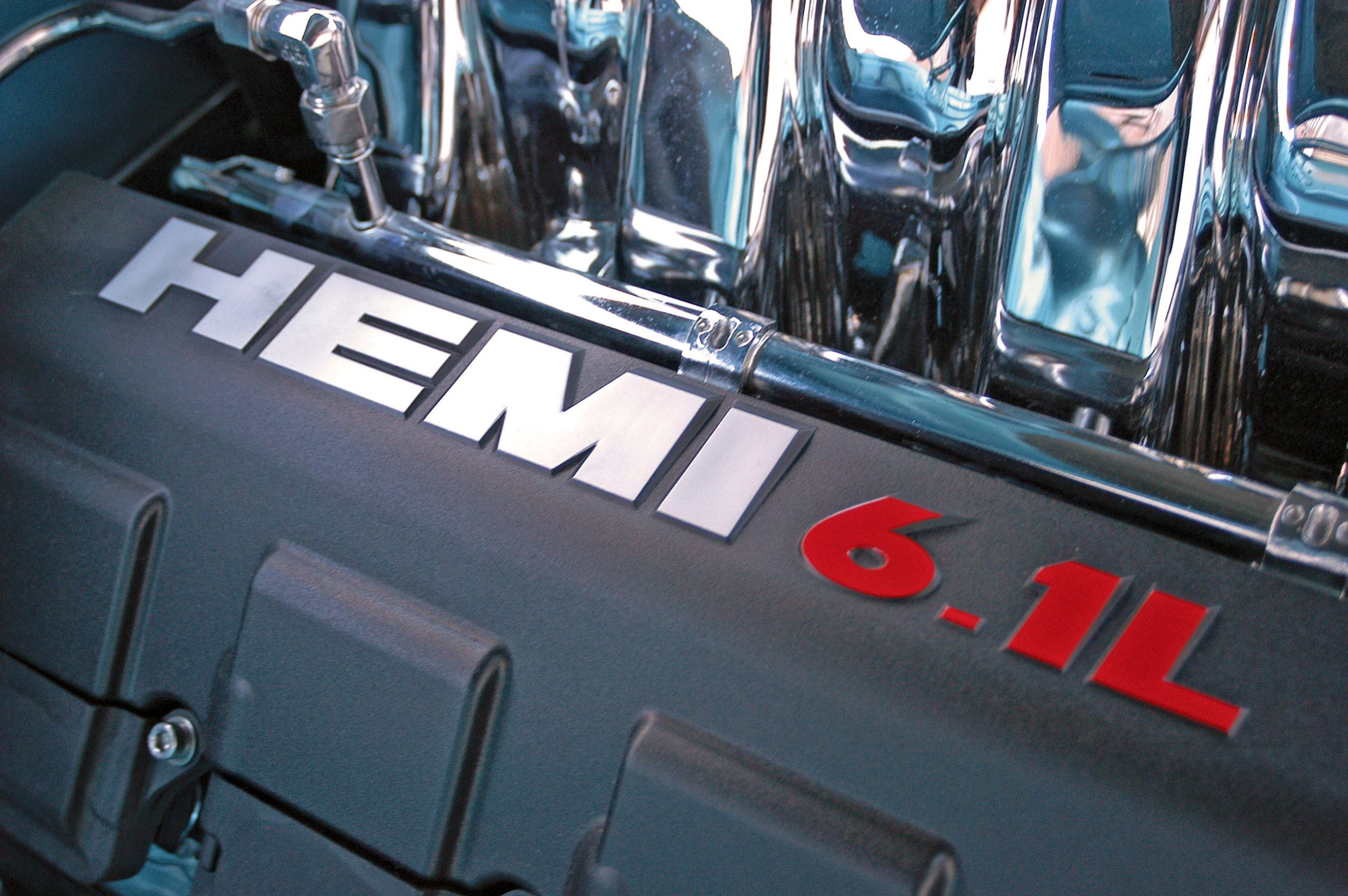
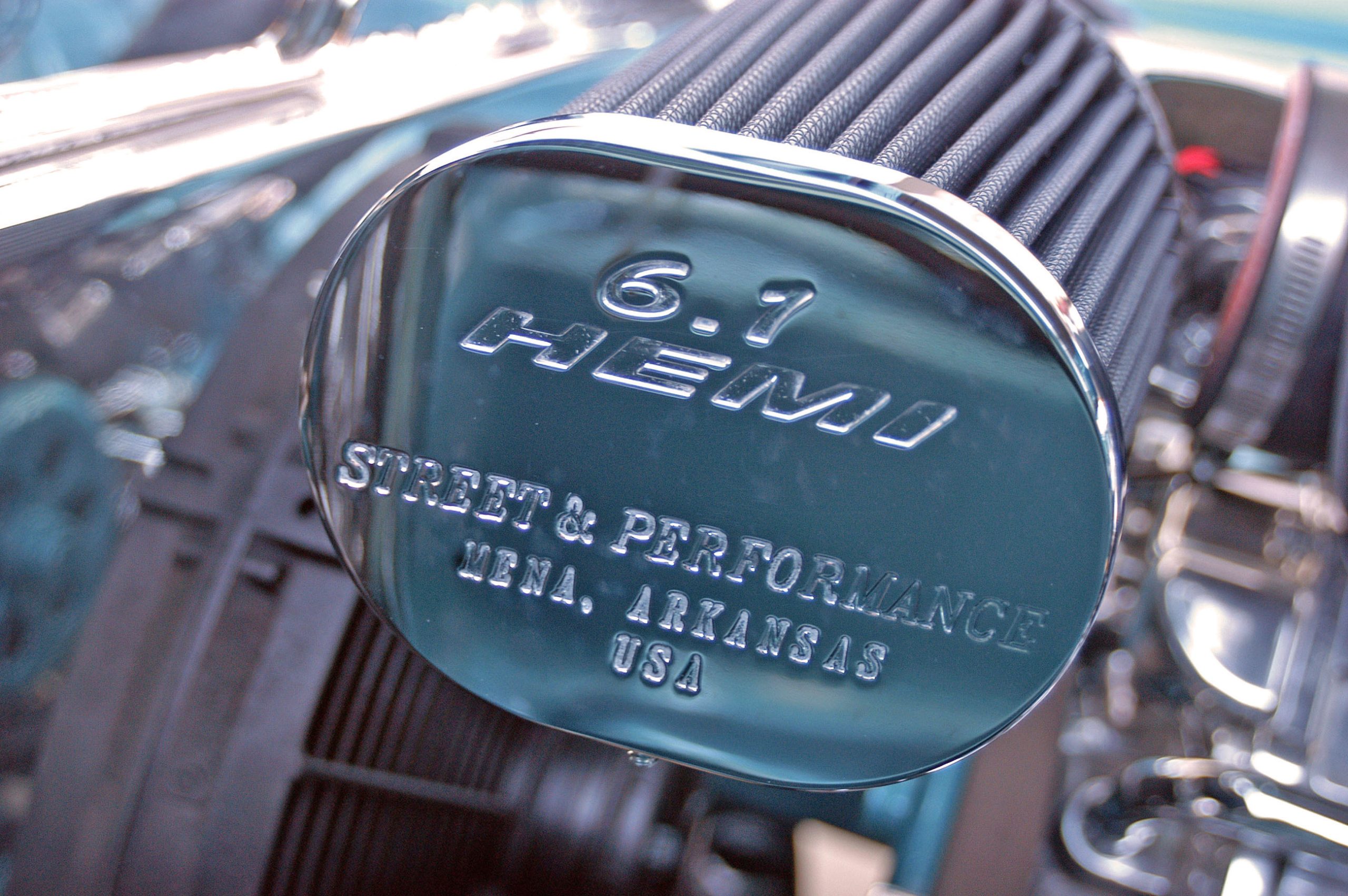
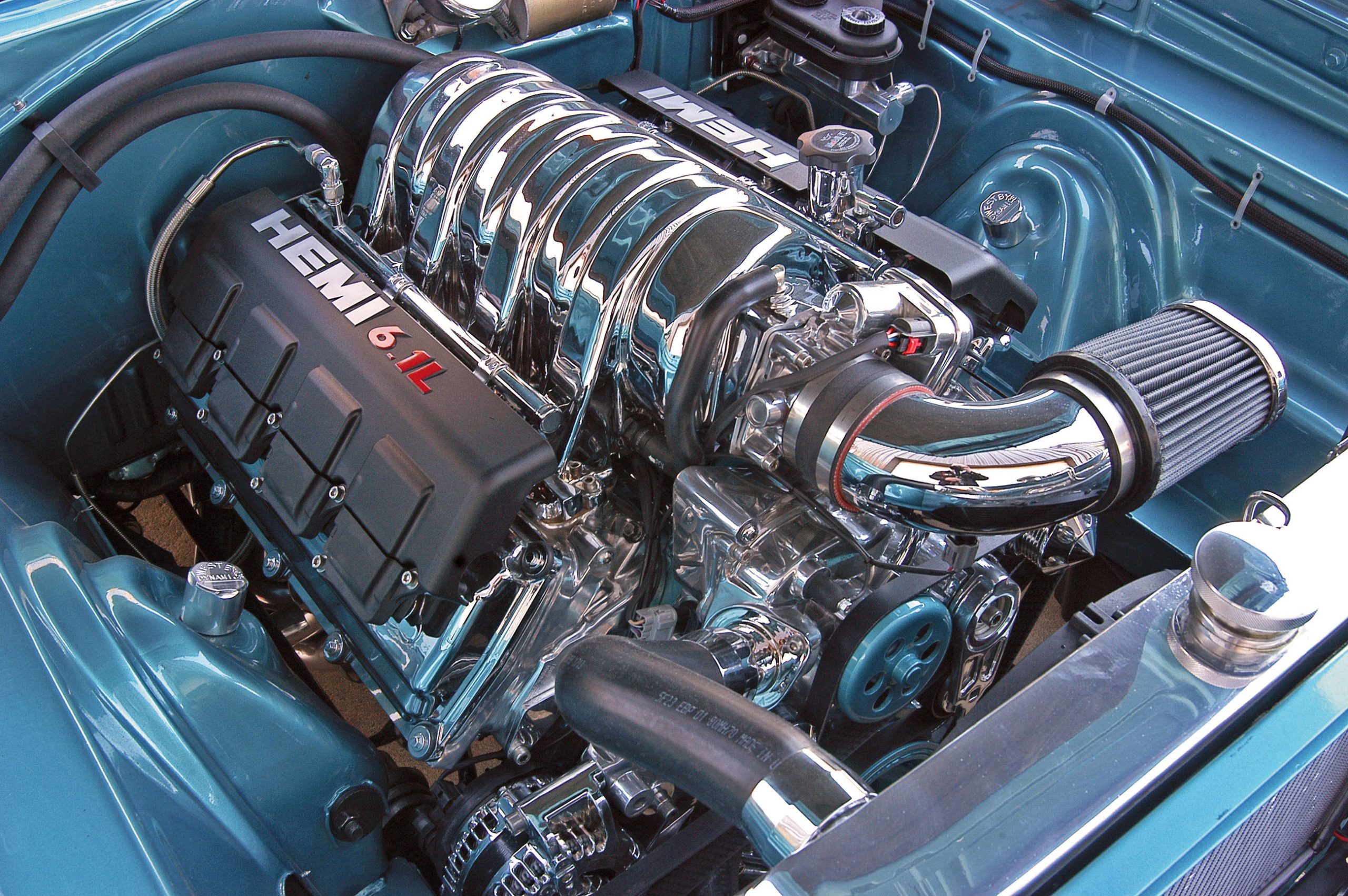
As we said earlier, the entire point of the project was to provide a platform for the 2006 6.1-liter Hemi engine. Jacobs and Angelly shipped the Plymouth to Street & Performance in Mena, Arkansas, for the installation of the new engine and its associated equipment. S&P was the first aftermarket company to offer an engine harness for the 5.7-liter Hemi, and the company was quick to support the new 6.1-liter engine, too. Mark Kincaid installed the new engine, which S&P left internally stock. With 425 horsepower and 420 lb-ft of torque available, the new Hemi does not lack for power. If anything, it lacks only for looks, and S&P took care of that issue with a chromed intake manifold, polished heads, valve covers and the like. A combination of painted stock and polished billet accessory pulleys and a new air filter and intake tube complete the look. S&P wired the engine to make it work inside its new home and backed the engine with a Keisler five-speed manual transmission and hydraulic clutch.
A Show-Stopping Debut at SEMA
Jacobs and Angelly completed the GTX just in time for the 2005 SEMA show, where they debuted it. Not surprisingly, the car received a ton of attention, and not just from fellow Mopar nuts. This is a Plymouth that any rational Bow-Tie or Blue Oval fan should appreciate. After all, with the popularity of swapping LS1 engines into Chevelles or mod motors into early Mustangs, it’s only natural that this new engine should give Mopar fans the same access to reliable, powerful, new-generation, fuel-injected engines. Jacobs’ GTX now has classic Mopar styling with modern Mopar power—a tough combination to beat. If anyone should toss the now-catchphrase “That thing got a Hemi?” at him, he can answer that “Yes, yes it does.”