Edit Template

THE AUTO BUILDER
Menu
Featured

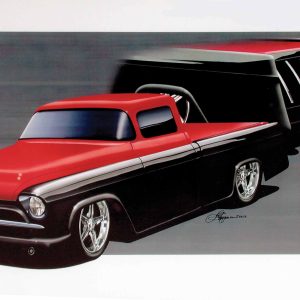
Cimtex Rods Super Cameo: Part 12
In this detailed account, the Cimbanin brothers at Cimtex Rods in Jarrell, Texas, tackle the complex task of chopping and restoring a ’56 Chevrolet Cameo roadster. This article delves into the nuances of custom truck modification, from aligning door frames to adjusting the roof profile, highlighting the meticulous approach and expertise involved in such a project. Learn about the challenges and techniques of customizing classic trucks, as demonstrated by the award-winning craftsmanship of the Cimbanin brothers.

Challenging The Odds
Like old hot rods, muscle cars are getting hard to find, so as our hobby grows, different alternatives and varied approaches keep it fresh. We’ve witnessed a change in style of many of the cars being built today. No matter what the future holds, you can bet that a Mopar enthusiast will insist on having a Hemi—or another fine Mopar powerplant under the hood—whether it’s the original-style Hemi or the new, modern Hemi that’s become popular.
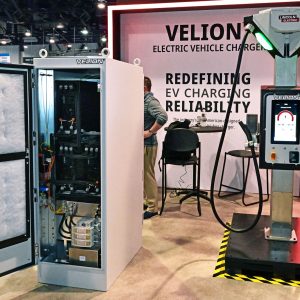
Lincoln Electric Sparks a New Era: Velion™ Chargers Ignite the Hot Rod Industry’s Electric Revolution
If a hot rodder were to have built an EV charging station, we think it would have looked like the heavy-duty version Lincoln Electric has built. Now for the nuts and bolts information from Lincoln Electric themselves on the new single and dual Velion™ Chargers. Like ourselves most people reading this article may have a hard time comprehending all the abbreviated terminology listed below but here it is to inform you on the knowledge of Lincoln Electric’s EV chargers.



Spotlighter
POPULAR READS
-
The Auto Builder’s Hottest Product Picks from The Triple Crown of Rodding 2026
-
Product Spotlight: Bill Mitchell Products Aluminum LS Engine Block
-
PRODUCT SPOTLIGHT: 60-66 Chevy C10 Fresh Air Vent Block Off Plate
-
Product Spotlight: Pyramid Optimized Design Sequential Aurora Taillight for 1964½–1966 Mustang
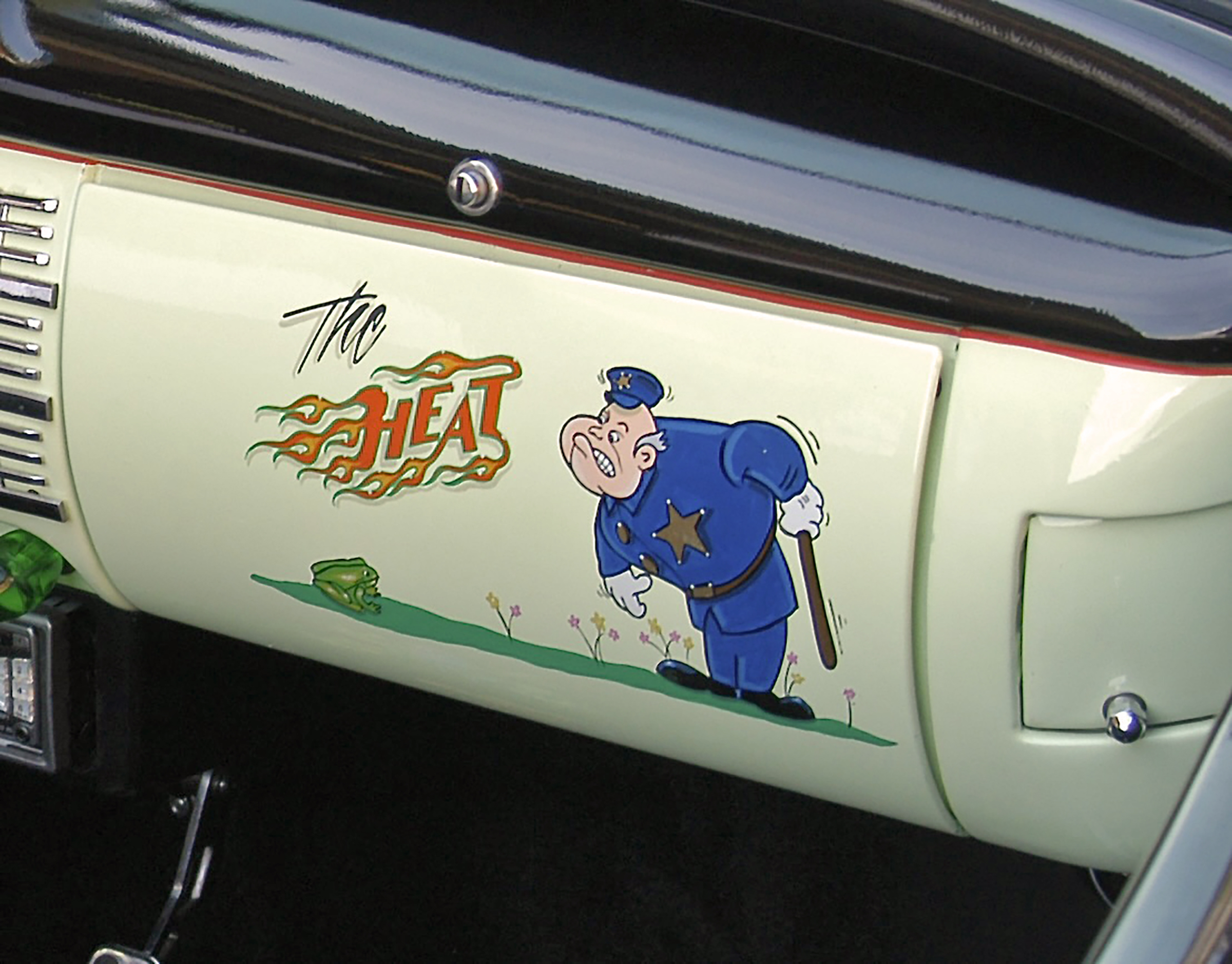
WHEN “THE HEAT” GOES HOT RODDING
Seven Decades, 200 Cars and a Lifetime of Hot Rod Memories
Author
Gerry Burger
Photos Suppled by Jack Klingel
Hang out with your hot rod buddies and I guarantee talk will turn to days gone by. Some stories are more complex than others, but all are fun and most are true. Our latest Rear View Mirror takes a look at Jack Klingel’s tales of the open road. To say Jack liked cars is akin to saying Elvis liked music.
In his 86-years Jack has owned over 200 cars. Obviously, they were not all hot rods as many were purchased, “fixed and flipped” to finance his latest hot rod project. I feel fortunate to call Jack a friend since the seventies, so after more than a few hours of conversation and supplied photos we had a story, a story as told by Jack Klingel… husband, father, police officer and all out hot rodder.
This is by no means all of his hot rods, just a few of the more interesting ones.
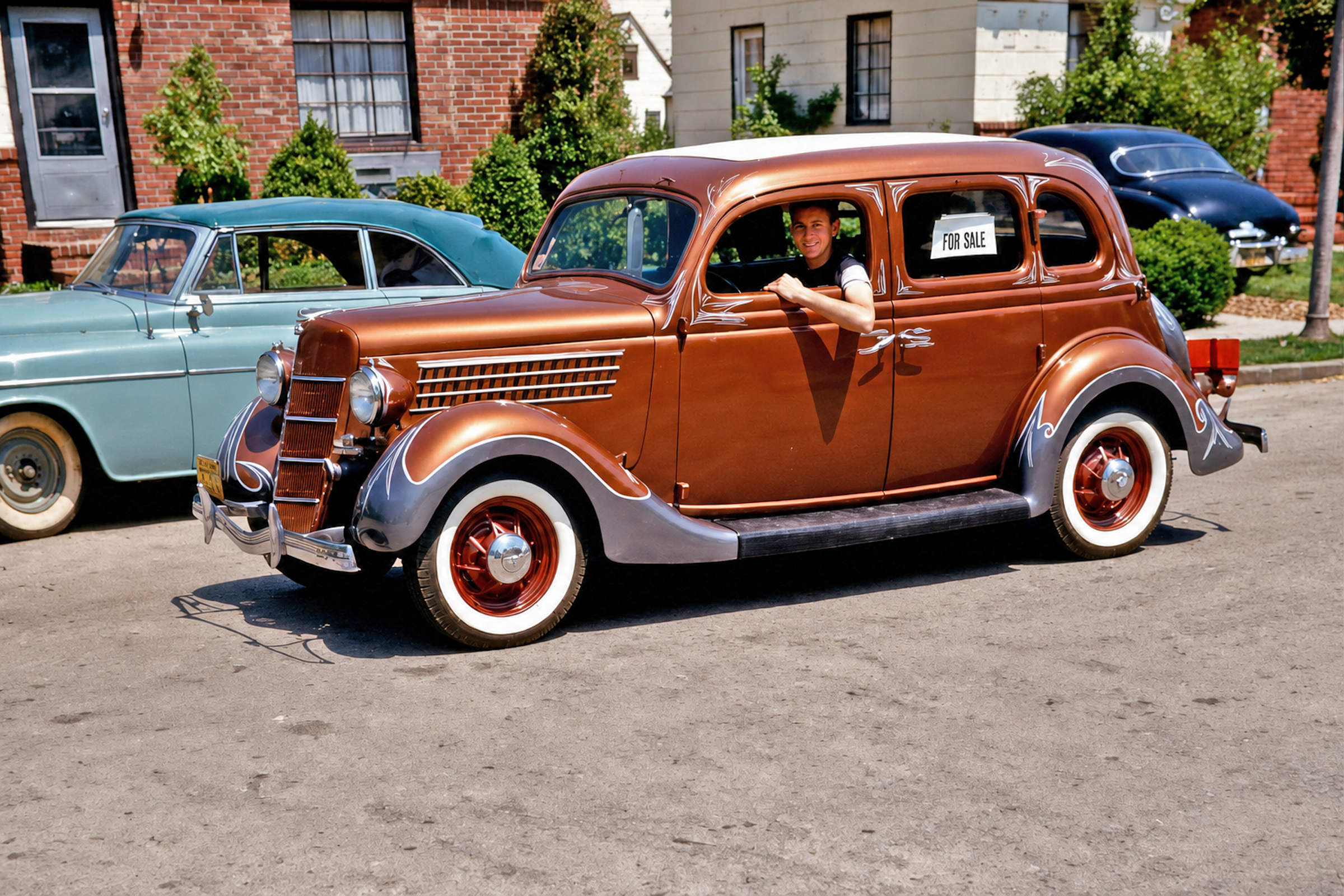
It was 1956 when Jack bought his first car, a 1935 Ford purchased for $35.00. Like many budding hot rodders, Jack had been reading all the “pocket magazines” so this car was destined to be a hot rod, or as Jack told us… “I use the term “hot rod” loosely. It was my first go at bodywork, my skill set was as minimal as my tool set. Using a small compressor I sprayed the 1956 Chevy Sierra Gold lacquer in the driveway. When it came time for the scallops, a can of metallic paint, a roll of good ole tan 3M tape and a brush came into play, followed by one of my earliest pinstriping jobs. It was a time when fellow hot rodders shared skills and tools and even many professionals would take the time to pass along their knowledge. The results were presentable for the time. Another signature piece of my early cars was the For Sale sign.”
Mechanically the car remained basically stock, right down to the mechanical brakes found behind those wide whites and wire wheels. While memory of the sale are a bit foggy, Jack is pretty sure it broke into triple digits.
A MILD CUSTOM MERC MAKES THE LONG ISLAND SCENE
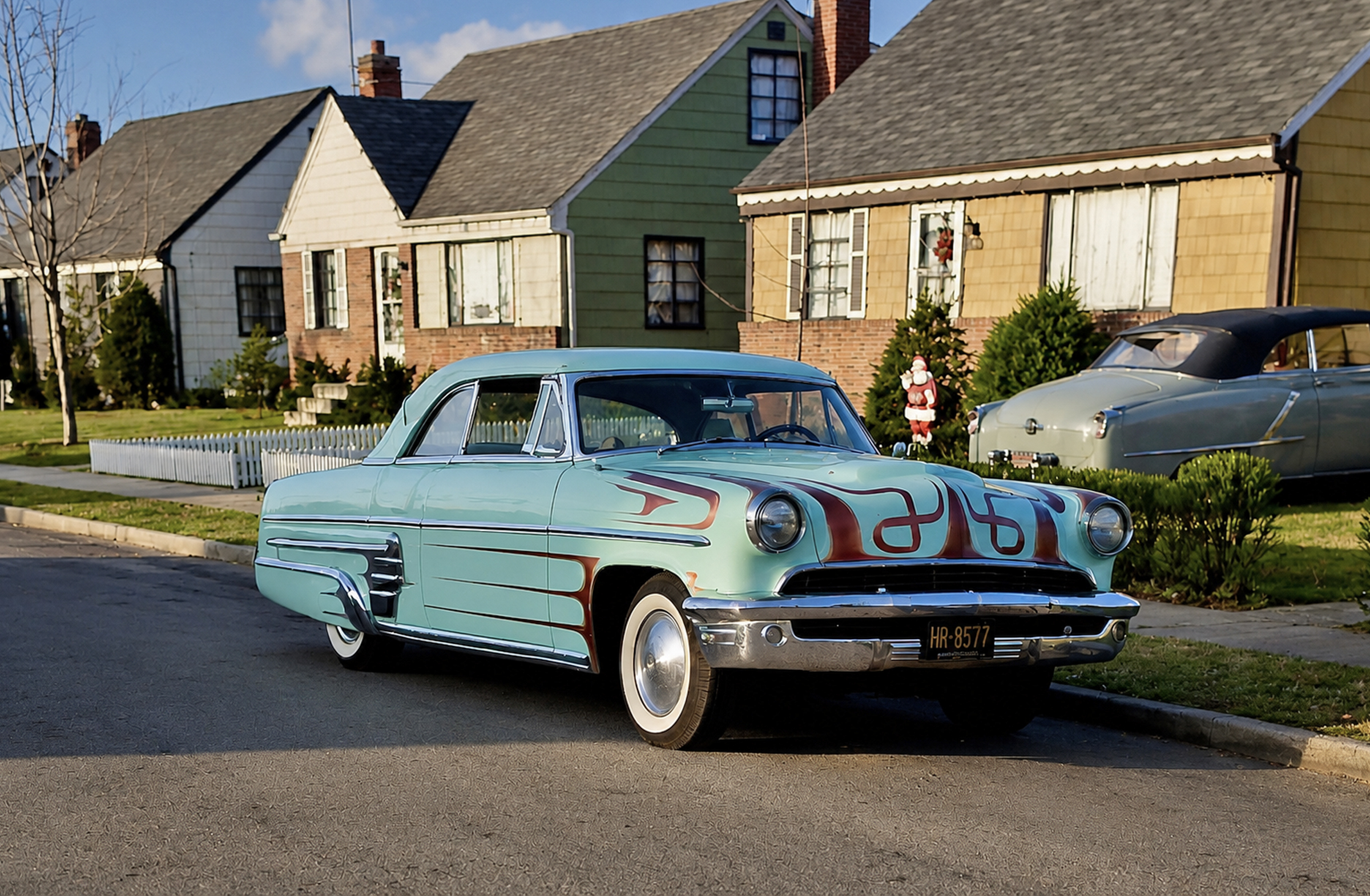
Feeling flush from the sale of his ’35 Ford, Jack bought a pretty nice ’53 Mercury Monterey hardtop. He would proceed to nose and deck the car, shave the door handles and add cruiser skirts and scallops. A nicely trimmed and smoothed front grille gave the car a clean look, while lowering blocks brought the rear down for a perfect early custom stance. The ’53 Mercury Aqua Marine blue paint with copper scallops was the final finish. Jack mentioned the scallops were sprayed with left-over Sierra Gold paint from his ’35. Under the hood the last year Mercury flathead was nicely dressed and it all rolled on wide whites and spun Moons. This was a very cool car.
If you were a custom car guy in the fifties, Studebakers always caught your eye. It’s hard not to admire the superb design by Raymond Loewy and Robert E. Bourke, that low-slung profile was begging to be customized.
Enter Jack Klingel and his pal Alan Isler. Alan’s uncle owned a Baldwin,N.Y. body shop and Alan was customizing a 1955 Chrysler while Jack owned a 1954 Studebaker Commander V8. This connection allowed Jack and Alan to customize their cars evenings in a real bodyshop. Jack recalls… “We’d get down there and work on the cars ‘till well past midnight. Alan was a good welder and my bodywork and paint skills were much improved. Together we customized our cars. Improving the work environment were our girl friends, who would stop by, hang out and listen to some music while we worked on the cars… life was good.” Jack was a member of the Glen Cove Eliminators. That girlfriend, Gerri Byrne, would become Jack’s wife not long after the Studebaker was finished.
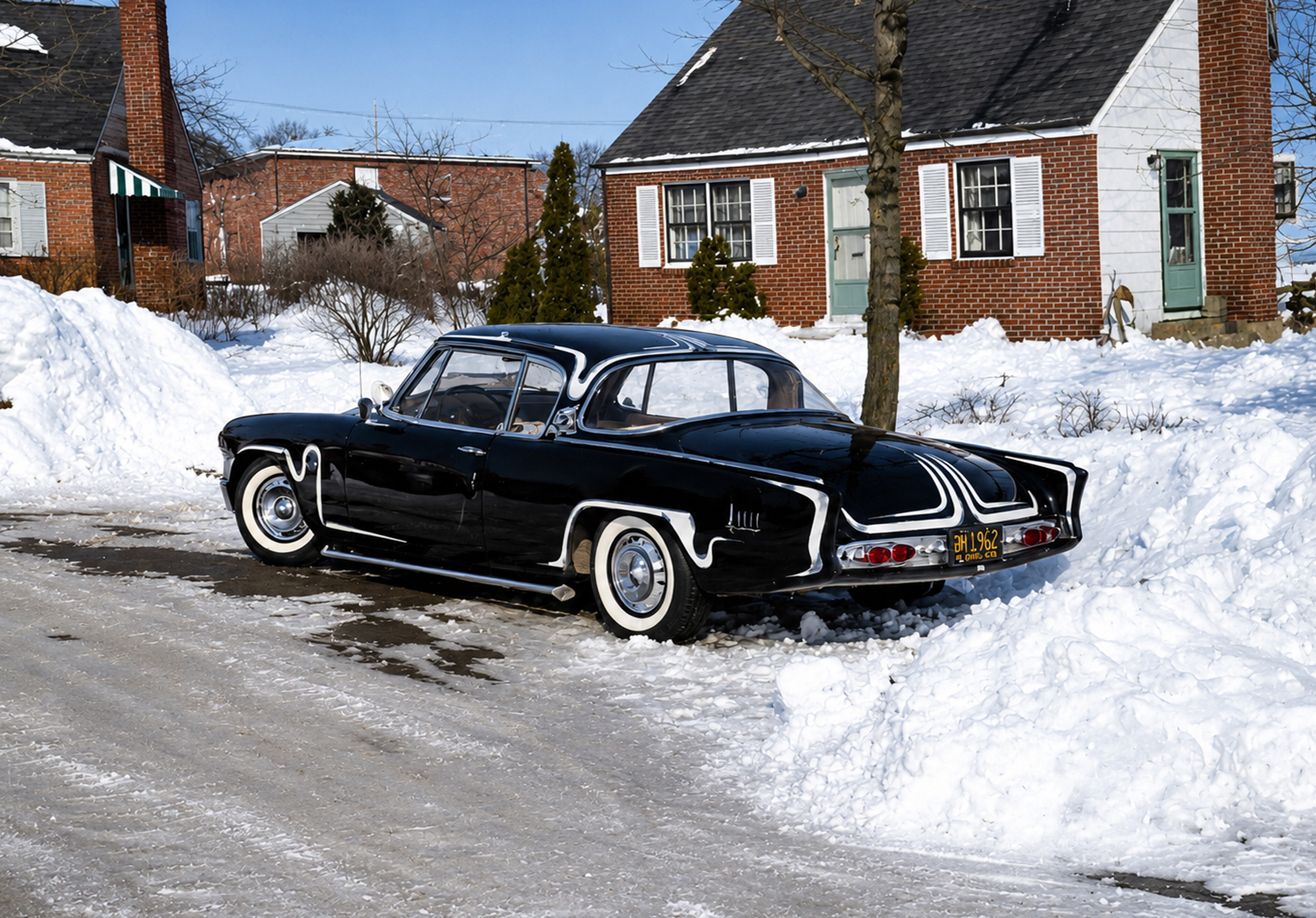
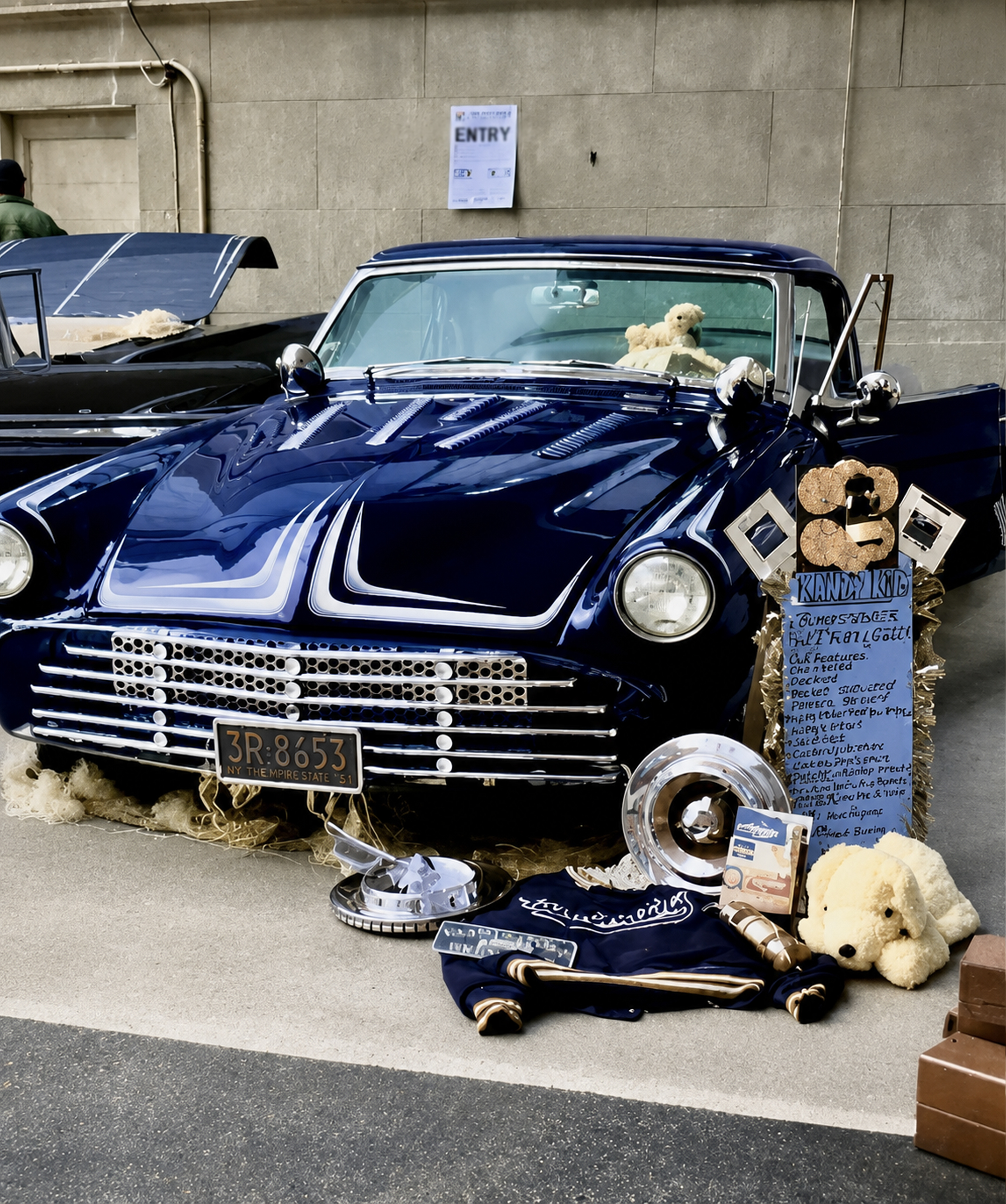
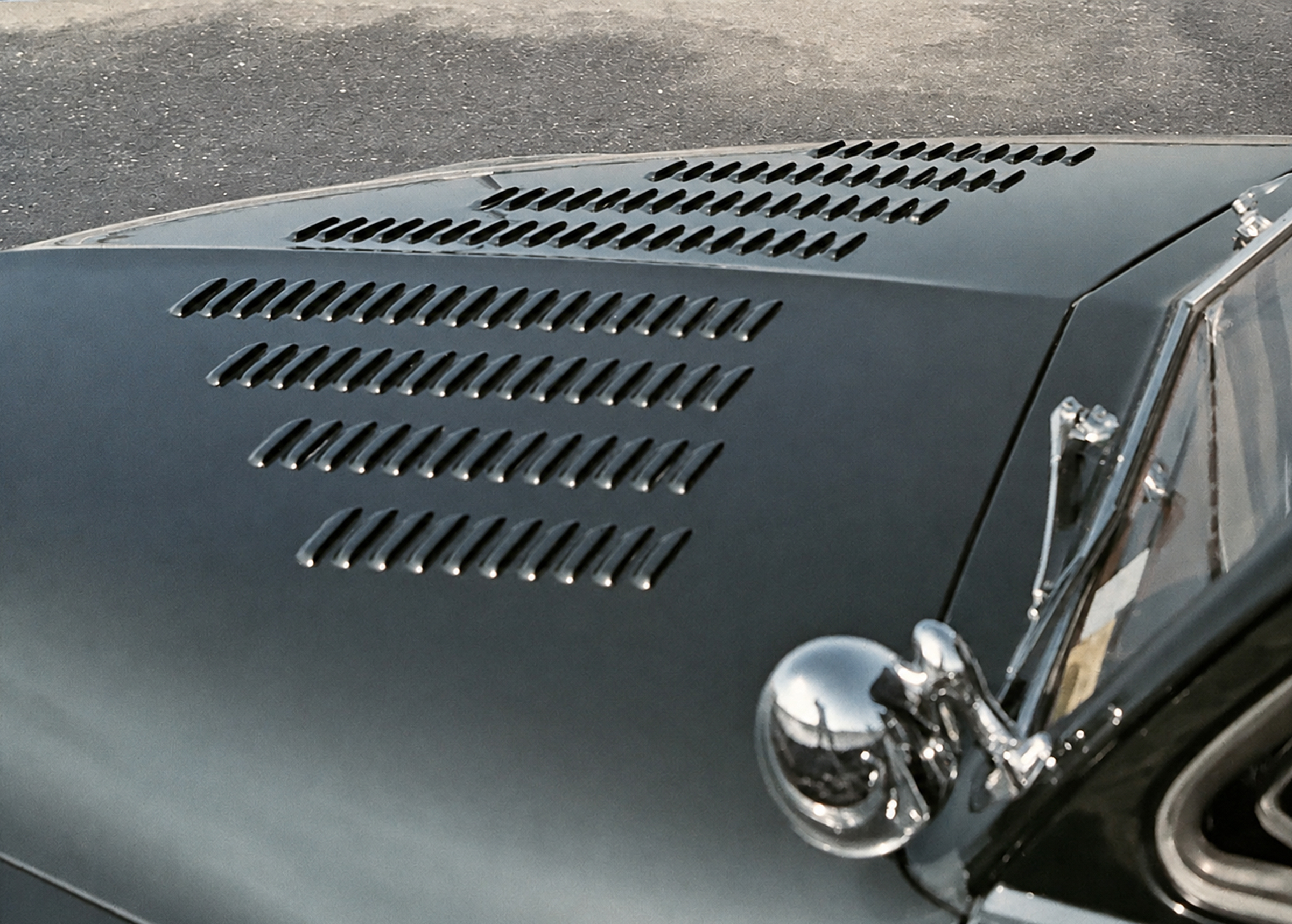
The Studebaker was heavily customized with a reshaped grille opening and a hand-built tube grille. The hood was filled with louvers by Kilday and Krause and they punched a few in the gas fill door too. Out back a nicely styled, recessed taillight panel replaced the bumper. Dressed in basic black with white scallops, it had a clean look. Appleton spotlights and full-length lake pipes were nice accessories. By 1961 there were several patterns emerging, Appleton spotlights, wide whites, fuzzy dice, scallops and pinstriping were becoming signature features. The wheel treatment changed with a simple trip to the junkyard to pop off a new set of hubcaps. Two favorites were his ’57 Plymouth or his ’57 Chrysler caps.
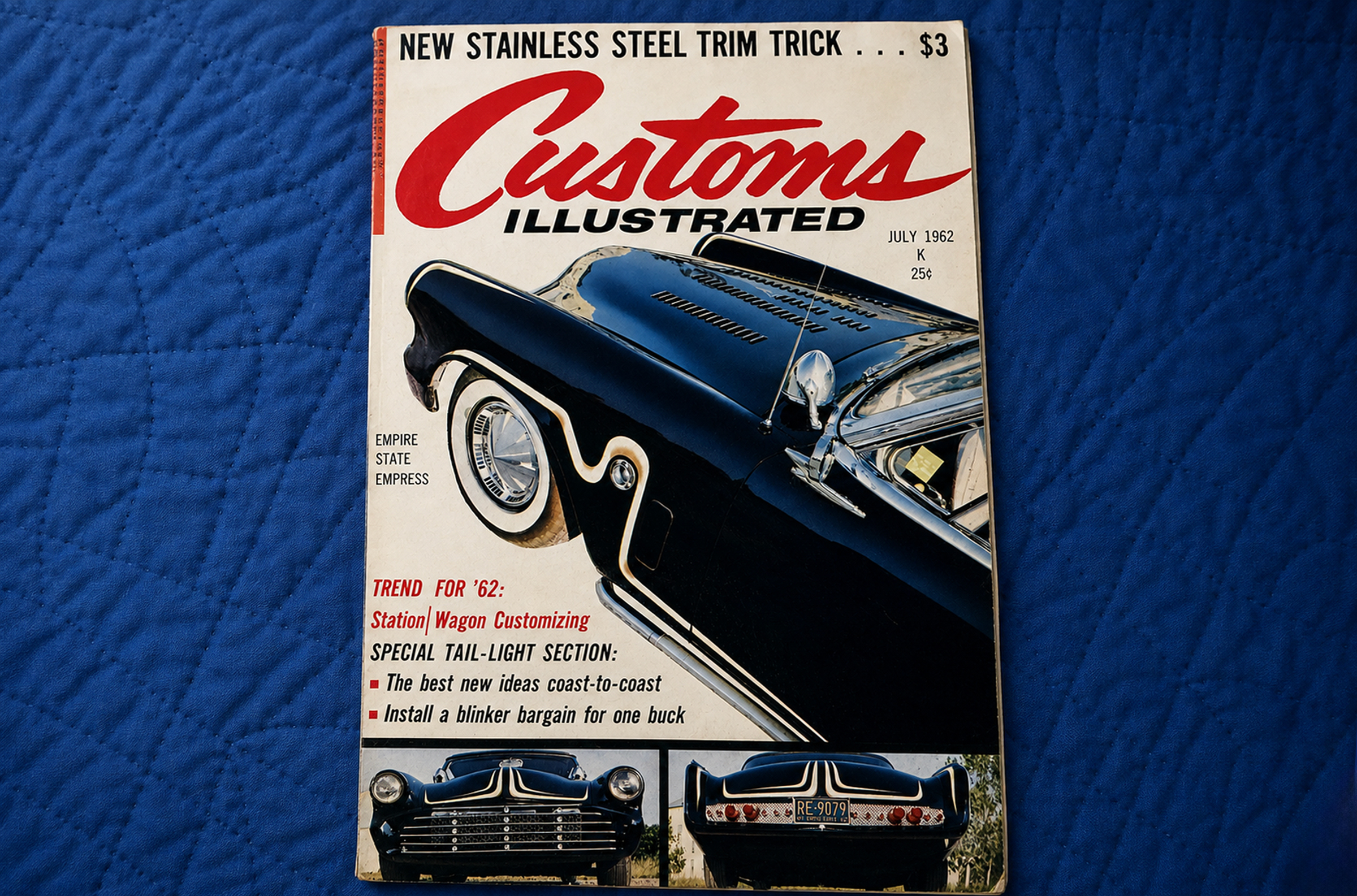
The Studebaker was discovered at the 1961 Glen Cove Road Panthers Car Show by the editors of Customs Illustrated Magazine . A photo session lead to Jack’s Studebaker being the January 1962 cover car. Oh yeah, things were going his way. It was around this time Jack became a Nassau County Police officer.
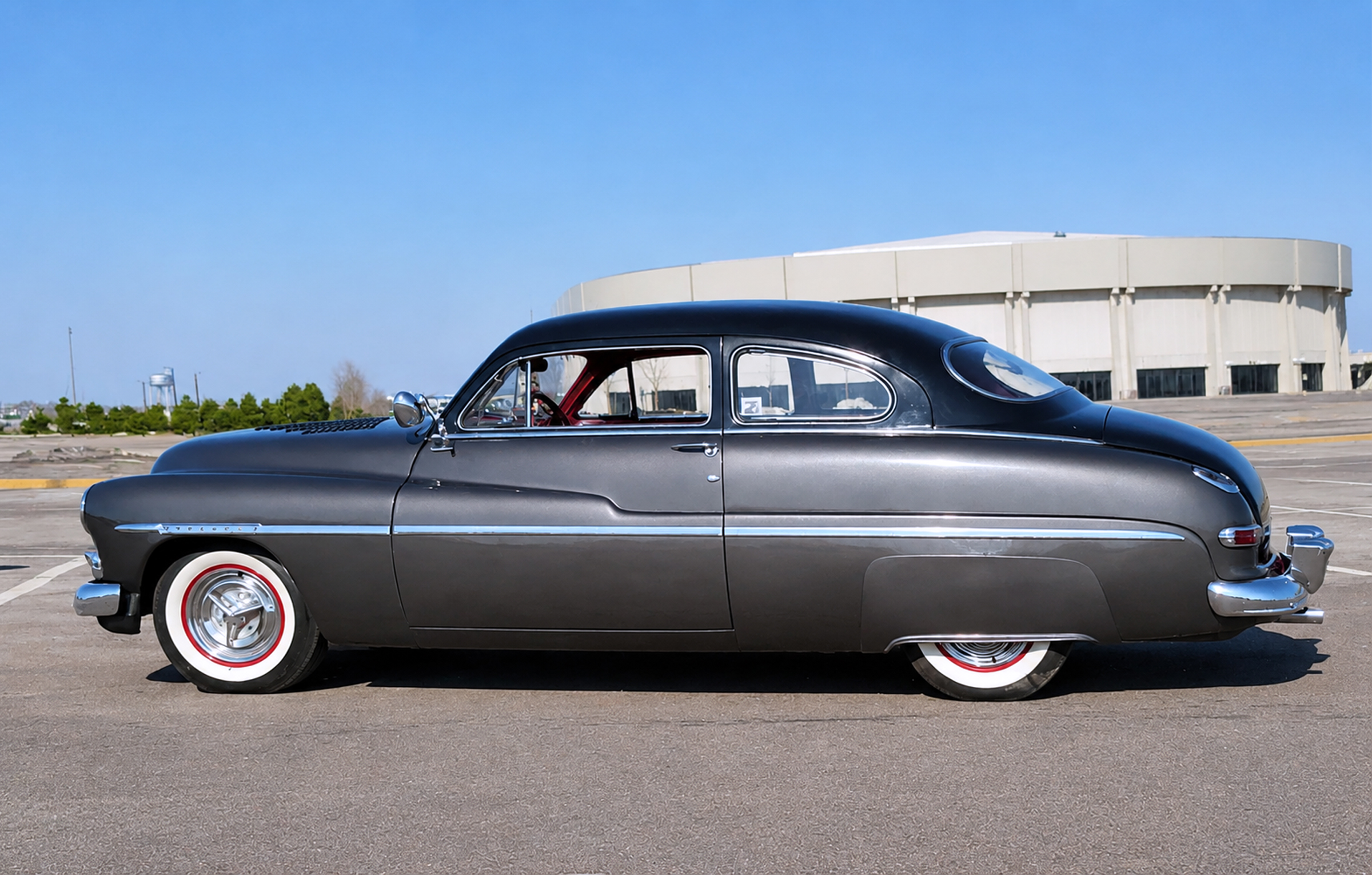
After going pretty heavy on the Studebaker, Jack went mild on a 1950 Mercury. He laid down a tasteful metallic charcoal finish with wide whites on red rims and Fiesta caps. The hood was filled and peaked after Bobby Krause and Richie Kilday punched it full of louvers. Of course Appletons grace the windshield posts, dice dangle from the mirror while mild lowering, skirts and blue dots complete the package. Inside Lacy Hunt stitched one of his great rolled and pleated interiors.
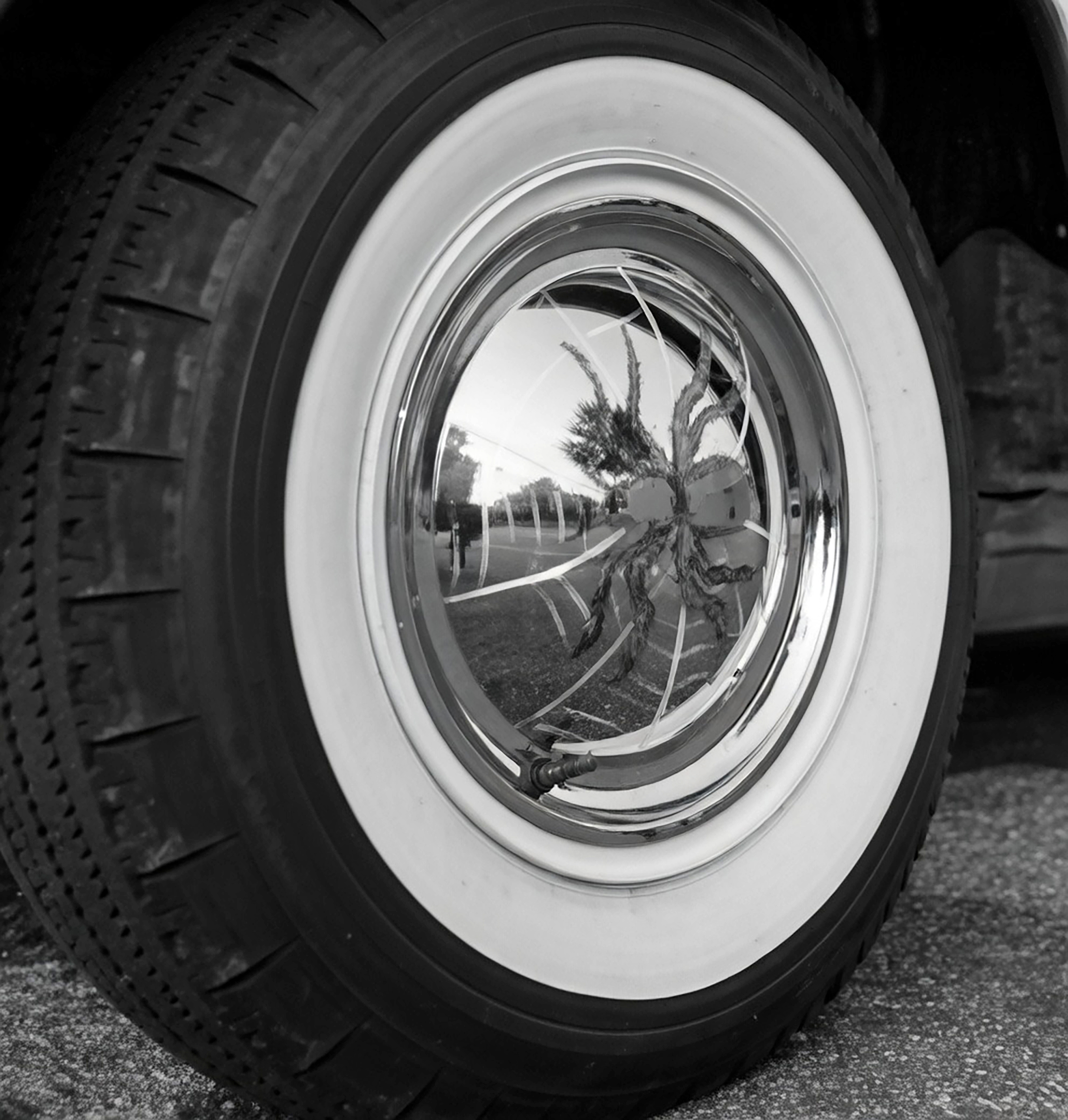
If you have never been stricken with rod and custom fever this may seem like odd behavior, but for those of us who are afflicted, this makes perfect sense. Jack took the time to paint spiders and cobwebs on the smoothie caps he bought for his dad’s new 1957 Dodge.
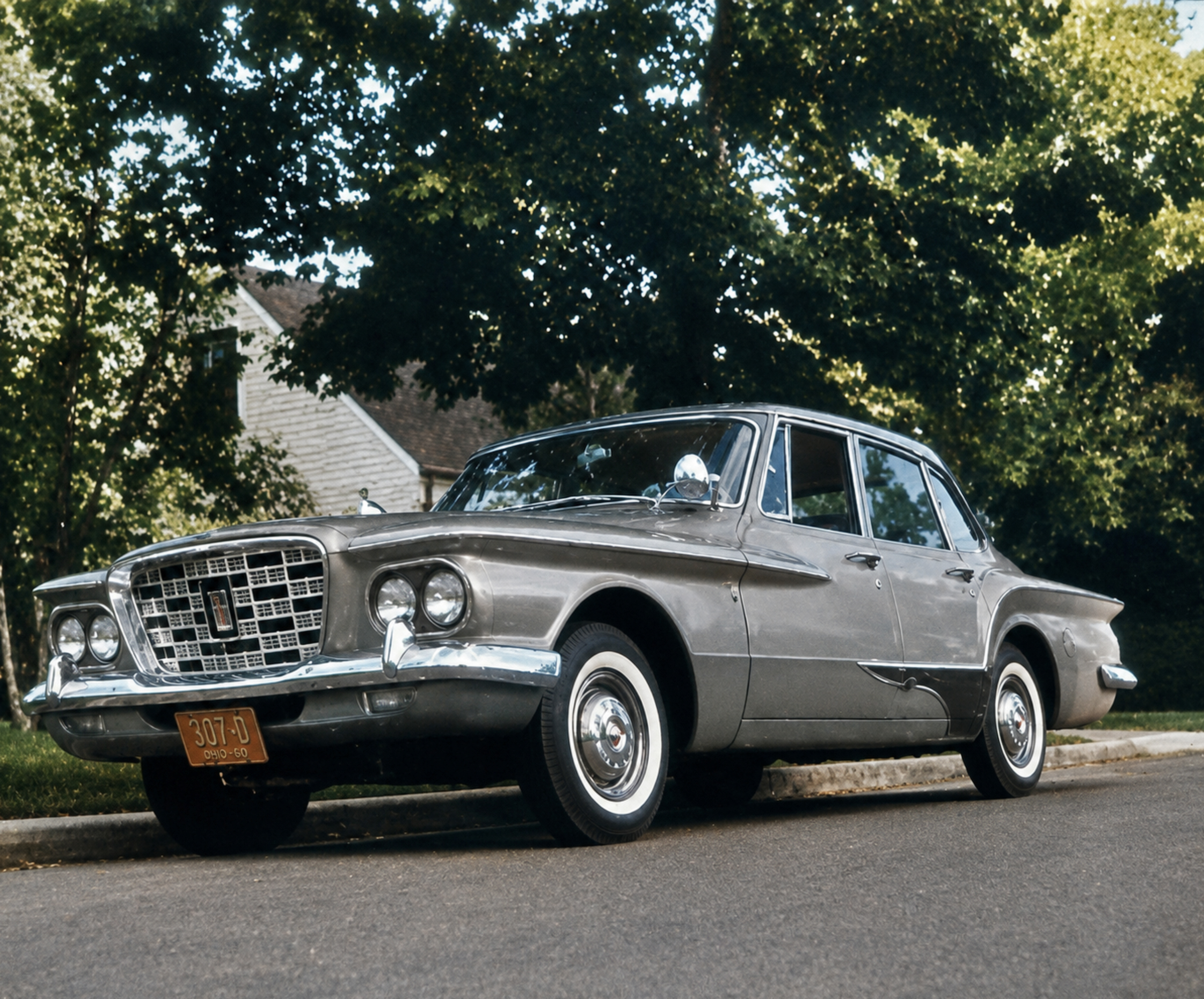
Likewise, his recent bride Gerri was motoring around in a mild custom 1961 Valiant. The factory color was Crystal Green Iridescent, while modified ’56 DeSoto side trim allowed Jack to add a dark green insert. Obligatory Appleton spotlights add to the custom mood.
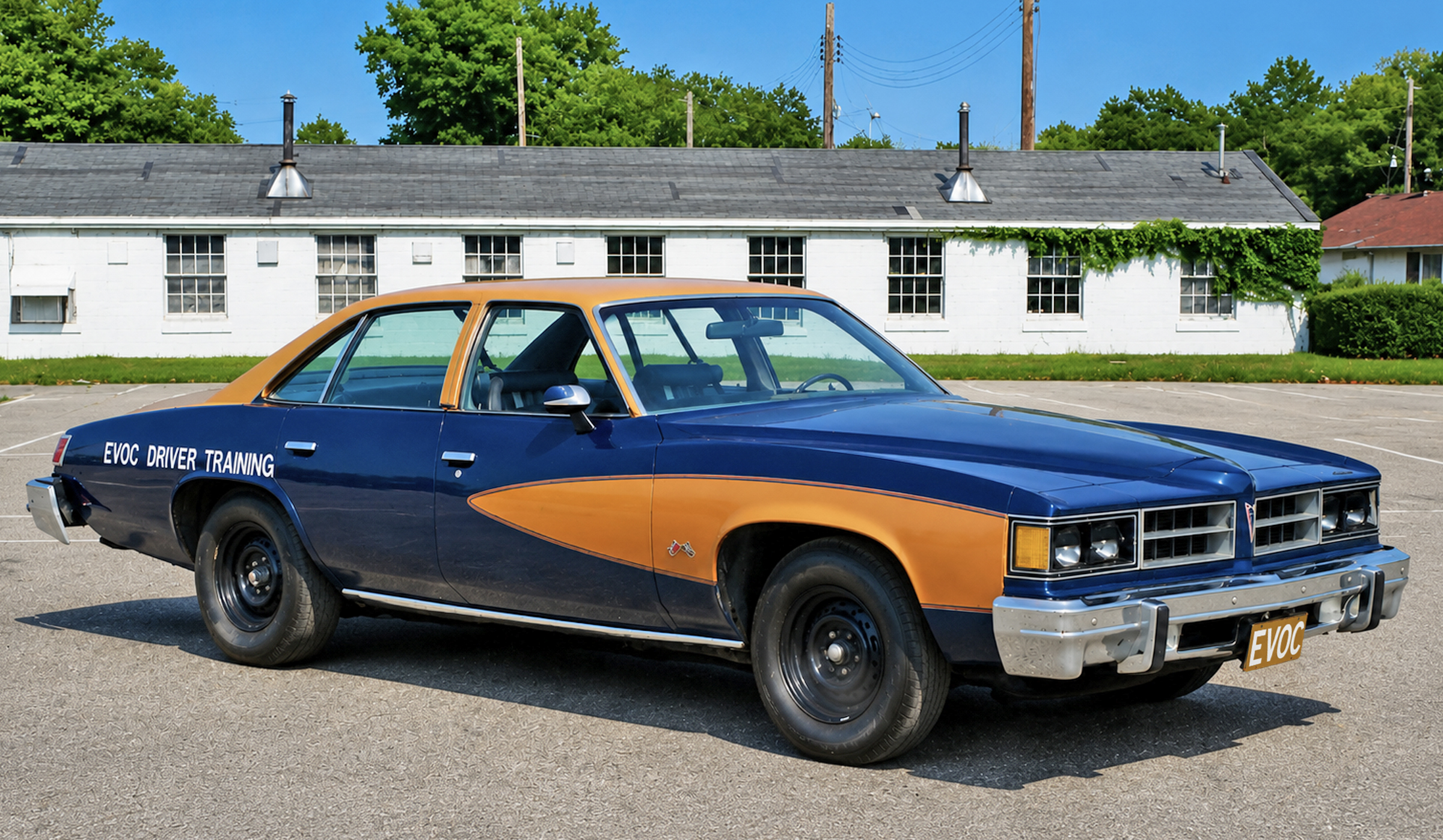
Fast forward to 1977 and Jack was a police EVOC driving instructor. Pontiac provided a new 1977 Catalina. Again, Jack…”We were not kind to that Pontiac, it sure took a beating. My commander and I drove it to my house one weekend where we added some gold accents to the dark blue car. Crazy stuff.” Now, when we say Jack Klingel would customize anything with four wheels, this certainly drives the point home.
THE NICEST ORIGINAL CAR I EVER BOUGHT
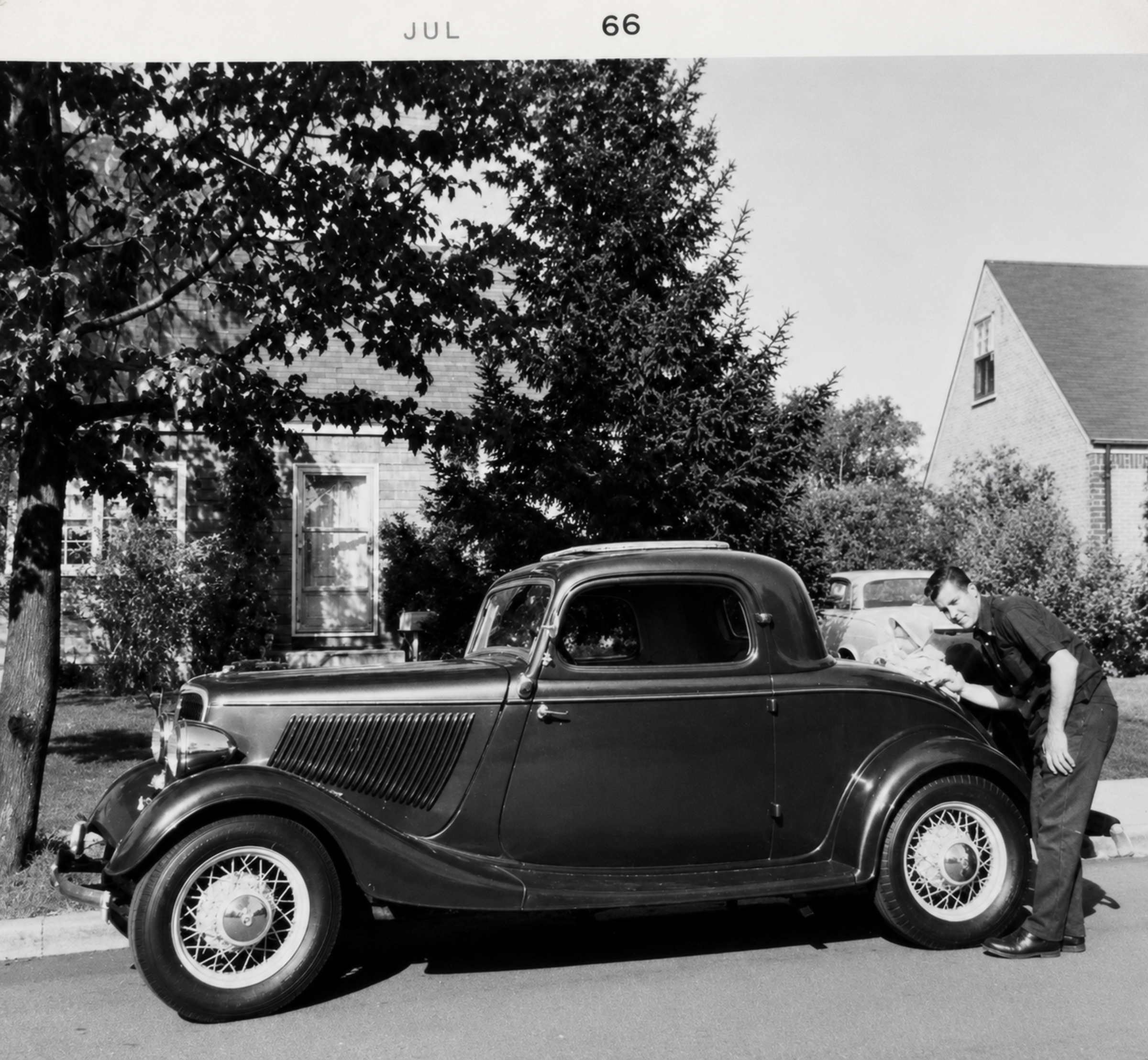
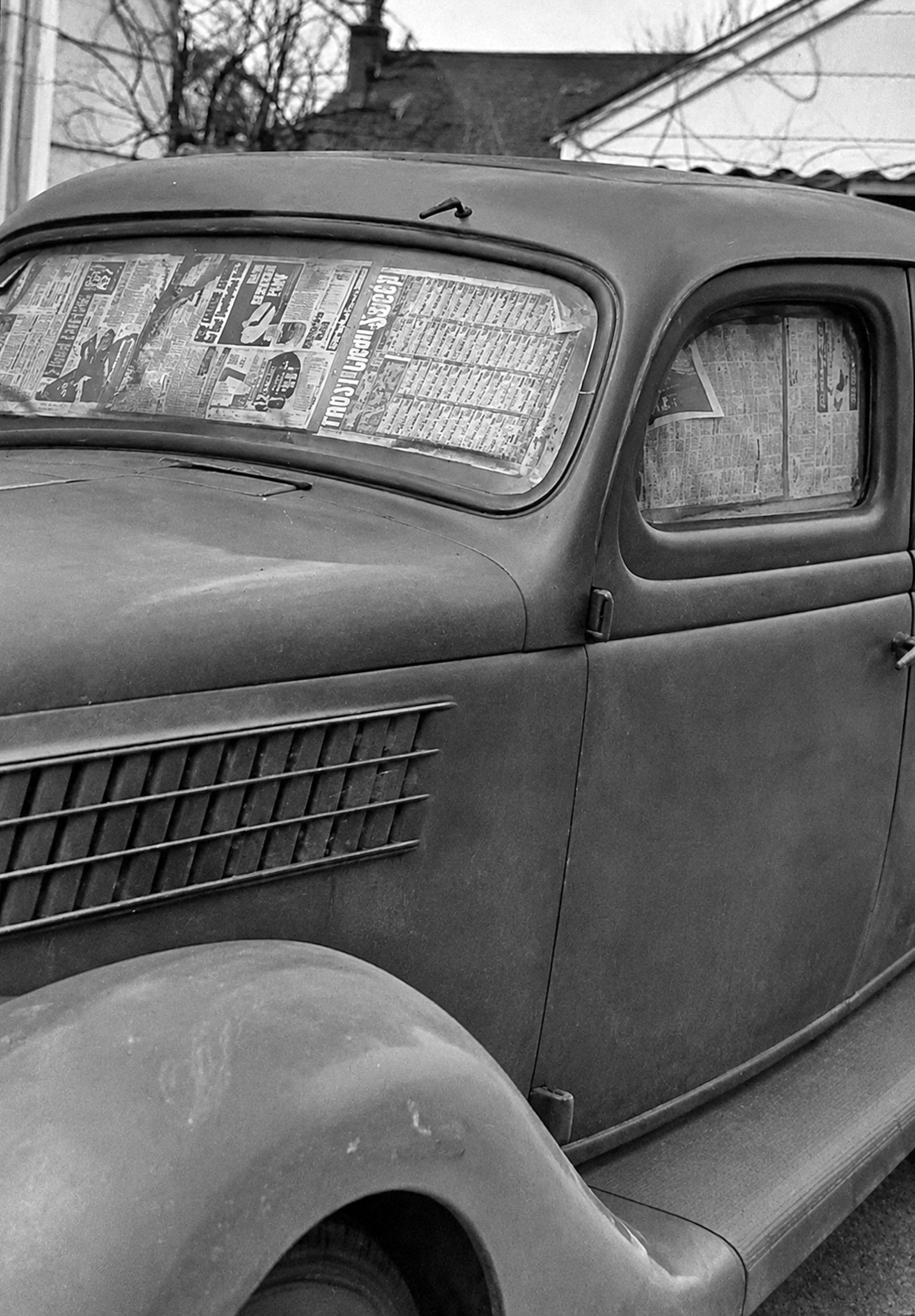
As Jack told us…”This was the nicest original car I ever owned. It ran like a clock and was stock right down to the mechanical brakes. I was on the police force by then and was driving fifteen miles each way to work. One thing that didn’t work was the gas gauge, so I always carried a few gallons in the rumble seat. If the motor started to stumble, just pull over and add fuel.”
Modifications were limited to seal beam headlights, rolled and pleated interior and other minor touches. The paint scheme was brown with black fenders.
WHAT IS A CAR GUY TALE WITHOUT A FEW CORVETTES?
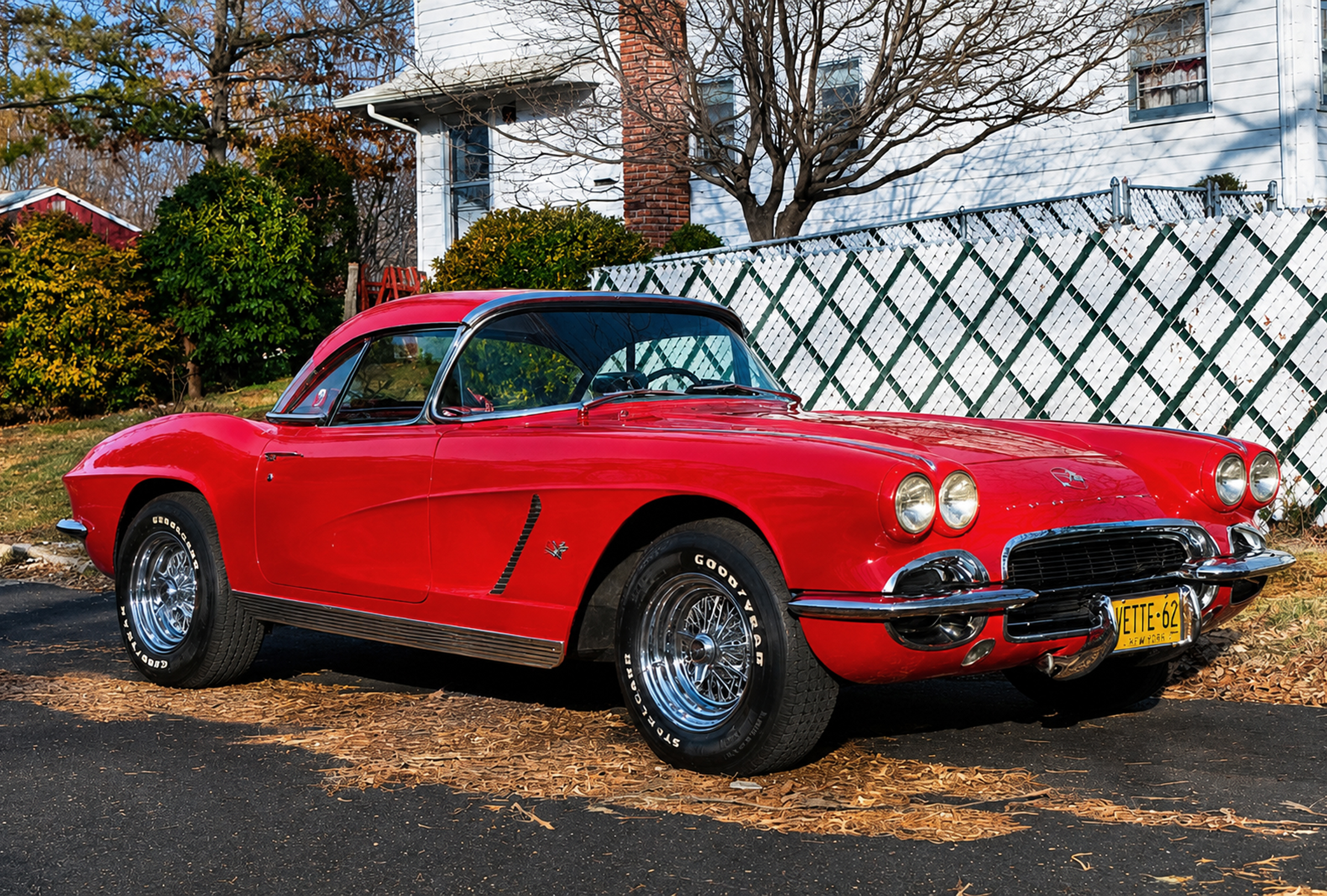
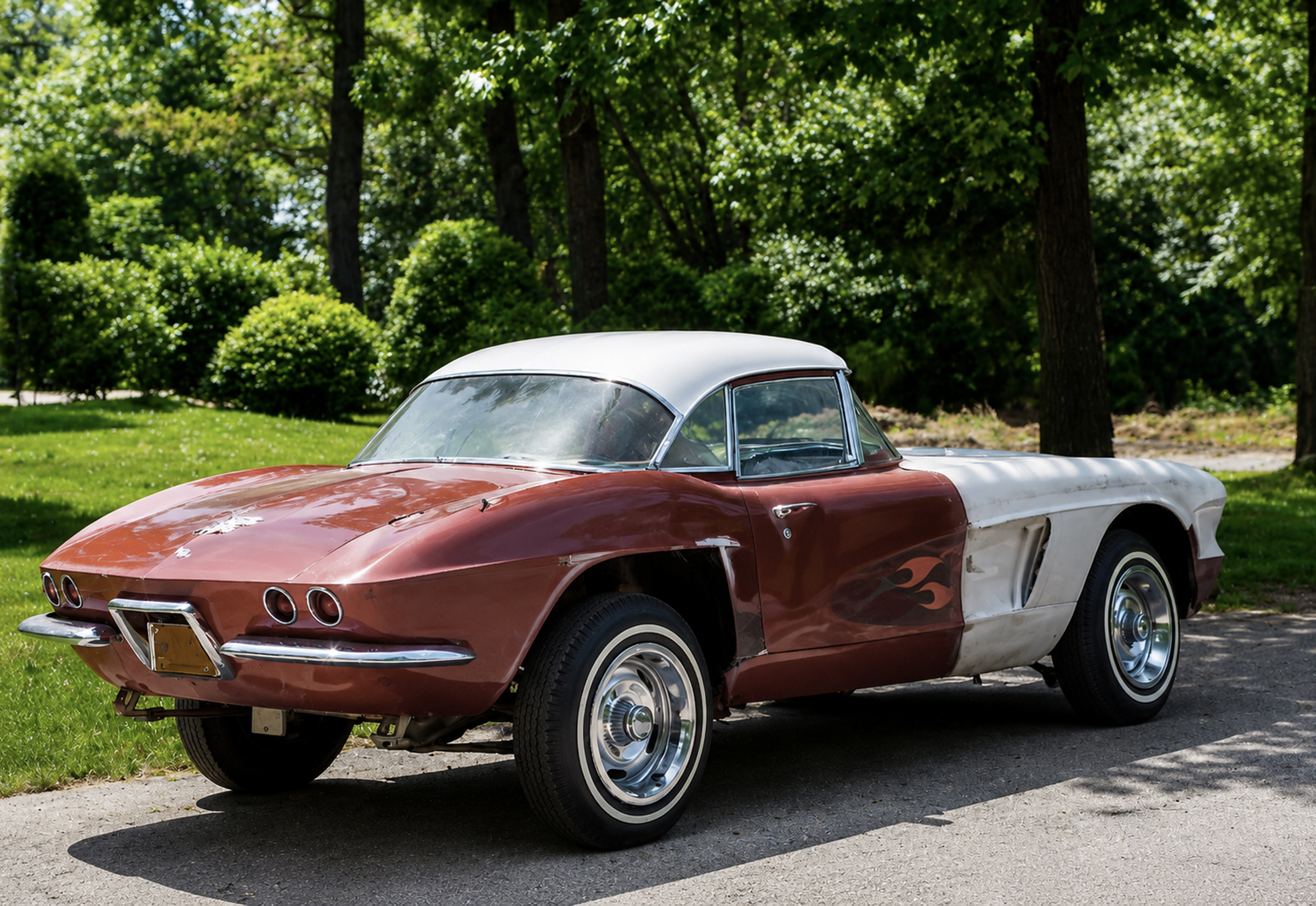
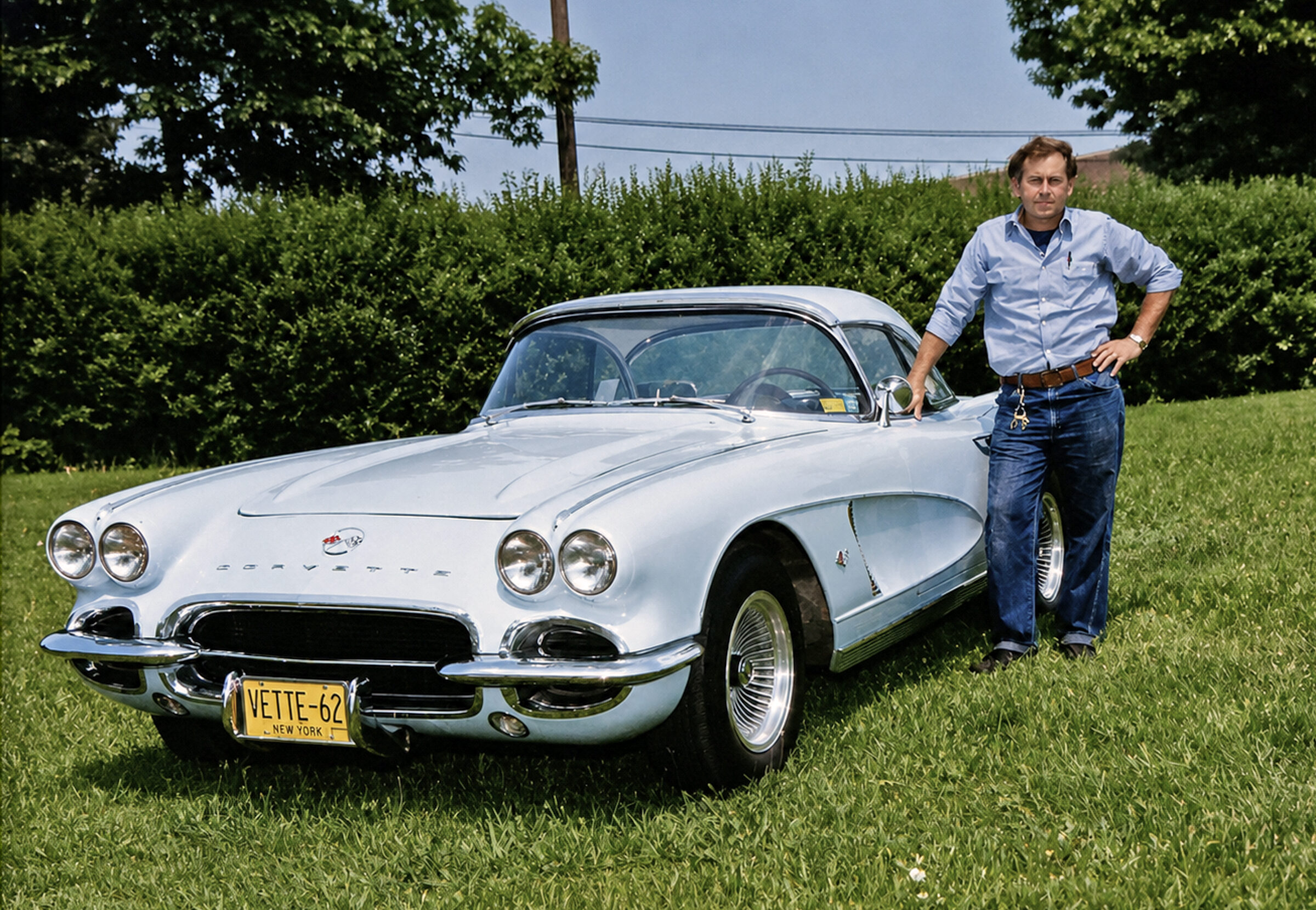
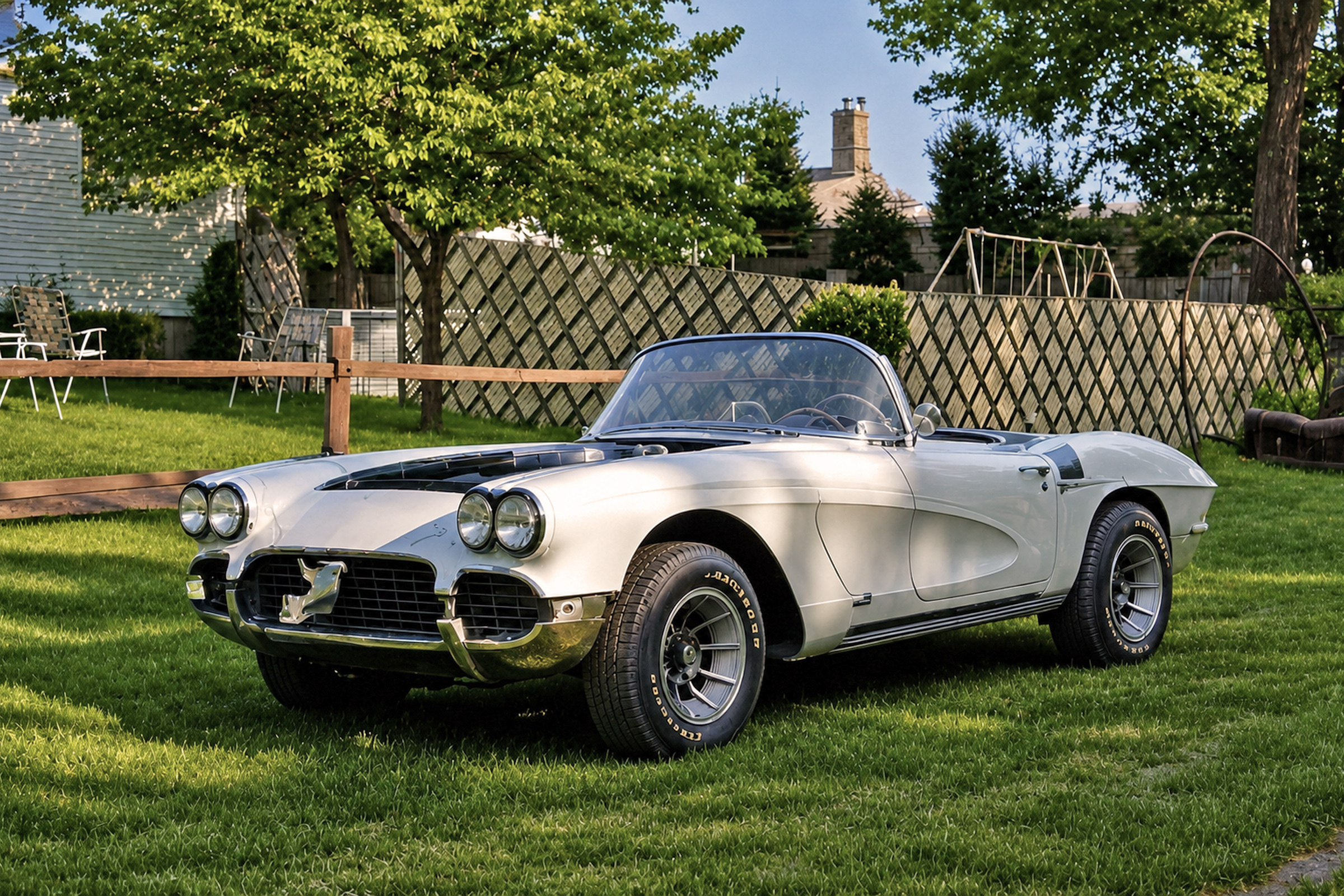
Most all-American hot rodders have spent some time in or around the Great American Sports Car. After briefly owning a1957 Corvette in the late sixties it would be the mid-seventies before this 1962 Corvette rolled into his garage. It had been sitting in a local driveway and it took ten years to convince the owner to sell. Like most of his purchases it was a project, but he got the Honduras Maroon car running and enjoyed driving the 283/Powerglide car. When the front of the car became heavily chipped a flame job seems like a proper fix. Eventually the car grew tired and he stripped it to bare ‘glass and went completely through the mechanicals too. A bright red finish and a set of Tru-Spokes were proper for the time.
About the time the red car hit the road, a second ’62 Corvette would appear. It had been sitting in a pretty rough neighborhood in N.Y.C. with a tow-away sticker on the windshield. Jack’s cousin, an officer with the NYPD, located the owner and made an incredible deal on the car. No motor, no trans but the rest was there, complete with two tops. The plan was to simply to flip it and make a couple bucks, but cousin Jack saved him the trouble and bought his second ’62 and together they hauled it home. If anyone on Long Island, in the mid-seventies, happen to see a ’62 Corvette being towed by a chain, behind a cop car, we just solved your fifty-year mystery. Maybe now your friends will believe you. As Jack told us, “We didn’t go too far, and it was mostly back roads, although there was a close call with an Opel GT.”
A running 327/Powerglide was purchased and Jack’s second Corvette came to life. After stripping it to bare fiberglass it became obvious this was a no-hit body. After performing typical minor repairs, Jack laid down a nice powder blue paint job. The best parts were mixed and matched onto the red car, and the blue car was sold for a tidy profit.
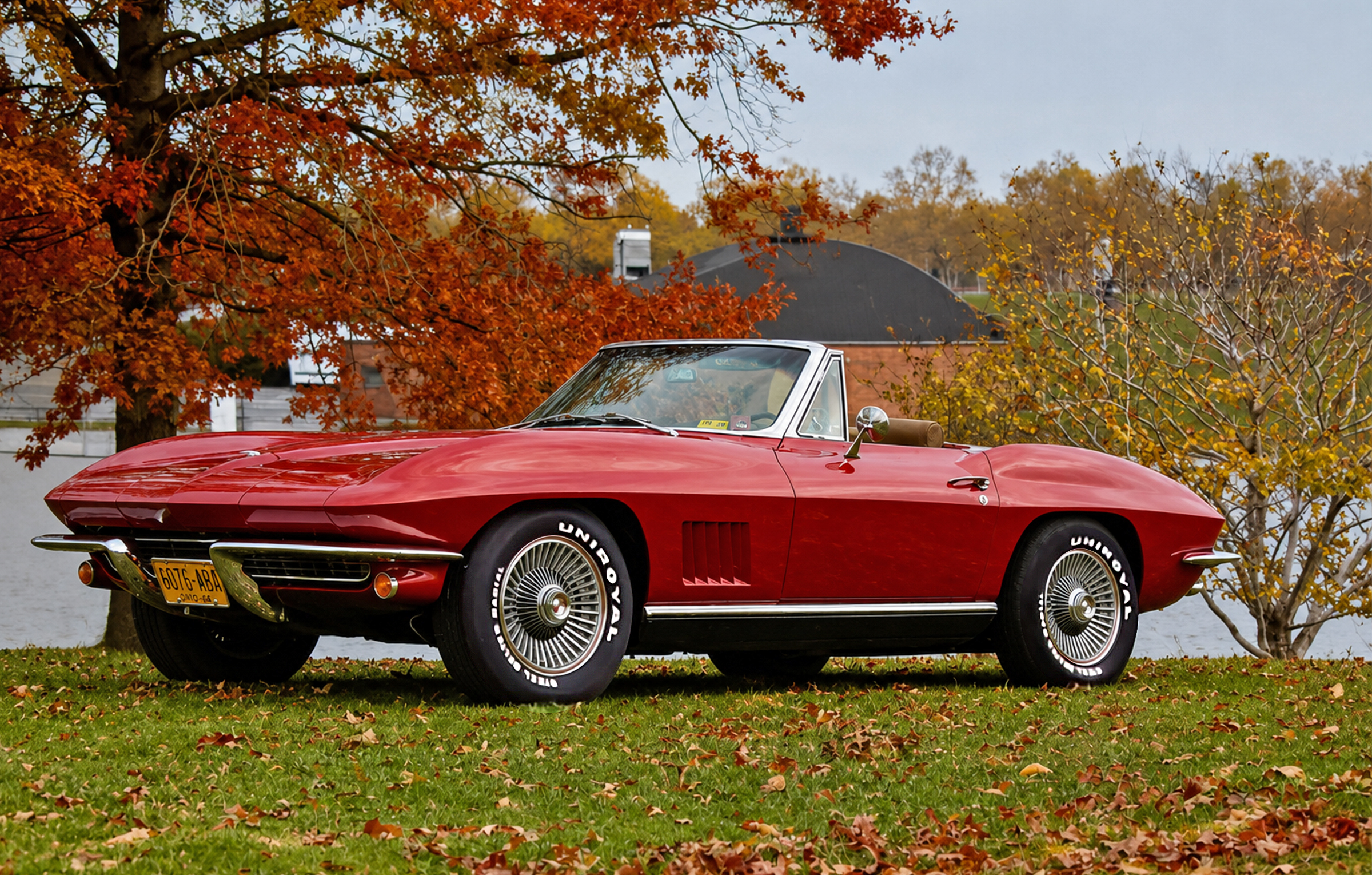
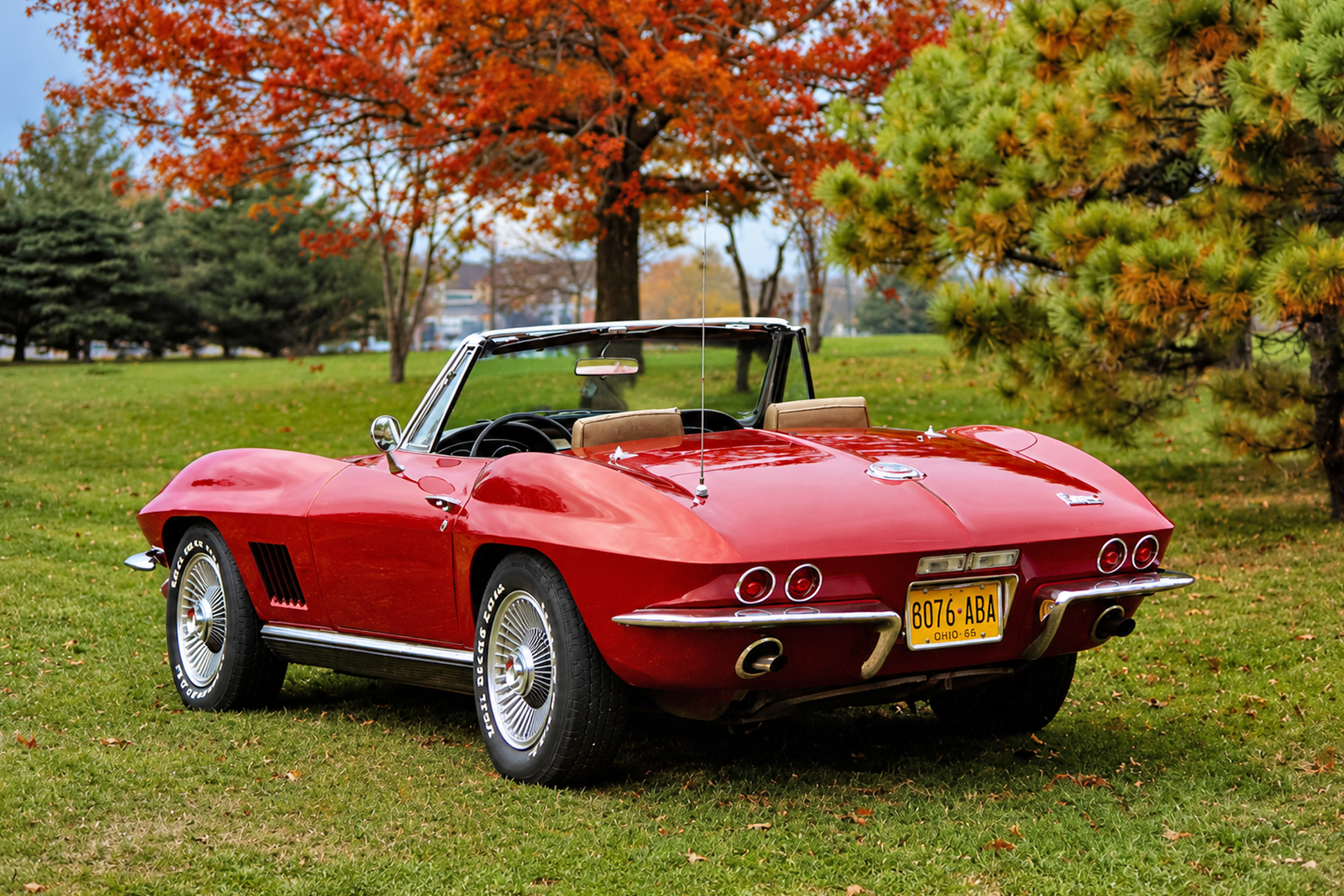
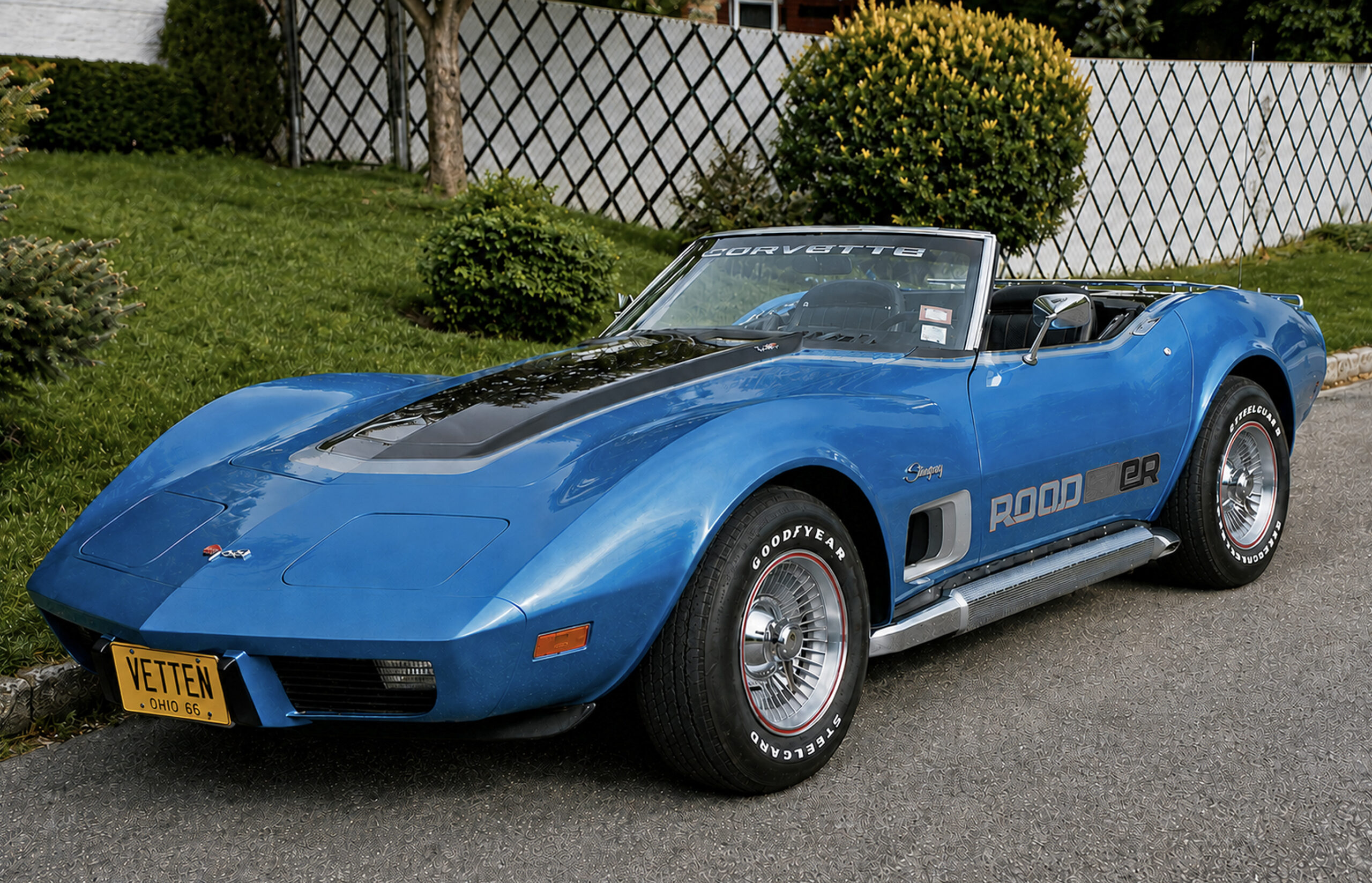
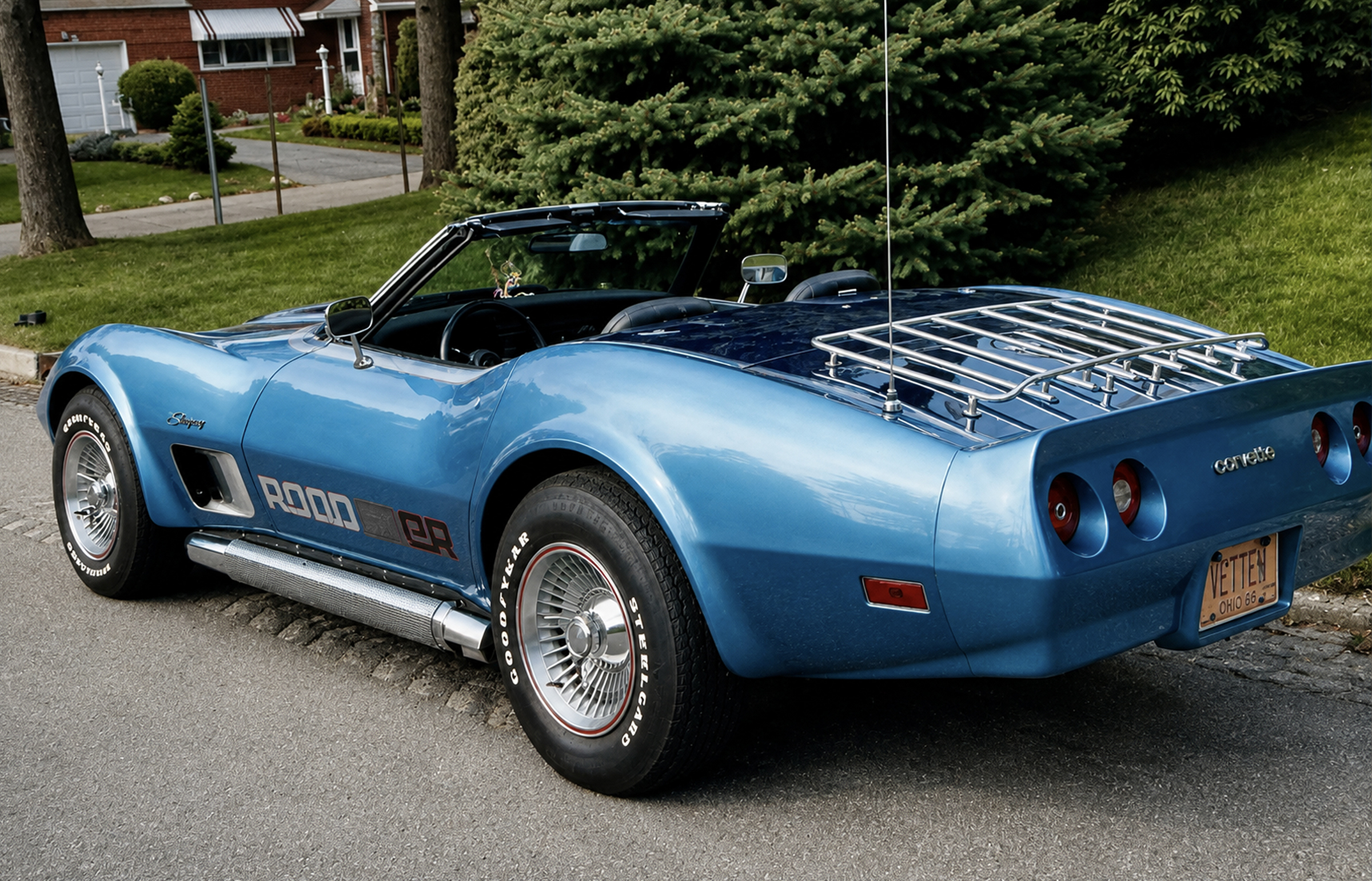
Over the years a couple more Corvettes came and went. A real nice 1967 roadster, sporting a fresh Klingel paint job and a 327/four-speed combo. That was followed by a 1975 model with rare factory sidepipes and of course custom paint and bodywork that included using an ’82 rear cover. Jack’s take on the car…”I liked my body and paint work on the car. It was a 350 small block with a 350 turbo, but it was one of the early smog motors, so it was really lacking in power, but Gerri liked driving it.”
MUSCLE AND LACE
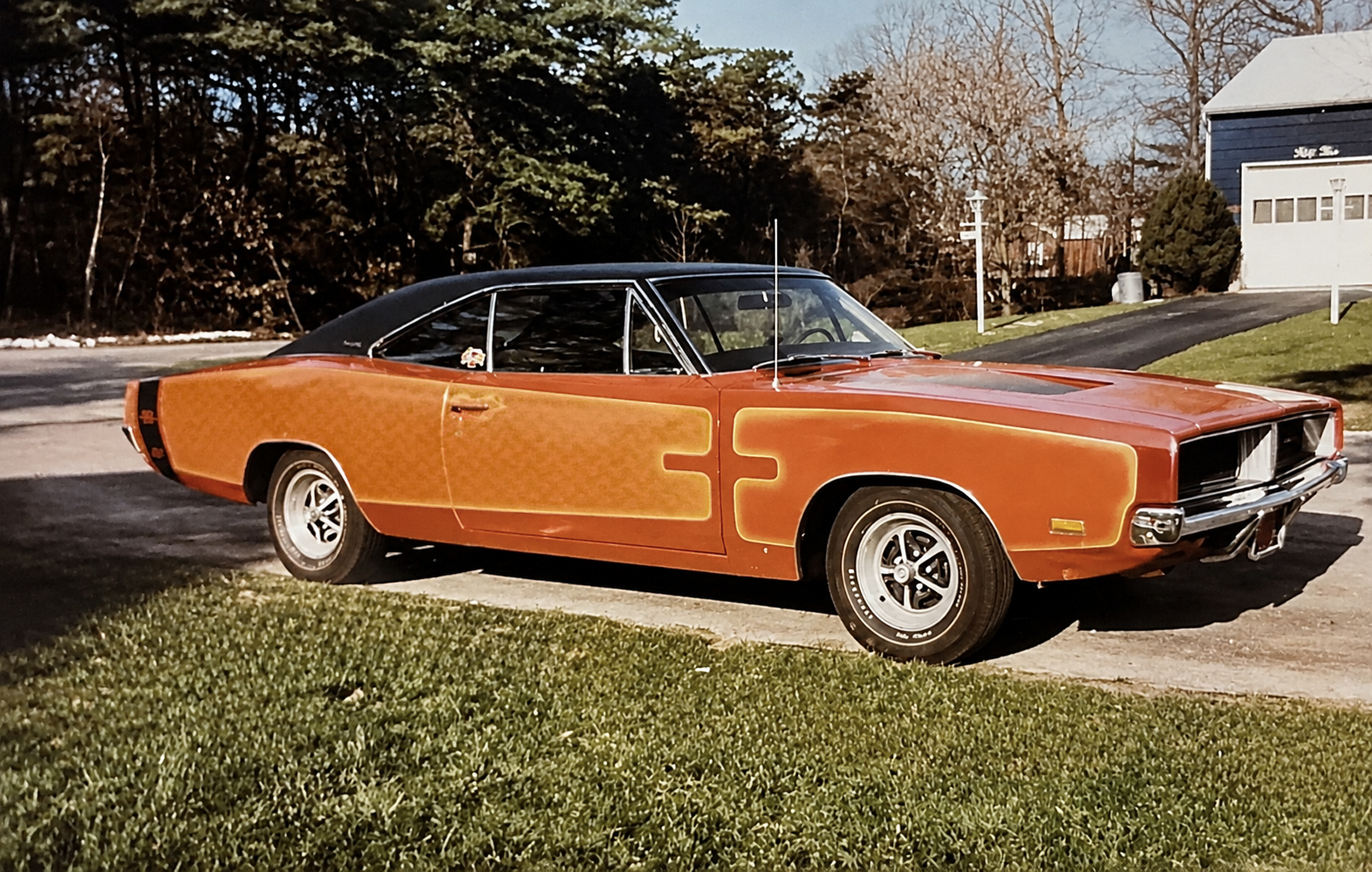
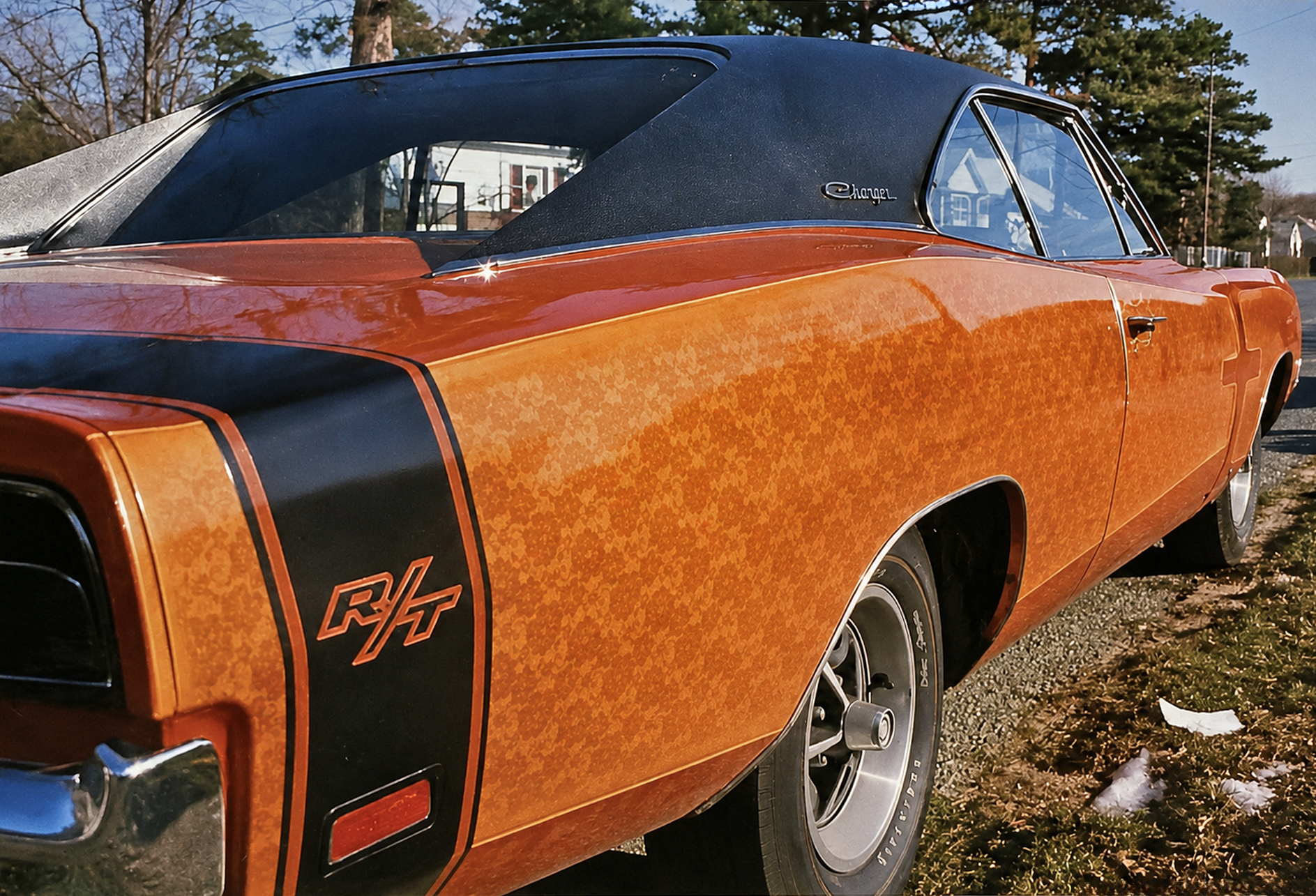
At first glance two things that don’t seem like natural partners might be muscle and lace. Custom painters had discovered the art of lace painting and it quickly became the fad paint scheme of the seventies. It could be subtle or it could be outrageous, but lace was definitely cool for a while. Jack had plenty of muscle car on hand since he owned an ’69 Charger R/T. That orange base seemed like the perfect palette for some subtle fade panels and lace.
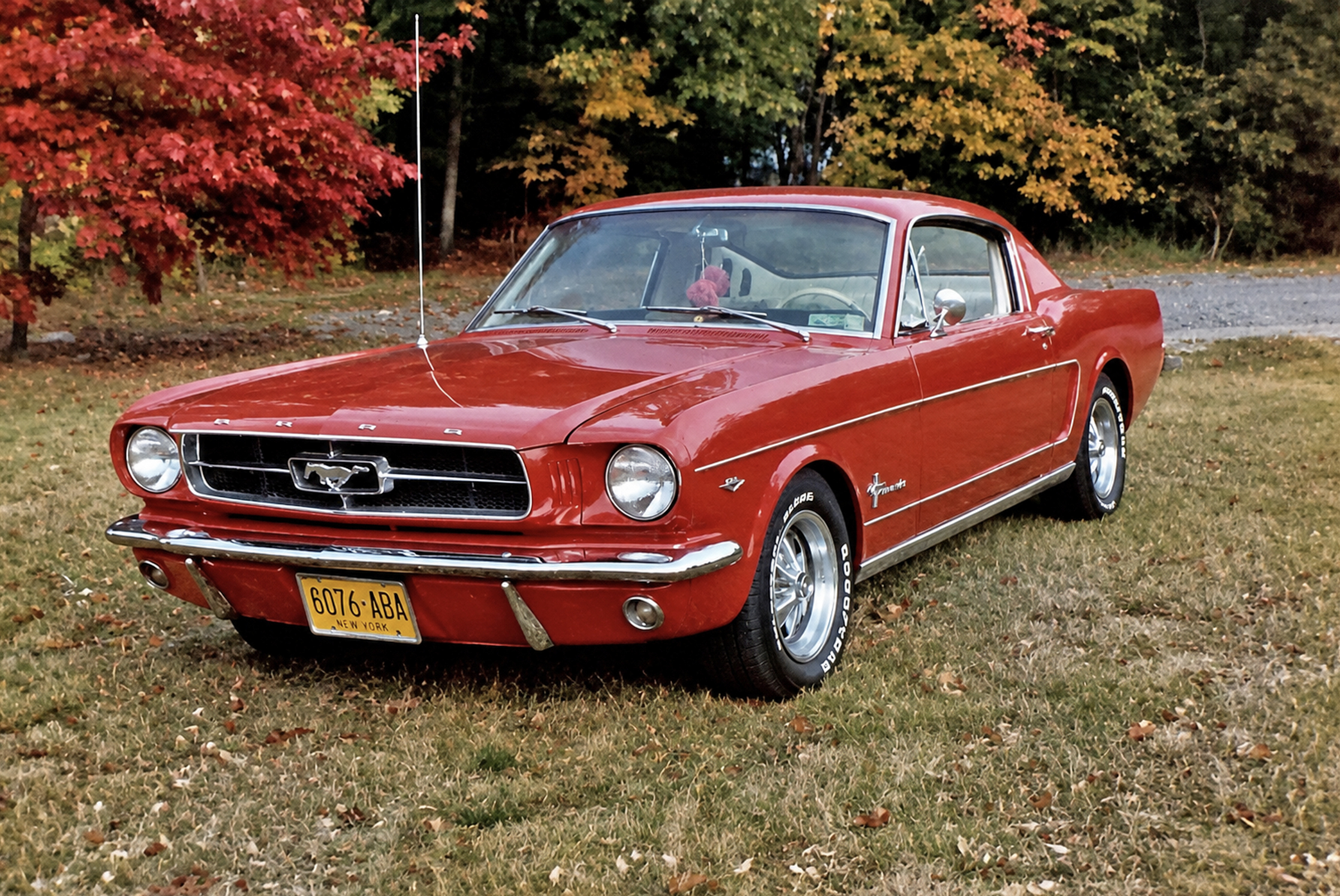
Since we’re talking great sixties cars, we added a shot of his Poppy Red ’65 Mustang fastback.
IT WAS A MATTER OF GENETICS
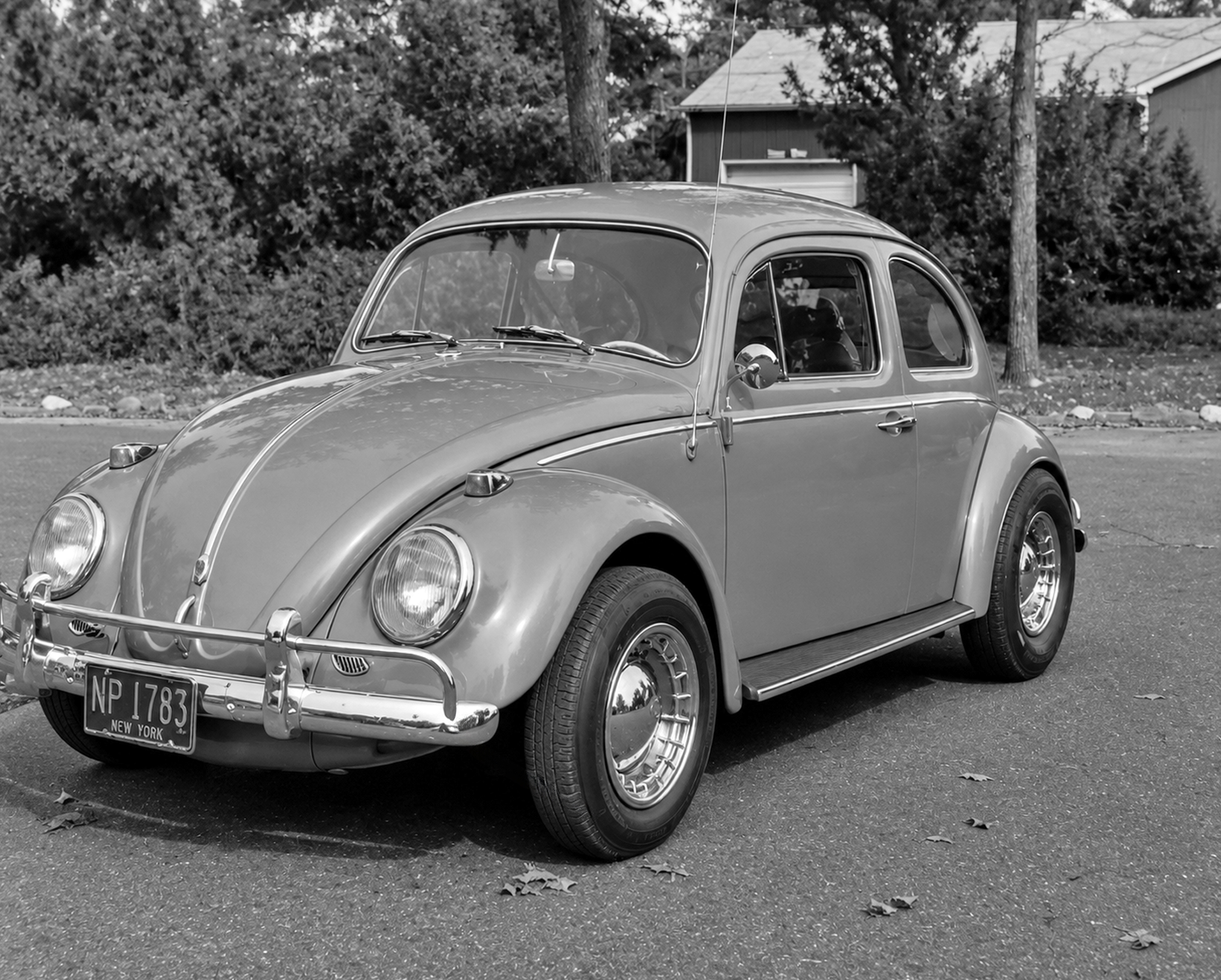
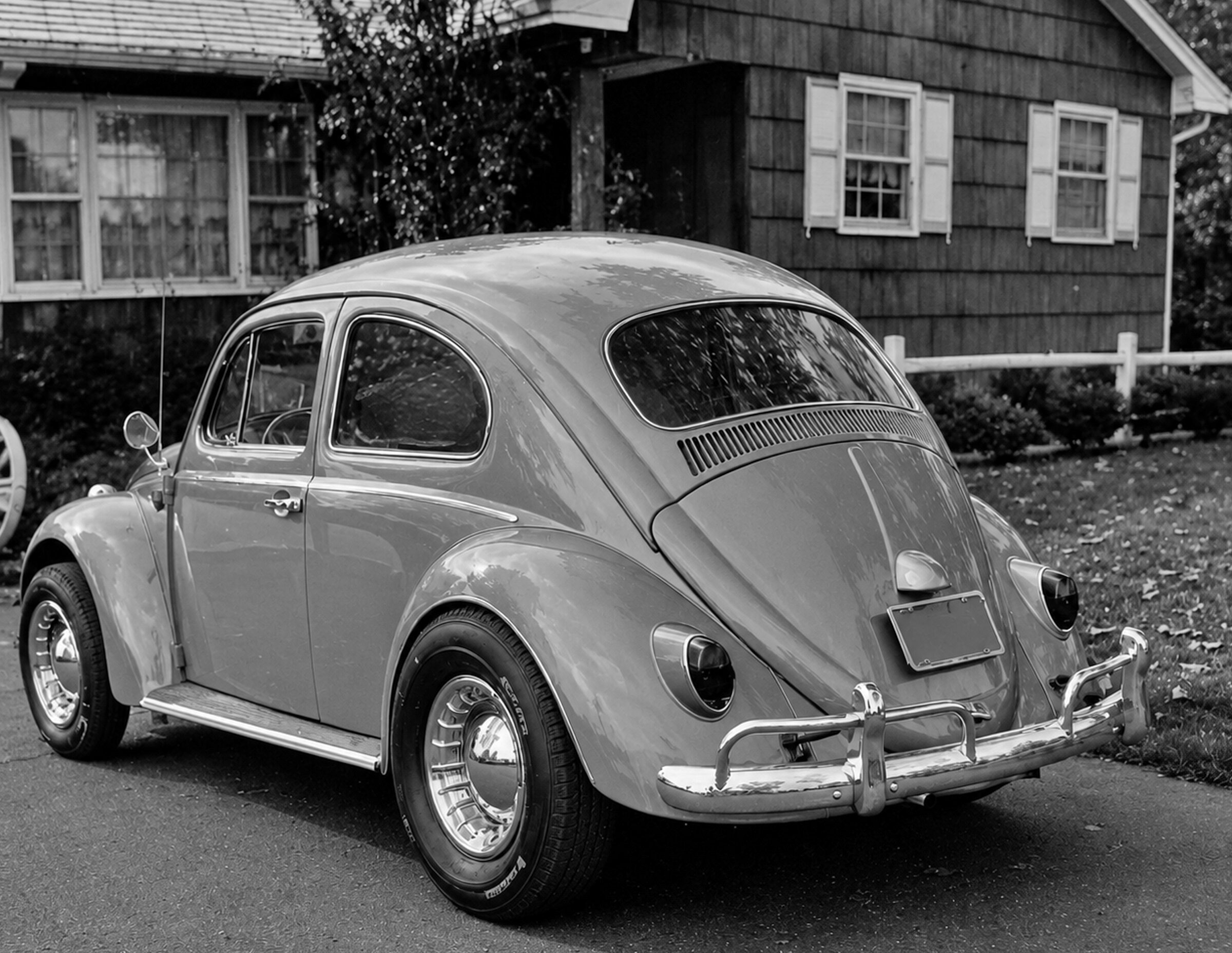
When your name is Klingel it’s just a matter of time before you get into German cars. Volkswagens were a fun sector of the car hobby (and still are) and they lent themselves to customizing too.
Mild or wild, his bugs were neat. It could be as simple as literally reversing the wheels and give a mild radius to the rear fenders. Cut carefully and no paint work is required and door edge guard finishes it nicely. Those reversed wheels were treated to 1956 Cadillac outer hubcap rings that act as beauty bands around the baby Moons. The ’56 Caddy caps were two-piece affairs, a couple hours with pliers bending the tabs and the center came out leaving these great beauty rings.
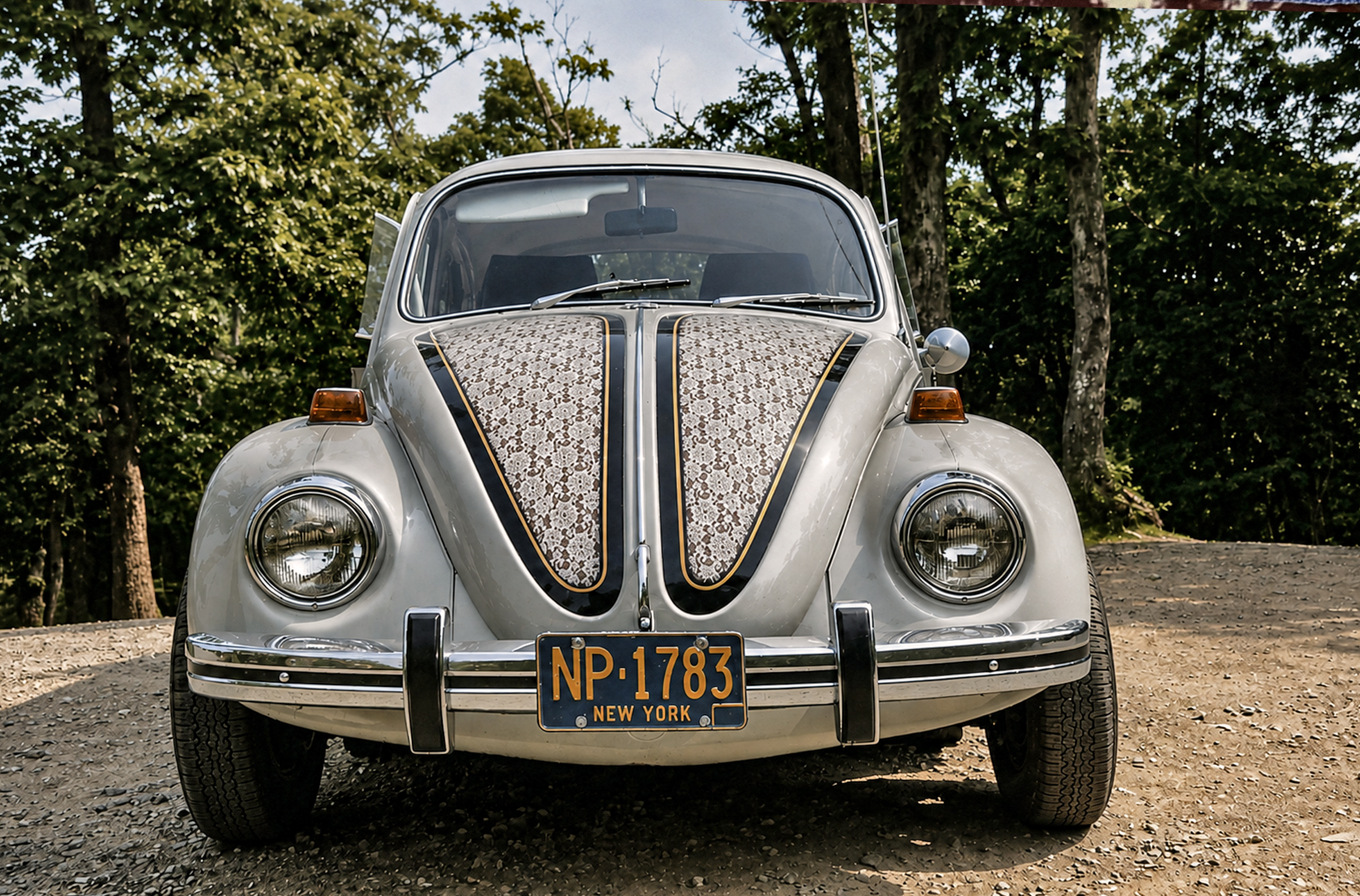
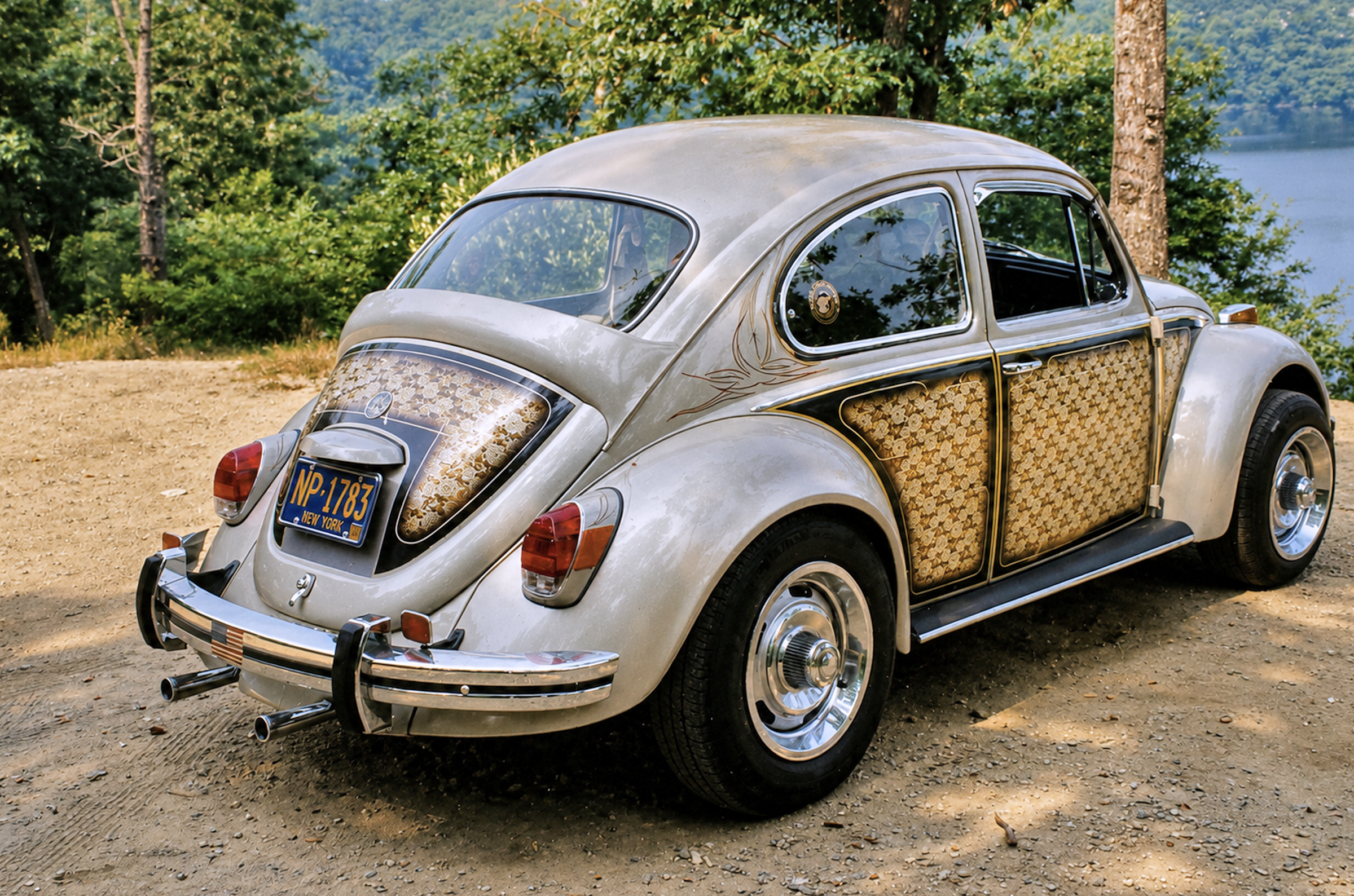
Remember that big roll of lace Jack bought? He customized his wife’s bug with panel painting and faded lace. Chevy Rally Wheels look right at home on the bug.
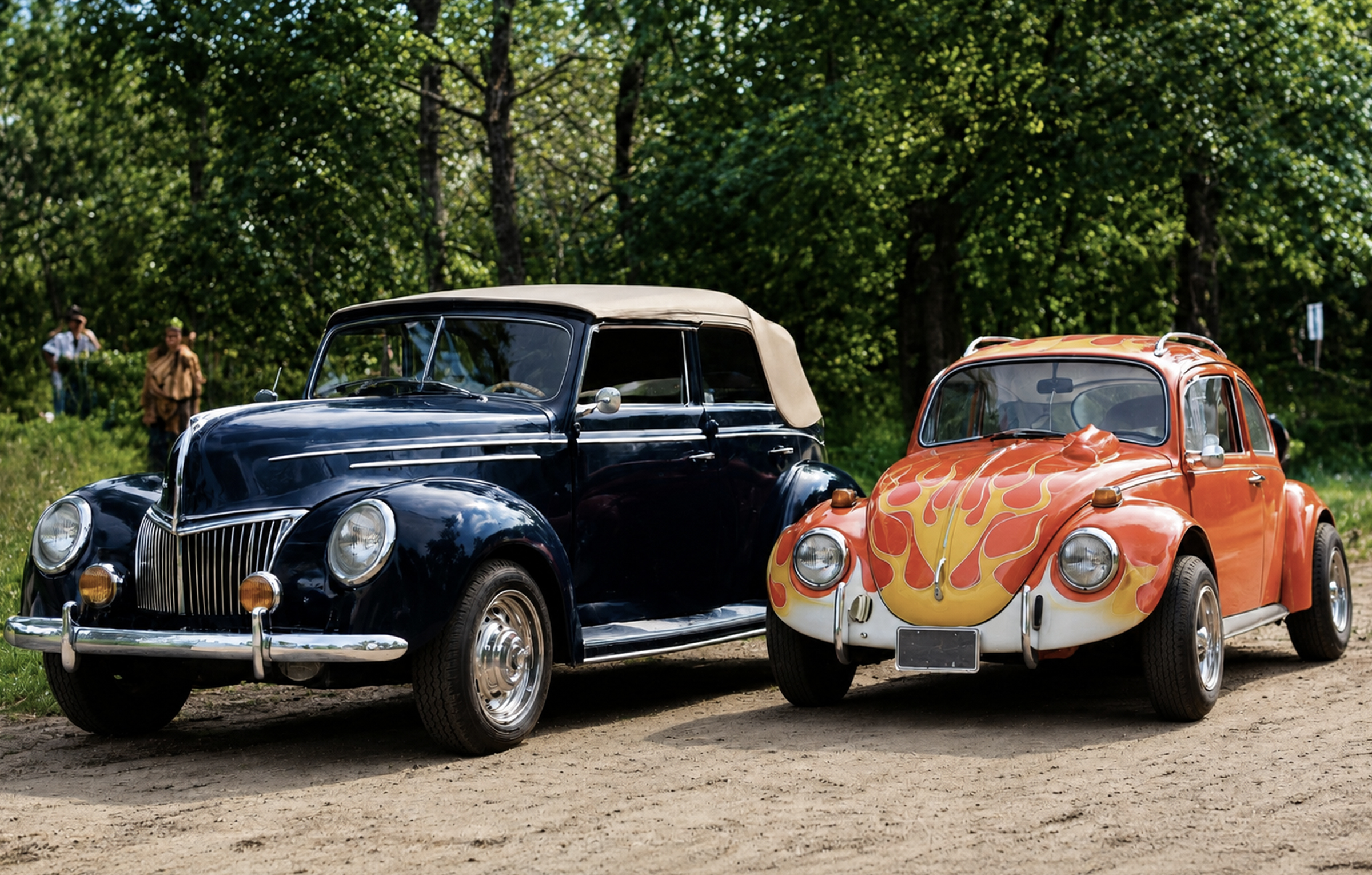
The VW accepts traditional hot rod components too. One of Jack’s flame paint jobs, front nerf bars, mag wheels and flared fenders all work well on the beetle. The flames extend over the roof and Jack’s ’39 Ford makes for a nice size comparison.
THEN HE GOT THE ITCH FOR ANOTHER FIBERGLASS CAR
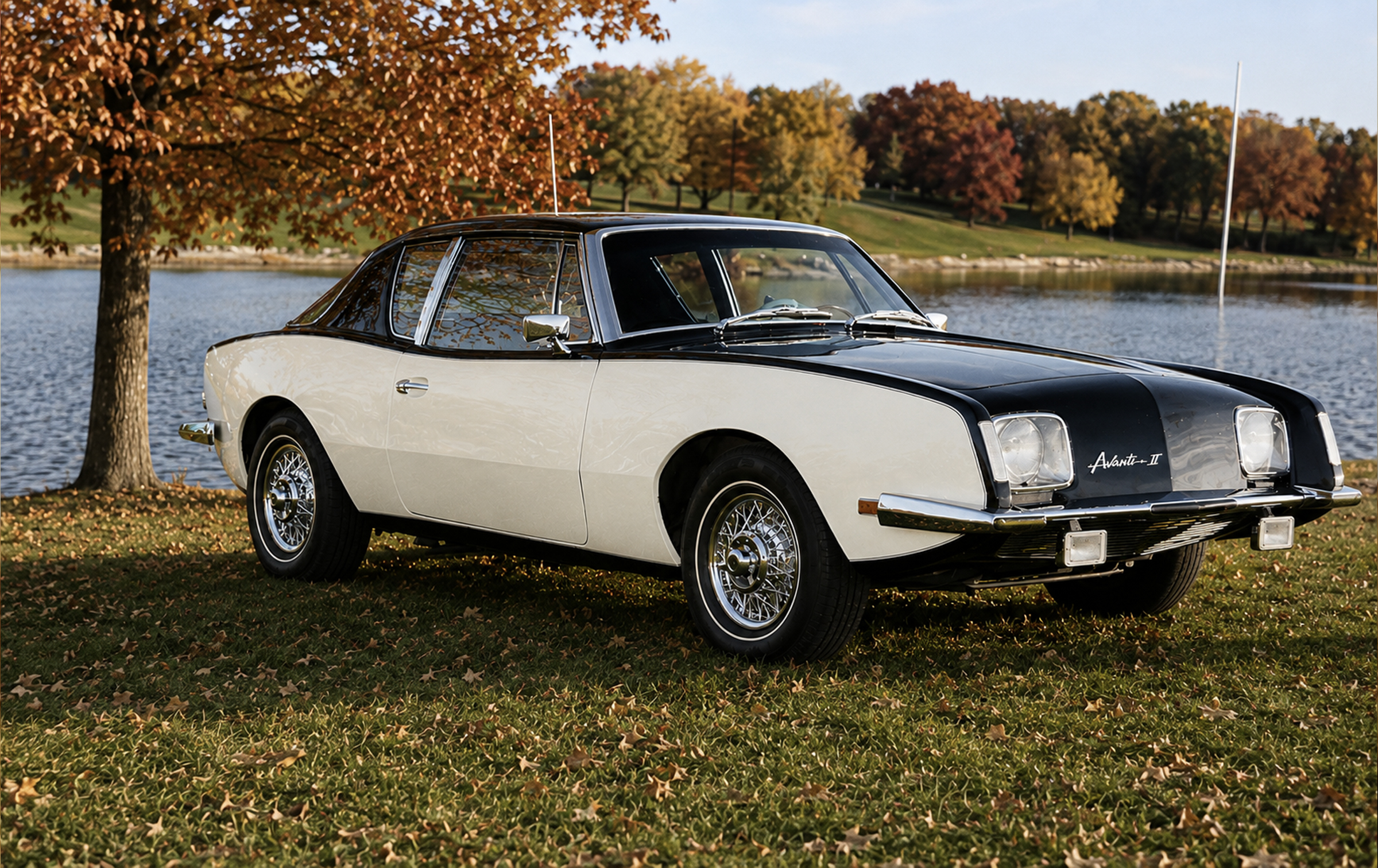
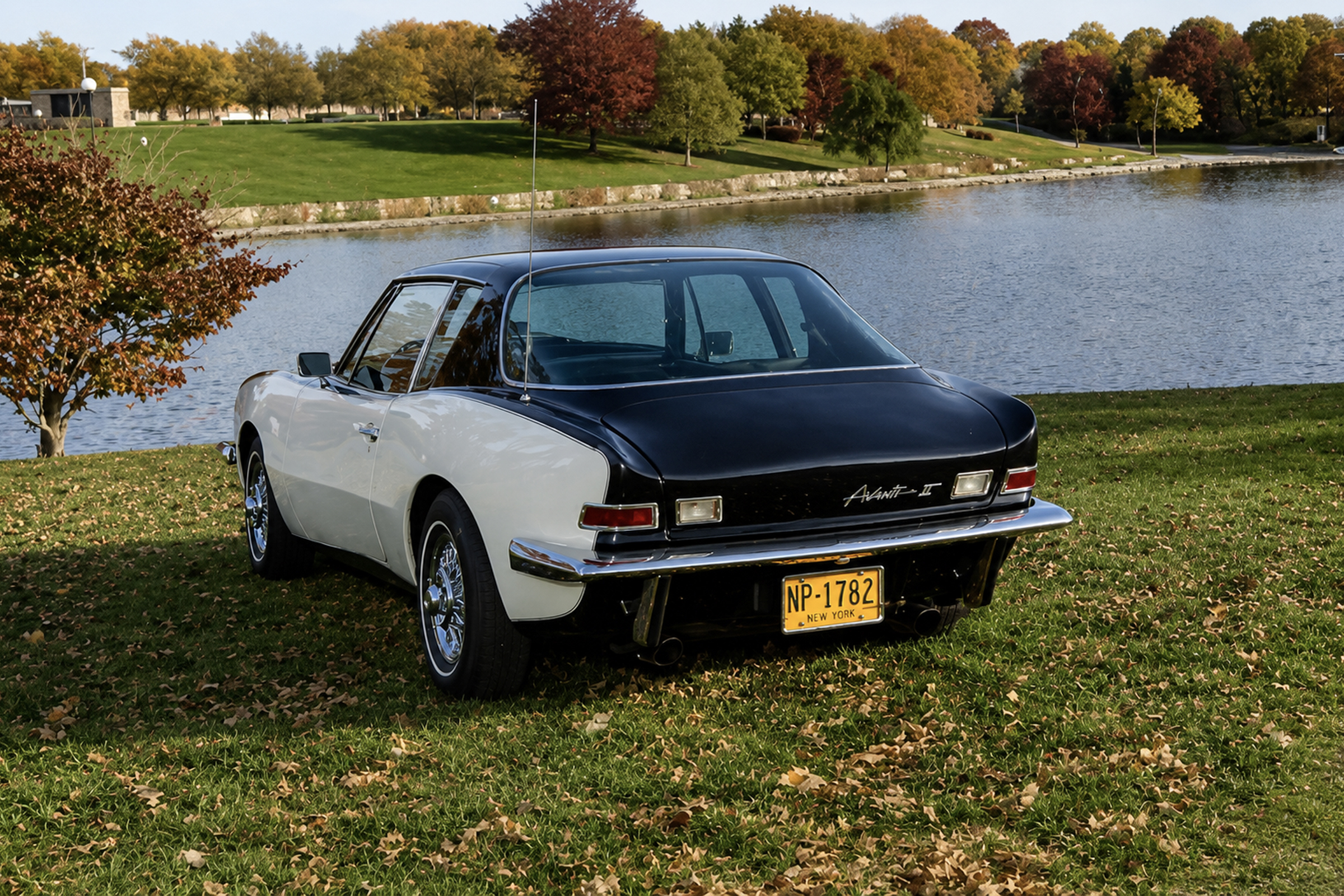
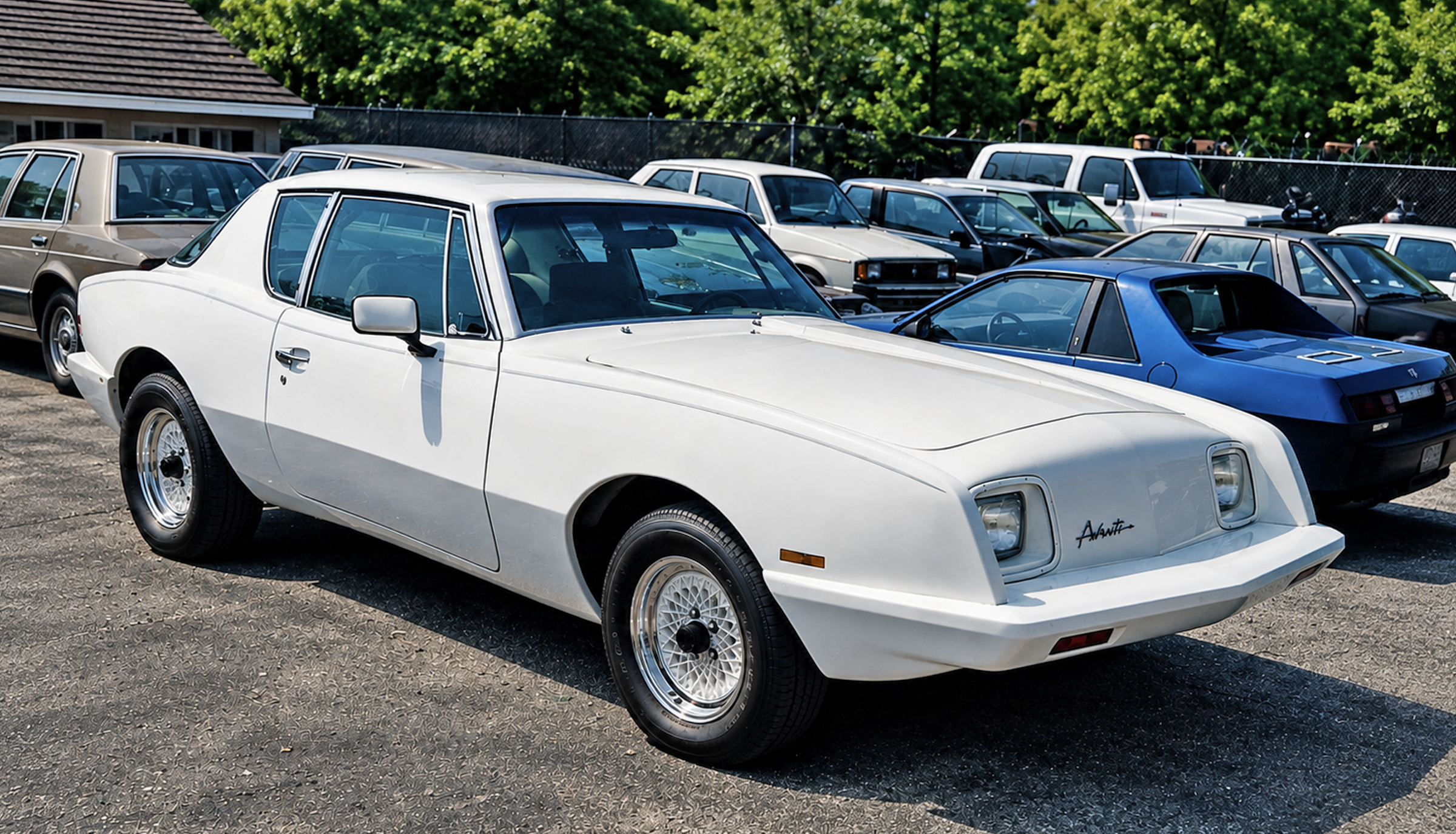
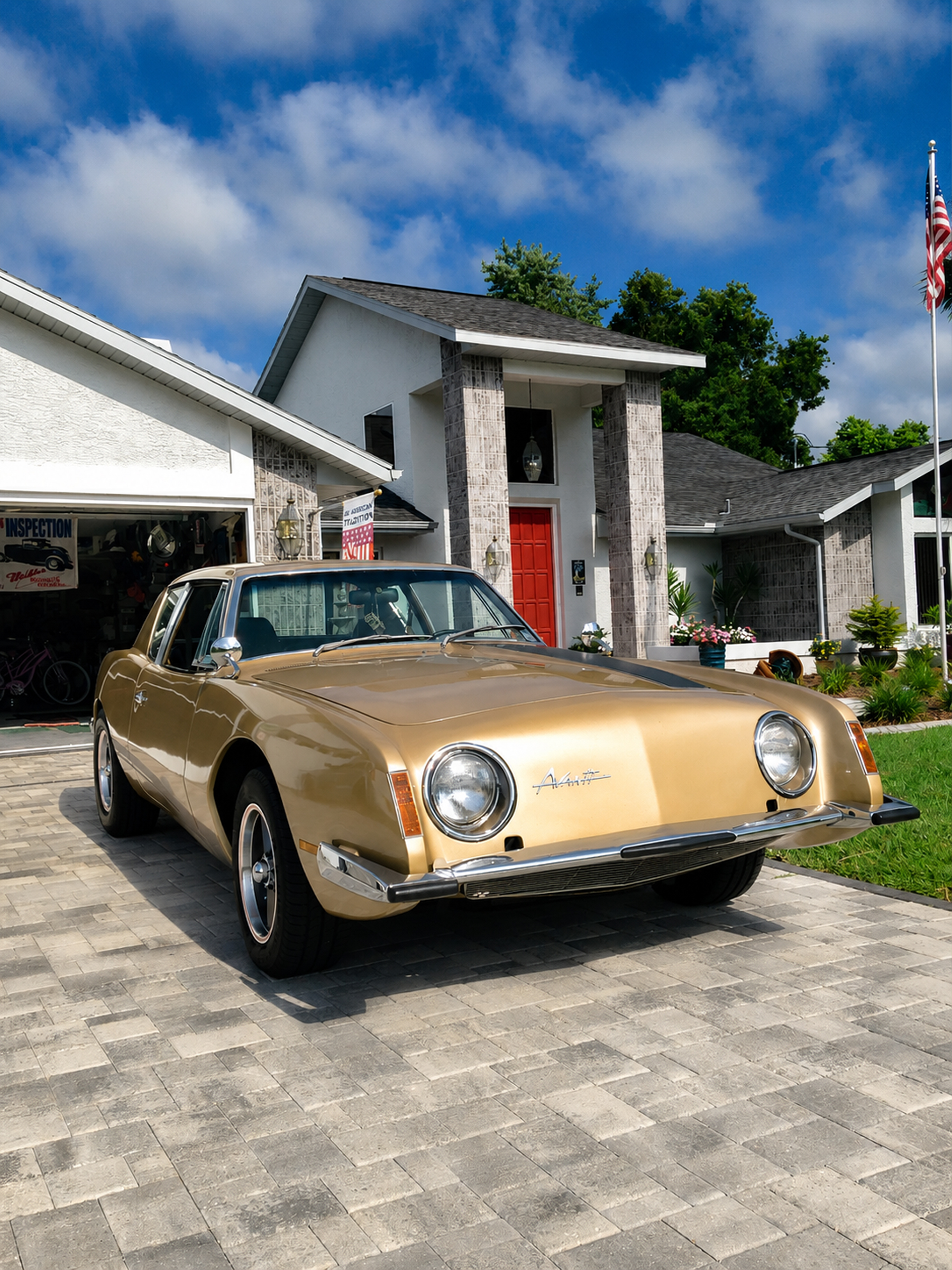
Jack always liked Studebakers and had a few very nice Gran Truismo Hawks over the years, but it was the Avanti that really caught his eye. Another design by Raymond Loewy Design the car had a gorgeous fiberglass body built by the same company that produced the original 1953 Corvette bodies.
By 1962 Studebaker was struggling and the Avanti was one of the first four-passenger, personal performance cars. It’s mission was to help save Studebaker. Initial response was strong, but a series of manufacturing problems lead to delayed deliveries and cancelled orders. The two years of Studebaker Avanti production resulted in less than 6,000 units. While Studebaker stopped producing the Avanti in 1963, they sold the rights to the name and design and the Avanti II was born.
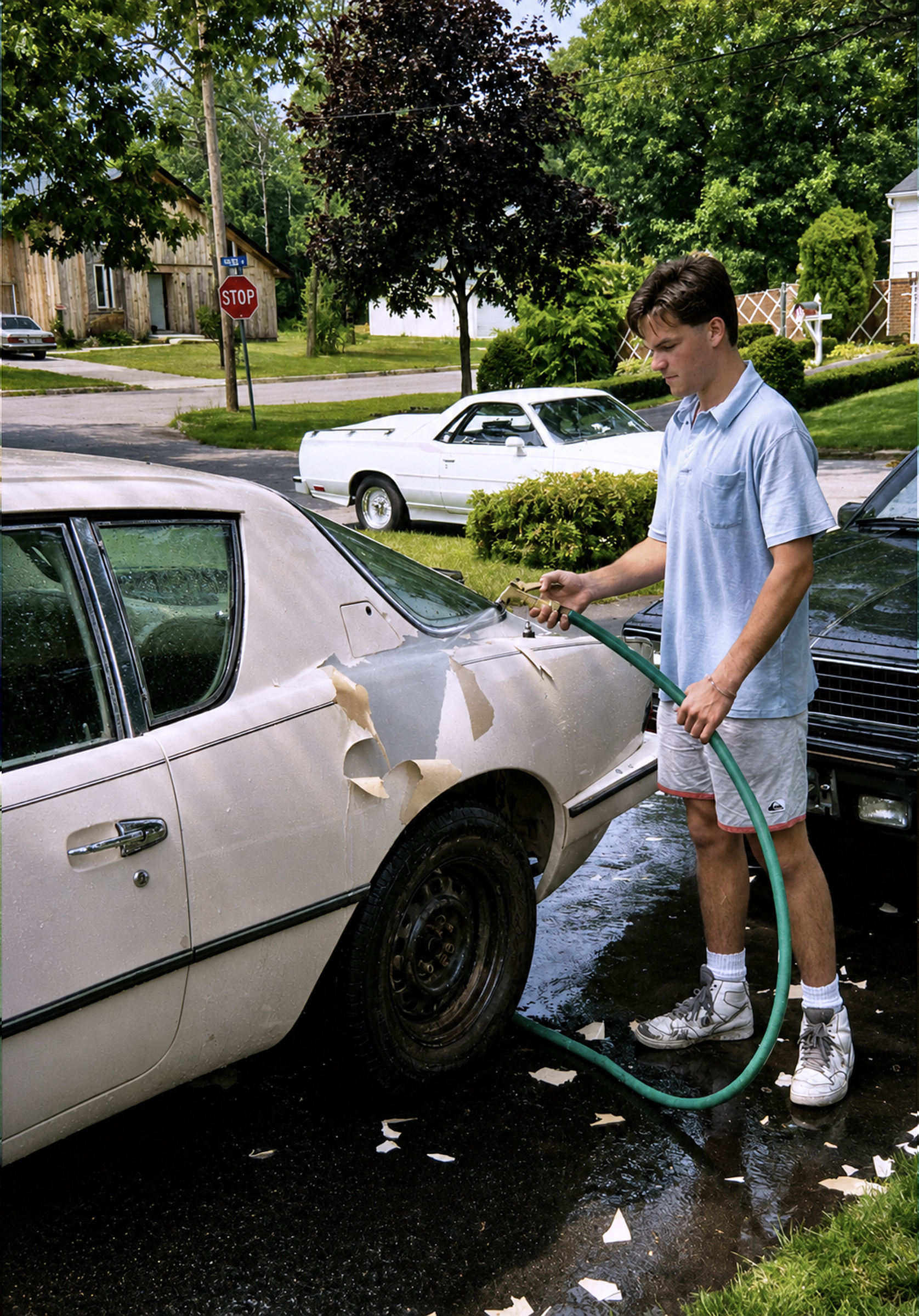
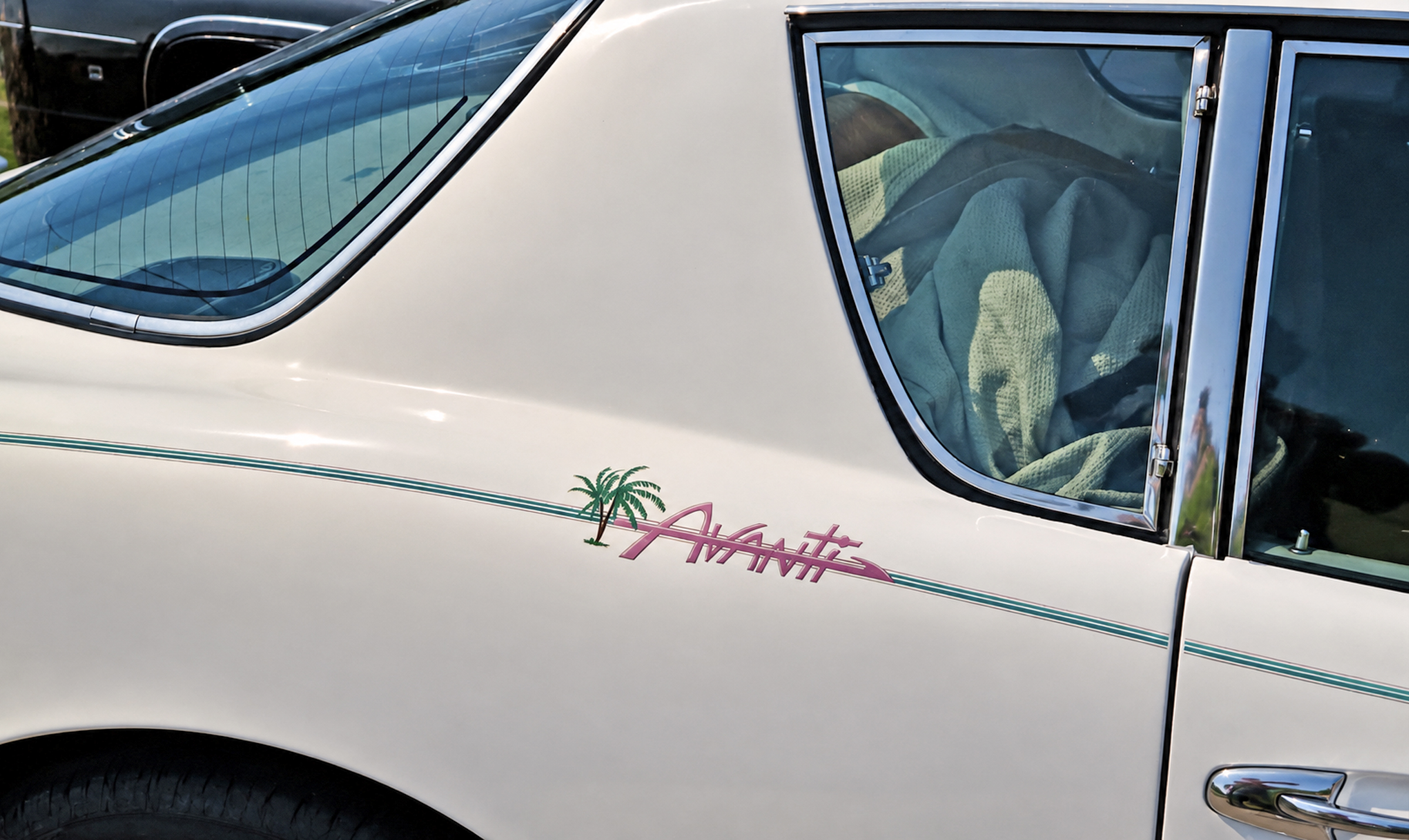
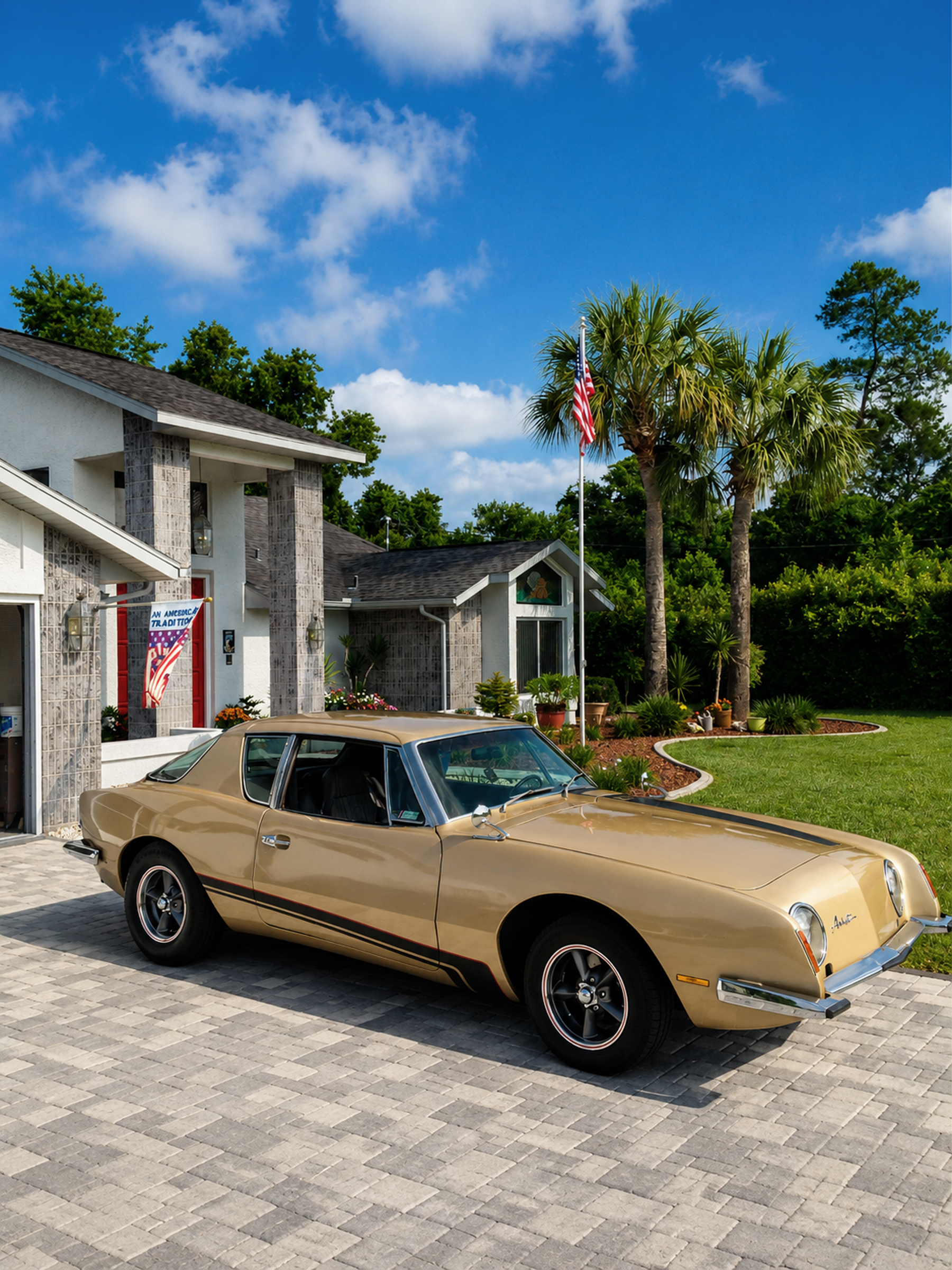
It was not uncommon to find an Avanti in the Klingel garage. This 1966 Avanti II was perfect for the two-tone approach in a dark green over pastel green paint scheme.The body needs no real style changes, it Is that good. The white Avanti II remained monochromatic and was repainted after a young Kevin Romeyk stripped the original paint off the car. In 2016 Jack was driving a gold Avanti, he added the satin black graphics and tasteful five-spoke wheels.
NEXT, SOME QUALITY TIME IN THE TUB
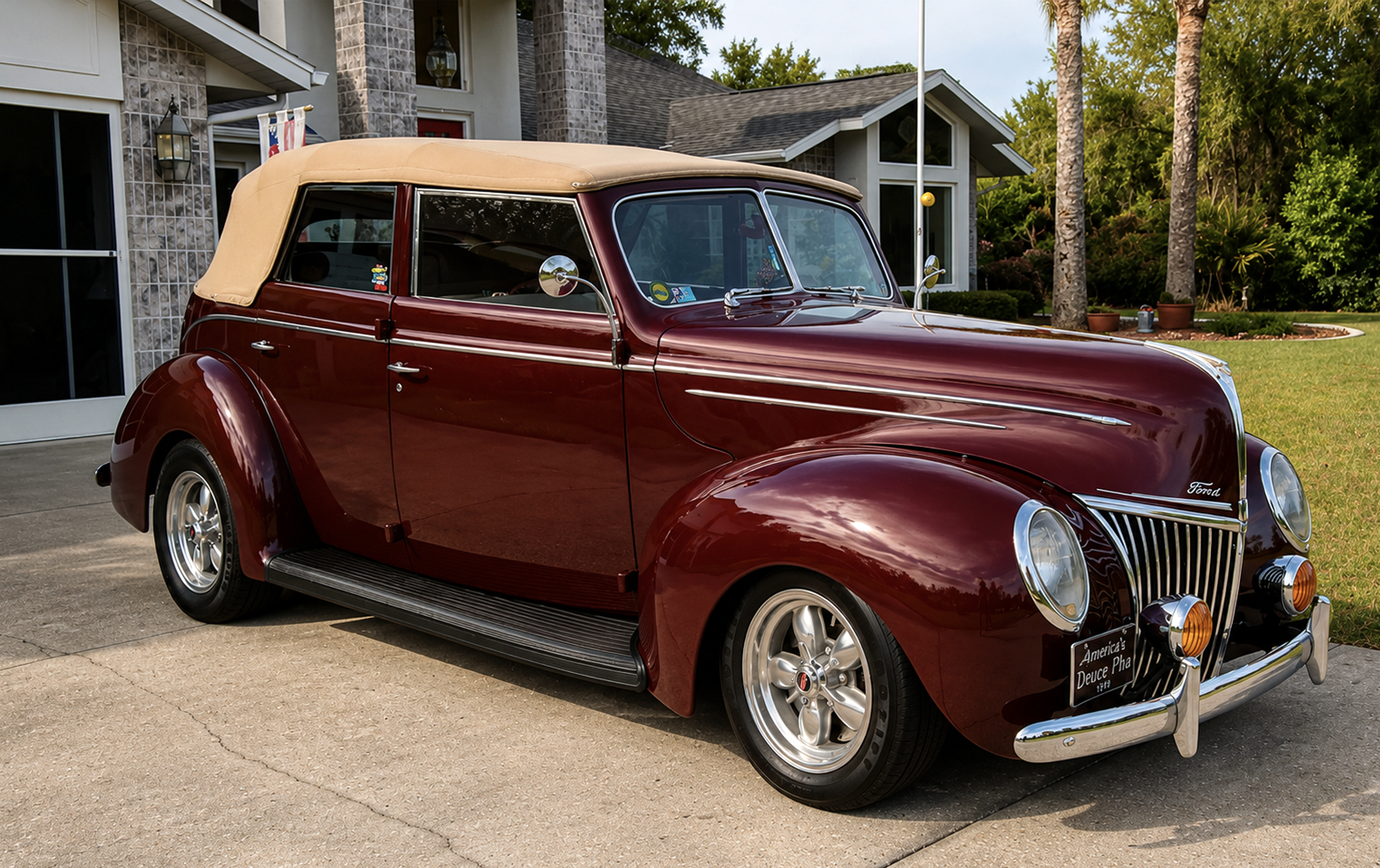
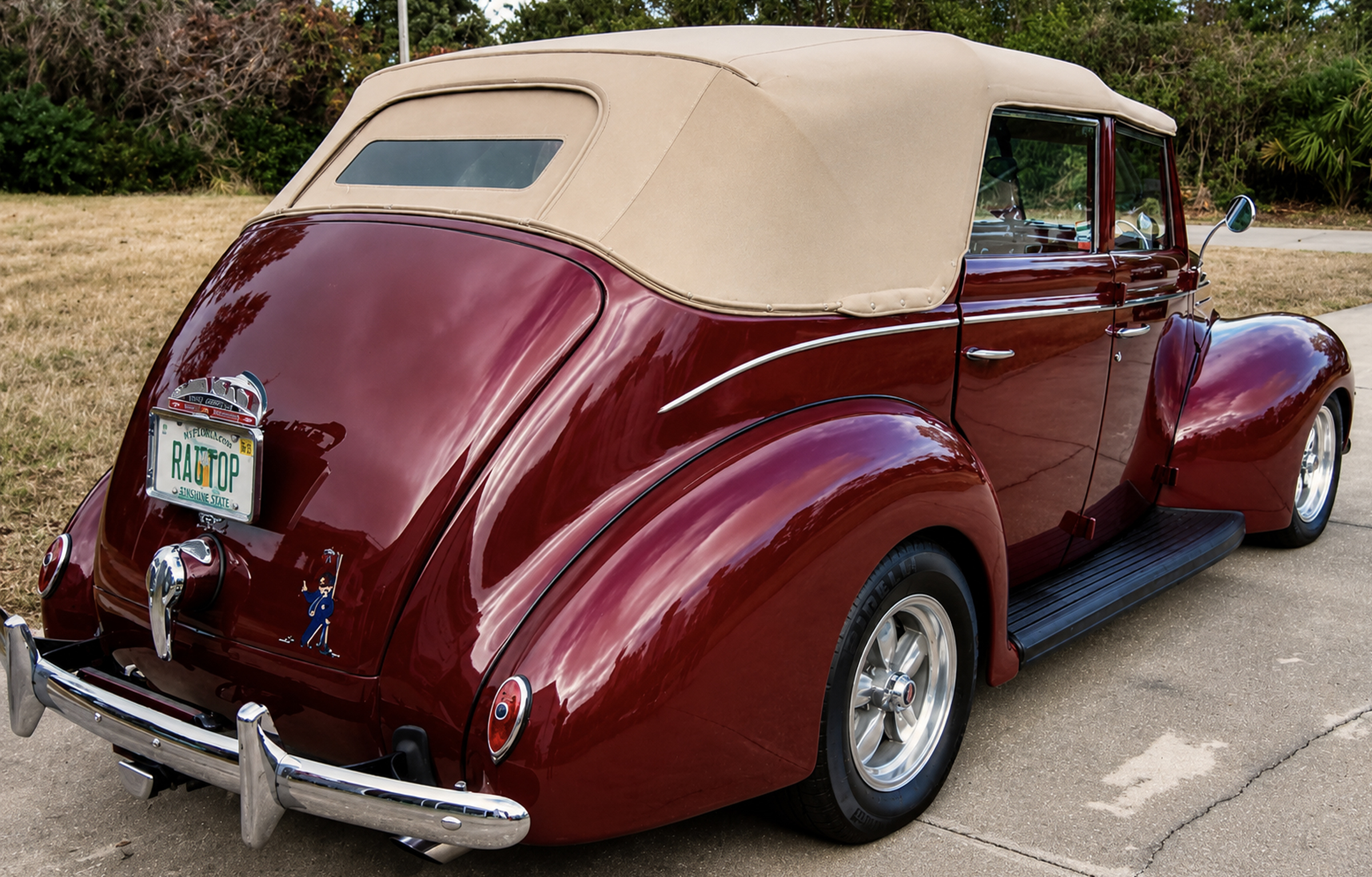
After doing bodywork on fiberglass cars you get the itch to spend some time in the tub. Of course old faithful, Jacks ’39 Ford Convertible Sedan, had remained in the Klingel garage since the late sixties, a feat no other hot rod could manage. The first build saw the car covered in the “new” hot color, 1968 Pontiac Verdoro green, lots of miles resulted in a bit of a road rash, so the fenders went to black.
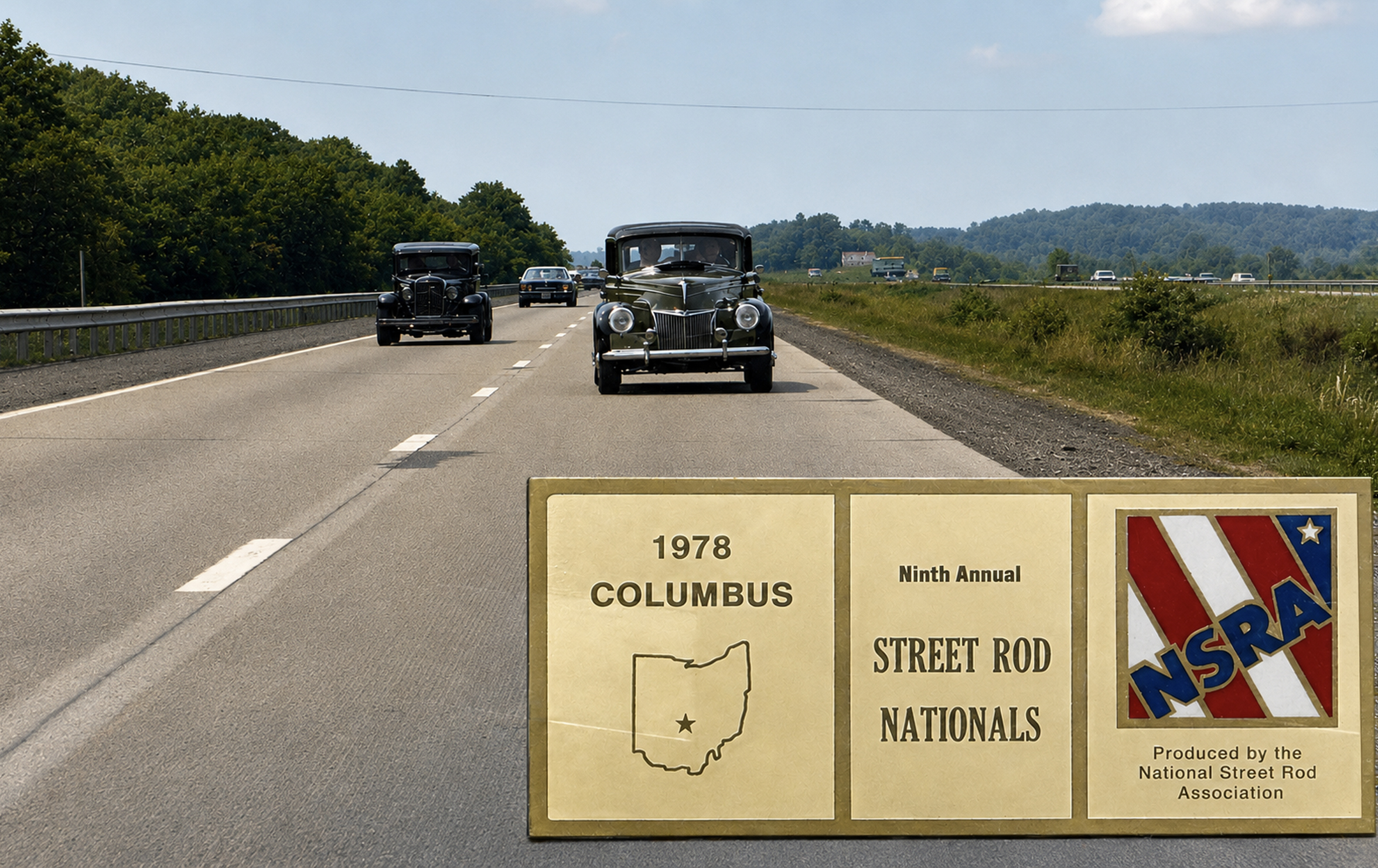
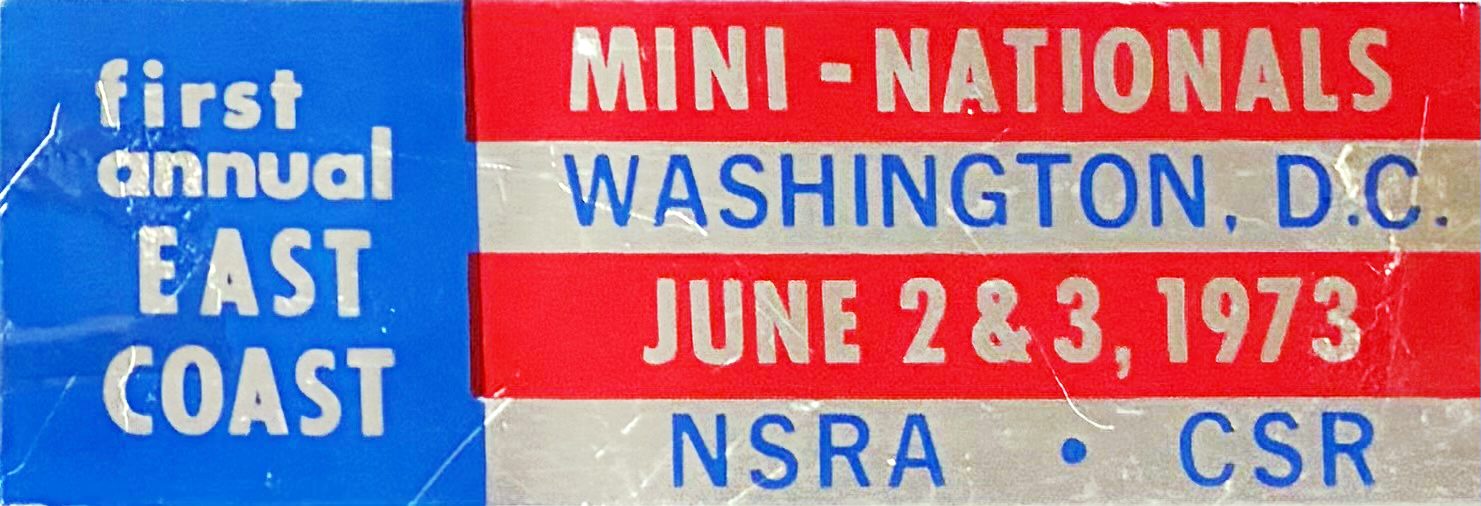
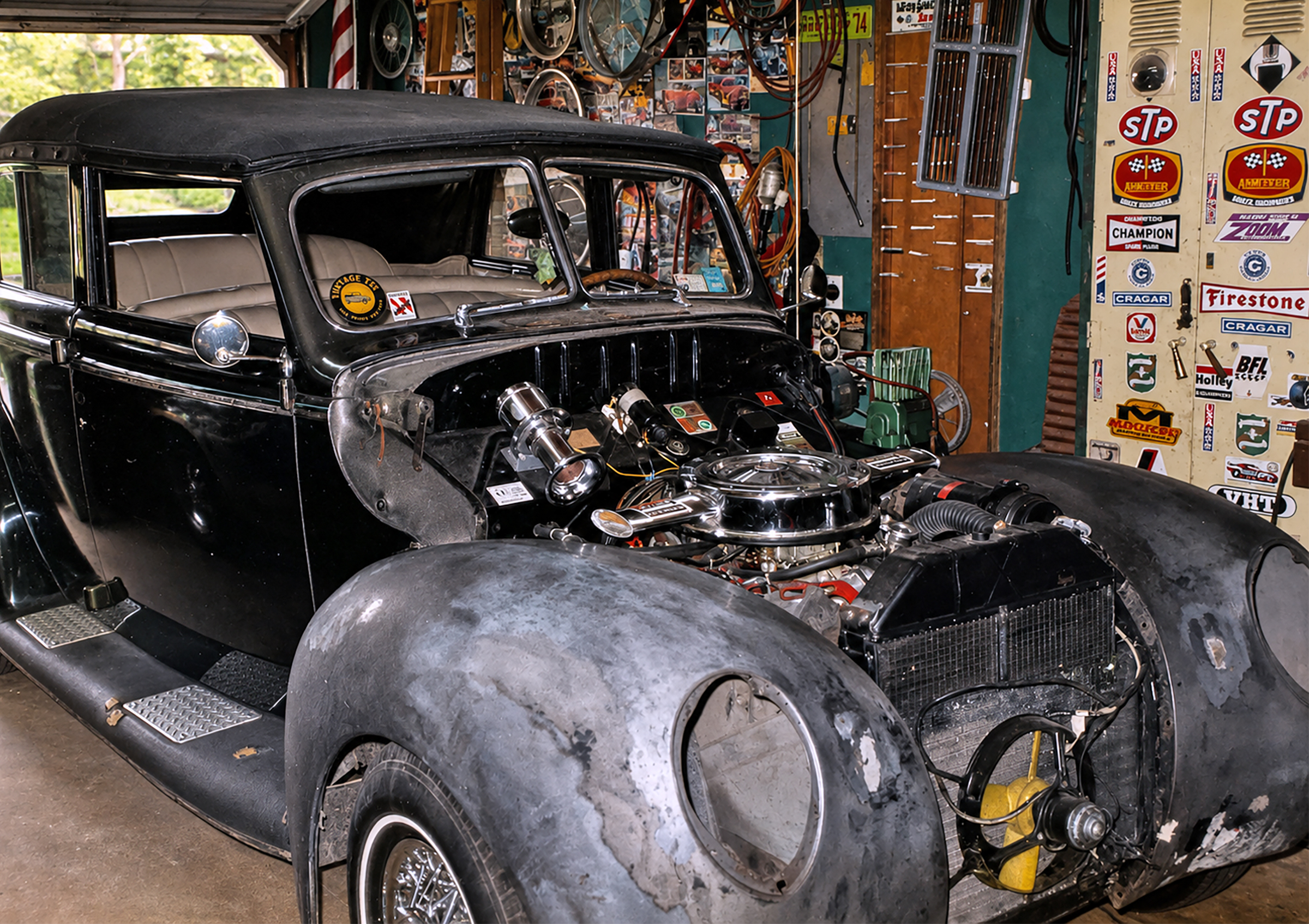
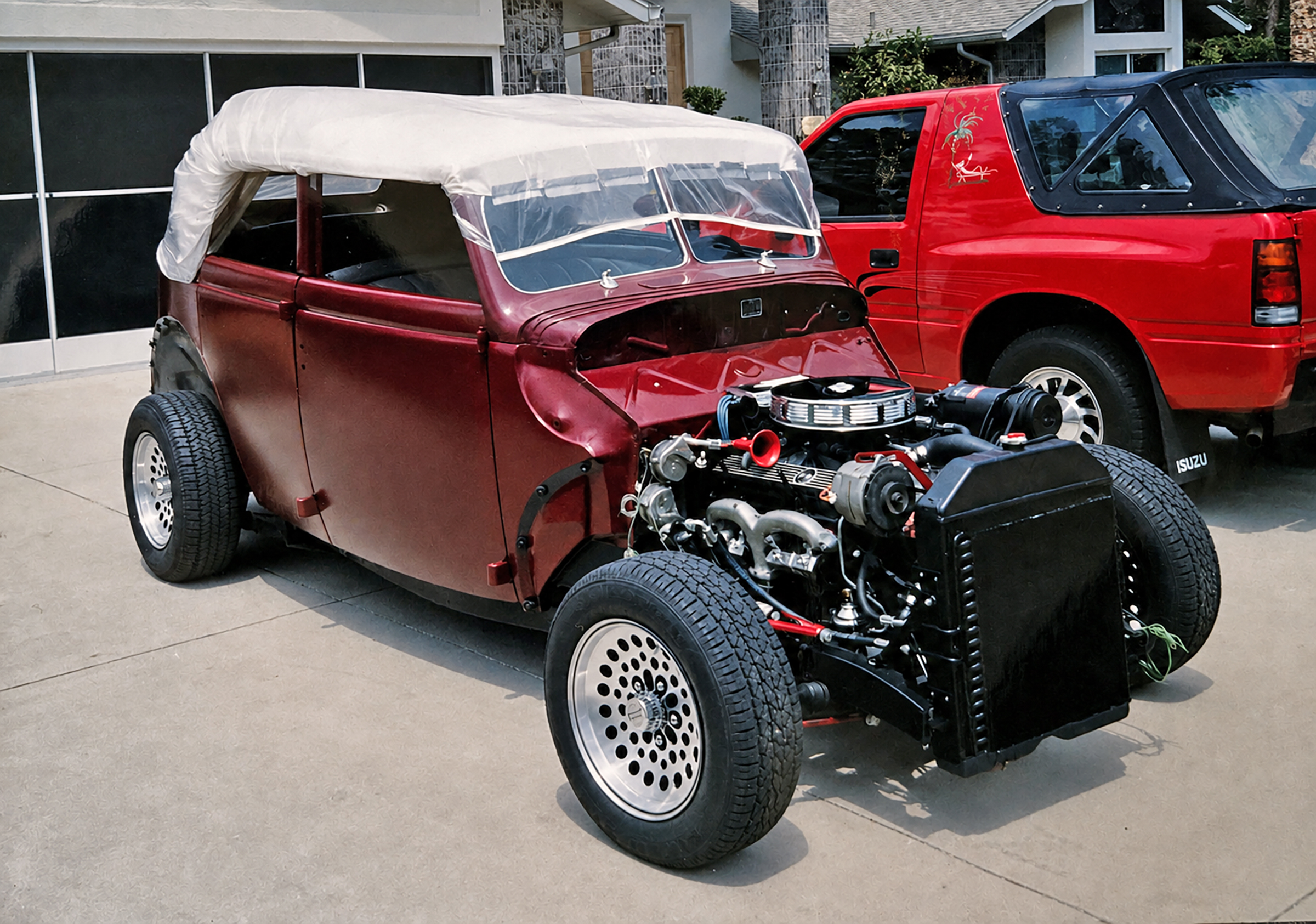
This hot rod has been on the road non-stop since 1968. It made the drive from Long Island to Rockville, Maryland for the first Nats East and motored to Columbus, Ohio for the 1978 Street Rod Nationals and the list goes on… racking up over 40,000 miles. After a partial tear-down, the bare metal panels were treated to a nice burgundy paint job. You may notice in the tear down photo the ahh-ooga horn and the Vintage Tin of Long Island club decal. Oh, remember that “kid next door” Kevin Romeyk stripping the Avanti? He became a life long pal and today Kevin owns the burgundy ‘39.
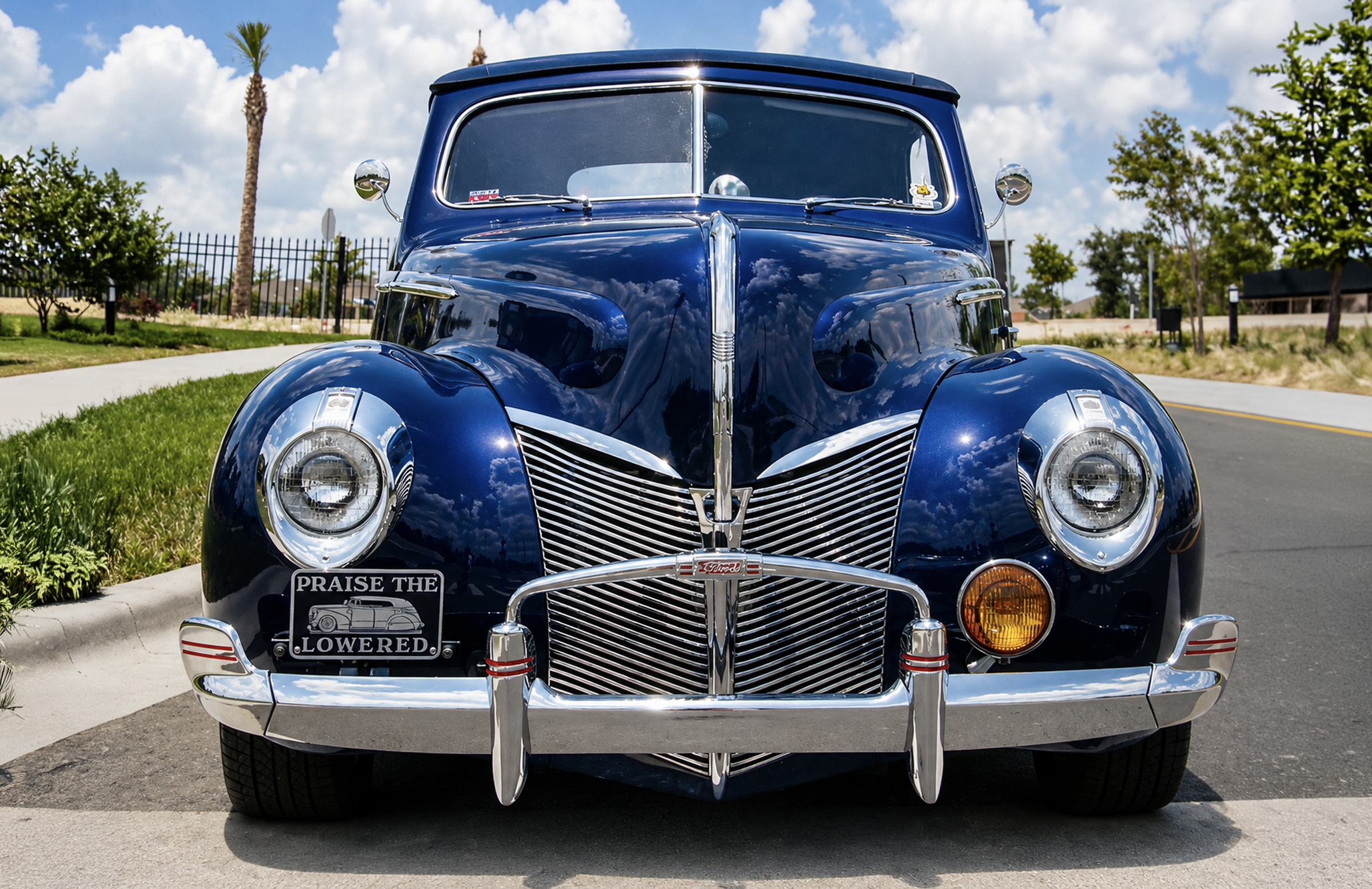
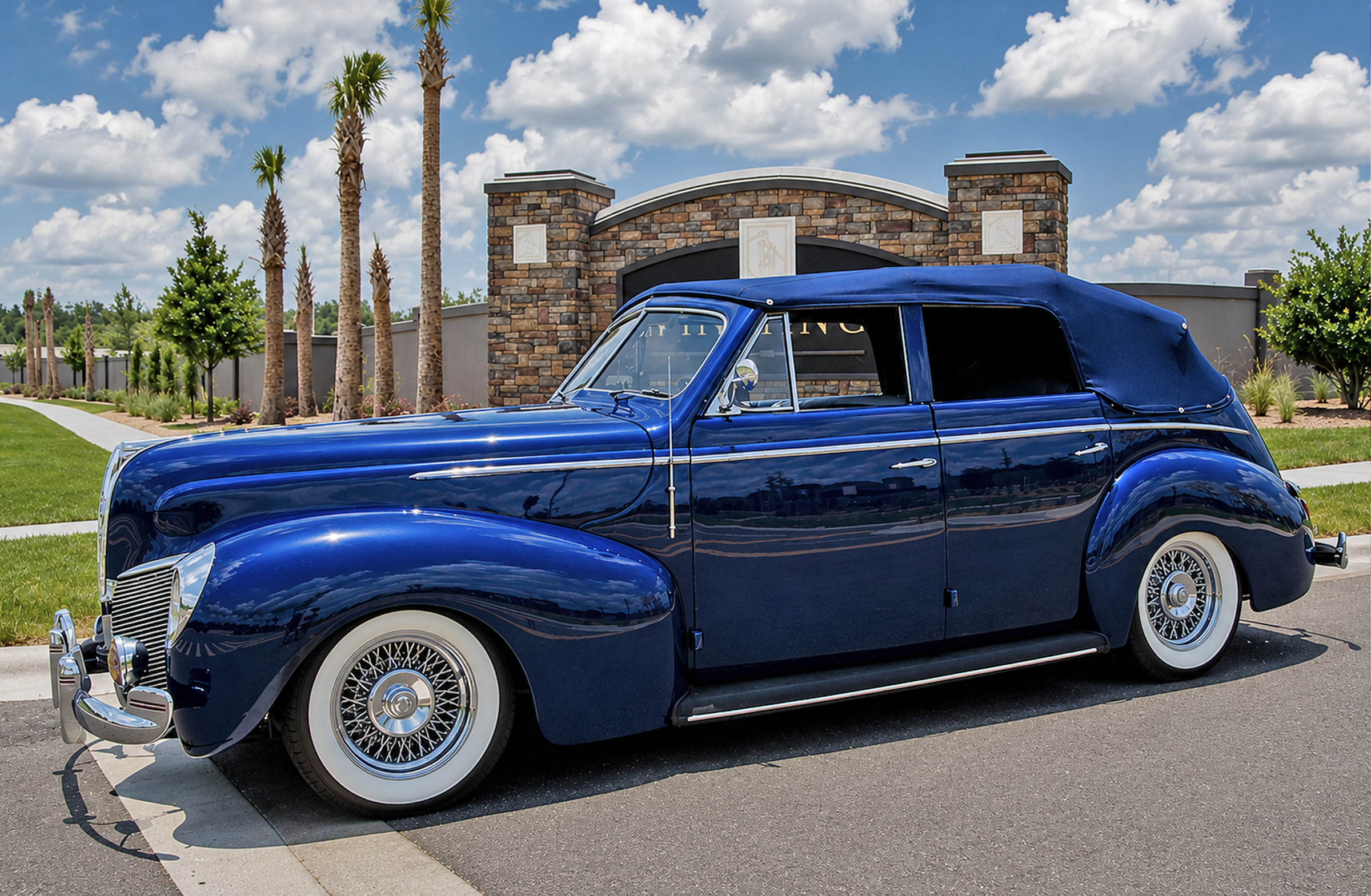
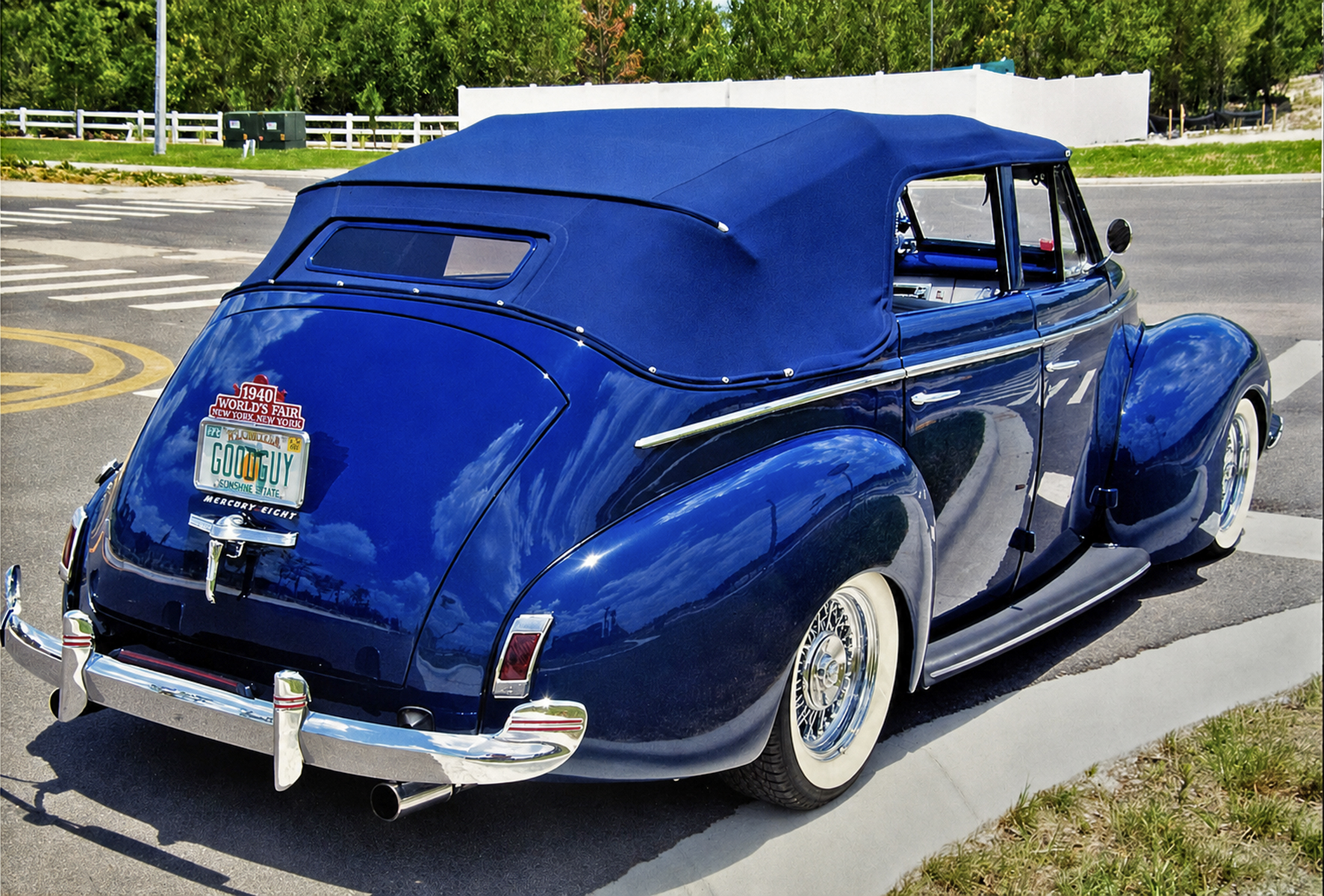
When you’ve spent fifty-years in a tub you tend to miss it when it’s gone. So when a rare (only 978 built), one year only,1940 Mercury Four-door Convertible Sedan presented itself, Jack jumped on it. A full project the car , the Merc was treated to deep blue paint over laser straight panels. A blue Haartz cloth top continued the classy approach. Accessories like bumper guards, wing tips, grill guard and a single driving light add glamour. It’s a great car and even the ever-humble Jack had to admit, “Yeah, that was one of my better efforts.”
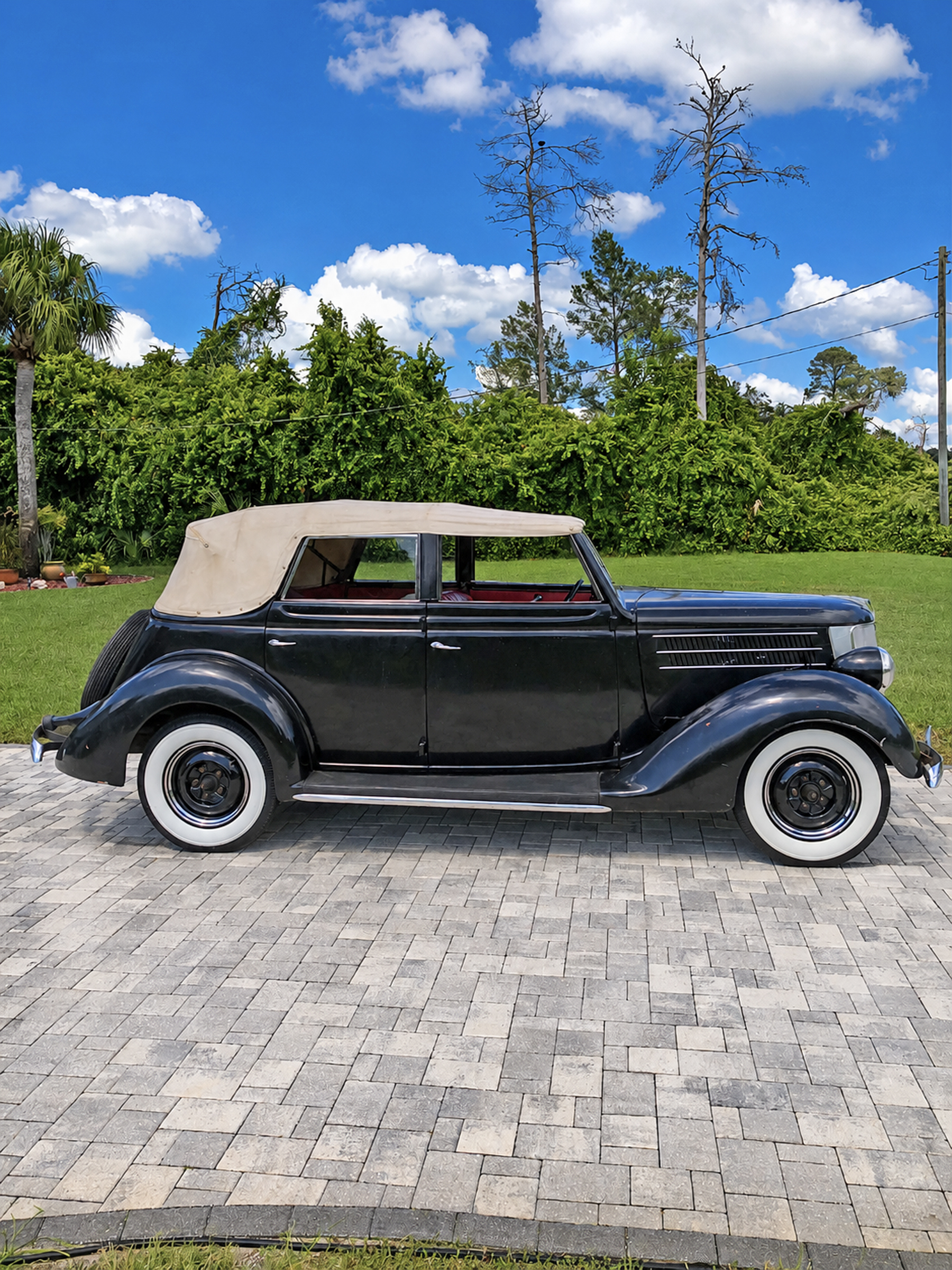
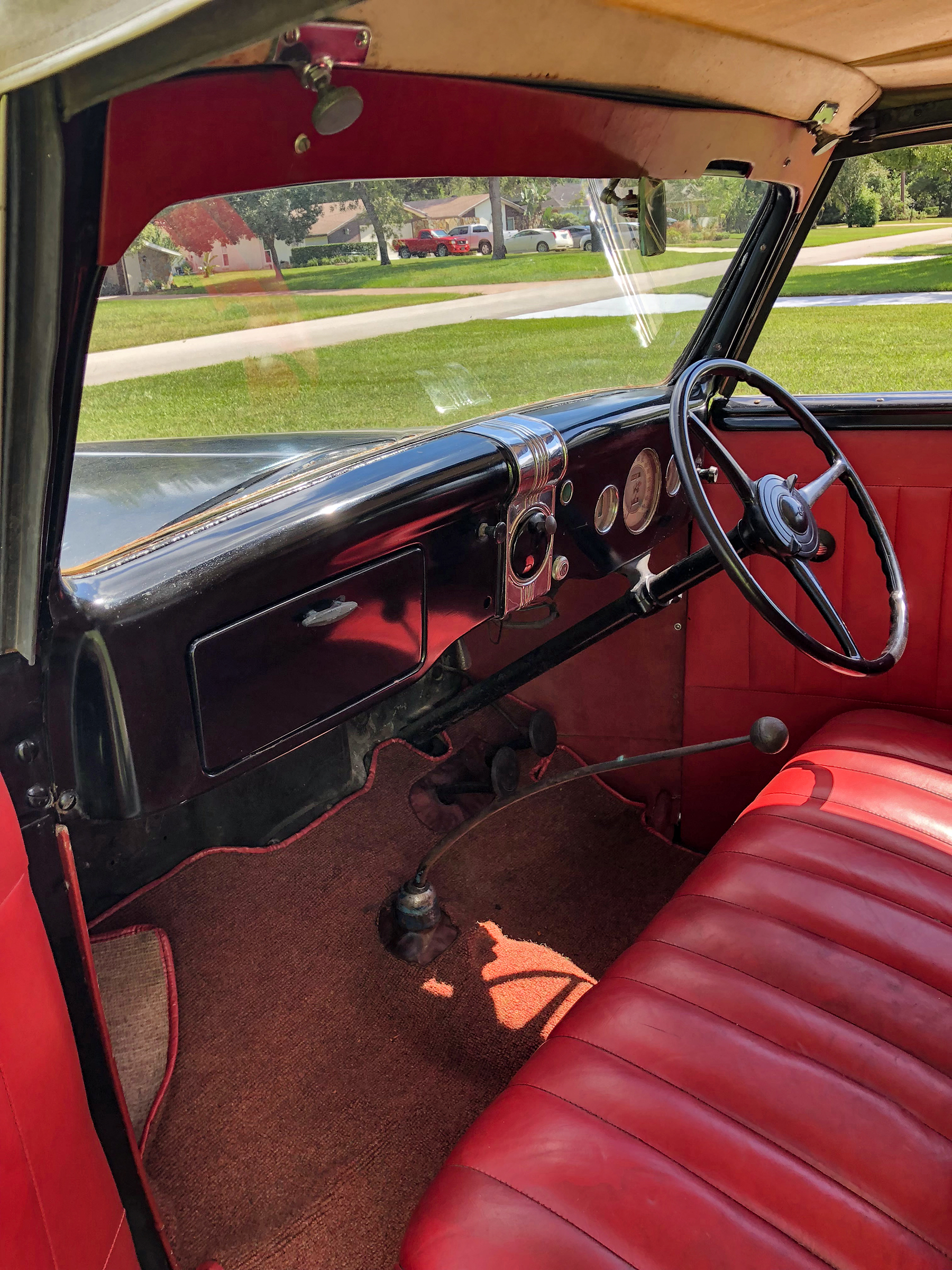
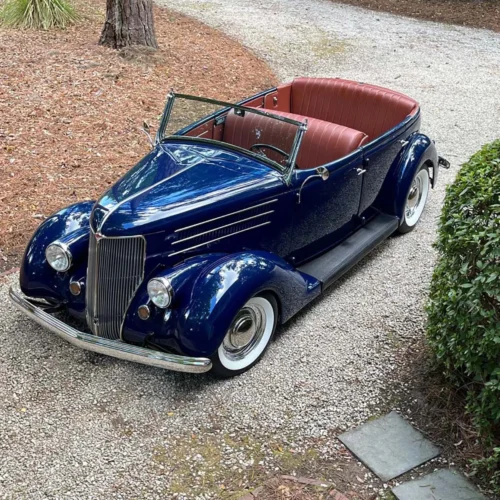
The final tub came in the form of this basic, early hot rod style1936 Ford four-door convertible. Simple wide whites wrapped around steelies is all it needed. Inside red rolled and pleated upholstery provides contrast. Jack did mention he preferred the steering wheel on the left, and so it was sold.
AND THE HOT RODS KEEP COMING
SOMETIMES YOU JUST WANT TO TAKE A CAB
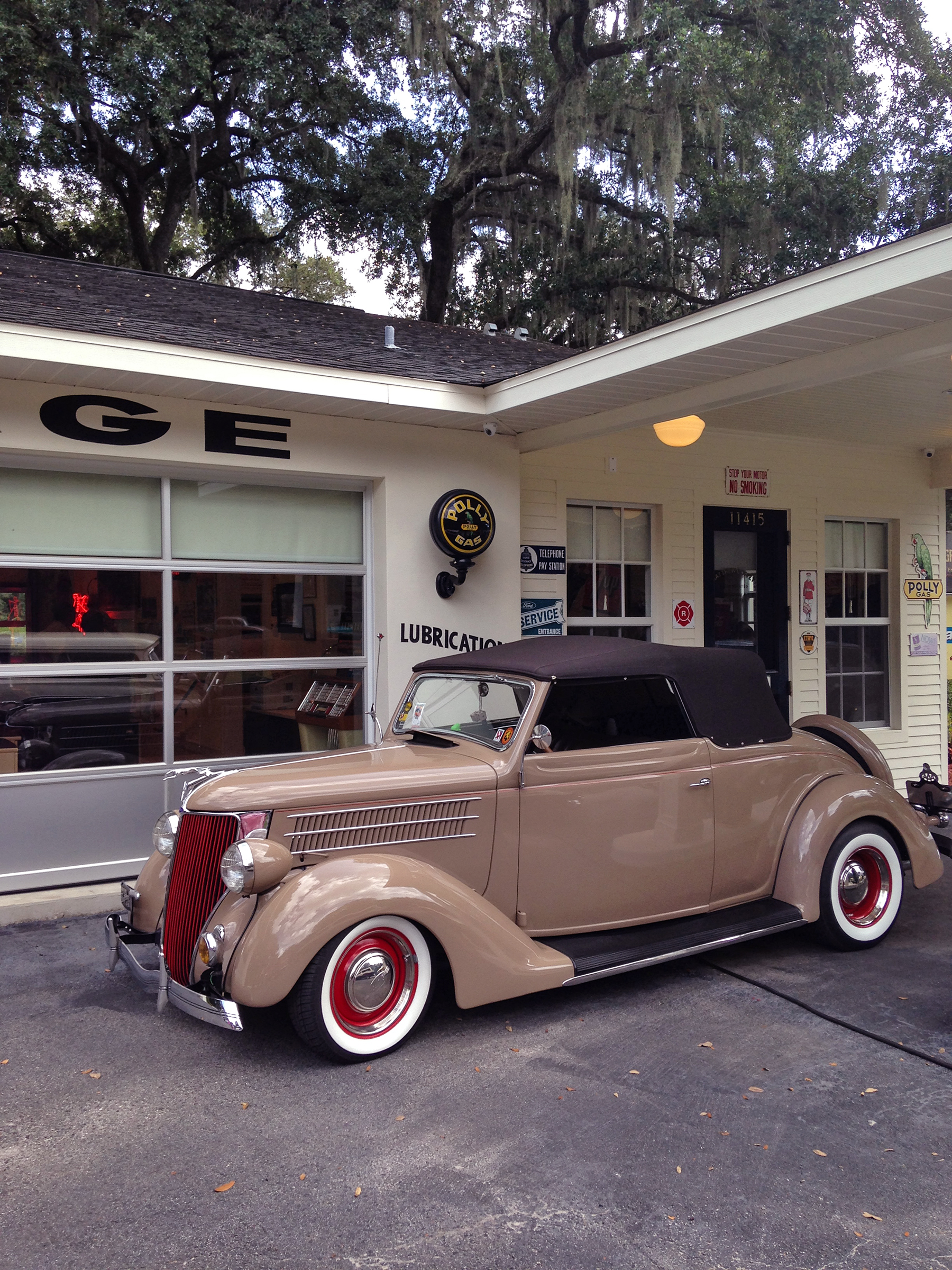
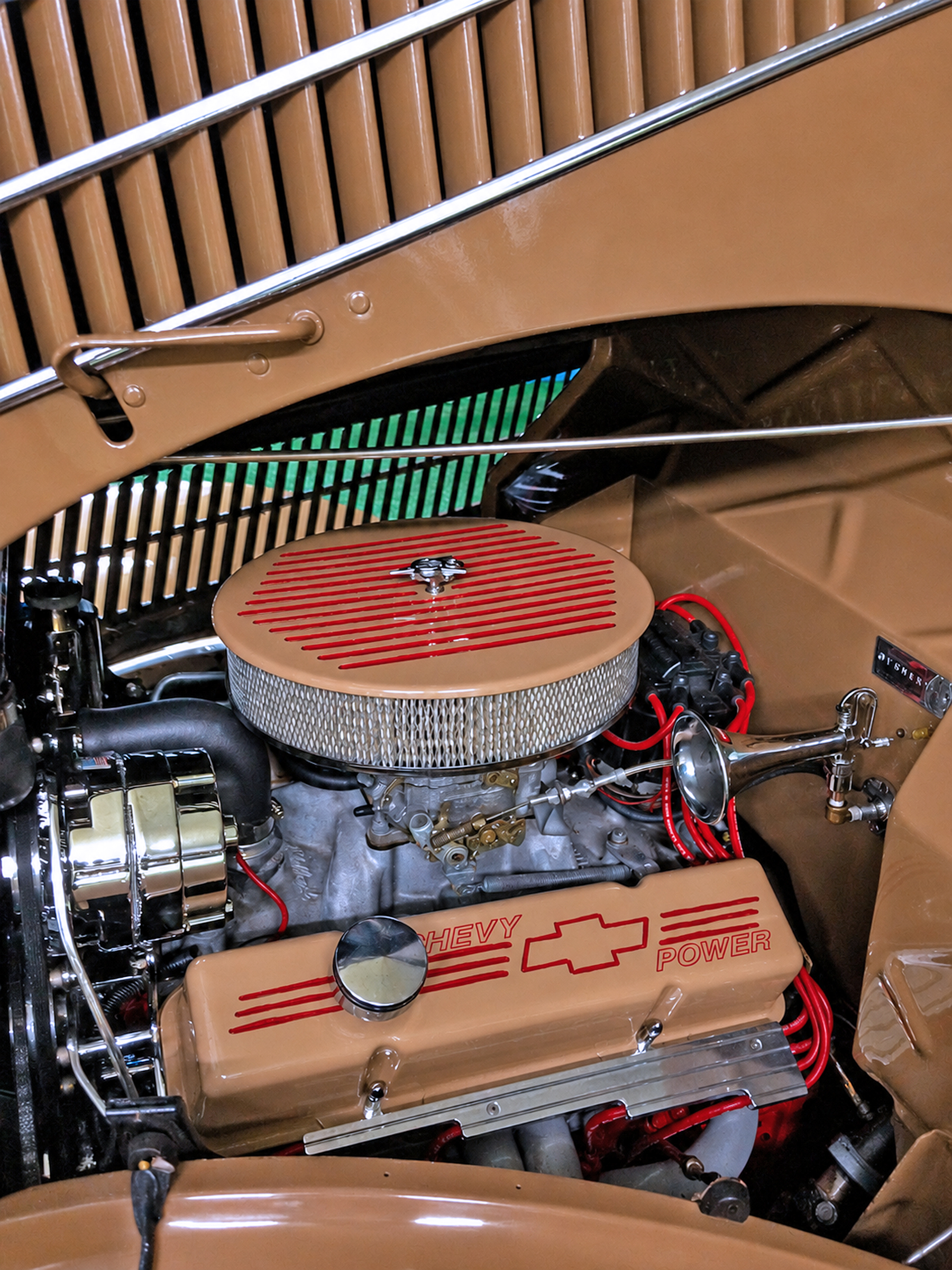
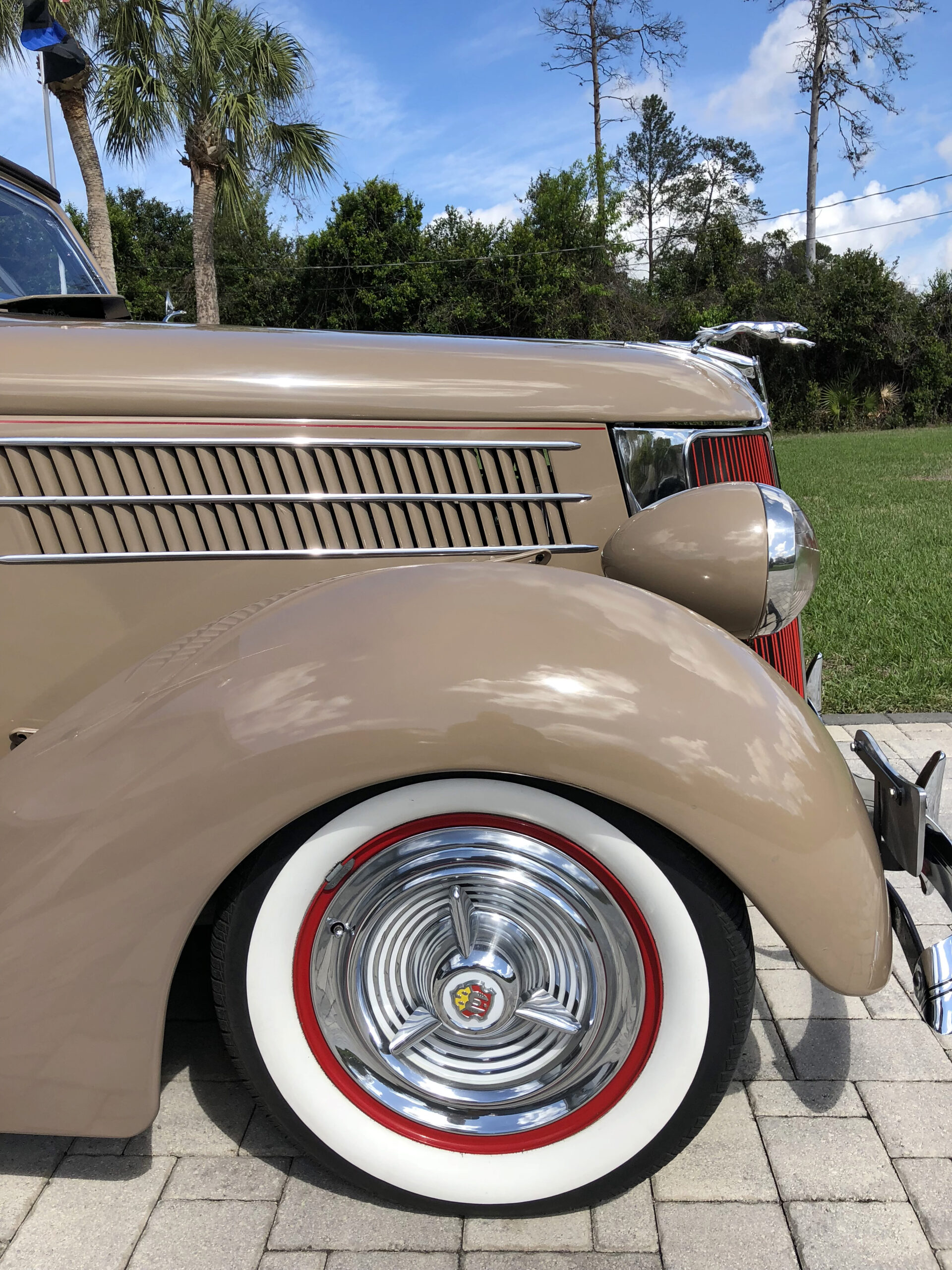
Jumping into a new century the hot rods kept rolling into and out of the Klingel garage. Among his favorites was this ’36 Cabriolet. Color choices are pure vintage hot rod with tan paint and brown Haartz Cloth top. You can never go wrong with red steelies and wide whites but Jack did switch between early Ford caps and beauty rings and ’54 Olds Fiesta caps. Under the hood a small block Chevy wears painted billet accessories. Painting and pin striping these parts add vintage flavor, and yes, that is a genuine Wolf Whistle on the firewall.
SHADES OF BONNIE & CLYDE
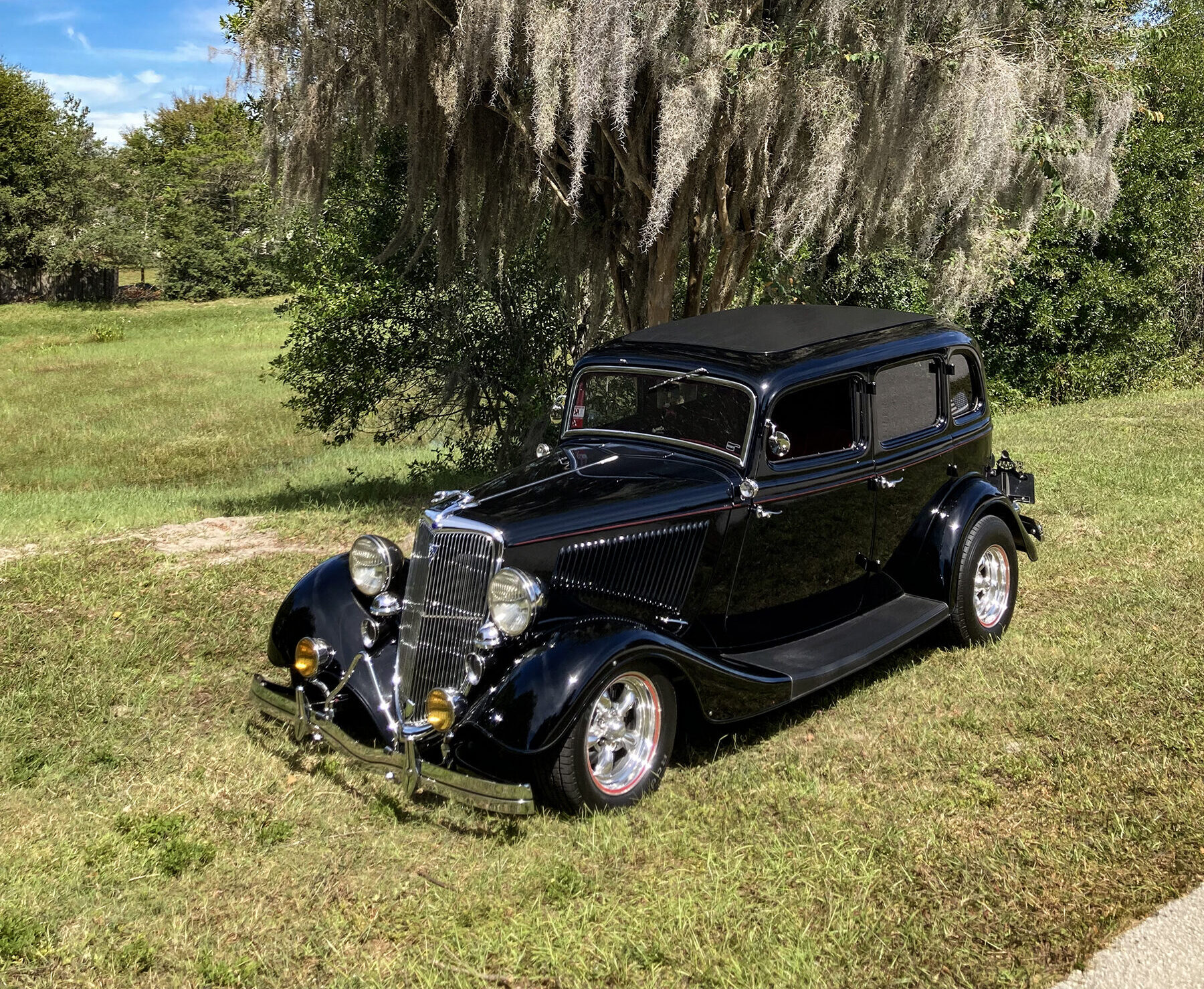
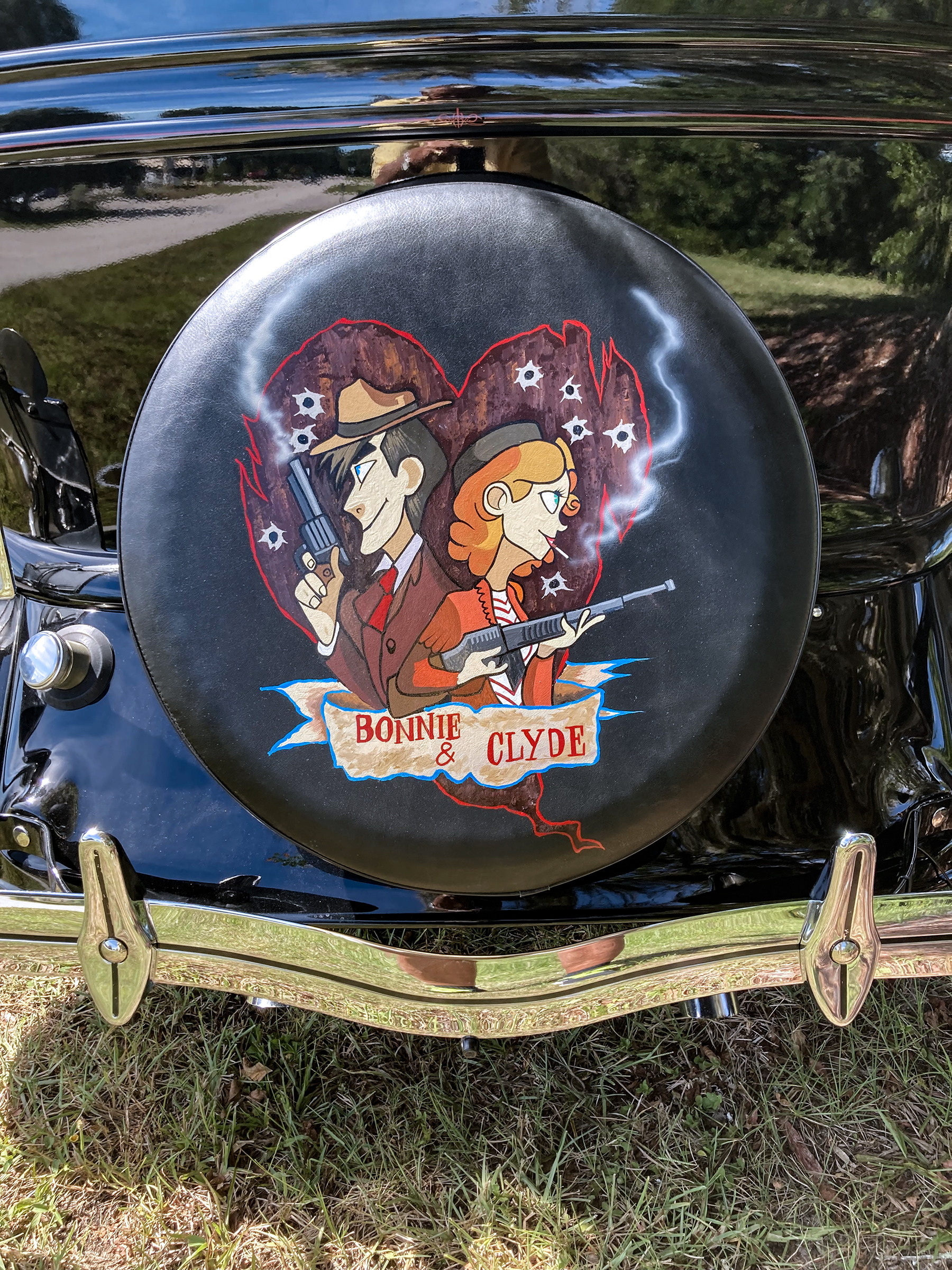
It isn’t easy to build a resto-rod four-door and still be sinister, but this car manages to do just that. Flawless black bodywork combines with a fine red pinstripe, with an accessory list that would make any car salesman smile. Bumper guards, grill guard, twin horns, greyhound radiator cap, cowl lights and driving lights are in place and yet the car still has a simple feel about it. The polished Americans carry the Klingel-signature red pinstripe and the spare tire cover tells the tale of two outlaws in a similar car, on that fateful day, May 23,1934.
“A” RARE HIBOY
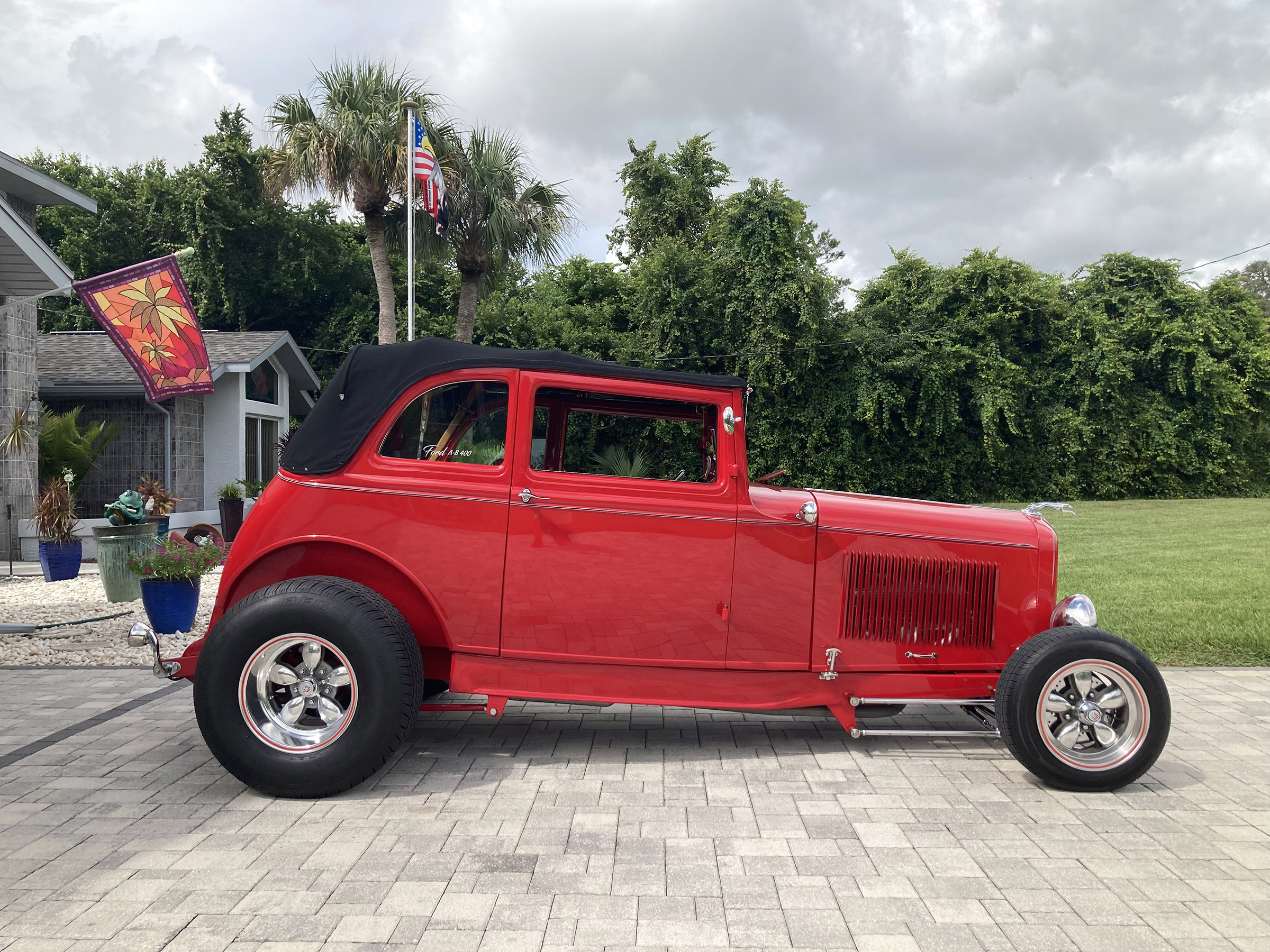
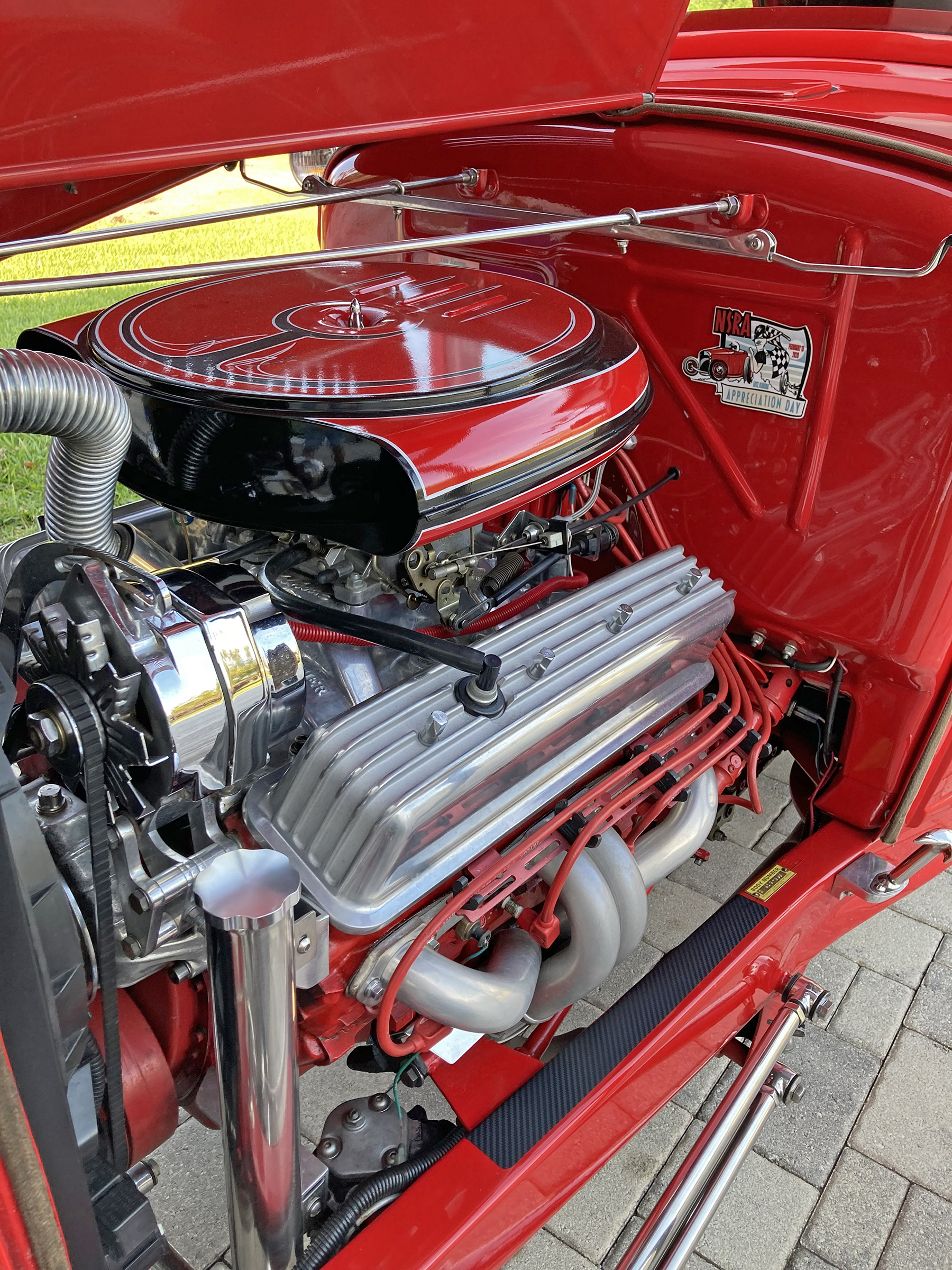
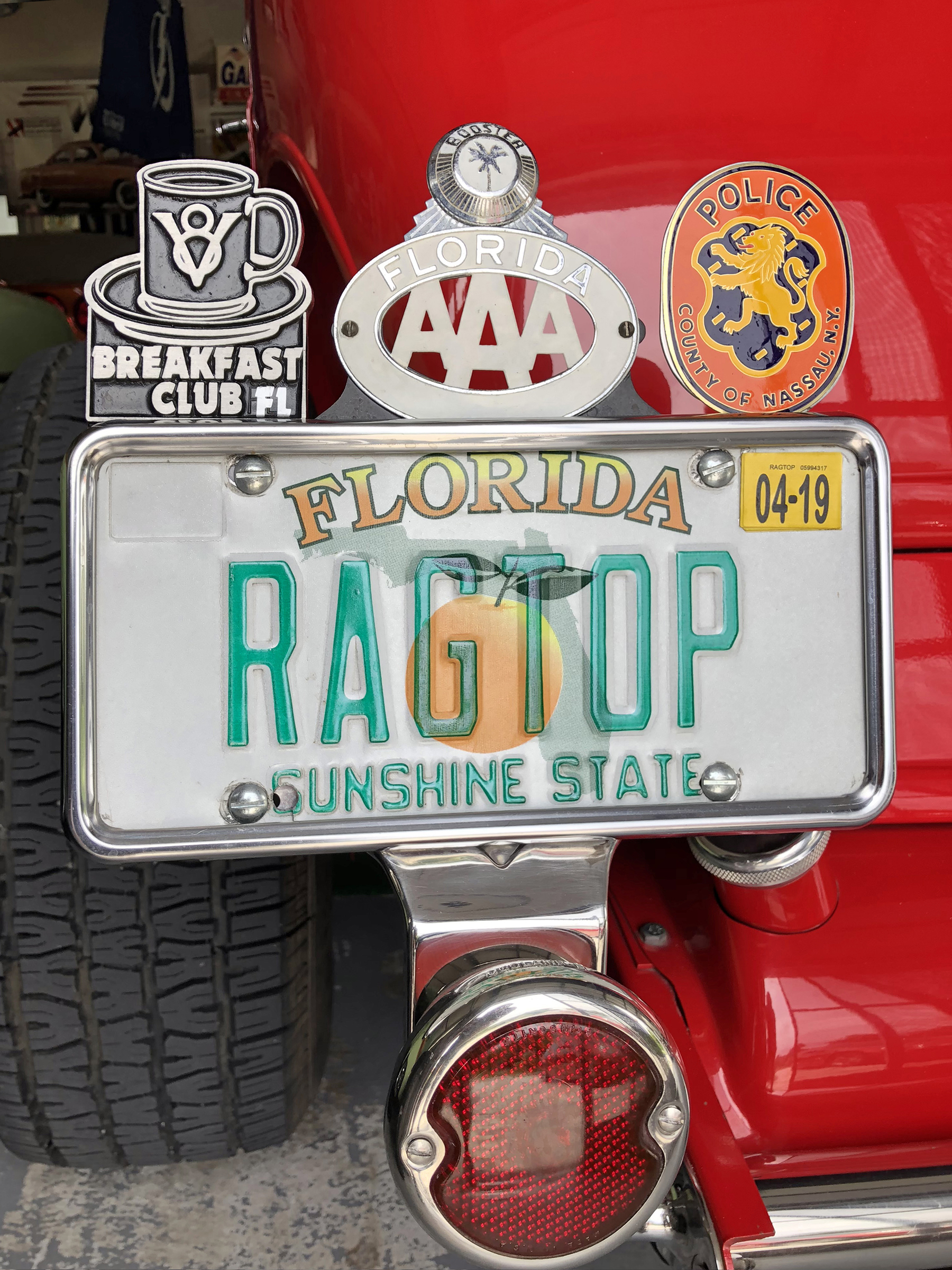
Always with an eye for the unusual, when this super rare Model A-400 (only 5,093 were built in 1931 only) came up for sale Jack jumped on it. The time of full builds had passed and finding a desirable hot rod and adding the “Klingel touch” became the new approach. After bringing the A-400 home a set of polished American Racing 200S (a.k.a. Daisy) wheels with signature red pinstripe were added along with various accessories. The late model small block wears finned aluminum valve covers and a “Klingel Special” scalloped air breather. Front suspension is Super Bell dropped axle while coil-overs mount the nine-inch rear. Inside, a ’40 Ford dash is fitted. Top up or down this is one very cool hot rod.
AND THEN CAME THE ROADSTERS
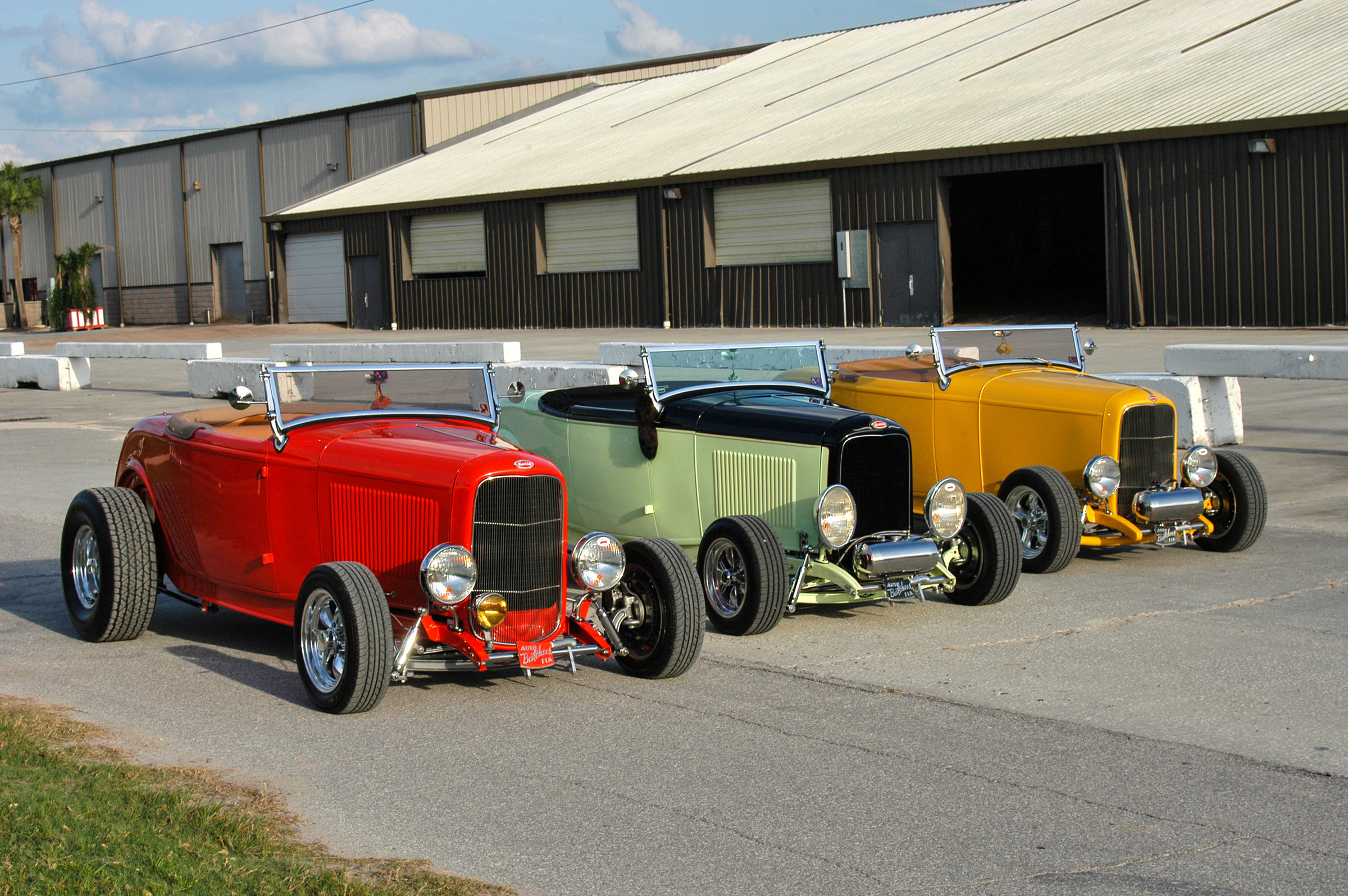
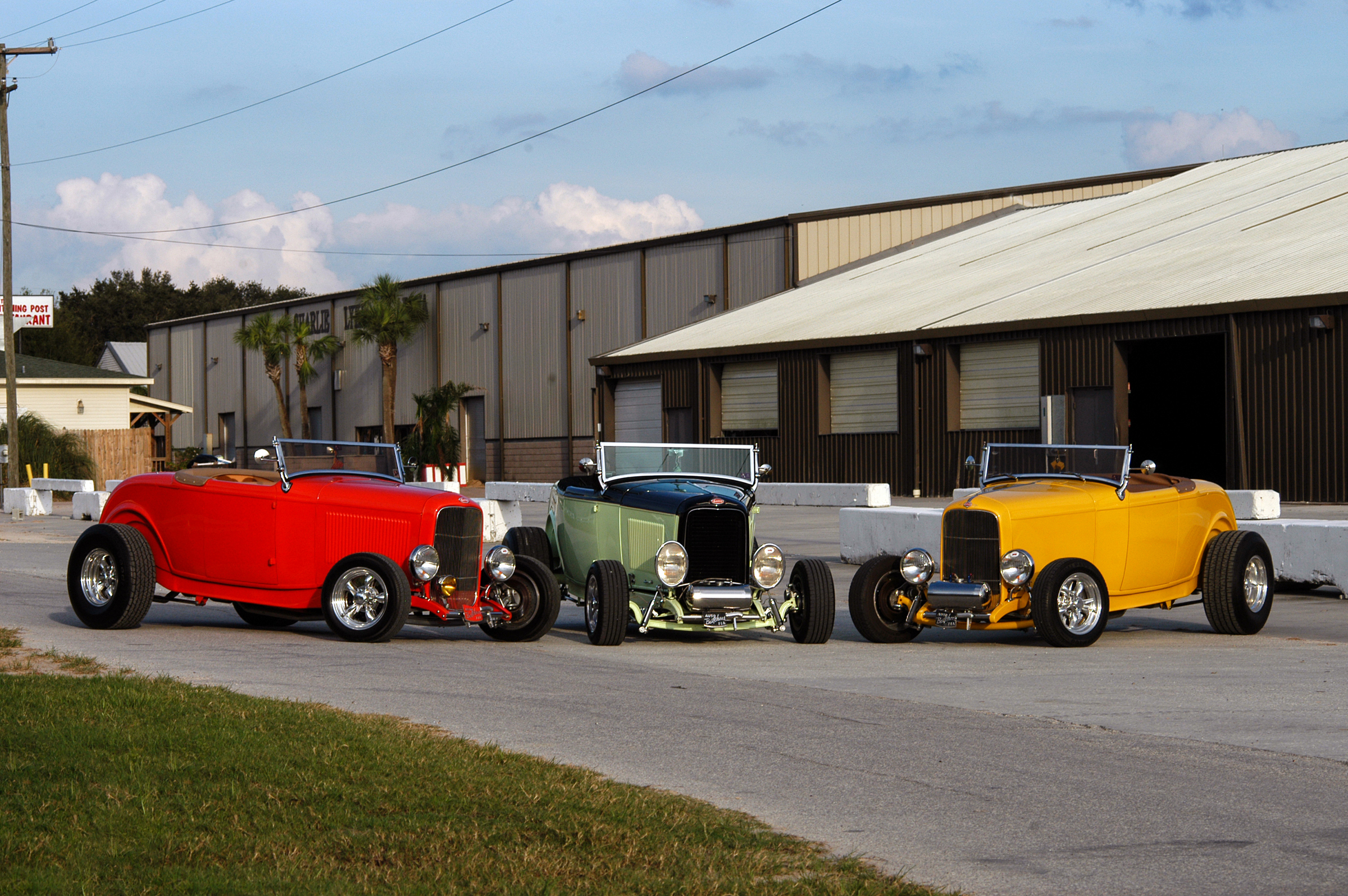
It is somewhat amazing that it took over fifty years for Jack Klingel to build a Deuce roadster. But, when the time was right (2004), Jack and hot rod pals Curt Land and Cliffy Wricks of Spring Hill,Florida decided they should all build roadsters and head out to the LA Roadster Show. Mission accomplished, as a matter of fact it was so much fun the group made the drive twice, 2004 and 2010.
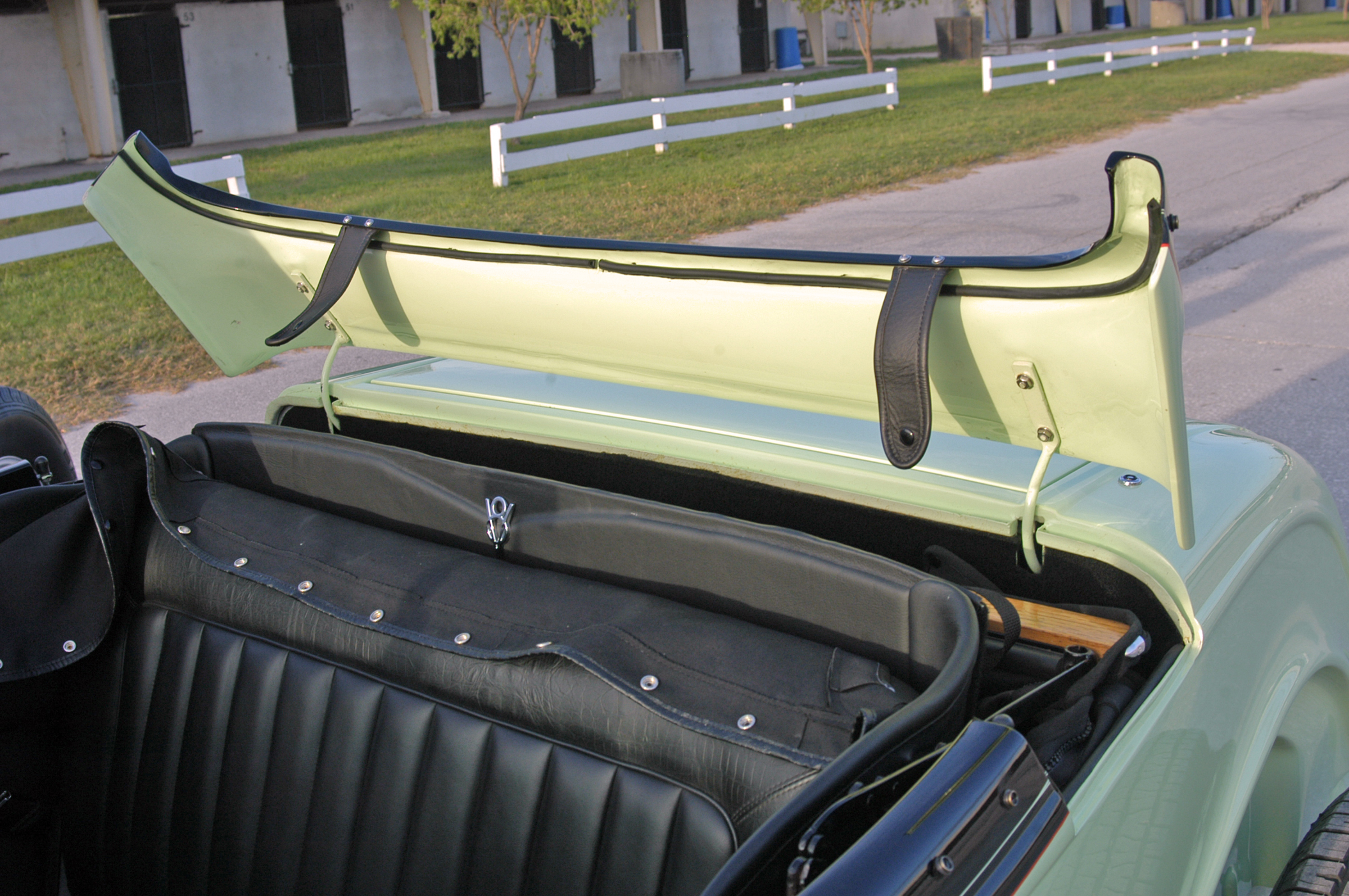
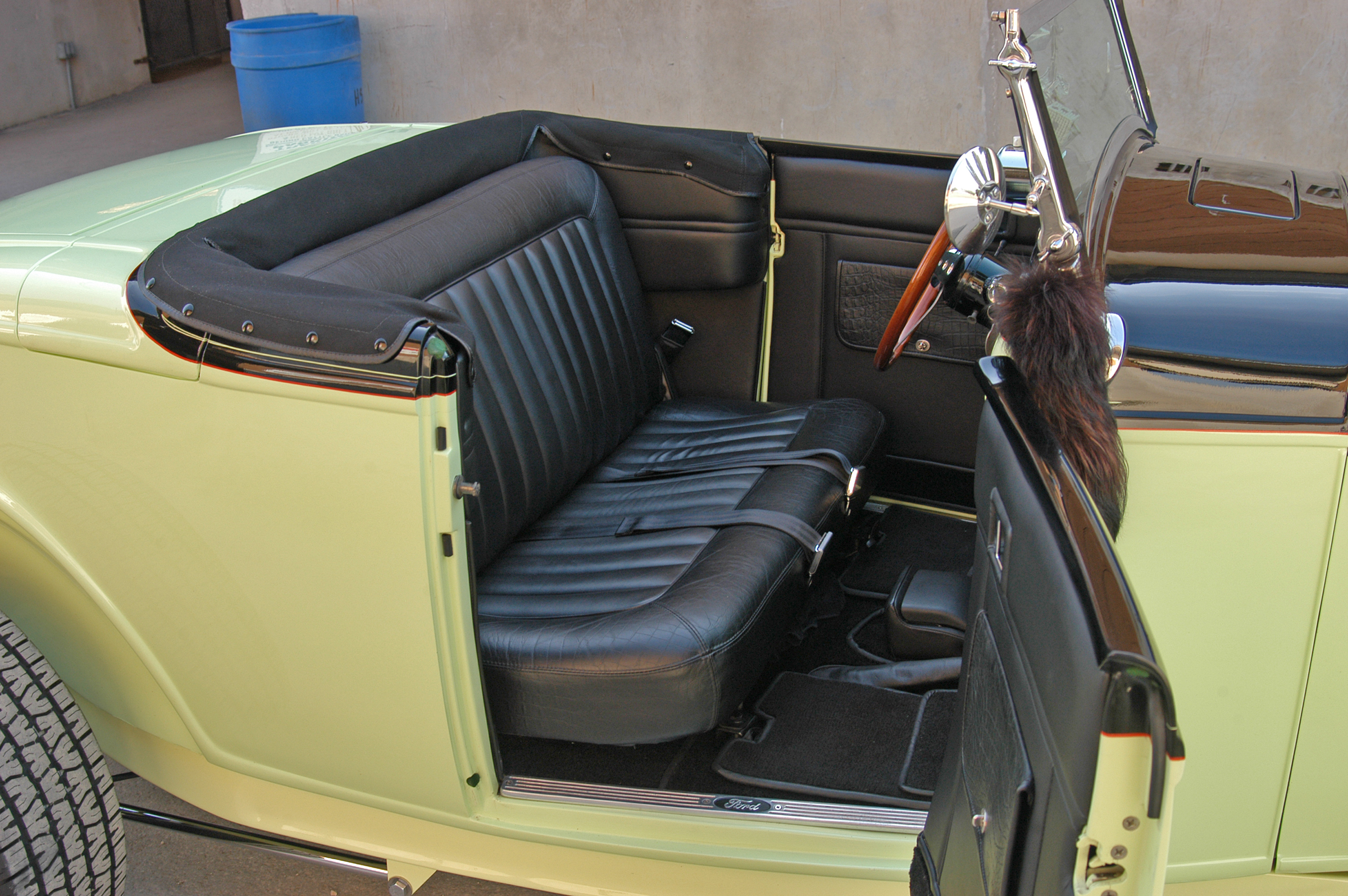
Steve Kreischer, yet another Long Island to Spring Hill transplant, had a big home shop so the roadsters were built there as a group effort. It was Steve who designed the hide-a-way folding top employing an modified MGB top frame. Lengthened, widened and one additional bow allowed the top to fold compactly into the custom formed well.
The body and chassis combinations were much the same on all three cars and Deuce Hiboys deserve bright colors. When this gang rolled into an event they were hard to miss and they might turn up anywhere from York,PA. to Mississippi Cruisin’ the Coast to the Street Rod Nationals to the LA Roadster show. This trio knew how to roll.
A CLOSER LOOK AT JACK’S ONLY DEUCE ROADSTER
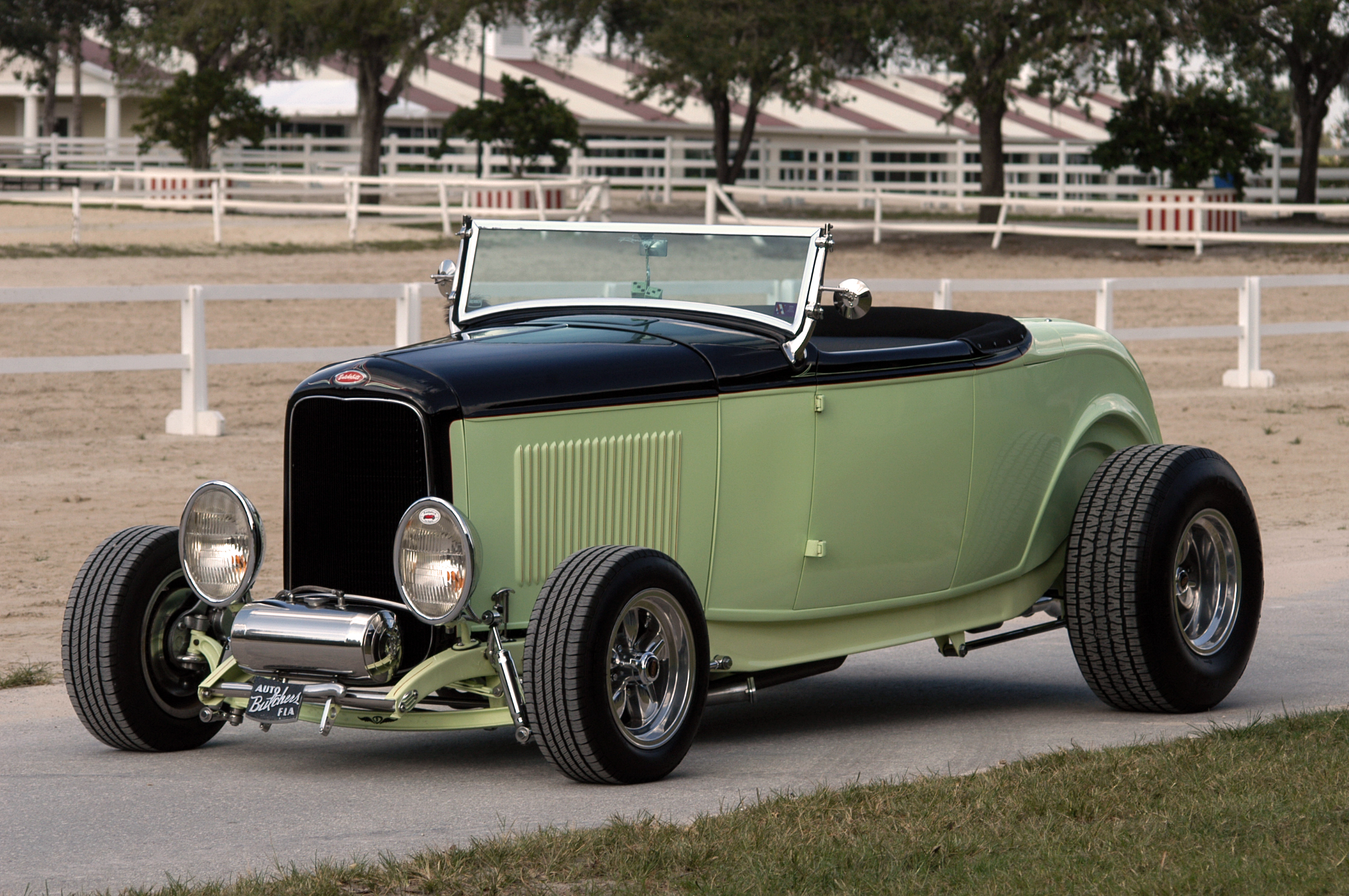
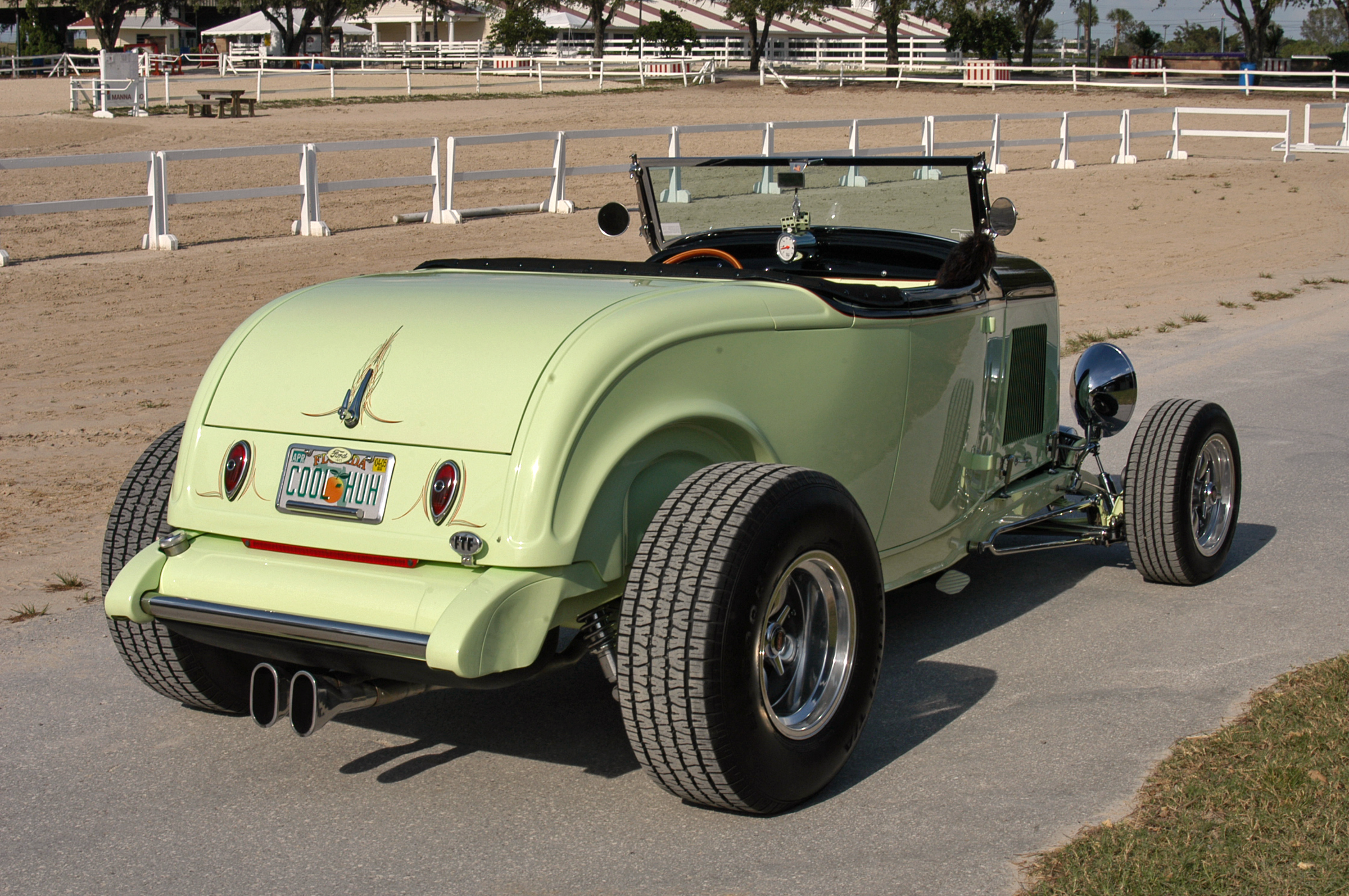
Jack’s Deuce was built in traditional basic hot rod fashion. Clean, simple and reliable, a Super Bell dropped axle, chrome hairpins and P&J disc brakes are found up front. Outback coil-overs and four-bars locate a ten-bolt Nova rear.
In typical Klingel fashion the roadster is tastefully two-toned using the cockpit body reveal as the break point. After laying down the black and green he used a fine orange pinstripe to complete the paint scheme. A set of 1933 Studebaker headlights lead the way while the Big ’n Littles rolling stock varies from polished Daisy’s to chrome wires.
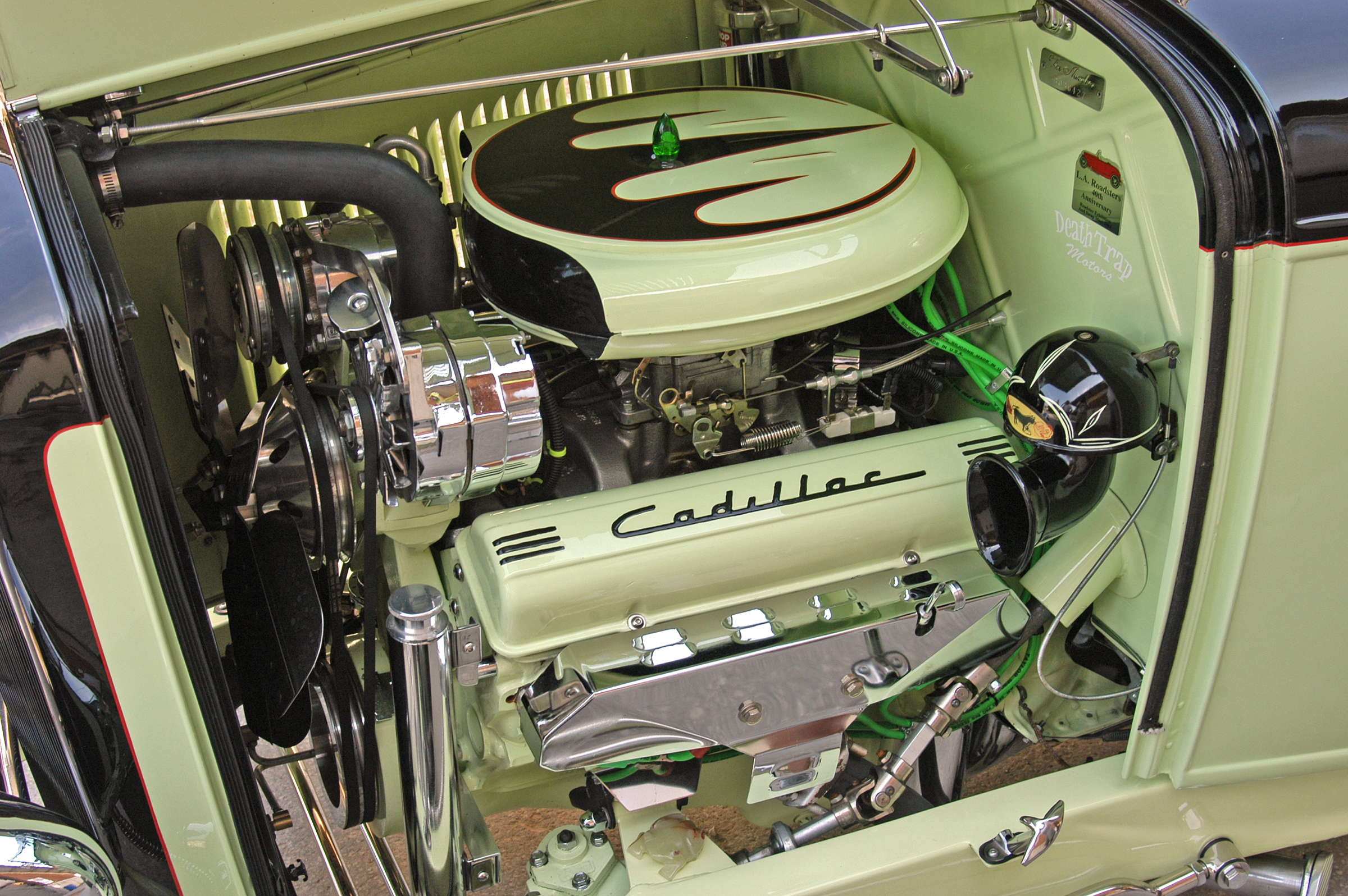
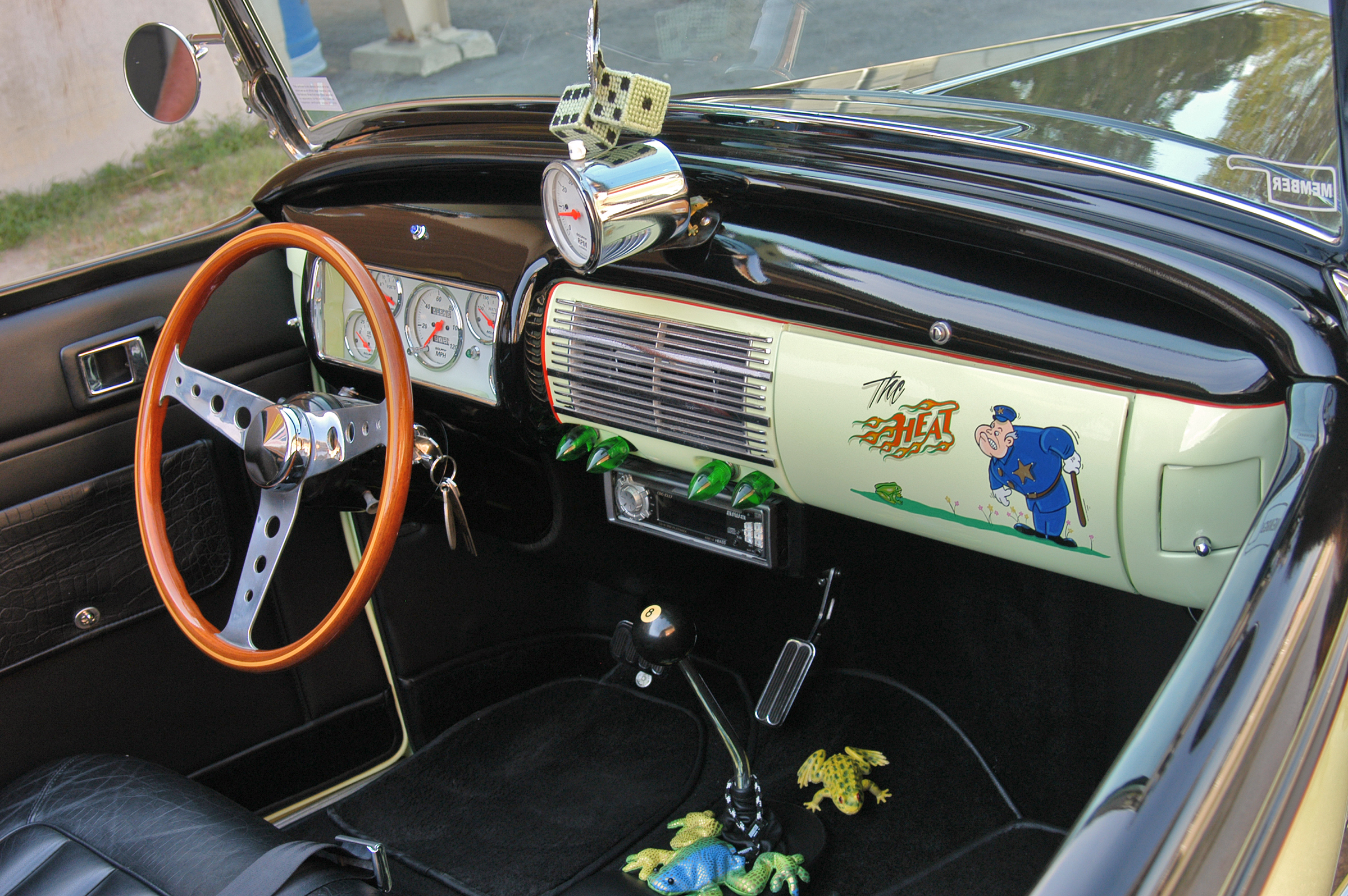
Under the hood your basic 350/350 combo keeps things simple. The signature scalloped air breather and “Cadillac” valve covers complete the vintage engine bay. Due to the whole green theme on the car you don’t have to be a detective to discover an abundance of frogs throughout the car, did we mention Jack likes to smile and enjoys it when you join him? To date the roadster is showing 50,000 miles and counting
FINALLY… A “KLINGEL GREEN” WOODY
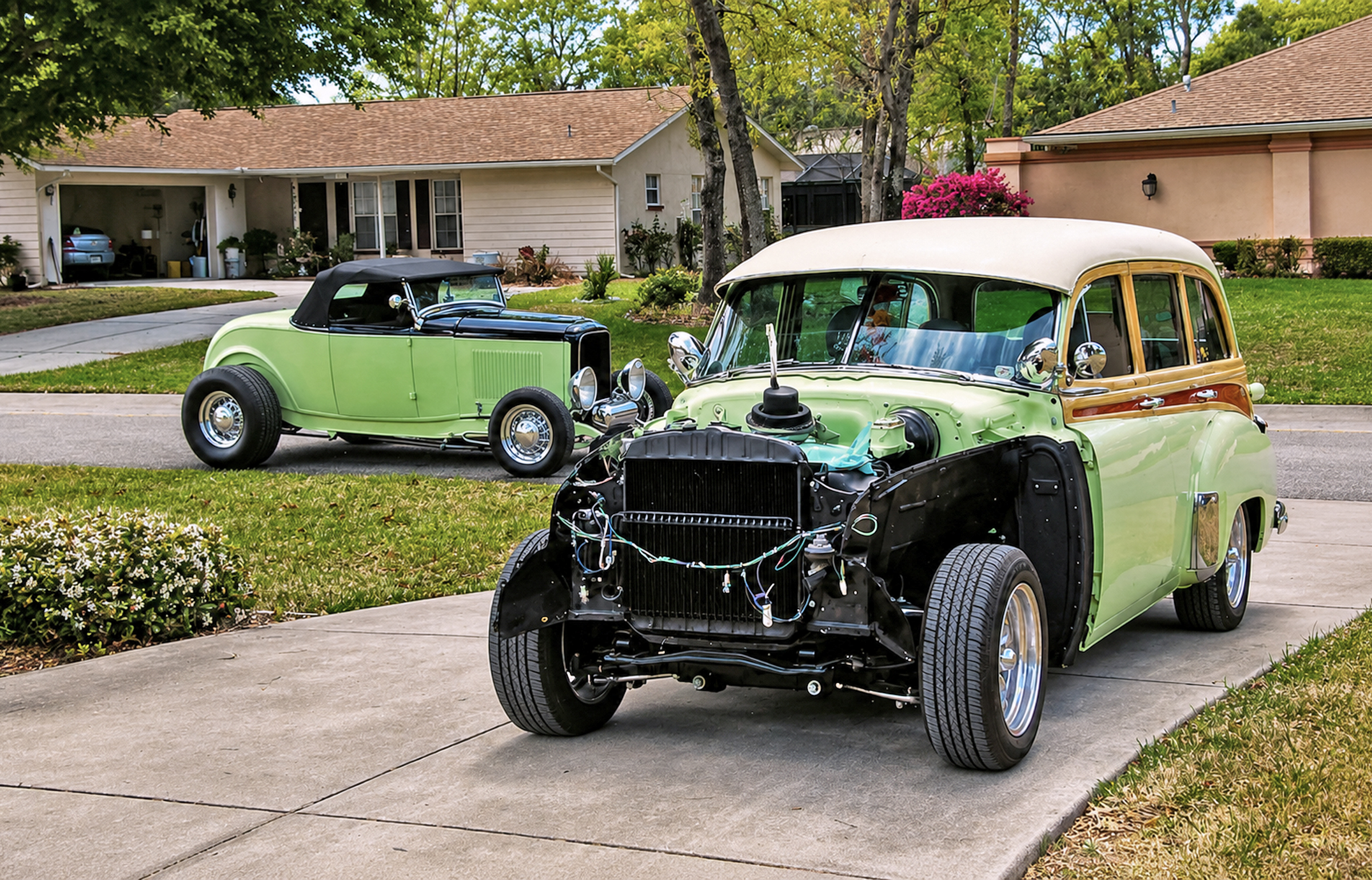
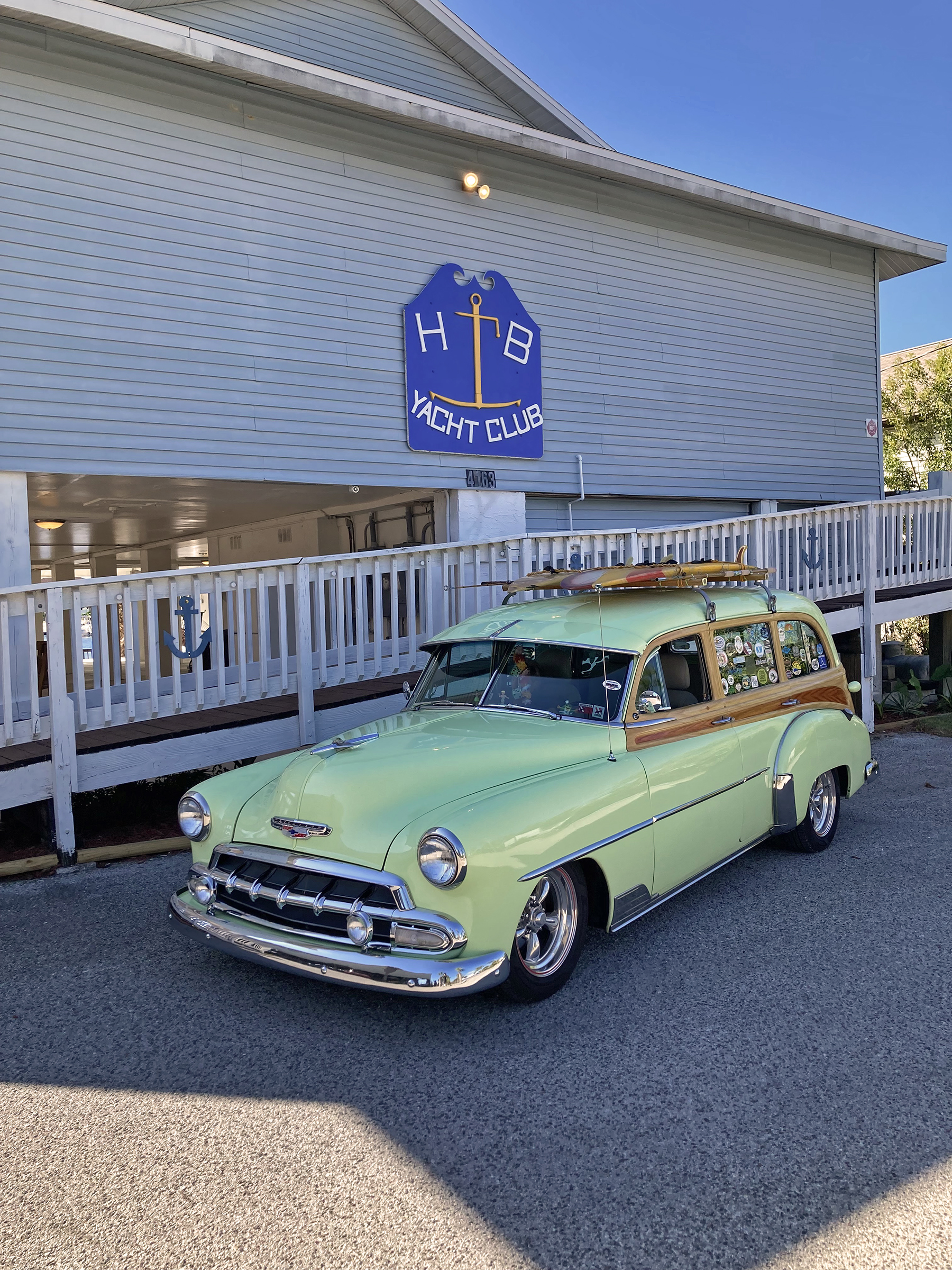
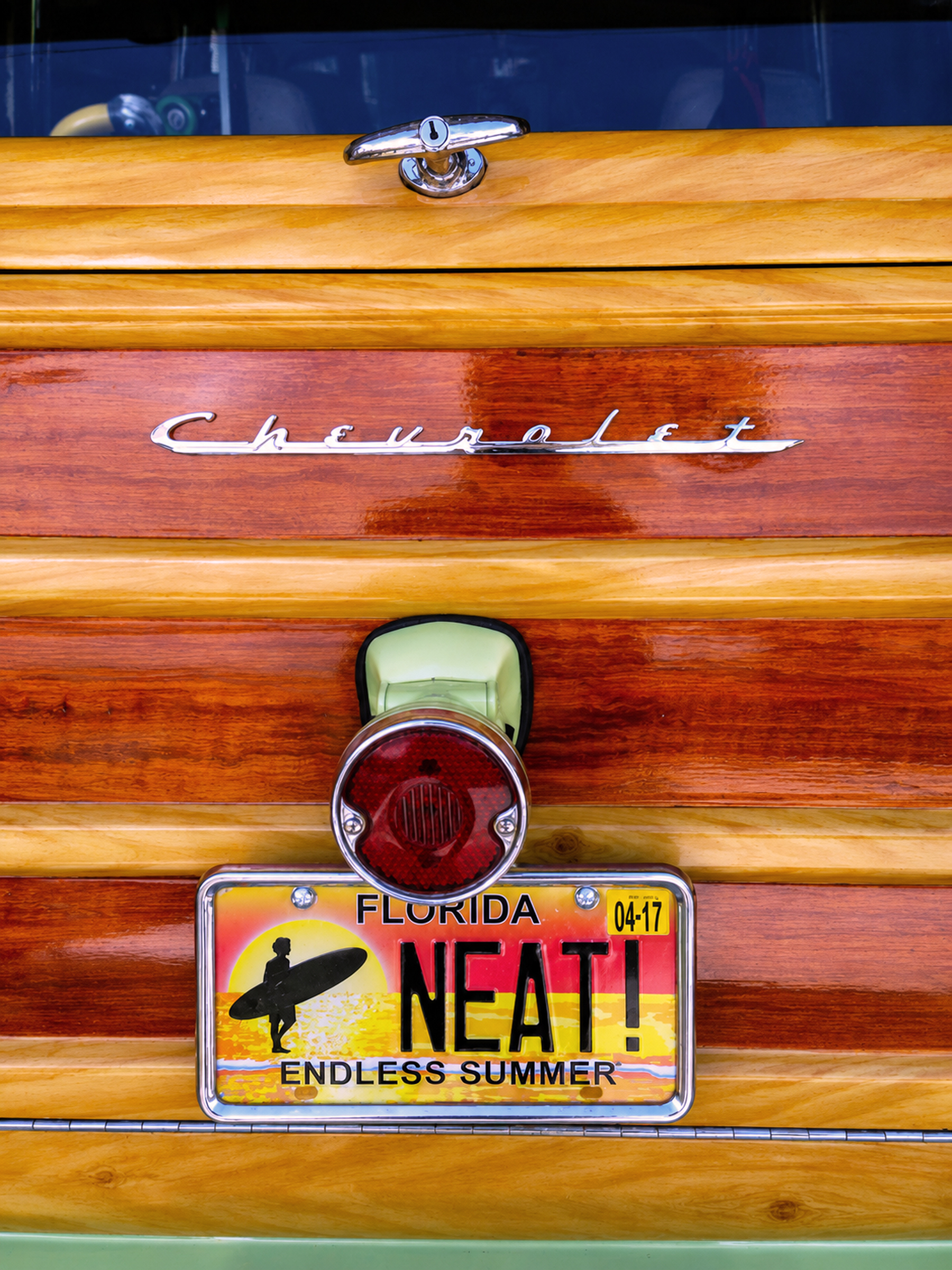
Okay, at this point he’d been at this hot rod game for around sixty-years and yet one other thing had escaped the resume. While he had long admired woodies, he never had one to call his own. In 2007 that void was filled when he bought a 1952 Chevrolet tin-woodie. His long time friends at Lakewood Auto Salvage, in Lindenhurst, N.Y. had saved an entire 1994 Buick Electra for Jack. The car was transported down to Florida where the driveline from that car found it’s way into the ’52 Woody. This was his entry into the wild world of EFI motors, but after some aftermarket wiring, a full set of new injectors and plugs, the small block came to life and has never stopped since.
he basically stock body rolls on Fatman Fabrications suspension and polished Americans. Jack laid down his trademark green paint alongside the perfectly painted “wood” panels. Decals always look cool on a woodie so Jack added “a few” to the side windows. Driving lights and a roof rack loaded with surf boards provide proper beach flavor. The old woodie goes down the road like a dream and today is a daily driver. Back in 2016, when it was fresh, it worked it’s way into the Circle of Winners at the Syracuse Nationals. Today the car shows 55,000 miles and counting.
LOOKING BACK WITH JACK
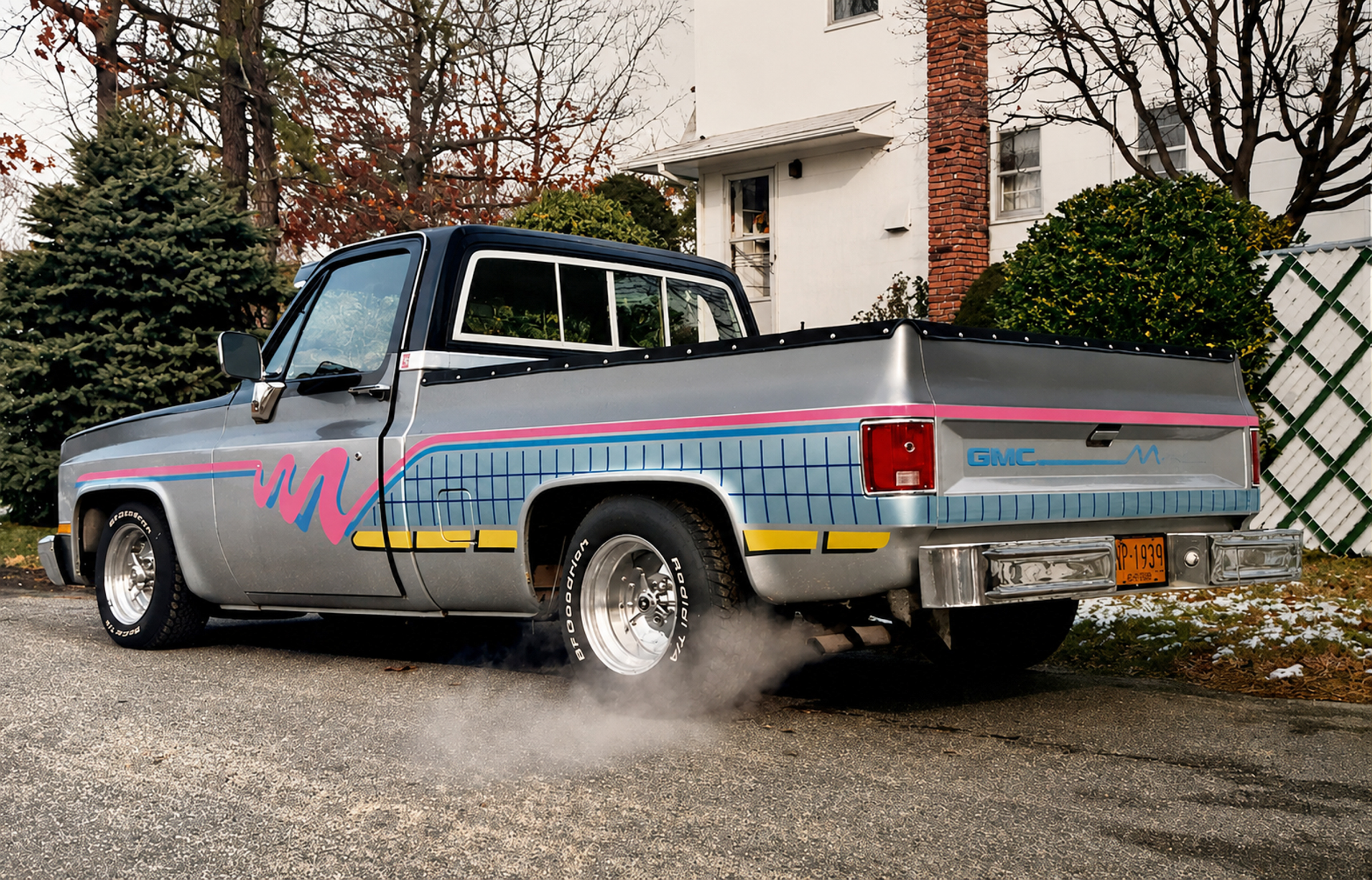
And so, here we are hangin’ out with Jack Klingel, discussing his now seventy-years of non-stop hot rodding. He knows his way around a car and is even smart enough to know what he doesn’t know, “I don’t build motors” would be an example. When it came time to move from Islip, New York to Spring Hill, Florida he realized he would need a truck. So he bought a pretty nice silver Chevy truck, eight-foot bed because he had “a lot of stuff”. But he wasn’t about to drive that far in a stock vehicle, so it was lowered, two-toned, and period correct splash-graphics were sprayed on before he left. That’s pretty well defines Jack Klingel. He is a hot rodder’s hot rodder.
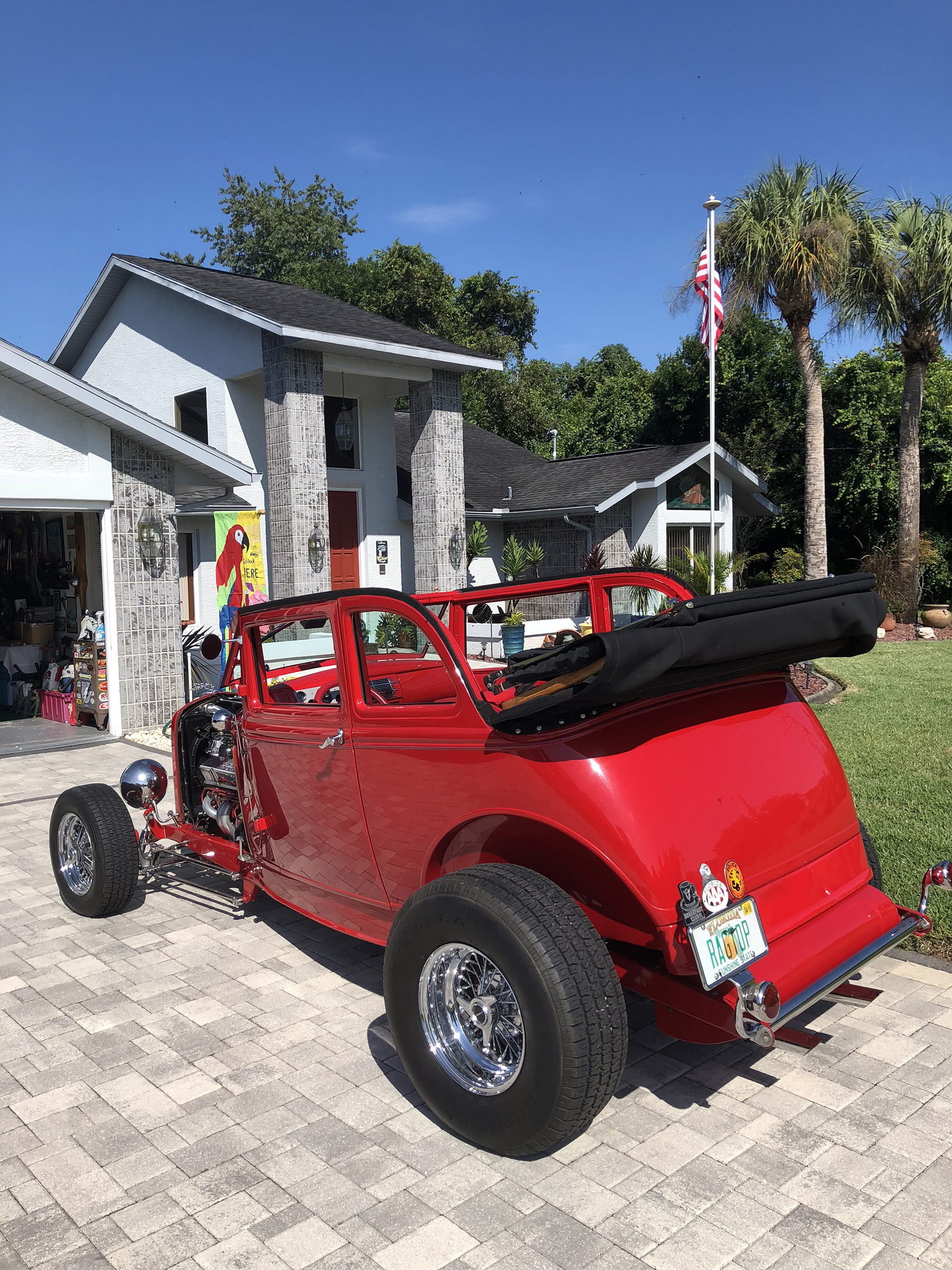
His days of cross-country trips have come and gone, but he seldom misses the hot rod breakfast on Saturday or local cruise nights. His garage is filled with hot rods and memories, including his ’52 Woodie, his Deuce roadster and a 2019 Buick Regal TourX, red with custom racing stripes and a surf board on the roof.
We could go on even longer, but it’s time to call it a wrap.
Stay Tuned, Enjoy the Drive.
ARTICLE SOURCES
Gerry Burger
Gerry Burger has been immersed in hot rodding since the early 1960s, building his first hot rods as a teenager after being inspired by local racer Bob Zorn. A chance meeting with Tom Medley in 1972 launched a distinguished career as an automotive photojournalist, leading to freelance work for dozens of magazines, the founding of Rodder's Digest, and editorial leadership roles at Street Rod Builder and American Rodder. Today, Burger continues to write, photograph, and build hot rods, remaining one of the hobby's most respected voices.