THE GOLDEN AGE OF DESIGN
The name most often associated with this vehicular revolution was Harley Earl, General Motors’ chief stylist and father to many of the special GM Motorama Dream Cars of the day. Through his visions, along with those of his extremely gifted design team, many special vehicles were built and displayed in a traveling road show the likes of which have never been equaled.
THE CORVETTE EFFECT
One of the most innovative and well-known cars to come out of this vision quest was, of course, the ’53 Chevrolet Corvette. Within months of the debut of the prototype, the factory responded to the resounding acclaim for the new creation with production versions that were nearly identical to the prototype.
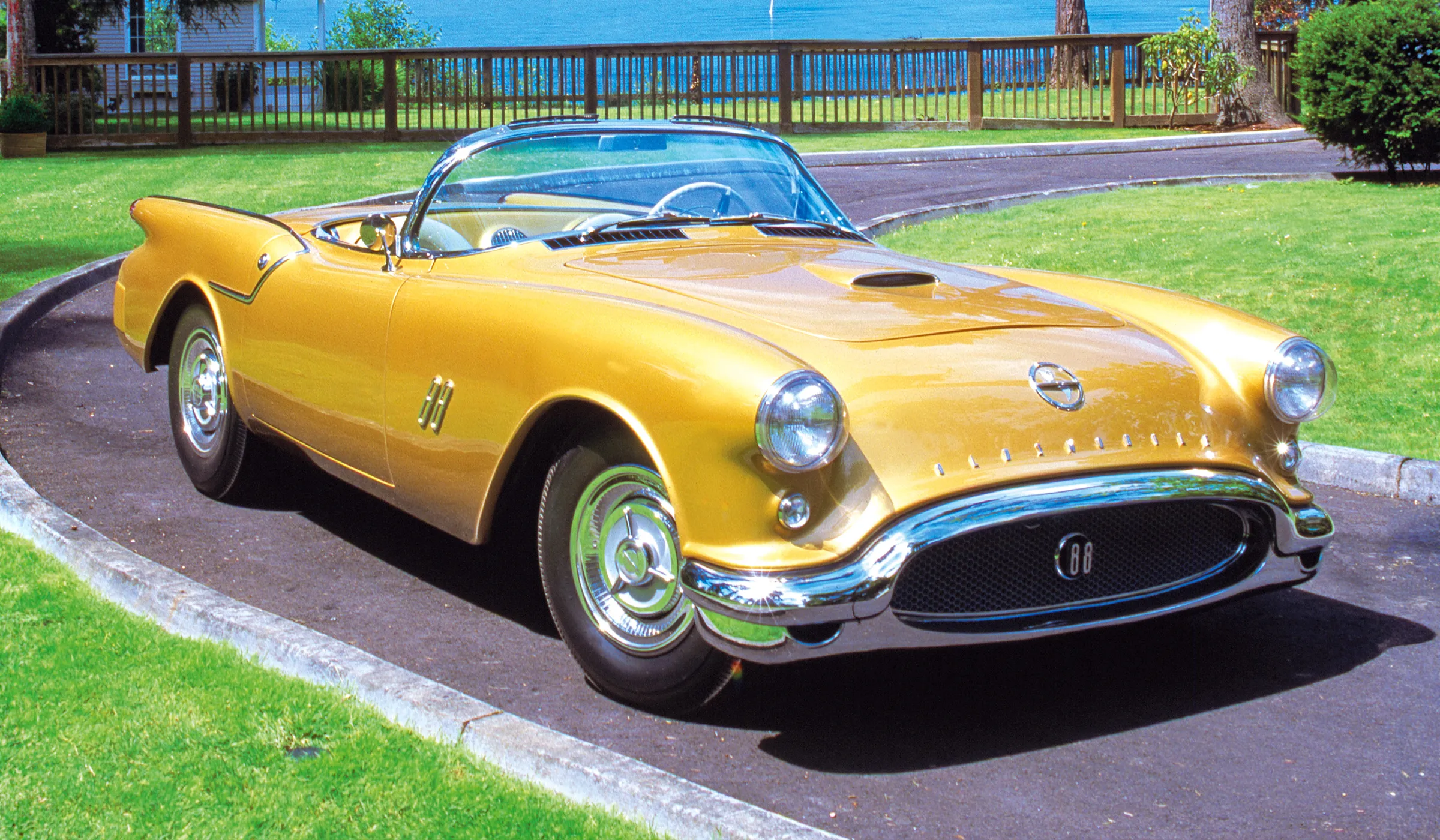
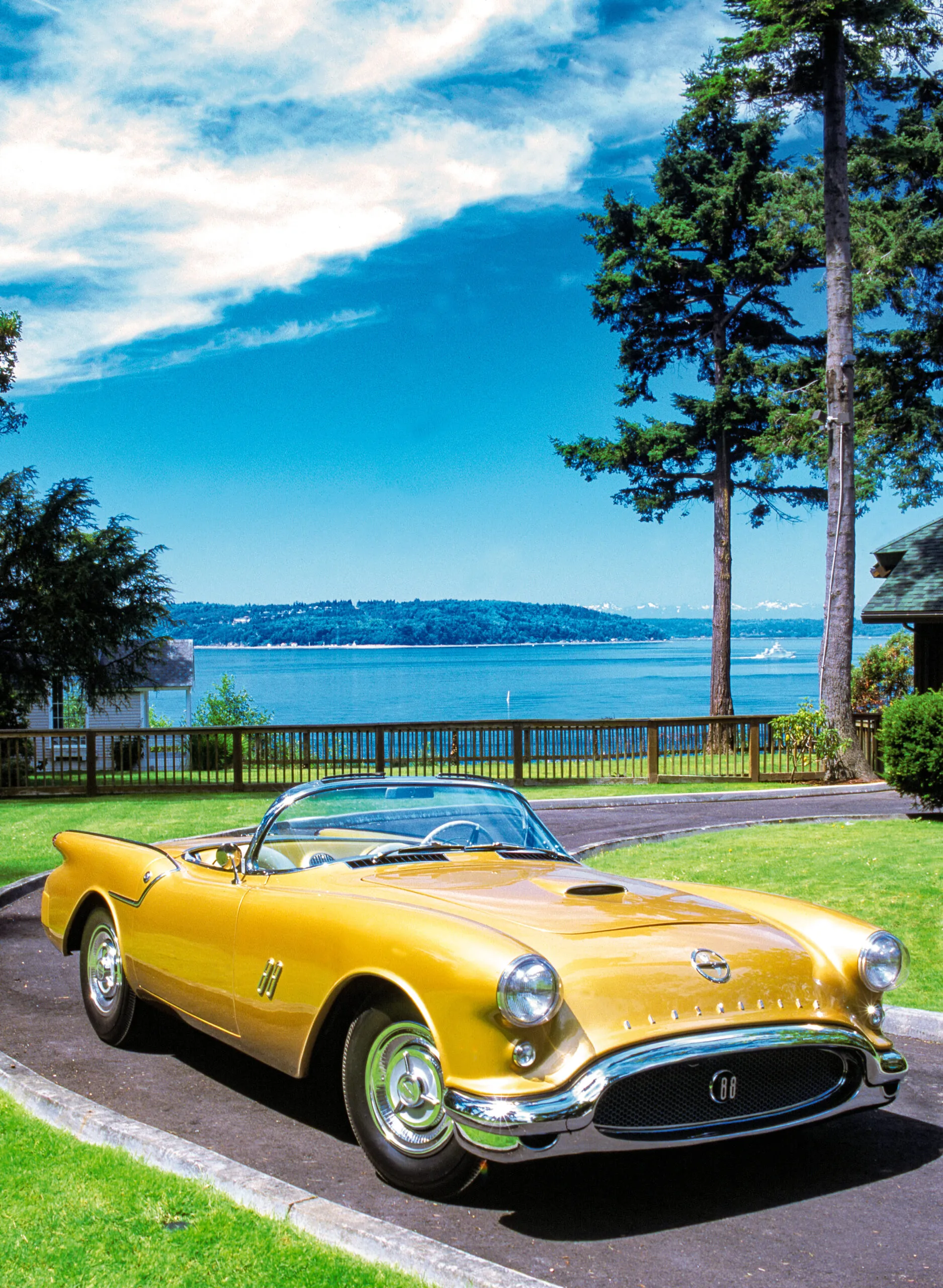
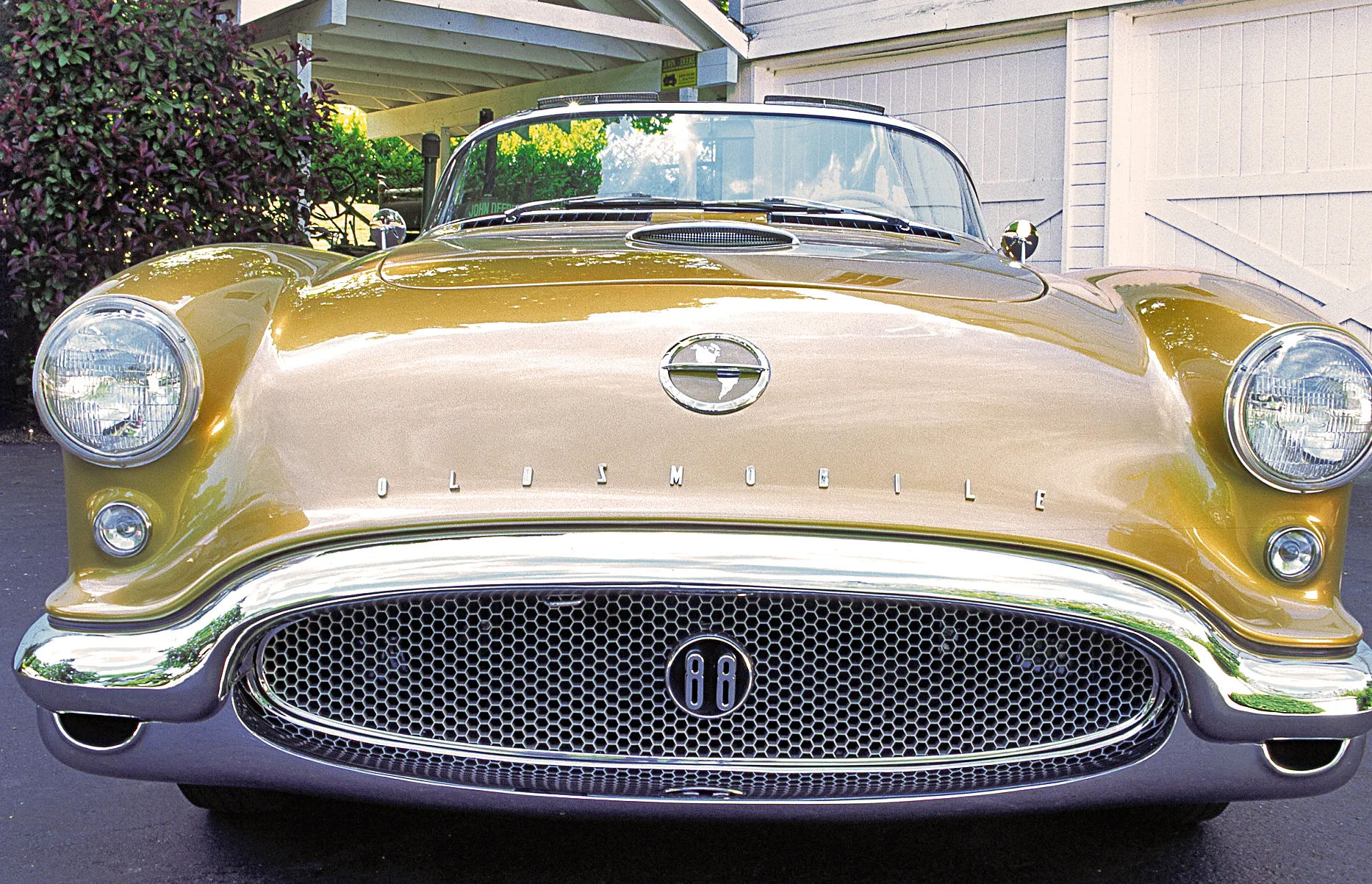
The immediate popularity of this truly revolutionary car got the attention of other automakers, as well the various division chiefs and designers within General Motors. In fact, design teams at Pontiac and Oldsmobile were hard at work creating their own versions of the Corvette, and by 1954 both had come up with their own interpretations. While the Pontiac Bonneville Special and Buick Wildcat II were more suited to the “Dream Car” mystique, the Oldsmobile F-88 was clearly intended to become a production car.
GM COMPETITION AND THE F-88
As Corvette sales were somewhat slow in 1954, the idea of a competitor coming from within GM was too much for the Chevrolet brass to take. Being that Chevy was the sales leader among all of the GM divisions, it wasn’t long before an official mandate sealed the fate of any “other” Corvettes.
Meanwhile, one of the two Olds F-88 prototypes that had been produced was being readied in the staging area for the Macy’s Thanksgiving Day Parade, when a fire broke out in the engine compartment. In the confusion of the moment, no one could find the hood release, and within minutes the highly valued car melted before them.
Considering this tragedy, and the fact that the only remaining example of the F-88 December 2000 81 was scheduled to be chopped into so many pieces and unceremoniously dumped in a scrap yard, one of the engineers decided to change destiny.
Quietly, secretly, he cut the body into several pieces, each large enough to fit in the back of his pickup. Then, when the time was right, he spirited the segments home, one by one. Soon after, the chassis was loaded onto a trailer and it, too, faded into obscurity, although this makes for another interesting story.
Rather than shaping an entirely new chassis for the F-88s, two new ’54 Corvettes were purchased from two different dealers somewhere in the Midwest. The cars were then disassembled in a back room of the Oldsmobile facility in Flint, Michigan, and the bare chassis were readied for a new life as foundations of the F-88s.
LOST AND REDISCOVERED
As it turned out, while it was the intent of the F-88’s savior to reassemble the remaining chassis and body segments, it was not to be for many years.
Then, in 1971, a friend of the current owner came over to see another car that he had found in the classified section. While looking it over, he spotted what looked to be a very dusty, yet interesting pile of components tucked away in the back of the ex-Olds engineer’s garage.
Further inspection and questioning captured his attention, and after several attempts to purchase the remnants of the F-88, its new owner took it to a new home in Phoenix, Arizona.
As with many challenging projects, it would be many more years before the reconstruction process would get under way. Then, in 1985, while looking over some original drawings of the car, he came across some letters from a very motivated automotive pioneer by the name of E.L. Cord, a man who had been looking to start another new car company based on the stillborn F-88.
Realizing the importance of these inquiries, and certainly tempted by them, the owner decided he would finally do what needed to be done so many years earlier. As some of the original components had suffered the ravages of time, replacements had to be shaped if the car was to retain its originality.
RESTORATION AND GORDON APKER
By 1990, all of the components had been assembled and readied for installation, and so the restoration process began in earnest. Two years were spent resurrecting the F-88, and when it was completed, it glistened in all of its original glory, catching the attention of many people, including Gordon Apker.
Earlier in life, Apker had owned several GM Motorama Dream Cars celebrating the originals, and while an F-88 version was never produced, he realized the true value of this one-of-a-kind creation.
Unfortunately, Apker soon found that it had already been sold when he came across it, though that only served as further temptation. Before long he was in contact with the new owner, and while he was initially told “it’s not for sale,” he had a Bentley that proved to be more than the owner of the F-88 could resist. Soon Apker traded the Bentley and another car for the F-88.
A LEGEND COMES FULL CIRCLE
While you may think this was the end of the story, there’s more. The previous owner had already agreed with Olds to show the car at the “100 years of Oldsmobile” celebration.
It then went on an extended trip across the United States and Europe, and was damaged during its travels in a car hauler.
Taking full responsibility, Oldsmobile spent a great deal of effort and expense bringing the F-88 back to perfection, right down to its flawless gold paint. This final page in the F-88’s road to recovery seems even more amazing when you consider how this car came full-circle, with Olds completing the final restoration of a car it had originally shaped 40 years earlier.
Today Apker continues to draw attention to this car at automotive events in his area, and it stands in a place of honor among the many classics in his collection.
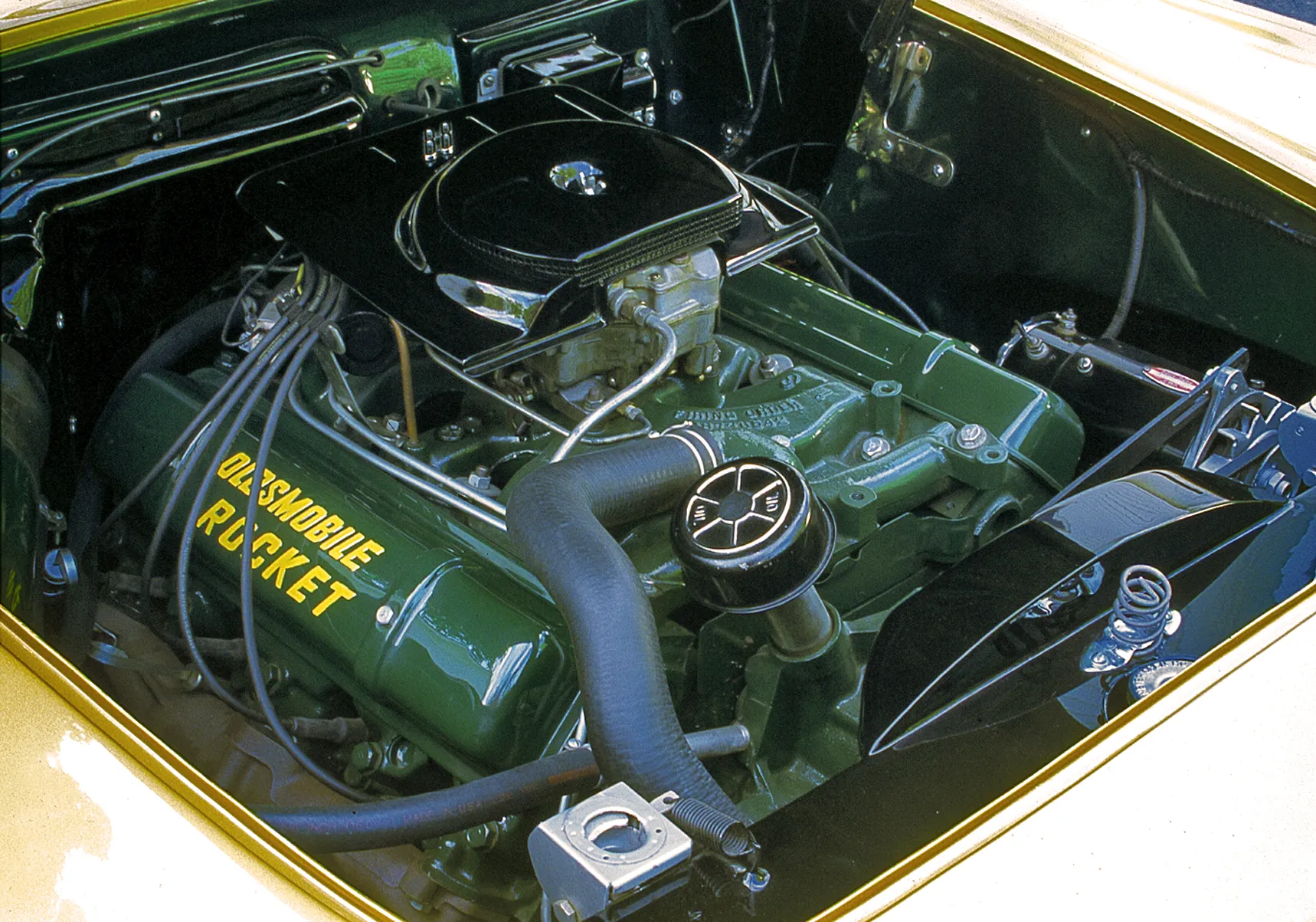
Without too much prodding, Apker will point out many of this car’s unique features, particularly the 303ci Rocket V-8 mated to a Hydramatic transmission.
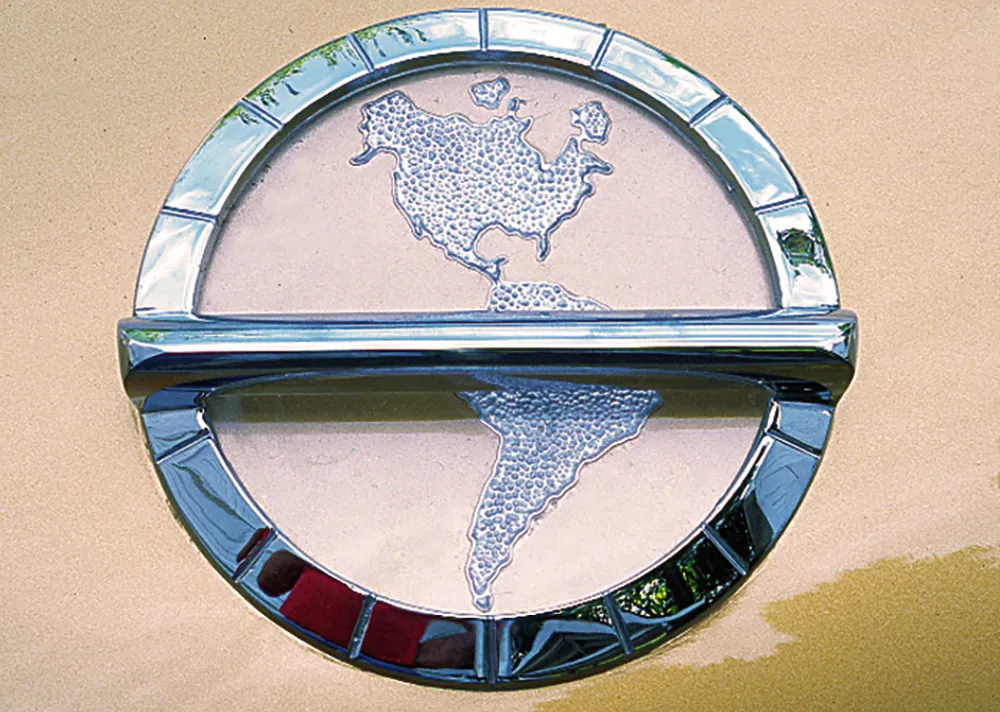
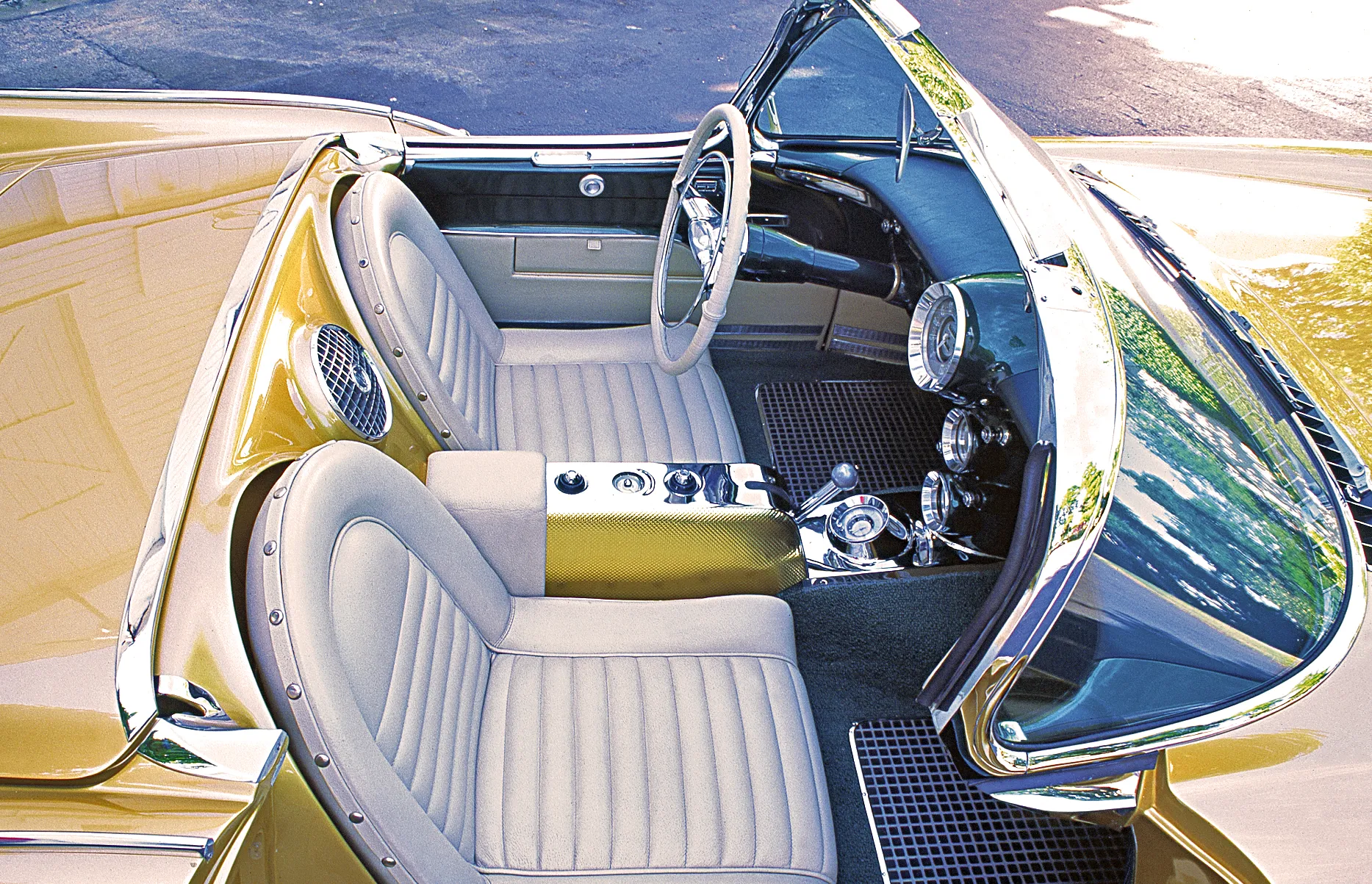
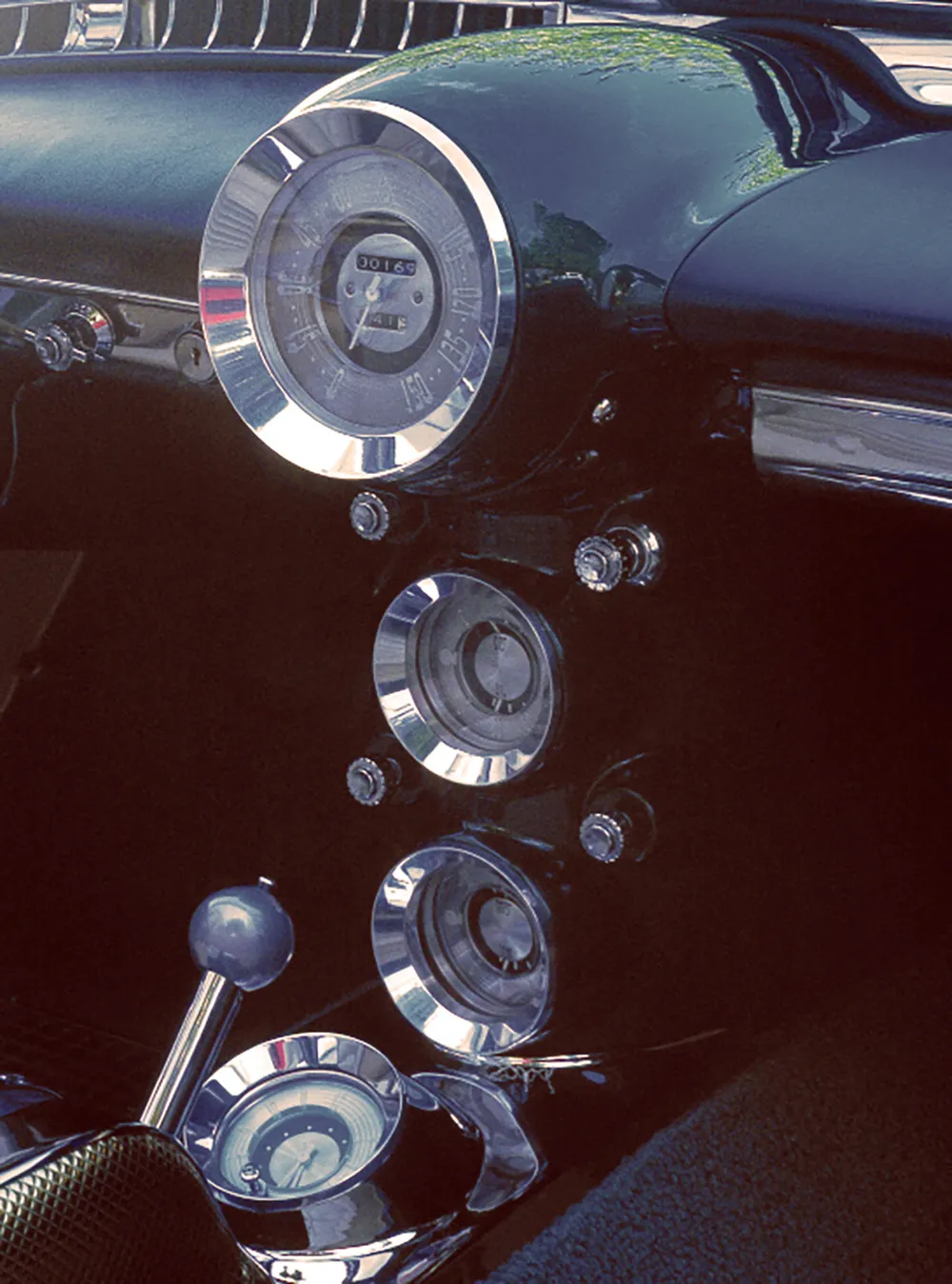
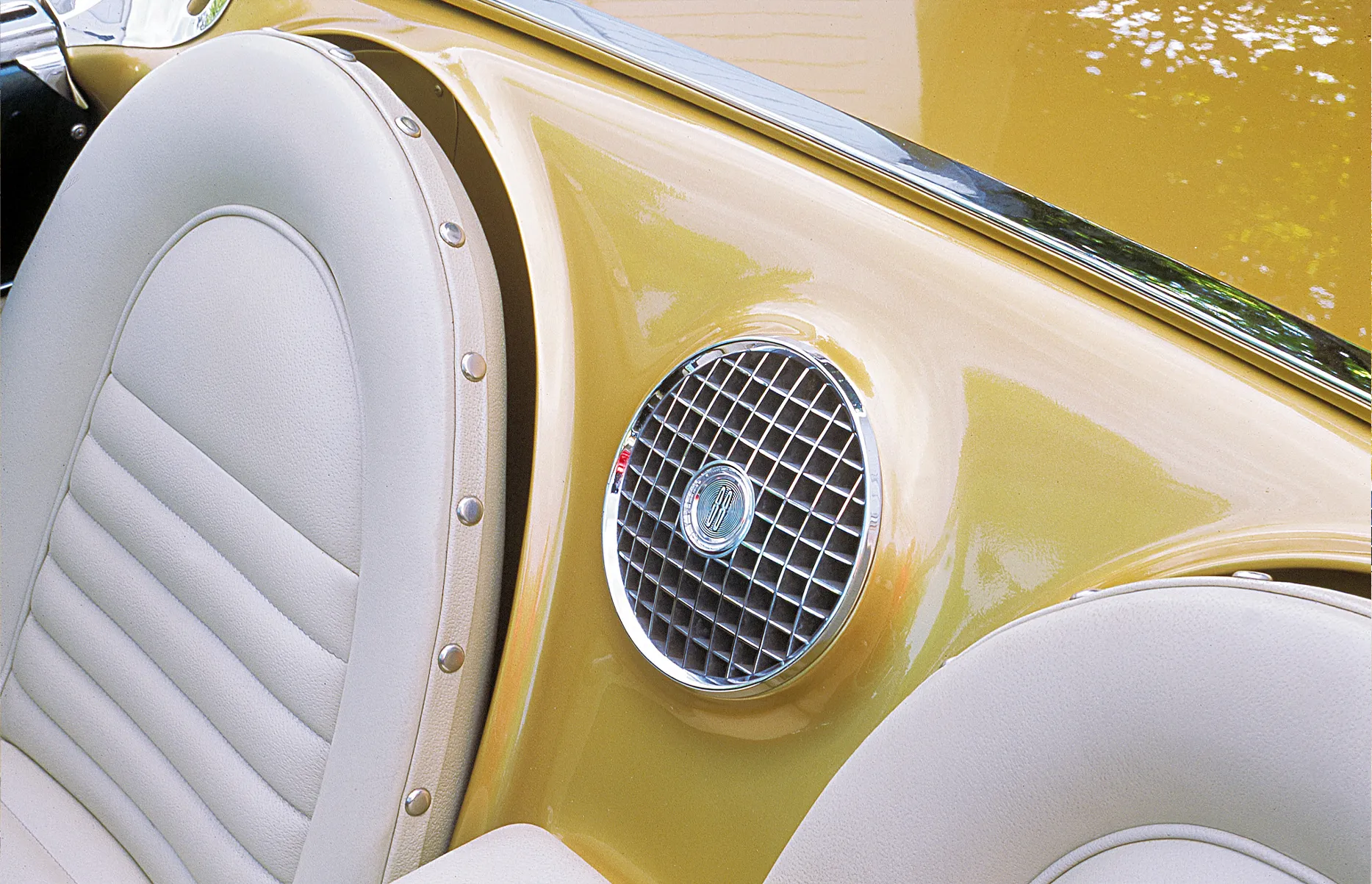
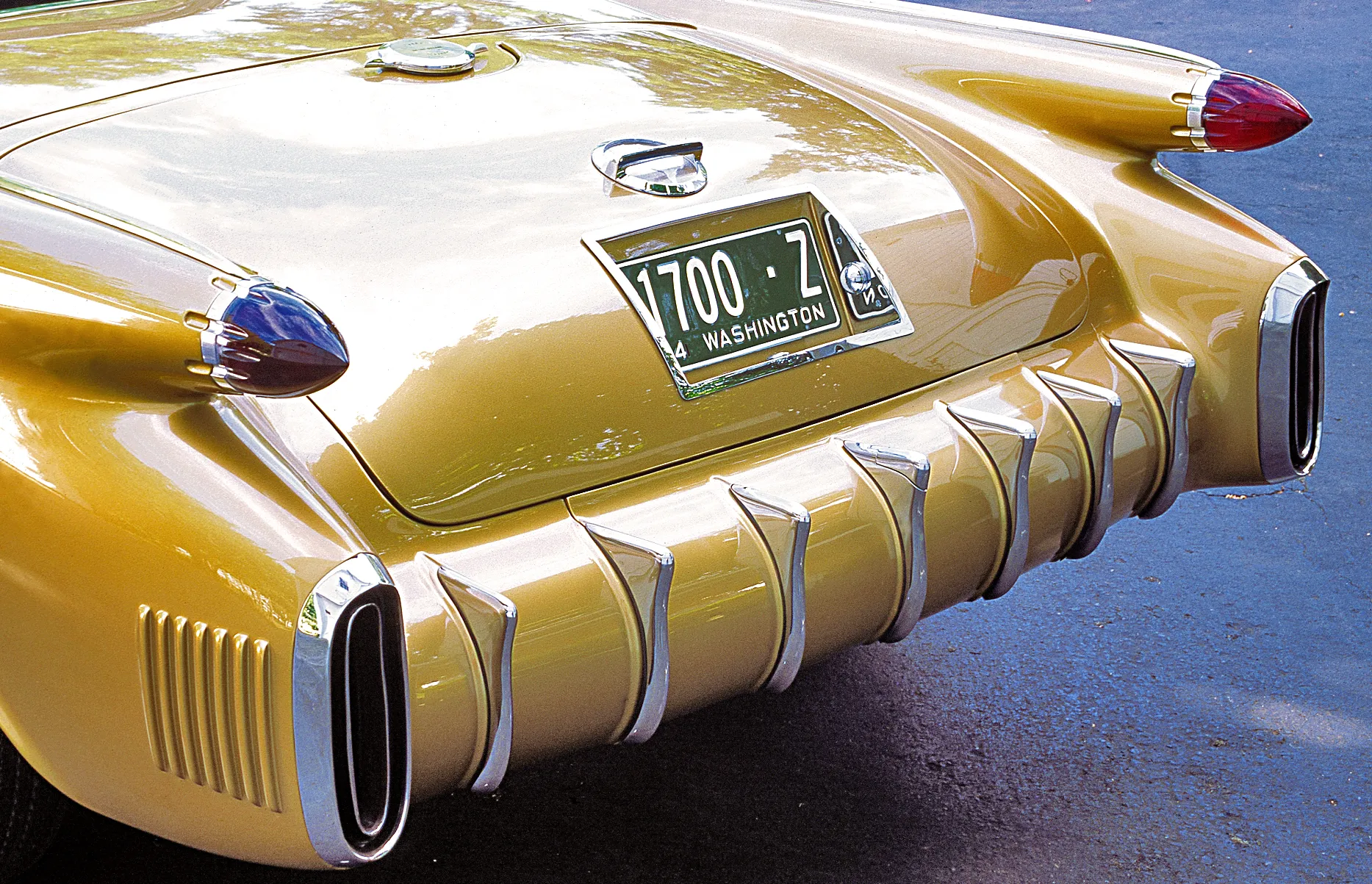
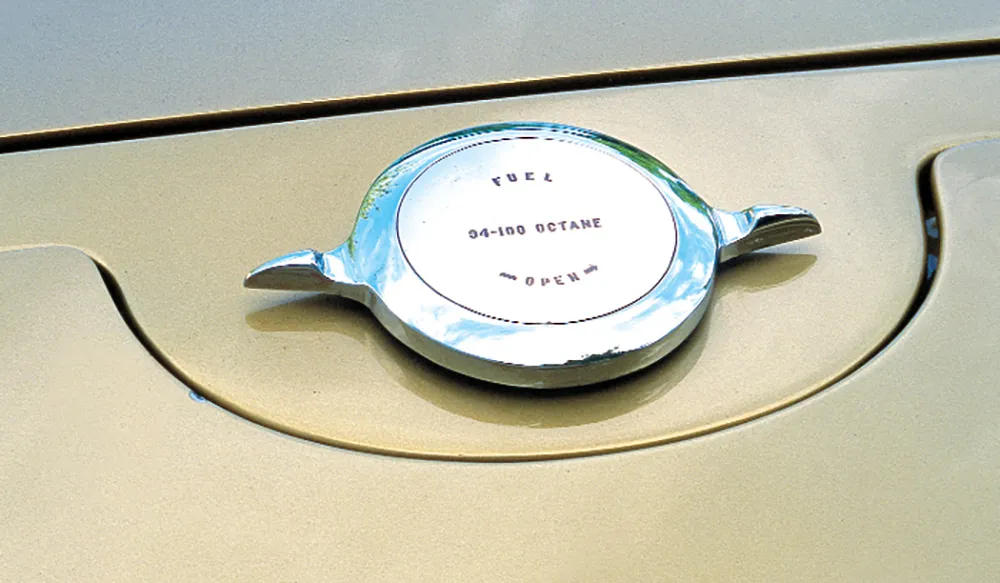
Another special touch can be found in the vertically stacked gauges in the center of the dash, each of which was specially made for this car, as they’re unlike any others produced by GM at that time. So it is with the bugscreened “air grabbers” atop the windshield, the pigskin upholstery and the unique emblems in the front and rear. In fact, from the signature oval Oldsmobile grille and bumper to the various trim pieces and the exhaust ports at the tip of both rear fenders, everything about this car is special. There’s even a small door at the top of the transmission tunnel that can be opened to reveal the original serial number of the ’54 Corvette chassis.
Yes, when it comes to rare cars, few have anything on this ’54 Oldsmobile F-88. It went from a prized innovator to a feared competitor that was nearly lost forever, were it not for the foresight of several individuals who realized its place in history.
(As an aside to this story, in an effort to regain the favor of Oldsmobile executives, they were eventually given the rights to another trend-setting project, which would eventually surface as the front-wheel-drive ’66 Oldsmobile Toronado, the first 10 of which came to the public in that very same shade of gold.)