





THE AUTO BUILDER
Menu
Featured
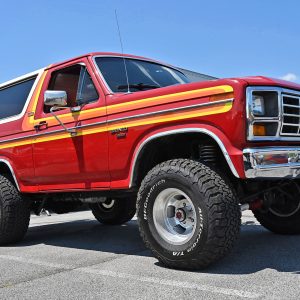
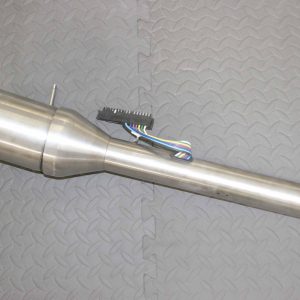
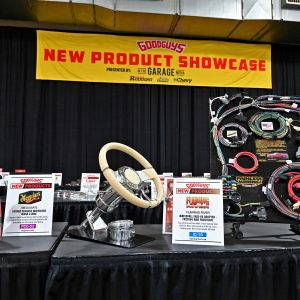
Top Parts Picks from Goodguys Columbus 2025
Columbus brought the heat—literally and figuratively. At this year’s Goodguys Nationals, the metal was shiny, the builds were wild, and the vendor midway was packed with gearheads showing off the next big things. We walked the aisles, kicked tires, talked shop, and came away with a short list of standout products we think deserve your attention. Whether you’re wrenching on a street truck, building a corner-carving pro-tourer, or chasing big boost, here are some of the best parts we spotted.

Into the Blue
There are a lot of reasons why people choose to build and drive the cars they do. Most of the time, it is because a particular car was one that they wanted or liked when they were young, and such is the case with Allen Bernd and this ’62 Chevy Impala SS.
A Southern Tradition
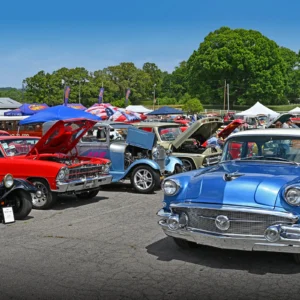
Johnson City, Tennessee didn’t just host a car show—it briefly turned into a rolling museum of American hot rodding. The 51st NSRA Street Rod Nationals South took over the Appalachian Fairgrounds on May 8–9, 2026, delivering two full days of traditional street rods, customs, and classic builds that reflected decades of craftsmanship and culture.



Spotlighter
POPULAR READS
-
The Auto Builder’s Hottest Product Picks from The Triple Crown of Rodding 2026
-
Product Spotlight: Bill Mitchell Products Aluminum LS Engine Block
-
PRODUCT SPOTLIGHT: 60-66 Chevy C10 Fresh Air Vent Block Off Plate
-
Product Spotlight: Pyramid Optimized Design Sequential Aurora Taillight for 1964½–1966 Mustang
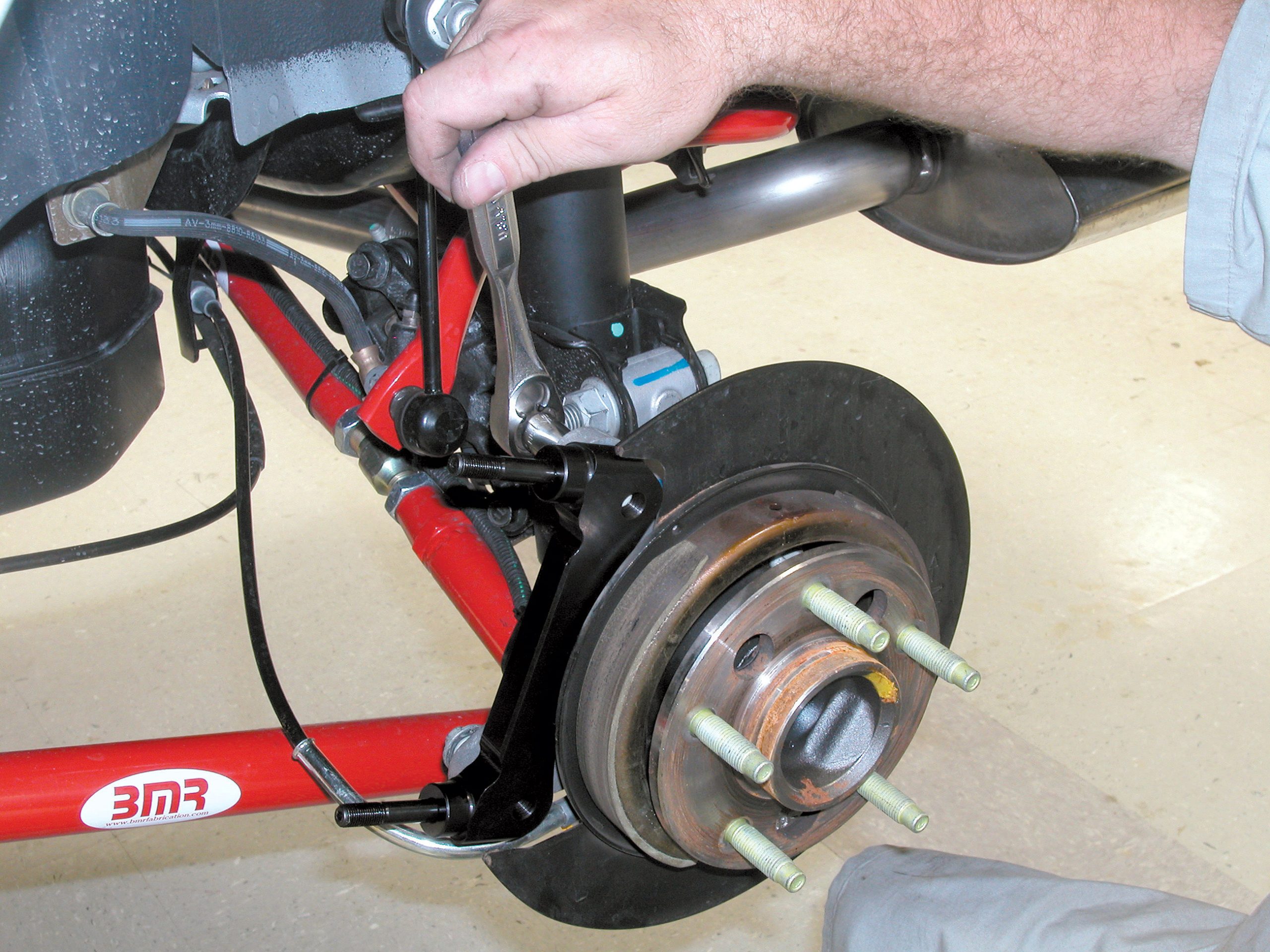
STOPPING BEYOND DOUBT
Wilwood Racing Technology Improves the ’03 Monte Carlo
NASCAR. It’s the most popular televised form of racing, with millions of fans across the nation. In fact, some believe NASCAR’s Cup Series Racing is the most popular sport in America. For all the money expended in Formula 1 (something in the neighborhood of $300 million a year for each of the top teams), it doesn’t approach the excitement, immensity or competitiveness found in this most American of sports.
Author

Stephen K. Anderson
Words & Photography
NASCAR Technology vs F1: Real-World Relevance
While there are those who will argue any comparison with the mega-dollar development of F1, their debate is silenced by the relative sensibility of NASCAR racing and its relation to real-world vehicles. While the exotic Ferrari Enzo street car is unquestionably a tour de force of advanced-technology performance, it has almost nothing to do with Michael Schumacher’s championship-winning F1 cars, and so it is with the rest of that illustrious field.
NASCAR’s Connection to Production Vehicles
In contrast to the other-world developments found in the F1 circus, some of the technology applied to cars circulating NASCAR facilities either is the result of developments in the Motor City or will eventually lead to products utilized by the world’s largest automakers. Stock Car racing originated from production cars, and while it is a stretch to say they share a lot with the current batch of street cars, including their bodies, they are nonetheless products of common interests.
Tracks as Testing Grounds
While racing fans see super speedways like Daytona, Talladega and Michigan, and smaller tracks such as Martinsville, Bristol and Richmond, as playgrounds and entertainment centers, development engineers fully understand their value as proving grounds. It’s at venues like these that products serve as prototypes for The Big Three, as well as smaller manufacturers in the aftermarket. And as these items are developed, more practical and cost-effective versions eventually find their way to production cars and super rods.
The Chevrolet Monte Carlo’s Role in Development
One of the favored cars that circulate these racing facilities is Chevrolet’s Monte Carlo, and while the racing versions differ greatly from those we see on the street, a paraphrase of the old saying “what’s raced on Sunday is transportation on Monday” is proving to be all too true. The Monte Carlo’s design is, in fact, a product of wind-tunnel development centering on efficiency and performance, and although it differs from NASCAR’s hybrid designs, it still shares a similar appearance. Just ask Hendrick Motorsports’ chief aerodynamicist, Gary Eakers, about this connection, because he once ran the General Motors wind tunnel before Rick Hendrick brought him in-house.
Bridging the Gap Through Braking Technology
Unlike other aspects of these cars, the one area that is directly linked between racing and production cars is braking. One of the most thoroughly challenging aspects of a racecar is controlling its braking efficiency, and Wilwood Engineering has been developing racecar brake technology since its earliest days. Born in the caldron of all forms of NASCAR racing, Wilwood has gone on to develop braking systems for other racing venues as well. And from there a rather complete line of street-based products began taking shape.
Real-World Application: Monte Carlo Brake Upgrade
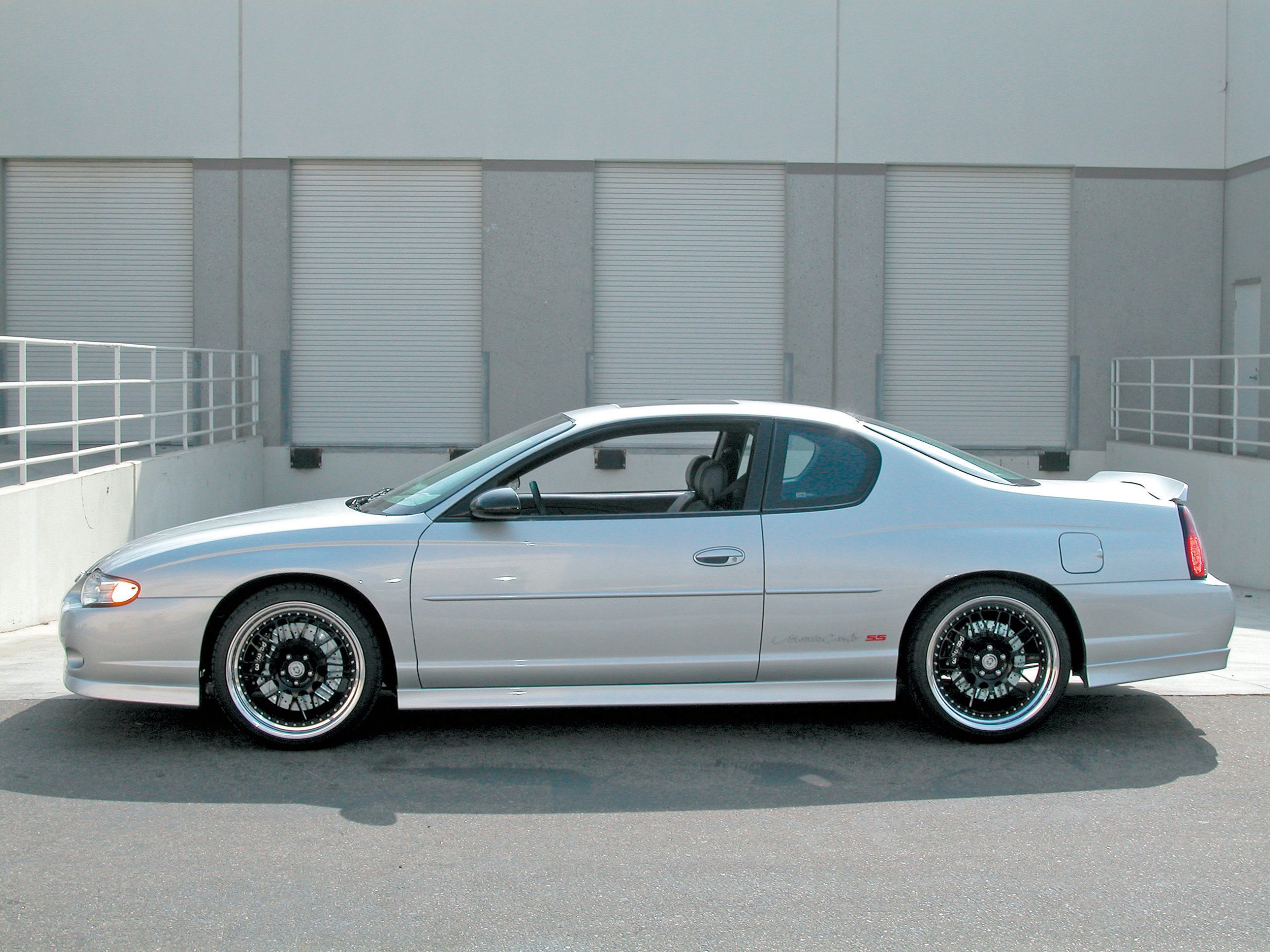
As a result of these ongoing developments, numerous braking systems for street applications have been developed, including one for the Chevy Monte Carlo, which shows once again how racing does improve the breed. While these sleek Chevys certainly have an adequate braking system to start with, considerable improvements are realized when this easy-to-install and highly cost-effective package is bolted on.
Installation with Dindo Cajulis’ Monte Carlo
We were fortunate to be on hand as Wilwood Engineering fitted its new braking package to Dindo Cajulis’ ’03 Monte Carlo. It seems this window of opportunity was, at best, a short one, because the entire installation took less than four hours, including the time needed to capture these photographic images and talk with the installer. When you consider the gains, both functional and visual, this is amazing indeed, and it shows how far our industry has come.
Who Is Dindo Cajulis?
Judging from his enthusiasm for this Monte Carlo, and performance vehicles in general (he also owns a Lotus Esprit Turbo), there is little doubt that Cajulis is a true enthusiast, yet his real commitment is not his hobby but his work. You see, Cajulis owns PhaseX, a high-tech corporation specializing in the development of braking software systems for some of the top auto manufacturers in the world. We mention this to underscore the fact that while he’s continually sharpening the leading edge of braking technology, Cajulis looked to Wilwood for his braking upgrade. That in itself should serve as testament enough, but once you’ve followed us through this installation process, you’ll see why he believes so strongly in Wilwood products.
Street Performance That Measures Up
While the streets of Southern California may not seem as torturous as NASCAR tracks such as Bristol or Martinsville, they do provide a different kind of challenge that tests vehicle stamina like few other arenas. Wilwood disc brakes are designed to handle the rigors of high-output street performance, and the company has developed a wide variety of packages so that you, too, can enjoy maximized braking in minimum time, for a variety of applications.
01 As the owner of PhaseX, a company specializing in the initial development of advanced braking systems for OEM automakers, Dindo Cajulis followed the update on his ’03 Monte Carlo from beginning to end, and he came away impressed.
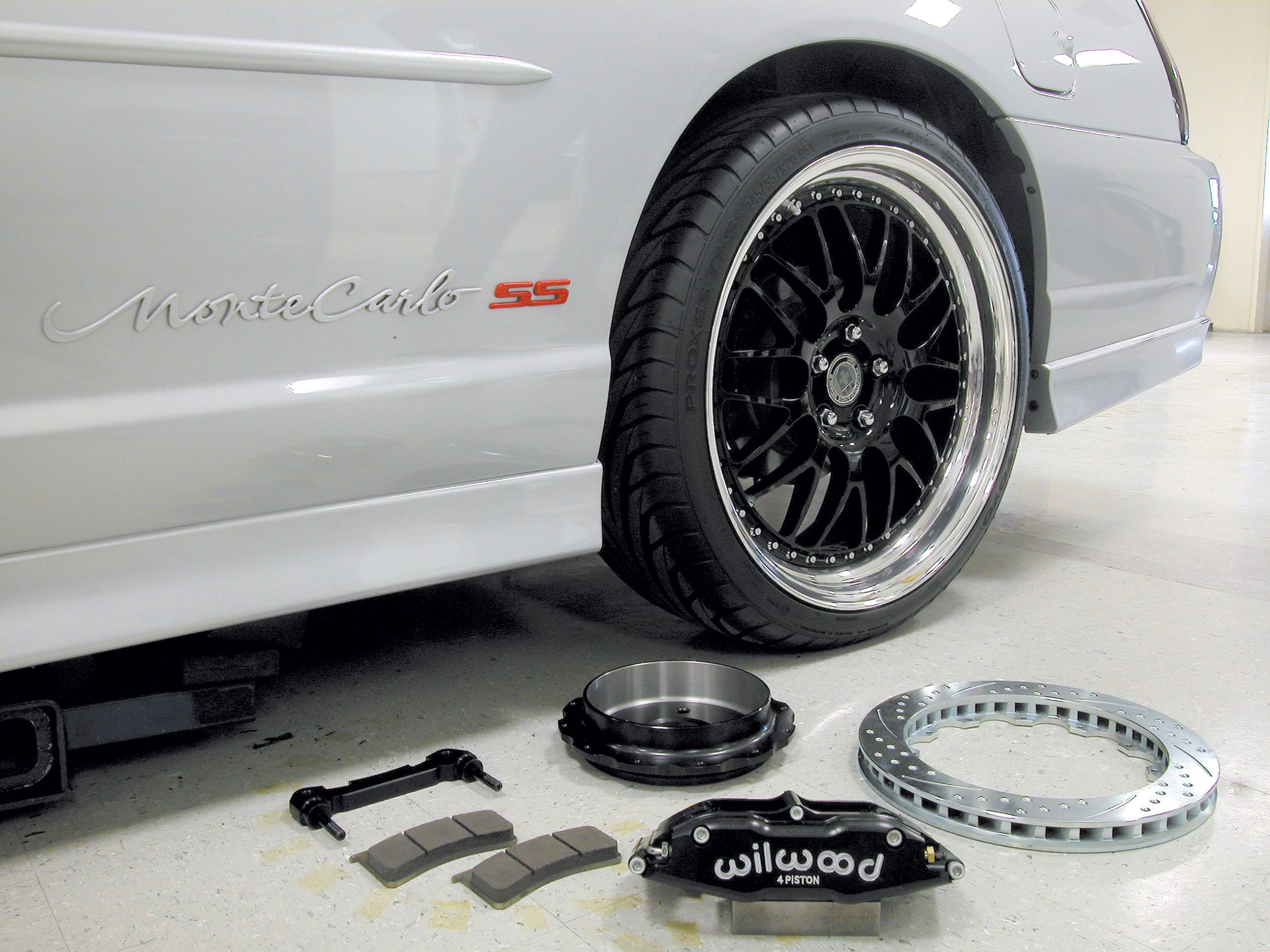
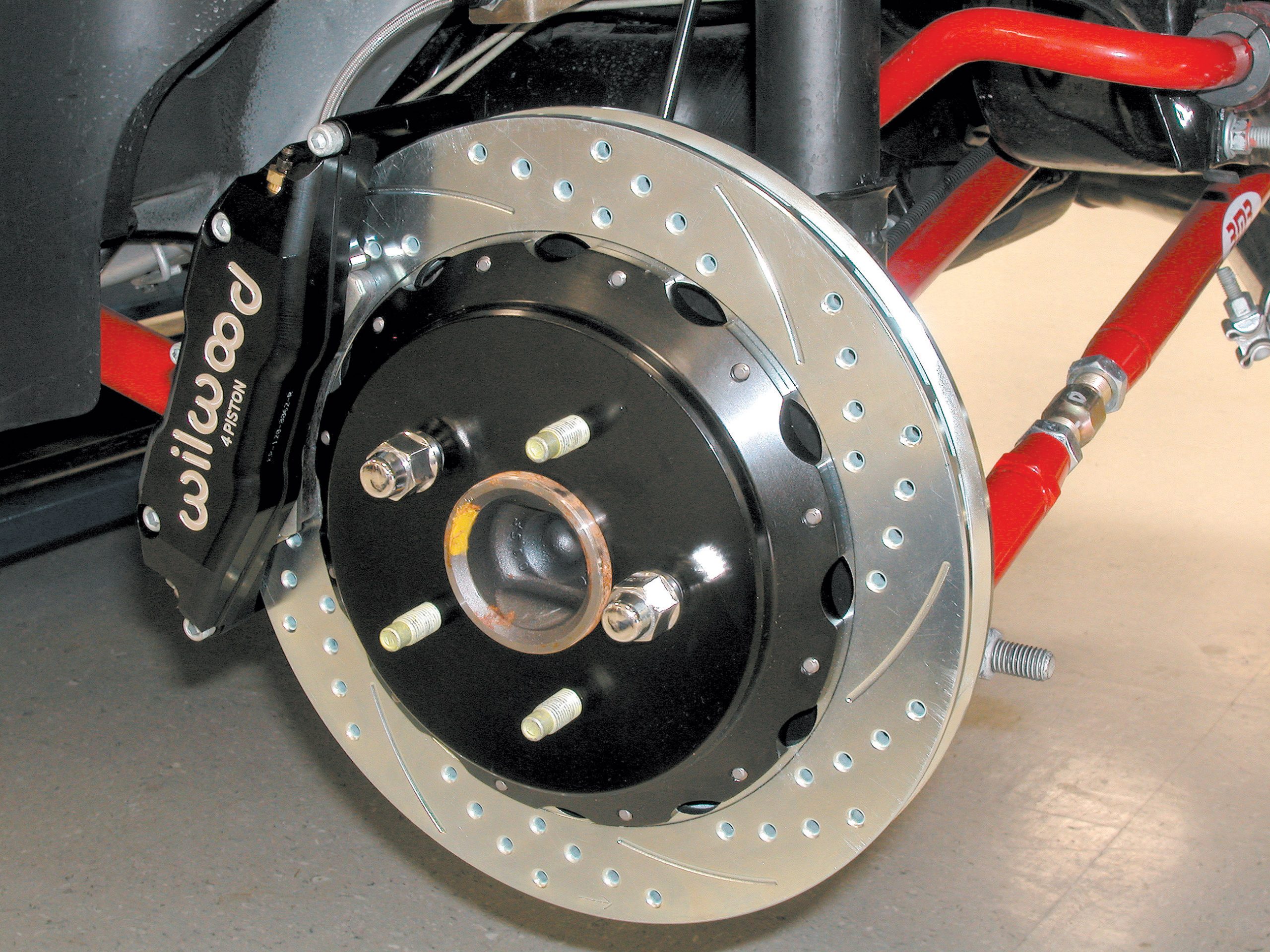
02 The Wilwood Superlite 4 Pro Series with a rear parking-brake kit featuring vented rotors is a natural for this car, providing incredible stopping power and impressive looks in a surprisingly quick installation. Reasonably priced, this is a straightforward bolt-on.
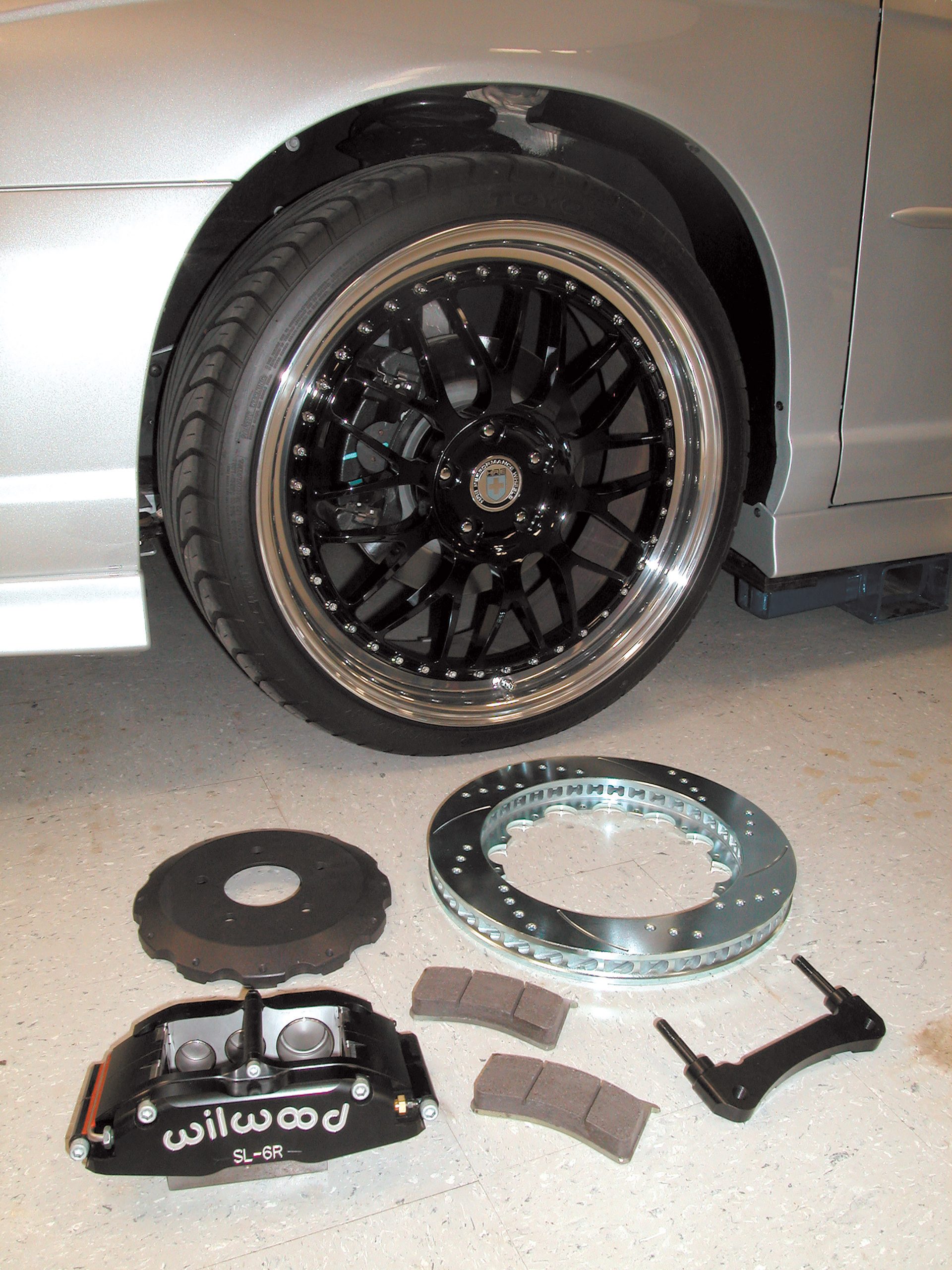
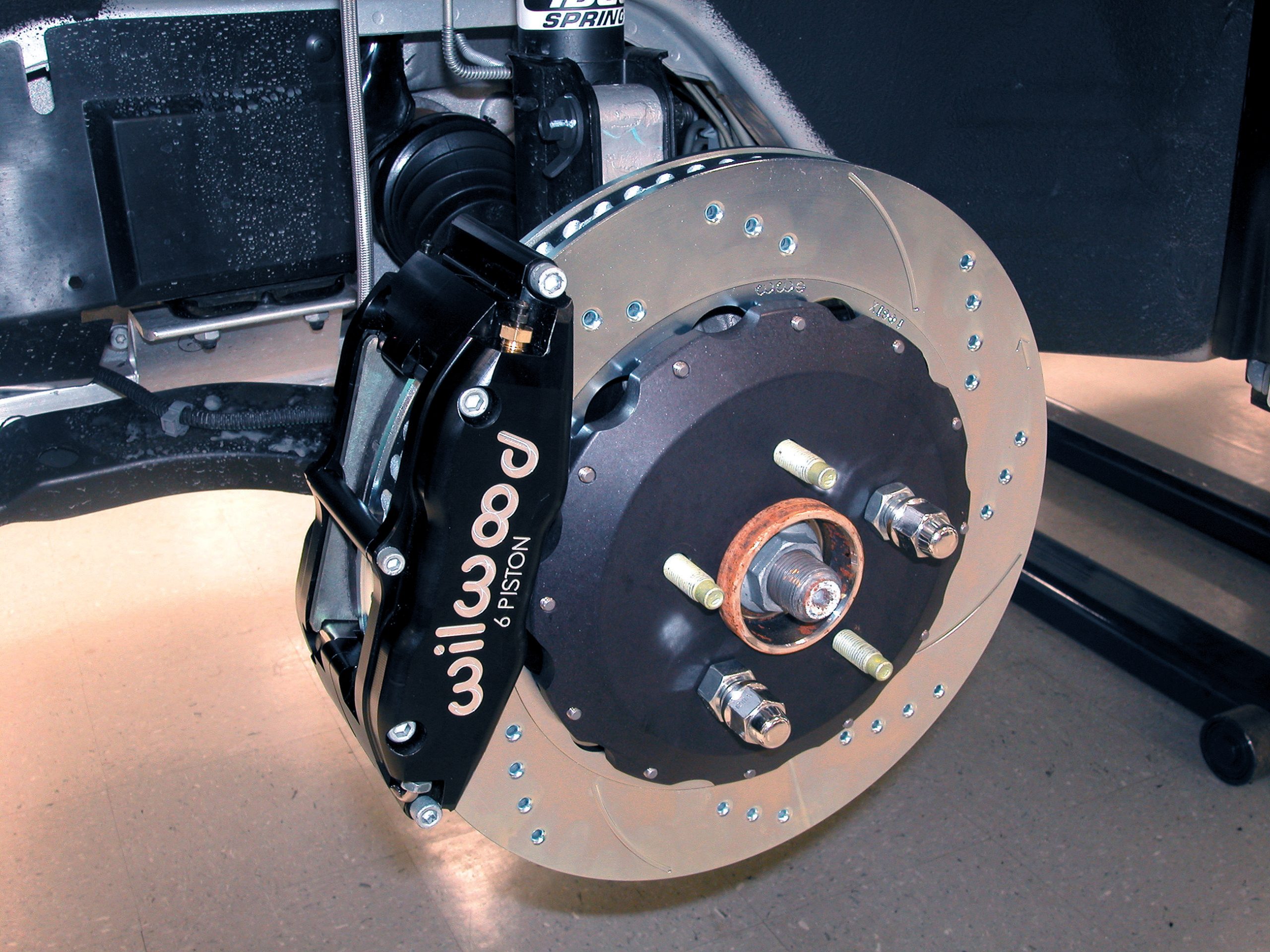
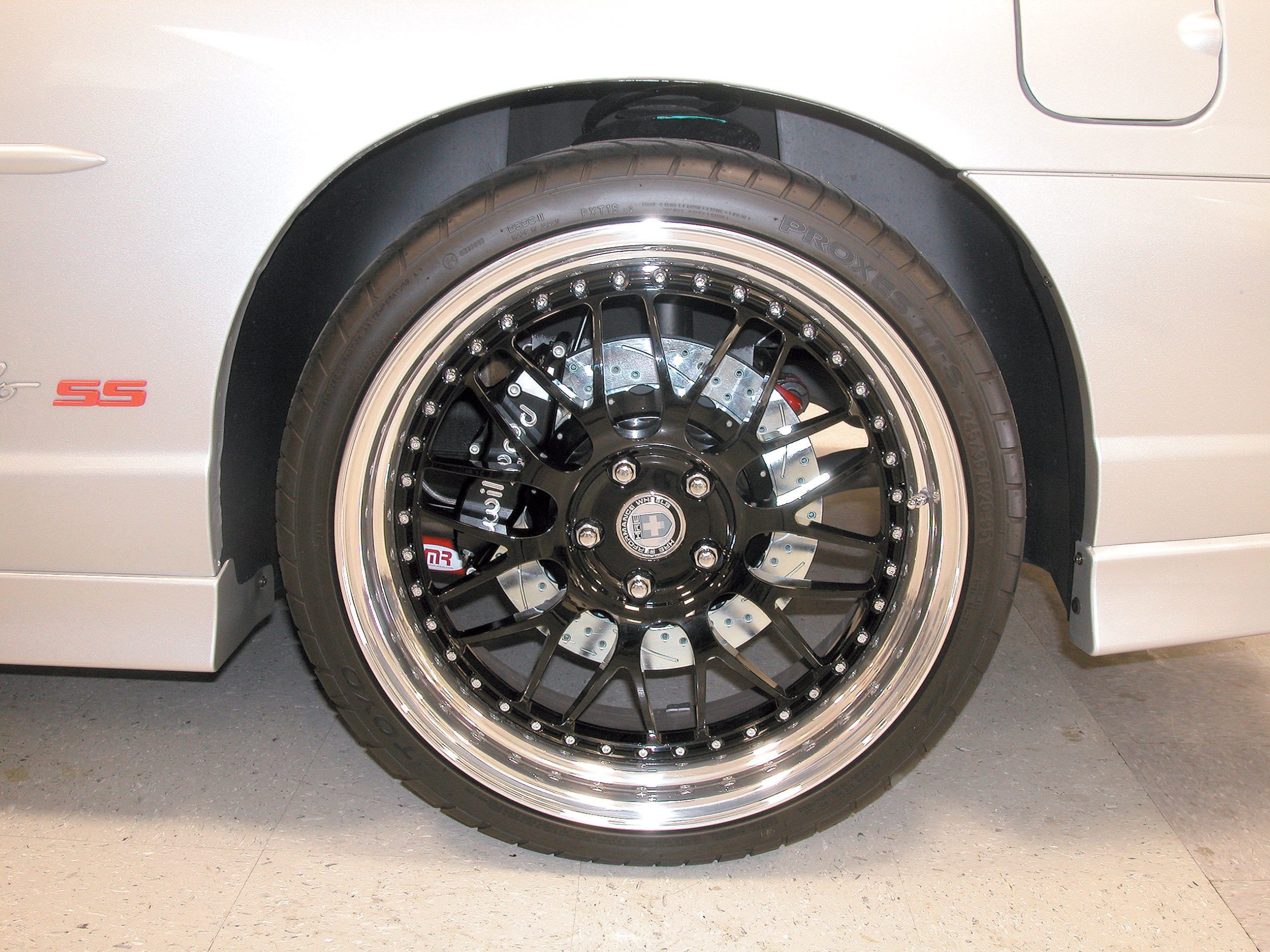
03 To maximize the braking performance of his Monte Carlo, Cajulis chose Wilwood’s stout Superlite 6 Big Brake Front Hat Kit with 14-inch-diameter vented rotors. Combined with the rear brake package, it will give this car excellent control and fade resistance.
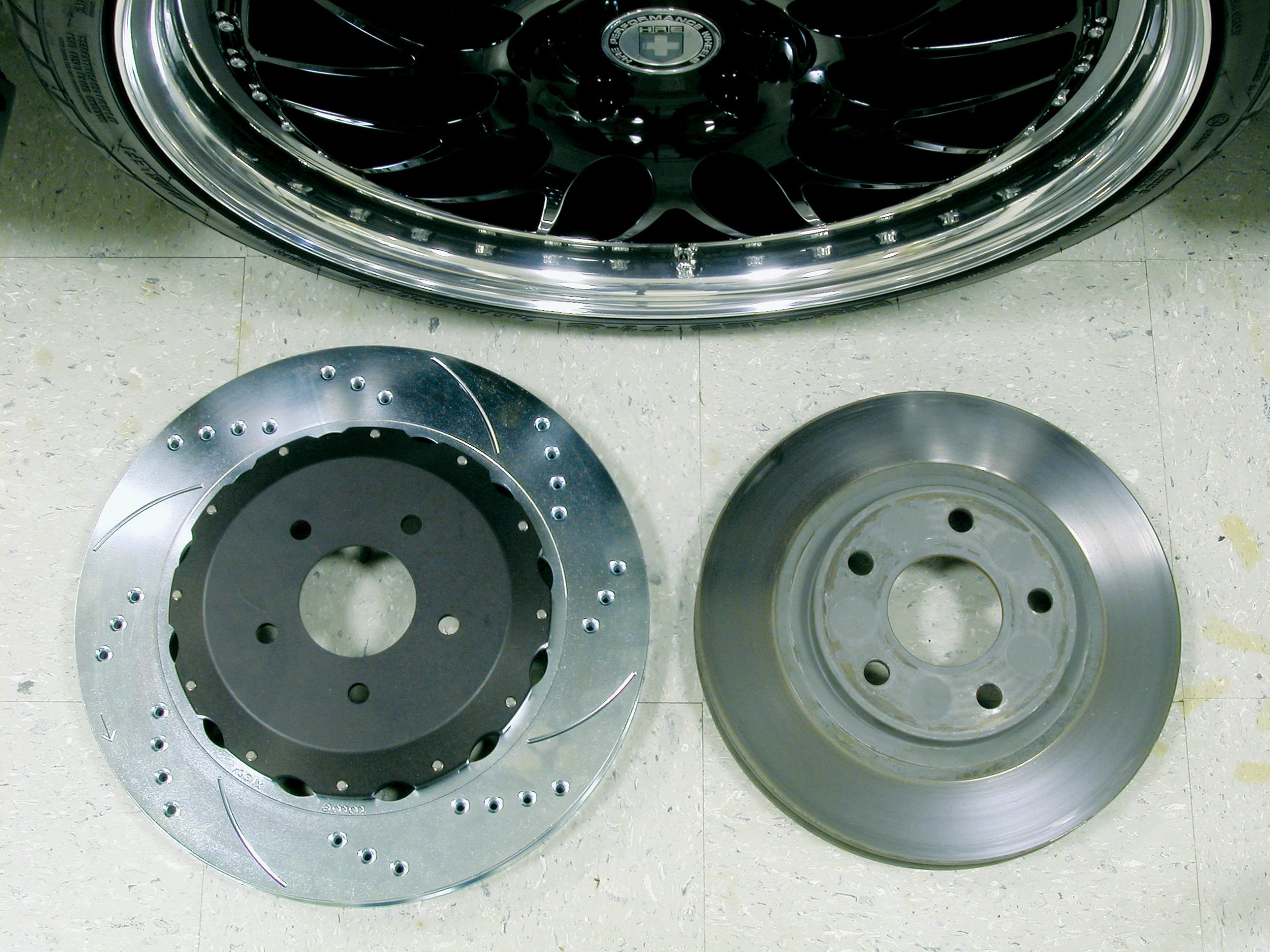
04 When compared with the original front rotor, right (as if we needed to tell you), it’s easy to understand why this Wilwood kit is so effective in improving braking dynamics. Add the benefits of cross-drilling and larger vents, and you’ve got to say “yes!”
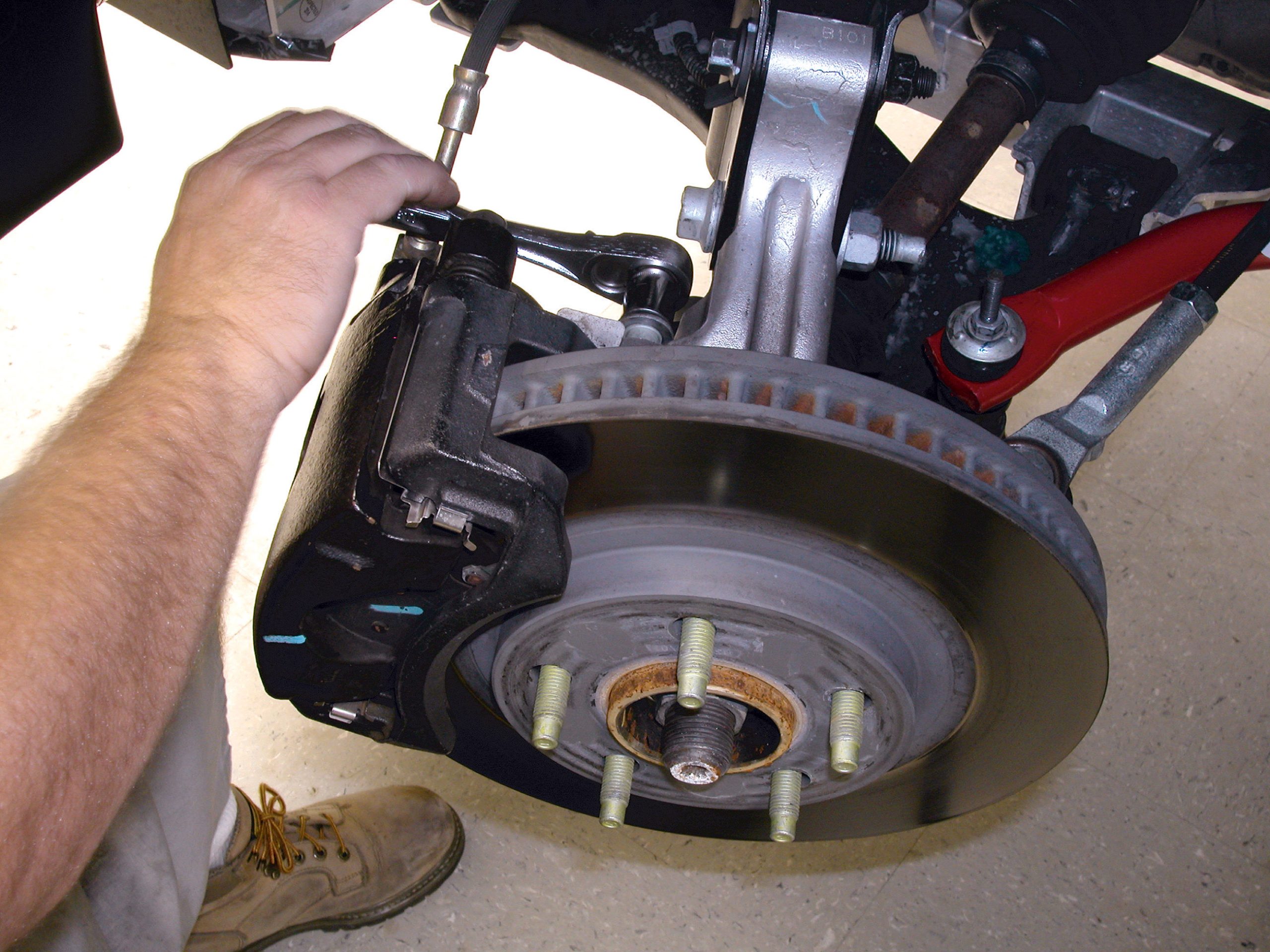
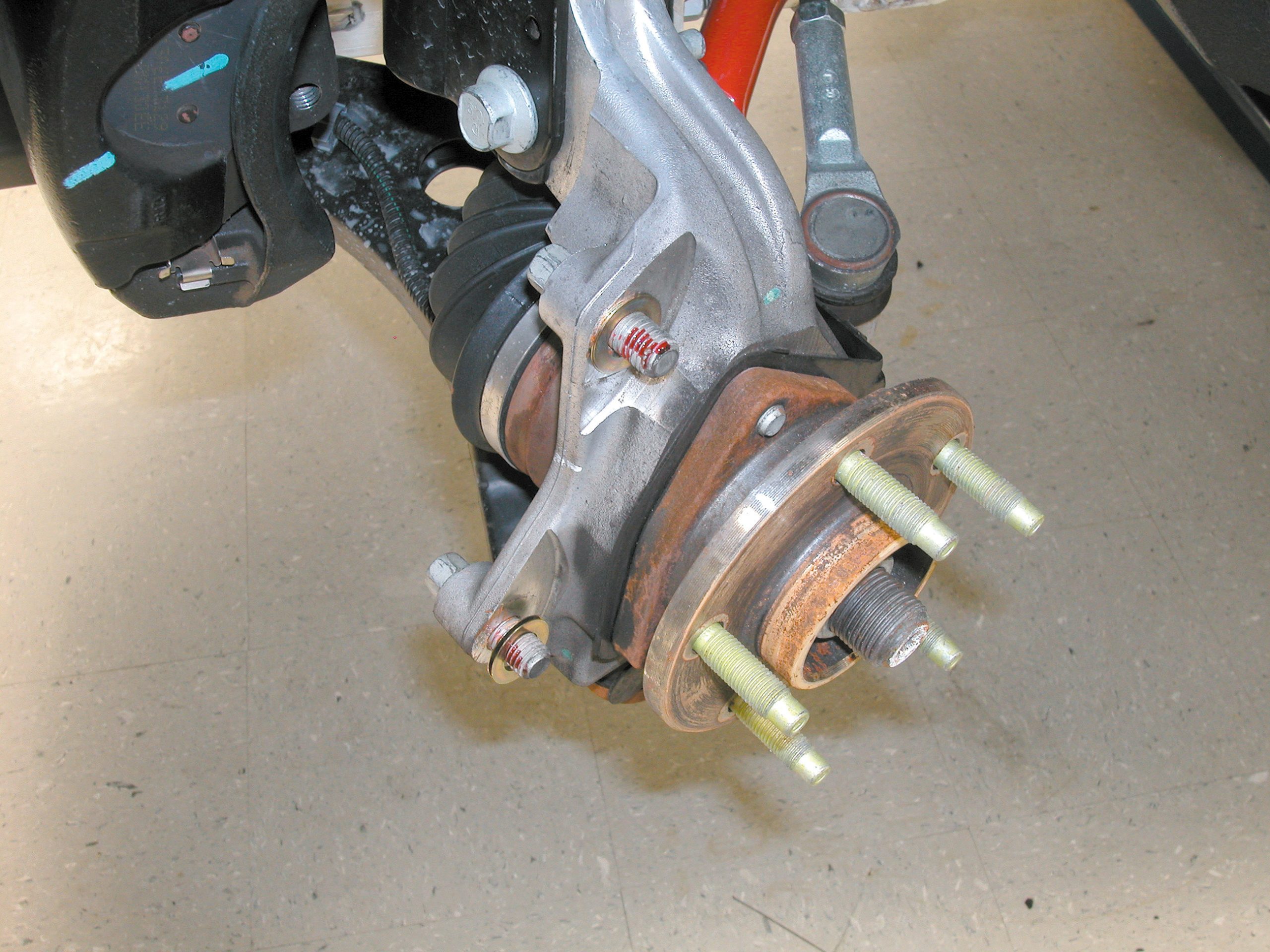
05 Starting at the front, the process begins by raising the car and lowering the lower control arm onto a jackstand; this installation should be done one side at a time. Once the car is secure, remove the bolts holding the original calipers to the spindle. Be sure to leave the bolts loosely in place, temporarily supporting the caliper.
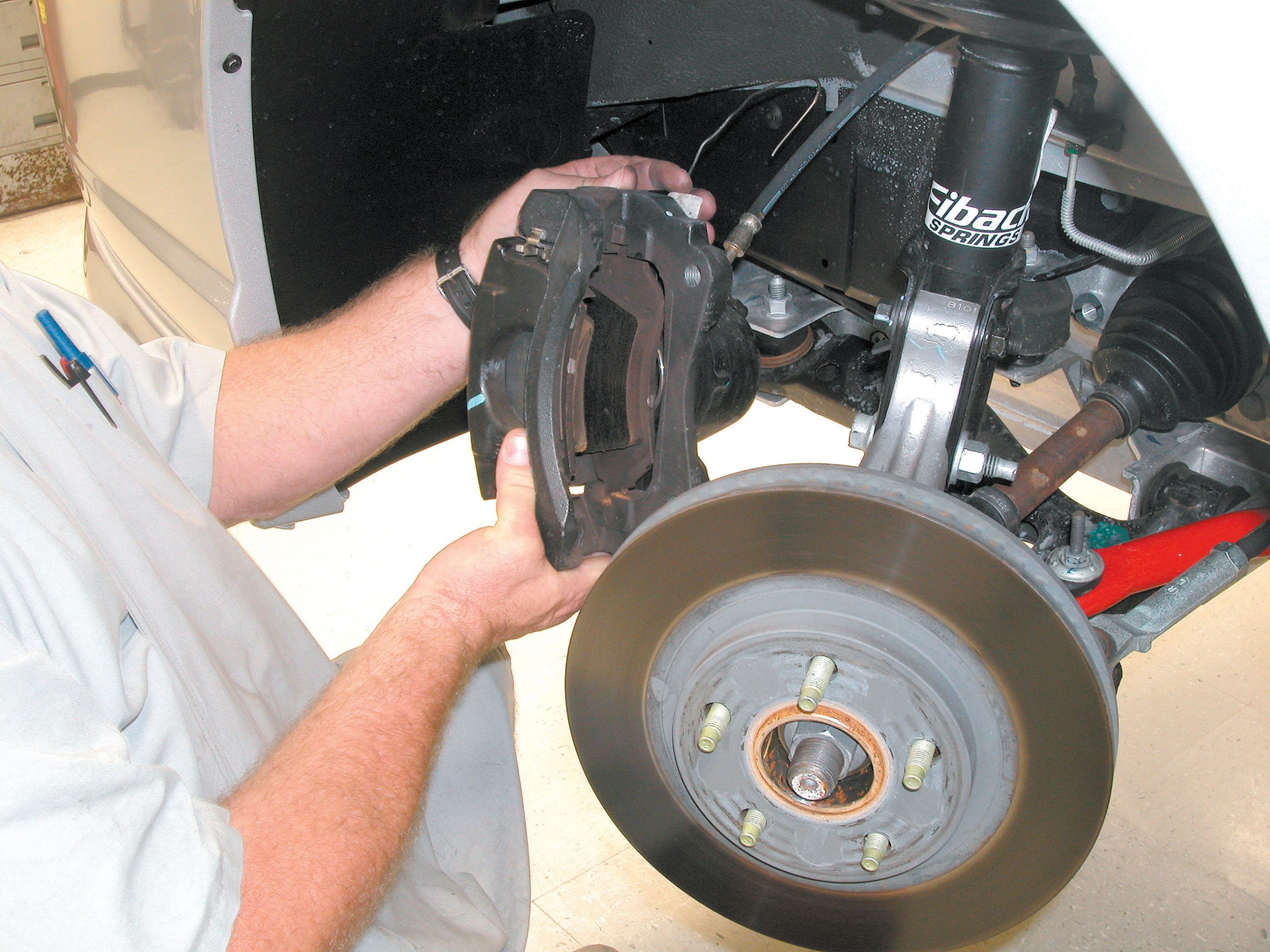
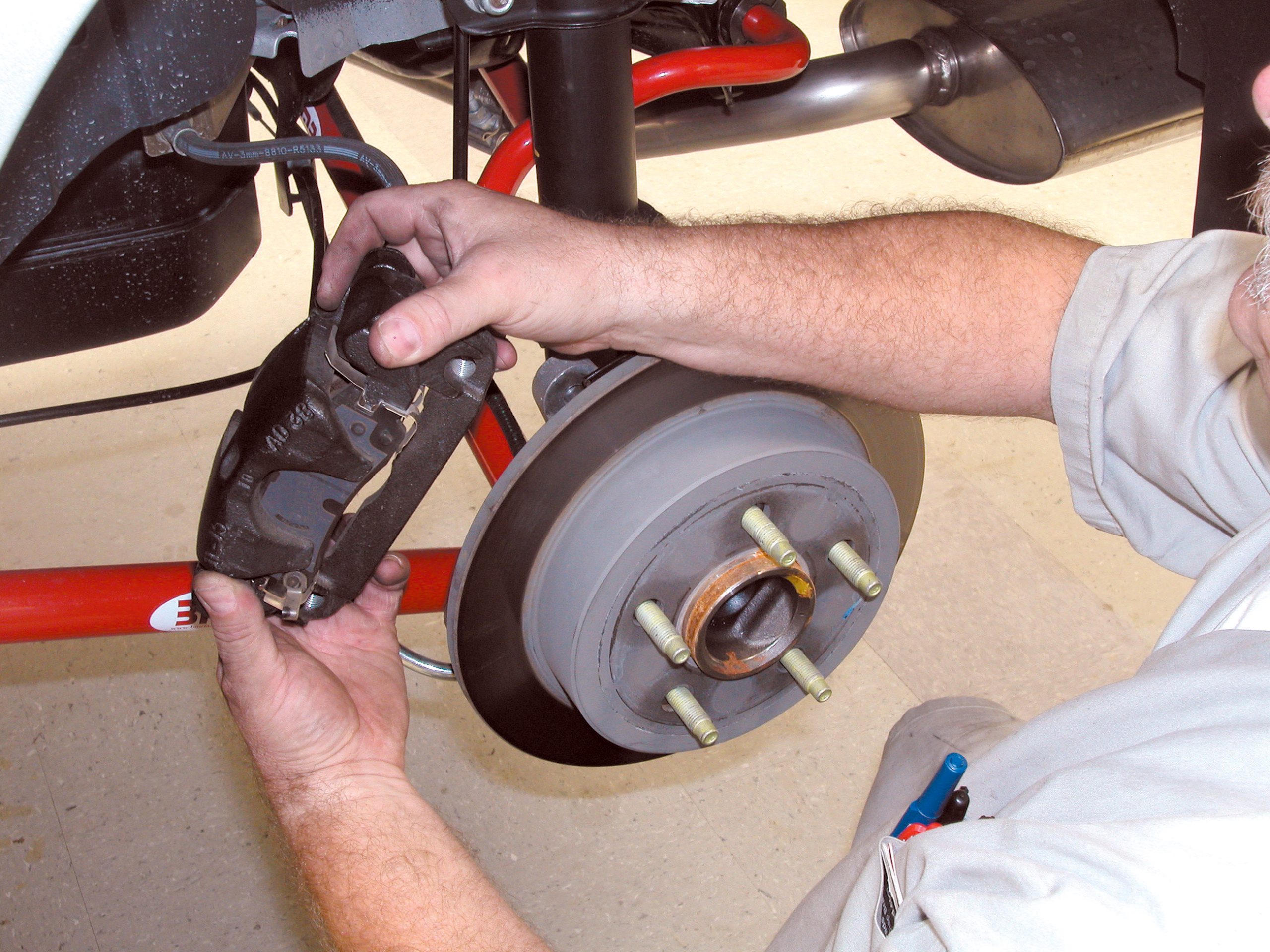
06 With a good grasp on the caliper, pull out the bolts and move the caliper away from the rotor. A sturdy wire should be attached to the stock caliper so it can be hung from the coil springs during the removal of the brake line. Note the relatively small pad size compared with the Wilwood pads. Combined with the larger rotors, considerable gains are realized.
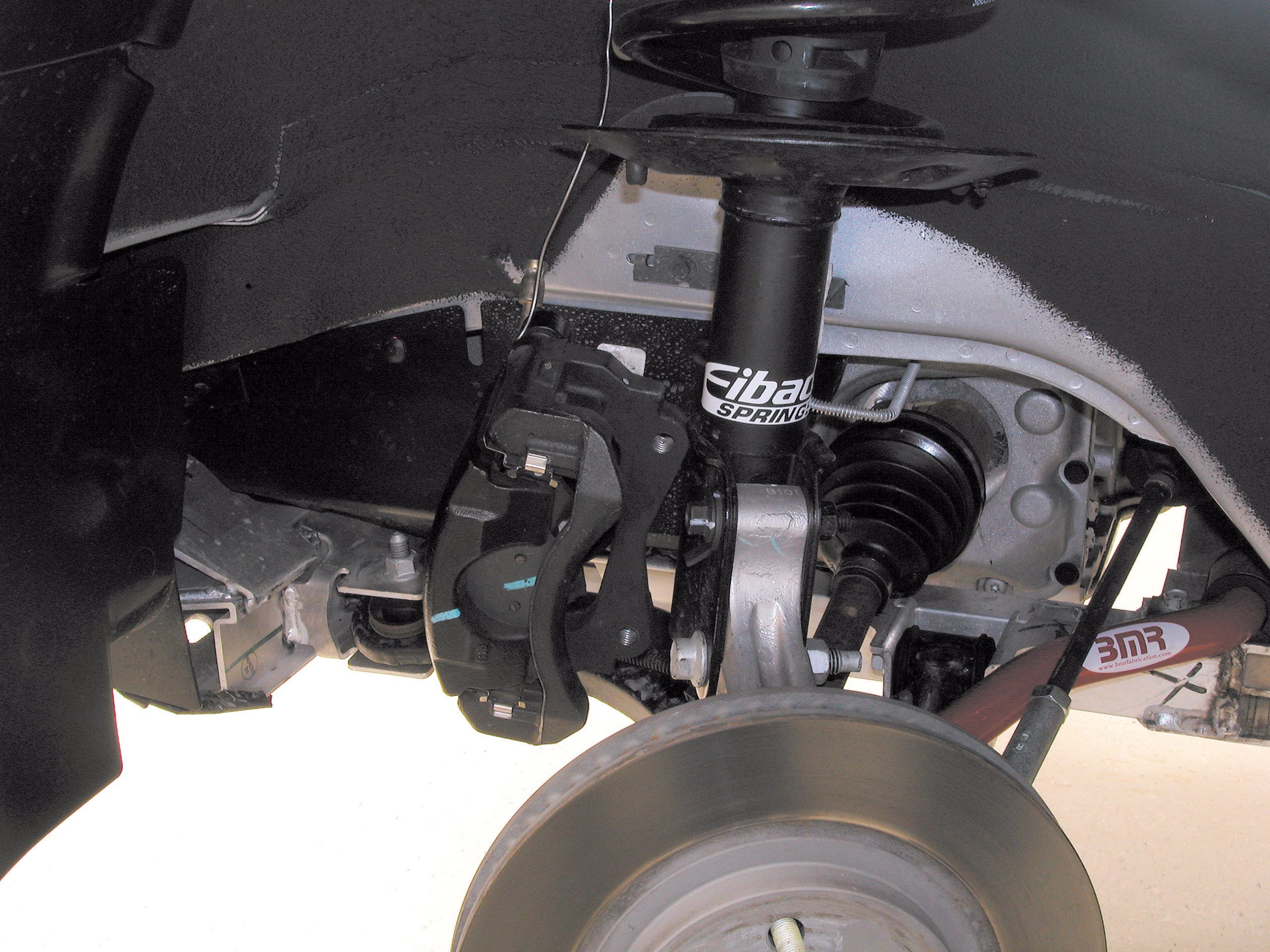
07 With the caliper removed, hang it from the spring above. This will allow you to remove the brake line and brake rotor without worrying about supporting the caliper. However, don’t disconnect the brake lines yet; wait until it’s time to bolt up the new caliper.
08 To place the Wilwood caliper precisely where it needs to be on the spindle, Wilwood supplies two (black-anodized) spacers for each corner, along with various shims to fine-tune the location. Care should be taken to add or subtract spacers to position the caliper exactly where it needs to be in regard to the rotor. Always read the instructions!
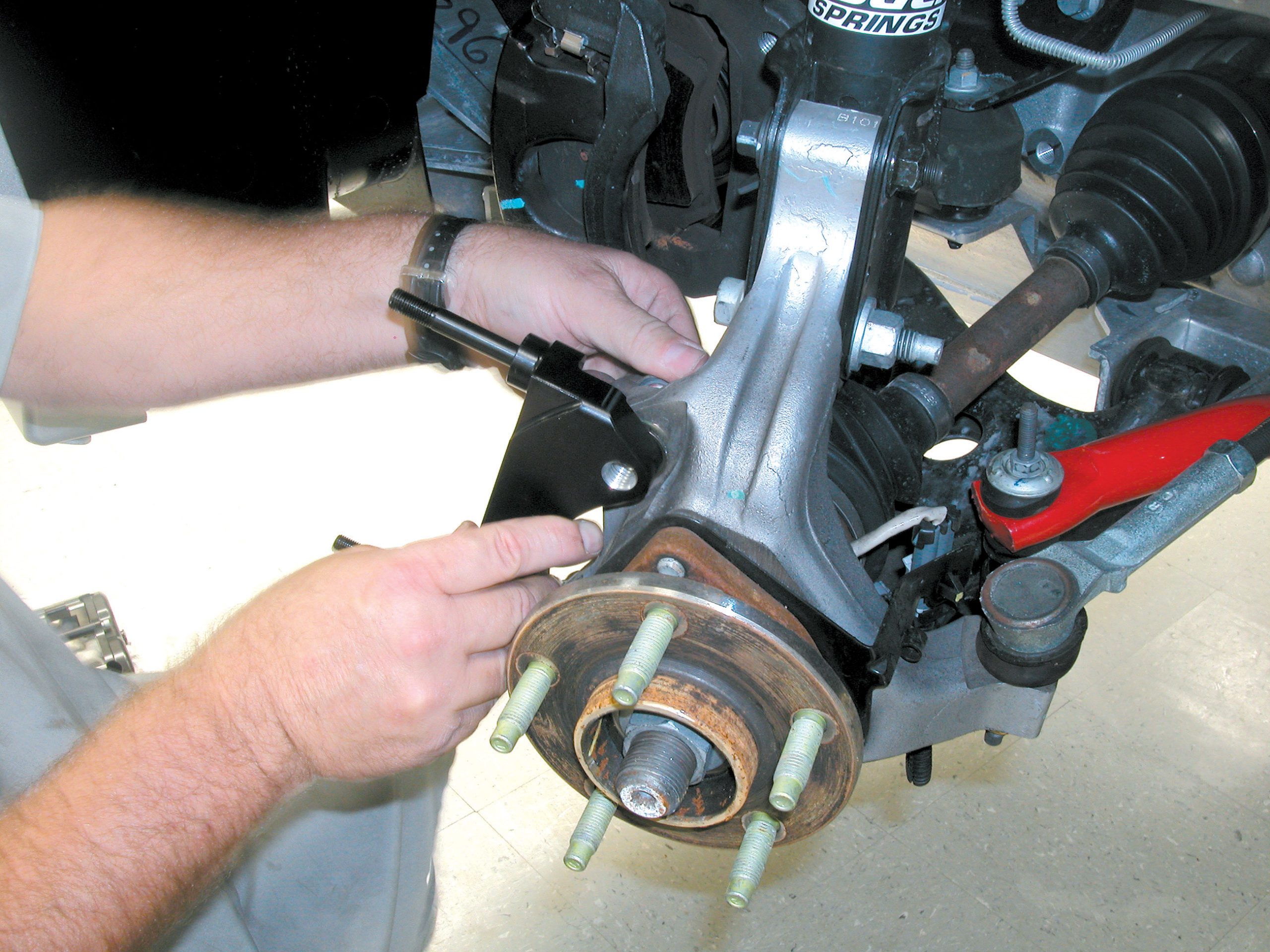
09 Reinstall the original caliper bolts, which will be used to install the caliper-mounting bracket. Once the threads have been cleaned, slide them back through the spindle and put a small amount of red Loctite 271 on the threads. Remember to take your time, because once this Loctite has set, removing the bolts is difficult.
10 Now position the caliper-mounting bracket against the spindle, taking care to mount it as designed. Then thread the bolts through the spindle and into the bracket in preparation for tightening.
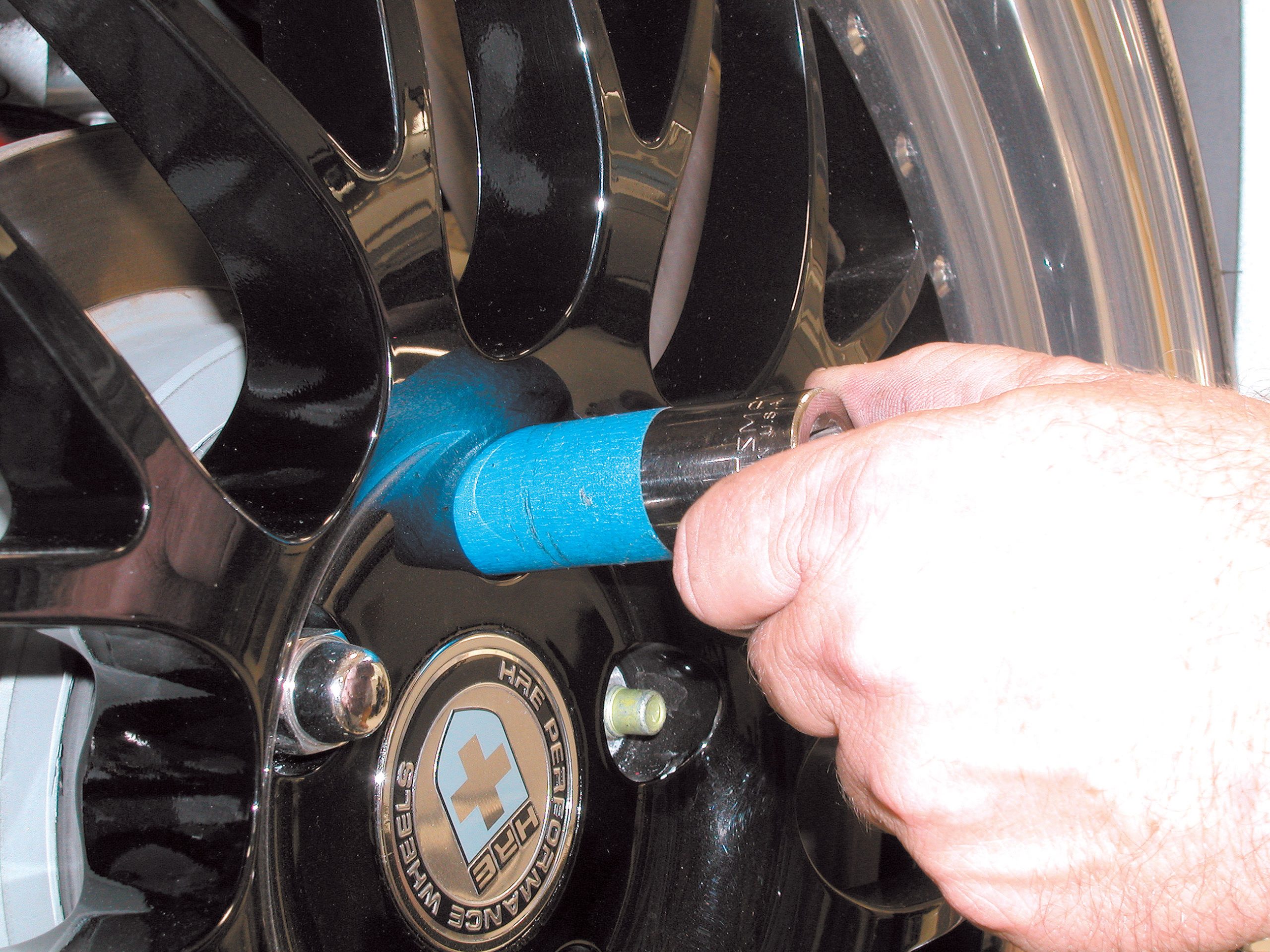
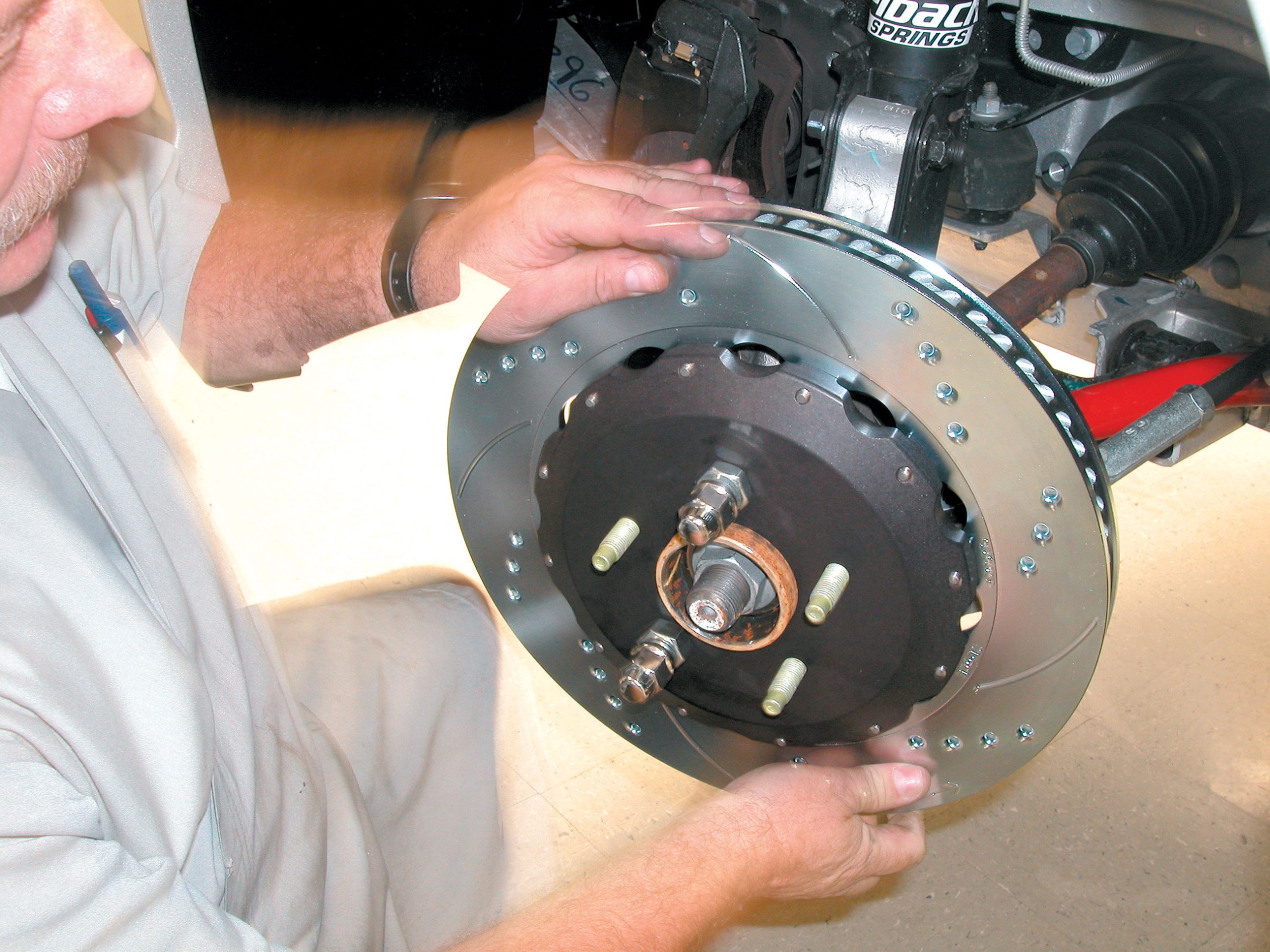
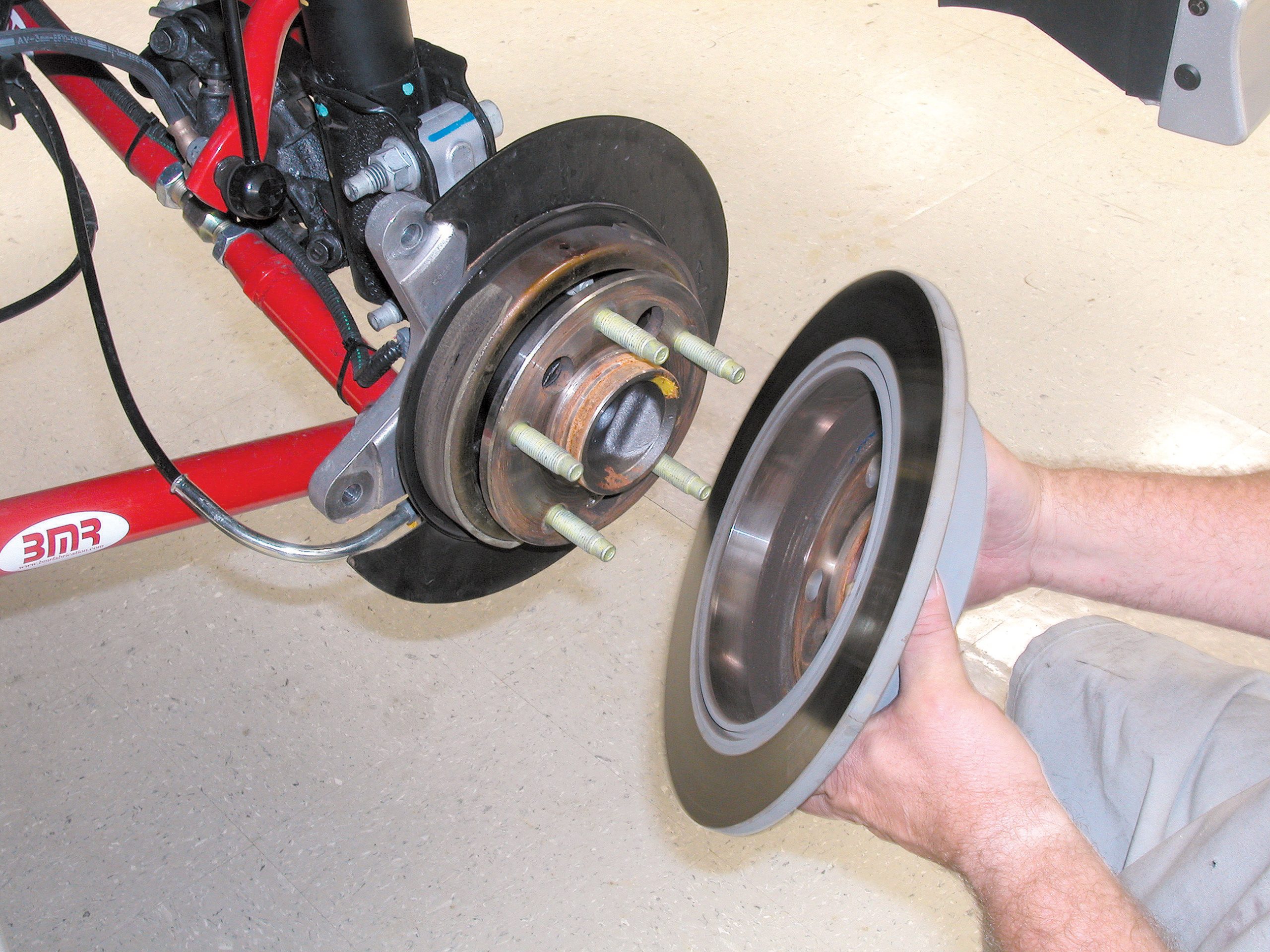
11 Now you can install the new hat and 14-inch brake rotor, taking care to align the wheel studs with damaging the threads. Use a couple of wheel studs to secure the rotor tightly in position before the caliper is mounted.
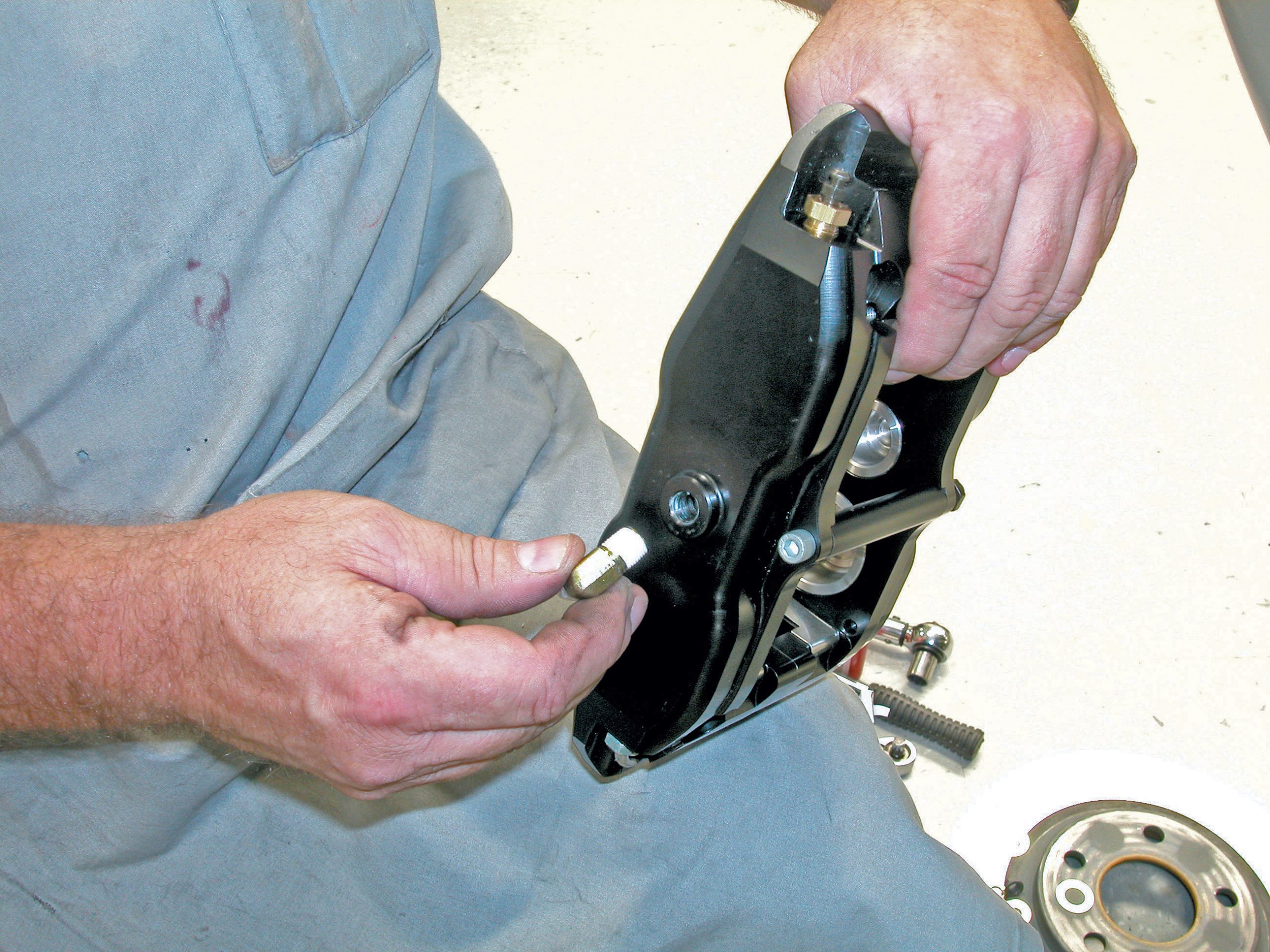
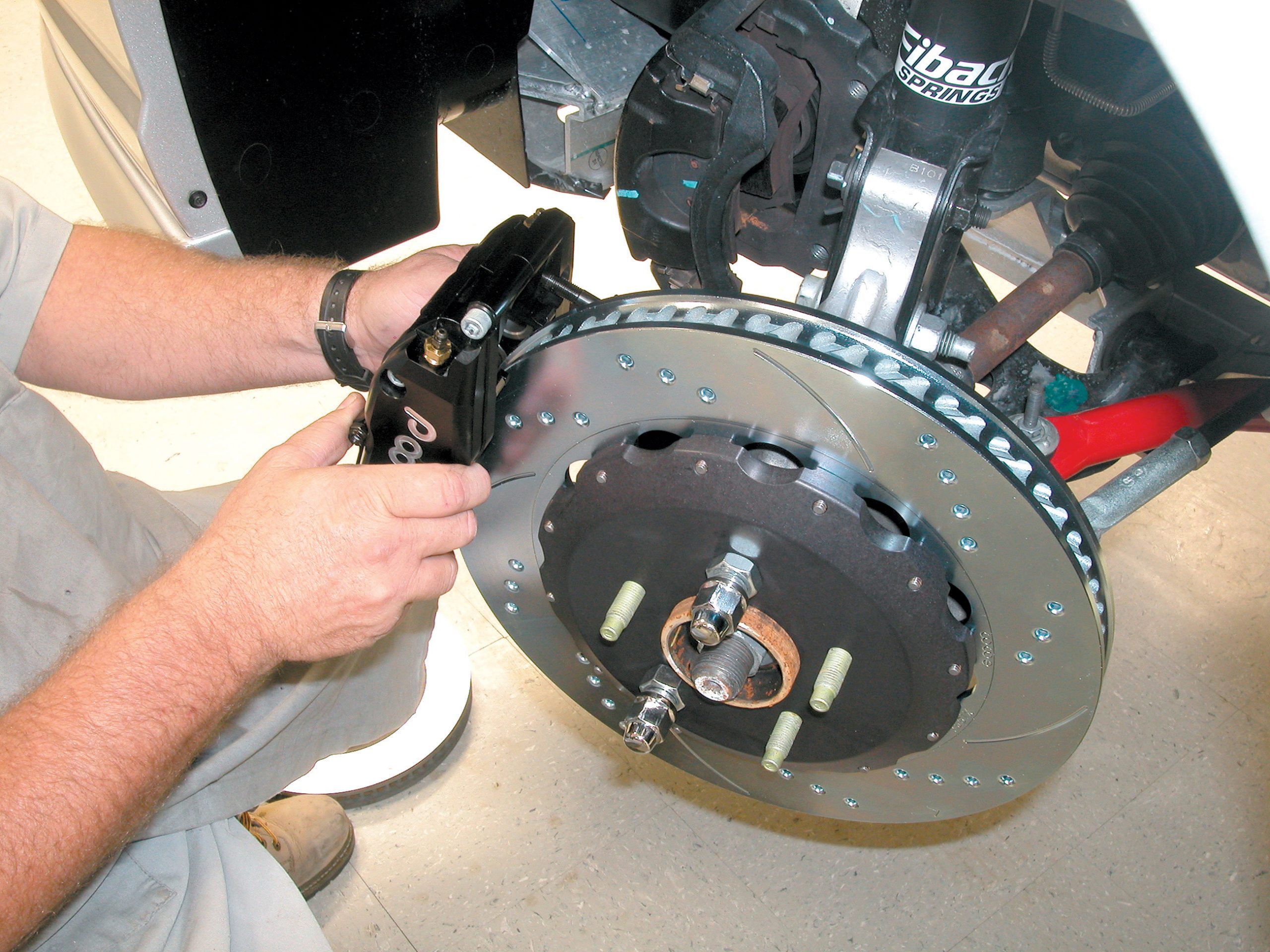
12 Before mounting the Wilwood Superlite 6 caliper, remove the cover on the inlet hole on the backside and install the steel 90-degree elbow fitting. Be careful to keep this area clean, because any contamination can negatively affect braking performance.
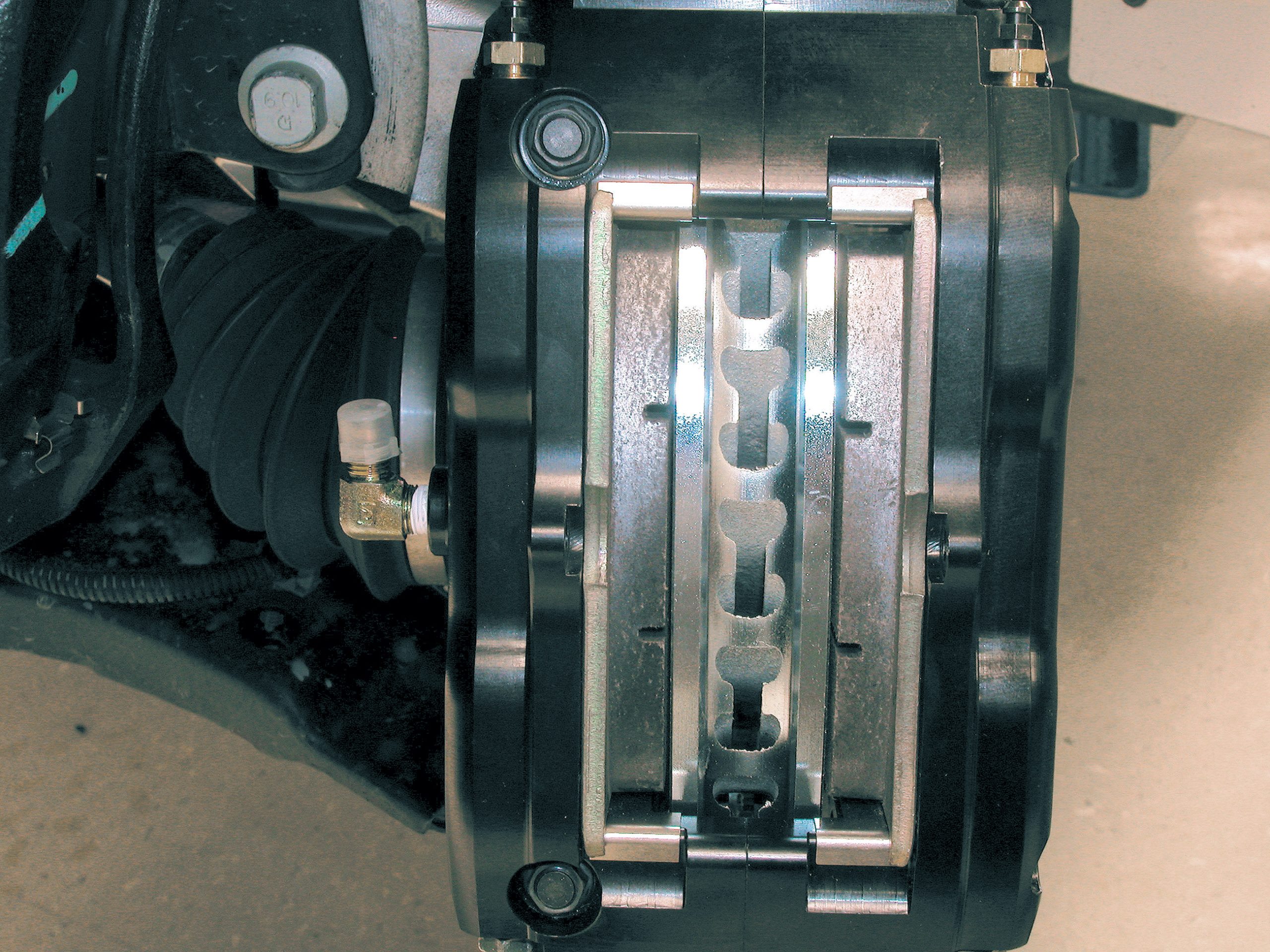
13a-b With the pads removed, position the caliper on the caliper-mounting bracket, taking care not to damage the threads as you slide it into place. Now determine the exact location of the caliper in reference to the brake rotor, adding or removing shims to position the pads as recommended.
13a-b With the pads removed, position the caliper on the caliper-mounting bracket, taking care not to damage the threads as you slide it into place. Now determine the exact location of the caliper in reference to the brake rotor, adding or removing shims to position the pads as recommended.
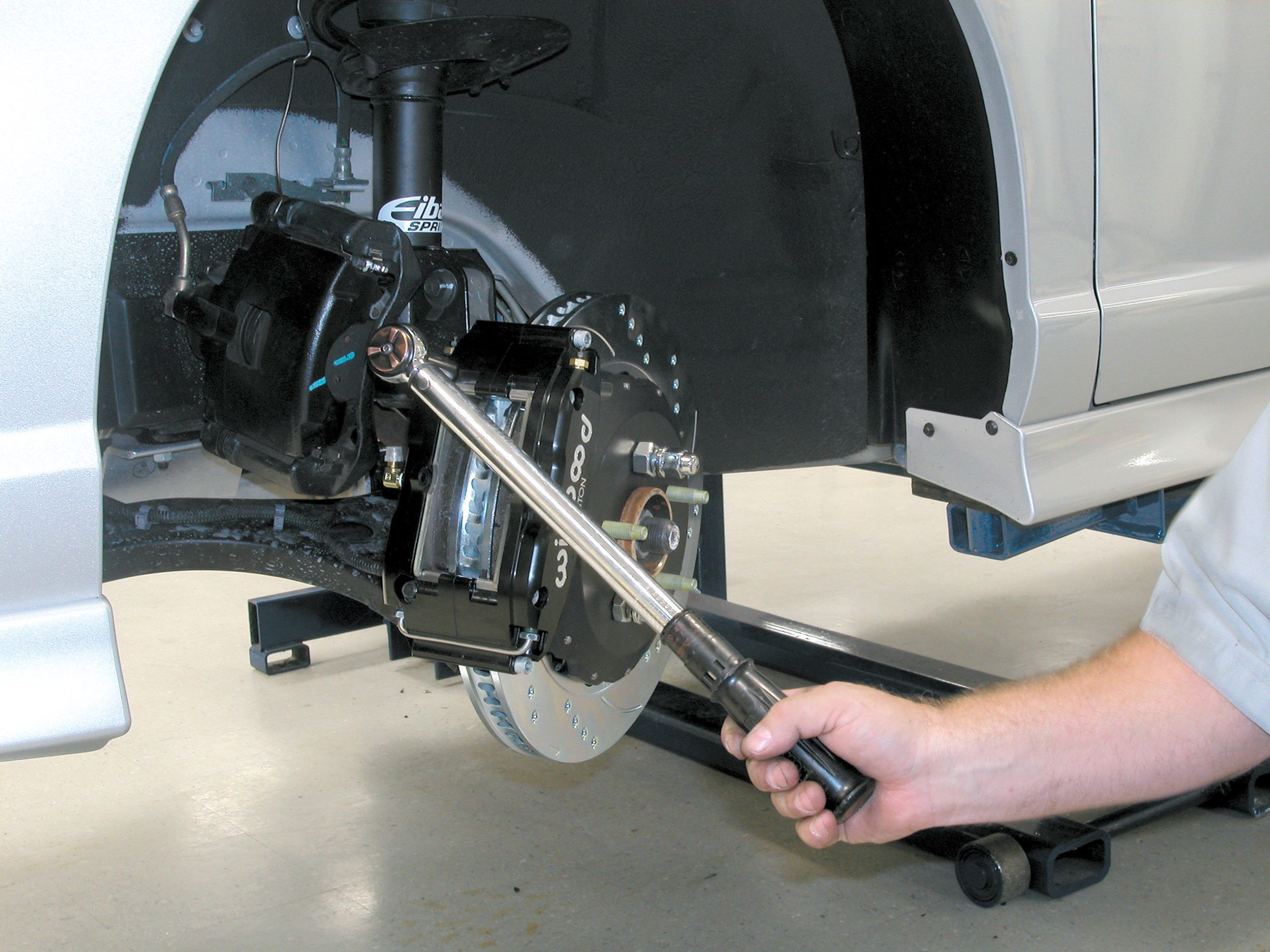
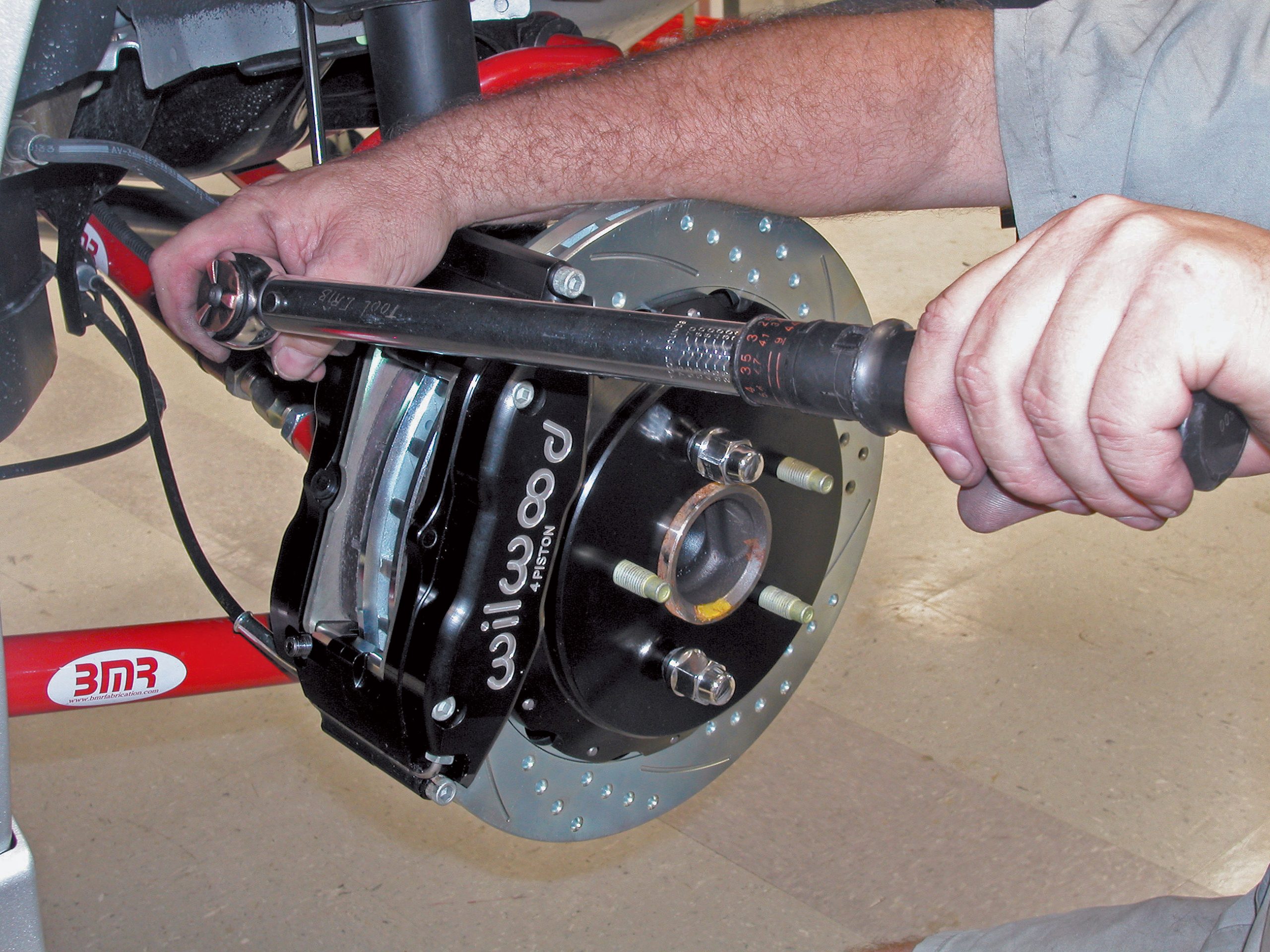
14 Use the torque wrench to tighten the mounting bolts to the recommended specifications. Once again, always refer to the installation instructions, which will make the procedure easier and leave no room for error.
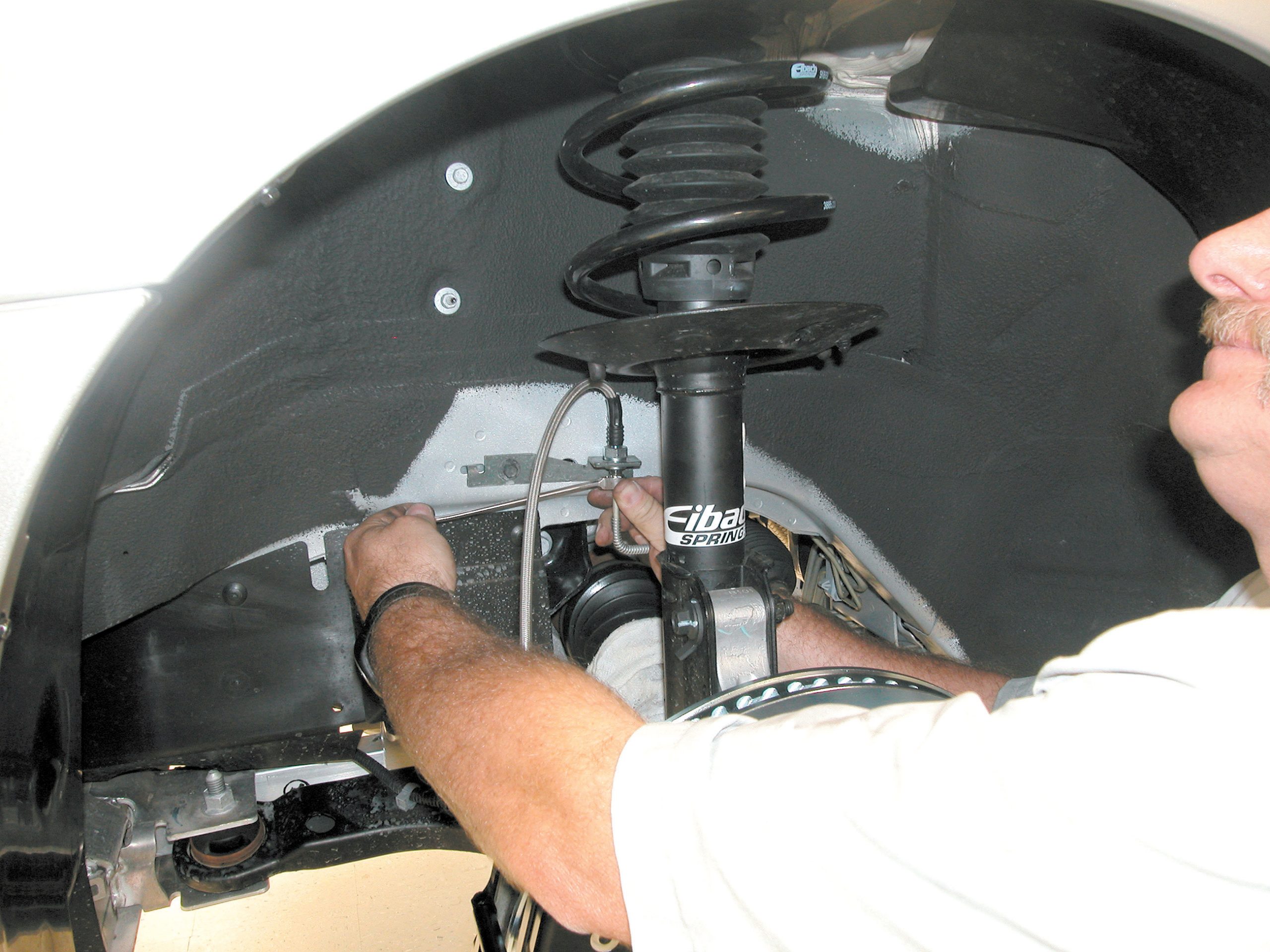
15 With the hardware fitted, the owner opted for optional stainless steel braided lines (PN 220-8176). After removing the banjo bolt from the GM caliper (now removed), the rubber hoses from the hard line to the frame, and the clip holding the rubber hose to the frame bracket, attach the new brake lines. Be sure the brake line is long enough to allow full wheel movement without binding.
16 Repeat this same procedure on the opposite side and you’re halfway done. Now it’s time to rework the back brakes. Remember, don’t drive the car until both front and rear brakes are installed and fully bled using Wilwood Hi-Temp 570-grade fluid or higher.
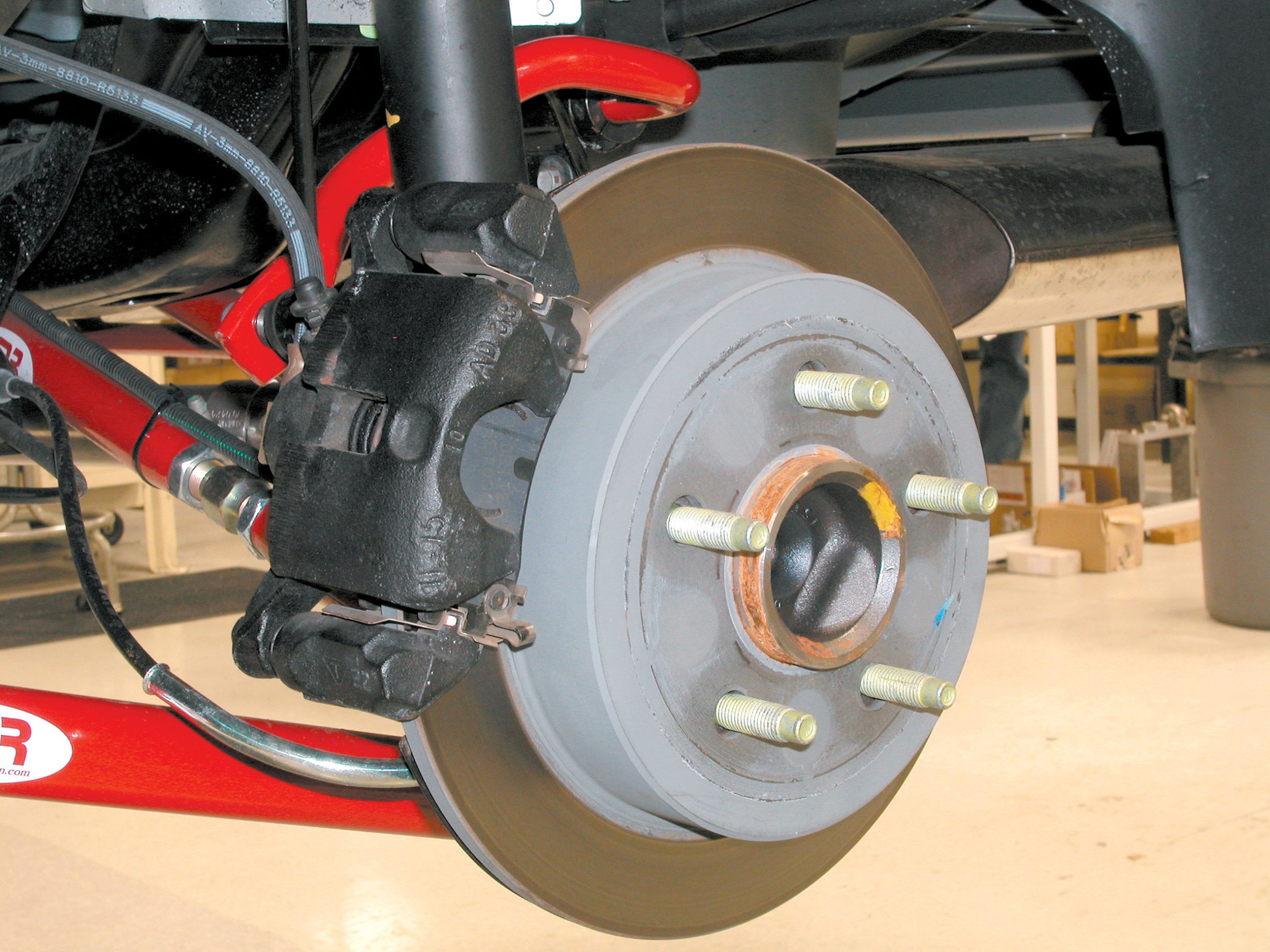
17 Although GM certainly engineered the back brakes to function as designed for adequate street use, they fall considerably short of the performance of the Wilwood package that will replace them.
18a-b As in front, the first step is to remove the original GM brake caliper and brake rotor. Note the inboard emergency brake assembly, which is retained with the Wilwood system, thanks to the specially designed rotor hat.
18a-b As in front, the first step is to remove the original GM brake caliper and brake rotor. Note the inboard emergency brake assembly, which is retained with the Wilwood system, thanks to the specially designed rotor hat.
19 Now you can attach the caliper-mounting bracket, again using red Loctite 271 to secure the bolts. These should be tightened to the 65 lb-ft torque rating.
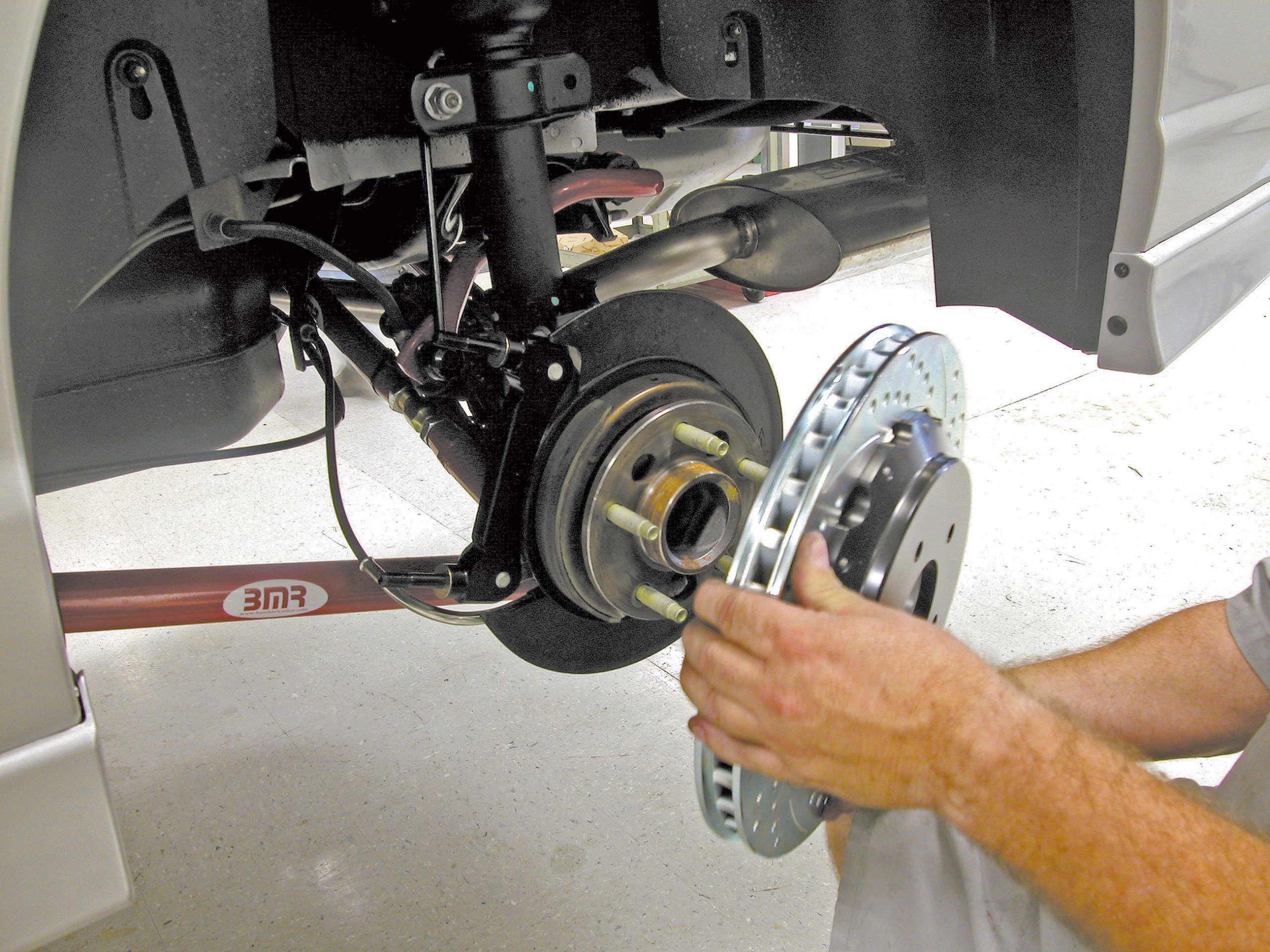
20 Install the new brake rotor, again taking care in sliding it over the wheel studs. While larger in diameter and thickness, the cross-drilled and vented 12-1/2-inch rotor is only slightly heavier that the stock unit. Once installed, keep it in place using two or more lugs over oversized washers.
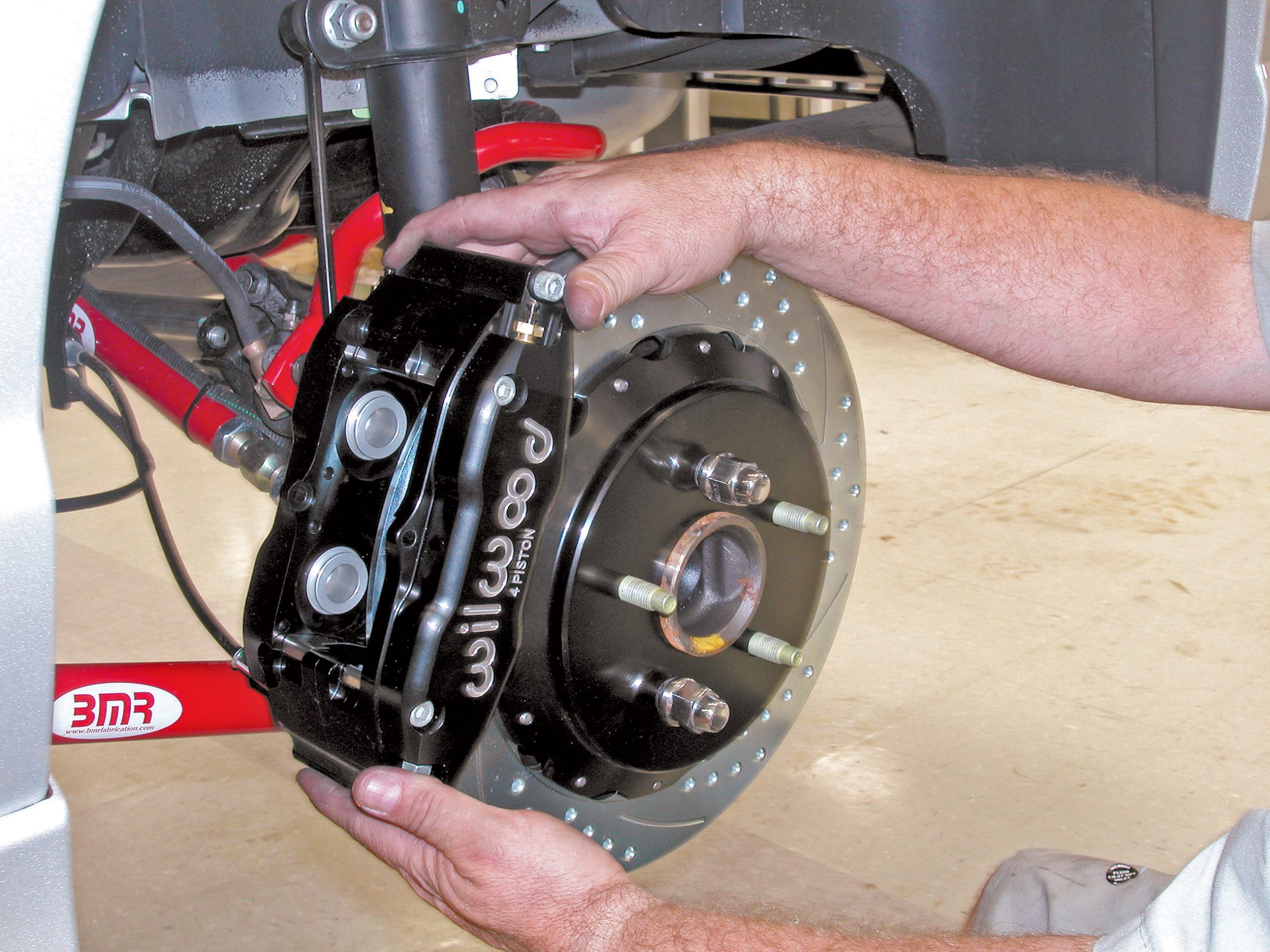
21 With the pads removed, install the Wilwood Superlite 4 Pro Series caliper, making sure to remove or add the appropriate number of shims to precisely position the caliper around the rotor. Although they employ more piston and pad area, they’re lighter than GM units
22 To install the brake pads, remove the caliper center bridge pad retainer bolt, nut and tube from the caliper. Now you can slide in the brake pads as indicated in the instructions.
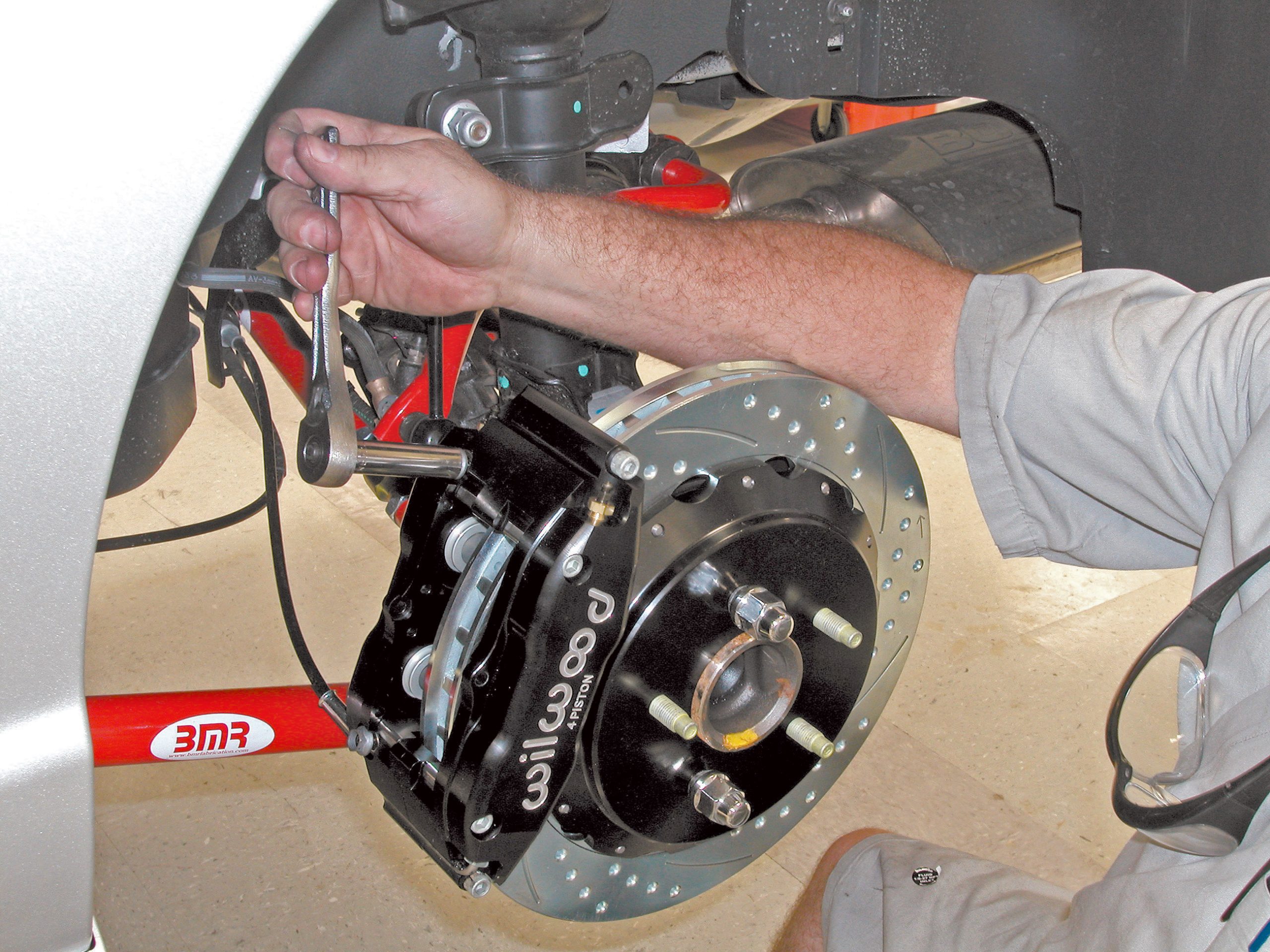
23 With all of the hardware in place and the brake pads installed, you can torque down the caliper to the required specifications. Again, this is critical to ensure absolute safety. Then reattach the stock brake line or Wilwood’s stainless steel braided lines.
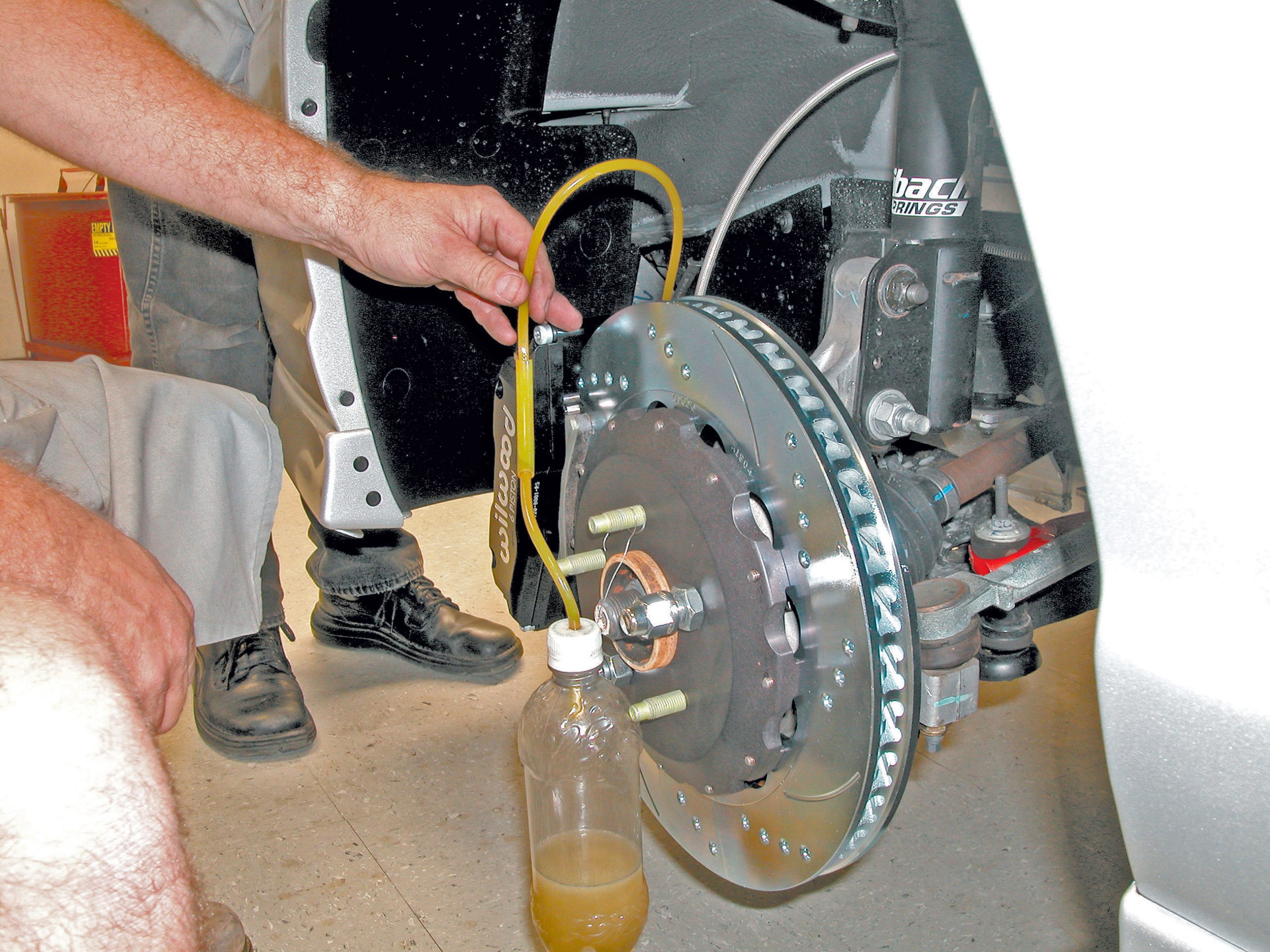
24 Once you have repeated the installation on the opposite side, begin bleeding the brakes, starting with the right rear, then the left rear, and the right front. Lastly, bleed the left front, closest to the master cylinder, allowing any remaining air to be bled from the system. Consult the instructions for the proper bleeding procedure, and use Wilwood Hi-Temp 570-grade fluid or higher.
25 And there you have it, a great-looking, powerful braking system that will bring new capability to this Monte Carlo.
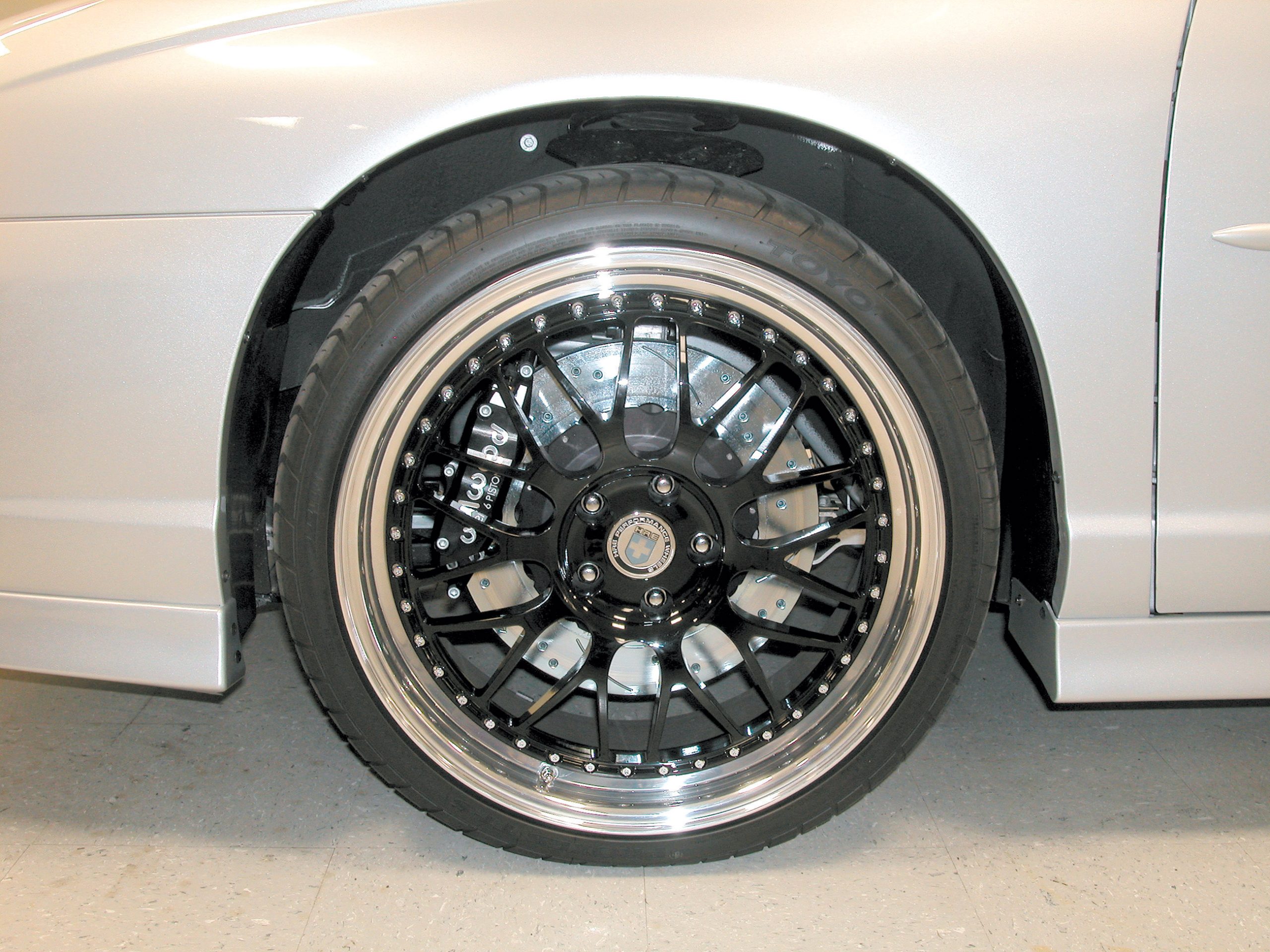
26a-b As you can see, the addition of this Wilwood braking system on this Monte Carlo has numerous returns, not the least of which is visual.
26a-b As you can see, the addition of this Wilwood braking system on this Monte Carlo has numerous returns, not the least of which is visual.
27 The last step before taking to the highway is a careful test drive around the block a few times to make sure everything goes, or stops, as planned. This will also allow you to “bed in” the brakes as recommended to maximize pad life and braking capabilities.
ARTICLE SOURCES