Global Influence of American Rodding
Yes, our red-white-and-blue lifestyle has made a big impression on the rest of the world, which can be seen in the cars produced down under and in other countries, including England, Germany, France and Sweden, each with its own take on an original theme. While some countries are governed by strict laws controlling every aspect of a car, right down to its tire size, other regions are more relaxed in their standards, as long as the vehicles in question are deemed safe.
Swedish Craftsmanship and Passion
Judging by the number of Swedish craftsmen who have taken up residence building rods in the United States, applying talents learned at home, it’s obvious this is a country after our own hearts. While hands-on skills are all but ignored by our current school system, that’s far from the case in Sweden, where such skills are prized and utilized. Still, many Swedes remain in their fine nation, doing as they’ve always done, and doing it well.
Leif Tufvesson’s Innovative T6 Roadster
Leif Tufvesson’s innovative roadster is a prime example of that mindset, incorporating a wealth of technological advancements and innovative approaches that would stretch any imagination. For us, this is far more than just a street rod; it underscores the very title of this publication—it is a super rod pure and not so simple. And whether you understand it or not, take time to review its inventive mix of 21st-century mechanicals and good old, home-built pride.
Day Job at Koenigsegg, Night Work in the Workshop
During the day, Tufvesson is the workshop manager at Koenigsegg Automotive AB, the company that is currently developing one of the world’s fastest sports cars, the Koenigsegg CC 8S. At night, he’s been retreating to his own workshop for over four years, developing every aspect of his innovative T6 roadster, and he’s done it with a degree of dedication and skill seen in few cars, here or abroad.
Body Design and Fabrication
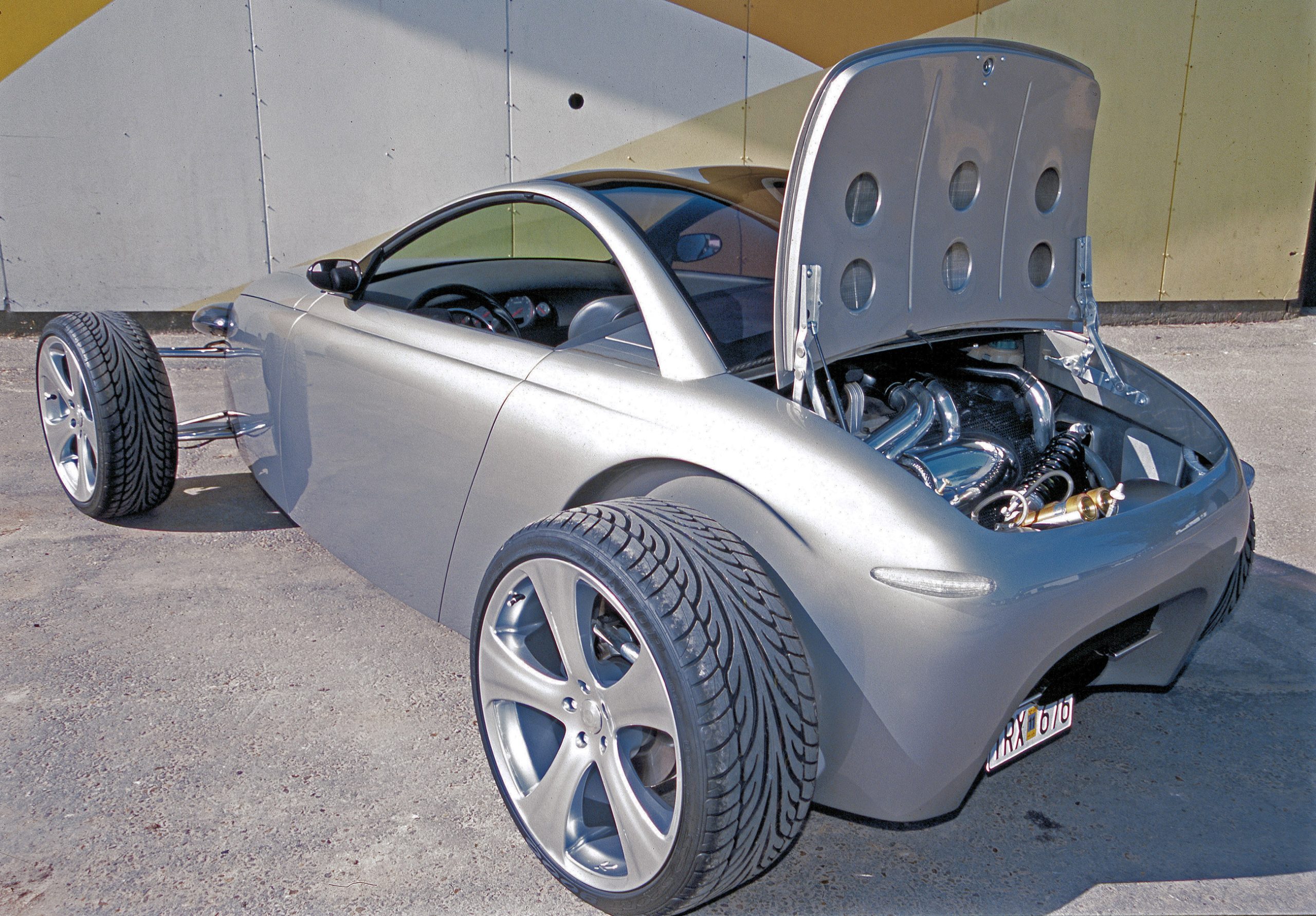
The exotic lines of the body were shaped around a wooden buck, just as it’s been done in design studios for decades, utilizing aluminum sheet for everything except the hood, which was constructed of carbon fiber. It’s obvious from the level of quality applied in these panels that Tufvesson is a man of many talents, which becomes more apparent the more you review this car, including its overall design. While some may find it hard to describe this car as a roadster, only the slim arches that flow from the windscreen to the trunk bring up these questions. Then again, when the “double bubble” top is in place, it’s an entirely different story. Interestingly, this removable roof was formed by heating an acrylic panel over another wooden buck, allowing it to conform to those contours. In the event of inclement weather, a second set of doors, with side windows, also can be installed, further altering the appearance and description of this sleek machine. But what’s in a name?
Integration of Volvo Components
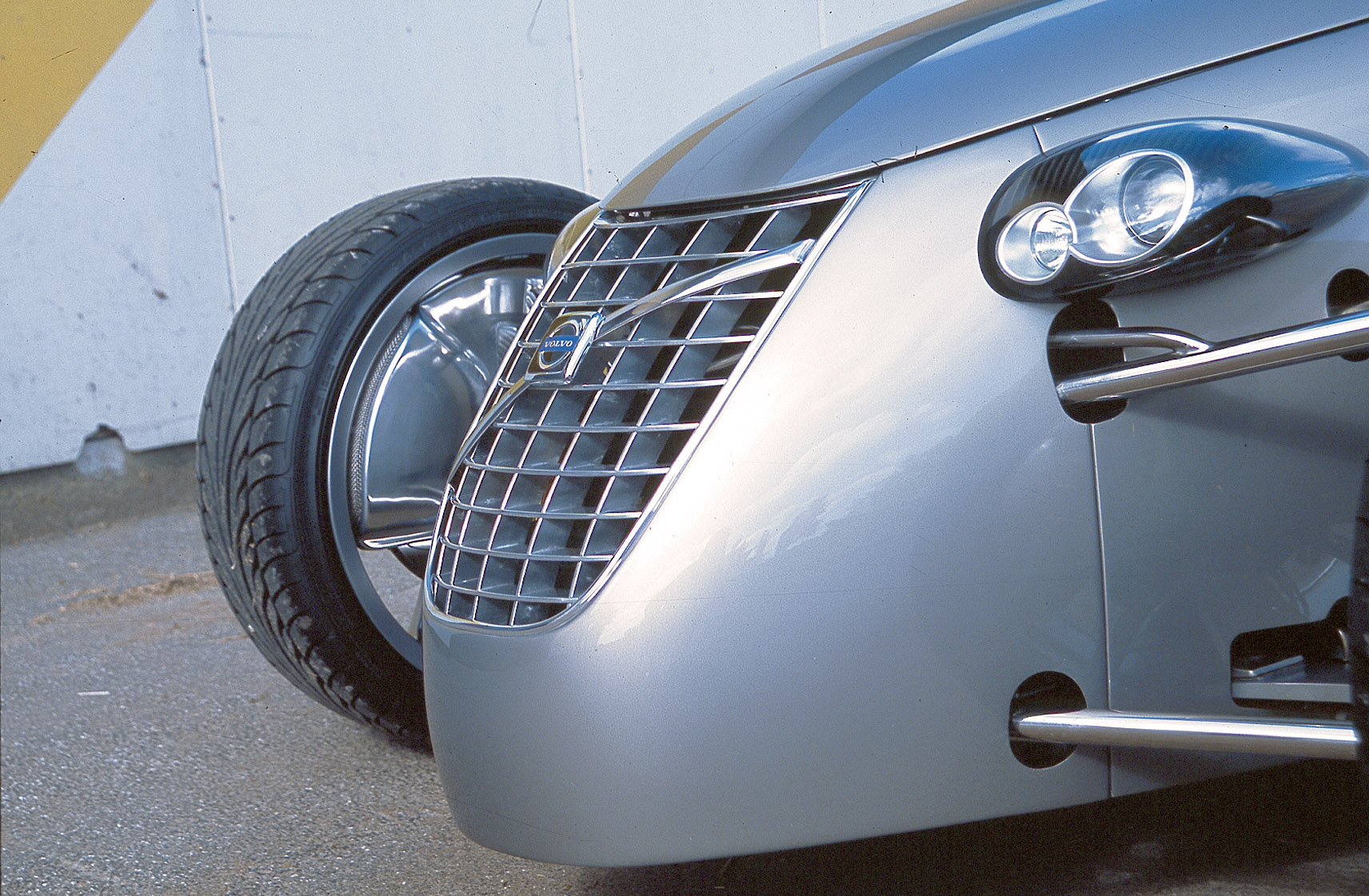
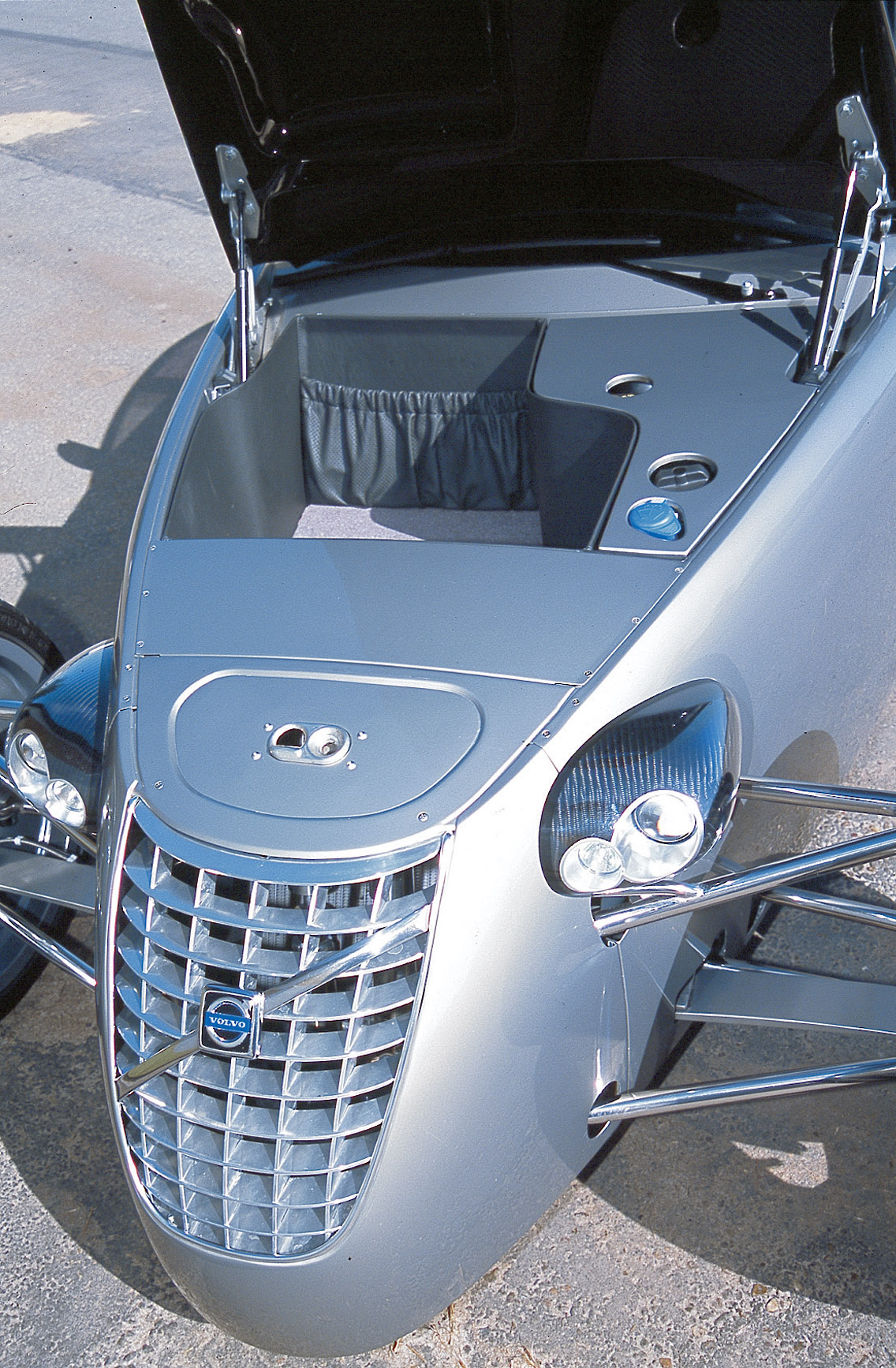
It is interesting to note that Tufvesson once worked in Volvo’s development department, and as a result of this relationship, he was able to secure a Volvo S80 as a source for various components for this project. As you can see from the grille, this is one area that benefited from this generosity, and there are many other areas that utilize this applied technology. What isn’t factory-based is most likely scratch-built, including the headlights, which combine Tufvesson’s own carbon-fiber pods fitted with tiny lights from another vehicle. Similar efforts went into the taillights, where white acrylic was shaped in a similar fashion to ’53 Volvo lights and then fitted with LEDs inside—red for the stop and taillights and amber for the turn indicators. The Honda motorcycle mirrors also incorporate turn signals, although they, too, have been altered with hand-formed lenses that closely match the body color, a light-green mica hue applied at a local body shop in Tufvesson’s home town of Angelholm, Sweden.
Interior Details and Craftsmanship
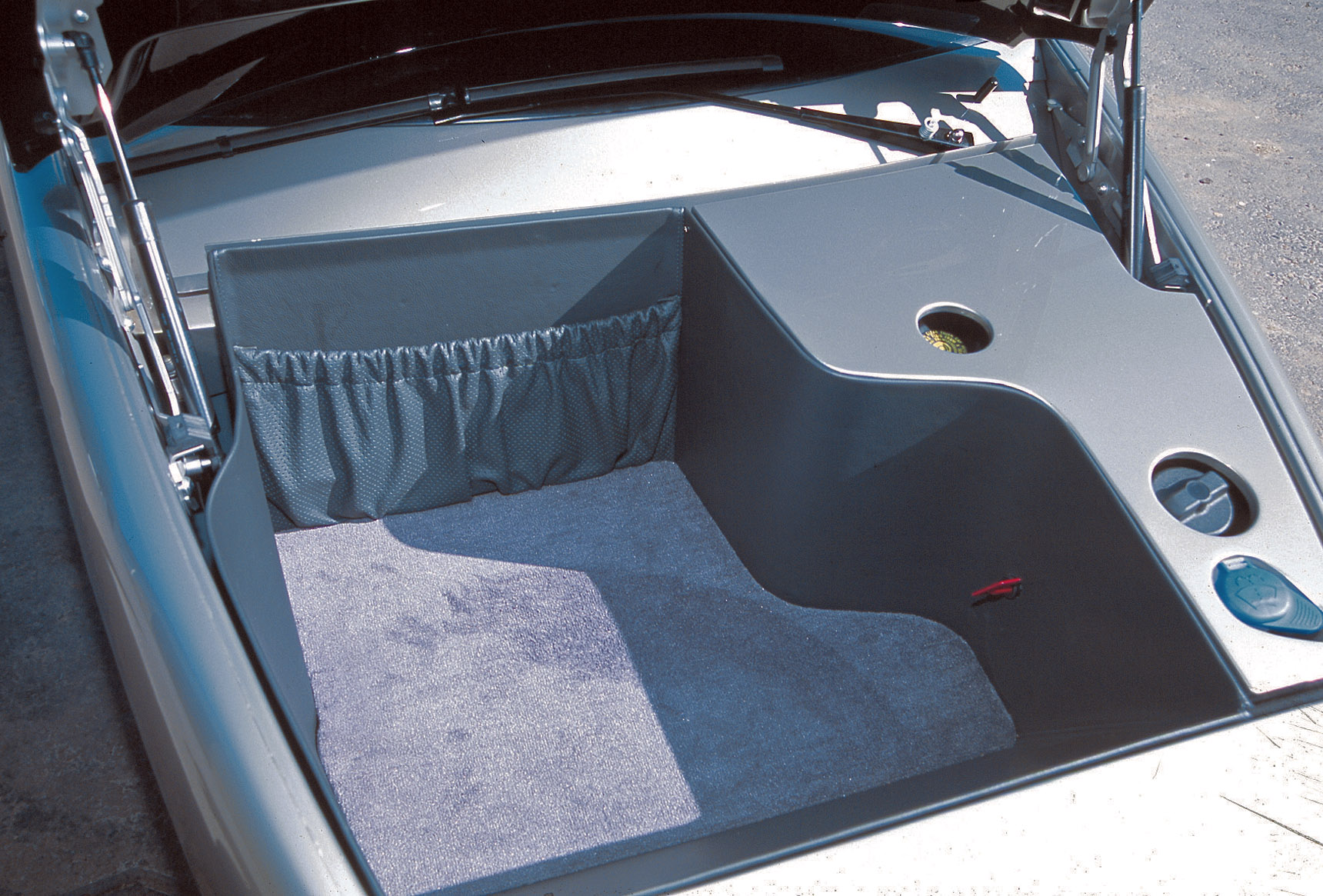
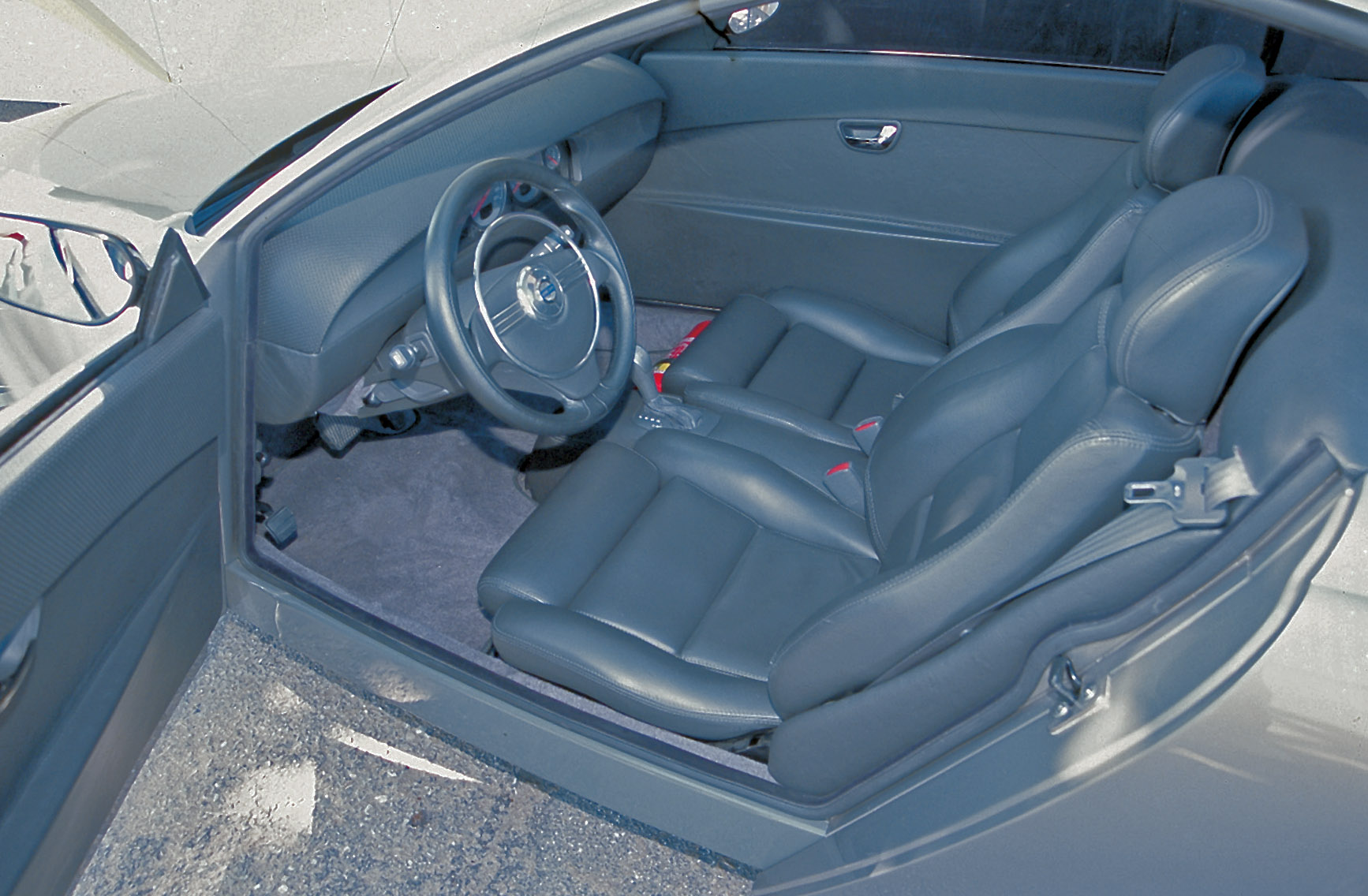
A look inside this roadster reveals more Volvo heritage, including an S80 steering wheel fitted with a horn ring from a ’47 PV Volvo. The dash also is custom, while the gauges are from the S80, as is the steering column. The dark-gray leather seats are similar to Volvo units, surrounded by flowing lines carved from foam and re-created in a single layer of carbon fiber and covered by Tufvesson in matching leather. The trunk is finished out nicely, too, although it’s probably not where you think. With its engine in the back, the T6 carries its luggage up front, and there’s even a Volvo tool kit fitted on the underside of the hood.
Front Suspension and Engineering
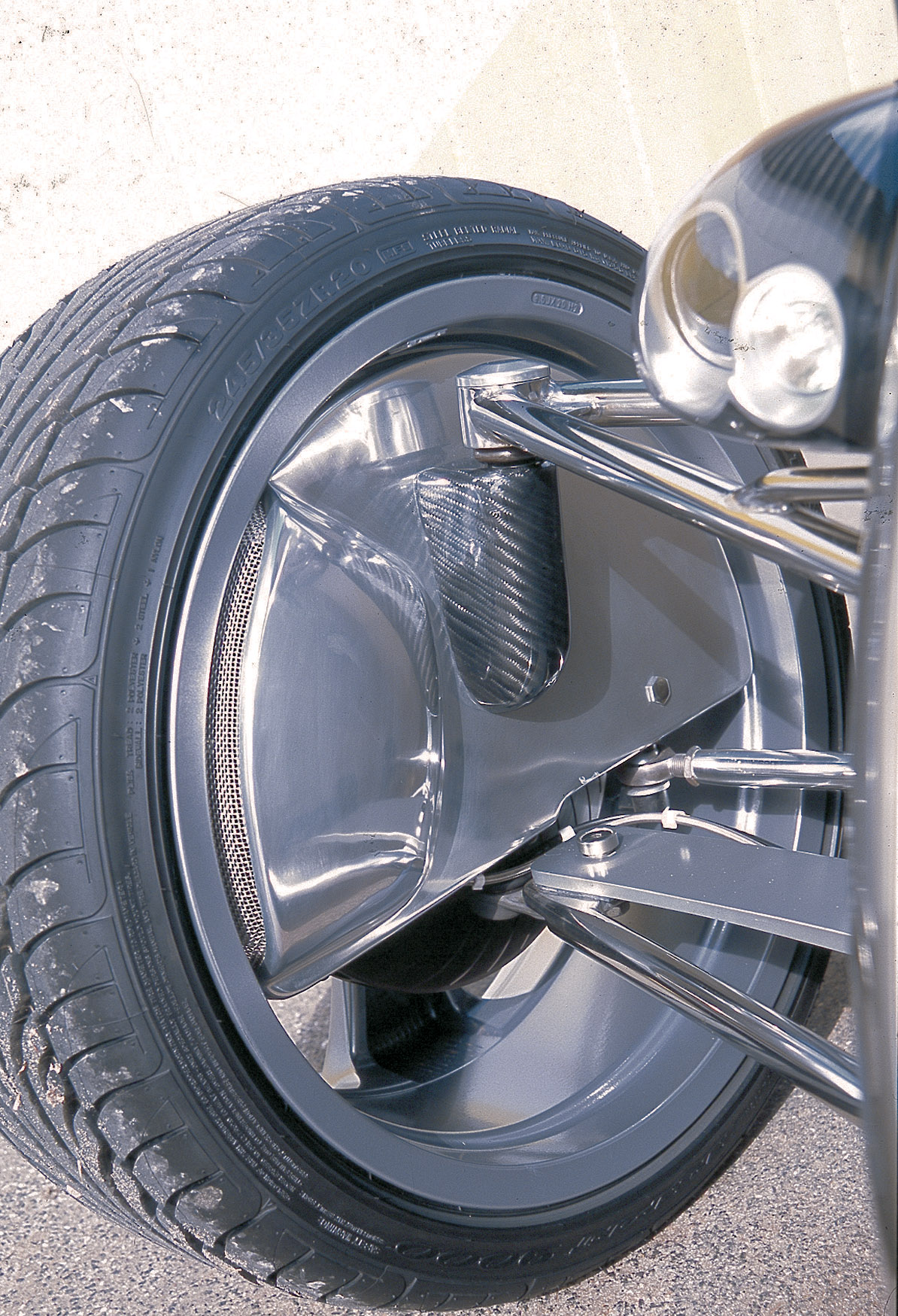
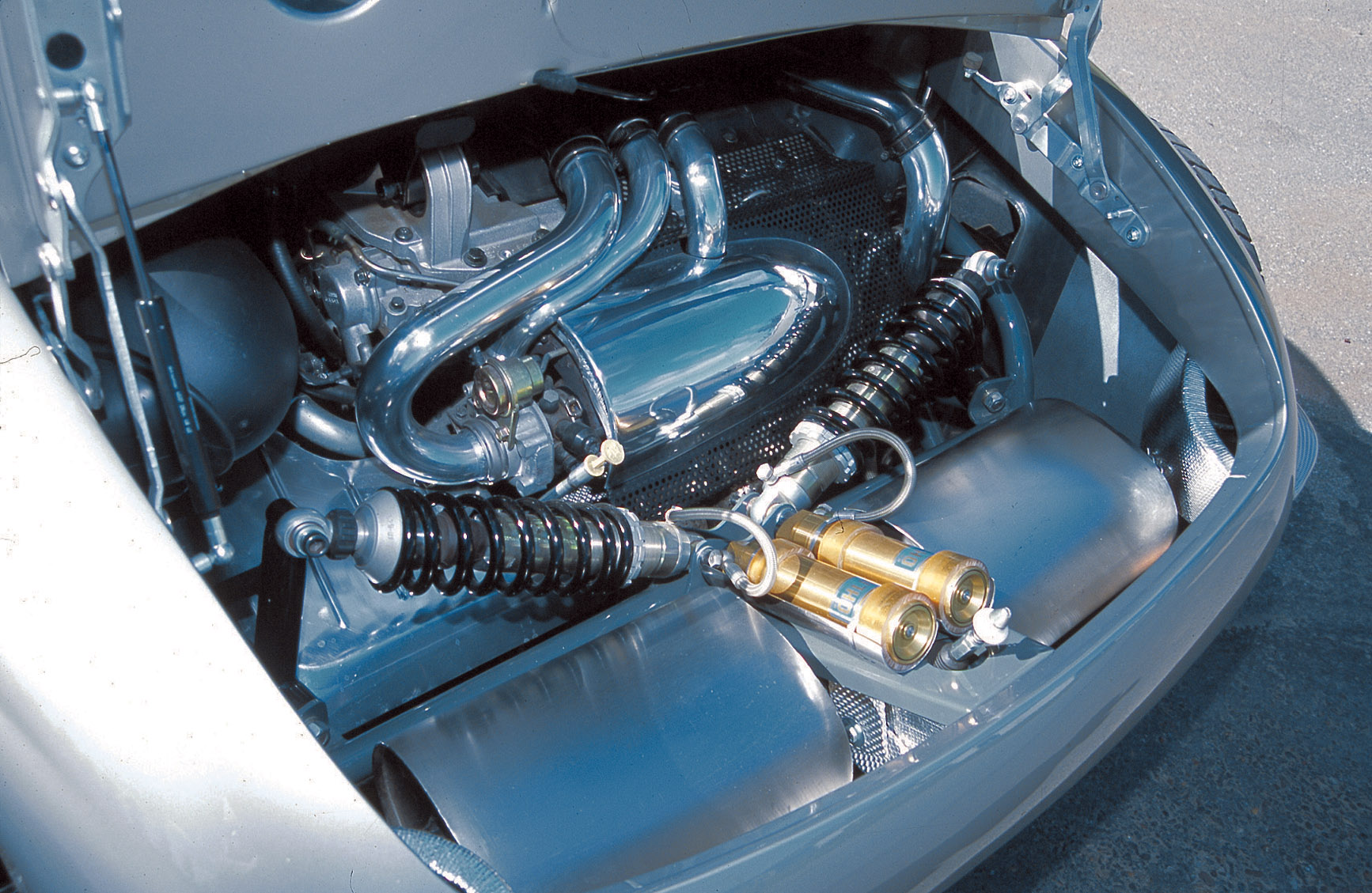
Other components in the “trunk” include the master cylinder and brake booster, the radiator (fed through lines running within the framerails), and the inboard shocks and inner suspension. Once again, we see that Tufvesson is nothing if not creative, as he fabricated the front legs using Volvo C70 uprights in combination with his own unequal-length wishbones shaped from 28mm (1.125-inch) stainless tubing. Wheel travel is transmitted through cantilever action to inboard gas shocks and a pair of adjustable transverse leaf springs, similar to the single-leaf composite spring found on the back of late-model Corvettes. The rear suspension is equally interesting, and not surprisingly, it incorporates the lower arms, hub carrier and spindles from the S80, while Tufvesson’s own upper arms join with an S80 sway bar and coilover gas shocks positioned horizontally inboard behind the engine. The steering arms were replaced with rigid, adjustable rods that allow for wheel alignment. Braking comes by way of Tar-ox rotors and calipers hidden beneath clever covers that double as air ducts feeding cold air where it is needed as the sticky rubber surrounding 20×10- and 20×8.5-inch Kahn Design rims adheres to the tarmac.
Framework and Structural Innovation
The framework unifying these suspension components also is impressive, with C-shaped main rails joined with CDS steel tubing forming a subframe around the engine and transmission and the forward portion of the chassis. The frame kicks up in back to accommodate the rear suspension, and there’s an additional bulkhead adjoining the dashboard supporting the steering column, pedal assembly and master cylinder. It’s here you’ll find great lengths of wiring that brings life to the various electrical systems.
Powertrain and Performance
Open the double-layer trunk lid and discover the heart of this amazing roadster, a twin-turbocharged, 2.9-liter straight-six from the S80, which features reprogrammed software that adds another 50 hp. Other changes include a custom exhaust system blowing through Bentley Turbo, free-flowing catalytic converters and mufflers. And there are surrounding gas reservoirs for the coilover shocks. The transaxle comes from the same source, and working in concert with the substantial torque of this engine, it’s capable of sending this extremely lightweight machine away with the gusto of a big-block Chevy.
A New Standard in Rodding
As you have seen, this new-age roadster is anything but a typical street rod, yet it’s based on the same thinking that transformed stock Model A’s and B’s into old-time hot rods long ago. It is, in fact, the personification of a super rod if there ever was one, and when you take into account all the special details, all who cherish individuality and creativity should welcome it. In a world often torn by unrest, it’s fantastic to see such new approaches to long-established standards come along, as the boundaries between nations, people and our favorite hobby vehicles fade from view.