More often than not, when someone buys a performance car, they choose a color that keeps with that image, and while there have been specific examples of cars to the contrary, a great majority of fast rides are red. Yet as time has passed, the hot colors that had once been so prevalent have become somewhat stereotyped as less typical shades often adorn our favorite rides.
While black was the color of choice when the first production cars came of age back in the ’20s, it wasn’t long before car companies began to offer other colors and even two-tones to embrace individuality in their purchase. But as time passed, black was often chosen to enrich the look of luxury cars while adding a special mystique to other models, including those bent on speed.
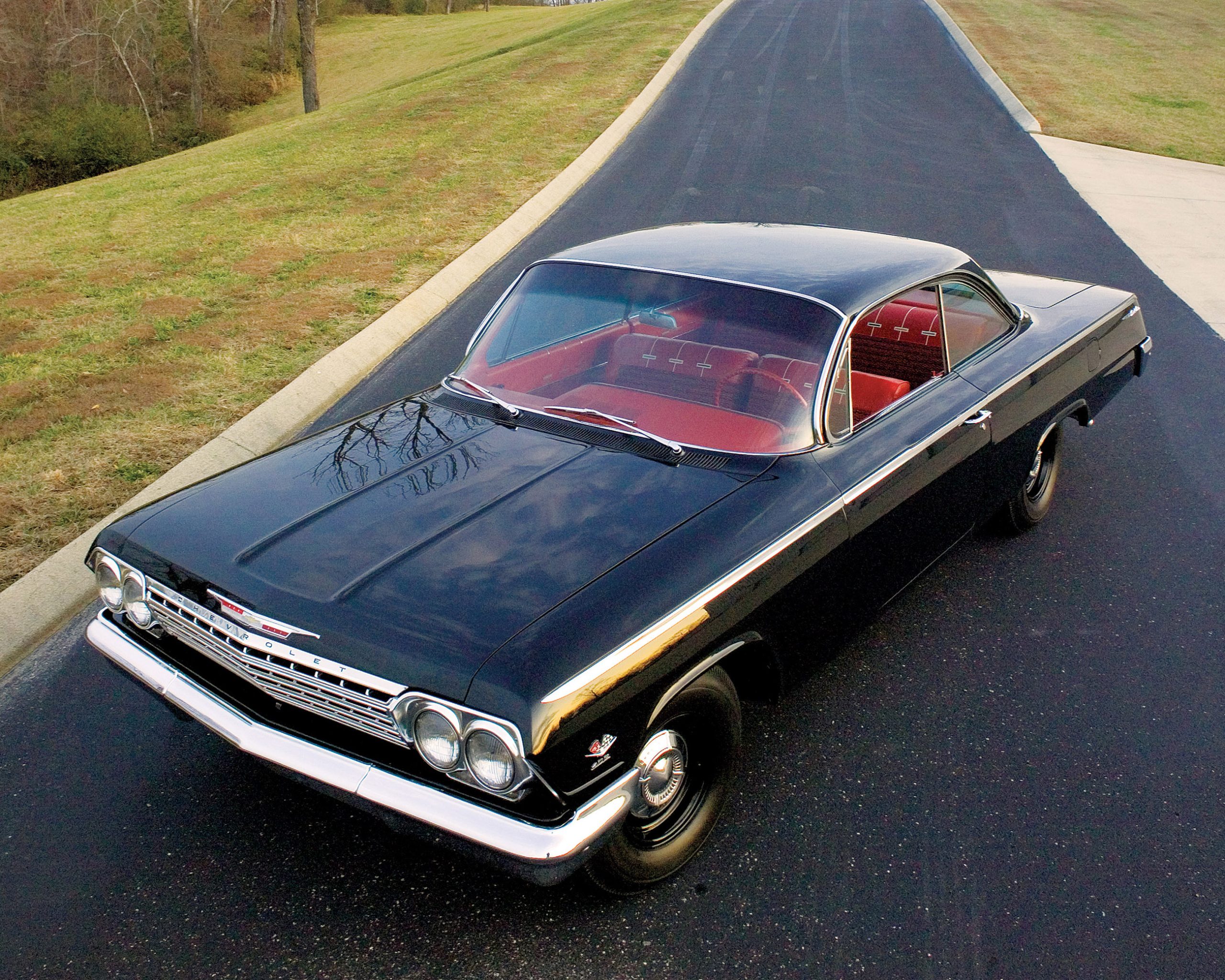
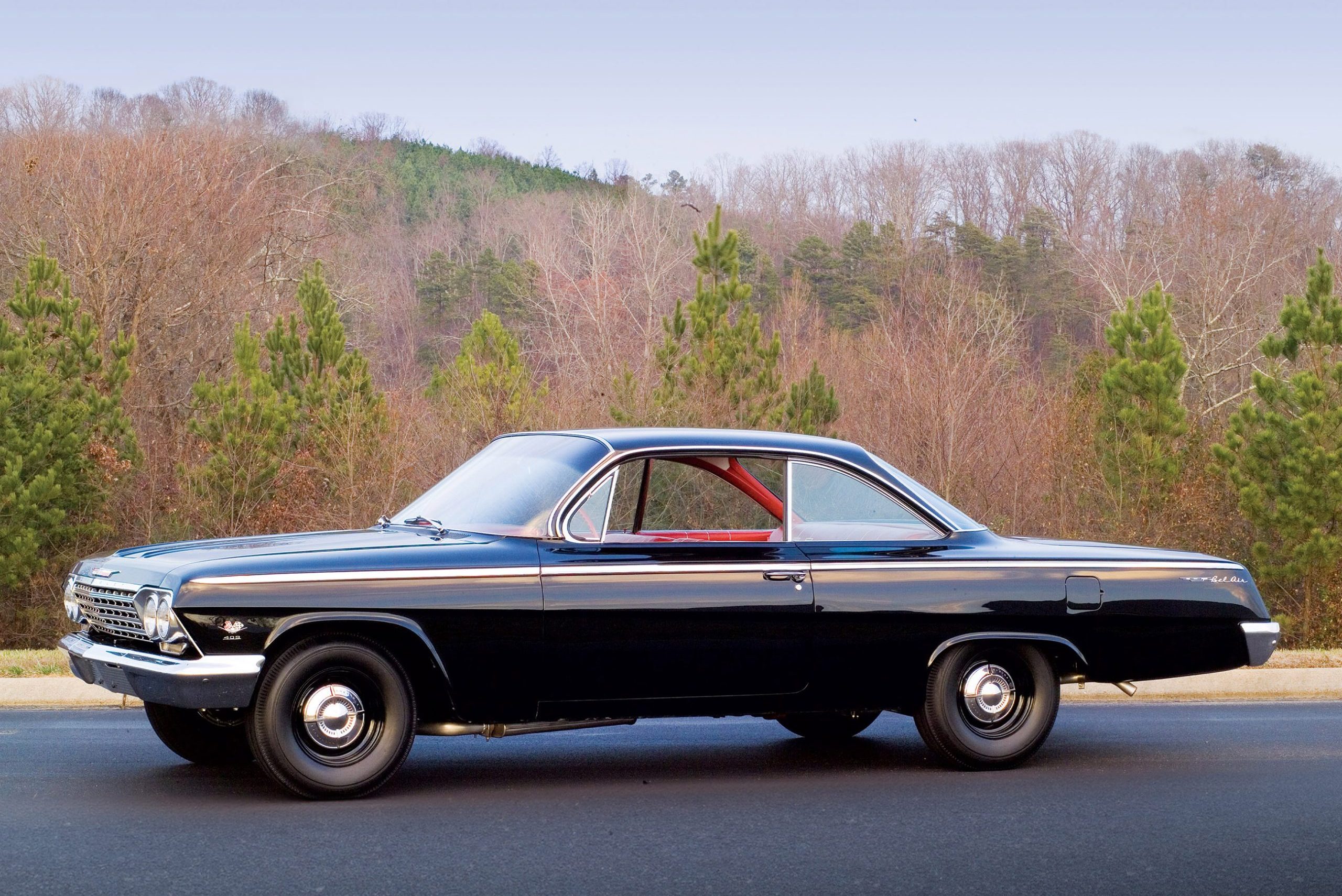
While the ’62 Bel Air may not be considered a performance car by everyone, those who know the heritage of these cars, both in NASCAR racing and drag racing, have come to appreciate their capability as much as their styling. In looking back to the glory days of these cars, you will find that the most famous among them were frequently black, evoking an understated feeling that belied the ability of these racers—stealth capability straight from the showroom. And as expected, or at least hoped by corporate bean counters, the “race it on Sunday, sell it on Monday” mentality played into sales gains that included the purchase of more than a few production car counterparts fitted with options emulating the most visible racing cars of the times. This particular ’62 Bel Air is one such car and is a prime example to be sure.
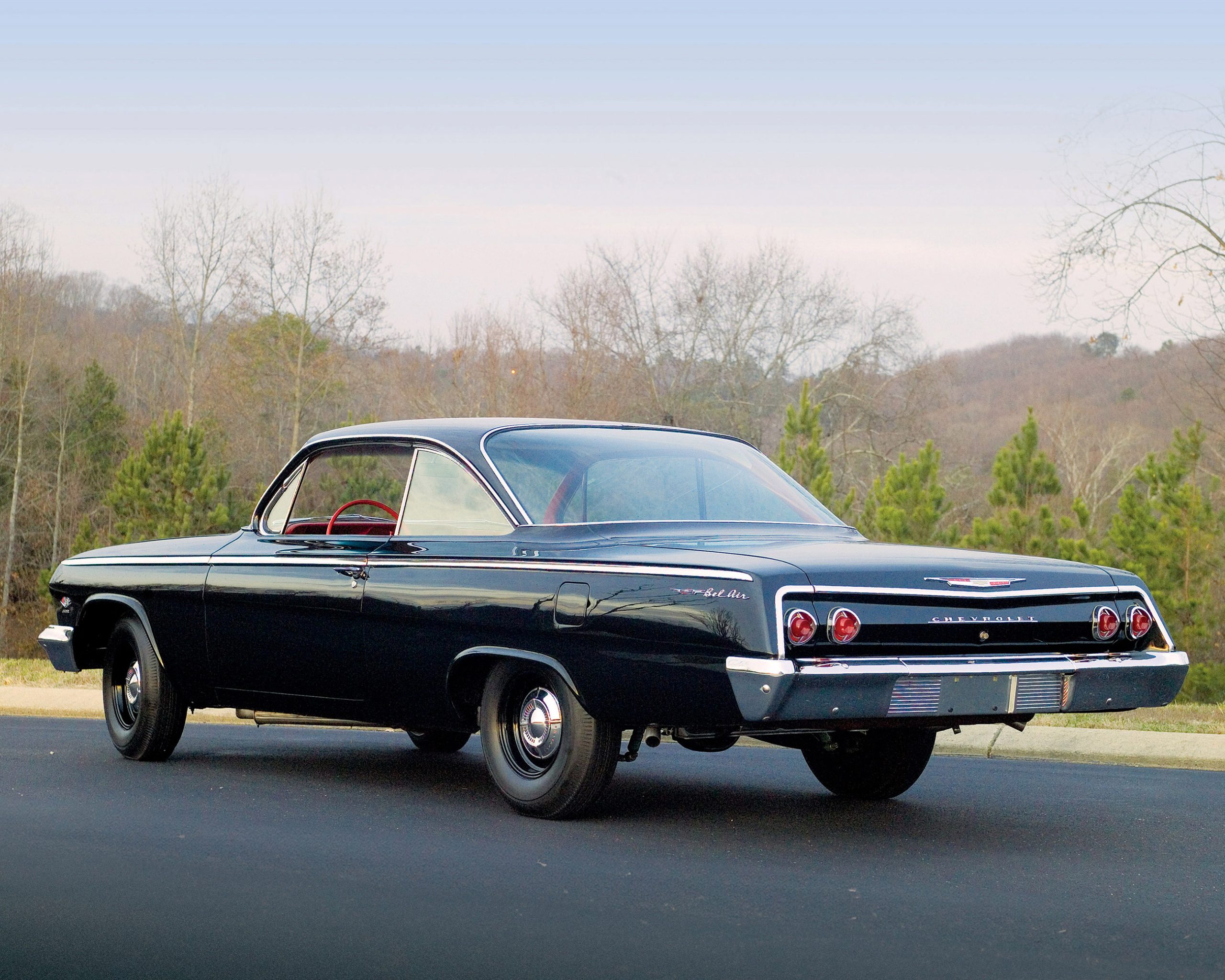
Sleeker than its Bel Air counterpart, which incorporates its own hardtop variation of the overall design, the so-called bubbletop versions on Bel Air-trimmed bodies offered a distinct aerodynamic advantage over the more prestigious counterpart. And while these models may not have commanded as much scratch in the showroom, the tables have turned as the real money these days comes from the bubbles.
Sitting slightly nose-high and looking that much more restrained with dog dish hubcaps framed in bias-ply blackwalls, this ’62 Chevy bubbletop is as sinister as it is subdued. In fact, as smooth as these panels are, one has to wonder if this car has ever broken a sweat or even turned a wheel with aggression since it rolled off the showroom floor.
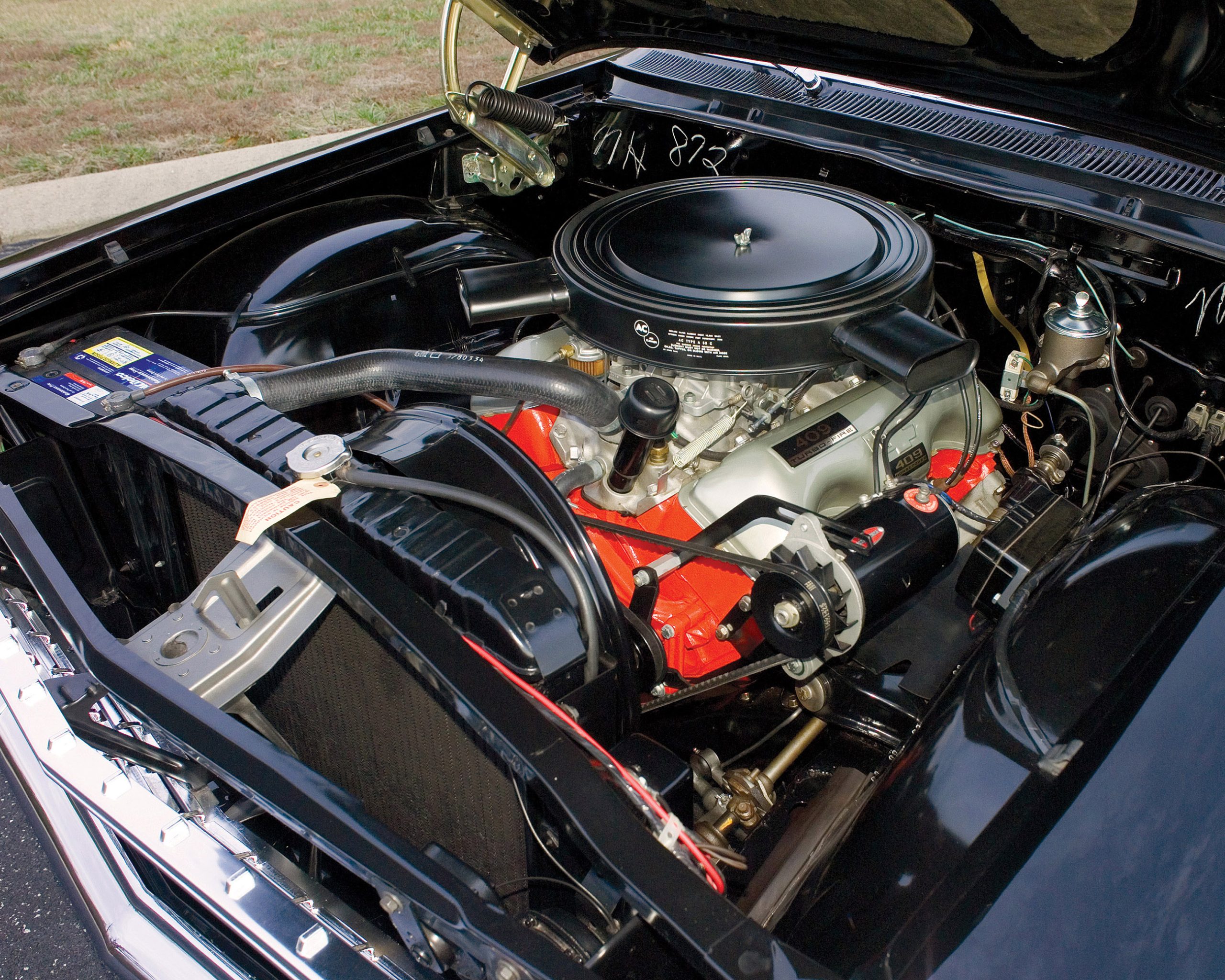
As it turns out, owner Kayo Erwin appreciates this exceptional level of restoration most as it recalls visits to car dealerships in a time when customers perused sales brochures before checking off option lists with wanton abandon. Within a few weeks, the wait was over and for the individual who ordered this ’62 Chevy Bel Air with the optional 409/409 engine package, the four-speed Borg-Warner T-10 transmission, Positraction differential and little in the way of external trim, this was quite literally the performance vehicle of choice.
Add a few decals, and the underlying intension of this car would become quite obvious, but left to its own devices, little about this car would tell others of its capability, at least until the throttle goes to the floor. Then all 409 hp would be tapped one gear at a time, and by the time the 1/4-mile markers flew by, this car was running over 110 mph in less than 12 seconds. Considering that these cars placed in the neighborhood of 4,000 lbs over impossibly small patches of relatively hard rubber, it’s a wonder that this kind of performance was even within reach, and it got better as a properly equipped one would run solidly in the 11s. As for corners, the only Gs come from the mouths of passengers, as in “Geez, I wonder if we’ll live through the next corner?”
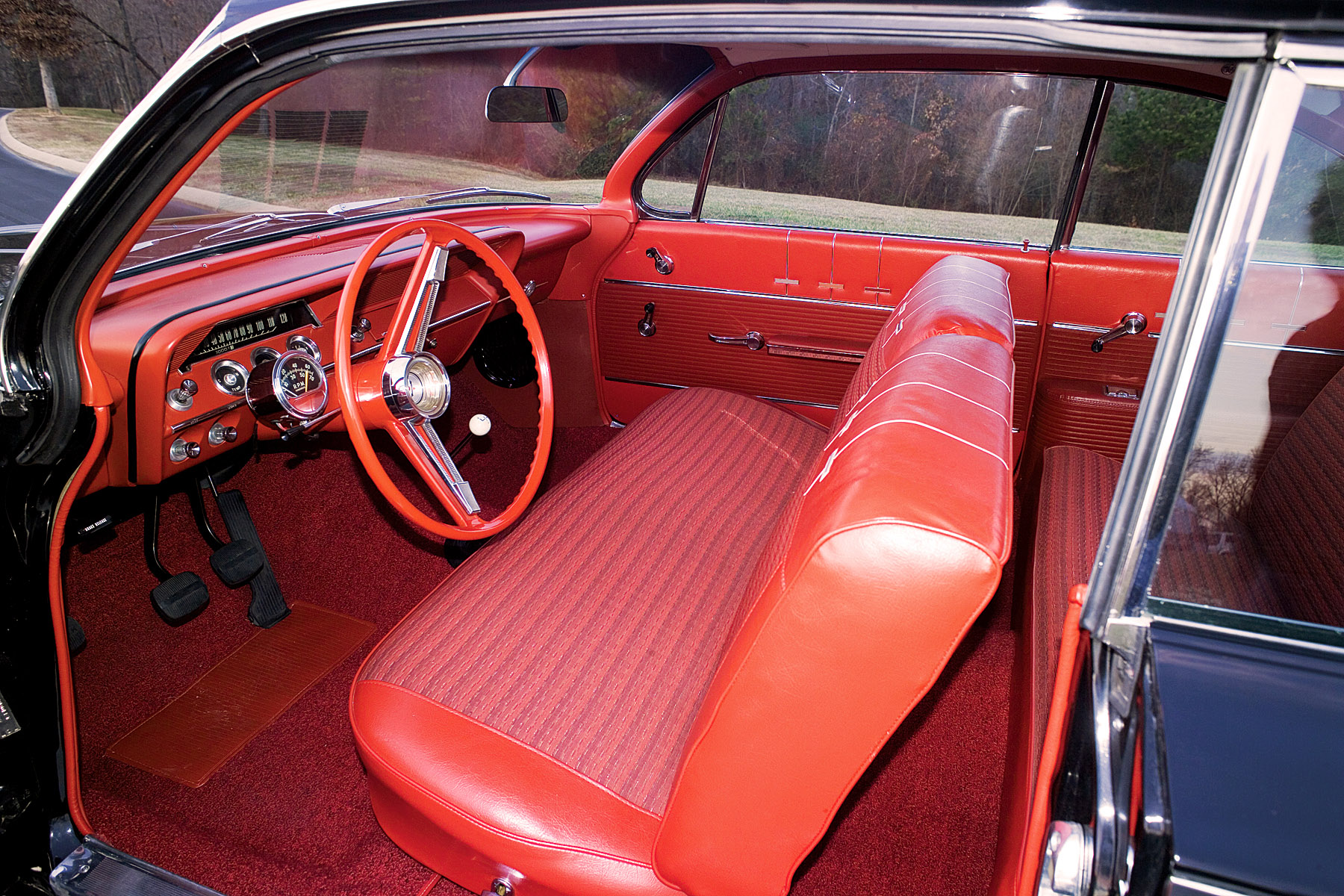
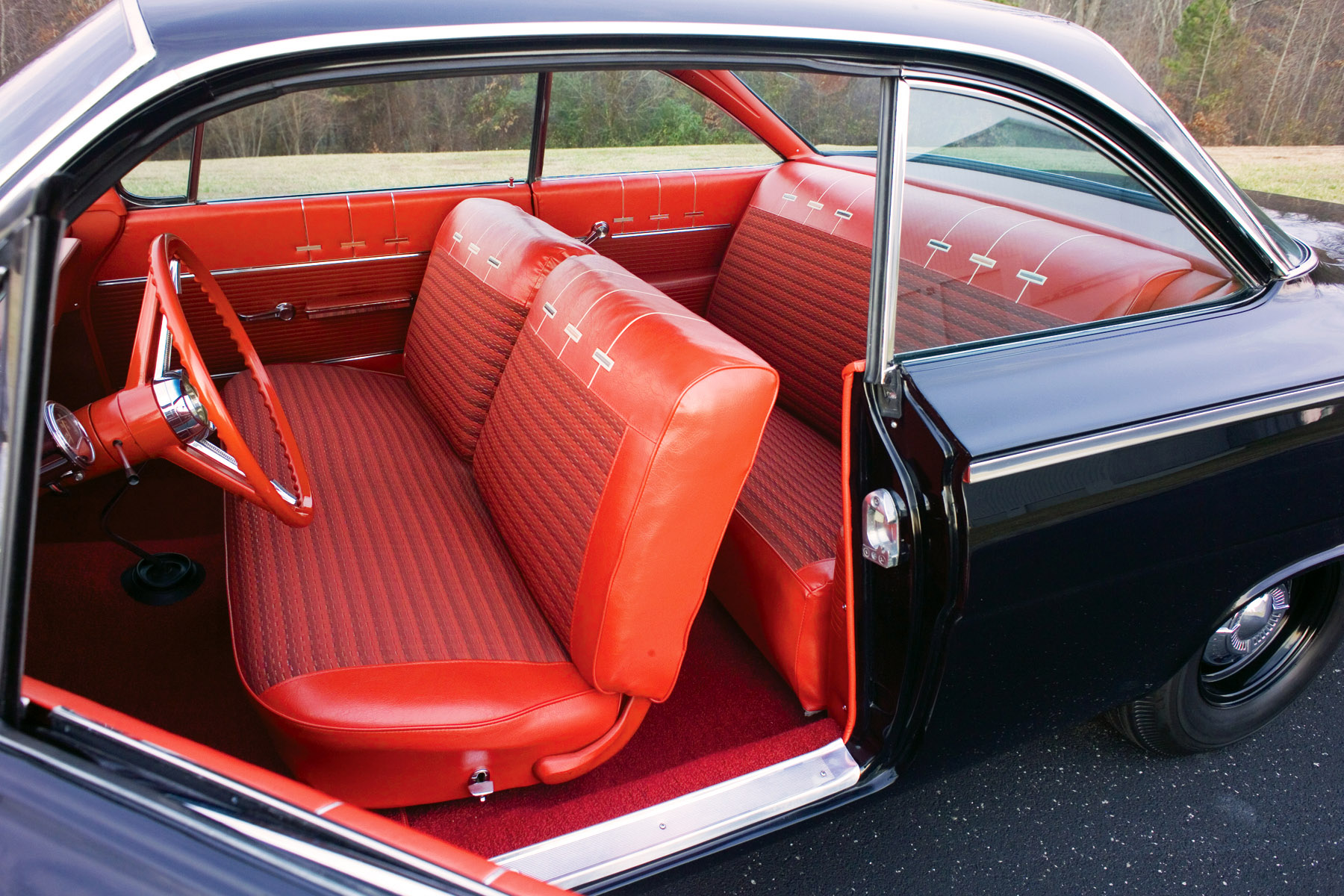
As with many Chevys of those times, the interior, while becoming, is what you might consider basic in its approach. Even though standard red cloth and vinyl were utilized here, the overall theme is subtle if not austere. In keeping with this look, there’s only one seat in front, matching the back seat just about stitch for stitch, which is also surprising on a car with this potential. Even the most rudimentary features, like the radio and heater, were deleted from the start, and needless to say, air conditioning was never an option, even though it was available. In keeping with the originality displayed throughout this car, the interior never wavers from originality. Again, if it weren’t for the mileage showing on the odometer, most would think that this car had just rolled off the showroom floor. It’s that nice!
To bring a car like this to such an extreme level of detail is no easy task, even though an ever-broadening line of aftermarket products made specifically for this car and other favorites of its era have made the restoration process far easier. No longer do we need to rely on a large shelf full of NOS components to see a car through its final transformation. However, this evolution still required considerable skill and attention to detail to reach the intended goals, which is a challenging task for anyone. Like any automotive project, be it a restoration or a scratch-built effort, this relatively rare bubbletop Chevy took considerable effort to be returned to perfectly “new” condition, and now Erwin can relive past memories through this exceptional example of early ’60s muscle.
While some understand the attraction of these cars, which has been made perfectly clear in their quickly ascending value, its true value is far greater than a wad of cash in hand. After all, owning one has become a privilege when you consider that they stopped making them more than four decades ago and certainly are not making any more. That, combined with the amazingly pristine condition of this car, its particular option package and the low-key appeal of the exterior, makes for a find that is difficult to recreate and, in the end, is next to the greatest value of all, which is driving it!